Specs are compiled from manufacturer listings and verified buyer reviews and can change over time — please confirm the key details on the product page before buying.
If you are shopping for a wooden loft ladder, the real question is not which one looks nicest in a photo — it is whether the side rails will still be straight after a few hundred trips up to the loft. Solid, one-piece rails hold their shape. Spliced or finger-jointed rails are where wobble starts, and a ladder that flexes underfoot is the exact thing you are trying to avoid in a load-bearing home fixture. Here is what actually separates the picks below.
This guide is built by comparing the manufacturers’ published specifications and the patterns across verified customer reviews, so you get each pick’s real strengths and trade-offs instead of marketing spin.
The four ladders here split into two clear jobs: freestanding loft and attic access ladders, and rolling library-style ladders that need separate sliding hardware. Wood species, rail construction and load rating decide which one is right for your ceiling. This comparison of wooden loft ladders covers what each one is actually built to do.
Top Picks
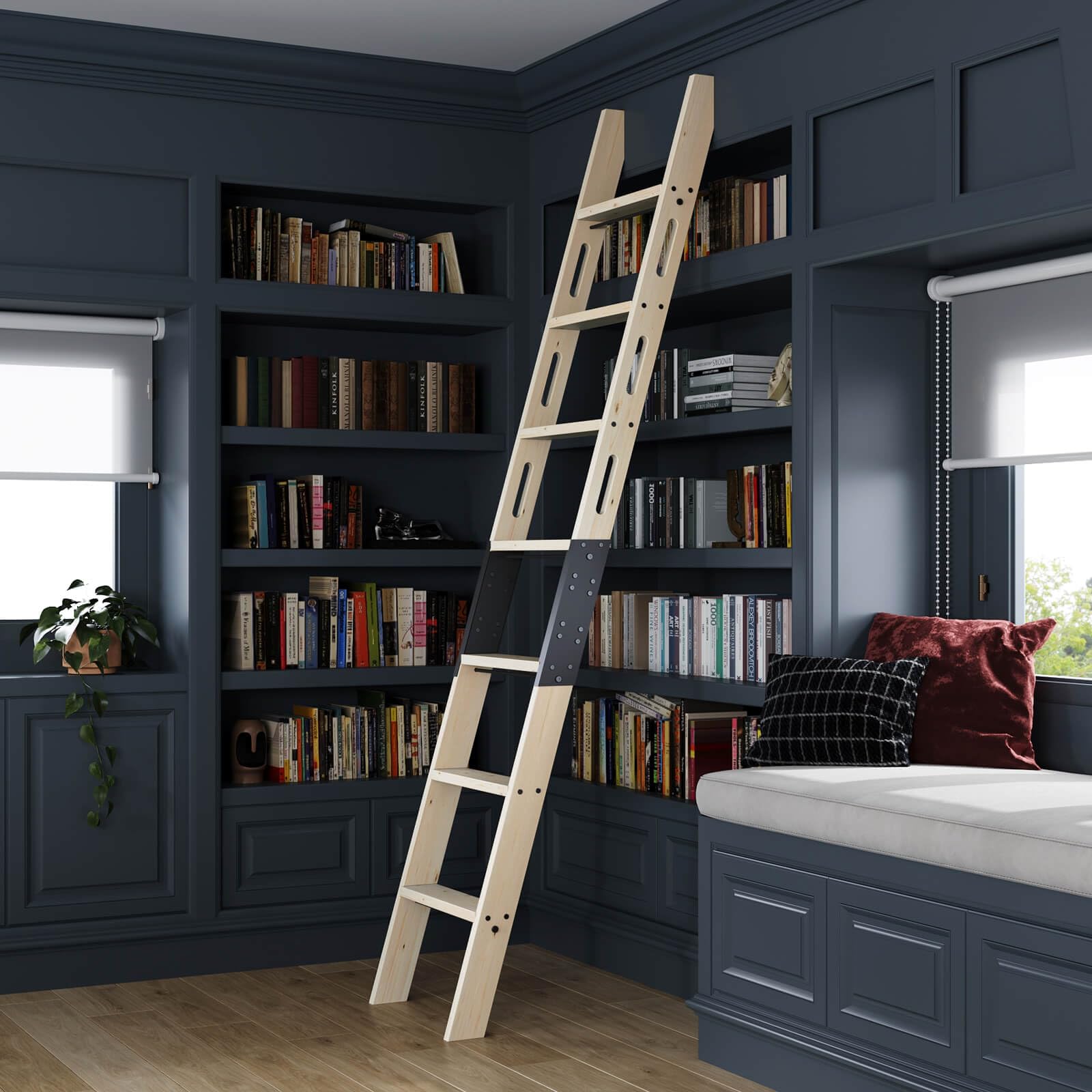
How To Choose The Best Wooden Loft Ladders
A loft ladder is a piece of structural hardware that you climb while carrying boxes. That changes what matters. Looks come last; what matters first is whether the rails stay rigid, whether the wood is rated for your body weight with a margin, and whether the ladder physically fits the hole in your ceiling. Get those three right and the rest is finish and taste.
Rail Construction Is The Whole Ballgame
Side rails made from full-length solid boards keep a continuous grain from top to bottom, so they resist twisting under load. Finger-jointed or spliced rails are cheaper to make and can develop a flex point where the joints meet. If a listing does not tell you the rails are one-piece, that is your first clue to check before you buy.
Softwood Ratings Versus Hardwood Ratings
Pine is a softwood, so a pine ladder rated at 450 lbs will often come with a lower recommended working load for long-term stability — the maker is telling you the wood will hold more than it will hold comfortably for years. Red oak is harder and denser, which is why hardwood kits tend to feel stiffer in the hand. Neither is wrong; they just trade weight, stiffness and price.
Freestanding Versus Sliding Hardware
An attic ladder or a leaning loft ladder stands on its own feet. A library-style ladder is a different animal: it rides a rail system, and those hardware kits are almost never in the box. Budget for the rail and trolley separately if you go that route, and check whether the ladder top is pre-cut for a sliding system.
Side-by-Side Comparison
| Model | Best For | Load Capacity | Steps | Max Height | Amazon |
|---|---|---|---|---|---|
| Rolling Library Ladder 8ft, 450lbs, 7 Steps★ Best Overall | Loft and bookshelf access | 450 pounds | 7 | 96 inches | Amazon |
| DIYHD 87″ Knotty Pine Sliding Library Ladder | Sliding library builds | 330 pounds | 8 | 87 inches | Amazon |
| Quite Guide Red Oak Library Ladder Kit | Hardwood finish quality | — | 7 | 2.43 meters | Amazon |
| FAKRO LWS-PL 66853 Insulated Attic Ladder | Insulated attic access | 300 pounds | — | 10 feet | Amazon |
Detailed Reviews
1. Rolling Library Ladder 8ft
Our pick — 4.0+★ from 40+ verified ratings; the strongest balance of quality and price.
A handrail on both sides and a 450 lb rating — the most load headroom here for hauling boxes to the loft.
The number that defines this pick is the 450 pounds (205 kg) it is rated to carry. That is the highest load capacity on this list, on an 8-foot ladder with seven steps. For hauling a laundry basket up one-handed, that margin over your body weight is the reason to pick it.
Buyers single out the assembly process as its strongest point. The kit ships unassembled with an illustrated manual, and assembly is the thing buyers talk about most — in a good way. Stability rates just as high, which tells you the spruce frame locks up solid once the nuts are tight. The build-in double-sided armrests give you a grab point at chest height, so climbing with a load feels steadier.
Here is the thing to plan for: the sliding hardware is not in the box, and you can only stain it after assembly. So break the finishing job into a weekend — assemble, then stain. It also stands 96 inches tall, so measure your loft opening against that before you order.
What Earns It First Place
- 450-pound load rating — more capacity than any other pick here.
- Seven steps across 96 inches of height for comfortable spacing.
- Double-sided armrests give a stable handhold on the way up.
- Solid spruce frame with visible natural grain.
Before You Order
- Sliding hardware is not included and must be bought separately.
- Staining can only happen after assembly.
- Ships unassembled, so set aside build time.
Reach for this if: you want a loft ladder with the most load headroom and a handrail on both sides.
Plan around this: the separate sliding-hardware purchase and the finish-after-assembly order.
2. DIYHD 87″ Knotty Pine Sliding Library Ladder

Full-length pine rails with oval grips cut straight through — a ladder built to be painted, not hidden.
Most cheap ladders hide their weak point in the side rails. This one addresses it head-on: the 87-inch side boards are cut from full-length solid knotty pine, not finger-jointed or spliced, so the grain runs unbroken from the bottom step to the top. That continuous grain is what keeps a ladder from developing a flex point halfway up.
At 8 steps and 17-3/4 inches wide, it gives you more rungs than the Rolling Library Ladder above — 8 against 7 — in a narrower footprint. The trade is height: 87 inches here versus that ladder’s 96. The oval cut-outs in the rails are a genuinely useful detail; you get a handhold exactly where your hand naturally goes while stepping.
The pine is unfinished, so knots and grain deepen once you paint or stain — but pine is a softwood, and the maker names 330 pounds as the recommended working load against a 450-pound maximum. Live near that ceiling and the wood will not stay as stiff for as long. Assembly uses pre-embedded threaded nuts, which is simple enough with a drill, though the instructions are thin. And the sliding hardware is a separate buy: the top is pre-cut to accept DIYHD’s sliding systems, so match it to the right kit.
The honest read: pick this one if you are building an actual library rail system and want the rail construction done right. The one-piece grain and pre-cut top do the heavy lifting.
Know the ceiling: the 330-pound recommended load is the real limit for daily use on soft pine.
Who it beats: the spliced-rail ladders in this bracket, on rail integrity alone.
Who it does not: anyone who needs a taller climb or the full 450 pounds as a daily working load.
3. Quite Guide Library Ladder Kit Red Oak

Red oak rails and a 25.1-pound shipping weight — a hardwood kit that feels like furniture, not scaffolding.
Red oak is the reason to look here. It is a hard, dense wood, and this kit ships as 2 side rails, 7 steps, 1 top rung and 3 steel rods — the steel rods being what pull the whole frame tight. The whole package weighs 25.1 pounds, which is light for a hardwood ladder and makes it manageable to move and hang on your own.
Quality is the headline here — buyers mention it first and most often, with appearance right behind it. The oak takes stain beautifully if you are matching a bookshelf or loft rail. Assembly is straightforward enough that it comes up as a positive rather than a complaint.
The catch is that this is a ladder only. Hardware is not included, and the kit arrives unassembled, so you are supplying both the sliding system and the build time. It also reaches 2.43 meters of height — check that against your top shelf before committing.
Finish quality: red oak is the hardest wood on this list, and it takes stain like a piece of furniture.
Buy the rail separately: no hardware in the box, so budget for the sliding kit.
Best for: a library or loft where the ladder is part of the look and you want hardwood, not pine.
Look elsewhere if: you need a turnkey setup with the rail and trolley in the same box.
4. FAKRO LWS-PL 66853 Insulated Attic Ladder

The only pick here with an insulated door — a ceiling hatch that closes like part of the house.
If your ladder has to disappear into a ceiling, this is the one built for that job. The insulated wooden door frame carries an R-Value of 5.2, which is a measure of how well it resists heat flow — so the hatch does not become a cold draft point between your heated room and the loft above. The door opens and closes on a balanced mechanism with no sudden drop.
Fit is the deciding factor. It is sized for a 22 x 54-inch rough opening, and the ladder adjusts to ceiling heights between 7 feet 11 inches and 10 feet 9 inches — a wide window that covers most homes. Maximum user weight is 300 pounds, which is the lowest load ceiling on the list, so factor that in if two people ever climb at once. A 2-year warranty backs it.
Quality is what earns praise here. Sturdiness splits both ways: plenty of buyers describe it as solid, but a handful find it can break under rough handling. Treat the fold-down door carefully and it rewards you. At 65 pounds, this is far heavier than the 25.1-pound oak kit — installing it overhead is a two-person job.
Where it earns its place: the insulated frame is the feature no other pick has, and the adjustable height range fits a real spread of ceilings.
Handle with care: sturdiness is the mixed note, so treat the door mechanism gently.
Choose this when: the ladder is seen from below and the hatch needs to seal and insulate.
Second thought if: you need more than a 300-pound limit or want a lean-and-climb loft ladder instead.
Know the Specs
Load Capacity Versus Recommended Load
Load capacity is the maximum weight a ladder is rated to hold. Recommended load is often lower — the weight the maker says keeps it stable for years. Pine is a softwood, so a pine ladder may max out at 450 pounds but recommend staying under 330. If you carry heavy gear up, buy for the recommended number, not the maximum.
Rough Opening And Adjustable Height
An attic ladder is built around the hole in your ceiling — the rough opening. A 22 x 54-inch model only fits a hole that size. Adjustable height is a separate spec: it sets the range of ceiling heights the ladder legs will reach. Measure both before you buy, because a ladder that is wrong for your ceiling cannot be fixed after the fact.
Common Questions
Do wooden loft ladders come with sliding hardware included?
What is the difference between a pine and a red oak ladder?
How do I know if an attic ladder will fit my ceiling?
Can I stain or paint a wooden loft ladder?
Are finger-jointed ladder rails weaker than one-piece rails?
How much weight should a loft ladder be rated for?
Is an attic ladder heavy to install overhead?
What does the R-Value on an attic ladder door mean?
Do I need to assemble a wooden loft ladder myself?
Can I use a library ladder as a permanent loft ladder?
The Bottom Line
If you want one dependable pick, the wooden loft ladders winner is the Rolling Library Ladder 8ft because it carries the most load headroom on this list — a 450-pound rating, seven steps and a handrail on both sides. If you are building a proper library rail system, the DIYHD Knotty Pine has the one-piece rails to do it right. And for a ceiling hatch that seals and insulates, the FAKRO LWS-PL 66853 is the one to reach for.
One last note before you buy: sort by your ceiling first, then by load. A ladder that does not fit your rough opening is no bargain at any finish grade, and a ladder rated below your daily carry weight is the one thing you cannot fix after the fact.
How we choose
We do not accept paid placement. Every pick is matched to a real buyer and a real use-case; we do not hands-on test units.
Sources
Specifications: manufacturer listings and product documentation. Review insights: verified customer reviews, as of November 2026. Pricing: not shown on this page (it changes often); check the current price via the retailer link.
As an Amazon Associate, Tactical Gear Guy earns from qualifying purchases. This does not affect which products we feature.