Specs are compiled from manufacturer listings and verified buyer reviews and can change over time — please confirm the key details on the product page before buying.
If your staircase has one loose, wobbly handrail, you already know the feeling — your hand reaches for it and it shifts under your palm. The fix is simpler than most homeowners expect: a solid wood rail mounted into the studs with sturdy metal brackets. What matters is matching the wood species, the length, and the mounting style to your actual stairs, not to a product photo.
This guide is built by comparing the manufacturers’ published specifications and the patterns across verified customer reviews, so you get each pick’s real strengths and trade-offs instead of marketing spin.
Below you’ll find picks sorted by real mounting hardware, load ratings, and wood type — from a beech grab bar built for heavy support to an unfinished red oak kit you can stain to match your trim. These are the wooden handrails for stairs interior worth measuring your studs for.
Top Picks
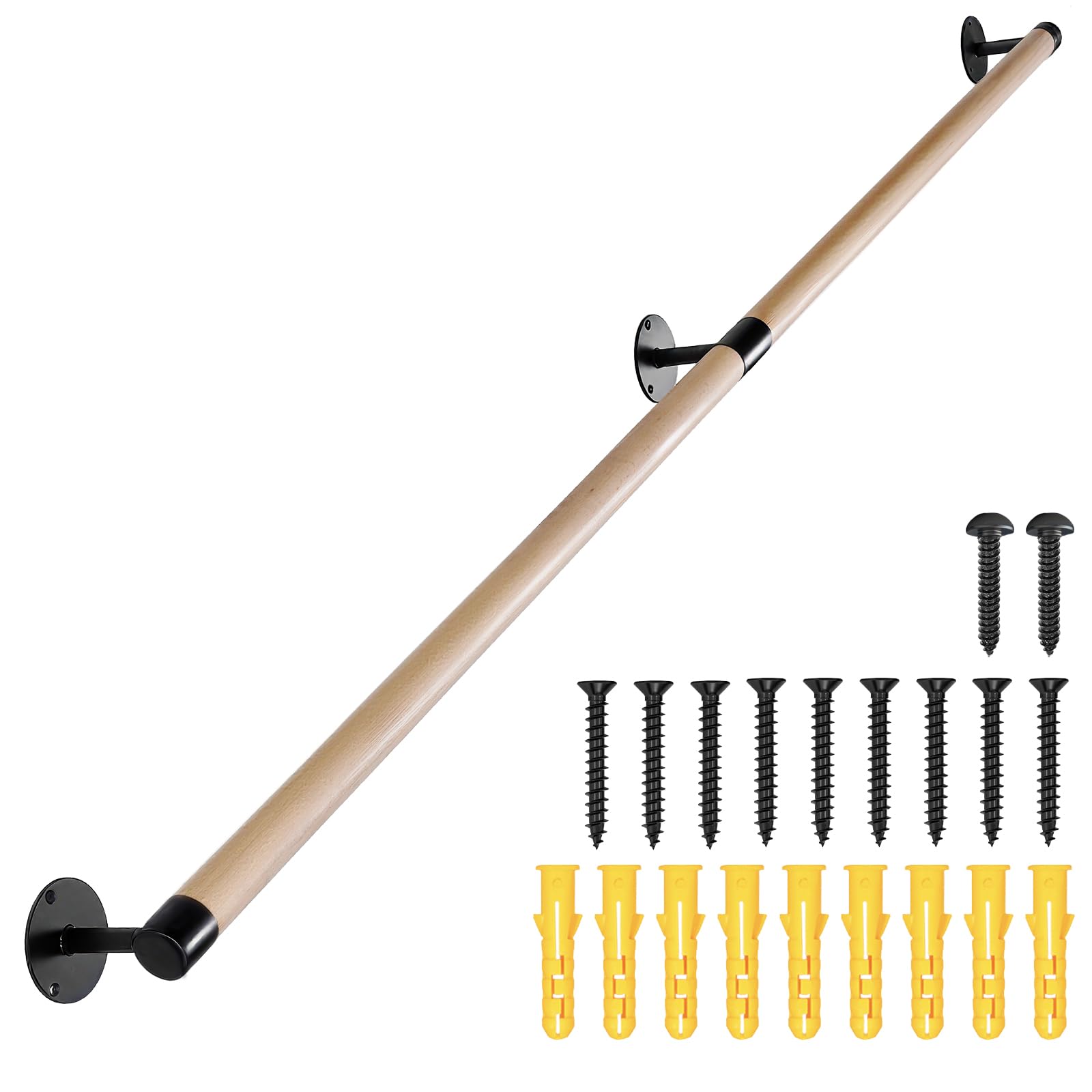

How To Choose Wooden Handrails for Stairs Interior
The mistake most people make is ordering a rail that looks right in the photo but doesn’t match their stud layout or their stair pitch. A wall-mounted wooden handrail only feels solid when the brackets land on real framing, so measure before you buy.
Find your studs first, then pick the length
A wall-mounted rail is only as strong as the wood behind it. Run a stud finder along the wall at your planned rail height and mark every stud center. If your studs sit on wide centers, you need a rail long enough that the included brackets still reach framing — otherwise you’re screwing into drywall and the rail will pull loose the first time someone leans on it.
Match the rail to your stair angle
Stair rails follow the pitch of the stairs, which is the angle the staircase rises at. Brackets that swivel or tilt let you mount the rail flush against the wall at that angle. Flat, fixed brackets work for horizontal hallway runs but fight you on a sloped staircase. Check that the brackets on your pick can be angled before you commit.
Wood species changes the feel under your hand
Beech and oak give you a dense, hard surface that resists denting and stays smooth under your palm. Pine is lighter and softer, and it dents more easily if something heavy knocks it. If you plan to stain the rail to match existing trim, unfinished oak takes stain predictably — a factory-finished rail usually won’t.
Load rating tells you what the rail can take
The load rating printed on a rail reflects how much weight the bracket and rail assembly is rated to support. Higher ratings matter for households with someone who leans heavily or grabs the rail to catch a stumble. Just remember the rating assumes the brackets are anchored into solid framing, not drywall anchors.
Side-by-Side Comparison
| Model | Best For | Length | Material | Load Rating | Amazon |
|---|---|---|---|---|---|
| 6 FT Wooden Stairs Handrails Wall Mount (Purife)★ Best Overall | Heavy-support grab bar | 72 in | Beech wood | 400 lbs | Amazon |
| SELEWARE 51 Inch Wood HandrailBest for Tight Stairs | Tight stair runs | 51 in | Beech wood with metal | 300 lbs per bracket | Amazon |
| 4FT Wooden Stair Handrails (JuneFanwei) | Thick-grip handhold | 4 ft | Pine wood | 501 lbs | Amazon |
| 80 Inch / 6.5 FT Wood Indoor Stairs Handrail (Dolibest) | Long basement runs | 78.74 in | Wood with metal brackets | 500 lbs per bracket | Amazon |
| Solid Red Oak Handrail Kit (G&T Wood Products) | Staining to match trim | 36 in | Red oak | 250 lbs | Amazon |
| 8FT Wood Stair Handrails Wall Mount (YEOOE) | Long open stairwells | 8 ft | Pine wood | — | Amazon |
Detailed Reviews
1. 6 FT Wooden Stairs Handrails Wall Mount
Our pick — 4.5+★ from 250+ verified ratings; the strongest balance of quality and price.
A 72-inch beech rail rated to 400 lbs, with the metal brackets pre-mounted to the bar.
This is the pick for a household where someone leans on the rail — an older parent or a guest recovering from surgery. Purife builds it from beech wood, a dense hardwood that holds a smooth, warm surface under your palm, and rates it for at least 400 pounds when the metal brackets are anchored properly. That’s the highest support rating on this list alongside the 4FT JuneFanwei rail, and it comes in a longer 72-inch run.
What wins people over is the build quality above everything else — the rail arrives feeling solid, the brackets are already mounted to the bar, and the round-edge profile keeps the ends from catching a sleeve. It’s a 3-inch wide grip, noticeably thicker than the 1.3-inch SELEWARE rail, so a full hand wraps around it comfortably. The beech surface also stays warmer to the touch in winter than a metal bar does. You can run it indoors on a staircase, or outdoors as a porch and deck grab bar, which makes it flexible if you’re outfitting more than one run.
The catch is the finish. It ships painted, so if you want bare wood to stain to your trim, this isn’t the blank canvas you’re after. And at 72 inches, it’s forgiving on stud spacing but too long for a short three-step landing — measure the run before you order.
What earns the top slot
- Beech hardwood grip feels dense and solid, not soft or hollow
- Rated to support 400 lbs when bracket-mounted into framing
- 72-inch length covers most standard interior staircase runs
- 3-inch round-edge grip gives a full, comfortable handhold
Where it falls short
- Ships painted, so it can’t be stained to match bare trim
- Too long for a short landing or a few-step run
Reach for this if: you need one solid, long rail that supports real weight on a standard interior staircase.
Look elsewhere if: you want unfinished wood you can stain to match existing oak trim.
2. SELEWARE 51 Inch Wood Handrail
Short, slim, and already bracketed — the snug-run answer.
A 51-inch rail is the right answer when your staircase is a short flight or your wall only gives you a couple of studs to work with. SELEWARE mounts it two ways: horizontally on drywall studs at 24-inch spacing, or angled at 30-35 degrees along the pitch of a sloped staircase on studs at 20-inch spacing. That flexibility is the reason it earns a spot here — you can fit it to the stairs you actually have instead of forcing a straight run.
The bracket is already attached to the bar, so installation is a matter of locating studs and driving screws. What buyers praise most is the wood itself, followed by how the finished rail looks on the wall — the round-edge beech profile reads as an attractive alternative to a metal rail and feels milder in cold weather. Each bracket carries a 300-pound rating, and the 1.3-inch round diameter is the slimmest grip in this lineup — noticeably narrower than the 3.35-inch JuneFanwei rail, so a large hand may feel like it wraps nearly around it.
One honest trade-off: the slim 1.3-inch profile that suits a small hand isn’t the best fit for someone wanting a chunky, easy-grab bar. It’s a grip-size question, not a strength one.
The real draw: dual mounting modes (horizontal at 24-inch or angled at 30-35 degrees) let it follow your stair pitch or run a flat hallway with the same rail.
Keep in mind: the 1.3-inch round grip is the slimmest here despite the 300-pound bracket rating.
Best for: a short interior flight or hallway where the wall only exposes a stud or two.
Skip if: you want a thick grab bar for a large hand — the 1.3-inch profile is a slim hold.
3. 4FT Wooden Stair Handrails

A 501-pound-rated pine rail built around a wide, easy-grab semicircular handhold.
This 4FT pine rail is built around the widest handhold here, so it’s the easiest to grab in a hurry. The semicircular handle is ground smooth with round edges, and at 3.35 inches wide it’s the broadest grip in this lineup — more than double the 1.3-inch SELEWARE diameter. Pine is a lighter, softer wood than beech, but this rail is rated to hold at least 501 pounds, the highest load figure here, and pairs solid wood with stainless-steel brackets.
The box arrives ready to work: two brackets, a drill bit, 24 screws, and 12 expansion bolts are included, so you’re not chasing hardware on a second trip. Buyers report it holds steady with no wobble once anchored. It’s also the most affordable per-foot option of the longer rails, which suits a rental or a basement run.
The genuine caveat is stability under load — it’s the one aspect that draws mixed feelings in reviews, likely tied to how much framing the brackets actually reach. Fasten every bracket into a stud and it firms up. Rely on drywall anchors on a hollow section and any rail will shift.
The strong point: the 3.35-inch semicircular grip is the widest here, which makes it the easiest to find by feel for kids, seniors, or anyone after surgery.
The honest limit: pine dents more easily than oak if something heavy strikes it, and stable feel depends on hitting studs.
Reach for this if: you want a wide, easy-to-find handhold and top load rating without paying premium prices.
Think twice if: your wall has no accessible studs — the brackets need framing to hold firm.
4. 80 Inch Wood Indoor Stairs Handrail

Nearly six and a half feet of wood rail that covers a long staircase run in one shot.
Long basement or hallway staircases eat shorter rails for breakfast — you end up with a gap or a joint. Dolibest solves that with 78.74 inches of wood rail in a single piece, slightly longer than the 72-inch Purife and far beyond the 36-inch red oak kit. Each metal bracket is rated for 500 pounds, and the bar comes with the brackets pre-mounted so installation is mostly about marking studs.
Installation is the standout strength here. The rail mounts with a smart DIY trick — drive one of the three screw holes per bracket first to test placement, then commit the other two once you’ve confirmed the position. That one-step adjustment means you’re not guessing where the bar sits before you drill. It also holds a 4.5+ star average from owners at a mid-range price, and the polished natural-wood finish fits most interior trim.
Do the math on weight: at 3.63 kg, it’s noticeably heavier to lift and hold steady against the wall than the 2.13 kg 6FT Purife, so plan for a second set of hands during install.
Why it earns its keep
- 78.74-inch rail covers a long run without a splice
- 500-pound bracket rating holds real weight
- Drill-one-hole-first install makes placement correctable
- Pre-mounted brackets cut assembly time
What to plan around
- 3.63 kg rail is a two-person lift against the wall
- Longer length means you must measure the run carefully to avoid overhang
Best for: a long basement, garden, or hallway staircase that needs one continuous rail.
Bring a helper if: you’re installing solo — the 3.63 kg bar is awkward to hold and drill at once.
5. Solid Red Oak Handrail Kit
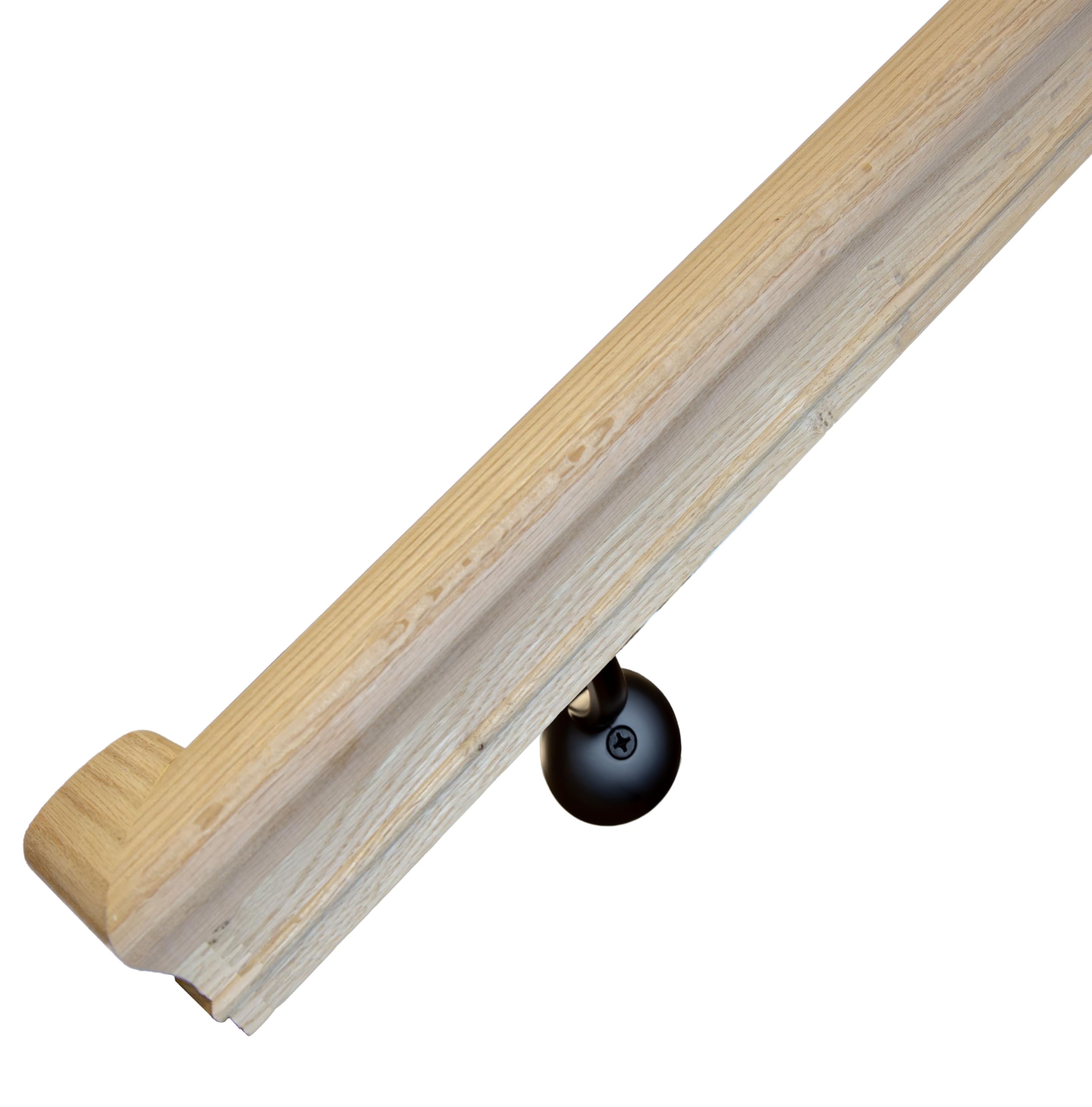
Unfinished red oak that you stain to match your trim — not a factory color.
Most rails ship finished, which is fine until the wood tone fights your baseboards. This kit gives you bare red oak in the 6010 profile, a shape described as the most popular handrail profile in the country, so it blends with existing stairs and you control the final color. Stain or paint it to match your home. It’s a 36-inch rail with 1.75-inch width and wall returns already attached to the bar, plus two wall brackets and matching screws in the box.
Red oak is a dense, hard hardwood, and that shows in the reviews — the construction reads as a solid, fine piece of wood, and owners mention it matches existing oak handrails cleanly. This is the pick for someone restoring a period home or adding a rail that must look original. The shorter 36-inch length makes it ideal for a small landing, a basement step, or a rail beside a few risers rather than a full flight.
Two limits worth knowing before you buy. First, it’s rated to 250 pounds — the lightest rating here, so it suits routine hand support rather than heavy leaning. Second, it’s unfinished and the amount of sanding needed gets mixed reactions, so budget some finishing time. Indoor use only.
The reason to choose it: bare red oak in the 6010 profile lets you stain to an exact trim match, with wall returns already attached.
The honest trade-off: 250-pound rating and a real finishing step — this is a light-support rail, not a heavy grab bar.
Choose this if: you’re restoring a home and need oak you can stain to blend with existing trim.
Not the pick if: you need a high-load bar for an elderly or heavy-leaning user.
6. 8FT Wood Stair Handrails Wall Mount (YEOOE)

Eight feet of polished pine for the open stairwell a shorter rail can’t finish.
When your staircase is a long, open run, an 8-foot rail is the only way to keep your hand on one continuous piece. YEOOE builds it from polished pine with a water-resistant finish and an anti-skid grip, so it holds steady in humid basement air and feels secure under your palm. The adjustable-height design also lets you set the rail to the hand height that suits the people who actually use the stairs.
Hardware is complete from the start: three brackets, a drill bit, 18 screws, and 9 expansion bolts, plus a manual. The pine finish has a modern, contemporary look that blends with hardwood floors, and buyers describe it as sturdy and easy to install. It’s the longest rail here, so if you’re covering a full open stairwell, this saves you a splice.
The recurring gripe is the width — it’s the aspect that gets mixed feedback, with some feeling the profile runs wide for a handhold. If you have small hands, hold that against the 3.35-inch JuneFanwei grip and decide which feels right. And like any pine rail, it takes a ding more readily than oak, so protect the ends during install.
The case for it: an 8-foot pine rail in one piece eliminates the joint a shorter bar leaves on a long open staircase.
The downside to weigh: the profile runs wide for smaller hands, and pine dents more readily than oak.
Pick this for: a long, open stairwell or corridor where one continuous rail matters.
Pick something slimmer if: your grip is small — the wide profile is the most-cited fit issue here.
Know the Specs
Load Rating
The load figure on a wooden stair rail (like 400 lbs or 501 lbs) tells you how much weight the rail-and-bracket assembly is rated to support. Higher ratings suit households where someone leans heavily or grabs the rail to catch a stumble. The rating assumes the brackets are anchored into solid studs — screw into drywall alone and the best-rated rail will still pull loose.
Wood Species
Beech and oak are dense hardwoods that resist denting and feel hard and smooth under your palm. Pine is lighter and softer, easier to work but more prone to marking. Species also decides finish options — bare oak takes stain to match trim, while a factory-finished rail usually won’t accept a new color cleanly.
Rail Diameter
The round diameter of the rail decides how it feels in your hand. A slim 1.3-inch bar suits a smaller grip and a snug wall, while a broad 3.35-inch semicircular profile gives a full hand something wide to find by feel. Match the diameter to the hands that will actually use the stairs.
Mounting Angle
Stair rails follow the pitch of the staircase, so the brackets must be able to sit flat against the wall at that angle. Swivel or tilt brackets handle a sloped run; fixed brackets work for horizontal hallway runs. Measure your stair angle before ordering, and confirm your studs land where the brackets need them.
Common Questions
How do I know which rail length fits my staircase?
Can I mount a wooden handrail on drywall without studs?
What does the load rating on a stair rail actually mean?
Is beech wood better than pine for a stair handrail?
Can I stain an unfinished red oak handrail to match my trim?
How do I mount a handrail on a sloped staircase wall?
Will a wood handrail feel cold in winter like a metal one?
What hardware is included with these wooden stair rails?
Can a wooden handrail be used outdoors as well as indoors?
The Bottom Line
For most interior staircases, the wooden handrails for stairs interior winner is the 6 FT Purife beech rail — a 400-pound rating, a dense 3-inch beech grip, and a 72-inch run that covers a standard flight. If your wall only exposes a stud or two on a short flight, the SELEWARE 51-inch rail angles to your stair pitch and fits snugly. For a long open stairwell, the Dolibest 80-inch rail covers the run without a splice, and if you need to stain oak to match existing trim, the solid red oak kit is the one to reach for.
One fact worth weighing: the JuneFanwei 4FT carries a 501-pound rating at a budget-friendly price, so if load support and a wide, easy-grab hold top your list, it’s the value standout on this page.
How we choose
We do not accept paid placement. Every pick is matched to a real buyer and a real use-case; we do not hands-on test units.
Sources
Specifications: manufacturer listings and product documentation. Review insights: verified customer reviews, as of November 2026. Pricing: not shown on this page (it changes often); check the current price via the retailer link.
As an Amazon Associate, Tactical Gear Guy earns from qualifying purchases. This does not affect which products we feature.