Specs are compiled from manufacturer listings and verified buyer reviews and can change over time — please confirm the key details on the product page before buying.
You want an oar that pulls clean through the water and doesn’t split at the blade the first time it bangs a dock. That narrows the field fast, because wooden oars live or die on two things: the wood species and how the shaft was joined. This shortlist covers four real options, from a compact pine pair for calm ponds to an eight-foot laminated oar built for open water.
This guide is built by comparing the manufacturers’ published specifications and the patterns across verified customer reviews, so you get each pick’s real strengths and trade-offs instead of marketing spin.
Below you’ll find the length, weight and construction details that actually decide whether an oar survives a season, plus honest notes on where each one gives up ground. Every pick here is a genuine wood oar, and the shortlist for the Best Wooden Boat Oars puts durability and shaft joinery ahead of pretty grain.
Top Picks
How To Choose The Best Wooden Boat Oars
Wood oars are a simple product with one hard job: transferring your pull into forward motion without bending, splitting or working waterlogged. The trick is knowing which trade-off you’re buying. A shorter pine paddle is light and easy to store, while a longer laminated oar carries more leverage on open water but weighs more in your hands.
Solid wood versus laminated construction
A solid pine paddle is milled from one piece of timber, so there’s no glue line to worry about — but pine is a softer wood and takes dings more readily. A laminated shaft is built from several thin layers of wood glued and pressed together, which spreads the load across the layers and adds stiffness. Laminated oars also carry a protective finish, often polyurethane, that seals the wood against water absorption.
Match the length to the boat
Short paddles work for canoes, dinghies and calm ponds where you’re close to the water. Longer oars, in the seven-to-eight-foot range, give you leverage on wider boats and open water. A length that’s too short leaves you reaching over the gunwale; too long and the oar feels unwieldy in tight quarters.
Check the blade tip and grip
The blade tip takes the most abuse because it’s what strikes rocks, docks and the bottom. A reinforced epoxy tip is a meaningful upgrade over a bare wood edge. On the other end, a shaped comfort grip or a T handle makes a difference over a full day of rowing, especially on the top hand that steers.
Look at the finish and the joinery
A clear varnish or polyurethane finish slows water absorption but doesn’t make a wooden oar waterproof forever; re-sealing is part of ownership. Equally important is the quality of the glue joint in a laminated shaft — that’s where failures usually start, and it’s the single most common weak point buyers run into.
Side-by-Side Comparison
| Model | Best For | Length | Weight | Construction | Amazon |
|---|---|---|---|---|---|
| 2 Pcs Wooden Canoe Oar Paddle★ Best Overall | Calm ponds, decor, and light canoe work | 2.5 ft / 30 inches | 1.43 kg package | Solid pine wood | Amazon |
| TRAC Outdoor Products C10770 Natural Finish Wood Oar | Mid-size boats and everyday rowing | 7 ft | 3.3 pounds | Multi-ply laminated wood | Amazon |
| Natural Finish Wood Oar with Comfort Grip | Wider boats and open water leverage | 8 ft | 3.6 pounds | Multi-ply laminated wood | Amazon |
| Seachoice Wood Oar, New Zealand Pine | Versatile all-around rowing across boat types | 7 ft | 1.81 kg package | New Zealand Pine with clear varnish | Amazon |
Detailed Reviews
1. 2 Pcs Wooden Canoe Oar Paddle
Our pick — 4.0+★ from 50+ verified ratings; the strongest balance of quality and price.
A two-pack of short pine paddles that skip the glue line entirely
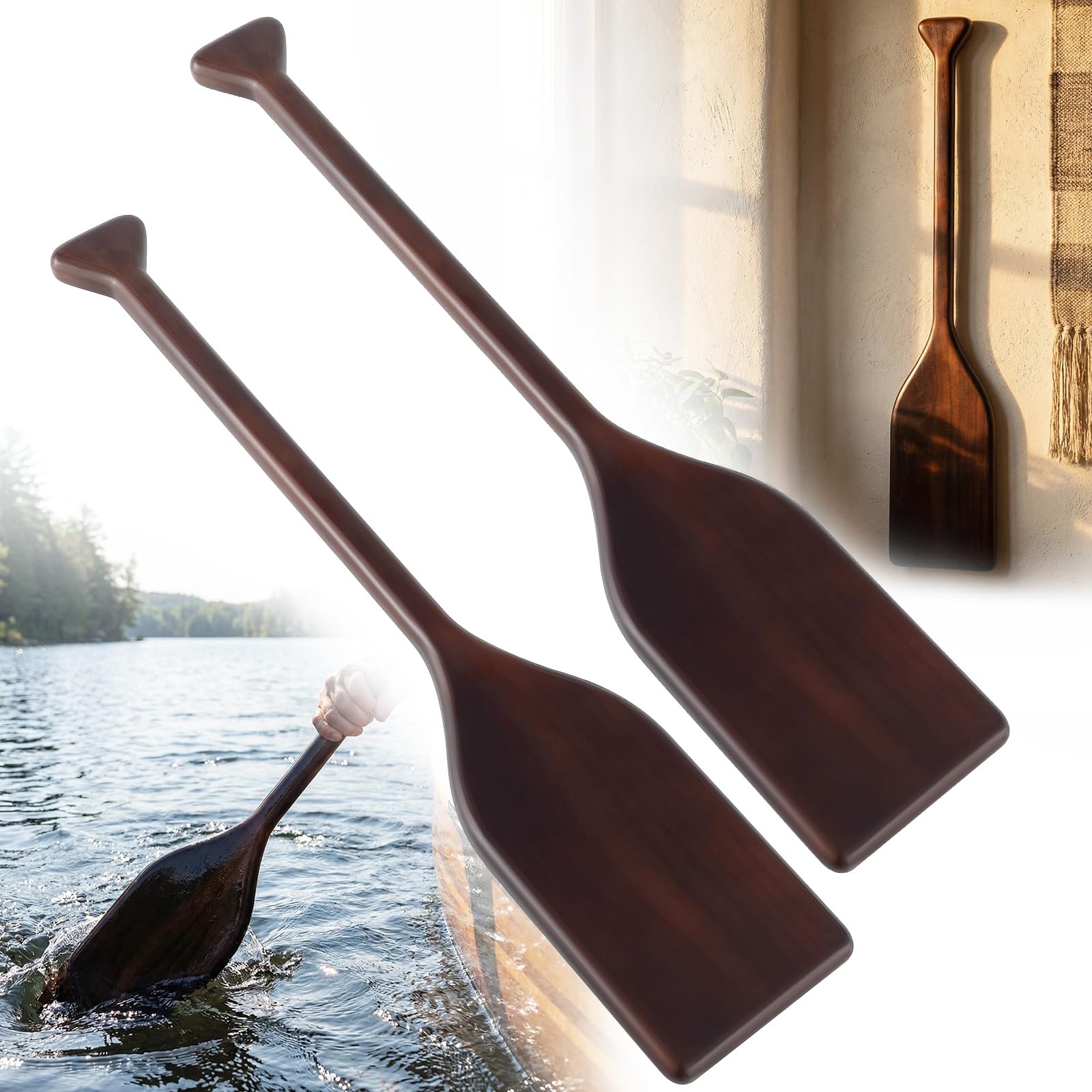
Two paddles per pack means one order covers both sides of a canoe, a kid’s dinghy and a wall display. Each paddle is milled from solid pine wood — one piece of timber, no laminated layers, no glue joint to fail. At 30 inches (2.5 ft) the shaft is short enough to store in a trunk or a closet corner without fuss.
The walnut color and natural grain give it a decided edge if the paddles are going up on a wall between trips. The T handle at the top is shaped for a firm grip, and the paddle is DIY friendly — you can add ribbons, beads or paint without worrying about ruining a complex finish. Few solid-pine paddles at this price take paint and ribbons without a finish to ruin.
Now the honest part. Pine is a soft wood, and while the milling and grinding are described as meticulous, durability is the recurring theme in buyer feedback — some paddles crack and split under load. Treat these as calm-water or decorative paddles rather than open-water workhorses. If you need an oar to lean on in chop, size up to a laminated shaft. As one two-pack buyer framed the choice, value is the draw, not brute strength.
What you get for the money
- Two paddles per pack, so you cover both sides of a canoe in one go
- Solid pine construction with no glue line to split
- Walnut finish and natural grain suit display duty as well as rowing
- DIY friendly for paint, ribbons or custom touches
Where it comes up short
- Pine is soft, and cracking or splitting is the most common buyer complaint
- At 30 inches the shaft is short — best for canoes and calm ponds, not wide boats
- Decorative quality outpaces heavy-duty use
Reach for this if: you want a budget-friendly pair for a canoe, a pond paddle or a wall display, and light duty fits your water.
Look elsewhere if: you row open water and need a shaft that can take real load — the pine here isn’t built for that.
2. TRAC Outdoor Products C10770 Wood Oar 7′
Seven feet of laminated shaft with a waterproof finish, built for regular rowing
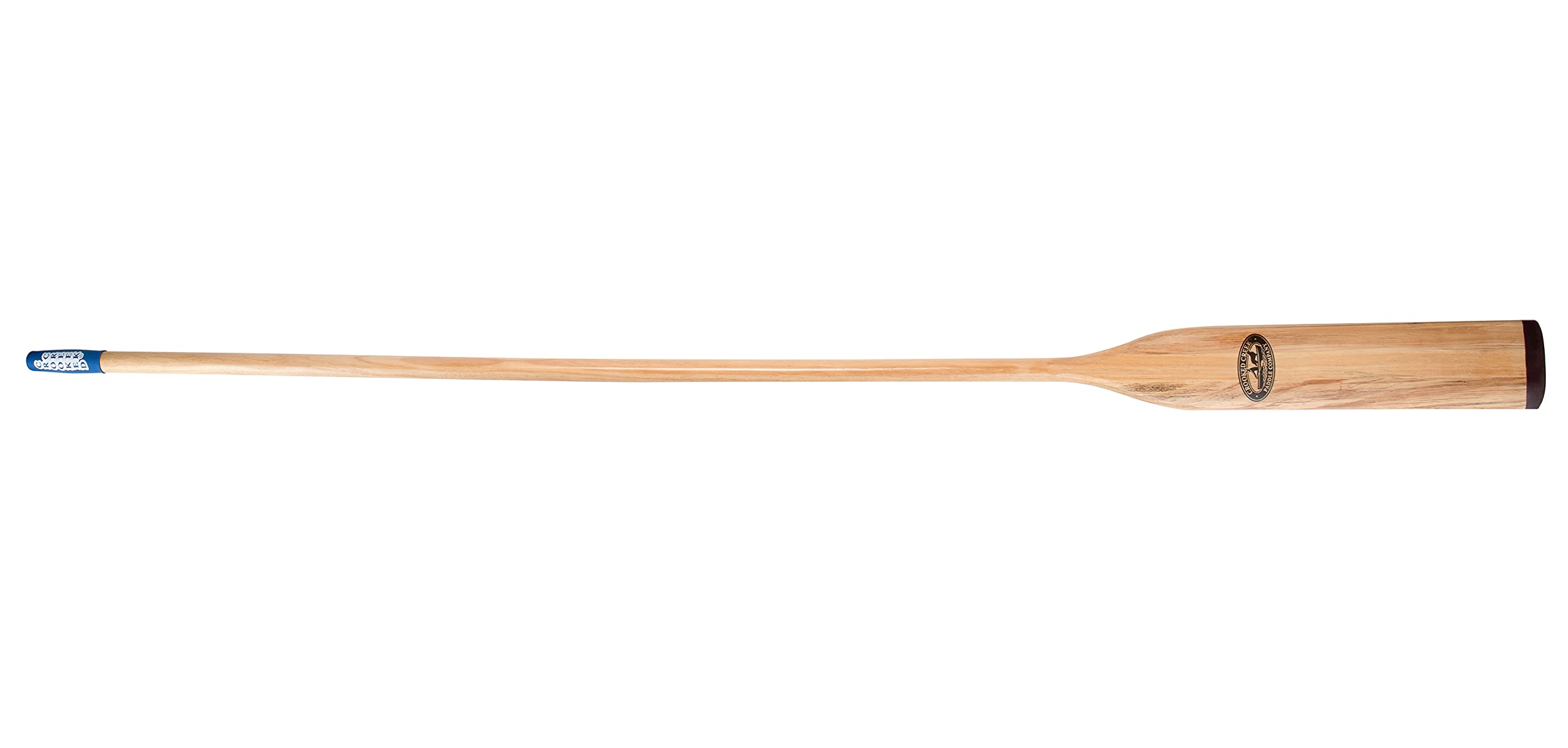
This is the practical middle of the range: a seven-foot oar with a multi-ply laminated shaft, meaning several thin wood layers are glued and pressed together so the load spreads across the layers. That extra stiffness is what lets it handle a full day of rowing without the flex of a plain pine paddle. A waterproof polyurethane finish seals the wood against splashes, and the brown epoxy blade tip takes the knocks that a bare wood edge would absorb.
Compare it directly to the eight-foot oar above: this one is 3.3 pounds against 3.6 pounds, and it’s a foot shorter, so it stows more easily and feels lighter at the end of the stroke. It costs a hair less too. The seven-foot length suits mid-size boats where an eight-footer would feel unwieldy in tight water.
The catch is the glue joint. Buyer feedback on the laminated shaft is mixed, and the recurring complaint is that the joint fails sooner than expected with heavy use. That’s a failure mode you won’t get from solid pine, which is why it pays to check the joinery before every season and store the oar dry. The 1-year manufacturer warranty covers defects early, but it won’t outlast a glue joint that fails in year two.
What earns its keep: the laminated shaft and epoxy blade tip together are a real step up from plain pine, and the polyurethane finish holds up to regular splash exposure. At 3.3 pounds it’s light enough for all-day rowing.
The honest trade-off: the glue line is the weak point on this oar, and the mixed quality feedback reflects that. If you row hard and often, inspect the joint each season.
Best for: rowers who want a lighter, shorter laminated oar for mid-size boats and daily use.
Think twice if: you push your gear hard and want the glue joint to be the last thing you worry about.
3. Natural Finish Wood Oar with Comfort Grip

The eight-footer that puts leverage on your side in open water
At eight feet, this is the longest oar in the group, and that extra foot of shaft over the TRAC above is the whole point. More length means more leverage on a wider boat, so each pull goes further and you’re not reaching over the gunwale to keep the blade in the water. It carries the same multi-ply laminated construction for stiffness, the same waterproof polyurethane finish, and the same brown epoxy blade tip for durability. At 3.6 pounds it’s 0.3 pounds heavier than the seven-foot TRAC, which is the cost of that extra foot.
Buyers report it pushes a skiff with ease, and the natural finish holds up cosmetically. Functionality and appearance are the two things that come up again and again in praise. The comfort grip is shaped for solid control on the top hand, which matters on long stretches when you’re steering as much as pulling.
Where it lets you down is durability. The recurring theme in buyer feedback is that these oars feel flimsy over time, and some report the wood itself being heavy in the hands. The laminated shaft’s glue joint is again the likely culprit for the failures. Treat this as a fair-weather oar for skiffs and dinghies, not a heavy-duty tool for rocky shallows. Store it dry and inspect the glue joint each season to catch separation early.
Why the length helps
- 8 ft shaft gives real leverage on wider boats
- Multi-ply laminate and epoxy blade tip for stiffness and tip durability
- Waterproof polyurethane finish against splashes
- Comfort grip on the top hand for steering
What to expect over time
- Durability is the consistent weak spot — flimsy feel reported over time
- At 3.6 pounds it’s the heaviest oar in the group
- Better suited to protected water than rocky shallows
Choose this if: your boat is wide enough that an eight-foot oar gives you a cleaner pull.
Pass if: you want the lightest oar you can get — the extra foot adds weight.
4. Seachoice Wood Oar
A single seven-foot pine oar with a clear varnish and a shaped grip
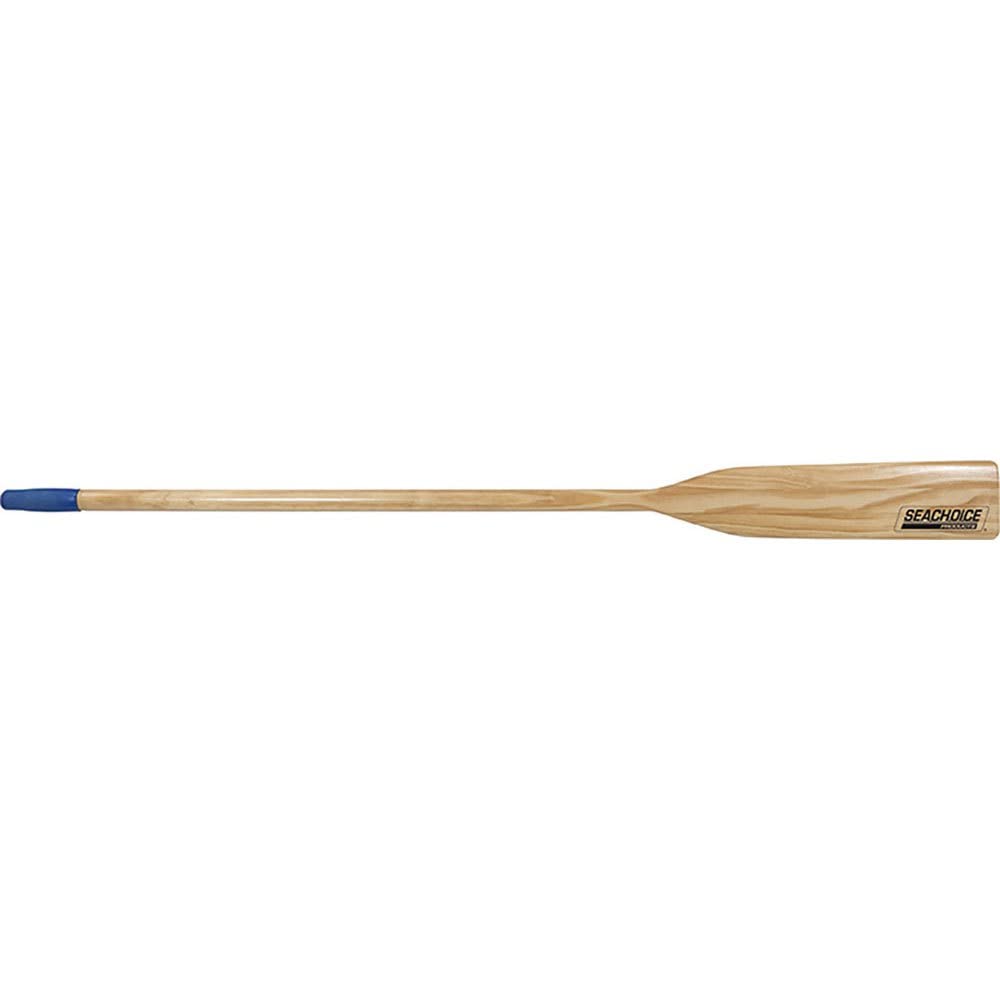
Seachoice takes a different route from the laminates: a single 7-foot shaft built from New Zealand Pine with a clear varnish finish that lets the grain show through. The blade measures 22-7/8 by 4-5/16 by 15/16 inches of surface area, which gives you a solid bite in the water. At 1.81 kg for the packaged oar it’s a manageable weight for one hand between strokes, and the comfort grip is shaped to keep the top hand steady.
This is the most versatile option here if your boat lineup changes — the manufacturer describes it as usable on a wide variety of boats, and the seven-foot length hits the middle of the range. At 7 ft it’s a full size up from the 30-inch pine two-pack, so it reaches open water those short paddles can’t. It’s the premium pick of this group.
The caution that comes up most is the shaft diameter — some find it on the small side, and a few describe it as heavy. The bigger honest note is durability: pine under heavy stress can break, and the clear varnish is a finish, not armor. Inspect the shaft for cracks after rocky bottom strikes and re-varnish as the coating wears. Row it gently and store it dry, and the pine shaft should hold up.
Why it earns the premium slot: the New Zealand Pine shaft with a clear varnish and a shaped comfort grip makes it the easiest all-rounder to live with — one oar, many boats.
What to watch: the shaft diameter runs small for some hands, and pine under hard stress can break. Give it a look over after every rocky-bottom trip.
Go with this if: you want one oar that works across a few different boats and you don’t row in exposed shallows.
Look past it if: you need a thick shaft to fill your hands or a shaft built for punishing use.
Know the Specs
Shaft length and leverage
Oar length is measured along the shaft, and more length gives you more leverage on a wider boat. A 7-foot oar suits mid-size hulls, while an 8-foot oar reaches cleaner on a beamy skiff. Too short and you’re reaching over the gunwale; too long and it feels unwieldy. Match length to beam and the rowing feels natural.
Weight and fatigue
The oar weight in pounds or kilograms decides how tired your arms and shoulders feel after an hour. A 3.3-pound oar is noticeably easier to swing all day than a 3.6-pound one, though both are manageable. Lighter is not always better — a very light oar can feel less planted in the water.
Solid versus laminated wood
Solid wood has no glue line but can split along the grain under stress. Laminated wood presses several layers together to spread load, which adds stiffness but introduces a joint that is the usual failure point. Neither is strictly better — match the construction to how hard you’ll row.
Finish and blade tip
A polyurethane or clear varnish finish slows water absorption but needs re-sealing over time. An epoxy blade tip protects the edge that strikes rocks and docks. If you row in shallow, rocky water, the reinforced tip is worth having; if you’re on calm ponds, a plain wood edge is fine.
Common Questions
How do I know which oar length fits my boat?
Is solid pine or laminated wood better for a boat oar?
What does a polyurethane finish actually do on a wooden oar?
Why do wooden oars split at the glue joint?
Can I use a canoe paddle as a boat oar?
How should I store a wooden oar between trips?
Is an epoxy blade tip worth having?
Are wooden oars heavier than other materials?
Do wooden boat oars come with a warranty?
The Bottom Line
For most buyers, the wooden boat oars winner is the 2 Pcs Wooden Canoe Oar Paddle because you get two solid pine paddles in one pack for light-duty rowing and display, with no glue line to worry about. If you want a lighter laminated oar for a mid-size boat and daily rowing, the TRAC Outdoor Products C10770 is the practical step up. And for a wider boat that needs real leverage, the Natural Finish Wood Oar with Comfort Grip at eight feet is the one to reach for. Pick by boat beam first, then by how hard you row: wide hull and hard pulling point to the 8 ft laminate, light duty to the pine two-pack.
How we choose
We do not accept paid placement. Every pick is matched to a real buyer and a real use-case; we do not hands-on test units.
Sources
Specifications: manufacturer listings and product documentation. Review insights: verified customer reviews, as of November 2026. Pricing: not shown on this page (it changes often); check the current price via the retailer link.
As an Amazon Associate, Tactical Gear Guy earns from qualifying purchases. This does not affect which products we feature.