Specs are compiled from manufacturer listings and verified buyer reviews and can change over time — please confirm the key details on the product page before buying.
Most wooden bird house feeders look great on day one and fall apart by the first hard frost. The fix is simpler than it sounds: check the wood species, how the seed stays dry, and whether the roof or panels open for cleaning. Get those three right and a cedar or plywood feeder can hang through several winters instead of one.
This guide is built by comparing the manufacturers’ published specifications and the patterns across verified customer reviews, so you get each pick’s real strengths and trade-offs instead of marketing spin.
Some units are built as nesting boxes, others as open feeding platforms, and a few do both jobs at once. Below you’ll find the details that separate a feeder worth hanging from one you’ll be replacing, all in one clear look at the wooden bird house feeder market.
Top Picks
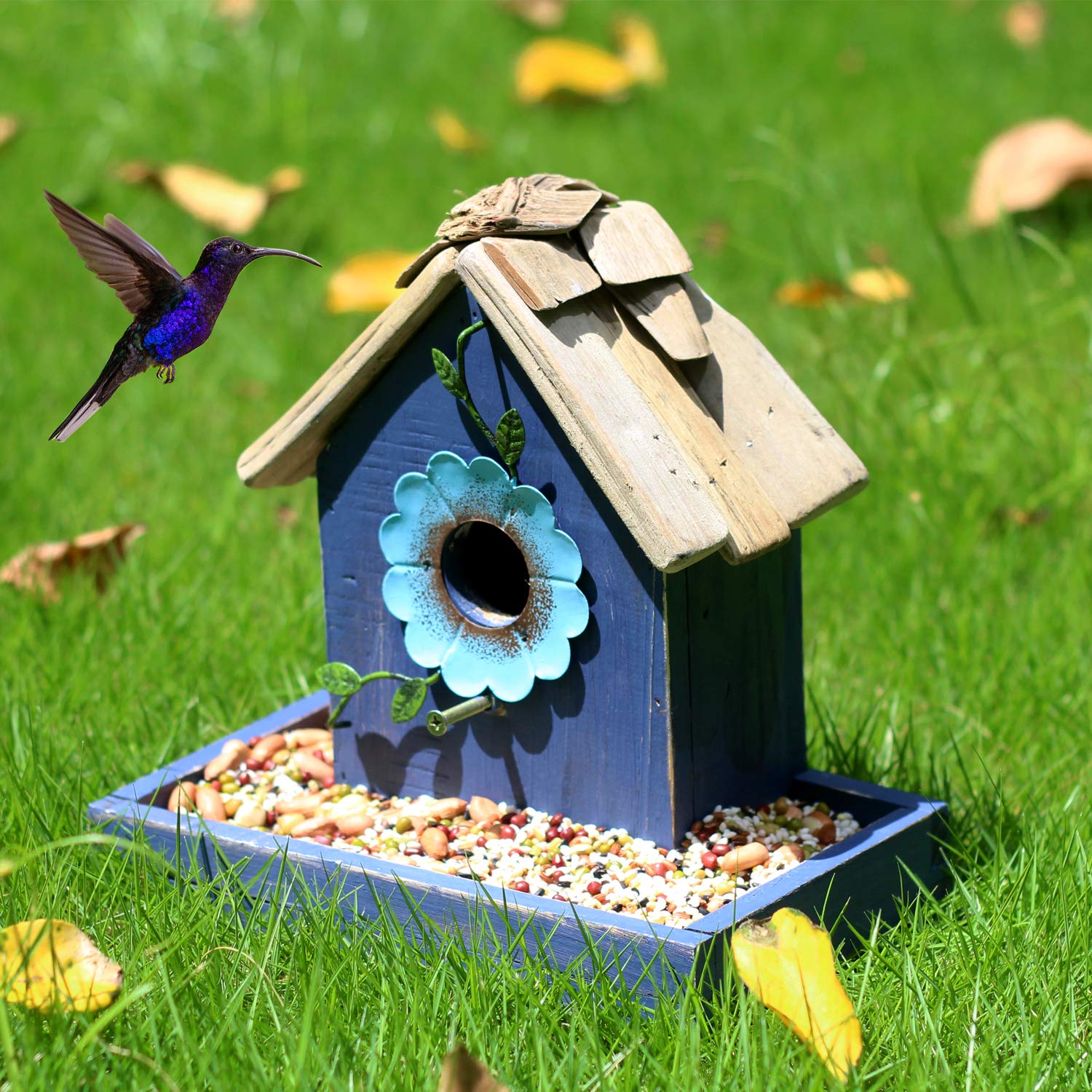
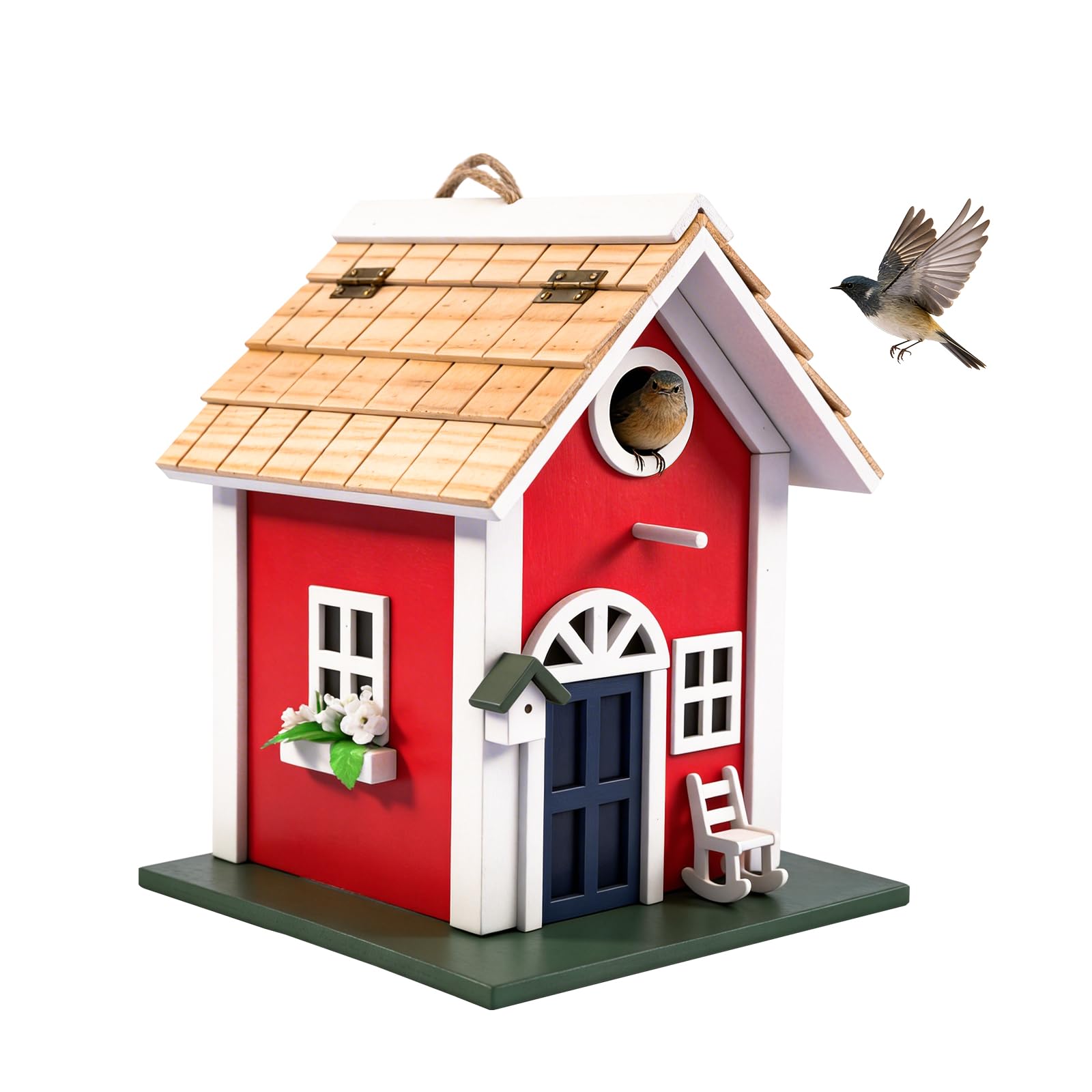
How To Choose The Best Wooden Bird House Feeder
The single biggest mistake buyers make is treating this purchase as garden decoration. A feeder that only looks good will soak up rain, swell, and split. Buy for the birds first and the yard second.
Start with the wood, not the paint job
Cedar and exterior-grade plywood handle wet weather far better than thin craft pine. Cedar naturally resists rot, which is why it shows up on the sturdier hopper feeders here. A colorful painted finish tells you nothing about the wood underneath it.
Decide if you want a nest box or a feeding station
A nesting box has a small entry hole sized for bluebirds, wrens, or chickadees, and it gives birds a place to raise young. A platform or hopper feeder holds loose seed in the open so birds can perch and eat. Some models combine a room with a seed tray, and those suit anyone who wants both jobs from one hanger.
Check how the seed stays dry
Wet seed goes mouldy, and mouldy seed is wasted seed — and a health risk to the birds eating it. A pitched roof sheds rain, and drainage holes let any moisture escape the tray. Clear panels or baffles keep the rain out while still letting you watch the birds feed.
Make sure you can actually clean it
Every feeder needs a seasonal clean-out to stay healthy for the next batch of birds. An opening roof, a hinged cleaning door, or removable panels turn a fiddly job into a two-minute one. If you have to fight the box open, you’ll clean it less often than the once-a-season minimum.
Side-by-Side Comparison
| Model | Best For | Material | Weight | Seed Capacity | Amazon |
|---|---|---|---|---|---|
| Tenforie Handcrafted Hut★ Best Overall | Overall nest box | Wood (plywood, cedar or pine shingles) | 1.9 pounds | — | Amazon |
| MEWANG Rustic CottageMost Charming | Garden decor gift | Wood | 0.93 kg | — | Amazon |
| STARSWR Wild Bird Feeder | Watching birds up close | Wood | 0.88 kg | — | Amazon |
| MIXUMON 3-Room House | Multi-family nesting | Pine wood | 2.8 pounds | — | Amazon |
| Liawm Red Cedar Feeder | Large seed load | Red cedar | — | 2.3 liters | Amazon |
| Gbekery Cedar Hopper | Suet and seed together | Cedar wood | 2.2 pounds | 2.8 pounds | Amazon |
| Edible Birdhouses Reseedable | Bird lover gift | Wood | — | — | Amazon |
Detailed Reviews
1. Wooden Birdhouse Bluebird House Feeder
Our pick — 4.5+★ from 850+ verified ratings; the strongest balance of quality and price.
The hand-built hut that treats your garden like a habitat, not a shelf display.
The body is exterior-grade plywood with cedar or pine shingles on top — the same layered approach a birdhouse needs to shrug off rain and sun. At 1.9 pounds it hangs light enough to swing freely from a branch without dragging the limb down. That combination of real weatherproofing and easy hanging is why this one sits at the top of the list.
What wins people over is the look. The colorful, novel shape is the thing that gets the most praise by a wide margin, and it reads as a proper garden accent rather than a plastic tub. The craftsmanship backs it up — buyers consistently describe the fit and finish as well-built. Birds take to it too, with finches and other small nesters moving in where the entry suits them.
The honest catch is the size. The entry is on the tight side for larger bluebirds, so it suits wrens, finches, chickadees, nuthatches and titmice better than it suits a big bluebird. There are also scattered reports of units coming apart, which is why you should hang it sheltered rather than in full exposure. Clean it out once a season and it earns its keep.
What you’re getting
- Exterior-grade plywood with cedar or pine shingles for all-climate use
- Rope-and-ring hanging so you can mount it on a tree, house, or hook
- Small-bird entry sized for wrens, finches, chickadees and nuthatches
- Genuinely decorative — bright, novel shape that dresses up a patio
- Light at 1.9 pounds, so branches carry it easily
Where it falls short
- Entry is smaller than bluebird fans would like
- A minority of units have come apart — hang it sheltered
- No seed capacity, since it’s a nest box first
Made for this: anyone who wants a weather-ready nest box that doubles as yard art, sized for small songbirds.
Look past it if: you’re specifically chasing bluebirds and need a wider entry hole.
2. Rustic Wooden Bird Feeder Cottage
A cottage-shaped feeder that arrives assembled and ready to hang in minutes.
This is the pick for the person who wants to hang something and start watching birds the same afternoon. Zero assembly, a durable jute rope, and a compact footprint make it the easiest setup on this list. The footprint measures 7.6″D x 9.99″W x 7.6″H, which is a roomy step up from the smaller boxes above while still fitting comfortably on a porch hook.
Detail work is where it earns its badge. The colors are sharp, the cottage silhouette is novel, and the whole thing reads as hand-finished rather than mass-stamped. The most-praised trait is the appearance, and the construction gets a strong secondary nod. Practical touches matter too: the roof opens so cleaning is quick, and birds find it readily once it’s up.
It weighs 0.93 kg, so factor that in if you’re hanging it from a thin branch rather than a bracket. There’s also mixed feedback on how long it lasts in open weather — a few owners found it doesn’t hold up indefinitely outside. Sheltered placement under eaves is the smart move here. For the gift-buyer who wants something that looks handmade, it delivers.
The roof matters: an opening roof turns the dreaded seasonal clean-out into a quick job, which is the single most practical upgrade on a decor-forward birdhouse.
Hang it sheltered: the fair caveat is weather exposure — a porch or eave placement treats this cottage far better than an open fence post.
Reach for this if: you want the prettiest no-assembly hanger for a covered porch or housewarming gift.
Think twice if: you’re hanging it fully exposed on an open post with no roof above it.
3. STARSWR Wood Platform Bird House Feeder

An open platform that brings cardinals and finches close enough to actually study them.
If the joy of a feeder is the watching, this is the shape for you. A sloping roof over an open platform gives birds a clear landing spot and gives you a clear view — no peering into a dark box. The dimensions run 10.5″ (L) x 7.5″ (W) x 7.5″ (H), so it’s a wide, table-like feeding station. It holds seed, and the open design suits mealworm feeding as well.
The thing this feeder does best is pull birds in. Cardinals, finches and chickadees are the headliners, and the attraction is by far the most-noted strength. At 0.88 kg it’s lighter than the 0.93 kg cottage pick above, which makes the branch hanger easier to place. Compared with the closed nest boxes here, it gives you far more visible feeding action.
Watch the hanger. The recurring gripe is the hanging twine — it can fray within a couple of weeks, so plan to swap it for a proper hook or cord. Size and value draw mixed opinions, so buy it for the viewing, not the volume. Treat the rope as a consumable and this feeder rewards you for years.
Best for birders: the platform design is the closest thing here to a front-row seat for feeding behavior.
The twine is the weak link: budget for a sturdier hang so the feeder’s real strength — pulling in cardinals and finches — keeps working.
Ideal for: anyone who feeds to watch, and wants a wide open station for cardinals and finches.
Skip the gamble if: you plan to leave the factory twine hanging unsheltered for the long haul.
4. MIXUMON 3 Hole Bird House

Three rooms, two seed trays, and a castle silhouette that does a lot of work at once.
This is the most ambitious build here. It’s pine wood, castle-shaped in a burnt wood color, and split into three rooms — one central and two smaller side rooms — each with its own door and perch sill. The door diameter is 1.57″ (4cm), which suits wrens, bluebirds and tree swallows. Two extra front feeders hold seed to draw birds in and keep them fed once they settle.
Where it wins is the look and the bird traffic. The appearance and the attraction are the top-rated traits, and the construction gets a solid nod too. There are three ways to mount it: screw it to a trunk or post via the rear mounting hole, hang it by the top rope, or set it on a post top. Each room has a front cleaning door so you can refresh the spaces individually.
And the durability is the real caveat: some units have come apart in a matter of weeks, with a bottom separating early. Size also draws complaints that it’s smaller than expected. Mount it firmly and it’s a striking centerpiece.
Why it turns heads
- Three separate rooms, each with its own door and sill
- Two built-in front feeders to attract and feed birds
- Three mounting options: screw, rope, or post top
- Individual cleaning doors for each room
- Castle shape in burnt wood for a rustic garden focal point
What to know before you hang it
- At 2.8 pounds it needs a sturdy mount
- Reports of early separation mean you should anchor it firmly
- Comes across smaller than some buyers expect
Built for: big yards that can showcase a three-room castle and mount it solidly.
Be careful with: flimsy branches and exposed spots — this one wants a firm anchor.
5. Liawm Red Cedar Roof Feeder 2 Suet Cages
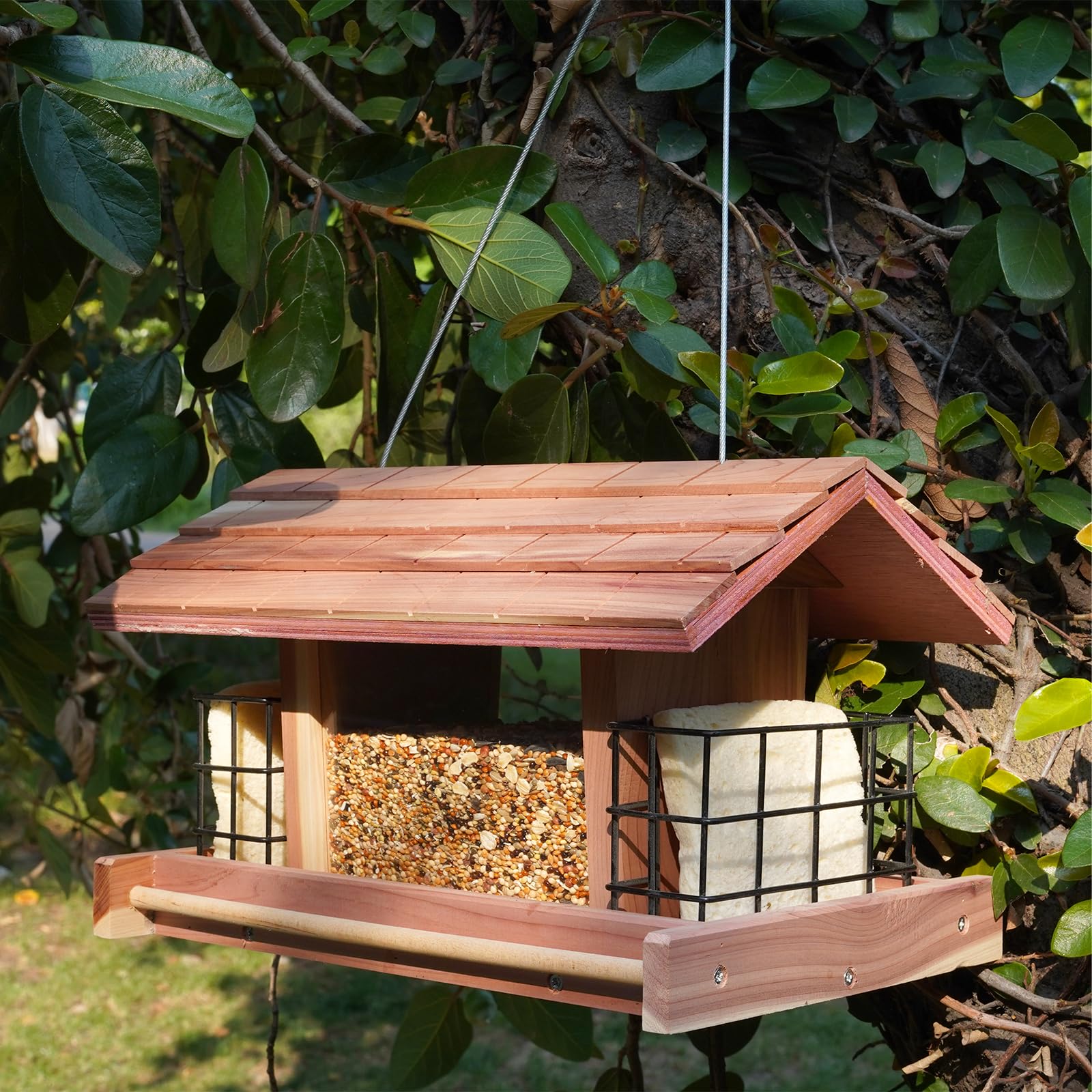
A cedar hopper that holds serious seed and still gives you suet on the side.
Natural premium red cedar is the headline here, and it’s the right call for a feeder that lives outdoors. It measures 11″L x 7.5″W x 7″H and holds up to 2.3 liters of seed — enough that you’re refilling less often than with a small box. Load it with sunflower seeds, peanuts, or corn kernels and the wild birds take notice. Two suet cages on the sides give you a second food type in one station.
Build quality is the strongest signal. Buyers rate it above plastic alternatives and it stands up to strong winds. The roof opens for filling, you can rinse it under the tap, and a transparent baffle keeps rain out while still letting birds see the food. A lanyard comes ready to hang from eaves or branches with no installation.
Here’s the trade-off: the capacity in the listing and the size people picture don’t always match, and a portion of buyers find it smaller and lighter-filling than expected. There’s also mixed word on durability over months. Hang it under cover, confirm the seed volume suits your flock, and it’s a solid cedar feeding station.
Cedar and suet in one: the red cedar body plus the twin suet cages make this the most flexible feeding station on the list.
Size expectation check: the honest heads-up is that the real-fill volume of a 2.3-liter hopper may surprise you — verify it matches your flock before committing.
Good match for: feeding both seed and suet from one weatherproof cedar hopper under cover.
Second-guess it if: you need a large hopper for a big flock and expect to refill rarely.
6. Wooden Bird Feeder Double Suet Metal Cage

Ships fully built, so it’s hanging and feeding on the day it arrives.
Solid cedar construction with a pitched roof is the foundation, and the roof does real work shielding seed from rain and sun. The central hopper takes up to 2.8 pounds of mixed seed, while two side suet cages with secure latches accept suet cakes, fruit, or nesting materials to bring in more species. At 11″L x 6.8″W x 7.3″H it’s a compact but productive feeder.
The convenience is the story. It arrives fully assembled with a sturdy hanging rope — attach it to a branch, hook, or eave and you’re done. Refilling is quick through the wide top opening, and the removable clear panels plus detachable bottom mesh make cleaning simple. Drainage holes keep seed fresh and dry, and the open hopper with a 360-degree perch lets birds feed from multiple angles.
Cedar is the same material family as the Liawm pick but this one takes a bigger 2.8-pound load in a tighter footprint. For a no-fuss feeder that’s ready from the start, this is a strong, practical choice.
Zero-assembly value: arriving built with rope included removes the one setup step most people dread on a wooden feeder.
Cedar hopper plus suet: a 2.8-pound seed load and two latching suet cages make it the most feed-versatile package here.
Suits you if: you want a cedar hopper with suet capacity and no assembly to fuss with.
Weigh the alternative if: you specifically want the biggest seed volume and a wider viewing window.
7. Edible Birdseed Bird Feeder

A wooden house you can literally feed to the birds, then coat and do again.
This one plays a different game from the hoppers. The real wood house is covered in wild bird seed, so it works as both shelter and food source at once. Included moss serves as nest material. The clever part is that it’s reseedable — when the surface gets picked bare, you coat it in glue or peanut butter and press on fresh seed or suet to start again.
The squirrel resistance comes from a bird-safe habanero and chili pepper flake coating: squirrels taste the heat, birds don’t. It’s made in the USA by a small business, and the maker guarantees it to last at least 5 years with re-seeding. Buyers also treat it as a ready-made gift for bird watchers and gardeners.
The catch is that a seed-coated surface is meant to be eaten, so expect the seed to fall off and disappear fast — that’s the whole point, not a defect. Value draws mixed opinions given how quickly the coating goes. Watch the dimensions too: at 5.5″L x 6″W x 1.05″H this is a small, shallow gift item rather than a hopper. Buy it to delight a bird lover, and it lands.
Different by design: the reseedable, seed-coated approach turns a wooden house into a repeatable food source — no seed tray required.
Buy it as what it is: treat it as a gorgeous, consumable gift, not a long-term seed hopper.
Perfect when: you want a memorable wooden bird feeder to give, with a reseedable food surface.
Not your pick if: you’re after a durable, high-capacity feeding station rather than a gift house.
Know the Specs
Seed Capacity (pounds or liters)
Capacity tells you how long you can go between refills. A 2.8-pound hopper holds more seed than a small feeding tray, so it suits a busy yard where feeders empty fast. Note that some listings measure in pounds and others in liters — check which one you’re comparing before you assume one holds more.
Material: Cedar vs Pine vs Plywood
Cedar resists rot and weather best, which is why you’ll see it on hopper feeders meant to stay outside. Pine is solid but benefits from cover. Exterior-grade plywood with shingles is a layered, weather-tough approach. Any of them work — the material just tells you how much shelter the feeder wants.
Entry Hole Size
The entry hole decides which birds can use a nest box. A narrow hole suits wrens, chickadees, and finches, while a wider one (around 1.57″ / 4cm on the three-room model) can take bluebirds and swallows. Match the hole to the species you’re hoping to host.
Mounting: Rope, Screw, or Suet Cage
Hanging rope, rear mounting screws, and post-top mounts each suit a different spot. Rope hangers swing freely from branches and hooks; screw mounts anchor firmly to a trunk or post. Heavier feeders want a solid anchor, so match the mount to the weight.
Common Questions
Will a wooden bird house feeder actually attract birds to my yard?
Is cedar really better than pine for an outdoor feeder?
How often do I need to clean out a wooden bird house feeder?
What is an edible birdhouse and how does reseeding work?
Will squirrels get into a wooden feeder?
How much seed does a typical wooden hopper feeder hold?
Do I need to assemble these feeders?
Can I hang a wooden feeder from a thin tree branch?
What entry hole size suits bluebirds?
The Bottom Line
For most yards, the strongest all-rounder is the Tenforie Handcrafted Hut. Exterior plywood with cedar or pine shingles handles the weather, the rope hanger makes placement simple, and the small-bird entry suits the wrens and finches most people want. If you’d rather watch cardinals up close, the STARSWR platform feeder gives you the best view of feeding action. And if you’re buying a gift, the Edible Birdhouses reseedable house is the one that makes an occasion of it. Whichever you pick, hang it with some shelter and clean it once a season — that’s how a wooden feeder earns the years it’s built for.
How we choose
We do not accept paid placement. Every pick is matched to a real buyer and a real use-case; we do not hands-on test units.
Sources
Specifications: manufacturer listings and product documentation. Review insights: verified customer reviews, as of November 2026. Pricing: not shown on this page (it changes often); check the current price via the retailer link.
As an Amazon Associate, Tactical Gear Guy earns from qualifying purchases. This does not affect which products we feature.