Specs are compiled from manufacturer listings and verified buyer reviews and can change over time — please confirm the key details on the product page before buying.
Do you need to heat a room, or cook dinner in the snow? Those are two very different machines, and prices run from budget-friendly to premium accordingly. This guide covers both kinds and lays out the real differences in burn output, firebox size, and weight, so you can see which one fits your wall.
This guide is built by comparing the manufacturers’ published specifications and the patterns across verified customer reviews, so you get each pick’s real strengths and trade-offs instead of marketing spin.
Heat output, firebox volume, and build material decide nearly everything about how a stove performs through a cold night. Here is the straight story on wood stoves.
Top Picks

How To Choose The Best Wood Stoves
The first thing to settle is where the stove will sit. A stove vented directly into a tent or a hunting cabin and a stove tied into a full chimney at home are built to different rules and different weights. Getting this wrong is the most expensive mistake you can make, because a 280-pound unit shipped by freight is not a casual return.
Indoor heating versus outdoor portable use
An indoor stove needs a rated heat output in BTUs (British Thermal Units, the standard heat-energy measure) that matches the square footage of the room. It also needs to be firebrick-lined or steel-plated to hold heat for hours. A portable outdoor stove trades that mass for a folding steel box that ships small and sets up at camp.
Check the ventilation type and chimney requirement before you buy anything. Some units need a standard six-inch connector and chimney system that is not included, which adds real cost to the project. Others come with a chimney pipe in the box.
Firebox volume and log length
A bigger firebox means longer burns and bigger logs. If the manufacturer lists a firebox capacity in cubic feet and a maximum log length in inches, trust those numbers over the room-coverage claim. A stove that accepts 21-inch logs saves you splitting and trimming every piece of wood you bring in.
Smaller fireboxes load shorter wood and need feeding more often. That is fine for cooking at a camp site and frustrating for overnight home heating. Match the firebox to your fuel supply, not to the brochure.
Side-by-Side Comparison
These three stoves sit in different jobs entirely, so the specs below are the apples-to-apples ones: heat output, the burn chamber size, and the material or weight that tells you what the unit is built for.
| Model | Best For | Heat Output | Firebox / Coverage | Build & Weight | Amazon |
|---|---|---|---|---|---|
| Guide Gear Large Outdoor Wood Burning Stove★ Best Overall | Camping, tents, outdoor cooking | High-heat output from a 24″ x 17″ x 15″ firebox | 24″D x 17″W x 15″H firebox | 88 lb steel, freestanding, direct vent | Amazon |
| DDSS Indoor Wood-Burning Heating Stove | Small-space heating and cooking | Heats areas up to 500 sq ft | 14.37″D x 15.55″W x 20.47″H | Thickened cast iron and double-layer steel plates | Amazon |
| Ashley Hearth AW2020-P | Whole-room home heating | 89,000 BTUs | 2,000 sq ft; 1.6 cu ft firebox, 21″ logs | Alloy steel, 280 lb, freestanding | Amazon |
Detailed Reviews
1. Guide Gear Outdoor Wood Burning Stove
A camp stove that packs its own chimney inside the firebox and still throws serious heat.
If your fire is in a tent, a wall tent, or the back of a truck bed, this is the stove that makes sense of the whole trip. The firebox measures a roomy 24 inches deep, 17 wide, and 15 tall, so you can load real splits instead of twigs and get cooking heat fast. What wins people over is the build — quality is the most-discussed strength in the feedback, and the assembly is simple enough to handle at dusk with cold hands. Everything ships packed inside the firebox itself, which is why it stays genuinely portable at 88 pounds.
Here is the head-to-head that matters most: this one weighs 88 pounds against the Ashley Hearth’s 280. If you are hauling a stove into a hunting spot or a fishing bank, that gap decides the purchase on its own. The direct-vent setup with its own chimney pipe also means you are not hunting down a six-inch connector kit before your first burn, unlike indoor units that expect one.
The honest catch is the door hardware. The recurring gripe in the feedback is that the door seal can come loose and the latch does not always close tight, and durability is the most-flagged theme overall. Treat the door gasket with care, seat the latch squarely every time, and check the seal before each season. Do that and the rest of the stove earns its keep — the heat output and functionality both draw steady praise, and the value reads well for a stove that ships complete.
Where It Earns Its Place
- 24″ x 17″ x 15″ firebox takes real firewood, not just kindling
- All parts ship inside the firebox for simple camp setup
- Chimney pipe included and direct-vent ready
- 88 pounds — the lightest option here by a wide margin
What To Watch
- Door seal and latch need careful handling to stay tight
- Outdoor use only, and it needs proper ventilation
- Stovepipe sizing draws some criticism in the feedback
Reach for this if: your fire lives outdoors — camping, tent heating, hunting camp, or cooking at a picnic site.
Look elsewhere if: you need a sealed indoor appliance tied into a home chimney; this one is built for the outdoors.
2. DDSS Indoor Wood-Burning Heating Stove, Thickened Cast Iron

A cast-iron cooker for a cabin corner, sized to warm one room and boil a pot while it does.
Think of this as a compact heater you can also cook on. The central chamber is thickened cast iron, and the top and bottom are thickened double-layer steel plates — a design aimed at holding heat and cutting how much wood you burn. It covers up to 500 square feet, which is a small cabin, a workshop, or one large room. Set it up freestanding and vent it directly, and you have a cooker and a heater in one footprint.
Versatility is the pitch. The burn chamber takes coal, firewood, branches, and wood chips, so you are not locked into one fuel. The ash box catches what falls through so cleanup stays contained, and the multi-function top handles barbecue, water boiling, and heating. It also stacks up compactly: at 14.37 inches deep by 15.55 wide by 20.47 tall, it takes noticeably less floor than the 21-inch-deep Ashley Hearth — the kind of difference that matters in a tight cabin corner.
Be clear-eyed about the background here. This unit has the thinnest feedback of the three, and its rating sits lower, so you are buying with less of a crowd behind you. It is a fair choice for a small-space setup where you want a stove and a cooking surface together, as long as you go in expecting cast iron that wants careful seasoning and steady feeding.
The compact case for it: cast iron and double-layer steel plates in a footprint under 16 inches wide, with a top you can cook on and a fuel list that includes coal as well as wood.
The part to weigh: a 500-square-foot ceiling and a thinner track record mean this is a fit for a small room, not a whole-home heater.
Best matched to: a cabin, shed, or workshop of up to 500 square feet where you want heat and a cooking top in one small stove.
Think twice if: you need the firepower or the proven following of a full-size indoor heater.
3. Ashley Hearth AW2020-P Wood Stove
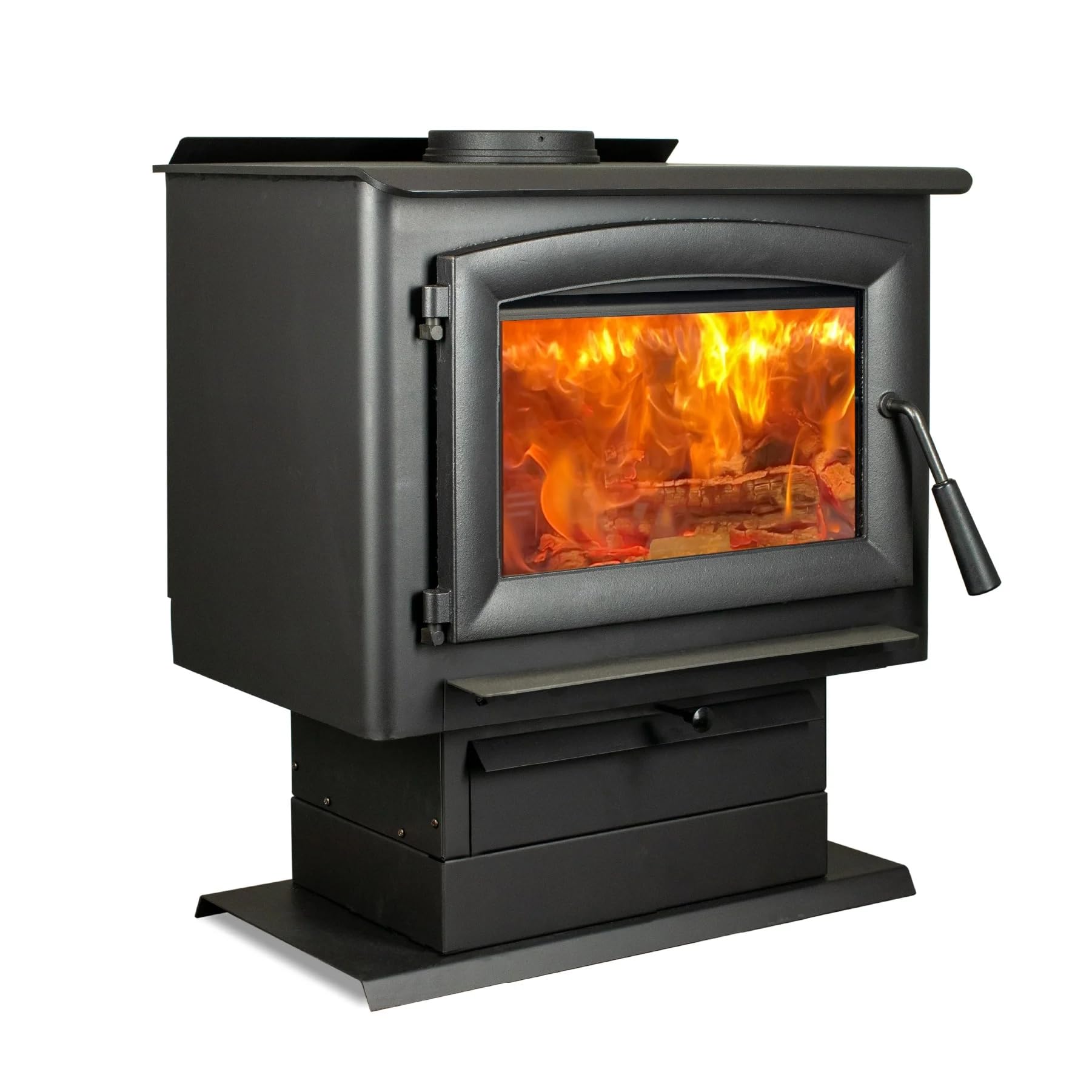
Eighty-nine thousand BTUs of whole-room heat, with no electricity needed to keep it running.
When the power grid drops, this stove keeps working. It produces up to 89,000 BTUs and is rated to warm spaces up to 2,000 square feet, which is genuine whole-room or open-floor heating territory. The 1.6 cubic-foot firebox swallows logs up to 21 inches, so you split less and reload less. Owners rate its heat efficiency second only to build quality, and many say it warms better than their previous stove.
You pay the premium for the build details. A secondary combustion system reburns the smoke for more heat per load, cutting wood use and emissions without a catalyst. The firebrick-lined interior improves combustion and extends life, and the heavy cast iron door’s air-washed ceramic glass keeps the fire view clear. It meets EPA guidelines for cordwood and is approved for mobile home and transportable building use in the US and Canada with the fresh air intake kit — the kit and the six-inch chimney system are sold separately.
The weight is the trade-off you accept for all that. At 280 pounds against the Guide Gear’s 88, this unit is a permanent installation, not something you move from camp to camp — and it ships by freight carrier, so a valid phone number is required at checkout. Burn time draws mixed feedback too, with some owners finding fires slow to start. Give it dry, well-seasoned wood and a proper draft and it settles in. Quality leads the praise here, and the heat output does the heavy lifting.
Why it commands the top tier: 89,000 BTUs, a 2,000-square-foot rating, a 1.6 cubic-foot firebrick-lined firebox, and secondary combustion that stretches your wood — all without a single watt of electricity.
The trade you make: 280 pounds of alloy steel that ships by freight and wants a permanent spot, plus a slow-start reputation that rewards dry fuel and good draft.
Built for: heating a real living space through winter and staying warm during outages, off-grid, or as a primary heat source.
Skip the idea of: moving it around — at 280 pounds with freight delivery, it is meant to stay put once installed.
Know the Specs
BTU Output and Square-Footage Rating
A BTU is a British Thermal Unit, a standard measure of heat energy. The higher the number, the more heat the stove can put into a room. Match it to your space — a unit rated for 2,000 square feet is built for a full room or open floor, while a stove topping out around 500 square feet suits a cabin or workshop. Buying more output than your room needs usually just means you run it low.
Firebox Size and Maximum Log Length
The firebox is the burn chamber, and its capacity in cubic feet tells you how much wood it holds per load. A larger chamber plus a stated maximum log length means longer burns and less trimming. A 1.6 cubic-foot firebox that takes 21-inch logs loads bigger wood than a compact unit, which shows up as fewer trips to the woodpile on a cold night.
Build Material and Weight
Cast iron and thick steel plates hold heat and last, but they add weight. A 280-pound alloy-steel stove is a permanent fixture; an 88-pound steel camp stove is meant to be packed and carried. Lighter steel units assemble fast and pack easily for camp. Heavier cast-iron and steel units radiate heat longer once up to temperature. Decide whether portability or heat retention matters more before you weigh the shipping label.
Ventilation and Chimney Requirements
Direct vent and standard chimney connectors are not the same thing. Some stoves come with a chimney pipe included, while others expect a standard six-inch connector and chimney system sold separately. Check what is in the box before you plan the install, because a missing connector kit can hold up the whole project. Mobile home approval often depends on a fresh air intake kit too.
Common Questions
Can I use a wood stove indoors without a chimney?
How many square feet will a 89,000 BTU stove heat?
Do I need electricity to run a wood stove?
What size logs can each stove take?
Can I cook on a wood stove?
Is a cast iron stove better than a steel one?
What fuel can I burn in these stoves?
Why do some stoves require a freight delivery and a phone number?
Does the firebrick lining matter?
How long does a load of wood burn?
The Bottom Line
For most buyers, the wood stoves winner is the Guide Gear Large Outdoor Wood Burning Stove because it ships complete with its chimney, sets up from a single packed firebox, and throws real cooking heat at 88 pounds — just mind the door seal. If you want whole-room heat that runs without electricity, the Ashley Hearth AW2020-P brings 89,000 BTUs (British thermal units, a measure of heat output) and a firebrick-lined firebox. And for a compact cast-iron heater you can also cook on, the DDSS fits a cabin corner at up to 500 square feet.
How we choose
We do not accept paid placement. Every pick is matched to a real buyer and a real use-case; we do not hands-on test units.
Sources
Specifications: manufacturer listings and product documentation. Review insights: verified customer reviews. Pricing: not shown on this page (it changes often); check the current price via the retailer link.
As an Amazon Associate, Tactical Gear Guy earns from qualifying purchases. This does not affect which products we feature.