Specs are compiled from manufacturer listings and verified buyer reviews and can change over time — please confirm the key details on the product page before buying.
You already know the feeling: the stove is loaded, the match is lit, and smoke starts curling out at a joint instead of going up. Almost every one of those headaches traces back to the pipe itself — the wrong diameter, the wrong wall, or a length that forced you to cut and crimp an end. This guide walks you through the single-wall and double-wall pipes that actually seal, sorted by how you plan to use them.
This guide is built by comparing the manufacturers’ published specifications and the patterns across verified customer reviews, so you get each pick’s real strengths and trade-offs instead of marketing spin.
You want a wood stove chimney pipe that drafts cleanly for years, not one you fight every winter. Three things decide that: steel gauge (how thick the metal is), wall count (single or double wall), and whether the length is adjustable. Below are the wood stove chimney pipe picks that get those three right, plus the clearance rules that keep the install legal.
Top Picks

How To Choose The Best Wood Stove Chimney Pipe
Start with the least glamorous question and the one that ruins the most installs: what diameter is the flue collar on top of your stove? Most freestanding wood stoves in North America are built for 6-inch pipe, and every pick here is a 6-inch pipe. Measure before you order, because a 6-inch pipe on a 5-inch collar is a leak you can’t seal with tape.
Single wall or double wall — pick by your clearances
Single-wall pipe is one layer of steel. It radiates heat into the room, which many people want, but it demands a wide buffer: the AllFuel single-wall sections here ask for 18 inches of clearance to combustible walls, ceilings, and wood mantles. Double-wall pipe wraps a stainless inner liner in insulation and an outer casing, so the outside stays cooler and the clearance shrinks — the DuraPlus triple-wall design needs a 2-inch clearance to combustibles. If your stove sits close to a wall, that difference decides the whole installation.
Steel gauge is the number that predicts lifespan
Gauge in sheet steel runs the opposite way you’d expect: a lower number means thicker metal. One maker spells it out plainly — 21-gauge steel is 9% thicker than 22-gauge and 27% thicker than 24-gauge. Thicker walls resist warping, denting, and burn-through at the hot end of the run. If you’re venting a hot-burning stove rather than a mild tent heater, this is where to spend.
Why so many of these pipes telescope
A fixed-length pipe has to match your exact measurement, and single-wall pipe generally cannot be cut down. A telescoping section slides to cover a range — say 18 to 30 inches, or 44 to 68 — so you don’t need to crimp or cut anything. That sliding range matters when you’re fitting pipe overhead on a ladder.
Side-by-Side Comparison
| Model | Best For | Wall Type | Diameter | Length | Amazon |
|---|---|---|---|---|---|
| DuraVent DuraBlack 6DBK-TL★ Best Overall | Most installs | Single wall | 6 in | 44–68 in adjustable | Amazon |
| AllFuel HST 18″–30″ TelescopingShort-Run Pick | Short connector runs | Single wall | 6 in | 18–30 in adjustable | Amazon |
| Selkirk Metalbestos 266036Tight-Clearance Pick | Close-to-wall stoves | Double wall | 6 in inner / 6.5 in outer | 36 in | Amazon |
| AllFuel HST 38″–70″ Telescoping | Tall runs | Single wall | 6 in | 38–70 in adjustable | Amazon |
| DuraVent DuraPlus 6DT-24 | Hot, hard-working flues | Triple wall | 6 in | 24 in | Amazon |
| AllFuel HST 6″ x 36″ 304 SS | Salt-air and damp climates | Double wall insulated | 6 in | 36 in | Amazon |
| AllFuel HST 6″ x 48″ 304 SS | Long single-piece runs | Double wall insulated | 6 in inner / 7 in outer | 48 in | Amazon |
| Selkirk 6″ SureTemp 206148 | Surge-tested safety | Double wall insulated | 6 in | 48 in | Amazon |
| FireSafe Flexible Liner Kit | Relining an existing chimney | 316 stainless liner | 6 in | 15 ft | Amazon |
Detailed Reviews
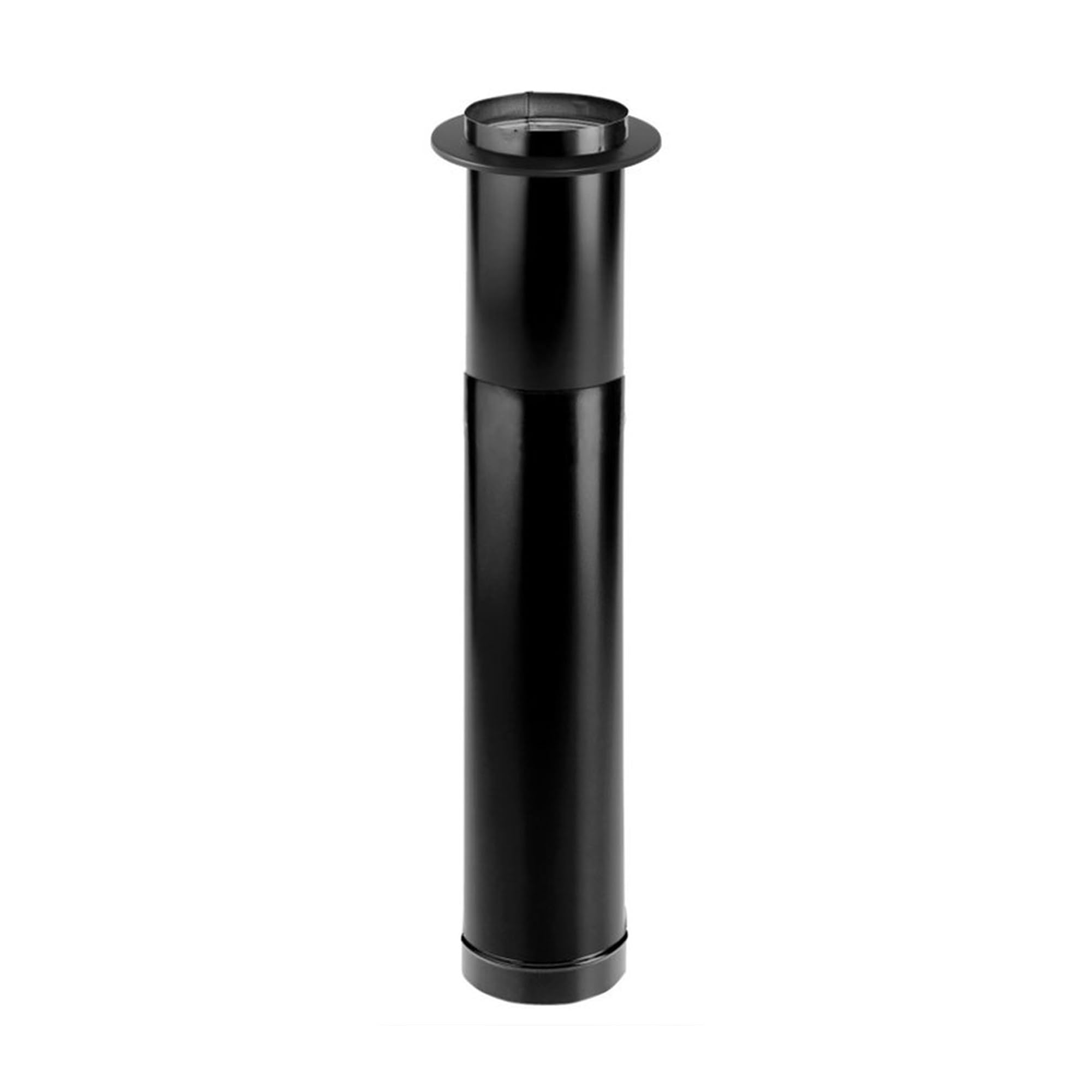
1. DuraVent DuraBlack 6DBK-TL Single Wall Telescoping Pipe
Our pick — 4.5+★ from 450+ verified ratings; the strongest balance of quality and price.
One pipe that swallows the whole measurement problem — from 44 inches out to 68.
That sliding range is the reason this one takes the top slot. You measure your run once, set the two sections where you need them, and the pipe covers everything from 44 to 68 inches without a single cut or crimp. Die-formed fittings mean the ends arrive ready to mate, and the lock-seamed design is what keeps the joint from weeping smoke at the seam.
The 6-inch interior diameter fits the standard freestanding stove collar, and the steel is listed at 0.02-inch wall. It weighs 7 pounds, so one person can hold it overhead and seat it while the other drives the screws. It’s rated for wood, oil, coal, and gas exhaust and vents outdoors, so it works as a proper flue pipe rather than a tent flue.
Installation is what people talk about most with this pipe, and the pitch is that the two sections slide past each other easily. That matches the design: the sliding joint is the whole product. The honest catch to plan around is clearance. This is single-wall pipe, so it needs 18 inches to combustibles — measured to walls, ceilings, and wood mantles. If your stove tucks into a tight alcove, that number, not the pipe, is what will stop the build.
Covers a whole measurement range
- Slides from 44 to 68 inches — no cutting, no crimping, no wasted length.
- Lock-seamed joint holds the seam tight where smoke likes to escape.
- 7 pounds is manageable for a one-person lift into place.
What you give up for that range
- Single wall means an 18-inch clearance to anything combustible.
- Not rated for running through a wall, ceiling, or outdoors in the weather.
The short version: If your stove has room around it and a 6-inch collar, this is the pipe that handles the measurement for you.
Look elsewhere if: Your run needs to pass through a wall or ceiling — this pipe is for straight vertical venting only.
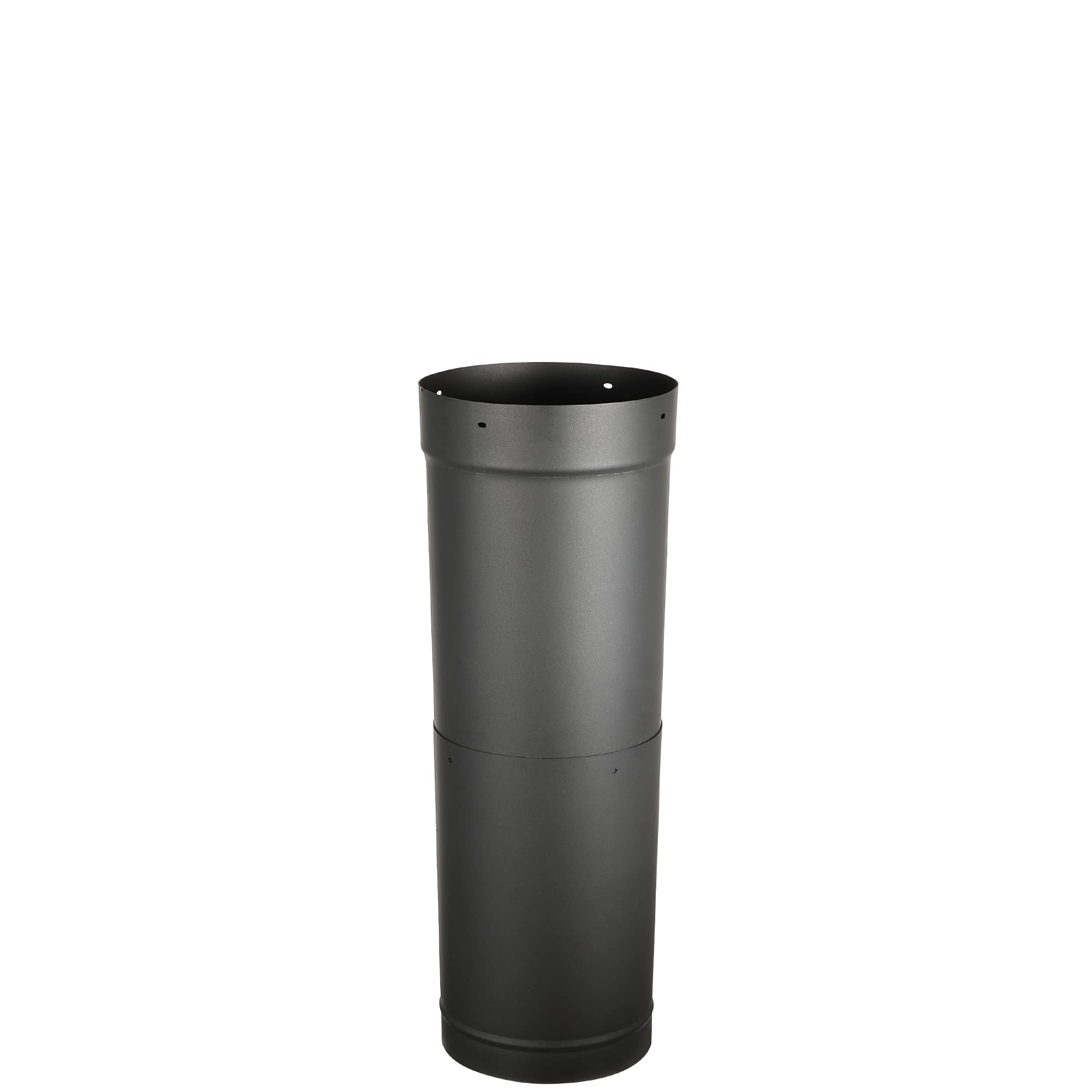
2. 18″ to 30″ Telescoping Pipe
A compact connector that covers the short gap between stove and chimney without a cutting job.
Where the DuraBlack above stretches to 68 inches, this AllFuel section tops out at 30. That is not a weakness — it’s the brief. It slides from 18 to 30 inches, which is exactly what you need for the short connector run up to a Class-A chimney, and it can mate with any brand of Class-A insulated pipe on the market.
The steel is the story here. AllFuel builds it from 21-gauge, which the manufacturer describes as 9% thicker than 22-gauge and 27% thicker than 24-gauge. In practice that means the wall resists warping at the hot end a little better than the thinner budget pipe you’ll see on the same shelf. The finish is a high-temperature black paint that’s meant to hold its color rather than flake off after a season.
Two limits to know before you buy. It cannot be cut down, so the telescoping range is your only adjustment — measure honestly. And like all single-wall pipe it wants 18 inches of clearance, and it must not run through walls or ceilings or live outside in the weather. Treat this as the indoor connector it is.
Where it earns its place: Thicker 21-gauge steel in a short, adjustable section that connects to any brand of Class-A chimney — a lot of capability for an entry-level connector.
Measure carefully: The 18-to-30-inch range is the entire adjustment window, and the pipe can’t be trimmed, so a short measurement puts you back at the store.
Grab this one if: Your run is a short connector and you want thicker steel without the longer pipe.
Pass on it if: You need more than 30 inches of reach — go up the list for the telescoping sections that stretch further.
3. Selkirk Metalbestos 266036 Smoke Pipe
Two walls of steel wrapped in black matte — the piece that gets a stove closer to the wall.
Here’s the setup this pipe is built for: a stove tucked into a corner or against a wall where single wall pipe would never clear its 18-inch rule. This Selkirk is a double-wall smoke pipe, with a black aluminized steel outer casing over a stainless steel inner liner. The gap between the two walls does the insulating, the outer casing stays cooler to the touch, and you get the matte black look on top of it.
It runs 36 inches long with a 6-inch inner diameter and a 6.5-inch outer diameter, and it connects a wood stove to insulated chimneys. Three metal screws come in the box, which is the small thing that saves you a trip mid-install. It’s a fixed length, so measure your run properly before you order — no sliding adjustment here.
Function is where this pipe delivers, and installation is the second thing people bring up. The wrinkle is value: reactions to what you pay are split right down the middle, with plenty of buyers calling it a fine deal and others feeling it sits high for one fixed section. The other thing to know is that this is the smoke pipe between stove and chimney — it’s a connector, not the insulated chimney stack itself, so plan the rest of the run accordingly.
Why double wall matters here: The stainless inner liner and aluminized outer casing give you a cooler exterior in a matte black finish that won’t dominate the room.
The honest note: It’s a fixed 36-inch section at a price some buyers question, so know your measurement and your budget going in.
Reach for this if: Your stove needs to sit closer to a combustible wall than single wall pipe allows.
Reconsider if: You need a variable length — this one gives you 36 inches and nothing else.
4. 38″ to 70″ Telescoping Pipe
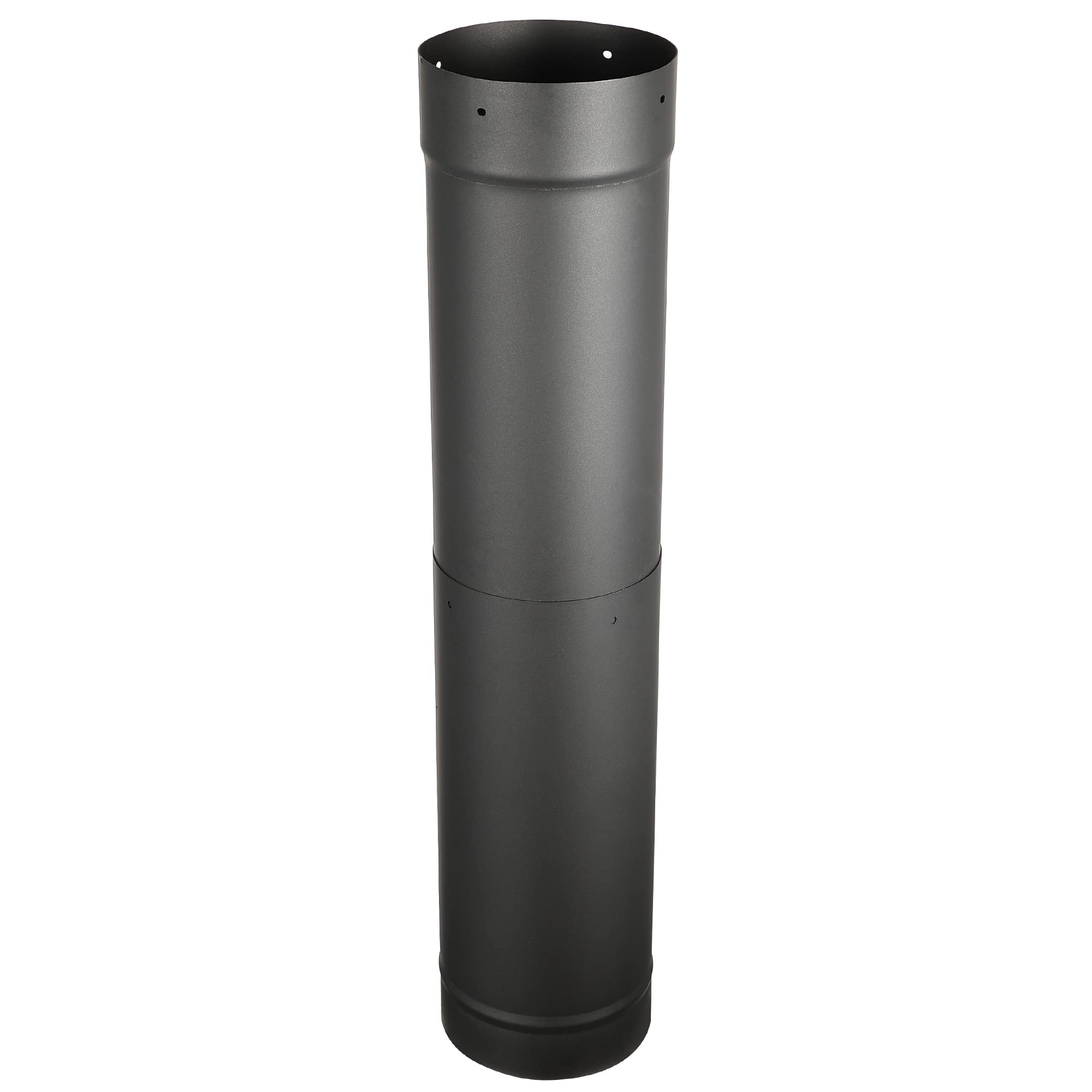
The tall-run specialist — nearly six feet of adjustable reach from one section.
Sometimes the stove sits low and the chimney entry sits high, and a short connector simply won’t bridge it. This pipe covers 38 to 70 inches in a single sliding section. Put that next to the DuraPlus fixed pipe at 24 inches and the difference is obvious: 70 inches versus 24, and you’re not buying two sections to span the same gap.
It’s built from 21-gauge steel, the same thicker wall spec as the shorter AllFuel pipe above — 9% thicker than 22-gauge and 27% thicker than 24-gauge, per the maker. The high-temperature black paint is meant to keep its finish rather than chip away. Like its shorter sibling, it connects to any brand of Class-A insulated chimney pipe.
Weight is the trade-off nobody mentions until they’re on a ladder. This section is 15 pounds, compared with the 7 pounds of the DuraVent DuraBlack — a real difference when you’re holding it overhead and trying to seat the joint solo. What wins people over, though, is the build quality, and thicker wall steel is exactly the kind of thing you notice when a pipe doesn’t flex or dent. Get a second pair of hands for the lift and this is a strong long-run pipe.
What the long reach buys you
- Covers 38 to 70 inches — no splicing two short sections together.
- 21-gauge steel wall resists warping and denting better than thinner stock.
- Mates with any brand of Class-A insulated chimney pipe.
What comes with all that length
- 15 pounds is heavy to hold overhead while you line up screws.
- Single wall, so the 18-inch clearance rule applies in full.
The fit: Tall stove-to-chimney spans where a fixed section would leave you short.
The caveat: Recruit a helper for installation — 15 pounds overhead is a two-person job.
5. DuraVent DuraPlus 6″ Diameter 24″ Length
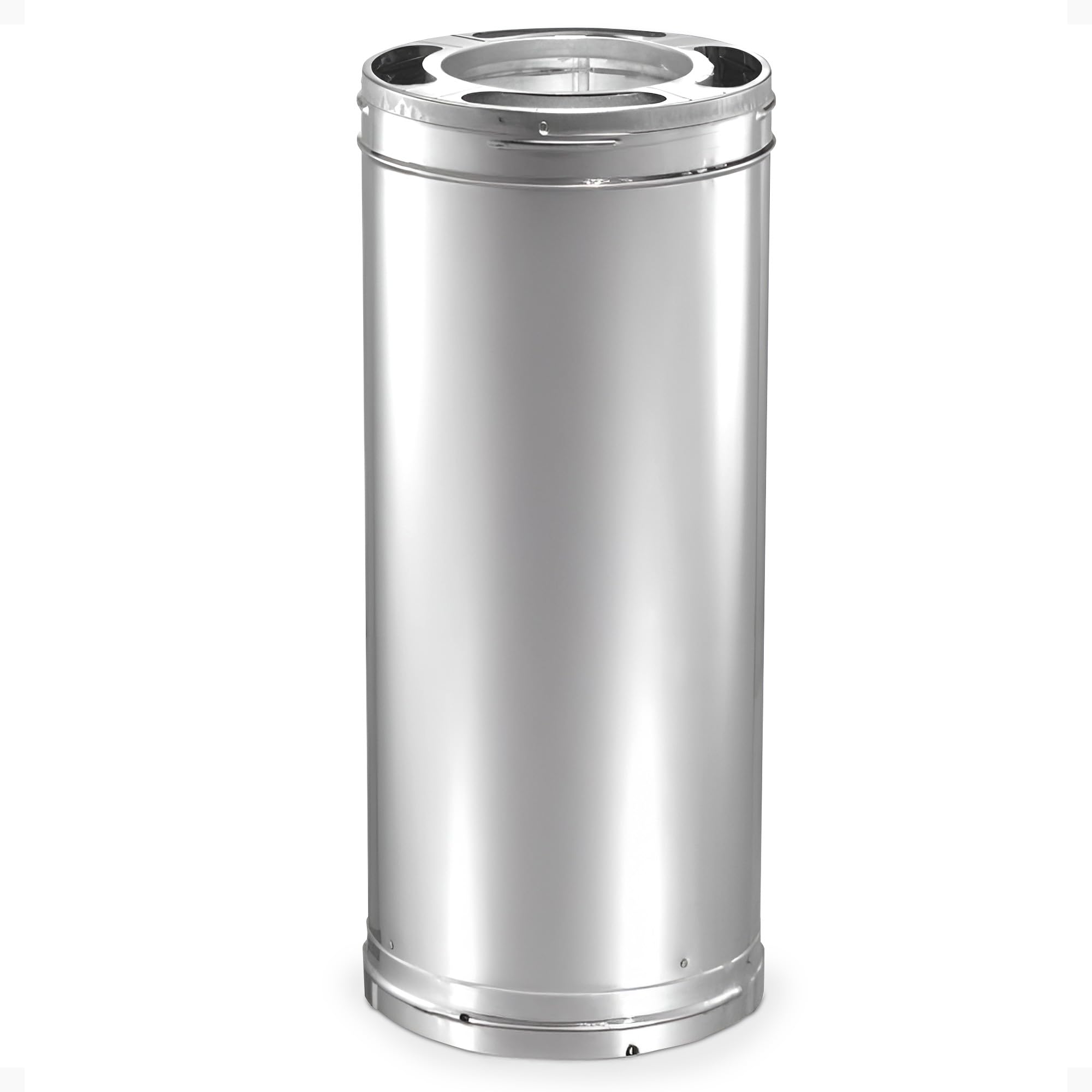
Three walls deep, tested to shrug off a chimney fire — the safety-first section of the list.
The spec that matters here is the construction. This DuraPlus pipe is triple wall: a stainless steel inner liner, then a ceramic blanket, then an air space, then the outer shell. That sandwich keeps the flue hot for a strong draft while keeping the outside cool — and it’s why this pipe needs just a 2-inch clearance to combustibles instead of the 18 inches a single-wall pipe demands.
It’s listed to UL 103HT, a safety standard for chimney products, at MH7399, and built to hold continuous 1,000°F flue temperatures plus a 2,100°F chimney fire test. In plain terms, if creosote ignites in the flue, this pipe is engineered to keep that heat inside. It vents wood, fireplaces, furnaces, boilers, ranges, and water heaters on wood, oil, coal, or gas — genuinely all-fuel. The 24-inch nominal length gives about 22.5 inches installed once you subtract 1.5 inches for the joint, and twist-lock fittings connect it with no sealant.
Two honest notes. At 11.5 pounds with a galvanized steel exterior, it’s the plain-metal look — if you want black pipe on a visible indoor run, this isn’t it. And what you pay is a real sticking point for some buyers. What works is the fit and straightforward install; the clearance alone justifies the format if your stove sits close to anything combustible.
Safety is the real spec: Triple-wall insulation plus a 2,100°F chimney-fire test rating make this the pick when the installation has to be right.
Know what you’re getting: Galvanized finish on the outside, a 2-inch clearance rule in the room, and a price some find steep.
Best for: Close-to-wall installs and anyone who wants the smallest possible buffer to combustibles.
Skip if: You’re buying for looks on an exposed indoor run — the galvanized finish is functional, not decorative.
6. Chimney Pipe, 6″ x 36″, 304 Stainless Steel

304 stainless on both walls — the pipe that won’t rust out where damp air gets at it.
Most insulated pipe gives you stainless inside and something cheaper outside. This AllFuel section runs 304 stainless on the inner and outer walls, with laser-welded seams. The reason to care is rust: galvanized steel and 430 stainless both corrode sooner in damp air, and a flue pipe that pocks and rusts is a pipe you’ll replace. 304 is the higher grade for moisture resistance.
It’s an insulated double-wall pipe, 36 inches long at 6-inch diameter, wrapped in a ceramic fiber blanket that holds a 2-inch clearance to combustibles. Twist-lock connections do the assembly, and a locking band comes in the box to keep the joint sealed tight. It’s certified to UL103HT for wood stoves, fireplaces, furnaces, boilers, water heaters, and outdoor wood furnaces on wood, gas, coal, or oil — all-fuel, listed.
This pipe only connects to AllFuel HST Class-A double wall chimney pipe (Class-A means the heavy-duty chimney type for wood stoves) and won’t connect to other brands of Class-A chimney. If you’re building an AllFuel stack, it’s smooth. If you already own another brand’s chimney, this is the wrong pipe for that stack. Buyers report the pieces arrive fitting exactly as described and seat well together.
What makes it last
- 304 stainless inner and outer walls resist corrosion better than galvanized or 430 steel.
- Laser-welded seams and a ceramic fiber blanket for a 2-inch clearance.
- Locking band included keeps the twist-lock joint sealed.
The compatibility catch
- Only connects to AllFuel HST Class-A chimney — not other brands.
- Fixed 36-inch length with no sliding adjustment.
Pick this for: Damp climates and long-term stacks where rust resistance matters more than saving on steel grade.
Not for: Anyone retrofitting an existing non-AllFuel Class-A chimney — the brands won’t mate.
7. 6″ x 48″ 304 Stainless Steel Chimney Pipe
Same corrosion-resistant steel as the 36-inch, with a full four feet of reach.
If the pipe above gives you 36 inches, this one hands you 48 — four feet of the same 304 stainless construction in a single insulated section. On a tall chimney build, that means fewer joints to seal and fewer twist-lock connections to check over the years. Fewer joints means fewer seams to seal and check over the years.
The walls are 304 stainless inside and out with laser-welded seams, and the ceramic fiber blanket inside gives you a 2-inch clearance to combustibles while keeping the flue temperatures up for a proper draft. It’s certified to UL103HT and works for wood stoves, fireplaces, fireboxes, furnaces, boilers, water heaters, and outdoor furnaces on wood, gas, coal, or oil. Assembly is twist-lock, with a locking band included to hold the joint sealed.
Four feet of insulated double-wall steel is a section you want two people to handle. The same brand restriction applies: it connects to AllFuel HST Class-A chimney and won’t mate with another brand’s Class-A stack. Owners mention it installs cleanly and does its job, and it carries a limited lifetime manufacturer’s warranty.
Why the extra length pays off: Fewer joints and fewer connections to seal, in the same 304 stainless build that holds up to moisture.
Plan for the lift: Four feet of insulated pipe is awkward overhead — line up help rather than wrestling it alone.
Suits you if: You’re building an AllFuel Class-A stack and want to minimize joints over a long vertical run.
Wrong pick if: Your chimney isn’t AllFuel brand — the connection won’t work across brands.
8. Selkirk 6″ SureTemp 48″ Chimney Pipe
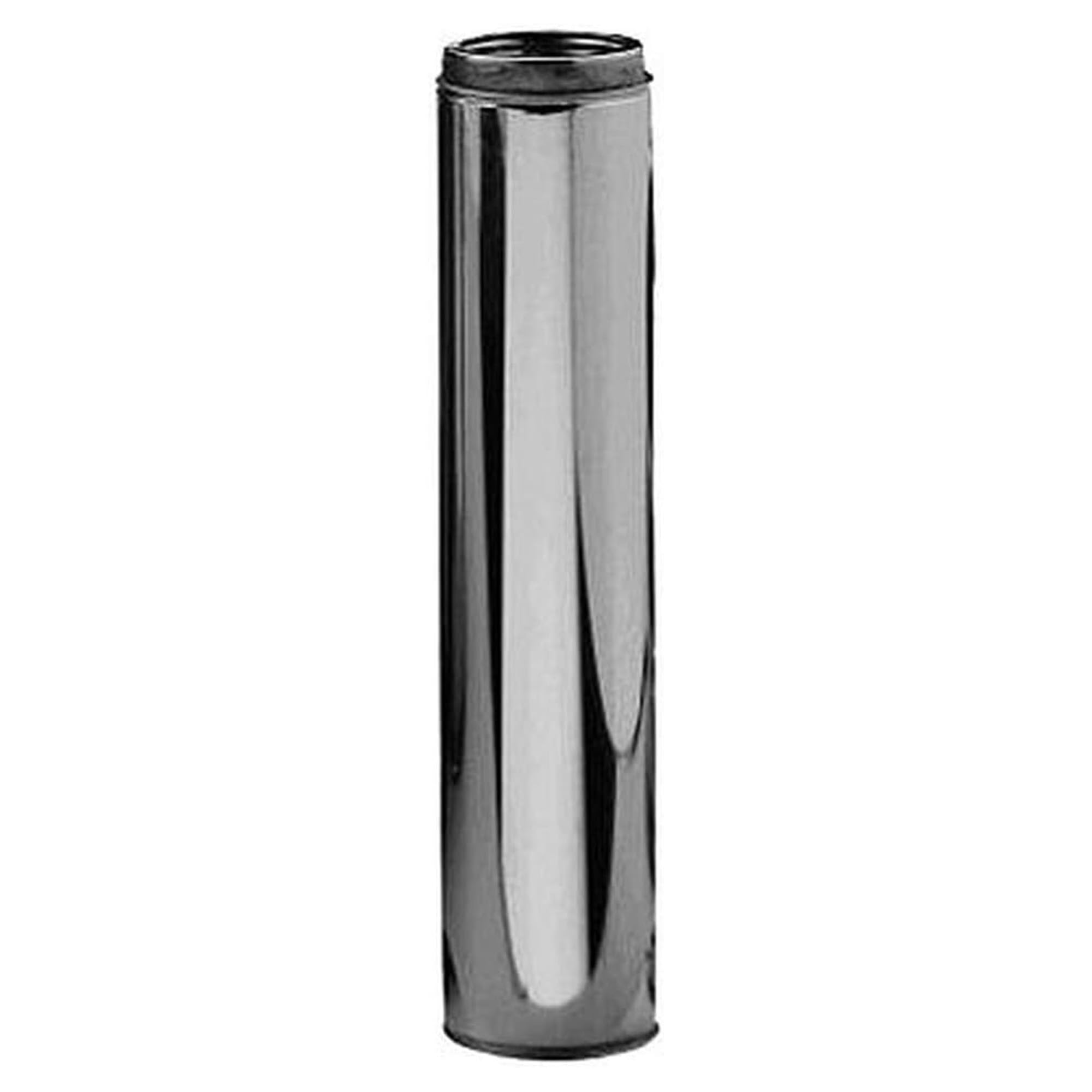
Built around heat surges — a full four feet of insulated double wall with a fire-test pedigree.
This is a double-wall insulated vent, 48 inches long, with a stainless steel inner liner and a tough outer casing around it. Selkirk rates it UL-listed and tested to withstand up to 2,100 degrees Fahrenheit during surges. That surge number is the one to circle: it’s the temperature spike of a chimney fire, and it’s what separates a serious vent from a general-purpose pipe.
It vents wood, coal, oil, or gas heating appliances, which means it covers a fireplace, a furnace, or a wood stove from one spec sheet. A locking band comes in the box to secure the joint. The nominal wall thickness is listed at approximately 0.05 inches, so the steel has some meat to it. The silver finish is the standard insulated-pipe look — visible but neutral.
The honest part: durability is where this pipe draws real complaints, with buyers describing sections that arrive dented and bent. On top of that, the price splits opinion — some buyers think it’s fair for a UL-tested 48-inch insulated section, others find it steep. What performs reliably, once you have a straight section in hand, is the venting itself.
The safety headline: A 2,100°F surge rating on a UL-listed double-wall section makes this a defensible choice for a hot-burning stove.
Inspect on arrival: Dented and bent sections show up in transit, so check the box before you accept it.
Choose it when: You want a surge-tested, UL-listed double-wall section and can inspect the delivery before you install.
Think twice if: You can’t be present for delivery — damage in transit is the recurring theme here.
9. Basic FireSafe 6 Inch x 15 Feet Chimney Liner Kit
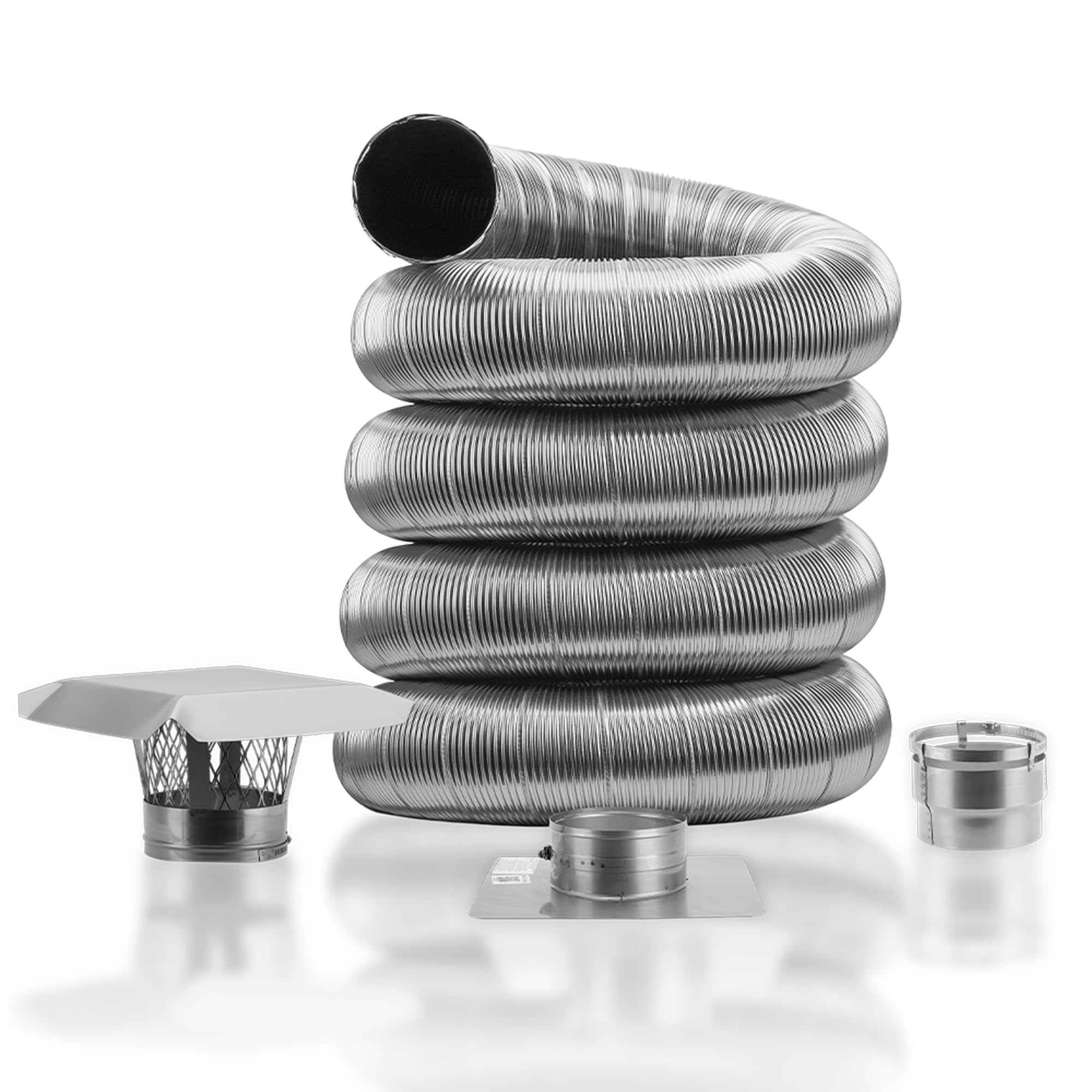
Not a pipe at all — a complete flexible liner kit for dropping a new flue down an old chimney.
Everything above is rigid pipe that connects a stove to a chimney. This is the job where you replace the chimney flue itself: a 15-foot roll of corrugated 316 stainless liner that flexes down a masonry chimney, plus the top plate, rain cap, and appliance connector in one box. If your old clay flue is cracked or drafting poorly, this is the piece you were looking for.
The steel is 316 stainless — the grade built for corrosion resistance in a damp flue — with 7-ply seams and 10 corrugations, which the maker says creates a gas- and watertight barrier. It’s rated for wood, gas, oil, and pellet appliances and meets modern building codes. It weighs 23 pounds rolled up and ships from the USA.
This kit is known for quality, and the 316 liner (316 is a stainless-steel grade made for flues) flexes and cuts about how a good liner should. The catch: working with it isn’t as easy as some expect, especially a long, heavy, awkward roll. The job takes patience and ideally two people to feed the liner down without kinking it. Installed properly, it drafts noticeably better than a tired clay liner.
What’s in the box
- 316 stainless liner, 15 feet, corrosion-resistant for a damp masonry flue.
- 7-ply seams and 10 corrugations for a tight gas- and water-resistant barrier.
- 13″ x 13″ top plate with rain cap plus an appliance connector included.
The work it asks of you
- 23 pounds of corrugated stainless is awkward to feed down a chimney — two people help.
- The liner’s flexibility — and its bulk — make it more finicky to work with than some buyers anticipate.
Made for: Relining a masonry chimney for a wood stove, fireplace insert, or pellet appliance.
Not for: Anyone connecting a stove to an already-sound chimney — that’s rigid pipe, not this.
Know the Specs
Single wall vs. double wall
Single-wall pipe is one layer of steel that radiates heat into the room — good for a visible flue, but it needs a wide clearance to combustibles, typically 18 inches in the products here. Double-wall pipe wraps a stainless inner liner in insulation and an outer casing; the outside stays cooler, so the clearance shrinks. A triple-wall design goes further with a ceramic blanket and an air gap. The rule: the closer your stove sits to a wall, the more wall layers you want.
Clearance to combustibles
This is the buffer between the pipe and anything that could burn — a wall, ceiling, wood mantle, or trim. Single-wall pipe in this set asks for 18 inches; the insulated double- and triple-wall pipes shrink that down to 2 inches. Clearance is measured on the hottest part of the run, and it’s the number that decides whether a close-to-wall install is even legal. Check it before you buy, not after.
Steel gauge and grade
Gauge is thickness — a lower number is a thicker wall. One maker reports 21-gauge steel is 9% thicker than 22-gauge and 27% thicker than 24-gauge. Separately, the grade matters for rust: 304 and 316 stainless both resist corrosion better than galvanized or 430 stainless. In a damp climate, grade is the spec that decides how long the pipe lasts.
Diameter and telescoping length
Most freestanding wood stoves are built for a 6-inch interior diameter, and every pipe here is a 6-inch. Length is the other half: a fixed section must match your measurement exactly and usually can’t be cut. A telescoping section (one that slides to fit) covers a range — 18 to 30, 44 to 68, or 38 to 70 — so you don’t need to crimp or cut. If your measurement is uncertain, a telescoping section covers the gap without a second trip to the store.
Common Questions
Will a single-wall stove pipe fit any wood stove?
Can I run single-wall stove pipe through a wall or ceiling?
What is the difference between single-wall and double-wall stove pipe?
How much clearance does stove pipe need from a wall?
Can I cut a stove pipe to a shorter length?
What does the UL 103HT rating mean on chimney pipe?
Do AllFuel HST chimney pipes connect to other brands?
What does 21-gauge steel vs 22-gauge actually mean for the pipe?
Can I use a flexible liner instead of a rigid pipe?
How do I know which length of stove pipe I need?
The Bottom Line
For most installs, the wood stove chimney pipe that handles the most situations is the DuraVent DuraBlack 6DBK-TL. Its 44-to-68-inch telescoping range covers a wide span of runs, the lock-seamed joint keeps the seam tight, and it takes the measurement guesswork out of the job. That listing averages 4.5+ stars across 400+ owner reviews, matching the pipe’s reputation for easy installation.
If your stove sits close to a wall, the clearance math changes everything — the DuraVent DuraPlus brings a 2-inch clearance and a 2,100°F fire-test rating to the table. For a tall vertical run where you want fewer joints, the AllFuel 48-inch 304 stainless section is the one to reach for, provided your chimney stack is AllFuel. And if the chimney itself is the problem, the FireSafe flexible liner kit is the relining answer.
How we choose
We do not accept paid placement. Every pick is matched to a real buyer and a real use-case; we do not hands-on test units.
Sources
Specifications: manufacturer listings and product documentation. Review insights: verified customer reviews, as of November 2026. Pricing: not shown on this page (it changes often); check the current price via the retailer link.
As an Amazon Associate, Tactical Gear Guy earns from qualifying purchases. This does not affect which products we feature.