Specs are compiled from manufacturer listings and verified buyer reviews and can change over time — please confirm the key details on the product page before buying.
Buying a replacement engine for a log splitter is mostly a fitment puzzle, and the wrong pick wastes a weekend. What matters is the shaft size, the mounting footprint, and whether the engine starts on the first pull after a cold night in the shed. Get those three right and the rest is easy.
This guide is built by comparing the manufacturers’ published specifications and the patterns across verified customer reviews, so you get each pick’s real strengths and trade-offs instead of marketing spin.
Below you’ll find shaft measurements, torque figures, and starting systems laid side by side, plus the honest trade-offs owners hit in the woodshed. This breakdown of the wood splitter engine market covers the horizontal-shaft gas engines that actually bolt onto a splitter.
Top Picks
How To Choose The Best Wood Splitter Engine
A log splitter engine has one job: turn a pump reliably, all day, in cold weather, without shaking itself loose. Buyers who get burned almost always got the shaft wrong or bought more horsepower than the pump could use. Here is what actually decides the purchase.
Measure the shaft before anything else
A horizontal shaft engine connects to your splitter’s pump coupling through a straight shaft with a slot cut in it. That slot is the keyway, and the key sits in it so the shaft drives the pump instead of spinning freely. You need the diameter, the length, and the keyway size to match what your old engine had. A 3/4″ shaft with a 3/16″ keyway is the common pattern on the engines here, but confirm yours on the machine before ordering. If the diameter is off by a fraction, the shaft won’t seat in the pump coupling and nothing else about the engine matters.
Horsepower is a headline, torque is the muscle
Splitting force comes from the torque the engine can hold under load, not from a big number on the sticker. Torque is rotational push, and it’s usually quoted at a specific RPM. An engine with more torque at a lower RPM tends to hold speed better when the wedge bites into a knotty round. Peak RPM is a separate figure that tells you how fast the engine spins when it’s not loaded.
Recoil or electric start, and what each costs you
A recoil starter is the pull cord you yank by hand. Electric start adds a key or button and needs a battery that is often not included. Electric start saves you yanking a cold cord at sunrise, but it adds a battery to buy, charge, and maintain. Most splitters live outdoors, so a battery that sits in the cold needs attention.
Cooling, fuel, and oil protection
These are air-cooled engines, meaning fins and airflow do the cooling instead of a radiator. A forced-air cooling system and a ventilated heat sink keep temperatures down during long runs. Fuel tank size decides how long you work between fills. A low-oil sensor shuts the engine down before oil starvation damages it, which matters on a splitter that tilts on uneven ground.
Side-by-Side Comparison
| Model | Best For | Displacement | Shaft | Start Type | Amazon |
|---|---|---|---|---|---|
| XtremepowerUS 7.5HP 212cc★ Best Overall | Overall balance of power and starting ease | 212cc | Horizontal | Recoil & Electric | Amazon |
| XtremepowerUS 7HP 212ccBest for Repowering | Straightforward manual-start replacement | 212cc | Horizontal | Recoil | Amazon |
| BILT HARD 212CC 7HP | Repowering an older worn engine | 212CC | 3/4″ × 2-3/8″, 3/16″ keyway | Recoil | Amazon |
| maXpeedingrods 7HP 212cc | Key-start convenience on a budget | 212cc | 3/4″ × 2.43″, 3/16″ keyway | Recoil & Electric | Amazon |
| Aceup Energy 7HP 212cc | Lightest engine to lift and mount | 212cc | 3/4″ × 2-3/8″, 3/16″ keyway | Recoil | Amazon |
| CHALIGHT 212cc 7.5HP | Electric start with a low-oil guard | 210cc | Horizontal | Recoil & Electric | Amazon |
Detailed Reviews
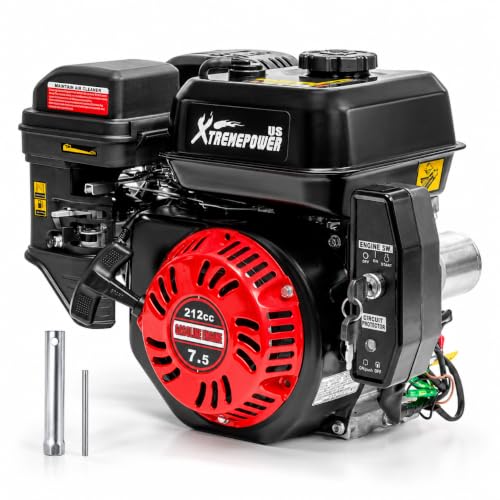
1. XtremepowerUS 7.5HP 212cc Gas-Powered Engine
Our pick — 4.0+★ from 450+ verified ratings; the strongest balance of quality and price.
Two ways to start it, 7.5 horses behind the wedge, and the widest fit in this lineup.
The number that earns this engine the top spot is 7.5 horsepower from a 212cc 4-stroke OHV block, paired with a 9.6 ft-lbs torque peak at 3,600 RPM. In plain terms, that torque figure is the twist that keeps the wedge moving when it hits a stubborn crotch in the round. It’s one of the highest horsepower figures in this group, at 7.5HP against the 7HP Aceup Energy.
Starting is where it separates itself from the manual-start crowd. You get a recoil pull cord and an electric key start in the same housing, both feeding the same 212cc block. On a frosty morning, turning a key beats yanking a stiff pull cord. The 1-gallon fuel tank is the largest single capacity on this list alongside the XtremepowerUS 7HP, so you spend more time splitting and less time pouring. Owners also figured out it converts easily to a foot throttle, which is a neat trick for anyone running it on a log splitter with a hand-operated wedge.
Here’s the honest part. It’s a hefty block, which matters when you’re wrestling it onto a mounting plate alone. It also ships dry, so you must add gasoline and engine oil correctly before the first pull — skip that and you damage it on day one. Neither issue is a deal-killer, but budget the extra ten minutes for setup. It holds 4.0+ stars across 400+ ratings from owners who have run it.
Where It Pulls Ahead
- 7.5 horsepower and 9.6 ft-lbs of torque at 3,600 RPM — the strongest pairing in this lineup
- Recoil and electric key start on one engine, so cold mornings don’t dictate your schedule
- 1-gallon fuel tank keeps the fill-ups spaced out through an afternoon of splitting
- Horizontal shaft fits go-karts, pressure washers, water pumps, and log splitters alike
What To Plan Around
- Heavy enough that solo mounting is awkward — get a second pair of hands for the mounting plate
- Ships dry, so you must add gas and oil yourself before the first start
Reach for this if: you want one engine that starts either way and has the most power to muscle through knotty rounds.
Go elsewhere if: you mount and unmount an engine single-handed every season and want the lightest lift.
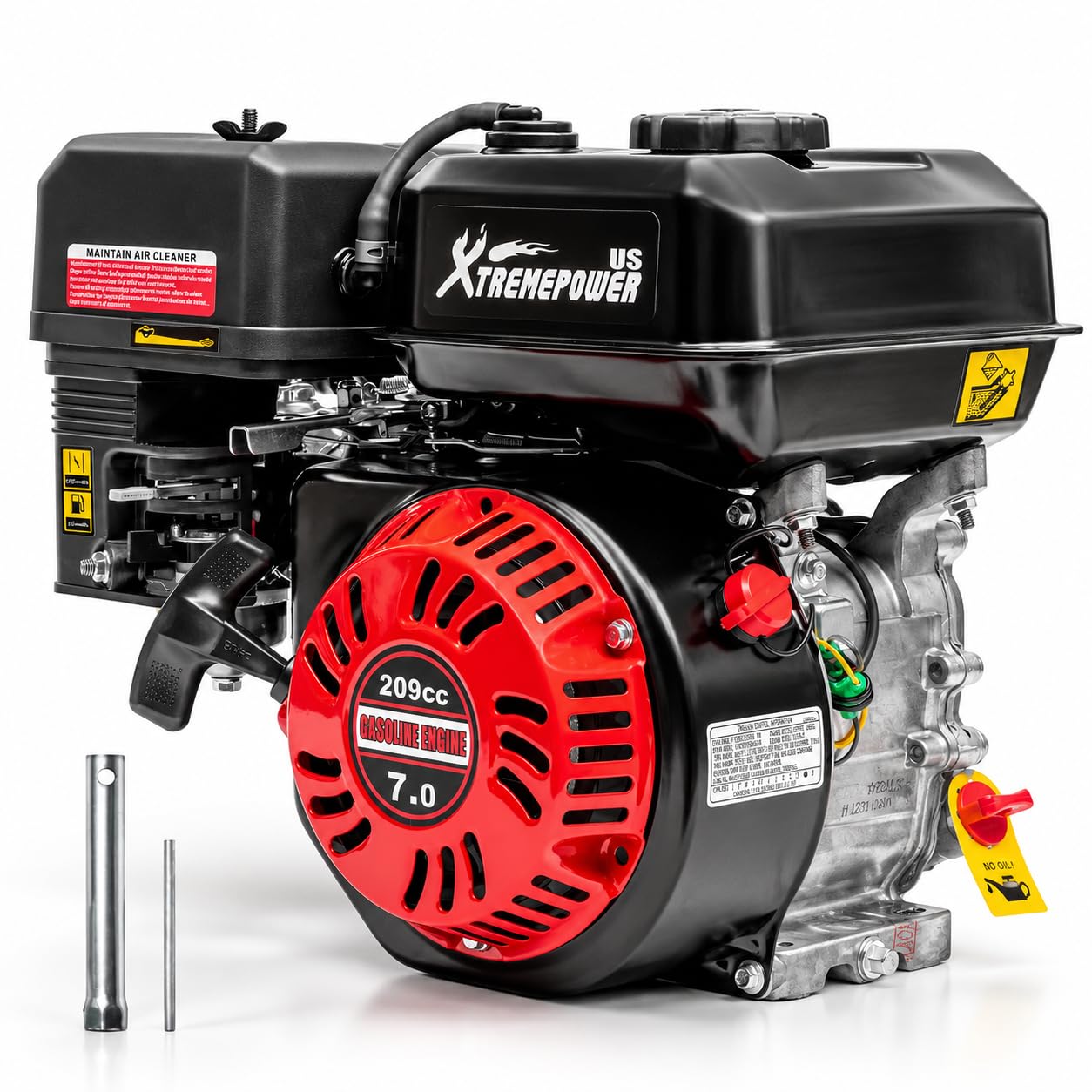
2. XtremepowerUS 7HP 212cc Gas-Powered Engine
The no-frills sibling: same block, one less way to start it, and a lighter lift.
This is the same XtremepowerUS family as the pick above, but the spec sheet swings a different way. You get 7 horsepower from a 212cc 4-stroke OHV block, a 9.6 ft-lbs torque peak at 3,600 RPM, and a 1.0-gallon fuel tank. The trade is simple: you give up the electric key start and save weight. It’s lighter than the 7.5HP version, so one person can set it on a mounting plate without a wrestling match.
The reliability story is the one that matters here. Owners describe an engine that fires on the first pull, and reliability is the trait that comes up most in the feedback, followed closely by overall quality. For a replacement engine, that’s the whole ballgame — a machine that starts when you need it and doesn’t need a mechanic. The 4-stroke design keeps power delivery steady, and the air cleaner keeps dirt and debris out of the intake during dusty work. You get a compact horizontal layout with accessible controls for start, stop, and maintenance.
What you don’t get is a key start, and on a cold morning that pull cord is your only option. If you split year-round and the engine lives outside, plan for the drill. The engine also ships dry, so the first fill is on you. Weigh that against the lower weight and the single-start reputation, and this becomes the pick for someone whose splitter is already wired for manual start.
The fitment read: horizontal shaft with a standard 212cc footprint, so if your old engine bolted down flat, this one lines up the same way.
The honest limit: no electric start means every cold start is a hand pull — fine for mild weather, less fun at dawn in December.
Who it beats: the heavier 7.5HP version if you value an easy lift and don’t need a key start.
The one caveat: you’re trading away electric start, so confirm you’re comfortable with the pull cord before you commit.
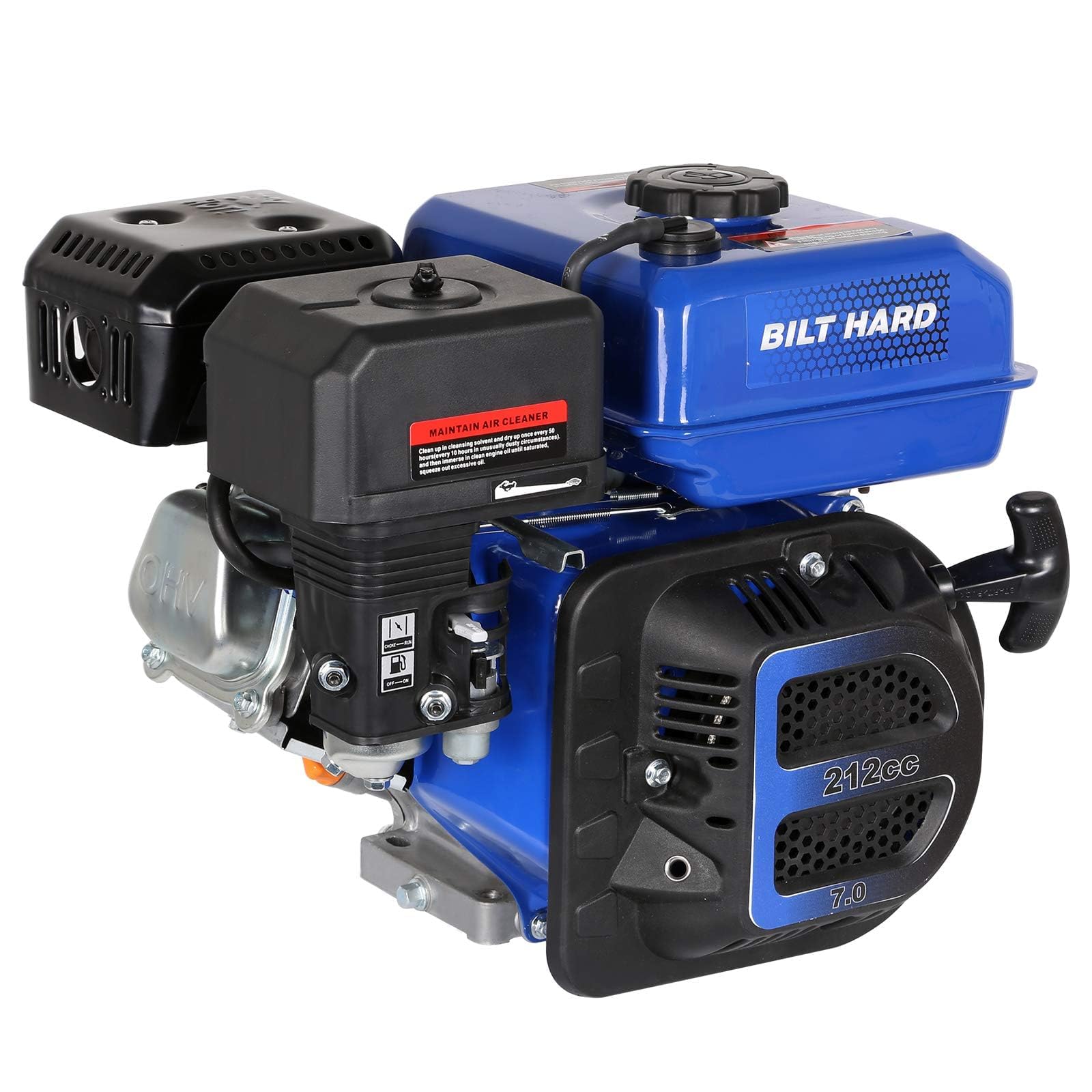
3. BILT HARD 212CC 7HP Gas Engine with Manual Start
For anyone swapping out a tired Honda or Briggs, this one publishes the numbers that matter.
Most engines make you guess at the shaft spec. This one puts it on the label: a 3/4″ diameter shaft, 2-3/8″ long, tapped with 5/16″-24 UNF threads, and a 3/16″ keyway. The mounting pattern measures 6.40″ in length and 2.95″ to 3.17″ in width. If you’ve got a splitter built around a standard small-engine footprint, those figures tell you immediately whether it bolts on. That’s the kind of clarity that saves a return shipment.
Power-wise it runs a 212CC 4-stroke engine that delivers 8.86 lb-ft of maximum torque at 2,500 RPM and spins up to 3,800 RPM. That’s the highest peak RPM in this group — BILT HARD turns 3,800 against the 3,600 of the XtremepowerUS 7.5HP. The other practical detail is the fuel shutoff valve and gas-saving overhead valves, which help you run the carb dry before storage. It replaces 6/6.5/7/7.5 HP engines from Honda, Yamaha, Kohler, and Briggs & Stratton, so it’s built for the repowering job where a name-brand block finally gave out. Each engine is oil tested before packing, so a faint oily touch is normal.
The catch is the recoil-only start and the 33.5-pound heft. Neither is a flaw, but together they mean you’re pulling a cord on a fairly substantial block of metal. The auto-decompression on the recoil starter helps by easing the compression on the pull, so it doesn’t fight you as hard as an older engine might. Buyers report the shaft and mounting pattern line up perfectly on installation, the strongest signal you can get on a swap this fiddly.
Choose it when: a worn name-brand engine is coming off your splitter and you want published shaft numbers to match against.
Think twice if: you want a key start — there isn’t one, and the block is 33.5 pounds of manual pull.
4. maXpeedingrods 7HP 212cc Gas Engine

Turn a key, skip the yank — and let the oil sensor protect the block.
The maXpeedingrods puts the convenience of electric start into a mid-range package. The shaft is a 3/4″ diameter, 2.43″ long, with a 3/16″ keyway and a 5/16″-24 drilled-and-tapped end — close to the BILT HARD’s 2-3/8″ length, just a fraction longer. The bore and stroke measure 70x55mm across a 212cc displacement, and it spins a 7-horsepower 4-stroke OHV block. Fuel tank holds 3.6 liters, and the oil capacity is 0.6 liters.
Two features earn attention beyond the key start. First, the low-oil sensor shuts the engine down when oil drops below a safe level, which matters on a splitter that tilts on uneven ground. Second, the overhead valve design helps with power output and fuel efficiency, and the engine carries EPA certification. Between the key and the oil guard, this is the engine for someone who wants to minimize fiddling. The recoil start stays in the housing as a backup, so you’re not stranded if the battery is flat.
Now the part you’d rather know up front. The reliability picture is genuinely mixed — for every owner who reports it running great out of the gate, another describes a unit that didn’t hold up. That’s not a reason to write it off, but it is a reason to buy with a return window in mind and to do the first oil fill correctly. At 41.6 pounds it sits near the heavy end of the group, and the battery is not included, so electric start means buying and maintaining one. If you want key-start simplicity and can handle a little setup, it’s a reasonable gamble.
Reasons It Earns a Slot
- Electric key start plus recoil backup — two ways to get running
- Low-oil sensor shuts the engine down before oil starvation does damage
- EPA-certified 212cc OHV block with 70x55mm bore and stroke
- 3.6-liter fuel tank and 0.6-liter oil capacity
The Honest Friction
- Reliability feedback splits between great and disappointing — buy with a return window
- Battery not included, so electric start needs an extra purchase and upkeep
Your move if: key-start convenience and an oil-level safety net outweigh the need for a spotless reliability record.
Look past it if: you want a proven track record before you spend — the mixed feedback is real.
5. Aceup Energy 7HP 212cc Gas Engine

At 29 pounds, this is the engine you can sling onto a mounting plate alone.
Weight is the headline here. This Aceup Energy tips the scale at 29 pounds. That’s the difference between an engine you carry to the splitter and one you drag on a hand truck. If you’re mounting it solo, or lifting it off a shelf in a cramped shed, 29 pounds is a genuinely different experience. The block itself is a 7HP 212cc 4-stroke OHV engine at 3,600 RPM with a 0.9-gallon fuel tank.
Inside, it uses forged crankshafts, an all-steel camshaft, and cast iron cylinder liners. Those are the wear parts, and quality materials there are how an engine survives seasons of splitting. The shaft is a 3/4″ diameter, 2-3/8″ long, tapped with 5/16″-24 UNF threads and a 3/16″ keyway — the same pattern as the BILT HARD, so fitment is predictable. It also ships with a shock pad, oil funnel, and spark plug wrench, which saves the trip to the parts store on install day. Owners single out build quality in the feedback, with easy starting close behind.
The trade-off sits in the durability record, and it deserves a straight answer. Some owners mention internal failures early on, and that’s the single strongest reason to buy this one only with a return window in hand and to follow the break-in oil change exactly. It’s EPA compliant and back to the warranty terms noted on the listing, so the recourse exists. For a light-lift, budget-friendly engine with quality internals, it’s a fair bet — just don’t treat it like a name-brand block you can neglect.
Weight versus muscle: 29 pounds is the lightest in this lineup, and it still runs the full 7HP 212cc spec.
What to watch: early internal failures come up in the feedback, so protect yourself with a return window and a careful break-in.
Best matched to: the solo installer who moves the engine seasonally and wants the lightest chunk of metal to lift.
skip it if: you need a long, proven service record and won’t accept any early-failure risk.
6. CHALIGHT 212CC Go Kart Log Splitter Engine

The protective one: it shuts itself off if the oil runs low, before you wreck the block.
Of all the safety features here, the oil alarm on this CHALIGHT is the most practical. If there isn’t enough oil before starting, the machine shuts itself off automatically, which protects the engine from the kind of damage that ends a season early. That matters most on a splitter that leans on a slope as you work. It pairs a 7.5HP rating with a 210cc displacement and 3,600 RPM of rotating speed. The 210cc figure is 210cc against the 212CC of the BILT HARD — a hair smaller on paper, though both are sold in the same power class.
The internals are built for stability: a metal cam, forged crankshaft, and cast iron cylinder liner. A forced air cooling system and ventilated heat sink keep temperatures in check during long runs, and the overhead valve design reduces carbon buildup and improves fuel savings. You get both manual and electric starting, and the package includes two keys, a manual, and the assembly accessories. The air filter adds filtration performance and reduces wear over time. If you want an engine that guards itself while you focus on the woodpile, this is the shape you’re looking for.
The catch: there are only 20+ ratings to lean on, so you’re buying mostly on the spec sheet and the oil-alarm feature rather than a track record. The 210cc displacement is also the smallest here, so if you’re used to a 212cc block, be aware it’s a touch under. Neither undercuts the protective design, but it does mean you should keep the receipt and do a careful first fill. That’s the sensible path for a newer engine.
Pulled toward it by: the oil alarm that shuts the engine down before low oil does damage, plus dual start options.
Pause if: you want a long track record and 212cc displacement — this one has neither, at 210cc and no review history.
Know the Specs
Shaft Diameter, Keyway, and Length
These three numbers decide whether the engine physically drives your pump. The diameter is the round thickness of the output shaft, the keyway is the slot cut into it, and the length is how far it sticks out. A 3/4″ shaft with a 3/16″ keyway is the common small-engine pattern you’ll see here, but yours must match. Measure the old engine’s shaft with a caliper before you order anything. If it doesn’t match, the engine won’t bolt up no matter how much horsepower it has.
Torque at RPM versus Peak Horsepower
Horsepower is the headline number, but torque at a given RPM is what actually pushes the wedge through the round. Torque is rotational force, quoted in foot-pounds (ft-lbs) and measured at a specific engine speed. An engine rated at 9.6 ft-lbs at 3,600 RPM holds its speed under load differently than one rated at 8.86 ft-lbs at 2,500 RPM. The lower-RPM torque curve tends to feel stronger at the moment the wedge bites. Peak RPM is separate — it tells you how fast the engine spins freely, not how hard it pushes.
Electric Start and the Battery You Supply
Electric start means a key or button spins the engine instead of a pull cord. The catch is that the battery is often not included, and on some models it isn’t supplied at all. A battery that lives outdoors in the cold needs charging and occasional replacement. Ask yourself whether the convenience is worth that upkeep before you pay for it. Recoil start is simpler and always works, but it’s your arm doing the work on a cold morning.
Cooling, Fuel Tank, and Oil Protection
These engines are air-cooled, so fins and airflow do the work of a radiator. A forced-air system and ventilated heat sink keep temperatures down during long runs. Fuel tank capacity in gallons or liters decides how long you work between fills. And a low-oil sensor or oil alarm shuts the engine down before oil starvation damages the block — a real safeguard on a splitter sitting at an angle. Most engines ship dry, so you must add gasoline and engine oil correctly before the first start.
Common Questions
Will a 212cc engine fit my log splitter if my old engine was a Honda or Briggs?
What does the keyway on the shaft do?
Is 7.5 horsepower too much for a wood splitter?
Do these engines come with oil and gas already in them?
How is electric start different from recoil start on a splitter engine?
What does an OHV engine mean and why does it matter on a splitter?
Can a log splitter engine also run a go-kart or pressure washer?
How important is a low-oil sensor on a wood splitter engine?
What fuel tank capacity actually means through a working day?
Should I run the carburetor dry before storing the engine for the season?
The Bottom Line
If you want one engine that gives you real splitting muscle and an easy start, buy the XtremepowerUS 7.5HP 212cc. It leads this lineup on power and torque — 7.5 horsepower and 9.6 ft-lbs at 3,600 RPM — so it can push a wedge through tough rounds. It also gives you both recoil starting (a pull cord) and electric starting (a key or button), so you don’t have to choose between muscle and convenience. Repowering a tired name-brand block and need published shaft numbers to match against? Reach for the BILT HARD 212CC. And if lifting a heavy block alone is the real worry, the Aceup Energy 7HP weighs 29 pounds, which makes it the smart budget move — just protect yourself with a return window.
The XtremepowerUS 7.5HP holds 4.0+ stars across 400+ ratings, a solid track record for a fitment-critical purchase. Measure your shaft first, fill the engine correctly, and one of these will keep a splitter running for many seasons.
How we choose
We do not accept paid placement. Every pick is matched to a real buyer and a real use-case; we do not hands-on test units.
Sources
Specifications: manufacturer listings and product documentation. Review insights: verified customer reviews, as of November 2026. Pricing: not shown on this page (it changes often); check the current price via the retailer link.
As an Amazon Associate, Tactical Gear Guy earns from qualifying purchases. This does not affect which products we feature.