Specs are compiled from manufacturer listings and verified buyer reviews and can change over time — please confirm the key details on the product page before buying.
If you are tired of sanding dust coating every surface in your shop, a wood scraper tool cuts the finish off in clean ribbons instead. These are thin steel cards and rigid iron-bodied scrapers that shave a glassy surface off hardwood without a cloud of grit. The short answer: the Crown Sheffield two-piece rectangular set is the pick most people should buy — 4.5+ stars across 600+ owners — because its milled edge and 40/42 Rockwell C steel take a burr fast and hold it.
This guide is built by comparing the manufacturers’ published specifications and the patterns across verified customer reviews, so you get each pick’s real strengths and trade-offs instead of marketing spin.
You will see how blade steel, thickness and burr quality separate a scraper that works from one that skates. Read on for the picks that actually remove finish, and how to choose the right wood scraper tool for your bench.
Top Picks


How To Choose The Best Wood Scraper Tool
A scraper does not have a motor, a battery or a blade edge in the usual sense. It works because you roll a tiny burr on a steel edge and drag it at a steep angle, so it shaves a thin curl off the surface instead of grinding dust. Buy the wrong steel and you will spend your evening re-rolling a burr that gives up after ten passes.
Blade steel and hardness first
Look for high carbon steel with a stated Rockwell C hardness — that is a measure of how hard the steel is and how long the edge survives. You will see figures like 40/42 and 45-50 C in this lineup. The lower figure holds a burr longer and stays flexible; a higher figure keeps a keener edge but feels stiffer under your thumbs.
Thickness decides how the card feels
Most cards here sit at 0.032 inches thick, roughly the same stock as a heavy cabinet scraper. Thin stock flexes so you can bow it and concentrate pressure in the middle of a panel. Thicker stock stays flat, which suits edge work and flat glue removal. Neither is better — thin stock for bowing into a hollow, thick stock for flat glue removal.
Shape is the real specialty question
A plain rectangular card handles flat panels. A gooseneck or hollow shape reaches into a curve, a spindle or the inside of a cabinet frame. Curved and roundover cards match the sweep a router bit leaves behind. Match the shape to the work you actually do — flat panels, curves or inside corners.
Side-by-Side Comparison
| Model | Best For | Blade Material | Pieces | Stated Weight | Amazon |
|---|---|---|---|---|---|
| Crown 375 Two-Piece Rectangular Set★ Best Overall | Everyday flat-panel scraping | High carbon steel, 40/42 Rockwell C | 2 | — | Amazon |
| Crown 376 Three-Shape SetBest Shape Set | Curves, spindles and inside corners | Tempered high carbon steel | 3 | — | Amazon |
| Therwen Burnisher and Scraper KitBest Kit Value | One-stop burr rolling kit | Carbon steel scrapers, wood handle burnisher | 6 scrapers + 1 burnisher | 0.41 kg | Amazon |
| Narex Shaped Cabinet Scraper Set | Rounded-belly scraping | Hardened high-carbon steel | 3 | 4.9 ounces | Amazon |
| DFM Round Over Curved Scraper Card | Matching router roundover profiles | American blue spring steel, 45-50 Rockwell C | 1 | 1.76 ounces | Amazon |
| 17PCS Blue Spring Steel Card Set | Shape-hunting and tight contours | Blue spring steel | 16 shapes + burnisher | 12.6 ounces | Amazon |
| Two Cherries 520-5750 Scraper | Buying one good card and getting to work | 0.8 mm precision blade | 1 | 3.2 ounces | Amazon |
| Woodpeckers Mighty Mini Carbide Scraper | Dried glue in tight corners | Solid carbide, 4-sided cambered insert | 1 | 1 pound | Amazon |
| Spear & Jackson CABSCRAP | Long sessions on big flat panels | Adjustable carbon steel blade in cast iron body | 1 | 675 g | Amazon |
Detailed Reviews
1. Crown Hand Tools 2 Piece Cabinet Scraper Set 375
Our pick — 4.5+★ from 600+ verified ratings; the strongest balance of quality and price.
Two Sheffield steel cards that take a burr in minutes and keep it through a whole panel.
You get two 2 1/2″ x 5″ cards in 0.032-inch stock, which is thick enough to bow under your thumbs but thin enough to flex into a low spot. The steel is medium carbon, hardened to 40/42 on the Rockwell C scale — a hardness figure that trades a little ultimate keenness for the spring you want in a scraper. That flex is what gives you control: press the middle of the card and it bites deeper only where you press.
Crown mills the edges rather than stamping them, and that matters more than any spec sheet line. A milled edge is a clean, flat bevel, so when you roll your burnisher across it the hook comes up even and fast. Your first sharpening session takes a few passes instead of a half hour of flattening a rough stamped edge. Sharpness is the second thing this set is known for, right behind how well it just plain works.
What wins people over is effectiveness — the tool removes finish and levels a surface with far less effort than the sanding block it replaces. The honest catch is stiffness: the cards are on the firm side, so if you like a card that bows like a leaf you may find these a touch unyielding on a crowned panel. The 4.5+ star score across 600+ owners is the highest in this group, and it is the set to reach for first.
What earns its place
- Milled edges mean the burr rolls up quickly and evenly instead of fighting you
- 40/42 Rockwell C steel holds a useful spring so you can control depth by pressure
- Two cards in the set let you keep one sharp while the other is being burnished
- Made by Crown Hand Tools in Sheffield, England
What to plan around
- Firm stock — buyers who want a very flexible card will notice the stiffness
- Rectangular only, so curves and inside corners need a different shape
Start here: Flat panels, tabletops and painted trim — anything where a straight card and a clean burr do the job.
Keep shopping: You need a gooseneck or curved profile, which this two-card set does not include.
2. Crown 376 Cabinet Scraper Set of 3
The same Sheffield steel as the winner, but with a gooseneck and a curved card for the jobs a flat one cannot touch.
All three cards measure 2 1/2″ x 5″ and are tempered high carbon steel, so the blade stock matches the rectangular winner closely. Where this set pulls ahead is reach. The gooseneck slips into the inside of a cabinet frame or around a spindle. The curved card follows the sweep of a moulded edge. One set covers what the rectangular pair leaves out, and it does it for two extra pieces rather than a separate purchase.
Functionality is the thing owners talk about most, and sharpness sits right behind it — these hold an edge long enough that you are not stopping mid-panel to re-burnish. The practical benefit is in the sanding you no longer do: a sharp scraper takes a finish down flat and level, and you save the time you would have spent on the orbital.
Here is the trade-off to know before you buy: burr retention is the one mixed note in the review record, so expect to refresh the hook more often than on a really high-hardness card. That is normal for a tempered steel scraper and no reason to walk away — it just means a burnisher belongs in your kit. This set also edges out the DFM single card on piece count, three against one, so a wide range of shapes arrives in one box.
If shapes are your problem: Take this one — gooseneck, rectangular and curved in a single set.
Look elsewhere if: You only ever scrape flat panels and do not want to pay for profiles you will not use.
3. Therwen Card Scraper Burnishing Tool
A burnisher and six differently shaped cards in one box — the whole sharpening loop, solved.
Most scraper buyers forget the second half of the tool: the burnisher, the hardened rod you drag along the edge to turn the burr. This kit includes one, with a 4.72-inch wood handle and a 6.3-inch metal rod. That length gives you a comfortable two-handed roll, and the wooden grip lets you lean into the pressure without your palm slipping. Pair it with the six carbon steel cards and you can go from dull to shaving without buying anything else.
The six shapes cover far more ground than a plain rectangular card. Three rectangular scrapers in different thicknesses handle the bulk of flat work. Curved, gooseneck and beveled cards take on spindles, boxes, chairs and cabinet frames. Quality is the aspect that stands out in owner feedback, with functionality close behind — this is a set that does its job across a spread of tasks.
The trade-off is honest and visible in the reviews: sharpness and edge holding get mixed marks, so the steel is not in the same league as the Sheffield cards above. Treat the included burr as a starting point and re-roll often. For a first scraper setup where you want every shape and the burnisher in one purchase, that is a fair deal.
Where the money goes: A wood-handled burnisher plus six shaped cards — the practical math works out for a beginner assembling a bench from scratch.
Set your expectations: The steel holds a burr for fewer passes than premium cards, so plan on frequent touch-ups with that burnisher.
Best for the first-time scraper: You want every common shape and the burnisher to maintain them, in a single order.
Think twice if: You already own a burnisher and only care about edge quality — the Crown cards hold a burr longer.
4. Narex Shaped Cabinet Scraper Set, 3 pcs

A hollow belly, a gooseneck and a flat card — three shapes for surfaces a straight scraper skates over.
Narex ships three hardened, polished cards in 0.7 mm stock. The rectangular card runs 150 x 65 mm, the hollow shaped card 135 x 50 mm and the gooseneck 120 x 70 mm. That spread of sizes is the point: a smaller card gets into a drawer side or a narrow rail where a full-size sheet will not fit. The polished surface helps the shaving curl away cleanly instead of dragging.
Weight is the number that separates this set from the DFM card — 4.9 ounces against 1.76 ounces. That extra heft comes with the three-card count and the packaging, and it tells you these are full-bodied cards, not featherweight fillets. In the hand they feel substantial, which helps on a long scraping pass where you want the card to keep its line.
The polished, hardened steel suits smoothing work and paint removal, which is exactly what the maker lists it for. What to keep in mind: the set leans toward shaped work, so if you mostly scrape flat glue lines, the hollow card will sit in the drawer. It is a specialist trio, and a good one for cabinet and trim jobs.
The shape argument: Hollow and gooseneck profiles in one box, sized for cabinet parts rather than full panels.
The honest limit: Buy it for curves and edges — the flat card is the least-used piece for most benches.
Worth it when: Your work runs to mouldings, rails and curved cabinet parts that need a shaped edge.
Not the one if: You want maximum flat-panel capacity and nothing else.
5. Round Over Curved Cabinet Scraper Cards

A curved card cut to match the roundover a router bit leaves, so you scrape the profile you just routed.
DFM makes this card from 0.032-inch American blue spring steel, hardened to 45-50 on the Rockwell C scale. That is harder than the Crown cards’ 40/42, which means a keener, longer-lasting edge but a stiffer feel under the thumb. The CNC-machined edges arrive ready to use, so you can scrape before you ever touch a burnisher — handy when a job is already underway.
The specific job is the one nobody else in this list covers directly: cleaning up a roundover profile after a router pass. The medium card runs a 3/8 to 3/4 radius, and it scrolls if you have ever fought a flat card against a curved edge. It also works as a standard card or cabinet scraper, so it is not a single-use oddity.
It is the lightest thing here by a wide mark — 1.76 ounces against the Narex set’s 4.9 ounces. That thin, springy feel is exactly what a profile card should have. The catch: you get one card, so the man who wants a full set of shapes should look at the Crown 376 or the Therwen kit instead.
Reach for this if: You route roundovers and want a scraper that follows the curve instead of fighting it.
Look elsewhere if: You need several shapes to cover different jobs — this is one card, not a set.
6. 17PCS Card Scraper Set
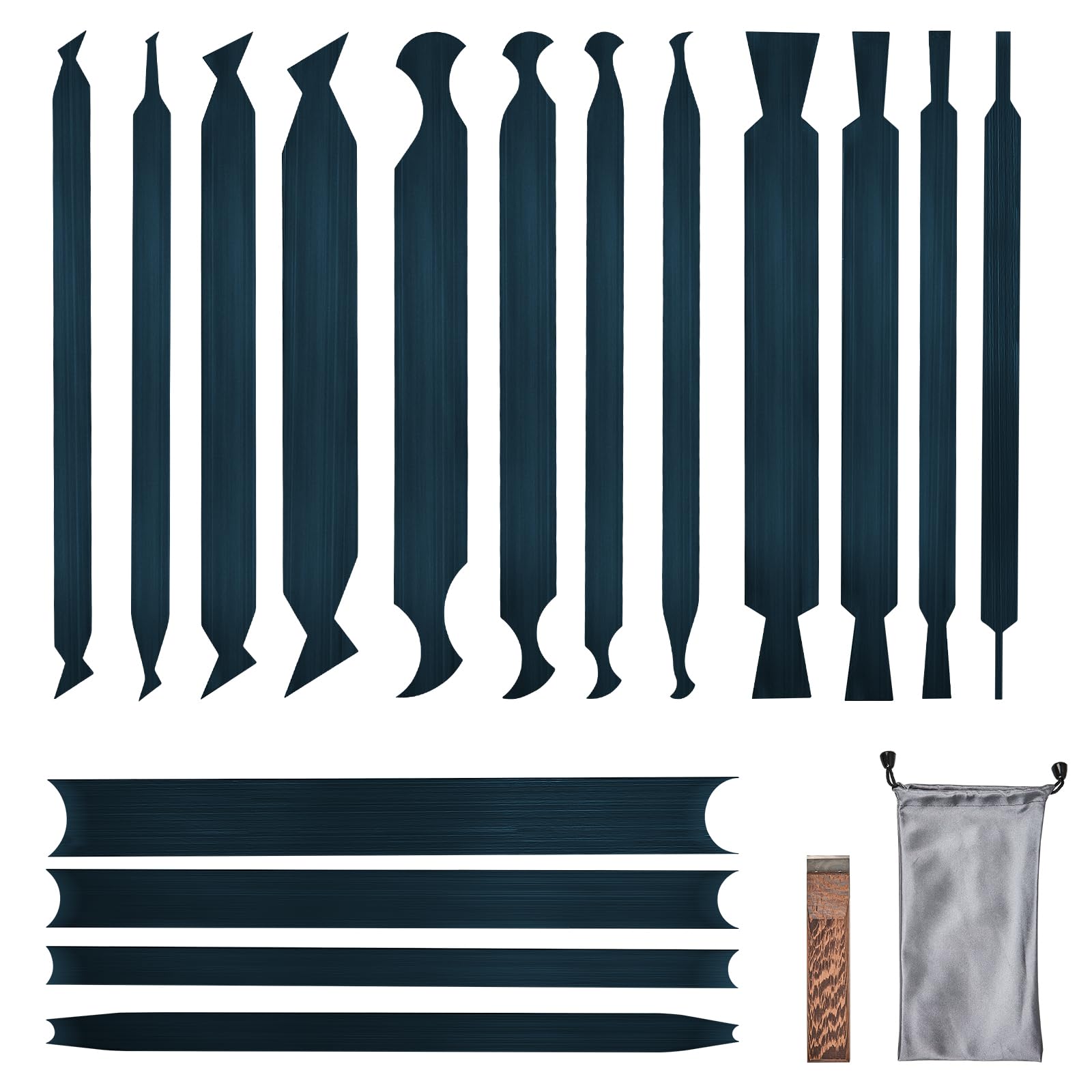
Sixteen blue spring steel shapes plus a burnisher — a whole drawer of profiles in one box.
The count is the whole pitch: 16 cards across four distinct series of varying dimensions, plus a burnisher to roll the burrs. They are cut from blue spring steel, and the maker notes the cards finish a surface without the scratch pattern sandpaper leaves behind. For contour work and compact spaces, having this many profiles means you can match the card to the curve instead of forcing one card to do everything.
Functionality leads owner feedback, with value for money close behind — for the spread of shapes in the box, it reads as good value. Removing paint from rounded and concave cabinet surfaces is where this set does its best work. The shapes are the reason: a gooseneck, a beveled card and the curved series all reach spots a flat sheet cannot.
The maker’s own instructions ask you to wear gloves while using the cards, largely to keep sweat off the blue spring steel and rust at bay — store them oiled when they are idle. Sharpening is the one mixed note, so expect to spend time tuning each edge. At 12.6 ounces the set is the heaviest collection in this group, and it arrives in a cardboard box with silk storage bags.
Where it shines
- 16 shapes across four series — a profile for nearly any contour
- Blue spring steel finishes without the scratch pattern sanding leaves
- Burnisher included, so the whole set can be maintained from day one
What to budget for
- Sharpening gets mixed feedback — several edges need tuning before they shave
- The maker asks for gloves and oiled storage to keep the steel rust-free
Best for the shape-curious: A shop that wants a card for every contour without ordering profiles one at a time.
Not ideal if: You want razor edges straight from the box — this set rewards some sharpening time first.
7. Two Cherries 520-5750 Scraper with Prepared Edges
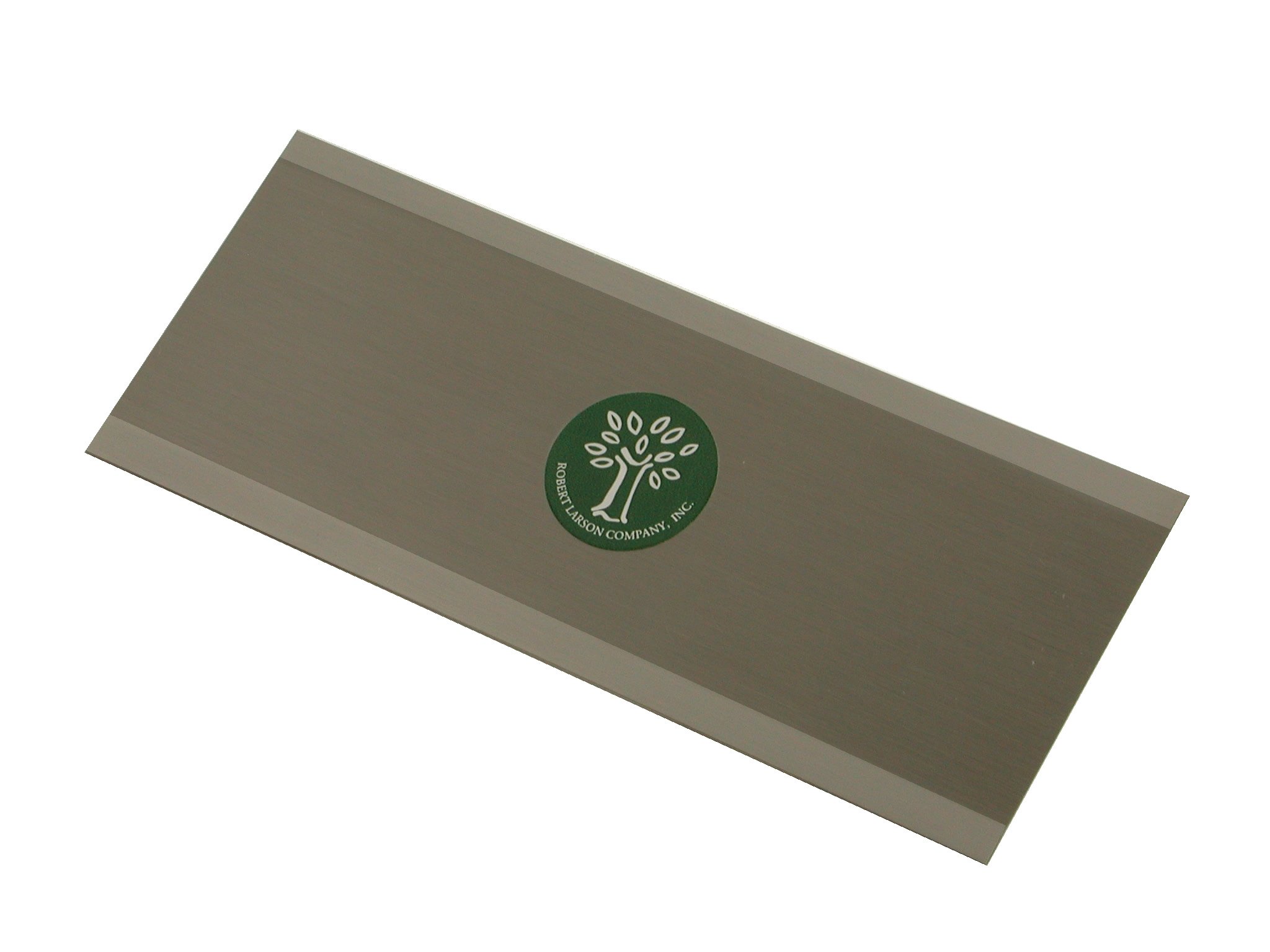
One card, edges already prepared, ready for your burnisher the moment it lands.
Two Cherries cuts this card to 2-3/8 by 5-7/8 inches from a 0.8 mm precision blade. The edges come prepared, which means somebody at the factory has already flattened and dressed them. You skip the filing stage and go straight to rolling a burr. At 3.2 ounces it sits between the featherweight DFM card and the heavier Narex set — enough body to feel solid, light enough to flex.
The maker claims it leaves a smoother finish than sandpaper. Anyone who has gone from 220-grit to a sharp card knows the difference — clean cut fibres instead of torn fuzz. Functionality and value are the two things owners agree on, and for a single ready-to-burnish card that is what matters.
Edge durability is the aspect that splits opinion, and it is the honest caveat here. You will re-roll the burr more often than on a high-hardness card, so keep your burnisher close. Buy it for the simplicity of one good card, not for a set.
The one-card case: Prepared edges mean you skip the filing and start scraping sooner.
The honest catch: Edge durability is mixed in owner feedback — plan on regular burnishing.
Pick this when: You want a single dependable card and you already know how to roll a burr.
Keep looking if: You need multiple shapes or want the hardest edge available — the DFM card runs 45-50 Rockwell C.
8. Woodpeckers Mighty Mini Carbide Scraper, USA Made

A solid carbide insert with four edges — which makes “lasts four times longer” a literal statement, not a slogan.
This is a different animal from the thin steel cards. It uses a solid carbide insert with four cambered edges, and the included blade gives you four working edges on one platform. When one goes dull, you rotate to the next instead of re-rolling a burr. The camber on the edges — a slight curve — is what helps keep you from marring the wood as you pull the scraper at a high angle.
The job it is built for is dried glue in tight corners. Carbide pops hardened glue off readily, and the small head reaches into places a full card cannot follow. You can also buy a square insert and a replacement cambered insert separately if you wear one out or want a different profile.
What you are paying for is edge life and the fact it is built and inspected in Ohio. That convenience has a cost in feel: it is the heaviest single tool here at 1 pound, and you cannot bow it to focus pressure on a hollow. For flat panels, a steel card still rules. For glue in a corner, this is the tool you hand a woodworker.
The corner specialist: Dried glue in tight joints, four rotate-able edges, no burr to roll.
skip it if: You want to bow a card across a panel — the rigid carbide body will not flex.
9. Spear & Jackson CABSCRAP Cabinet Scraper with Cast Iron Body
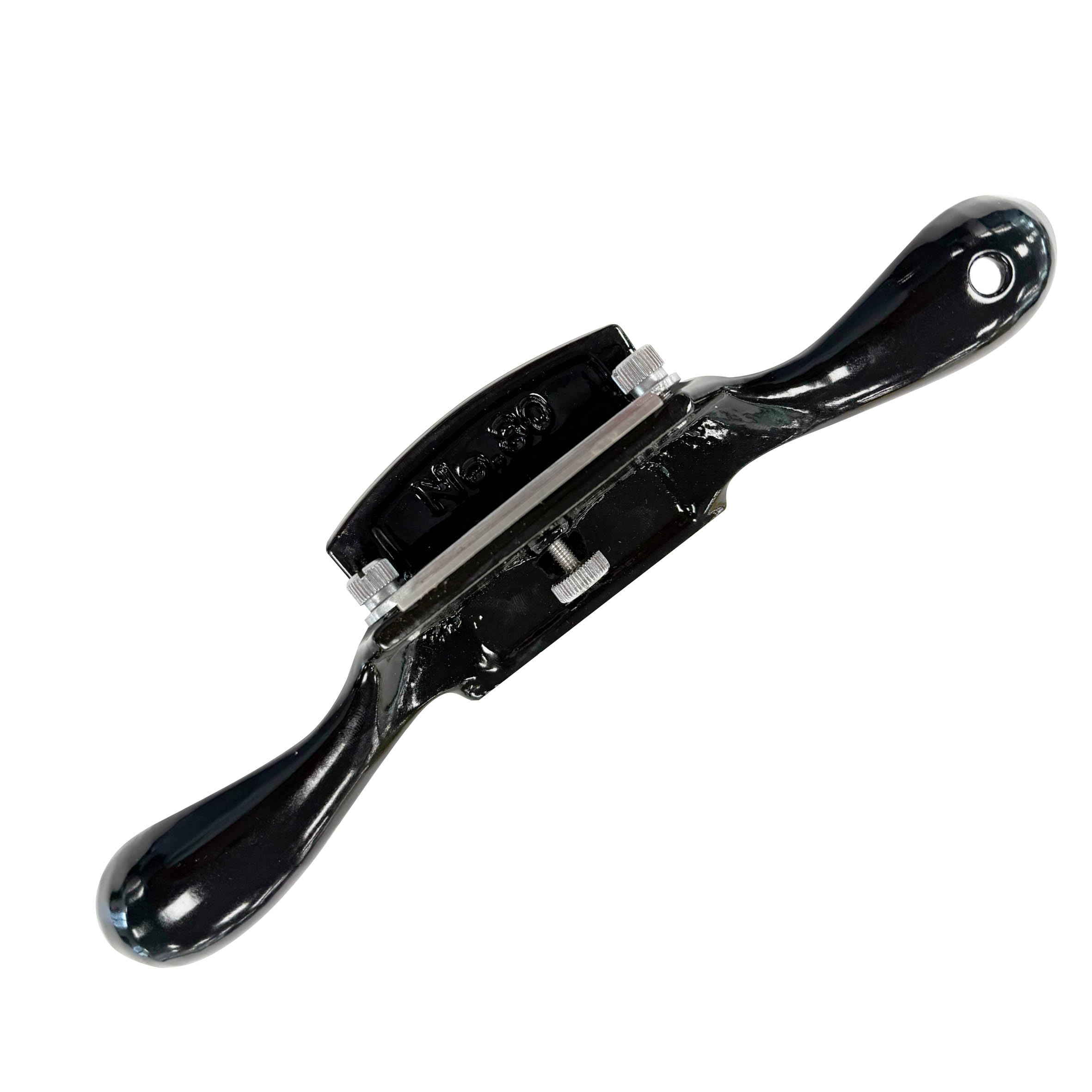
The cast iron scraper built for long sessions — real handles and an adjustable blade, at 675 grams.
This is the only scraper in the lineup that is a framed tool rather than a bare card. A cast iron body holds an adjustable carbon steel blade, and the ergonomic handles are shaped for grip and reduced fatigue through a long afternoon of scraping. The overall tool measures 11.81 inches long, 3.15 inches wide and 2.36 inches high — a two-handed working layout that keeps your wrists out of the bending position a thin card demands.
The adjustable blade gives you control over how much material the edge takes per pass. That suits smoothing and preparing a surface before stain or varnish, where you want consistent, controlled removal rather than the freehand feel of a card scraped by thumb pressure. The cast iron adds the stability that comes with weight.
That weight, 675 g, is also the honest trade-off. It is the heaviest tool in this group by a wide mark, and no burgundy-thin card can match it for pure bulk-feel on a small trim piece. Think of it as the tool you reach for on big flat panels where two-handed control and low fatigue beat finesse.
The framed-tool appeal: Cast iron body, adjustable blade and shaped handles for hours of controlled scraping.
The weight penalty: At 675 g it is a bench tool, not something you keep in a pocket for a quick touch-up.
Take this if: You are prepping large panels and want two-handed control that saves your wrists.
Pass if: You want a flat card to bow and work into a curve — the cast iron body will not do that.
Know the Specs
Rockwell C hardness
Rockwell C is a scale for how hard a steel is, and the number on a scraper’s spec sheet tells you how long the edge survives. A 40/42 card like the Crown set bends more easily and holds a burr; a 45-50 card like the DFM comes stiffer with a keener edge. Neither figure is “better” — 45-50 C holds a keener edge, 40/42 C flexes more under your thumbs.
Blade thickness and spring
Thickness controls how much a card flexes, which is the scraper’s real control knob. A 0.032-inch card bows under pressure so you can put force in the middle of a panel without cutting a gouge at the edges. Thinner stock flexes more, which helps on curves; thicker stock stays flat for edge work and glue removal.
Common Questions
What is a burr and why does a scraper need one?
Will a card scraper replace sandpaper entirely?
Do I need a burnisher, or is a screwdriver shaft enough?
What are gooseneck and hollow shapes for?
Is a carbide scraper better than a steel card?
Will a scraper work on veneer or plywood?
How do I stop a scraper from gouging the wood?
Do I need gloves to use a card scraper?
Which scraper suits a first-time woodworker?
The Bottom Line
For most benches, the wood scraper tool worth buying first is the Crown 375 two-piece rectangular set: milled edges, 40/42 Rockwell C steel and the highest rating in this group. If your work runs to curves and spindles, grab the Crown 376 three-shape set. And for dried glue stuck in a corner, the Woodpeckers Mighty Mini is the tool you want in reach.
How we choose
We do not accept paid placement. Every pick is matched to a real buyer and a real use-case; we do not hands-on test units.
Sources
Specifications: manufacturer listings and product documentation. Review insights: verified customer reviews, as of November 2026. Pricing: not shown on this page (it changes often); check the current price via the retailer link.
As an Amazon Associate, Tactical Gear Guy earns from qualifying purchases. This does not affect which products we feature.