Specs are compiled from manufacturer listings and verified buyer reviews and can change over time — please confirm the key details on the product page before buying.
If your wood plugs keep falling out or sitting proud of the surface, the cutter is usually the reason, not your technique. A plug cutter is a hollow drill bit that carves a small cylinder out of scrap wood so you can glue it over a screw hole and sand it flush. The size printed on the bit and the actual size of the plug it makes are often two different things, and that gap is where most of the frustration lives. This guide covers the picks that actually hold their size and the ones that reward a careful setup.
This guide is built by comparing the manufacturers’ published specifications and the patterns across verified customer reviews, so you get each pick’s real strengths and trade-offs instead of marketing spin.
A plug cutter rewards the buyer who reads the shank size and the RPM limit before the first cut. Here is what separates a clean, tight-fitting plug from a loose one in any wood plug cutter.
Top Picks

How To Choose The Best Wood Plug Cutter
A plug cutter is a small, cheap tool that can waste an afternoon if you buy the wrong one. The three things that decide whether you get a tight, invisible plug are the shank, the cutter profile, and the diameter. Get those right and the rest is setup.
Shank type decides how the bit behaves
A hex shank is a six-sided base that locks into a drill chuck without spinning. That matters because a round-shanked bit can slip under load and chew the hole. A 1/4-inch hex shank fits most power drills and quick-change chucks, so you can swap sizes fast. A 1/2-inch hex shank is built for a stationary drill press and gives you a firmer, more vertical cut.
Straight versus tapered cutters
A straight cutter makes a plug with parallel sides — simple, but it can bottom out in a hole. A tapered cutter makes a plug that narrows toward the bottom, so it wedges in snug and hides the screw head with a slight friction fit. Tapered tends to be the safer choice for concealing fasteners in visible projects.
Diameter and the plug-size trap
Buy the diameter that matches the hole you are plugging, not the screw. A 3/8-inch cutter pairs with a 3/8-inch hole. Read the cutting diameter in the specs, not just the title, because some listings list the shank size where the plug size should be. The most common complaint across the category is plugs coming out smaller than expected — so match the cutter to the job and test one plug in scrap first.
Side-by-Side Comparison
| Model | Best For | Cutting Diameter | Shank Type | Flutes | Amazon |
|---|---|---|---|---|---|
| CMT 529.095.31 Plug Cutter | Hardwood work and repeated cutting | 0.38 inches | 1/2-inch | 4 | Amazon |
| Make it Snappy Tools 3 Piece Tapered Set | Buying three sizes in one go | 0.25 inches | Quick-change chuck | 1 | Amazon |
| Make it Snappy 3/8″ Tapered Plug Cutter | One reliable 3/8-inch cutter | 0.38 inches | 1/4-inch hex | — | Amazon |
| Montana Brand 3pc Self-Centering Set | Hand-drill work without a press | 0.25 inches | 1/4-inch quick shank | 2 | Amazon |
| Rocaris 8 Pack Plug Cutter Set | Broad size range on a budget | 0.25 inches | 1/4-inch hex | 2 | Amazon |
| DKIBBITH 8 Pcs Straight & Tapered Set | Two cutter styles in four sizes | 0.25 inches | 1/4-inch hex | 1 | Amazon |
Detailed Reviews
1. CMT 529.095.31 Plug Cutter
The four-flute cutter that keeps its edge through a long run of plugs
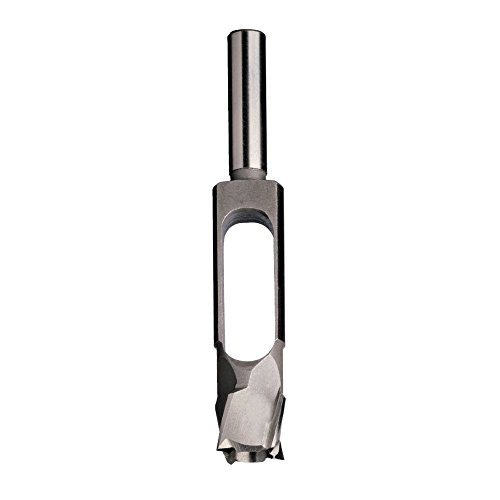
The CMT 529.095.31 is the pick for anyone cutting a lot of 3/8-inch plugs in hardwood and who wants the bit to stay sharp while doing it. Its four cutting edges give you more teeth working the wood at once, which means a smoother wall inside the plug and less chatter. The 1/2-inch shank is built for a drill press chuck, so the cut stays vertical and the plug comes out even.
The 5.5-inch cutting length gives you real reach through thicker stock. The maker lists a max suggested speed of 500 RPM on hardwood and 1000 RPM on softwood, and staying inside those numbers keeps the four edges from overheating. This is the one place where the spec sheet earns its keep: run a four-edge bit too fast in oak and you burn the plug wall rather than slice it.
Compare the flute count here against the DKIBBITH set, which lists 1 flute on the same 1/4-inch cutting diameter. Four edges against one is the difference between a cutter that clears chips cleanly and one that clogs when you push it. The honest trade-off is speed: four edges demand you slow the spindle down, and in a hurry it is tempting to run it hot. Owners who cut thousands of plugs on one bit are the ones who keep the spindle under 500 RPM in hardwood.
Where It Wins
- Four cutting edges on a 3/8-inch cutter clear chips and leave a clean wall
- 5.5-inch cutting length reaches through thicker stock without extras
- 1/2-inch shank locks into a drill press for a straight, even plug
What To Watch
- Hardwood caps at 500 RPM — you cannot rush this one
- Some owners find the plugs come out shorter than they expected
Go for this: repeated 3/8-inch plug runs in oak or maple where a clean wall and a bit that stays sharp are worth the discipline.
Think twice: if you only need a handful of plugs, the lower-RPM fuss is overkill for a one-off repair.
2. Make it Snappy Tools 3 Piece Tapered Plug Cutter Set
Three tapered cutters that cover most plug jobs without buying twice
If you want one box that handles 1/4-inch, 3/8-inch, and 1/2-inch plugs, this Snappy set is the straightforward answer. All three cutters are tapered, so the plugs wedge in snug and hide a screw head cleanly. The high carbon steel is hardened for repeated use, and the set is made in the USA by Snappy.
The one spec that tells you how it behaves is the taper. A tapered plug sits flush at the top and pulls tight before it bottoms out, which is exactly what you want when you are matching grain over a countersink. The trade-off — and it is worth saying plainly — is that a 3/8-inch cutter here can break during a first run if you overload it. A tapered wall is thinner at the tip, so it rewards a light, steady feed at a moderate spindle speed rather than a plunge.
Put it against the single CMT above: the CMT takes four flutes on one size, while this gives you three tapered sizes at one flute each. That is the choice — one bulletproof cutter versus three sizes that each want careful handling. For a shop that plugs a range of holes, the range wins.
Best for range: a workshop doing plugs across 1/4-inch, 3/8-inch, and 1/2-inch holes that wants tapered wedging across all three.
The careful note: treat the tapered tips gently, especially the 3/8-inch, and feed at a steady moderate pace so the thinner wall does not crack.
Pick this if: you want tapered plugs in three sizes and value the tapered wedge fit over a single bombproof bit.
Pass if: you are a heavy hand on the drill — a single-flute tapered tip wants a light touch.
3. Snappy 3/8″ Tapered Hex Shank Plug Cutter Made in USA

A single 3/8-inch tapered cutter that earns its keep one job at a time
For the buyer who plugs the same size hole over and over, buying one good 3/8-inch cutter beats a set of four sizes you will never touch. This Snappy is the one most owners return to. What wins people over is straight quality — the cutter body and the way it holds up under repeated use. Its 1/4-inch power bit hex shank locks into a drill press or a handheld chuck without spinning.
The 0.38-inch cutting diameter matches a 3/8-inch hole, and the taper gives a snug plug fit that hides a countersink. Note the comparison against the DKIBBITH set, which lists a 0.25-inch cutting diameter — this one is a full size up at 0.38 inches, so they are not swappable for the same hole. On a drill press the results come out clean and sized right; a long run of plugs is well within reach.
The catch is sharpness, which the reviews split on. Some owners say it stays sharp through heavy use, others find it dull off the shelf. Neither complaint is universal, but it tells you this is a cutter to test in scrap before committing a finished piece of stock. Run it at a moderate speed and let the taper do the work.
Why It Earns the Slot
- 0.38-inch cutting diameter matches a 3/8-inch hole exactly
- 1/4-inch hex shank grips a drill press or handheld chuck without spin
- Tapered profile seats a plug snug over a countersunk screw
Where It Asks More
- Sharpness varies — some arrive sharp, some want a touch-up
- One size only, so it will not cover a range of holes
Best fit: a furniture or cabinet maker who plugs a steady stream of 3/8-inch holes and wants one dependable cutter.
Not the one: if you work across mixed hole sizes, the three-piece tapered set above covers more ground.
4. 3pc Self-Centering Plug Cutter Set (Made in USA)

Self-centering tips that let a handheld drill cut a clean plug
Most plug cutters want a drill press and a clamped workpiece. This Montana Brand set is the exception: the self-centering tip guides the cutter and stops it walking across the stock, so a handheld power drill gets you a smooth tapered plug without a press or clamps. If you do your woodworking on a benchtop or a tailgate, that is the feature that matters.
The 1/4-inch quick shank grips the drill chuck and resists slipping, which is the second half of the no-wander story. Cutting performance is what buyers notice first — the blades slice a clean tapered plug rather than tearing it. You get three cutters in the set, finished in black oxide for a bit of rust resistance.
Here is the honest split. Sharpness and durability draw mixed marks, so a heavy production shop that leans on one bit all day may wear it faster than a hobbyist will. This set is aimed at the buyer who values the self-centering tip and portability over industrial longevity — and for that buyer it delivers exactly what it promises.
Its real job: handheld drilling where a self-centering tip and a no-slip 1/4-inch shank mean a clean plug without setting up a press.
Size it honestly: it is a hobbyist and job-site friend, not a production cutter — expect to replace a bit sooner if you run it hard every day.
Reach for this: when you are drilling by hand, away from a press, and need the cutter to start where you aim it.
Look elsewhere: if you cut hundreds of plugs a week and need a bit to survive the volume.
5. 8 Pack Wood Plug Cutter Drill Bit Set

Eight cutters across four sizes, straight and tapered, on a tight budget
The Rocaris set puts eight pieces in your hand across 5/8-inch, 1/2-inch, 3/8-inch, and 1/4-inch — four straight and four tapered. That makes it the budget way to try both cutter styles and find the size you actually reach for. The 1/4-inch hex shank fits most power drills and hand tools, so swapping sizes is quick. That is eight cutters against the one in the Snappy single above.
Two flutes per bit help clear chips, and the black oxide finish resists rust. The thing to plan around is that the plugs often come out smaller than the size on the label, so measure the first one in scrap before you drill your good stock. A few owners also note the bits dull faster than premium cutters. Neither stops the set from doing the job — it just sets your expectations.
Think of this as the try-both-styles starter set. You get straight and tapered in the four common sizes, and once you know your preferred style you can upgrade that single size to a longer-lasting cutter. For occasional plugging around the house, it covers the lot.
What You Get
- 8 pieces across 5/8, 1/2, 3/8, and 1/4-inch in straight and tapered
- 1/4-inch hex shank fits most drills and hand tools for quick swaps
- Two flutes per cutter clear chips as you go
The Trade-offs
- Plugs can come out smaller than the listed diameter — test in scrap
- Edges dull quicker than premium single cutters under heavy use
Ideal for: a home woodworker who wants to sample straight and tapered across four sizes without spending much.
Skip for: production work where one bit must hold an edge through hundreds of plugs.
6. Wood Plug Cutters 4 pcs Straight & 4 pcs Tapered

Four sizes in both straight and tapered, so you can match any countersink
The DKIBBITH set gives you both cutter styles in 1/4-inch, 5/16-inch, 3/8-inch, and 1/2-inch — four straight and four tapered, eight pieces total. Straight cutters are good for filling a flat-bottomed countersink, while the tapered ones seat a plug snug over a screw head. Both are black oxide coated to resist rust. It is a set to buy when you want every option in the drawer.
Read the specs before you commit: this set lists a 0.25-inch cutting diameter and a single flute. Compare it against the CMT at four flutes on a 3/8-inch cutter — the CMT has more teeth working the wood, while this set spreads its value across eight pieces. The trade-off for that spread shows up in the feedback: quality and plug fit draw mixed notes, and some plugs come out smaller than the hole. Expect to work with a low-speed drill press, and test a plug before you drill finished stock.
The maker is upfront that it works best in a drill press at low speed, and a hand drill needs real skill because the cutter can wander and leave a sloppy plug. That is a fair warning rather than a flaw, and it tells you who this set suits — the buyer with a press who wants every size and style, not the first-timer freehanding it.
The value view: eight pieces covering straight and tapered in four sizes is a lot of coverage, best used in a low-speed drill press.
Read this first: plug fit is the weak point — several buyers find plugs smaller than expected, so test before you commit good stock.
Choose it if: you have a drill press and want straight and tapered options across four sizes in one purchase.
Leave it if: you drill by hand — this set openly wants a press for a clean plug.
7. 3PCS Wood Tenon Maker Dowel Pocket Hole Plug Cutters
Flutes
Flutes are the cutting edges on the cutter, and more flutes mean more teeth clearing chips as you cut. A four-flute cutter slices a smoother wall than a single-flute one, but it also wants a slower spindle speed. Match the flute count to how much plugging you do and how much control you have over the drill speed.
Shank Type
The shank is the base that goes into the chuck. A hex shank is six-sided, so it locks without spinning — a 1/4-inch hex fits most power drills, while a 1/2-inch hex is built for a stationary drill press and gives a firmer vertical cut. A round or straight shank can slip under load, so check the type before you buy.
RPM Limits
RPM is how fast the cutter spins. Running a plug cutter too fast builds heat and burns the plug wall instead of slicing it. The maker lists limits for a reason — a hardwood cap keeps the edge cool and sharp. Stay under the number, feed steadily, and the cutter lasts far longer than one pushed to full speed.
Common Questions
Will a 3/8-inch plug cutter make a plug that fits a 3/8-inch hole?
Do I need a drill press to use a wood plug cutter?
What is the difference between a straight and a tapered plug cutter?
Can I use a plug cutter in a standard power drill?
How long does a plug cutter stay sharp?
Why are my wood plugs coming out too small?
What size plug cutter do I need for hiding screw heads?
Is a carbide plug cutter better than high carbon steel?
Can a plug cutter cut dowels or tenons too?
Does a hex shank stop the cutter from slipping?
The Bottom Line
Most buyers should start with the CMT 529.095.31, a wood plug cutter that cuts clean holes and keeps a drill press straight. It has four cutting edges, a 5.5-inch cutting length, and a 1/2-inch shank (the part the chuck grips), and it holds a 4.5+ star rating from a healthy base of owners. Want three tapered sizes in one box? The Make it Snappy three-piece set covers 1/4, 3/8, and 1/2-inch. For hardwood joinery on a press, reach for the ZOMIYU 65# carbon steel set when scorch-free walls matter. Wherever you land, buy one cutter, test it in scrap, and let the fit decide.
How we choose
We do not accept paid placement. Every pick is matched to a real buyer and a real use-case; we do not hands-on test units.
Sources
Specifications: manufacturer listings and product documentation. Review insights: verified customer reviews, as of November 2026. Pricing: not shown on this page (it changes often); check the current price via the retailer link.
As an Amazon Associate, Tactical Gear Guy earns from qualifying purchases. This does not affect which products we feature.