Specs are compiled from manufacturer listings and verified buyer reviews and can change over time — please confirm the key details on the product page before buying.
You already know what you want: a stove that keeps the house warm without you hauling a bucket out to it every few hours. The real decision is hopper size against square footage. A 25 lb. hopper in a 2,800 sq. ft. room means refilling twice a day in January. A big hopper on a small room means you burn pellets you did not need. Match the two and you refill once a day instead of twice.
This guide is built by comparing the manufacturers’ published specifications and the patterns across verified customer reviews, so you get each pick’s real strengths and trade-offs instead of marketing spin.
Every pick below burns wood pellets, states its own hopper weight and BTU rating, and carries EPA or equivalent certification where the maker lists one. The trick is matching a hopper to how often you actually want to be near the stove, and that is exactly what this breakdown of the best wood pellet stove options will settle for you.
Top Picks

How To Choose The Best Wood Pellet Stove
A pellet stove is a furnace you load with compressed wood pellets, and it feeds itself into the burn pot with a small auger — a screw-shaped mechanism that turns and drops pellets a few at a time. That single moving part is why you compare stoves on hopper size, BTU, and how the controls work, not on looks.
Size the hopper to your winter routine
The hopper is the bin on top that holds pellets, and its capacity in pounds tells you how long a fill lasts. A 25 lb. hopper on the HP40 means frequent top-ups in a cold snap. A 130 lb. hopper on the Cleveland Iron Works large unit holds roughly three full bags at once, so you can feed it and walk away. Ask yourself one question before anything else: will I be home twice a day or once?
Read BTU and coverage together
BTU (British thermal units) measures heat output per hour. Coverage in square feet measures the room it is rated to handle. A stove rated at 42,370 BTU over 2,800 square feet is working hard in an open plan. The same BTU in a 1,200 square foot cabin idles. Note the wording too: several makers say “under mild temperature conditions,” which means the coverage figure assumes you are not fighting a hard freeze. Size one notch above your coldest room’s square footage.
Decide how much control you want
Auto ignition lights the pellets for you, a programmable thermostat runs the stove to a set temperature, and Wi-Fi puts it on your phone. Each added feature — auto ignition, thermostat, Wi-Fi — is another electronic component that can fail. If you want the simplest repair path, a dial and a variable-speed blower have the fewest parts to fail. If you want the stove to come on before you get home, pay for the programmable controller.
Side-by-Side Comparison
| Model | Best For | Hopper Capacity | Heat Output | Coverage | Amazon |
|---|---|---|---|---|---|
| HP22 Pellet Stove★ Best Overall | Whole-house heat in mild climates | 55 lb. | 41,000 BTU | 2,800 sq. ft. | Amazon |
| ComfortBilt HP40 AlpineCompact Pick | Cabins and sunrooms | 25 lb. | 26,224 BTU | 1,500 sq. ft. | Amazon |
| Cleveland Iron Works MediumSmart Controller | Smart-home control | 60 lb. | 30,124 BTU | 1,500–2,200 sq. ft. | Amazon |
| HP42 Alpine Pellet Stove | Big open spaces | 120 lb. | 42,370 BTU | 2,800 sq. ft. | Amazon |
| Castle 41278 Serenity | Scheduled operating modes | 40 lb. | 32,000 BTU | 1,500 sq. ft. | Amazon |
| Cleveland Iron Works Large | Fewest refills | 130 lb. | 29,501 BTU | 2,000–3,000 sq. ft. | Amazon |
| Canyon Lodge Large | Basement-to-upstairs heat | 130 lb. | 29,501 BTU | 2,000–3,000 sq. ft. | Amazon |
| PelPro PP70 | Dial-simple operation | 70 lb. | 42,500 BTU | 2,000 sq. ft. | Amazon |
| HP50S Pellet Stove | Tight footprints | 47 lb. | 41,000 BTU | 2,200 sq. ft. | Amazon |
| Bayfront Pellet Stove | Quiet running with Wi-Fi | 66 lb. | 30,173 BTU | 1,800–2,500 sq. ft. | Amazon |
| Freedom Stoves Independence PS21 | Power outages | — | 34,700 BTU | 800–1,800 sq. ft. | Amazon |
Detailed Reviews
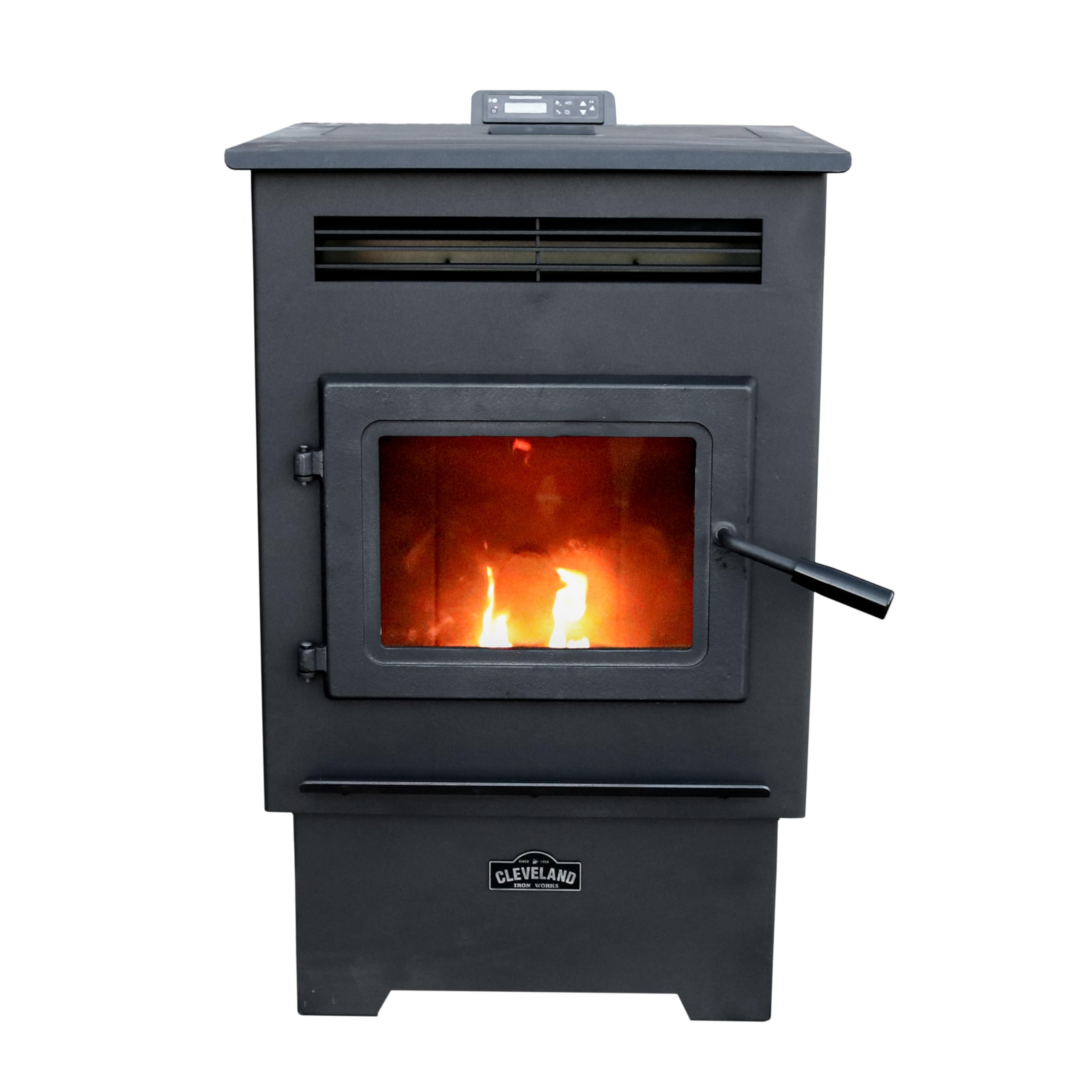
1. HP22 Pellet Stove, 2,800 sq. ft., 55 lb. Hopper, Black
Our pick — 4.0+★ from 250+ verified ratings; the strongest balance of quality and price.
A 55 lb. hopper and 41,000 BTU that carry a 2,800 sq. ft. open floor plan on one daily fill.
Here is the outcome you actually want from a stove: you fill it, set a temperature, and forget it. The HP22 delivers that with a 55 lb. hopper feeding up to 41,000 BTU per hour, and ComfortBilt rates the burn at up to 20 hours on a fill. Across 2,800 square feet of listed coverage, that is a stove that works through the evening and into the next morning without your hand on a scoop.
Five power settings and a programmable thermostat give you a heat range instead of an on/off switch, and the included remote plus auto ignition means you are not crouching with a lighter. The bay-view window lets you see the flame without opening the door, and the removable ash pan slides out for cleaning. EPA and CSA certification is listed alongside those features. This sits at 4.0+ stars from a substantial owner base, which is the strongest combination of score and volume on this list.
The honest trade-off is sound. Reliability and heat output are what win people over — the stove holding a whole house at a steady temperature is the recurring theme. But the noise question is genuinely split. Some owners describe a clean, quiet burn; others hear a high whine from the blower that they cannot tune out. If the stove sits in the room where you watch television, plan for that. It also weighs 273 pounds, so this is a two-person delivery-day job and not something you slide across the floor yourself.
What earns it first place
- Up to 41,000 BTU spread over 2,800 square feet, so a large open floor plan is covered
- A 55 lb. hopper and up to 20 hours of burn time mean roughly one fill a day
- Auto ignition, remote control, and a programmable thermostat take the morning ritual out of it
- Removable ash pan and bay-view window make weekly cleaning a five-minute job
What you should weigh first
- Blower noise is the split verdict — some units run quiet, others whine
- 273 pounds is a genuine two-person install
- Coverage is rated under mild temperature conditions, not a hard freeze
Pick this if: you have a large, open living area and want one stove that carries the bulk of your winter heating.
Look at a smaller bin instead if: the stove lives beside your TV — the noise question is the one thing you cannot control from the spec sheet.
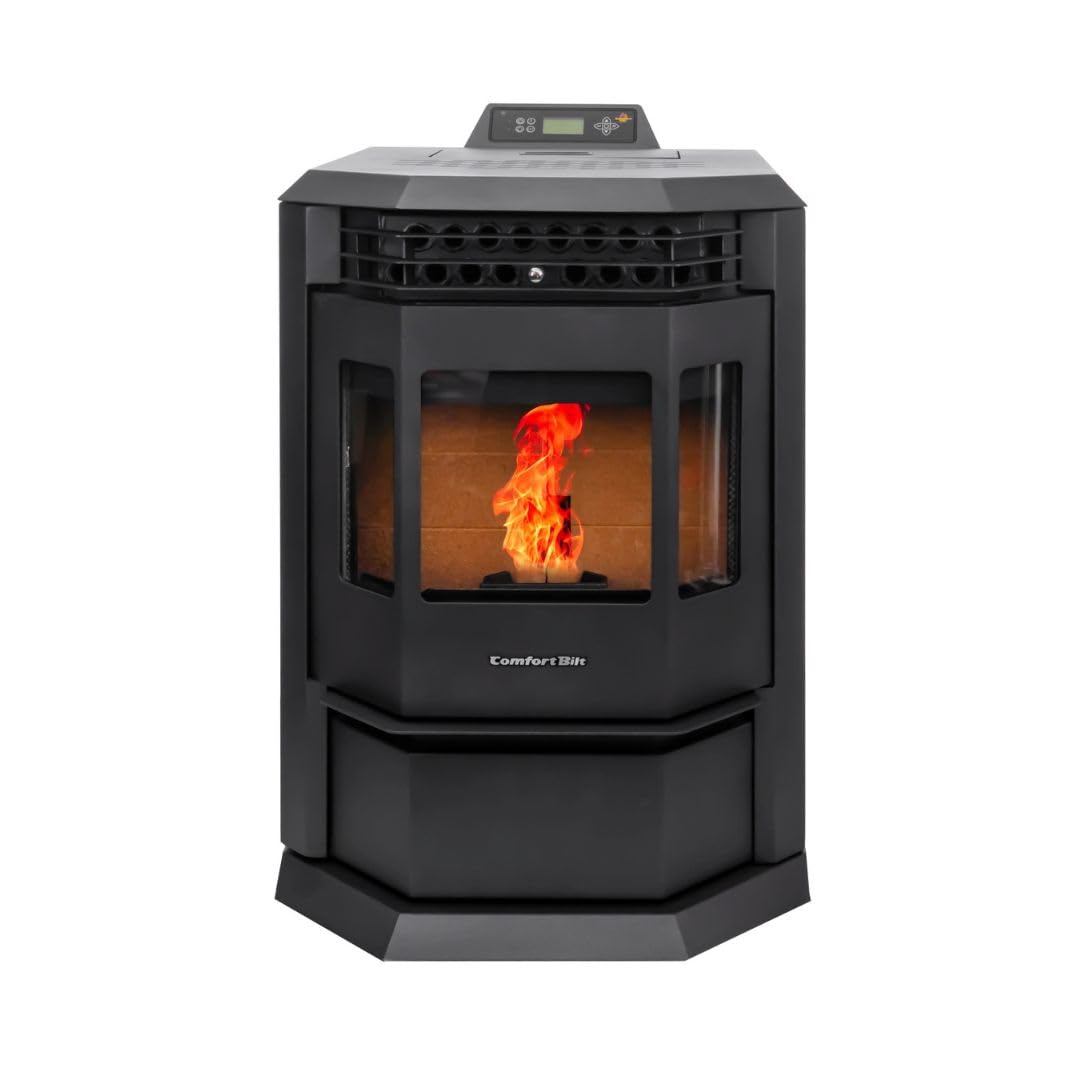
2. ComfortBilt HP40 Pellet Stove
A small-footprint heater built for the cabin, the sunroom, and the garage workshop.
The Alpine name is literal. This stove is meant to tuck into a smaller room, and its 26,224 BTU output over 1,500 square feet fits that brief. It runs at 81% efficiency, which is the figure ComfortBilt publishes for how much of the pellet’s heat actually reaches the room rather than the flue. For a structure you heat on weekends rather than every night, that number is the one to watch.
You get the same control package as the bigger ComfortBilt stoves — five power settings, a programmable thermostat, a remote, and auto ignition — because this is a scaled-down sibling, not a stripped model. EPA and CSA certification are listed. The hopper holds 25 lb., and that is the number that shapes ownership. Against the 130 lb. hopper on the Canyon Lodge, this is 25 lb., so you are refilling far more often. Buyers do describe it heating their space effectively, and the steel build is solid.
What is worth understanding before you order is the size of the review base behind it. This is a newer Alpine model with a modest owner count, so the performance has fewer voices behind it than the flagship HP22. That is a data-depth caveat, not a red flag — the design is proven ComfortBilt hardware. Just go in knowing you are an early adopter on this particular cabinet size.
The case for the compact build: if your square footage is under 1,500 and your priority is a stove that does not dominate the room, the 81% efficiency and small Alpine footprint make it a tidy match.
Reach for this if: you are heating a cabin, sunroom, or workshop and want full ComfortBilt controls in a smaller cabinet.
Step up if: you want a deep owner record and a bigger bin — the 25 lb. hopper means near-daily refills in cold weather.
3. Medium Pellet Stove – 60lb Hopper
Cast iron and Wi-Fi in one cabinet — the stove you tune from the couch.
Cleveland Iron Works builds this one in cast iron, and the 60 lb. hopper is the practical middle ground on this whole list. It delivers 30,124 BTU across a 1,500 to 2,200 square foot range. That spread is useful because it tells you the maker expects it to work in a medium room without idling. If your square footage lands in that band, this is a straightforward fit.
The built-in Wi-Fi is the feature that changes daily use. You can adjust it from your phone rather than walking over in slippers. Owners describe it working well on softwood pellets, which matters because not every stove burns a softer pellet cleanly. Build quality and heat output are both praised, and it holds a steady temperature rather than swinging. Setup is described as straightforward by multiple accounts. It sits at 4.0+ stars.
The question a careful buyer asks is about the electronics. Wi-Fi is only as good as the app behind it, and a connected stove is a more complicated machine to troubleshoot than a dial unit. The stove itself is 172 pounds and floor-mounted, so find a permanent spot rather than planning to move it seasonally.
Where the value lands: a cast iron body, a 60 lb. hopper, and phone control at a mid-range position makes this the flexibility pick — it works in a 1,500 square foot room and still has headroom for 2,200.
Best match: a homeowner in that 1,500–2,200 square foot band who wants to set temperature without leaving the sofa.
Think simple instead if: you would rather have fewer electronics to go wrong and a dial you can fix yourself.
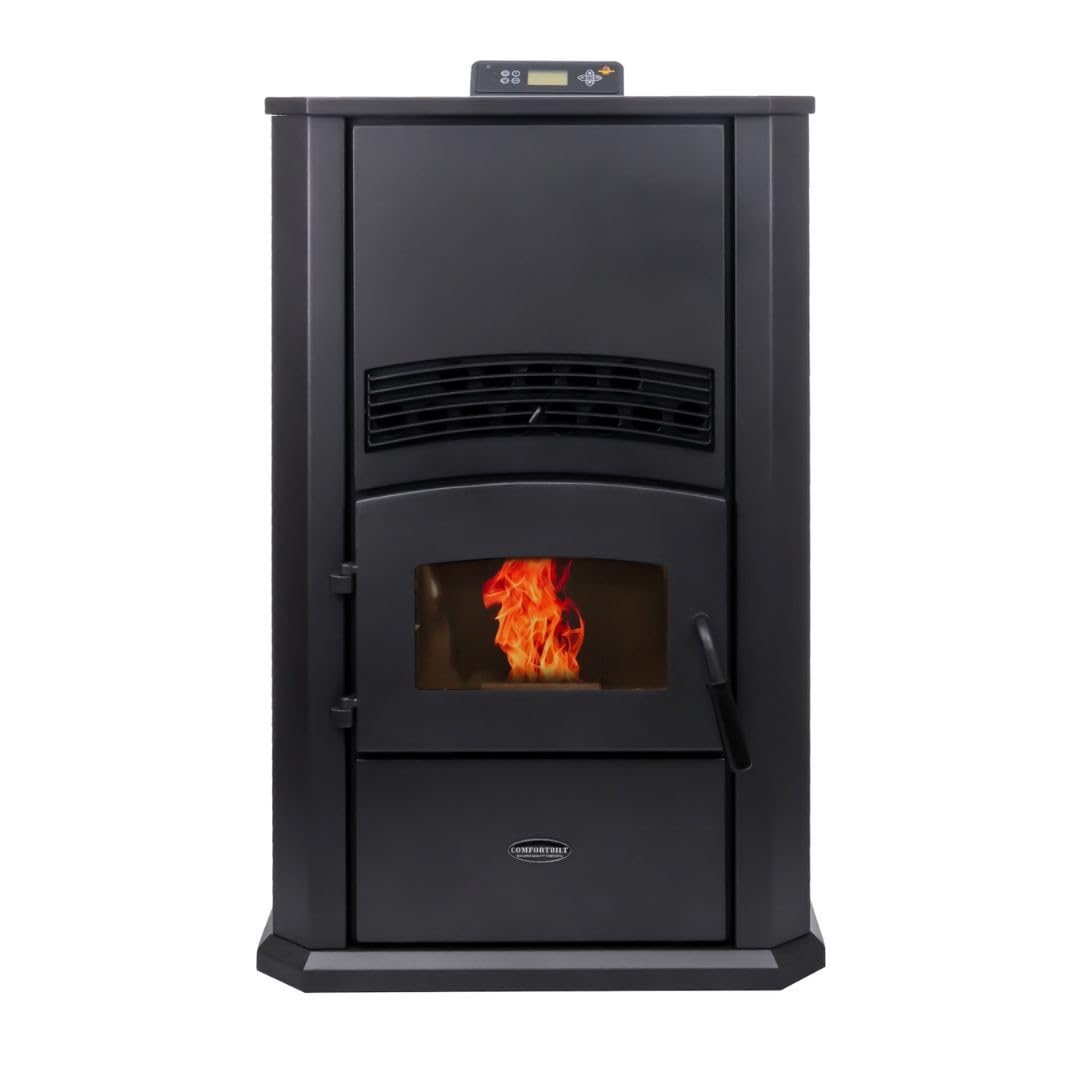
4. HP42 Pellet Stove
The biggest fire in this lineup — and the one you should read the reviews on first.
If raw output is the priority, the HP42 wins that race. It puts out 42,370 BTU per hour, ahead of the HP40 Alpine’s 26,224 BTU, and it carries an oversized 120 lb. hopper rated for up to 24 hours of continuous operation. ComfortBilt lists 87.5% efficiency in the feature copy and 86.1% in the spec table, and either way it is a high-efficiency burn. On paper this is the most capable stove here for a large open space.
That is the whole argument for it, and it is a strong one. The heater itself performs — owners describe real improvements over older models, and the output is not in question. The five power settings, programmable thermostat, remote, and auto ignition are all present, and the ash pan insert tray slides out for cleaning.
Now the part you need to hear. Reliability and durability are the weak spots in the owner record, and this one has the lowest score on the list at 3.0+ stars. Reports of the stove stopping short of a full run and of repeated breakdowns within months are the pattern, not a one-off gripe. That is enough to make the HP42 a stove for someone who wants maximum heat and can handle service calls. If you want a stove you never think about, the HP22 is the better bet — and its score is 4.4 to this stove’s 3.0+.
The firepower argument
- 42,370 BTU is the highest output on this list
- 120 lb. hopper rated up to 24 hours of continuous burning
- 87.5% efficiency in the feature copy, 86.1% in the spec table
- EPA and CSA certified with remote, thermostat, and auto ignition included
The service-risk argument
- 3.0+ stars is the lowest score here, driven by reliability and durability complaints
- Multiple accounts of breakdowns within a few months of use
- 275 pounds and 30 inches deep — plan the floor space carefully
Choose it for: a large, hard-to-heat space where maximum BTU and a 120 lb. hopper matter more than a spotless service record.
Choose the HP22 instead if: you want the same 2,800 square foot coverage with a higher owner score and fewer reliability questions.
5. Castle 41278 Serenity Pellet Stove

Four ways to run it, and a clean-out design that skips the hidden chambers.
The Serenity’s selling point is a controller with Manual, Thermostat, Weekly, and Eco operating modes. Eco mode lets the stove toggle between on and off to hold a room temperature — useful in a shoulder season when you want warmth without a full burn. The Weekly mode lets you set a schedule. Everything, including all four modes, can be programmed from the included remote. At 32,000 BTU over 1,500 square feet, it is sized for a normal living room rather than an open warehouse.
Cleaning is the other standout. Castle points out there are no tubes, corrugations, or hidden chambers, which means the burn path is open and reachable. Anyone who has scraped a convoluted heat exchanger will recognize why that matters. It runs on 120 volts and draws 77 watts in operation. It sits at 4.0+ stars.
The one real caution: the auger is the part to know about, and it is the feed mechanism that drops pellets into the pot. There are reports of the auger cycling only a few times and stalling. Functionality is a split subject in the owner record, and cost-effectiveness is genuinely argued both ways. So this is a stove for someone who wants scheduling and easy cleaning and is comfortable with a machine that may need an auger adjustment now and then. Note also that the maker requires a phone number to schedule the truck delivery appointment.
What sells it: the four-mode controller and the no-hidden-chambers clean-out are a genuine pair of conveniences you will use every week of the season.
Suits you if: you want a programmable schedule and the easiest cleaning path on this list for a standard 1,500 square foot room.
Pause if: you want a spotless reliability record — the auger is the known moving part to watch here.
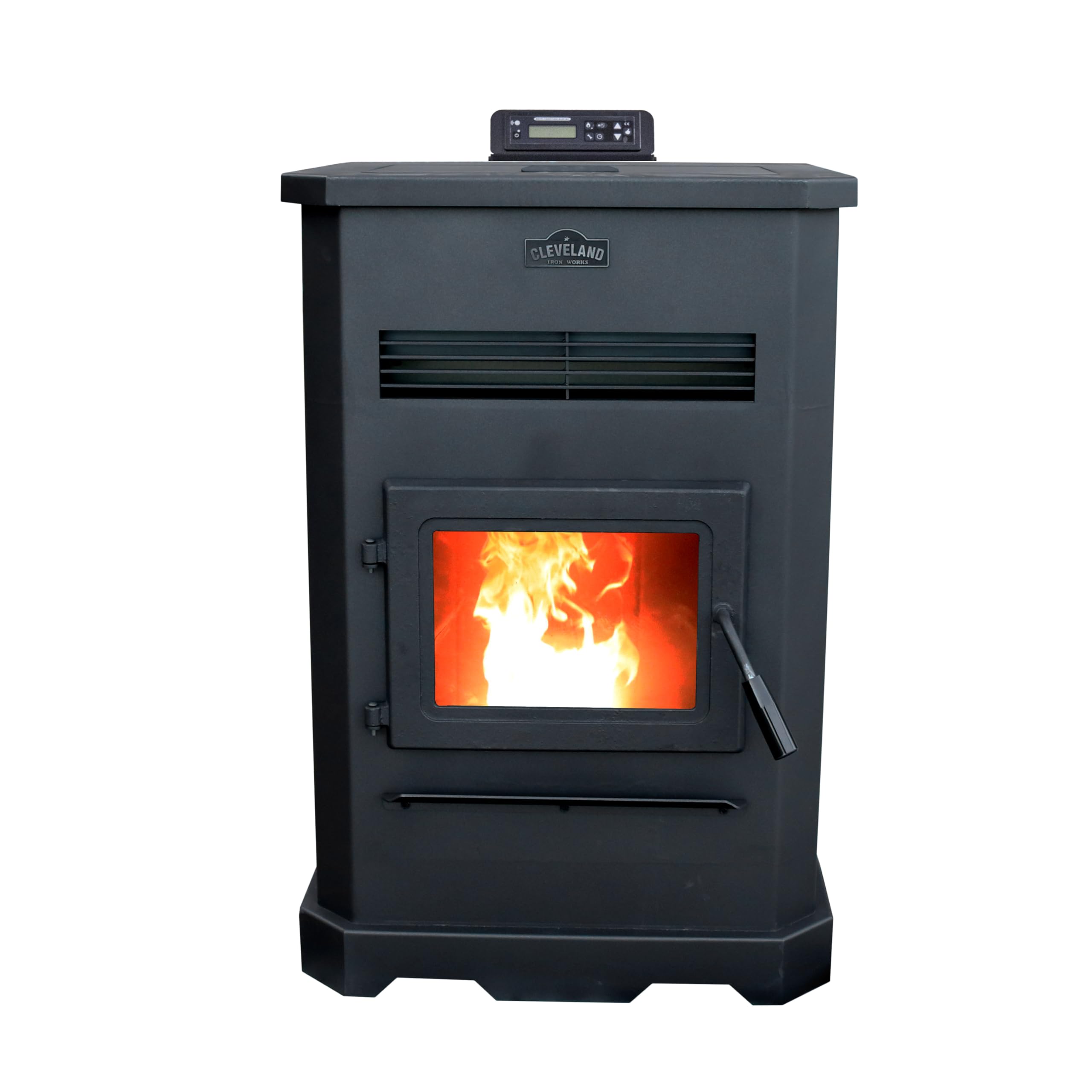
6. Cleveland Iron Works Large Pellet Stove – 130lb Hopper
One fill, three bags, and a serious drop in how often you touch the stove.
The number that matters here is 130. That is the hopper weight in pounds, and it is the largest bin on this list. Owners describe loading three whole bags of pellets at once, and that is the difference between a nightly chore and a twice-a-week errand. It delivers 29,501 BTU across a 2,000 to 3,000 square foot range, so the big bin is matched to a big space rather than oversized for a small room.
Cast iron construction and built-in Wi-Fi round it out. A house warming up quickly is the recurring theme in owner feedback, and the capacity is what people notice. If your square footage sits in that 2,000 to 3,000 band and you are tired of scooping, this is the direct answer.
The trade-off is weight. At 209.4 pounds and 27.6 inches deep, it needs a permanent, well-planned spot and a second set of hands on delivery. This is also a cast iron stove, so it will heat up and cool down with some thermal mass — fine in a large space, less ideal if you want quick heat in a small room.
Why the big bin wins
- 130 lb. hopper holds roughly three bags of pellets in one load
- 29,501 BTU sized for 2,000 to 3,000 square feet
- Built-in Wi-Fi for phone-based control
- Cast iron body for a long-term fixture
What to plan around
- 209.4 pounds and 27.6 inches deep — measure the floor spot first
- Best value lands only if your space actually needs 2,000+ square feet of heat
The refill-killer: buy this if the single thing you hate most about pellet heat is the daily bin.
Size down if: your room is under 2,000 square feet — a 130 lb. bin on a small room means you are cycling old fuel.
7. Canyon Lodge Large Pellet Stove

Built to push heat up a stairwell, with a fresh air kit already in the box.
Heating a whole house from the basement is the classic pellet-stove move, and the Canyon Lodge is built for exactly that. It carries a 130 lb. hopper with 29,501 BTU and a listed 2,000 to 3,000 square foot range. That is the same hopper and the same coverage as the Cleveland large stove above, matched down to the pound.
Where the Canyon Lodge pulls ahead is on quiet. It uses Whisper Quiet Blower Technology, and that is directly relevant to a blower-noise decision. Owners describe real heat reaching the whole house from the basement, which is the specific claim the quiet blower is designed to support — you do not hear it working through the floor. There is also a large viewing glass with an air wash system to keep it clear, automatic ignition, and a steel fire pot. The fresh air kit is included, and the stove is mobile home approved and EPA approved.
The trade-off is the owner record. At 3.5+ stars this is a comparatively new model with a smaller review base than the Cleveland equivalent, so the performance evidence is thinner even though the spec sheet is nearly identical. At 209.4 pounds it is the same install challenge as its twin.
The quiet advantage: mobile home approval, an included fresh air kit, and a blower built for quiet running make this the pick for a bedroom-adjacent or basement install where noise matters.
Pair it with: a basement or a run of stairs you need heat to climb, and a room above where silence matters.
Compare closely if: you want the deepest owner record — this and the Cleveland large stove are near twins on paper.
8. PelPro PP70 Pellet Stove
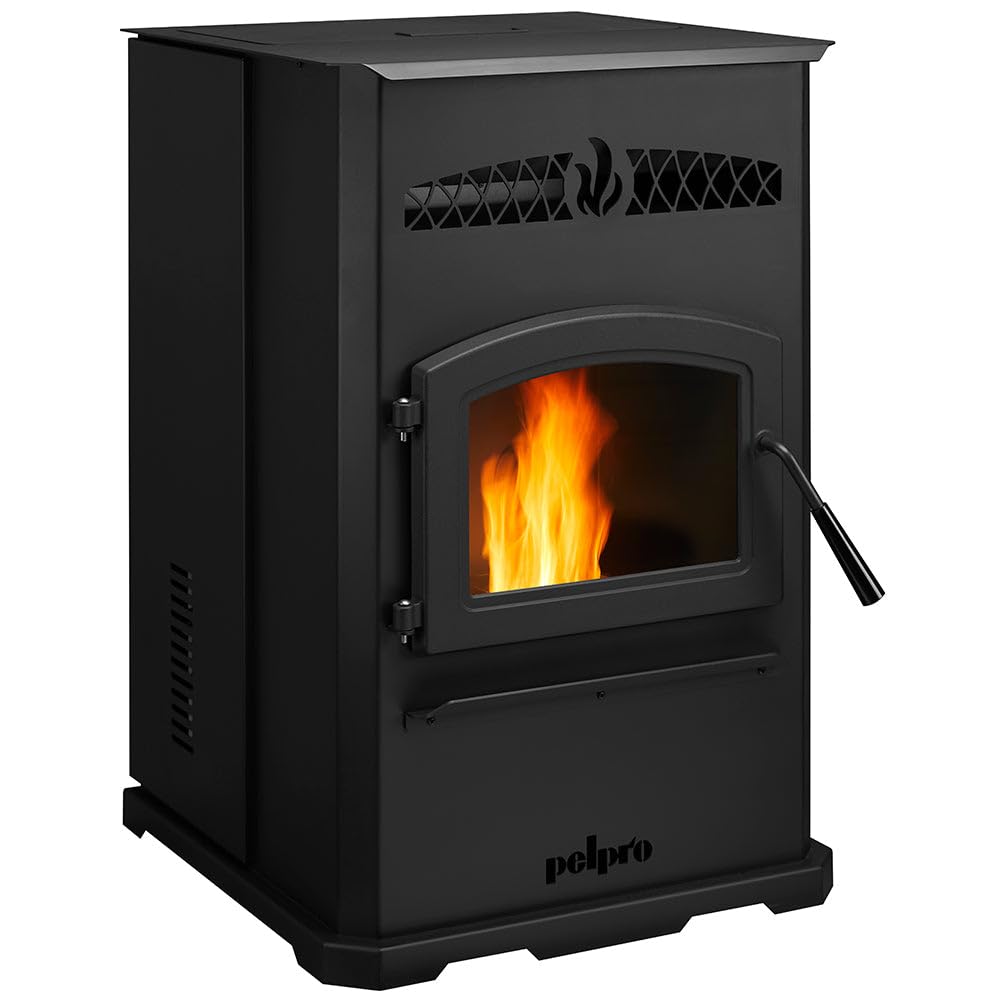
A dial, ten settings, and 88.5% EPA-certified efficiency — no app required.
PelPro builds this one around a single easy-use dial and ten variable heat settings. No touchscreen, no phone. The claim behind it is efficiency: 88.5% EPA-certified, which the maker positions as the best fuel economy in its class. That number is the reason a buyer looks here. It means more of each pellet’s heat ends up in the room, and less goes up the flue.
The output is real too. It generates 42,500 BTU across 2,000 square feet, and it includes a 300W auto-igniter so you are not hand-lighting. A quiet variable-speed blower and built-in thermostat keep it running on its own. The 70 lb. hopper is rated to hold up to two days’ worth of fuel. The cabinet measures 22 inches wide and 22 inches deep, and it is made in the USA.
The honest limit is the owner record. This carries 3.0+ stars from a small base, so there is less shared experience to lean on than the flagship picks. If you want a stove with a deep track record, the HP22 is the safer floor. If you want the simplest possible interface and the efficiency figure is what convinced you, this delivers both.
The efficiency argument: 88.5% EPA-certified at 42,500 BTU is a strong pairing — strong heat with less waste per pellet — and the dial control keeps it simple to run.
Made for: the buyer who wants a hands-on dial, ten settings, and a quiet blower without any connected complexity.
Hold off if: a thin owner record worries you — the deep-history stoves on this list may serve you better.
9. HP50S Pellet Stove, 2,200 sq. ft., 47 lb. Hopper, Black
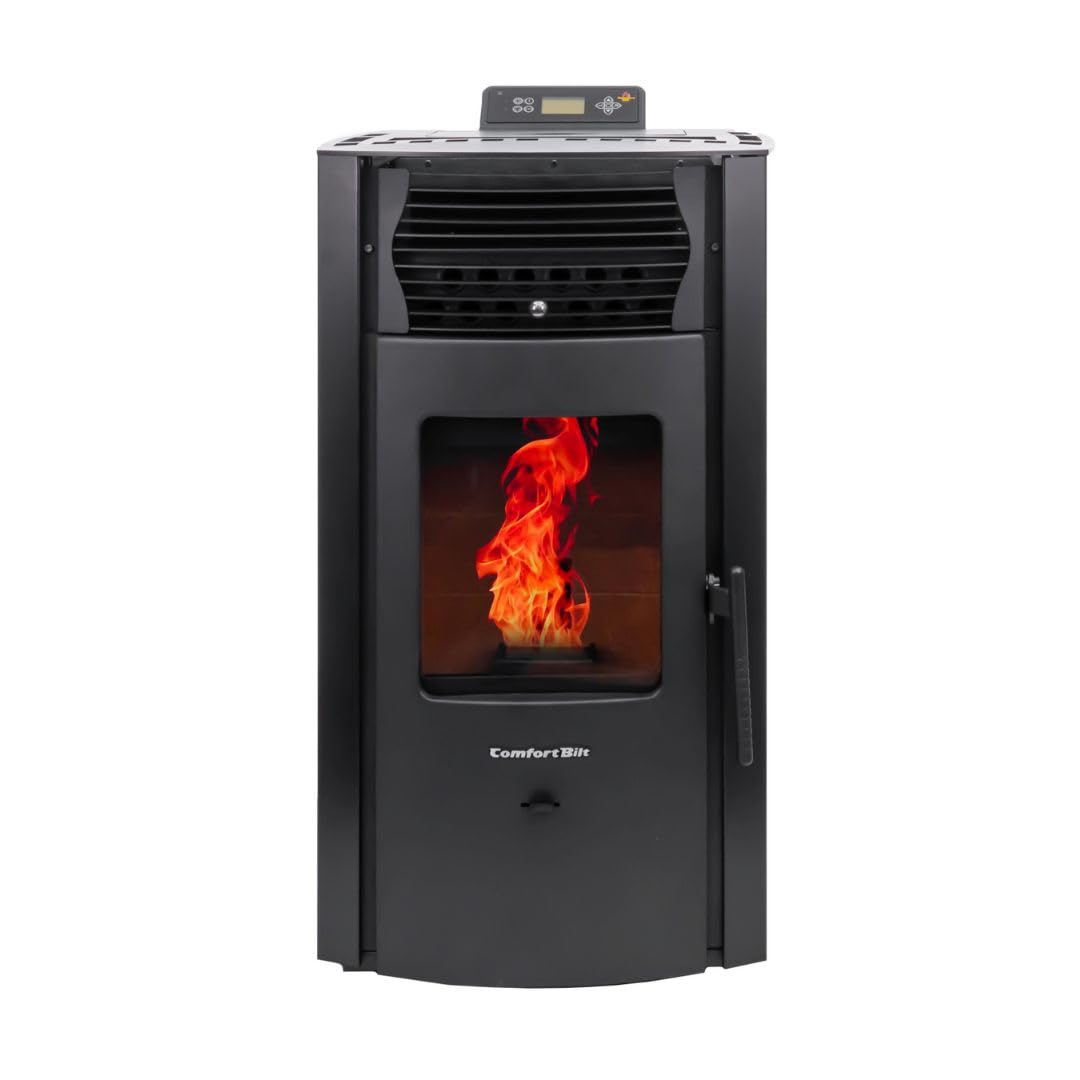
The narrow cabinet that still throws 41,000 BTU and burns for most of a day.
Space is the reason to pick the HP50S. It is 21 inches wide, built to slip into a corner where a wider stove would crowd the room. Don’t mistake the slim body for a small fire — it delivers 41,000 BTU per hour to 2,200 square feet. The 47 lb. hopper is rated for up to 23 hours of burn time. That one number is a good reason to pick it over a small-bin competitor: nearly a full day on a fill from a narrow stove.
It carries the full ComfortBilt control package — five power settings, a programmable thermostat, a remote, and auto ignition — plus EPA and CSA certification, a powerful room blower, and a removable ash pan. The output is what owners praise most, with the stove lifting a room by ten degrees on the low setting being a detailed, believable measure of real performance.
The caveat is durability. That subject gets split treatment in the owner record, with a stall in the auger feed showing up as the specific failure. It is not universal, but it is the part to inspect. At 240 pounds this is a heavy stove, so get help for the install.
The floor-space payoff: 21 inches wide with 41,000 BTU and up to 23 hours of burn makes this the answer for a tight corner that still needs real heat.
Ideal for: a narrow corner, cabin, or basement spot where a slimmer cabinet is the deciding factor.
Compare the HP22 if: you want the same ComfortBilt controls with a higher owner score and a bigger hopper for slightly wider floors.
10. Bayfront Pellet Stove – 66lb Hopper

A bay-front cabinet in cast iron, tuned for quiet heat and automatic cycling.
Cleveland Iron Works gives this stove a 66 lb. hopper and 30,173 BTU across 1,800 to 2,500 square feet. The quiet running is the part owners notice. It is described as very quiet and effective, and that matters if the Bayfront is going to sit in a living room you actually use. Temperature control is the other strength, with the stove coming on automatically as the room drops below your set point.
The 66 lb. bin sits between the brand’s 60 lb. medium and the 130 lb. large models, so it splits the refill difference for a mid-size room. Cast iron body, built-in Wi-Fi, and a bay-front viewing design round it out. It sits at 3.5+ stars across a large owner base — the biggest review count here besides the HP22, which makes it one of the more heavily tested stoves in the list.
The honest splits are installation and cleaning. Setup experiences range from simple to rough, with the instructions described as improvable by some. Ease of cleaning also gets mixed reaction. Flame control shows up as the specific limitation to understand. None of these change the fact that it performs and heats well — they just tell you to set aside an afternoon for setup and plan on dialing in the flame yourself.
The quiet-heat package
- Quiet running and effective heat output up to 1,800–2,500 square feet
- Temperature control that cycles on automatically
- 66 lb. hopper with built-in Wi-Fi and cast iron construction
- One of the more heavily reviewed stoves in this lineup
The setup and tuning caveats
- Instructions get mixed reviews for clarity
- Cleaning ease is argued both ways
- Flame control is the specific tuning point to expect
Good fit for: a living room in the 1,800–2,500 square foot band where quiet operation and automatic cycling win.
Not your first look if: easy cleaning is a priority — the Bayfront’s clean-out path gets mixed feedback.
11. Freedom Stoves Independence PS21 Pellet Stove
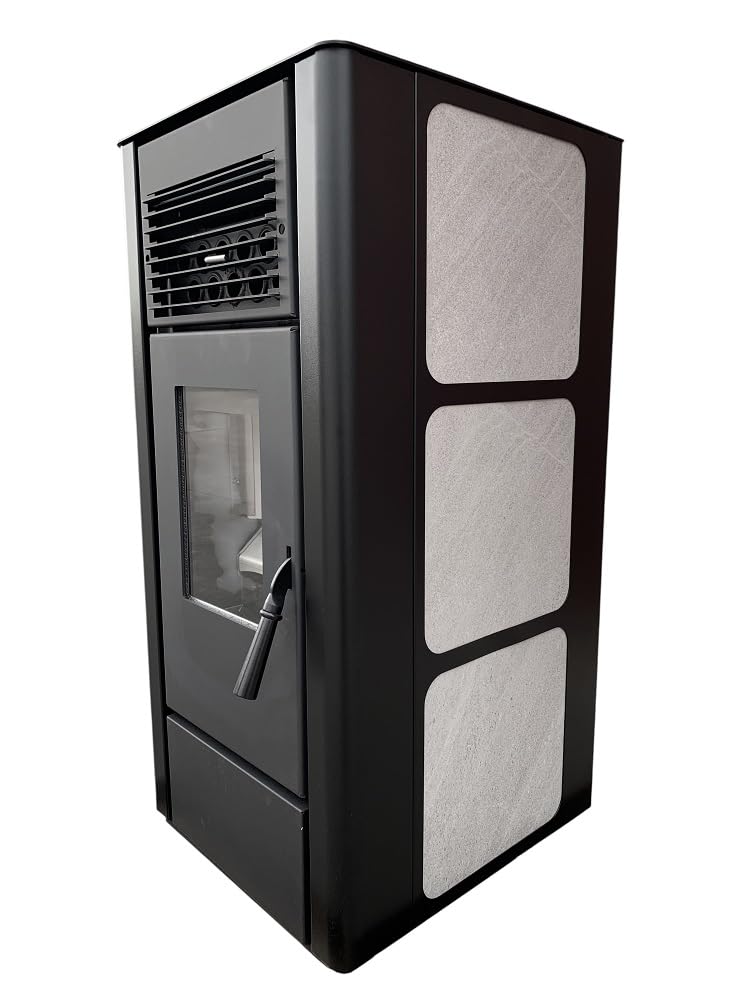
The one stove here that keeps burning when the grid goes down.
Most pellet stoves have a single weakness: a power outage shuts them off, and the blower stops feeding air to the fire. The Independence PS21 solves that with a 24V DC system that runs on two 12V batteries (sold separately) and delivers over 40 hours of runtime. In a storm-prone or off-grid setting, that is the feature that sets this stove in its own category. It generates 34,700 BTU and heats 800 to 1,800 square feet using a stacked tube heat exchanger for even warmth.
The controls are the other reason to want it. Built-in touchscreen, mobile app, and remote let you schedule and manage heat without leaving the couch, and the stove lights up quickly — owners describe it firing up in a few minutes. Performance and heat output are the strengths people report. The Sandstone Grey finish is applied to swappable side panels you can dress with a standard tile if you want it to match your room.
What to know before you buy: the Wi-Fi and temperature control get mixed reaction, so do not assume the app is flawless on day one. It also needs the batteries as an added purchase, and the listed coverage tops out at 1,800 square feet. The 5-year limited warranty and U.S. support from Pellethead are a genuine safety net. It sits at 4.0+ stars from a modest owner base — a smaller record than the HP22, but a strong one for the feature set.
Why the battery matters: over 40 hours of runtime on two 12V batteries means a multi-day storm does not take your heat with it — the difference between a stove that shuts down and one that keeps running.
Built for you if: you heat with wood pellets somewhere the power is unreliable, or you want off-grid capability.
Buy the HP22 instead if: your power is stable and you want the larger 2,800 square foot coverage.
Know the Specs
Hopper Capacity
The hopper is the bin that holds pellets, measured in pounds. It decides how often you refill. A 130 lb. hopper such as the Cleveland large stove holds roughly three bags at once, so you load twice a week. A 25 lb. hopper such as the HP40 means topping up daily. Bigger is not automatically better — a 130 lb. bin in a 1,200 sq. ft. room cycles old fuel, so match hopper pounds to your square footage and the burn time the maker lists.
BTU and Coverage
BTU (British thermal units) measures heat output per hour, and square-foot coverage measures how much room the maker expects that heat to handle. The two work as a pair. Higher BTU over more square footage is a working stove; the same BTU in a smaller room runs near idle. Watch the phrasing — several makers rate coverage “under mild temperature conditions,” which means a hard freeze asks more of the stove.
Efficiency Rating
Efficiency is the percentage of a pellet’s heat that reaches your room instead of escaping up the flue. The HP40 lists 81%, while the HP42 and PP70 list higher figures. A higher number means each bag goes further, so a stove that costs more up front can still be the cheaper one to run over a long winter. It is the spec that rewards the careful buyer most.
Controls and the Auger
The auger is the screw that feeds pellets into the burn pot, and it is the moving part that needs care. Auto ignition lights the fire, a programmable thermostat holds a temperature, and Wi-Fi puts it on your phone. More control means more electronics to maintain. If you want the simplest repair path, a dial and a variable-speed blower do the job with the fewest components.
Common Questions
How many bags of pellets fit in a 130 lb. hopper?
Do pellet stoves work during a power outage?
What does the BTU rating actually tell me?
Can a pellet stove heat a whole house from the basement?
What is an auger and why does it matter?
How often will I need to refill the hopper?
Are these pellet stoves EPA certified?
Is a bigger hopper always better?
What is the difference between a mild-condition and an optimal-condition coverage rating?
Can I program a pellet stove to run on a schedule?
Do pellet stoves run on batteries or only wall power?
The Bottom Line
For most homes, the wood pellet stove that earns the top spot is the HP22 Pellet Stove — 41,000 BTU across 2,800 square feet, a 55 lb. hopper for up to 20 hours of burn, and auto ignition with a programmable thermostat. It carries the strongest combination of score and owner depth here. If fighting refills is your pain point, the Cleveland Iron Works Large holds three bags in its 130 lb. bin. And if the power goes out where you live, the Freedom PS21 keeps burning on battery backup for over 40 hours.
How we choose
We do not accept paid placement. Every pick is matched to a real buyer and a real use-case; we do not hands-on test units.
Sources
Specifications: manufacturer listings and product documentation. Review insights: verified customer reviews, as of November 2026. Pricing: not shown on this page (it changes often); check the current price via the retailer link.
As an Amazon Associate, Tactical Gear Guy earns from qualifying purchases. This does not affect which products we feature.