Specs are compiled from manufacturer listings and verified buyer reviews and can change over time — please confirm the key details on the product page before buying.
Wandering dovetails usually trace back to the gauge, not your hands. A good wood marking gauge scores one crisp line parallel to the edge and holds that setting through a whole run of parts. For most buyers, start with the Clarke Brothers Wheel Marking Gauge: it carries a 4.5+ star rating across 3,000+ ratings, ships with two spare cutters in the box, and reads in both inches and millimetres up to 6″/150mm (150mm is about the width of a wide board). Below are all nine picks, sorted by what each one actually does well.
This guide is built by comparing the manufacturers’ published specifications and the patterns across verified customer reviews, so you get each pick’s real strengths and trade-offs instead of marketing spin.
Some gauges cut with a wheel, some with a pin, and a few do both. Matching the cutter type to your bench makes the choice simple. The picks below cover every budget and every style of wood marking gauge.
Top Picks

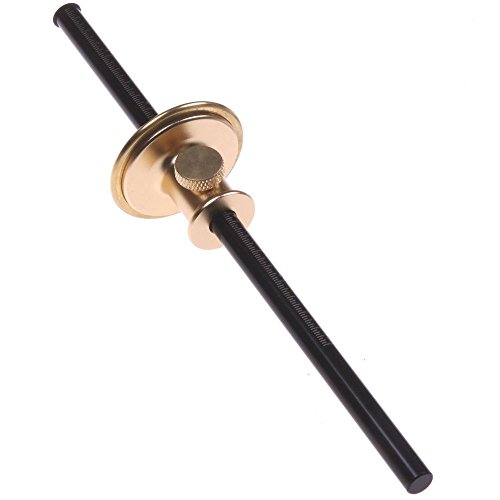

How To Choose The Best Wood Marking Gauge
The job is simple: hold a cutter at a fixed distance from the edge of a board and drag it along. What separates a good gauge from a frustrating one is how well it holds that setting, how cleanly the cutter scores, and how easily your hand finds the fence. Here is what to weigh before you buy.
Wheel cutter or steel pin
A wheel cutter is a small hardened disc that slices the wood fibres rather than tearing them. It leaves a line you can drop a chisel into, and it works with or across the grain. A traditional pin gauge drags a sharpened point through the wood. Pin gauges follow the grain and cost less, but the line is rougher. Many buyers end up owning one of each.
How much marking width you need
Most gauges here give you somewhere between 4.7 inches and a full 8 inches of usable reach. If you build cabinets, you will want the longer bar for wide panels and rail-and-stile work. For small boxes and drawer sides, a shorter body is easier to control. An 8″ bar covers most furniture joinery.
Read the scale before you trust it
A graduated bar lets you set a width by eye instead of stepping off a ruler every time. Look for laser-engraved marks rather than printed ones, because ink wears off after a few hundred passes. Dual scales in inches and millimetres suit the way most shops now work.
Locking and adjustment
The lock is where cheap gauges show their cost. A knurled thumb screw on a brass body gives you a grip you can feel and holds the beam without scoring it. A micro-adjust head lets you creep up on a width in tiny steps, which matters when you are fitting a tenon. Check that the cutter retracts into the head or fence so the edge is protected in the drawer.
Side-by-Side Comparison
| Model | Best For | Marking Reach | Cutter Type | Body Material | Amazon |
|---|---|---|---|---|---|
| Clarke Brothers Wheel Marking Gauge★ Best Overall | Most woodworkers | 6″ / 150 mm scale | Hardened steel wheel | Solid brass, steel, aluminum | Amazon |
| iGaging Wheel Marking GaugeBest Value | Budget precision | 8″ steel rod | Wheel | Solid brass | Amazon |
| KAKURI Japanese KebikiBest Traditional Feel | Hand-tool traditionalists | 120 mm / 4.7 inches | Japanese carbon steel blade | Laminated bamboo | Amazon |
| iGaging 3 in 1 Wheel Gauge | Two lines at once | 8″ steel rod | Two reversible wheel cutters | Solid brass | Amazon |
| Taytools 465494 | Mass in the hand | Up to 7 inches | Hardened high speed steel wheel | Solid machined brass head | Amazon |
| Frienda Ebony Mortise Gauge | Cutting mortises | 6.4 inches | Three-nail point set | Ebony and brass | Amazon |
| Taytools 464763 | Fine tuning widths | 7″ beam | 3/8″ hardened round cutter | Solid brass and steel | Amazon |
| Spear & Jackson CMTG | Classic mortise work | 8 inch gauge | Pin | Hardwood with brass plates | Amazon |
| Woodriver Wheel Marking Gauge | A lifetime bench tool | 7″ length | Retracting wheel blade | Solid brass, stainless steel, Bubinga | Amazon |
Detailed Reviews
1. Clarke Brothers Wheel Marking Gauge
Our pick — 4.5+★ from 3,000+ verified ratings; the strongest balance of quality and price.
Three cutters in the box and a fence that stops where you set it
The Clarke Brothers gauge is the one to buy if you want a single tool that handles drawer sides, tenons, and dovetail shoulders without fuss. Its 8″ bar gives you a generous reach, and the laser-engraved scale runs to 6″/150mm in both inches and millimetres. That dual reading means you can set a width straight from a metric plan or an imperial one without converting in your head. For a mid-range gauge, the spec sheet reads like a much dearer tool.
What wins people over is the build. The body is solid brass, steel, and aluminum alloy, and the brass face is non-marring, meaning it will not gouge the surface it rides on. The makers describe a patent-pending roll stop fence with a flat spot, which is the bit you feel the moment you set it down — the fence sits flat and stays flat as you drag. The knurled grip and ambidextrous hand orientation mean left-handers get the same control as right-handers, and the balance keeps your wrist relaxed through a long run of parts.
The two extra hardened steel wheel cutters are the value story here. A wheel edge dulls with use, and swapping in a spare takes seconds instead of ordering a replacement and losing a weekend. Buyers report consistent marking from one board to the next, which is exactly what you want when you are cutting a set of matching rails. One buyer used it on African black wood and found it performed well on that dense stock.
Where It Earns Its Keep
- Two spare hardened steel cutters included, so a dull edge does not stall a project
- Laser-engraved dual scale up to 6″/150mm reads in inches and millimetres
- Non-marring solid brass face protects the workpiece
- Ambidextrous, balanced body suits either hand for long sessions
What To Know Before Ordering
- The graduated bar stops at 6″ of marking width — wide panels need a longer beam
- It is a wheel gauge only, so there is no pin for those who prefer a scored trad line
Reach for this if: you want one dependable wheel gauge with spare cutters already in the box for general furniture joinery.
Keep shopping if: your work regularly runs past 6 inches of marking width and you need a longer beam.
2. iGaging Wheel Marking Gauge with 1/32nd & 1mm scale
The light-handed brass gauge that doubles as a depth gauge
Here is the trick most shoppers miss: this iGaging rod reaches a full 8 inches, which is longer than the Clarke Brothers bar above. Spend a little less and you actually get more marking width. The shaft is graduated in 1 mm and 1/32 inch steps, so you can set a fine width by eye and confirm it against the marks. Body is precision-machined solid brass with a knurled lock nut that holds the setting without slipping.
At 4.96 ounces it is noticeably lighter than the Taytools 465494 at 6 ounces, so it rides in an apron pocket without pulling. The extra use is the depth function. Because the rod graduates from the head, you can drop it into a groove or a mortise and read how deep you are. That makes it a handy second tool even if you already own a dedicated gauge. Functionality is the thing people focus on, and the price-to-precision balance is the reason.
The honest caveat sits with the moving parts. The lock nut holds firm, but the small screw that secures the wheel can work loose over time, and a few owners have had a wheel break. Check that screw snug before you start a project and it will serve you well. It is a sound first wheel gauge or a lightweight second one for the toolbox.
Best for light shop work: a longer 8″ reach in a lighter 4.96-ounce package than the Taytools, with a brass body that feels more expensive than it is.
The trade-off: the wheel screw needs an occasional tighten, and the wheel itself has been known to give way under hard use.
Worth it if: you want maximum marking reach and a depth-gauge bonus without spending much.
Look elsewhere if: you would rather not keep an eye on a small screw that can loosen.
3. KAKURI Wood Marking Gauge for Woodworking 4.7″
A bamboo-handled kebiki with a blade that hides inside the body
This is the pick for anyone who wants to feel the wood in their hand rather than a brass cylinder. The body is laminated bamboo, handcrafted in Japan, and the whole tool weighs 4.2 oz — light enough that repetitive marking does not tire your wrist. The Japanese name for this tool is a suji kebiki, and its single job is drawing a parallel line a set distance from the edge.
Setting the width is a matter of loosening the hand-turnable screws, sliding the beam to the distance you want, and locking it back down. The blade is Japanese carbon steel and is stowed inside the wooden body when the tool is not in use, which protects the edge and makes it safe to toss in a tool roll. Maximum width is 120 mm, or 4.7 inches, so it covers box work and smaller joinery nicely.
The quality of the build is what draws the most approval, and the blade cuts cleanly both with and against the grain. Where it divides opinion is consistency: some find it accurate and repeatable, others struggle to hold the same line twice. Treat the screws as your lock and check them between passes. It rewards a careful hand rather than a quick one.
Why carpenters reach for it: the carbon steel blade cuts clean in both directions, and the bamboo body feels warm and controlled through hours of marking.
Honest limit: 4.7 inches of maximum width is the shortest reach on this list, and consistent results depend on keeping the screw fixings tight.
The right call if: you enjoy a traditional marking tool and work mostly on boxes and small joinery.
Think twice if: you need repeatable identical lines at speed across large panels.
4. iGaging Wheel 3 in 1 Marking Gauge with Mortise Gauge

Two reversible cutters let you strike both mortise lines in one pass
Cut mortise-and-tenon joints by hand and the extra effort pays back here. The 3 in 1 pairs a solid brass body with an 8″ steel rod, graduated in 1 mm and 1/32 inch steps (1/32 inch is under a millimetre, so you can dial in fine offsets). what separates it from the single-wheel iGaging above is the second wheel: the two reversible cutters sit together so you can scribe both sides of a mortise at once, and a stop collar keeps the spacing locked. It also works as a depth gauge.
The alloy steel marking blade handles softer woods like pine cleanly, and the knurled lock nut keeps your width locked. The brass body carries that solid heft you want when you are pulling a long line. This is a mid-range tool with a specialist’s range of jobs.
Be honest with yourself about your stock. The cutters are praised as sharp by some and called not very sharp by others, and one owner found it struggled on harder woods. If you work mostly in oak and maple, budget a little time to hone the edge or plan on the Taytools below. For softer stock and joint layout, it earns its keep.
What Makes It Useful
- Two reversible wheel cutters scribe a mortise’s twin lines in a single pass
- 8″ steel rod graduated in 1 mm and 1/32 inch
- Works as a marking, mortise, and depth gauge in one tool
The Reality Check
- Cutter sharpness divides owners — some find it keen, others do not
- Performance drops on harder hardwoods like oak and maple
Buy it if: you cut hand mortises and want the twin-line shortcut in one tool.
skip it if: your work is mostly dense hardwood and you would rather not re-hone a new cutter.
5. Taytools 465494 Wheel Marking Gauge

Six ounces of machined brass that sits steady on the board
Mass matters more than most shoppers realise. This gauge weighs 6 ounces, which is noticeably heavier than the 4.96-ounce iGaging, and that weight keeps the fence planted while you draw the line. The head is precision machined from solid brass — not plated — and it measures 1-9/16 inch in diameter, so it fills your palm and gives you fine control. The beam is a hardened.310 inch diameter rod that runs up to 7 inches of reach.
The cutting wheel is hardened high speed steel and leaves a sharp, distinct line in both soft and hard wood, with and across the grain. Measurement accuracy is listed at +/-0.001 inches, which is the kind of tolerance you want when you are fitting a tenon by hand. The knurled thumb screw is solid brass too, and it locks the head to the beam so your setting stays put.
One neat detail: the head has a countersink so the cutter fully retracts inside it, protecting the edge when the tool sits in a drawer. Value for money and marking quality are the two things that come up most. The main question is reach — at 7 inches it falls short of the 8-inch iGaging, so wide panel work is not its strength.
The spec that sells it: a 6-ounce solid brass head with +/-0.001 inch accuracy — the weight is what steadies your line on a long drag.
Where it falls short: 7 inches of beam reach trails the 8-inch iGaging, and the heavier body takes getting used to if you are coming from a light tool.
Pick this one if: you want a brass-bodied gauge that holds its line under its own weight.
Pass if: you routinely mark widths beyond 7 inches.
6. Frienda Ebony Mortise Gauge 6.4 Inches

An ebony-and-brass mortise gauge built to strike double lines
This is a two-function tool: it lays out single lines and, with its three-nail double-sided head, strikes the twin lines a mortise needs. The body is sturdy ebony with brass fittings, 6.4 inches overall, and the width between the two needles adjusts from 0.21 to 3.9 inches, or 5.5 to 100 mm. That adjustment range covers most standard mortise widths. If double-line layout is your main need, this does it without the wheel-cutter fuss.
In the hand it looks the part — the polished surface feels smooth and, at 11.84 ounces, it carries real presence. The fixing screw and pointed tips are meant to speed your layout along. It suits both a DIY builder and a working carpenter who wants a traditional pin gauge for joinery.
Set your expectations around the small hardware. A few owners have had the small screw that holds the outer pin fail to grip properly, and results are split between those who find it accurate and those who do not. On a tool with working pin points, a snug fit up front makes the difference. It is a good choice for someone who values traditional materials and will keep the fixings checked.
What it is good at: a 0.21 to 3.9 inch needle adjustment range and three-nail head for clean double-line mortise layout.
What to watch: the small screw holding the outer pin can fail to grip, so check it before every session.
A fit for you if: you want an attractive ebony mortise gauge for traditional joinery layout.
Not for you if: you want a set-and-forget tool you never have to re-check.
7. Taytools 464763 Solid Brass Wheel Marking Gauge

A micro-adjust head for creeping up on the exact width
When you are fitting a tenon to a mortise and need to shave the width in tiny increments, a micro-adjust head earns its keep. This Taytools has a solid brass 1.625 inch diameter lockable head with a knurled adjustment knob, so you can dial the fence to a width one hair at a time. The beam is a 7″ by 5/16″ diameter hardened steel rod, grooved to stop the head rotating while you adjust. Three cutters come in the box — the fitted 3/8″ hardened round cutter plus two spares.
The cutter slices cleanly across the grain, and it retracts into a countersink in the head so the edge is safe in storage. This is a step up in finesse from the single-lock gauges above. Owners who fit joints by hand get on well with it.
The micro-adjust does split opinion. Some find the adjustment threads not as fine as they expected, and one of the more common gripes is that the head slips instead of holding its setting. A firm lock on the knurled knob helps. It is an excellent gauge when the lock is set firmly, but it demands a little attention to holding the setting.
Strengths Worth Paying For
- Micro-adjust knob lets you dial width in the finest steps
- Grooved 7″ hardened beam keeps the head from rotating during adjustment
- Two spare cutters included, and the cutter retracts for safe storage
Points To Weigh
- The adjustment threads feel less fine than some buyers expect
- The head can slip unless the knurled lock is tightened firmly
The tool to buy if: you fit tenons by hand and want micro-adjust control over the width.
Keep looking if: you want a gauge that never has you re-checking the head after a few passes.
8. Spear & Jackson CMTG Mortice Gauge

A hardwood-and-brass mortise gauge in the old workshop style
This Spear & Jackson is a traditional mortise gauge, the kind that has laid out joints in furniture shops for generations. The block is rosewood-stained hardwood with two brass plates on the working face, and a round brass bar runs through the top section with a brass lock screw. That face-plating is the detail that matters: brass resists the wear a hardwood fence takes from dragging against a board edge day after day. The block measures 66 x 55 x 26 ± 1 mm and the gauge is listed as 8 inches overall, weighing 7.4 ounces.
The internal brass thread on the lock is meant to hold the beam firmly without chewing into soft stock. This is a genuine mortise gauge — one tool for one classic job of striking parallel lines for a mortise. If you already own a wheel gauge for general lines and want the traditional counterpart for joints, this slots alongside it.
Because it is a hardwood body, it rewards care. Keep it out of damp shop corners and wipe the brass now and then, and it will look right for a long time. It is a heritage tool with the materials that suit that role, not a fit-and-forget micro-adjust head.
The materials that matter: brass wear plates on the working face and a brass lock on an internal thread — the parts that take the pressure are the ones in metal.
The straightforward trade-off: a fixed traditional mortise layout rather than an adjustable micro-head, so widths come from the fixed pin spacing.
Made for you if: you want a traditional brass-and-hardwood mortise gauge that will patina with use.
Not your tool if: you want push-button width adjustment and a wheel edge.
9. Woodriver Wheel Marking Gauge
Ten ounces of brass, stainless, and Bubinga built to last a career
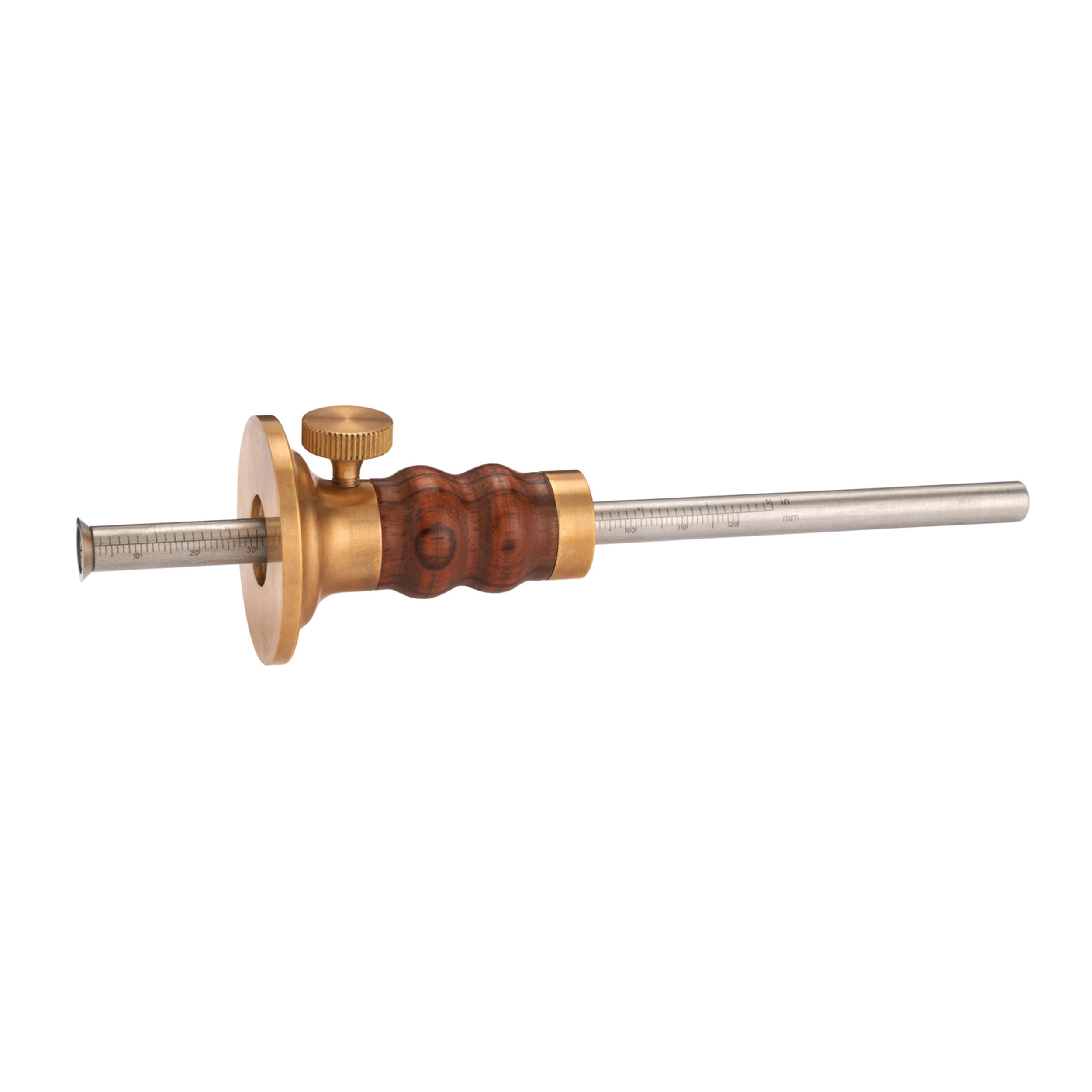
The Woodriver is the tool you buy once and hand down. The body is solid brass and stainless steel with Bubinga wood accents, and at 10.4 ounces it has the most heft on this list — that mass keeps the fence riding flat and the line true. The bar is 7″ long, and the retracting blade stows inside the fence for safe storage. Clean, precise scribes on every pass is the promise, and the materials are what back it up.
This is a gauge for someone who marks joinery daily. The brass and stainless construction resists rust in a way hardwood bodies do not, and the Bubinga accents make it easy to handle with a dry hand. For someone who marks joinery for a living rather than an afternoon, the build is the point. Owners describe it as beautiful and sturdy, and the heft in the hand comes up as a genuine plus.
The straightforward catch is that it is the most expensive option here, and it earns that position through materials and finish rather than extra features. If you want one gauge for life, this is a fair candidate; if you mark occasionally, a mid-range tool covers the job.
Built To Hand Down
- Solid brass and stainless steel with Bubinga accents resists rust and wear
- 10.4 ounces gives the steadiest, most planted feel on this list
- Blade retracts into the fence for safe storage between sessions
Why Some Buyers Pause
- The priciest pick here, justified by materials and finish more than extra features
- 7″ of reach, the same working length as the Taytools above
The one to own for life: a brass-and-stainless craftsman’s gauge with real heft.
Put it back if: you mark occasionally and want a simpler tool for the money.
Know the Specs
Wheel cutter versus pin
A wheel cutter is a hardened disc that scores the wood fibres with a clean slice. Because it cuts rather than tears, you get a line a chisel can drop into and it works with or across the grain. A pin gauge is a sharpened point that drags through the surface; it is the older, cheaper design and it tends to follow the grain. If your joinery needs a crisp, repeatable line, a wheel cutter is the safer bet.
Marking reach and beam length
The beam is the long rod the fence slides along, and its usable length sets how wide a board you can mark. On these tools the range runs from a short 4.7 inches on the Japanese kebiki up to a full 8 inches on the iGaging models. Match the reach to your work: boxes and small joints need less, wide panels and rails want the longer bar.
Graduated scales
A graduated scale is a series of engraved marks on the beam so you can set a width without a separate ruler. Laser-engraved marks hold up far better than printed ones. Dual scales in inches and millimetres let you work straight from either plan.
Body materials
Solid brass and stainless steel resist rust and hold weight, which helps the fence stay flat on the board. Hardwood and bamboo bodies feel warmer and lighter in the hand but need a little more care in damp shops. Brass wear plates on a hardwood fence are a good middle ground.
Common Questions
Can a wheel marking gauge replace a mortise gauge?
Why does my marking gauge line wander off course?
How wide can these gauges mark from the board edge?
Do I need a metric scale or an imperial one?
How often should I change the wheel cutter?
What is the difference between a mortise gauge and a marking gauge?
Can a marking gauge cut a line across the grain as well as along it?
Should I store the gauge with the cutter exposed?
Will a brass-bodied gauge rust in a damp shop?
The Bottom Line
For most woodworkers, the best wood marking gauge is the Clarke Brothers Wheel Marking Gauge because a dual-scale bar, a non-marring brass face, and two spare cutters in the box cover nearly every joint you will lay out. If reach is your priority, the iGaging Wheel Marking Gauge gives you a full 8 inches at a friendlier place in the range. And for cutting mortises, the Frienda Ebony Mortise Gauge strikes both lines in one pass with a look you will not mind leaving on the bench. Keep the cutters sharp and the lock snug, and the line will stay true.
How we choose
We do not accept paid placement. Every pick is matched to a real buyer and a real use-case; we do not hands-on test units.
Sources
Specifications: manufacturer listings and product documentation. Review insights: verified customer reviews, as of November 2026. Pricing: not shown on this page (it changes often); check the current price via the retailer link.
As an Amazon Associate, Tactical Gear Guy earns from qualifying purchases. This does not affect which products we feature.