Specs are compiled from manufacturer listings and verified buyer reviews and can change over time — please confirm the key details on the product page before buying.
A tool rest is the one part of your lathe that decides whether a chisel glides or catches. The wrong one flexes under a heavy cut, pits at the top edge, and turns a smooth bead into a fight. The right one puts the bar at the height you actually turn at, so the chisel sits close to the work. This guide covers what to check before you order — post diameter, bar length, and top-bar material — so your next rest drops straight into your banjo.
This guide is built by comparing the manufacturers’ published specifications and the patterns across verified customer reviews, so you get each pick’s real strengths and trade-offs instead of marketing spin.
Start by measuring the post on your current rest. A 5/8″ stem and a 1″ stem are not interchangeable, and that single number rules out more options than any other spec. Below you will find the reason each rest earned its spot in this roundup of the wood lathe tool rest market.
Top Picks
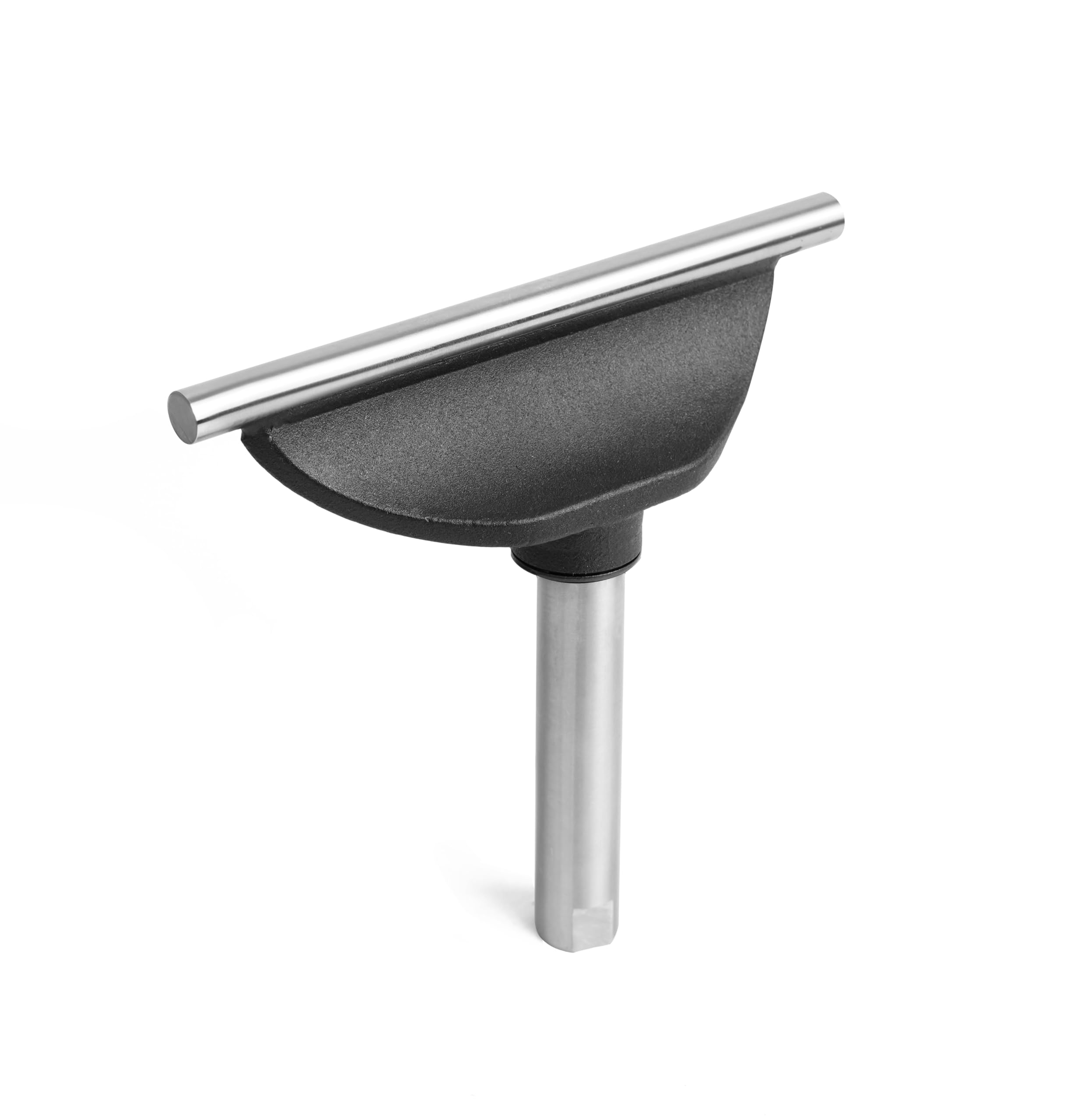

How To Choose The Best Wood Lathe Tool Rest
Buying a tool rest is mostly a measuring job. The steel quality decides how long the top edge stays smooth, but the post size decides whether the rest fits your lathe at all. Get the post diameter wrong and the rest will not enter the banjo at all.
Measure the post before anything else
Your banjo (the clamp that holds the rest) accepts one post diameter. Common sizes here are 5/8″ and 1″. Pull your current rest out and measure the stem with calipers, not a ruler. Post length matters too — a rest with an 80mm stem sits differently in the clamp than one with a 3″ stem. If the stem is too long it bottoms out; too short and the clamp cannot bite.
Bar length follows the work, not the lathe
A 12″ bar gives you more sliding surface before you have to stop and move the banjo. On long spindles that means fewer stops to slide the banjo. On pens, light pulls, and small boxes, a 6″ bar is the better tool because it gets close to the work without the tailstock fouling it. Many turners end up owning both.
Top-bar material decides glide and wear
The top bar is where your chisel actually rides. Hardened steel holds a smooth surface longer. A stainless cap resists corrosion and stays slick. Either way, a rest with a nicked or gouged edge will catch a skew every pass — which is why the better rests are built so the bar does not dent in the first place.
Side-by-Side Comparison
| Model | Best For | Post Diameter | Bar Length | Material | Amazon |
|---|---|---|---|---|---|
| BMWOOD 6″ Tool Rest★ Best Overall | Small projects on a 5/8″ banjo | 5/8″ | 6″ | Steel | Amazon |
| PSI Woodworking CLTSET58Best Value | Three bar lengths in one buy | 5/8″ (15.875mm) | 6″, 9″, 12″ | Alloy Steel | Amazon |
| BMWOOD Integrated 12″ Tool Rest | Long spindles on a 1″ banjo | 1″ (25.4mm) | 12″ | Cast Iron | Amazon |
| Rockler 6″ Capped Tool Rest | Finger comfort on fine work | — | 6″ | Stainless Steel | Amazon |
| YEIXCIKA 12″ Tool Rest | Wide sliding surface, 1″ post | 1″ | 12″ | Stainless Steel | Amazon |
| Rockler Bowl Turner’s Tool Rest | Bowl exteriors and hollow forms | — | S-shaped | Stainless Steel | Amazon |
| sturdy Comfort Tool Rest | Big lathes with a 1″ banjo | 1″ | 6″ | Solid Steel | Amazon |
Detailed Reviews
1. 6″ Tool Rest with 5/8″ (16mm) Diameter 82mm Length Post
Our pick — 4.5+★ from 200+ verified ratings; the strongest balance of quality and price.
The rest that quietly fits more small lathes than almost anything else here.
The 5/8″ post is the detail that puts this one first for most home turners. That diameter is the common stem on mid-size and mini lathes, and the 3″ post length gives the banjo enough to grip without bottoming out. It weighs 1.12 pounds, so it is light enough to lift out one-handed when you swap between projects.
The top bar is 6″ long and radiused — rounded rather than square — so the web of your hand sits into the curve whether you turn overhand or underhand. That curve is functional, not decorative. A radiused bar lets your fingers ride the rest while your thumb steers the chisel, which is why the hand fit is what wins people over on this one. The steel is hardened, and the top threading is M10x1.5, which is the size that swaps with most brands’ rests, Nova included.
Where it gives ground: 6″ is a short bar. Turn a long table leg and you will stop and move the banjo more often than you would with a 12″ rest. Compare it to the integrated 12″ BMWOOD further down — that one gives you a 12″ bar versus a 6″ bar — and the trade is clear. Also check your stem first. A 1″ banjo will not take this 5/8″ post, full stop.
What earns it the top spot
- 5/8″ post diameter suits most mid-size and mini lathes
- Radiused top bar fits an overhand or underhand grip
- M10x1.5 threading swaps with most brands, Nova included
- 1.12 pounds — easy to lift out and swap between cuts
Where it runs short
- The 6″ bar means more banjo repositioning on long spindles
- Will not fit a lathe with a 1″ banjo
Reach for it if: your lathe takes a 5/8″ post and you turn pens, knobs, small boxes, and short spindles.
Look elsewhere if: you turn long work at a stretch — the 6″ bar will have you moving the banjo constantly.
2. PSI Woodworking CLTSET58 Toolrest Set
Three rests, three bar lengths, one purchase — and a 6″ bar that will feel tight to some.
The pitch here is coverage. You get a 6″, 9″, and 12″ rest on one order, all sharing the same 5/8″ (15.875mm) post and the same 5/8″ round top bar. The post is 2-3/4″ long on all three. That means you can fit a long rest for spindle work and drop to the 6″ the moment the tailstock starts crowding you, without shopping again.
The bar is a solid round in alloy steel, finished smooth enough that the chisel glides and the cut runs without vibration. What sells it is the range for the money — the price-to-coverage ratio is the whole argument, and that is the aspect that gets talked about most in the reviews. Functionality runs a close second. In practice it turns into a set you can grow with rather than a single rest you outgrow.
Two honest catches. The bars are not stainless, so if you expected that from the listing, you will be disappointed — this is alloy steel. And the top edges scar with use, which is normal for a straight bar but means you will want a file on hand to knock down any raised nick before it starts catching. On bar length, the shorter rests in the set do draw some gripes about feeling small on bigger work.
Best three-in-one play: If you are not sure which bar length you need, this set answers the question by handing you all three. The 12″ covers long spindles, the 9″ does most general turning, and the 6″ gets in close on small pieces.
The honest trade: Alloy steel rather than stainless, and straight bars that will scar. Expect to dress the top edge with a file now and then to keep the glide smooth.
Solid call when: you want one order to cover every bar length and your lathe runs a 5/8″ post.
Less ideal when: you only ever turn one size of work — a single rest will do the job with less clutter.
3. Integrated 12″ Tool Rest with 1″ (25.4mm) Post, 80mm Length

A 12-inch bar with real mass behind it — the spindles-only answer for a 1″ banjo.
Twelve inches of bar is the headline. That is 12″ versus the 6″ on the top pick, and it means fewer stops to slide the banjo mid-cut. The mass backs it up: this rest weighs 2.64 pounds versus the 1.12 pounds of the 6″ rests on this list. Extra weight in the rest is weight that does not buzz under a heavy roughing cut.
It is built from strong cast iron with a 45° slope running the length of the body. That slope is what lets you tuck a fingernail or a skew into a range of grips while keeping the tool close to the work. The top profile is rounded so a chisel runs smoothly from one end to the other. The stem is 1″ (25.4mm) in diameter with an 80mm length, and it drops onto Jet lathes cleanly, which is the fit note that comes up again and again in its reviews.
The whole set here is 12.68 x 5.94 x 1.93 inches packed, so it arrives as a substantial lump of metal. Quality and sturdiness are the two things that get mentioned with real weight behind them. Measure your stem before you buy — 1″ is a bigger bore than many mini lathes take, and there is no adapter in the box.
Why it suits long work
- 12″ bar gives you a wide sliding surface before you touch the banjo
- 2.64 pounds of cast iron keeps the cut settled under load
- 45° slope opens up a range of tool grips while staying close to the work
- Rounded top profile runs a chisel end to end
Where it pushes back
- 1″ post will not fit a 5/8″ banjo — no adapter included
- A 12″ bar crowds the tailstock on pens and small pulls
The one for you if: you turn table legs and long spindles and your banjo takes a 1″ stem.
Skip the long bar if: most of your work is pens and light pulls — the shorter 6″ rests get in closer.
4. Rockler 6″ Lathe Tool Rest Capped with 5/16″ Stainless Bar

The rest built around your fingers, not just your chisel.
Run a finger along the edge of this one and you feel the point of it. The top is capped with a 5/16″ round stainless steel bar, and the body underneath is contoured so your fingers settle into it. Long sessions with your hand braced on the rest are the reason that contour exists. This rest weighs 1.12 pounds and packs down to 6.14 x 5.47 x 1.3 inches, so it stows in a drawer without drama.
Your chisel glides instead of dragging, because the top is stainless steel (a rust-resistant metal that stays slick). That slick surface also feels silky against your tool and your skin. Rockler sells this shape in 4″, 6″, and 10″ bar lengths (the bar is the part your tool rests on). The 4″ bar lets you get close even when the rest of the workpiece is wider, while the 6″ and 10″ bars give you more slide before you readjust.
What it does not tell you: the listing gives no post diameter at all. Before you order, confirm what your banjo takes, because this is the one spec that can sink the purchase. Turners on lathes with an unusual stem size should check that first.
The comfort case: A stainless cap plus a contoured body makes this the pick when your hand lives on the rest all day. The 5/16″ round bar is the part your chisel rides, and it is the part that stays slick.
The check before you buy: No post diameter is published. Measure your stem, then order — this is not a spec you want to guess at.
Worth a look when: finger comfort over long turning sessions matters as much as the cut itself.
Hold off when: you cannot confirm your banjo’s post size from the listing alone.
5. YEIXCIKA 12 Inch Lathe Tool Rest

A concave top and a welded post that is built to stay put under vibration.
The post is welded, not threaded, onto the body at 1″ diameter. That weld is the spec that matters most here — a bolted or threaded post can work loose under the constant chatter of turning, and a welded one does not. It weighs 1.96 pounds, which sits between the featherweight 6″ rests and the 2.64-pound cast iron option above. The 12″ bar gives you the long sliding surface, and the stainless steel forging is made to resist rust and wear.
The top bar has a concave shape rather than a plain round. Your fingers curl into the hollow, which pulls your hand closer to the work and steadies the chisel at the same time. For anyone who has fought a flat-bar rest that lets their knuckles drift, that curve is a real change in how the cut feels. Quality and functionality are the two things that come up most, and there is a note in the reviews about it beating an 8″ rest in daily use.
One maintenance point worth repeating from the maker: check the top edge periodically for nicks, scrapes, or dents. A metal file smooths them out before they start catching your gouge. The 12″ bar, like the other long rests here, will get in the tailstock’s way on small work.
The engineering wins
- Welded 1″ post resists loosening under vibration and impact
- Concave top bar curls your fingers in and gets you closer to the work
- Stainless steel forged body resists rust and wear
- 12″ bar means less banjo repositioning across a long piece
The upkeep and the limits
- Top edge needs periodic filing to clear nicks before they catch
- Long bar fouls the tailstock on pens and small pulls
Pick this one when: you want a welded post that will not work loose and a concave top that steadies your hand.
Think twice when: your banjo is 5/8″ — this is a 1″ post only.
6. Rockler Bowl Turner’s Lathe Tool Rest, S-Shaped

The only rest here shaped to follow the curve of a bowl instead of fighting it.
Everything else on this list is a straight bar. This one bends in an S, and that shape is the entire reason to own it. The two curves mirror the profile of bowls and hollow vessels — one curve is gradual, the other more angular. As you work the outside of a bowl, you follow the form with the bar instead of chasing it with your body.
The angular ends are the other half of the idea. They tuck into the opening of a narrow vessel so you can round the corner and hollow the inside without the rest blocking your path. The body is solid stainless for heft and corrosion resistance, and the finish is silky enough that the chisel glides and your fingers stay comfortable. It is built for mini and midi lathes.
This is a specialist tool, not a general-purpose rest. If you mainly turn spindles, pens, and legs, the S-curve does not help you and a straight bar will be more useful. Get it when bowls and hollow forms are what you actually turn.
The shape does the work: Straight rests make you move your body around a bowl. This bar curves along the wall of the vessel and lets you keep the chisel supported the whole way round. The tighter angular end exists specifically for reaching into a narrow opening and turning the corner.
Know your work first: Bowls and hollow forms only. Buy it for spindle turning and you have paid for a shape you will never use.
The bowl turner’s answer: you hollow vessels and shape bowl exteriors and need the tool support to follow the form.
Not for you if: your turning is straight spindles, pens, and legs — a straight bar serves you better.
7. sturdy Comfort Tool Rest, 6″ Wide, Long Post

Six inches of hardened steel built for the big lathes — 3 pounds of it.
At 3 pounds, this is the heaviest rest in the roundup, so it stays put while you work. The body is solid steel and the top is a hardened steel bar (treated to resist wear). That hardening keeps the edge smooth over years of use instead of nicking the first time you get clumsy with a bowl gouge. A nicked bar catches a skew (a flat, angled chisel) on every pass; a hardened one does not, and that is what you are paying for at the top of the range.
This rest drops straight into your lathe if you own one of the models listed below, because the post (the rod that fits into the lathe’s tool rest holder) is 1″ in diameter and comes in the long version. The fit list is unusually explicit: Oneway 2436 and 2416, Powermatic 3520C, 3520B, 3520A, 4224A and 4224B, sturdy American Beauty, Record Power Regent, Vicmarc VL300 with a 1″ banjo (the clamp that holds the post), Jet 1840, Laguna 2436 and 1836, Woodfast 20″ lathes, General 20″ lathes, and Rikon 20″ lathes. If your lathe is on that list, this rest installs easily and stays put.
The 6″ width is a deliberate choice, not a limitation — a shorter bar reaches closer on work that a longer rest cannot get to. Durability and build quality are what carry this one, and the hardened rod at the top is the part owners single out as not dinging. Check that list before you order. If your lathe is not named there, the long post may not seat correctly.
Why it costs more: Hardened steel through the body and a 3-pound heft that settles a heavy cut. This is the rest you buy once for a big lathe and stop thinking about.
The fit is specific: The long 1″ post is built for a named list of lathes. Confirm yours is on it — a near-miss here means a rest that will not seat right.
Made for your machine if: you run one of the big lathes on the fit list and want a hardened bar that will not nick.
Look past it if: your lathe is not on that list — the post sizing is too specific to risk.
Know the Specs
Post Diameter and Post Length
The post is the stem that drops into your banjo, and its diameter is the one number that must match. A 5/8″ post and a 1″ post are not interchangeable, and neither comes with an adapter. Post length matters just as much — an 80mm stem and a 3″ stem sit at different heights in the clamp, so one may bottom out while the other grips correctly. Measure your current rest with calipers before you order anything.
Bar Length and Top-Bar Material
Bar length sets how far you can slide the chisel before you stop and move the banjo. A 12″ bar is a real gain on long spindles and a nuisance on pens, where the tailstock fouls it. The top bar is what your tool actually runs on, so its material sets the glide. Hardened steel holds a smooth edge longer; a stainless cap resists corrosion. Either way, a nicked edge will catch your tool until you file it smooth.
Common Questions
How do I know which post diameter my lathe takes?
Will a 1″ post fit a lathe that takes a 5/8″ post?
Is a longer tool rest always better for turning?
What happens if the top bar gets nicked or gouged?
Should I get a straight bar or an S-shaped bowl rest?
Does a heavier tool rest really make a difference?
Can a tool rest work loose during a cut?
Do I need to measure the post length as well as the diameter?
Is stainless steel or cast iron better for a tool rest?
Will the Rockler S-shaped rest fit my mini lathe?
The Bottom Line
For most turners working on a 5/8″ banjo, the BMWOOD 6″ Tool Rest is the first one to consider — a radiused bar that fits your hand, hardened steel, and M10x1.5 threading that swaps with most brands. It covers small and medium work without fuss. If you turn long spindles and your banjo takes a 1″ stem, the Integrated 12″ Tool Rest gives you a 12″ bar versus a 6″ bar and cast iron weight behind it. And if bowls and hollow forms are your craft, the Rockler Bowl Turner’s S-Shaped Rest follows the curve where a straight bar cannot. My one nudge: if you genuinely do not know which bar length you need, the PSI three-piece set lets you try all three and settle the question for good.
How we choose
We do not accept paid placement. Every pick is matched to a real buyer and a real use-case; we do not hands-on test units.
Sources
Specifications: manufacturer listings and product documentation. Review insights: verified customer reviews, as of November 2026. Pricing: not shown on this page (it changes often); check the current price via the retailer link.
As an Amazon Associate, Tactical Gear Guy earns from qualifying purchases. This does not affect which products we feature.