Specs are compiled from manufacturer listings and verified buyer reviews and can change over time — please confirm the key details on the product page before buying.
If your sofa sits so low that standing up takes a push off the armrest, or you cannot slide a storage bin under the bed, you do not need new furniture. You need a few inches. A wood riser block lifts the whole leg by a set height, and the job is done in minutes with no drilling and no tools. The tricky part is fit: the recessed top hole must match your leg shape and width, or the furniture wobbles. That one measurement decides which of the seven sets below will fit.
This guide is built by comparing the manufacturers’ published specifications and the patterns across verified customer reviews, so you get each pick’s real strengths and trade-offs instead of marketing spin.
Risers are sold as short screw-in legs or as slip-under blocks with a recessed cup on top, and each suits a different piece of furniture. Below you will find seven solid-wood options sorted by what actually fits where, so you can pick the right set for your bed, sofa, or desk with the first order. best wood furniture risers come down to measuring your leg before you buy anything.
Top Picks

How To Choose The Best Wood Furniture Risers
The wrong riser does not fail because it is cheap. It fails because the leg does not sit inside the cup. Measure your furniture leg first, then match the recess and the lift height to it. Lift height and finish come second.
Measure the leg before the lift height
Take a tape to the bottom of the leg and note the width across the widest point. A round leg needs a round recess wide enough to seat it. A square leg needs a square recess. If your leg has a caster wheel, measure the wheel housing instead. A riser cup that is too small lets the leg slide out sideways, and that is how furniture tips.
Screw-in legs versus slip-under blocks
A screw-in leg replaces the existing foot on the furniture, so it fits pieces with a threaded socket or a wooden base you can drive screws into. A slip-under block needs no hardware at all — you lift the corner and set it down into the recess. Screw-in legs suit sofas and dressers that already have legs. Slip-under blocks suit beds, tables, and anything you want to raise without touching the frame.
How much lift you actually need
Enough for a robot vacuum to pass underneath, or enough to take the strain off your knees when you stand. Some blocks lift a set amount and cannot stack; others interlock so you can add height later. The makers set a limit on how many you can stack per leg, and that limit exists for a reason — taller stacks wobble more.
Side-by-Side Comparison
| Model | Best For | Lift Height | Leg Style | Set Size | Amazon |
|---|---|---|---|---|---|
| AORYVIC L-Shaped Wood Legs★ Best Overall | Sofas and dressers that need new legs | 3 inch | L-shape screw-in | 4 pack | Amazon |
| Kasiden Wood Bed Risers 3.5 InchBest Value | Stackable height on a budget | 3.5 inch | Double-sided recess | 4 pack | Amazon |
| Sevender Non-Square Wood Risers | Slip-under lift with adhesive pads | 1.89 inch | Rectangular groove | 4 pack | Amazon |
| KOIKEY 2 Inch Square Risers | Walnut finish on hardwood floors | 2 inch | Square recess | 4 pack | Amazon |
| FASONLA Interlocking Risers | Adjustable height across the room | 1″, 2″, 3″ or 4″ | Classic interlocking | 8 pack | Amazon |
| Sopicoz Wood Bed Risers 4 Inch | Higher seating and vacuum clearance | 4 inch | Square pad | 4 pack | Amazon |
| Almanor Rustic Pine Risers | Heavy beds that need real lift | 3.5 inch | Rustic recess | 4 pack | Amazon |
Detailed Reviews
1. AORYVIC Solid Wood L-Shaped Furniture Legs, 3 Inch, 4 Pack
Our pick — 4.5+★ from 900+ verified ratings; the strongest balance of quality and price.
The dresser-upgrade move: swap the stubby feet for three inches of walnut-finished wood.
These are not slip-under blocks — they are replacement legs. You unscrew the old feet and drive these into the bottom of a sofa, futon, dresser, cabinet, wardrobe, bookcase, or bed, and the piece stands taller on four solid rubber wood legs with a smooth painted edge. The lift is 3 inches per leg, which is enough to let a robot vacuum pass underneath and enough to make standing up from a low sofa noticeably easier on your knees.
What wins people over is the build quality, which is far and away the most-praised trait in this set’s feedback, followed closely by how they look. The walnut finish and glossy dark tone read as original furniture rather than an accessory bolted on afterward — the L-shape gives that mid-century profile, and one buyer’s blunt summary is that they “look like part of the original chair.” That is the whole point of going screw-in instead of stacking plastic cups under a foot.
The catch is compatibility, and the maker says so plainly. These L-shaped legs will not fit furniture with a small base — the mounting plate needs room. Measure the underside of your sofa or dresser before you order, because a piece with a narrow or recessed frame has nothing to screw into. For a standard flat-bottomed sofa or dresser, though, this is the cleanest-looking way to gain height in the whole group.
What earns them the top spot
- Solid rubber wood with a smooth painted edge — the quality is the most-praised trait here by a wide margin
- 3 inches of lift clears a robot vacuum and eases standing up from a low sofa
- Walnut gloss finish blends into existing furniture instead of announcing itself
- Hardware included; the job is unscrew and screw back in
Where the fit gets fussy
- Will not fit furniture with a small base — check the underside first
- Screw-in install means a threaded socket or wooden frame is required
Go screw-in if: your sofa, dresser, or cabinet already has legs you can replace and you want the upgrade to disappear into the furniture.
Think twice if: the underside is narrow or recessed — these L-shape plates need a flat base with room to mount.
2. Kasiden Wood Bed Risers 3.5 Inch
One block, two heights — flip it or stack it for a little more lift.
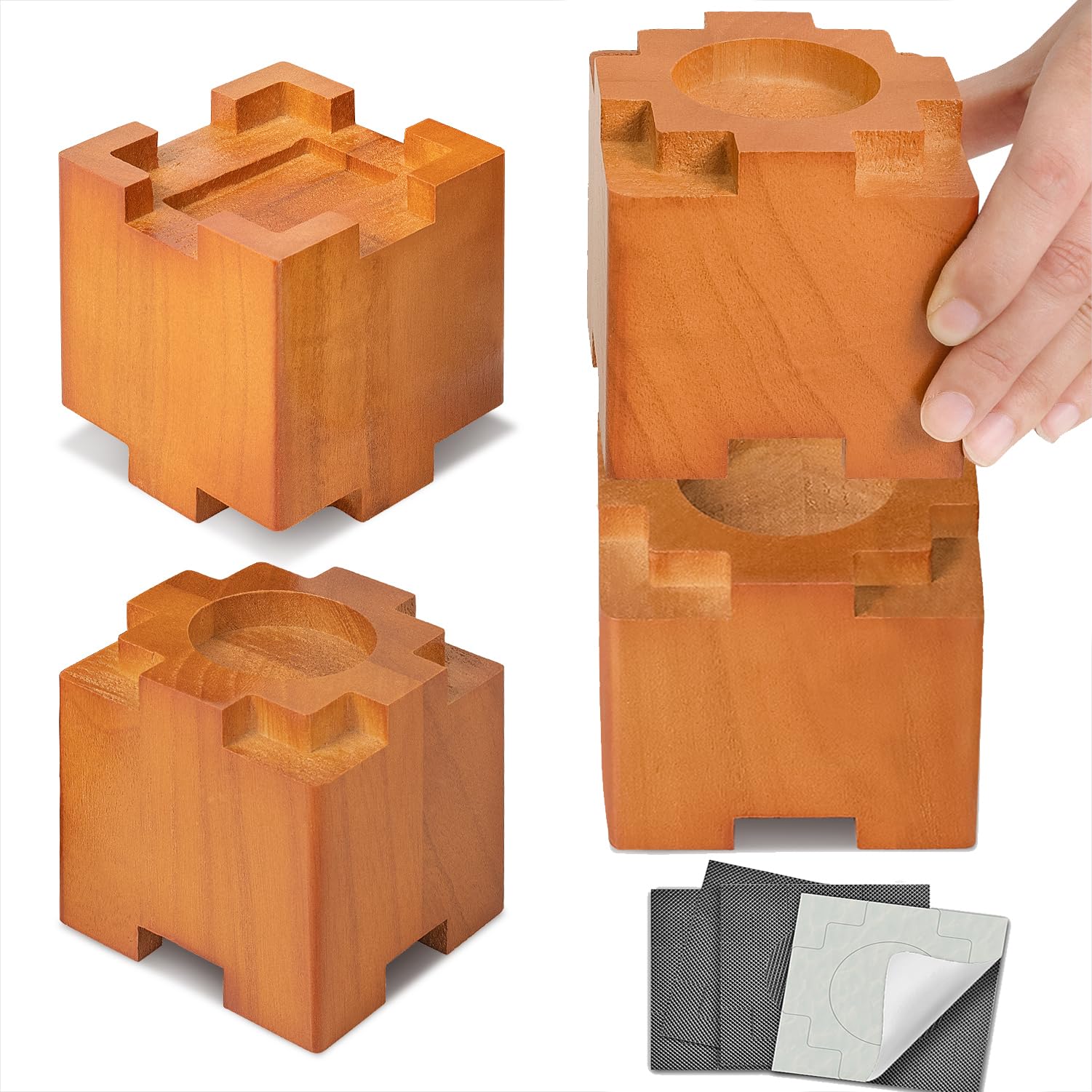
Each of the four solid wood blocks lifts furniture about 3.5 inches on its own, and the double-sided recess means the same block grips square, rectangular, and round legs. Set two blocks on top of each other and you get more height. At 1.79 pounds for the whole set, they are light enough to slide under a bed frame without help.
The rubber pad underneath is what stops these from walking across a wood or ceramic floor — it guards against cracks, scratches, and dents, which matters if you have tile or a finished hardwood. The maker rates the set at a total support weight of up to 6000 LBS, enough headroom for a heavy bed frame.
Fit is where you need to pay attention. Round legs have a 1.96 inch diameter ceiling, wheels have to measure within 2.36 by 1.57 inches, and square legs cap at 2.6 inches. Go over those and the leg will not seat properly, which is exactly the situation the maker warns about to keep the base stable. Measure all four legs, not just one.
The stackable advantage: use one block per leg at 3.5 inches, or double them up when a bed frame sits lower than you expected. That flexibility is why this lands in the value slot.
The measurement drill: a leg wider than the stated limits will sit proud of the recess. This is a fit-sorting task, not a flaw in the block.
Reach for this if: you want to try a height and change your mind later — the stackable design gives you that room.
Measure first if: your legs are chunky round columns over 1.96 inches or wheels larger than 2.36 by 1.57 inches.
3. Sevender Solid Wood Furniture Risers 1.89 Inch

A low-profile lift for coffee tables, sofas, and beds that only need a nudge upward.
Here is the number that separates this set from everything above it: 1.89 inches of added height. The FASONLA set covers 1, 2, 3, or 4 inches depending on how you stack it, and the Almanor blocks go to 3.5 inches. The Sevender is the smallest lift in the group, which makes it the right call when you want just enough clearance to sweep under a sofa rather than a step-change in seat height.
Each block carries a groove 1.57 inches wide (described as 410mm in the listing) that a leg or a wheeled foot sits into, and the set ships with rectangular and oval double-sided stickers that hold the leg in place and keep the wood off your floor. You set the furniture down into the grooves and it stays put — no screws, no tools. The maker lists it for coffee tables, sofas, beds, tables, chairs, and other household pieces, and notes the effect is clear even when you just set a piece on a flat surface.
Quality is what buyers talk about with this one — the solid wood and load-bearing performance come up far more than anything else. The practical caution is the same one that applies to any low slip-under riser: check your leg fits the groove before you rely on it. If the leg overhangs the 1.57 inch channel, the block is doing less than you think.
Why nearly two inches is plenty: most of the reason people raise a sofa or table is a cleaning gap or a gentler sitting height. The Sevender delivers exactly that without turning your coffee table into a bar counter.
The honest limit: at 0.8 kg for the set, these are the lightest-lifting option here — do not expect to clear thick carpet under a heavy bed frame.
Best for: a modest lift to let a broom or vacuum reach under low furniture, with sticky pads holding the leg in place.
Skip if: your furniture leg is wider than the 1.57 inch groove or you need a taller lift than 1.89 inches.
4. KOIKEY 2 Inch Wooden Square Furniture Bed Risers, 4 Pack
The walnut square that looks like it grew there — and holds two inches of lift steady.
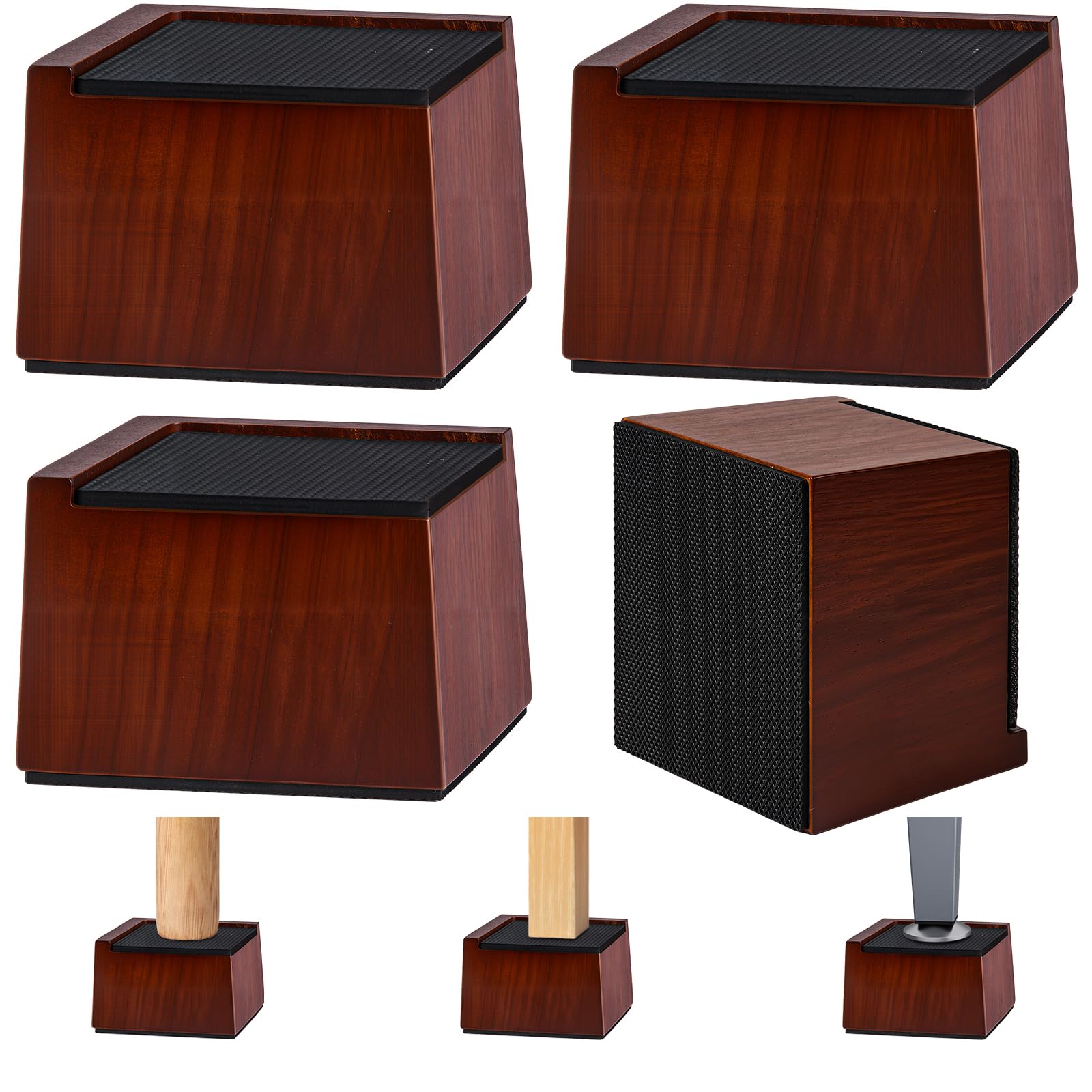
Solid oak, cut in a trapezoid shape, finished in an eco-friendly walnut colour with a smooth shine. The lift is 2 inches, and these are built to be set down, not stacked — the maker is explicit that height adjustment is not what these are for. What they are for is a piece that needs to sit two inches higher with nothing sliding around underneath.
The recessed hole on top is 2.75 inches wide and takes a furniture leg or wheel up to 2.6 inches in diameter. That recess is the safety feature: it keeps the leg from sliding out and the furniture from tipping, which is a bigger deal on a tall dresser than most people think. The maker rates the set to withstand weights up to 2000 lbs, and the felt pads protect hardwood from scratches and quiet the scrape when furniture shifts.
The thing that keeps coming up in the feedback is how these blend with a wooden floor, and the appearance is the most-praised aspect of the set by a clear margin. The honest note is stability — most buyers report they don’t slip, but the felt pads are the part to watch, so give them a check after the first week of use. It is a small thing to monitor rather than a reason to look elsewhere.
The style win: a walnut square under a mid-century dresser is a hard match to beat, and the 3.35 inch top against a 3.85 inch base gives it a solid footprint.
No stacking here: 2 inches is the height, full stop. If you need more, look at the FASONLA set above.
Choose it for: hardwood floors and a furniture finish you actually want on show — the walnut square reads as a design choice.
Look elsewhere if: you need to add height in stages, because this set does not stack.
5. FASONLA Furniture Risers Set of 8

Eight interlocking blocks that let you dial in one, two, three, or four inches per leg.
The pitch here is flexibility, and it starts with the count: eight risers, not four. Stack them and you get the lift you want — 1 inch, 2 inches, 3 inches, or 4 inches — and each block is cut from a single piece of solid oak, so there is no glued joint to work loose. That eight-piece count is exactly double the four-piece sets elsewhere in this list, which is what lets you raise more furniture from one box.
The recessed hole on top measures 2.35 by 2.35 inches and is shaped to hold bed and furniture feet up to 2.35 inches wide, with contours that keep legs and wheels from slipping out. The maker is clear about the ceiling on stacking — do not interlock more than four risers on a single leg — and that cap is there for safety, not to limit you.
Looks and function are what owners notice most about this set, and the versatility gets called out again and again — people use them under dining tables, under beds, and in combinations to reach a specific height for a specific piece. The stability question is the one to respect: more stacking means more chance of wobble, so keep the block count per leg sensible and check that the leg is actually seated in the recess.
The count advantage: eight blocks means four legs raised two deep, or any mix of pieces across the house. Fewer sets force you to pick one piece of furniture.
Stack with care: past four risers on a single leg the maker says it is unsafe. Follow that number.
Reach for this if: you want one box that can raise a bed and a dining table to different heights.
Look elsewhere if: you want a fixed, no-thinking lift — the stacking decision is the whole point here, and it does need care.
6. Sopicoz Wood Bed Risers, 4 Inch Square

Four inches of rubber wood for the sofa you sink into and struggle to climb out of.
A whole 4-inch lift, from a single piece of rubber wood per riser rather than a laminated block. That full block is what makes it stable — there is no joint line for the weight to find, and the maker pitches it at a higher seating position first and a robot-vacuum-cleaning gap second. If standing up from a deep couch is the problem you are solving, four inches is the most correction in this group.
Both ends get a non-slip rubber pad, so the riser sticks to the floor on one side and grips the furniture leg on the other. No tools, no screws — you lift the corner and set it down. The maker lists couches, beds, tables, chairs, bedside tables, dressers, cabinets, and DIY projects as fair game, and asks you to measure before ordering so the recess matches your leg.
Quality and finish are the strong points in the feedback, with solid wood construction and an easy install getting consistent mention. The honest caveat is stability: the pad is the piece to watch — most reports say the risers hold firm, but the adhesive on the pads is the one component that needs a quick check now and then. At 4.2 pounds for the set, these are the heaviest of the small-block options, which is exactly what you want under a big sofa.
Why four inches stands out
- A full 4-inch lift — the biggest fixed-height gain in this group
- One solid piece of rubber wood per riser, no lamination to split
- Rubber pads on both faces grip floor and furniture
- No-tools install: lift, seat, done
The one component to keep an eye on
- The adhesive pads are the part to monitor; give them a check after a week or two
- You must measure the furniture recess against the riser before you order
Pick it for: a low, deep couch or a bed you want raised for easier standing — four inches does the job in one step.
Hold off if: your furniture legs are odd-shaped or wider than the recoated top can take; measure first.
7. Almanor Goods Rustic Pine Bed Risers

Rough-sawn pine blocks with a wide recess — built like a piece of the bed itself.
Blocks, not cups. Each one is cut from a solid block of durable pine, so there are no pieces that can fall apart — no inserts, no glued stack, nothing to work loose over a season of use. The lift is 3.5 inches, which the maker says beats most risers on the market, and the top cutout is a generous 2.9 by 2.9 inches.
That wide recess is the reason these suit a heavy bed frame. It takes a chunkier leg than the narrower cups, and it is why a king-size bed is well within reach — the set is described as supporting one with ease. Set the four blocks under the legs, and the frame comes up 3.5 inches for storage underneath. At 3.14 pounds for the set, they are substantial enough to feel planted.
Fit is the honest catch. The recess is roomy, but these read as small under a normal-size couch leg — the maker’s own fit notes and owner experience point the same way, so they are a much better match for bed frames and trundle beds than for a skirted sofa. For a bed, though, the stability side is where these earn their keep, and it is the most-praised trait of the set.
Built to stay put: solid pine with no joinery to fail, a 2.9 inch recess, and a 3.14 pound set weight. This is the heavy-bed specialist.
Check the leg width: a standard sofa leg can be too slim for the recess. Measure the furniture you plan to raise.
Point it at: a bed frame or trundle that needs 3.5 inches of clearance and a block with real mass behind it.
Not the one for: a slim-legged sofa or chair — the recess wants a chunkier foot to seat properly.
Know the Specs
Lift Height and Stacking Limits
Lift height is how far a riser raises the furniture, measured in inches. A fixed-height block gives you one number — the Sevender is 1.89 inches, the Sopicoz is a full 4 inches. A stackable riser lets you add height in stages, but the maker sets a ceiling on how many you can interlock per leg, and going beyond it makes the stack unstable. Pick the height that solves your actual problem, not the biggest number you can find.
Recess Diameter and Leg Shape
The recessed hole on top of a riser is the cup your furniture leg sits in. Its width must match your leg — a round leg needs a round recess, a square leg a square one. The KOIKEY takes legs up to 2.6 inches across; the Almanor cutout is 2.9 by 2.9 inches. A leg that is too wide for the recess sits on top instead of in it, and that is where wobble and tipping starts. Measure the widest point of the leg and the wheel housing.
Material and Finish
Solid wood — rubber wood, oak, or pine — holds its shape under a bed frame better than a hollow or plastic block. Screw-in legs are finished with paint or stain to match furniture; slip-under blocks often come in a walnut tone to sit with hardwood floors. A felt or rubber pad on the base protects the floor and cuts noise when furniture shifts. Wipe solid wood risers with a dry cloth and keep them off wet floors.
Weight Rating and Pad Type
A weight rating tells you how much total load the set can carry, and the makers here publish generous numbers — the Kasiden set is rated to 6000 LBS total. That headroom is why these work under heavy beds. The pad matters just as much: felt pads glide quietly and protect delicate floors, rubber pads grip and resist sliding. Either way, they are the wear part, so glance at them after the first few weeks of use.
Common Questions
Will wood furniture risers fit my bed frame legs?
How much height do I actually need to get a robot vacuum underneath?
Are screw-in legs or slip-under risers better for a sofa?
Can I stack wood risers for more height?
Do risers scratch hardwood floors?
How much weight can solid wood risers hold?
Will risers work on a round or wheeled furniture leg?
How do I keep my furniture from slipping off the riser?
Can I use risers on a dresser or bookshelf without making it top-heavy?
What is the difference between a furniture riser and replacement furniture legs?
The Bottom Line
For most people raising a sofa, dresser, or bed, the wood furniture risers winner is the AORYVIC L-Shaped Wood Legs, because solid rubber wood and a walnut finish turn a lift into an upgrade rather than an add-on. If you want to adjust the height later, grab the FASONLA Set of 8 — eight interlocking blocks cover 1 to 4 inches. And for a heavy bed frame that needs serious lift, the Almanor Rustic Pine Risers at 3.5 inches with a 2.9 inch recess are the ones to reach for.
The single biggest thing you can do before ordering is measure your leg width and shape. Get the leg width and shape, then match it to the recess on the block you like. Match the recess to your leg, and any of these seven will sit flat and stay put.
How we choose
We do not accept paid placement. Every pick is matched to a real buyer and a real use-case; we do not hands-on test units.
Sources
Specifications: manufacturer listings and product documentation. Review insights: verified customer reviews, as of November 2026. Pricing: not shown on this page (it changes often); check the current price via the retailer link.
As an Amazon Associate, Tactical Gear Guy earns from qualifying purchases. This does not affect which products we feature.