Specs are compiled from manufacturer listings and verified buyer reviews and can change over time — please confirm the key details on the product page before buying.
Buy the shoe that matches your foot width and your mat, not the loudest logo on the wall. Most women buying wrestling shoes get burned by the same two things: sizing that runs small and soles that lose grip once the mat gets sweaty. The six pairs below cover the real spread — a wide-toe option, a half-size-friendly flat sole, a budget trainer, and a premium mat shoe — so you can pick on fit and grip instead of guesswork.
This guide is built by comparing the manufacturers’ published specifications and the patterns across verified customer reviews, so you get each pick’s real strengths and trade-offs instead of marketing spin.
Below you’ll find how to match a shoe to your mat and your foot, a side-by-side table, and full write-ups on each pick. The short answer: fit and sole type decide everything in women’s wrestling shoes, so pick those two first and let color come last.
Top Picks


How To Choose The Best Women’s Wrestling Shoes
Wrestling shoes are not running shoes with a different name on the box. A wrestling shoe sits low, runs flat, and wraps your foot so you can feel the mat through the sole. That feeling is the whole point — you push, pivot, and drive off the ball of your foot, and a soft cushioned heel fights you the entire time.
Start with the sole, not the upper
The sole is where grip lives. Look for a flat rubber sole that is sewn on rather than only glued, since a stitched sole holds up better under repeated pivots. A flat sole keeps your whole foot planted, so you can drive sideways without your ankle rolling. If the sole is thick and springy, you lose mat feel and your balance shifts backward.
Get your fit right the first time
Sizing is the single biggest complaint in this category. Several of the shoes below run small, and one runs tight across the toes. Measure your foot and compare it to the insole length in inches where the listing gives one — that number is far more reliable than the size label. If you are between sizes, size up unless the listing says the fit is true to size.
Decide how much ankle you want covered
A low cut lets you move more freely and feels lighter on the mat. A low-mid cut wraps a little higher for extra ankle support. Neither is wrong — it depends on if you want to feel free or feel locked in. If you are still learning to move, a bit more coverage usually helps.
Side-by-Side Comparison
| Model | Best For | Closure | Cut / Sole Style | Sizing Note | Amazon |
|---|---|---|---|---|---|
| Otomix Women’s Stingray Escape★ Best Overall | Lifters who want a flat, half-size fit | Lace-up | Flat sole, sewn on | Half sizes offered; some say runs small | Amazon |
| FISTRAGE Wrestling ShoesBudget Pick | Budget training and beginners | Lace-up | Mesh upper, rubber sole | Unisex sizing; reviewers disagree on accuracy | Amazon |
| Beast Defiant 1 | Women and youth wanting a standout look | Hook and loop strap | Hi-poly rubber sole, microfiber suede upper | Unisex youth/women’s sizing | Amazon |
| Sisttke Womens Wrestling Shoes | Wide feet and bunions | Lace-up | Mesh upper, non-slip sole | Insole length listed in inches per size | Amazon |
| Venum Elite Wrestling Shoe | Mat feel with mid-cut ankle wrap | Lace-up | Low-mid cut, flexible rubber outsole | True to size per reviewers | Amazon |
| ASICS Women’s MATBLAZER | Beginners who want a known brand | Lace-up | Low-cut wrestling build | Runs very small; size up | Amazon |
Detailed Reviews
1. Otomix Stingray Escape Shoes
Our pick — 4.5+★ from 300+ verified ratings; the strongest balance of quality and price.
The half-size flat sole that keeps a lifter locked to the floor.
Here is the number that separates this pair from the rest of the list: Otomix builds it in half sizes. That sounds small until you have wrestled or lifted in a shoe that slides a half-size too long. A shorter, exact fit stops your foot from shifting when you drive out of a stance, and it is why Otomix can say buyers get the perfect fit rather than close enough.
The sole is the second reason it takes the top spot. It is a flat sole that is sewn on, not merely glued, and that build choice is what keeps the sole attached through repeated pivots and lunges. The whole shoe is built light, so you get support and stability while keeping a full range of motion. Otomix also builds this shoe for grappling, Jujitsu, powerlifting, boxing, wrestling, and MMA, which makes it a genuine crossover pick rather than a one-sport shoe.
What wins people over is comfort and the ankle support, which owners say genuinely helps their lifting. The honest catch is the fit — opinions split, with some calling it perfect and others saying it runs small. If you are between sizes, trust the half-size option and go up. At 4.5+ stars across 300+ ratings, it holds the highest score of the group, even though the FISTRAGE and ASICS picks carry more ratings.
What earns it the top slot
- Built in half sizes, so you can dial in a precise fit instead of settling for close
- Flat sole that is sewn on rather than only glued, holding up through pivots
- Light build with stability and full range of motion for lifting and grappling
- Crosses over to powerlifting, boxing, and MMA, not just the mat
Where it asks you to be careful
- Fit splits opinion — some find it perfect, some find it runs small
- Not the widest option here; broad forefeet may want the Sisttke instead
Reach for this if: you lift or wrestle often and want an exact-fitting flat sole you can trust on the platform.
Look elsewhere if: you have a wide forefoot and need a roomier toe box from the start.
2. FISTRAGE Wrestling Shoes
Light, grippy, and cheap enough to wear to class twice a week.
Quality is the thing buyers bring up about this shoe, and the numbers back it: FISTRAGE picks up far more positive notes about build quality than any other single aspect. That is a lot of agreement for a shoe at this price. It is built on a mesh upper with a rubber sole, and owners say it stays comfortable through long training sessions and match days alike.
Comfort comes in second here, with fit close behind — the shoe stays practical for a couple of hours on the mat. It also works beyond wrestling. It suits beginners and seasoned competitors, keeps a bold color lineup of red, blue, or green, and one buyer wears it for karate class without issue. If you want a single pair for training, sparring, and class, this is the value play.
The catch is durability, which is the one aspect buyers rate negatively. Multiple reviews describe it coming apart after a single use, so it is not the pick for daily hard mat work. Sizing is also split — some say true, others disagree. Buy it as a light-duty trainer and it makes sense; buy it as your one competition shoe and you may be shopping again sooner than you like.
Who it is really for: the high school wrestler, the karate student, or the weekend grappler who wants grip and comfort without spending premium money. The mesh upper breathes, and the rubber sole grips on all surfaces.
Watch this: plan on replacing it if you train hard most days. Treat it as a light-use shoe and the value holds up.
Best match: light training, martial arts class, and anyone dipping a toe into wrestling for the first time.
Think twice if: you need a shoe that survives daily hard mat work for a whole season.
3. Beast Wrestling Shoes

The leopard-print mat shoe with a strap instead of laces to fuss with.
Most wrestling shoes on this list lace up. This one closes with a hook and loop strap, which is a genuinely different feel — you pull it tight and rip it open, no lacing dance before a match. The upper is microfiber suede with three layers of mesh, so you get a soft shell that still breathes. It is a deliberate look as much as a functional one, and that is the whole point of the leopard print.
Comfort and fit are the two things owners praise most here, and ankle support and traction follow close behind. Inside sits a hi-poly insole the maker calls comfortable and deodorizing, over a hi-poly rubber sole built for mat grip. The shoe ships with a drawstring backpack, which is a small but real extra. It is genuinely unisex, listed in youth and women’s sizes, so it can grow with a young wrestler or fit a woman’s foot directly.
How long it lasts is the real question. Durability draws mixed reports, with stitching coming loose on some pairs after roughly seven practices. Value draws mixed feedback too, and several buyers felt the shoe fell short of what they paid. That does not make it a bad pick — it suits someone who wants the strap closure and the print and trains at a moderate pace. If you compete all season long, it is a less certain bet. Final-sale terms also mean you want to be sure of your size before you order.
The case for the Beast
- Hook and loop strap means quick on-and-off with no lacing
- Microfiber suede with three layers of mesh breathes while staying soft
- Comfort and fit are the standout points for owners
- Ships with a drawstring backpack
What to weigh first
- Stitching has come loose on some pairs after about seven practices
- Value felt mixed to buyers given what they paid
- All sales are final, so nail your size before you commit
If the strap and the print are what you are after: this is your pick, and the comfort backs it up.
Hold off if: you need a single shoe to survive a full hard-training season without stitch trouble.
4. Sisttke Womens Wrestling Shoes Boxing Shoe Wide

A wide toe box that finally leaves room for a bunion to breathe.
If every wrestling shoe you have tried pinches your forefoot, start here. The Sisttke is built wide, and owners say the roomy toe box comfortably handles a bunion. That is rare in a sport shoe that is usually cut snug. The 5.5 wide lists a 9.06-inch insole, climbing in steps to 10.63 inches at the 10.5 wide — so you can match your actual foot instead of guessing.
Quality is the aspect buyers praise most, with fit right behind it. Owners also wear these all day, which says something about the comfort of a shoe meant for the mat. The design cushions ankle pressure, adds a glued edge treatment to protect the feet, and uses a breathable mesh upper. Owners say the grip holds on gym floors and mats, and it crosses neatly into powerlifting and kickboxing if you want one shoe for several gym days.
The trade-offs are modest but worth knowing. Durability and traction both draw mixed feedback — some owners are happy, some are not — so it is not the indestructible choice. And because this is the wide option, a narrow foot may find it roomier than it wants. For a broad forefoot or a bunion, though, the extra width is the entire reason to buy it.
What it solves: the pinched-forefoot problem that sends wide-footed wrestlers on a frustrating hunt. The wide cut plus the published insole lengths take the guesswork out of sizing.
The trade-off: if your foot is on the narrow side, this roominess works against you. Look to the Otomix or Venum for a snugger shell.
Picture your foot: broad, bunion-prone, tired of being squeezed — this is the one built for you.
Skip the wide cut if: your foot is slim and you want a shoe that hugs the sides tightly.
5. Venum Unisex-Adult Wrestling Boxing Elite Shoe

A low-mid cut that wraps the ankle without stealing your mobility.
The Venum Elite sits in a spot most wrestling shoes skip. It is a low-mid cut — lower than a high-top but higher than a pure low shoe — so you get ankle support with a light upper that still lets you move. The outsole is flexible rubber built for grip, durability, and mobility all at once, and it keeps a flat heel so your whole foot stays planted on the mat.
Comfort comes from an anatomical insole that is glued in place to stop it sliding around mid-match, and the cushioning sits at a moderate level for a mat shoe. The upper is genuinely light, and the snake-head design on the beige and sand colorway gets noticed. Owners describe the fit as perfect and true to size, which is a relief after watching other picks run small. Quality is the number buyers talk about most, with comfort second.
Where it needs care is the toe box, where stitching has come apart on some pairs. Treat that as the one weak point and the rest of the shoe holds up. It is the pick for a wrestler who wants a true-to-size fit and a bit more ankle coverage than a low-cut shoe gives, without stepping into a heavy high-top.
Why the cut matters
- Low-mid cut adds ankle coverage while a light upper keeps you mobile
- Flexible rubber outsole grips with durability built in
- Anatomical insole is glued down so it will not slip mid-match
- Owners find it true to size, which is uncommon on this list
Keep an eye on
- Toe box stitching has come apart on some pairs
- Moderate cushioning means less padding than a cushioned trainer
The pick for you if: you want a true-to-size fit and a low-mid ankle wrap that lets you still cut and pivot freely.
Not your shoe if: you want a deep-cushion feel or a very low cut for maximum mobility.
6. ASICS Women’s MATBLAZER Wrestling Shoes
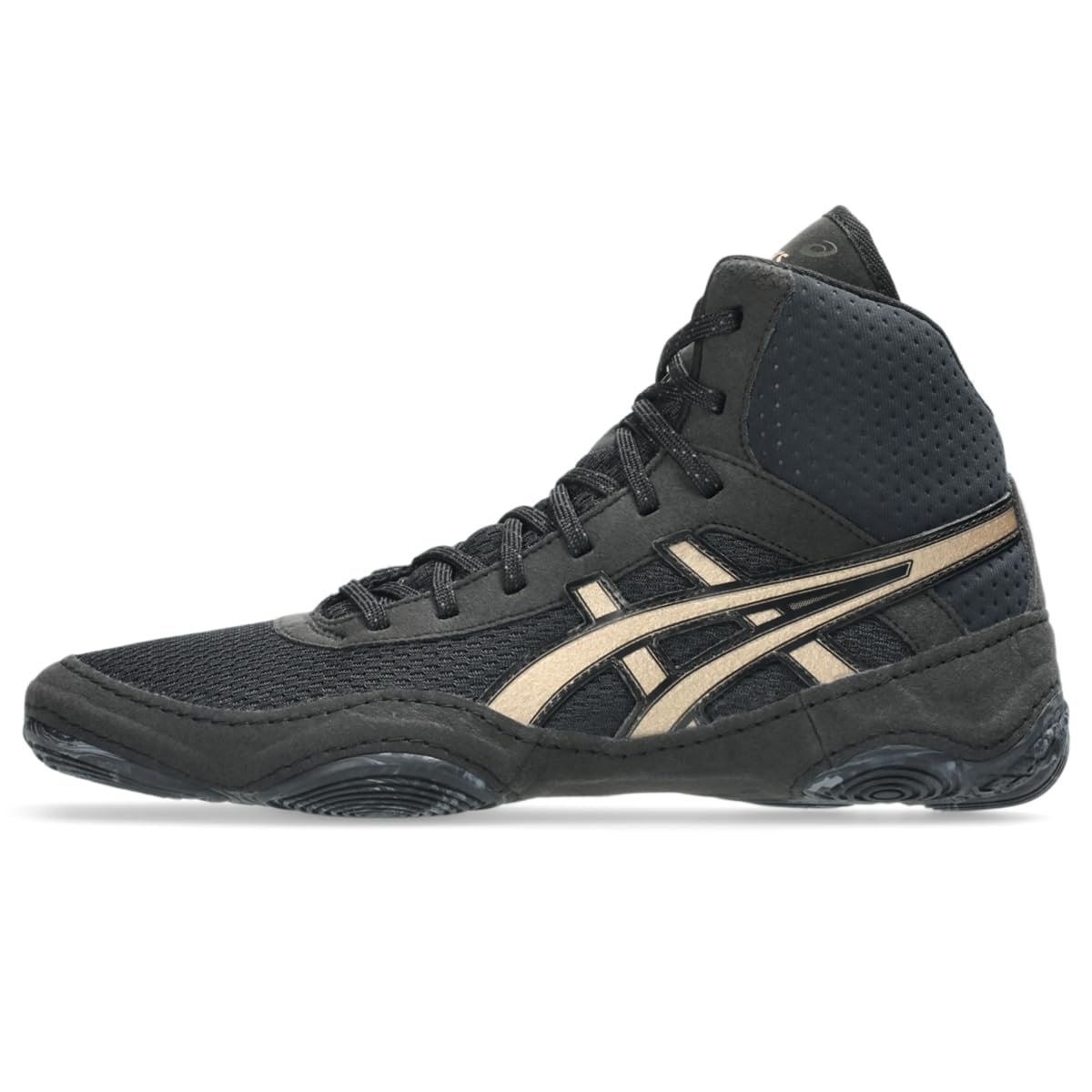
The brand-name starter shoe that beginners keep coming back to.
ASICS is the name on the wall of most wrestling rooms, and the MATBLAZER is the women’s-specific entry into that lineup. Owners call it an amazing beginner shoe, and the appeal is simple: a known brand, a loveable color, and a lacing system that is easy to dial in. Grip and comfort land well, so a first-season wrestler has a reliable base underfoot.
Quality is the aspect buyers praise most by a wide margin, with appearance a clear second. That is the pattern you want from a starter shoe — buyers trust the build and like how it looks. Value is also positive, which matters when you are outfitting a new wrestler who may not stick with the sport. At 1.44 pounds, it stays light enough to learn footwork in without feeling clunky.
Now the part you need to hear: this shoe runs very small. Sizing is the loudest negative on the whole listing, with many buyers saying it runs tight on the toes and others finding the fit great. Order up, and be ready to return if it comes in snug. Durability is mixed as well, with some reporting trouble after a couple of weeks and others saying they last. Get the size right and it is a solid first shoe; get it wrong and you will be sending it back.
The starter-shoe math: a women’s-specific ASICS with positive grip, comfort, and value scores, at 4.5+ stars across 470+ ratings — the most-reviewed pick here.
Size it up, seriously: this is the one shoe on the list that consistently runs small. Order a size above your usual and check the fit before your first practice.
The first-pair choice: a new female wrestler who wants a trusted brand name and an easy lacing system to learn on.
One warning before you click: the sizing runs very small, so order up or you will be returning a tight pair.
Know the Specs
Flat sole versus cushioned sole
A wrestling shoe uses a flat sole so your whole foot stays planted on the mat. That flatness is what lets you drive and pivot sideways without your balance shifting back. A cushioned or springy sole that works fine for running steals mat feel and makes you less stable. Look for a sole that is sewn on rather than only glued — a stitched sole handles repeated pivots better.
Cut and ankle height
The cut tells you how much ankle the shoe covers. A lower cut gives you more mobility and a lighter feel. A low-mid cut wraps a little higher for extra support while still letting you move. There is no single right answer — match the cut to how much support you want while learning versus how much freedom you want once you trust your footwork.
Toe box width
The toe box is the front section that holds your toes. A wide toe box leaves room for a broad forefoot or a bunion, so nothing pinches when you push off. A snug toe box gives a more locked-in feel but squeezes wide feet. If you have ever winced stepping onto a mat, width is usually the culprit.
Sizing and insole length
Sizing is the most common pain in this category, and it varies shoe to shoe. Some run small, some run true. Where a listing gives an insole length in inches, use that number over the size label — it tells you how much room your foot actually gets. When a shoe is known to run small, order up before you ever lace it up.
Common Questions
Should I size up or down in women’s wrestling shoes?
Can I use boxing shoes for wrestling?
What is the difference between a wide toe box and a regular one?
Do I need laces or a hook and loop strap?
How long should wrestling shoes last?
Are these shoes suitable for powerlifting and weightlifting too?
What does “low-mid cut” mean for ankle support?
Will a wrestling shoe work for a beginner on a budget?
Can my daughter wear these for youth wrestling?
How do I keep grip on a sweaty mat?
The Bottom Line
Fit and sole type are the whole game in women’s wrestling shoes. For most women, the winner is the Otomix Women’s Stingray Escape, because its half-size range and sewn-on flat sole give you an exact fit and trusted grip on the platform. If a roomy toe box is what your foot needs, grab the Sisttke Womens Wrestling Shoes. And if you are outfitting a first-season wrestler, the ASICS Women’s MATBLAZER is the known-brand starter to reach for — just order up on the size.
One nudge before you decide: the Otomix holds the highest score of the group at 4.5+ stars, and the half-size fit is why it can claim that. Whichever pair you pick, get the size right first — a perfect sole under the wrong fit is still the wrong shoe.
How we choose
We do not accept paid placement. Every pick is matched to a real buyer and a real use-case; we do not hands-on test units.
Sources
Specifications: manufacturer listings and product documentation. Review insights: verified customer reviews, as of November 2026. Pricing: not shown on this page (it changes often); check the current price via the retailer link.
As an Amazon Associate, Tactical Gear Guy earns from qualifying purchases. This does not affect which products we feature.