Specs are compiled from manufacturer listings and verified buyer reviews and can change over time — please confirm the key details on the product page before buying.
If you want one answer: the Orolay 092 is the parka most buyers should start with, because it pairs 90% RDS-certified down with a wind-resistant, water-resistant shell, a fleece-lined hood and 6 exterior pockets. Everything else on this list is a specialist — some are built for wet coastal sleet, some for sub-freezing dry cold, and some for women who need a plus-size cut that actually layers over a sweater.
This guide is built by comparing the manufacturers’ published specifications and the patterns across verified customer reviews, so you get each pick’s real strengths and trade-offs instead of marketing spin.
A winter parka only works when the fill, the shell and the fit match the cold you actually get. Below, every pick is matched to the cold you actually live in — the quick way to narrow your shortlist of women’s winter parka coats.
Top Picks

How To Choose The Best Women’s Winter Parka Coats
The mistake most people make is buying the thickest-looking coat on the rack instead of checking the fill. A parka keeps you warm by trapping a layer of still air against your body, and that job is done by the insulation inside — not by bulk on the outside. Get the fill and the shell right and a lighter coat carries you through a real winter.
Start with fill power, not with thickness
Fill power is a score for how much loft a set amount of down fluffs up to — higher numbers trap more air for the same weight. The Marmot Montreaux runs 700 fill-power down, and the Waukee steps up to 750+ fill power. Both are lighter than their warmth suggests, which matters when you are standing at a bus stop in a heavy coat. Synthetic fills like the 100g HEATSEEKER in The North Face Junction do not carry a fill-power number at all, but they keep working when damp — useful if your winters are wet rather than dry.
Read the shell language carefully
“Water-resistant” and “waterproof” are not the same promise. A water-resistant shell with a DWR finish (a coating that makes water bead and roll off) handles light snow and a drizzle, which covers the Orolay 092, The North Face Junction and the Waukee. A waterproof shell is the better bet for slush, freezing rain and long walks in wet weather — the Pioneer Camp and The North Face Arctic both list waterproof performance. If you live somewhere the snow arrives wet, spend your effort here.
Decide your layering room before you pick a size
An oversized cut like the Orolay 092 is designed to go over a chunky sweater, and its side zippers open up extra room around the hips when you sit down. A regular fit like The North Face Junction is cut to sit closer to the body. Neither is wrong — but a regular-fit parka bought one size up will feel bulky at the shoulders, while an oversized parka bought true to size may feel like a tent. Check the bust, shoulder and hip measurements before you pick.
Side-by-Side Comparison
| Model | Best For | Insulation | Shell | Hood | Amazon |
|---|---|---|---|---|---|
| Orolay Thickened Down Jacket★ Best Overall | Everyday winter commuting | 90% RDS down / 10% duck feather | Wind-resistant, water-resistant | Fleece-lined, adjustable | Amazon |
| Women’s Plus Size Winter ParkaBest Plus-Size Fit | Plus-size shoppers wanting a deep-pocket coat | — | Waterproof, windproof | Hooded | Amazon |
| Pioneer Camp Long PufferBest for Deep Cold | Cold snaps down to 5°F | Heavyweight puffer fill | Waterproof, windproof | Removable faux fur trim | Amazon |
| Columbia Suttle Mountain Long | Wet city winters, brand-name build | Insulated | Insulated shell | Hooded | Amazon |
| The North Face Junction | Mild-to-moderate winters, light carry | 100g HEATSEEKER synthetic | Recycled polyester, non-PFC DWR | Insulated, fleece-lined | Amazon |
| Waukee Long Down Coat | Deep dry cold, hands-free carry | 750+ fill power duck down | DWR-treated polyester | Removable fur ruff | Amazon |
| Marmot Montreaux | Long walks in blustery weather | 700 fill-power Down Defender | Water-resistant down treatment | Removable hood, fur ruff | Amazon |
| Helly Hansen Senja | Wet northern winters, streamlined fit | Insulated | Helly Tech protection | Hooded | Amazon |
| The North Face Arctic Parka | Extreme cold, full waterproofing | 600 fill recycled down | DryVent waterproof shell | Adjustable hood | Amazon |
Detailed Reviews
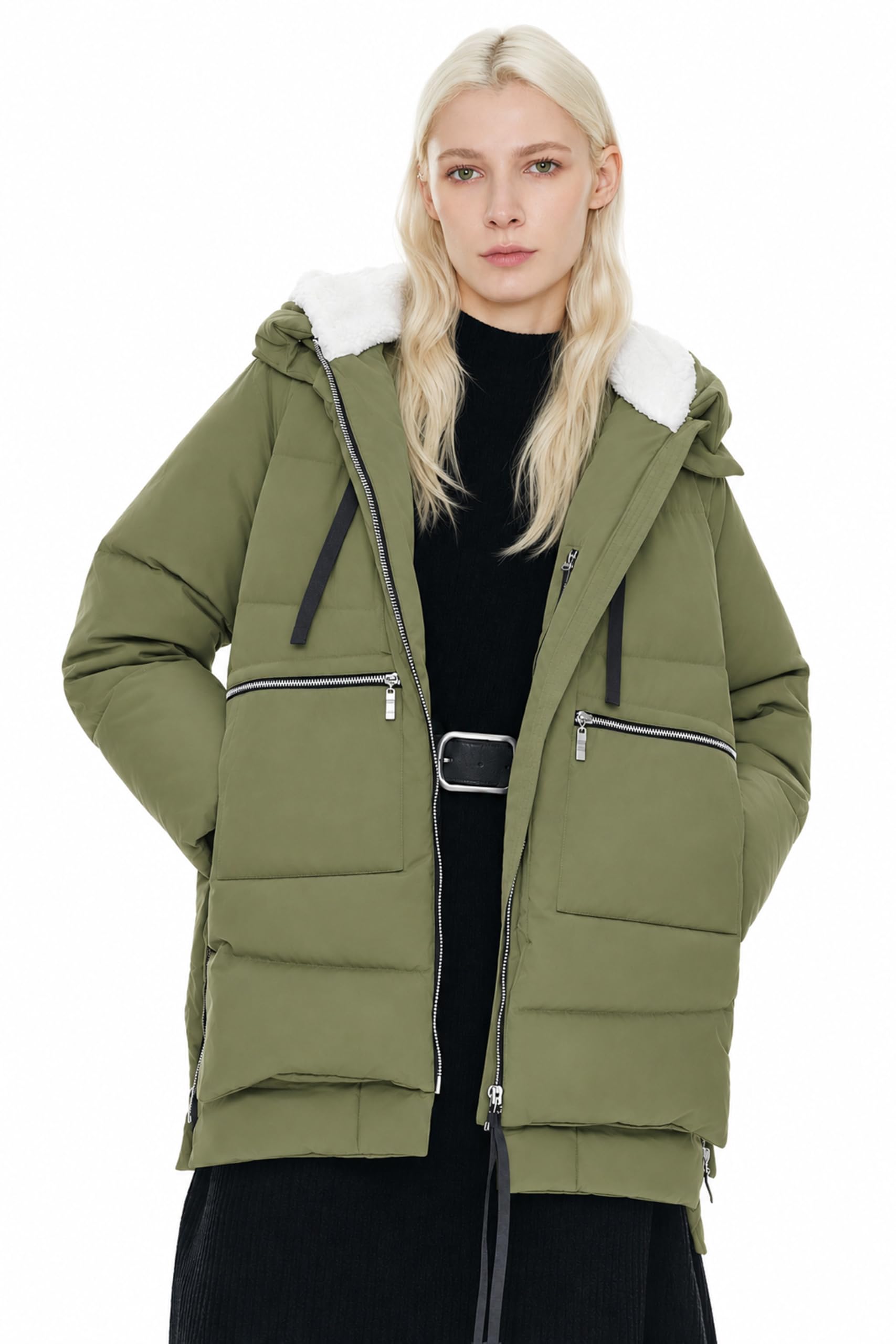
1. Orolay Women’s Thickened Down Jacket
Our pick — 4.5+★ from 29,500+ verified ratings; the strongest balance of quality and price.
The oversized down parka that became a New York winter staple, with 90% RDS down and 6 pockets.
The short version: this is a genuine down coat, not a polyester lookalike. The fill is 90% RDS-certified down blended with 10% duck feather, which is the stuff that actually traps body heat, and the shell is built to shrug off wind and light rain. Swap it for a cheaper synthetic-filled shell and you notice the difference the first time the temperature drops below freezing — down gives you more warmth for less bulk against your body.
The details are where this coat earns its place. There is a fleece-lined hood that sits soft against your neck instead of crackling, ribbed cuffs that seal the wrist gap, and an adjustable hem you cinch down when the wind picks up. The 6 exterior pockets are the headline for anyone who has ever juggled a phone, keys and gloves — everything gets its own space and your hands get somewhere warm to sit. The side zippers open extra room around the hips and hem, so sitting in a car or on a train does not turn into a wrestling match.
The honest catch is sizing. This is a relaxed, oversized cut by design, so if you want it to sit close to your body you will need to check the bust, shoulder, sleeve and hip measurements and consider sizing down. The wind resistance is real but this is a water-resistant shell, not a waterproof one — fine for dry snow and a light drizzle, less ideal if you walk long distances through wet slush. For most winter commutes, school runs and weekend errands, it is the easiest coat on this list to live with.
Where it wins
- Real 90% RDS-certified down fill with 10% duck feather for genuine cold-weather warmth
- 6 exterior pockets plus side zippers give room for layers and easier sitting
- Fleece-lined, adjustable hood and ribbed cuffs close off the two spots cold air sneaks in
What to weigh up
- Oversized cut means most buyers should size down for a closer fit
- Shell is water-resistant rather than fully waterproof
Made for: the woman who wants one coat to cover commutes, errands and school runs without thinking about it.
Think twice if: you walk long stretches through wet slush, where a waterproof shell like the Arctic Parka serves you better.
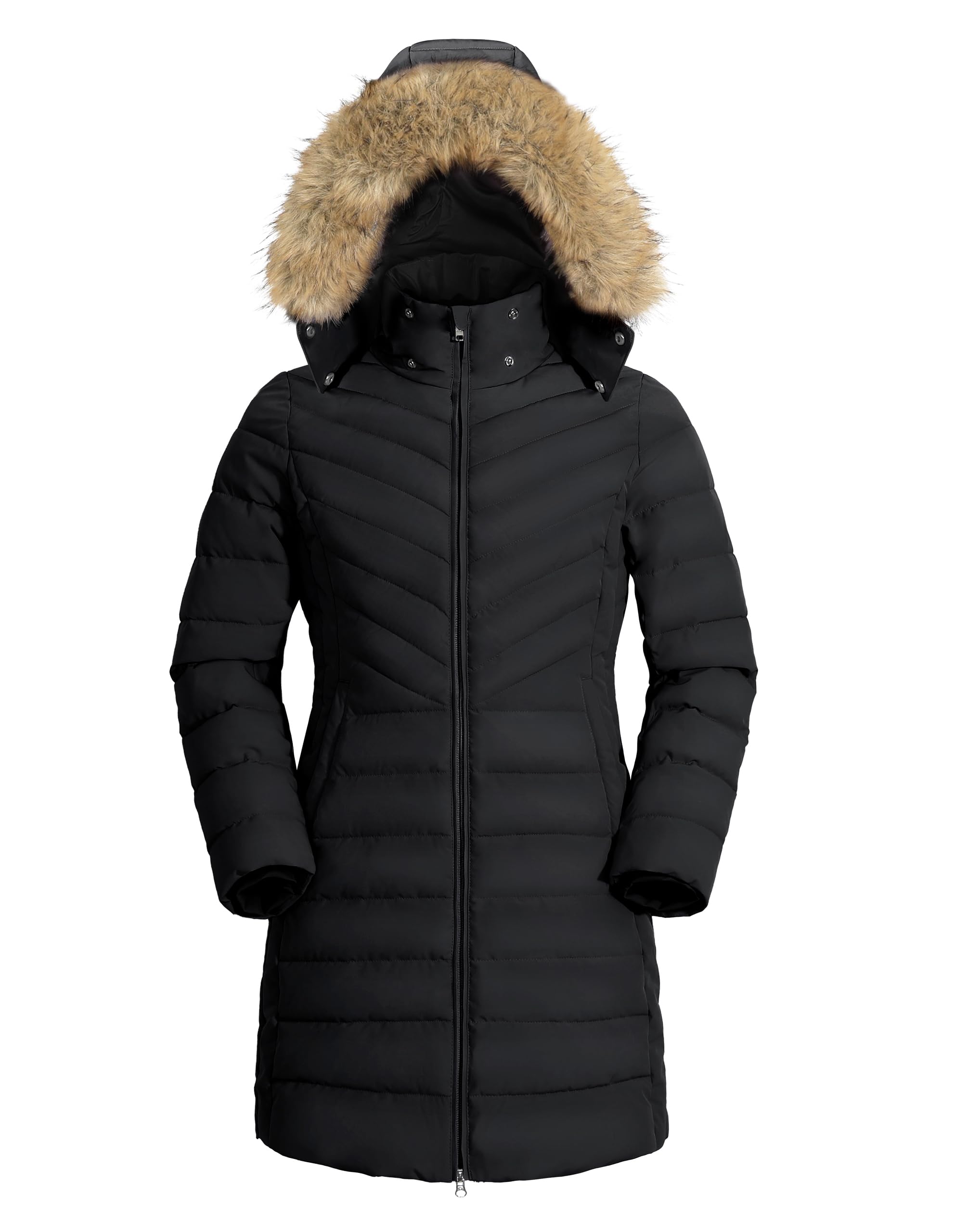
2. Women’s Plus Size Winter Parka Jacket Down Coats
Built for a plus-size frame first, with a waterproof shell and cuffs that seal the wrist draft.
Appearance is the most-discussed quality in the reviews, with owners repeatedly calling it sharper-looking than the coat it replaced. The warmth is the close second, and a lot of that credit goes to the knit cuffs at the wrist. Those sweater-style cuffs sit snug against your skin, so cold air does not funnel up your sleeve when you reach for a car door or a shopping trolley handle.
The pockets are worth flagging too, because they are deep enough to swallow a bottle rather than just a phone. They are deep enough to hold a bottle, not just a phone and keys. The shell is waterproof and windproof, which puts it ahead of the water-resistant Orolay above for anyone whose winters arrive as wet snow and freezing rain rather than dry cold.
The catch is sizing consistency. Fit draws mixed feedback in the reviews, and the size scale itself gets debated — some women find their usual size roomy, others do not. Measure yourself against the size chart rather than trusting the label. Weight is the other point to know: some find this a heavier coat to carry, which is the trade-off for a thick, waterproof build.
Deep pockets, real shell: a waterproof, windproof coat with knit cuffs that close the wrist gap and pockets that hold more than a phone.
The sizing question: check the chart against your own measurements, because fit reports split between roomy and snug.
Reach for this if: you want a plus-size cut with a waterproof shell and pockets that actually hold your stuff.
Look elsewhere if: you want a featherweight coat — this one carries some heft.
3. Pioneer Camp Women’s Winter Coats
The one that names its temperature range out loud: rated for 5°F to 45°F, waterproof, and cut above the knee.
Most parka listings leave you guessing how cold is too cold. This one does not — Pioneer Camp states a working range of 5°F to 45°F, which tells you straight away that it is built for a hard winter rather than a mild one. The build is heavyweight, the length runs above the knee, and both the waterproof shell and the windproofing are listed as core features. On a wet, windy January day that combination is what keeps you dry on the outside and warm on the inside.
It is a flexible coat rather than a fixed one. The hood comes off entirely to leave a simpler silhouette, and the faux fur trim — made from recyclable materials — detaches separately, so you can tune how dressy it looks for a commute versus a night out. Front and side zippers add usable storage and give the hem some give when you move or sit.
The fit is where you should do your homework. The reviews split between women who find it large enough to pull on over their head and women who find it runs small — so try your usual size mentally against the chart, and size up if you plan to layer a thick sweater. Quality is the trait it is praised most for, and the length gets consistent approval, so the core build holds up. Just do not assume the number on the tag tells the whole story.
The temperature promise: a stated 5°F to 45°F range, a heavyweight build and a waterproof shell make this the pick for genuinely cold, wet winters.
Configuration options: hood and faux fur trim both detach, so one coat covers dressy and casual outings.
Best matched to: cold climates where the forecast regularly dips below freezing and the snow arrives wet.
The one snag: fit reports are inconsistent, so rely on the size chart over your usual label.
4. Columbia Women’s Suttle Mountain Long Insulated Jacket
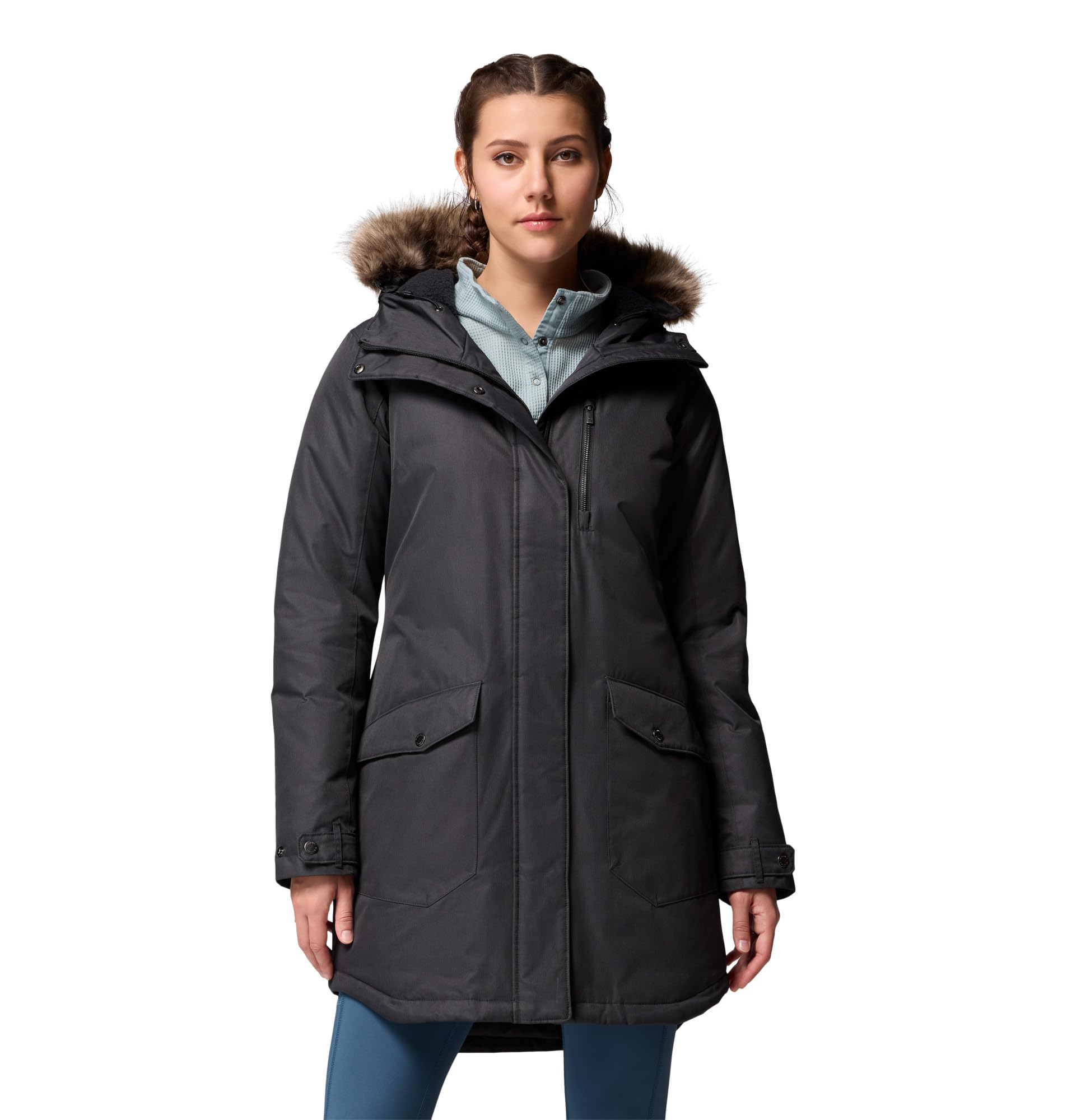
A long insulated shell from an outdoor brand that has been building for cold weather for decades.
What people notice first is that this coat keeps them dry as well as warm — two separate jobs that a cheap shell often fails at one of them. The insulation runs the full length of a long cut, so the warmth reaches past your hips rather than stopping at the waist. The colour range gets its own share of appreciation, which matters if you want a parka that looks deliberate rather than purely functional.
Columbia’s outdoor heritage shows in the build. This is a shell designed for people who spend real time outside rather than sprinting from a car to a door, and the quality of the construction is the trait it is praised most for. Compare it to the Pioneer Camp above and you get a similar long, insulated silhouette with a more established outdoor brand behind the pattern-making.
Now the sizing, which is the one thing to plan around. Fit feedback splits — some women find it true to size while others find the sleeves tight and the overall cut small. Length is similarly divided, with some loving the coverage and others finding the sleeves run long. None of that makes it a bad coat, but it does mean you should read the size chart carefully and consider going up if you are between sizes or plan to layer.
The case for it
- Long insulated cut keeps warmth running past the hips
- Keeps you dry and warm in the same coat, per owner experience
- Construction quality is the thing it is praised most for
Before you commit
- Sleeves and overall sizing run tight for some women
- Sleeve length divides opinion — short on some, long on others
Suits you if: you want a long, dry, warm coat from a name you recognise in outdoor gear.
Worth a second look if: you are between sizes — the sleeves are the tightest part.
5. THE NORTH FACE Women’s Junction Insulated Parka
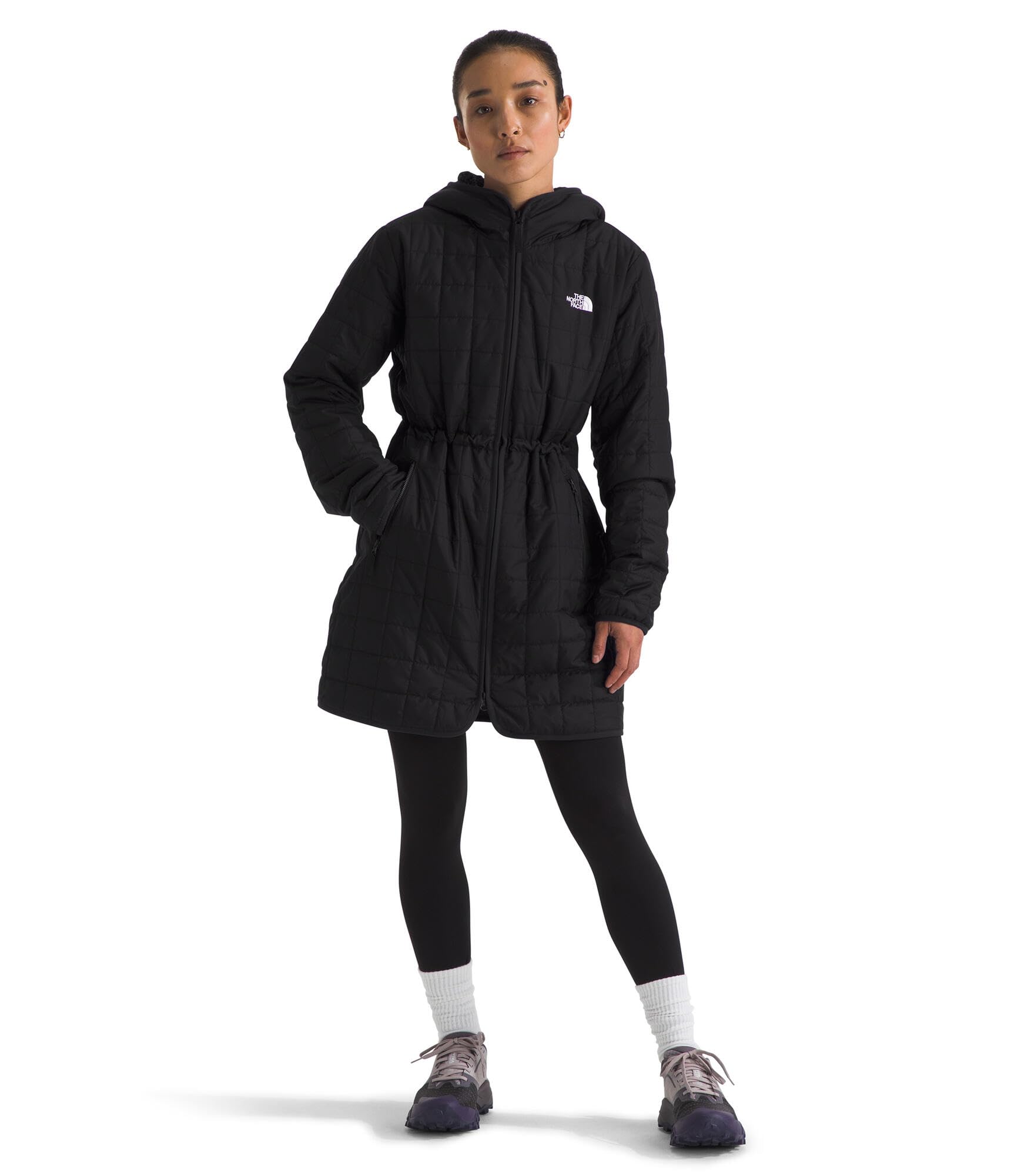
Runs on 100g HEATSEEKER synthetic fill, so it shrugs off damp where down would clump.
Down is wonderful until it gets wet, and then it stops lofting. This parka sidesteps that entirely with 100g HEATSEEKER synthetic hollow-core insulation, 70% of it recycled, which keeps its warmth even when the weather turns soggy. The North Face positions it for fall through spring with a layer underneath, which is an honest framing — this is a three-season coat in most climates and a winter coat in a mild one.
What makes it a pleasure day to day is the weight. Owners consistently rate it light for how warm it feels, and a cinched waist stops it looking like a sleeping bag with sleeves. The hood is insulated and lined with high-pile fleece, the cuffs and hood edge have stretch binding to cut drafts, and an internal draft flap sits behind the front zip so gusts do not slip through the gap. Secure-zip hand pockets hold your phone and keys, and an internal locker loop at the back of the neck makes it easy to hang on a hook.
The shell is 100% recycled polyester with a non-PFC DWR finish, meaning the water-repellent coating is made without added fluorine compounds — a detail The North Face highlights and worth knowing if that matters to you. The one recurring grumble is the zipper, which a few find sticky on the way down. Treat it gently and it does its job. This is the coat for a Houston or coastal winter, not a Minnesota January.
Warm without the weight: 100g recycled HEATSEEKER fill and a cinched waist give you a parka that layers easily and packs down small.
Honest climate limit: the warmth is designed for moderate cold with layers, so extreme dry cold needs the heavier down picks.
Pick this one if: your winter is damp and moderate and you want a coat you barely notice wearing.
The sticking point: the zipper occasionally grabs — ease it rather than yank it.
6. Women’s Waukee Long Down Coat

750+ fill power duck down in a long silhouette, with backpack straps for when you overheat indoors.
Here is the number that tells you what this coat is about: 750+ fill power white duck down. That is a high loft rating, and it means the insulation traps more air per ounce than a standard down fill. The practical result is a coat that feels lighter than it looks while still holding serious warmth — the long silhouette runs full length for maximum coverage, and the shell is DWR-treated polyester with bonded quilting to stop the down shifting into cold pockets.
The clever bit is the backpack straps. Walking into a warm shop or a heated train carriage in a long down coat is a recipe for overheating, and instead of carrying it you can sling it over your shoulders like a backpack and keep your hands free. The removable synthetic fur ruff cinches around your face to block wind, then comes off when you want a cleaner look.
Compare this directly to the Marmot Montreaux below and the fill tells the story: 750+ fill power here against 700 fill power there. Both are premium down coats, but the Waukee squeezes more loft out of each ounce of fill. The one thing to plan for is that a long down coat this warm is genuinely a cold-weather tool — in a mild winter it will run hot.
The loft number: 750+ fill power down gives you more warmth per ounce than the 700 fill-power Marmot below.
Hands-free carry: backpack straps let you wear it on your back once you step indoors.
Fits the bill for: deep, dry cold where you want maximum warmth at minimum carry weight.
Pass it over if: your winters are mild — this much loft is overkill.
7. MARMOT Women’s Montreaux Coat

Down treated to survive rain plus a fleece-lined torso — a coat built for windy, wet walks.
Standard down loses its loft when it gets wet, which is why Marmot treats the 700 fill-power down in this coat with Down Defender, a water-resistant coating that helps it keep working through unforeseen rain. Add a fleece-lined torso for an extra layer of wind protection and fleece-lined handwarmer pockets and wrist cuffs, and you get a coat that feels warm the moment you put your hands in it. The warmth is the quality it is praised most for, and it holds up in genuinely below-freezing weather.
The practical details are thoughtful. The length lands at mid-thigh for coverage without dragging, the hood and synthetic fur ruff both come off, and there is an interior zipper pocket plus drop pockets inside for valuables and gloves. The two-way zipper is the nicest touch — you can unzip from the bottom when you sit down, so the coat does not bunch up around your hips.
Be careful with sizing here, because it is the most divisive coat on this list. Fit and sizing feedback leans negative overall, so the risk is real: some women find it runs small, others find the cut off against their expectations. Zipper quality is the other recurring complaint. If you order, measure against the size chart and expect to possibly exchange — the coat itself is excellent once it fits right.
What earns it a place
- 700 fill-power down treated with water-resistant Down Defender
- Fleece-lined torso, pockets and wrist cuffs for instant warmth
- Two-way zipper unzips from the bottom so it does not bunch when you sit
Know before you buy
- Sizing feedback is the most mixed of the whole shortlist
- The zipper draws recurring quality grumbles
Worth it for: the walker who wants a warm down coat that copes with rain and wind without clamming up.
Only if you measure first: sizing is unpredictable enough that the size chart is not optional.
8. Helly-Hansen Women’s Senja Parka

A Norwegian rain-and-cold specialist’s take on the parka, with Helly Tech protection built in.
Helly Tech protection is the core of this coat — a weatherproofing system from a brand whose home market is wet, cold and coastal. The parka also carries an inner waist adjustment, which lets you cinch the shape to your body rather than wearing a straight tube, plus multiple pockets and fleece-lined hand-warming pockets you can bury your hands in. For a northern winter, the warmth holds up.
Where this coat asks something of you is the fit. The most-discussed thing about it is sizing, and the reports lean toward it running large — several women find they need to size down. So treat the fit as adjustable both ways: pick a smaller size and use the inner waist adjustment to tune the shape. Get that right and you have a properly weatherproof coat; get it wrong and you will be swimming in it.
This is the smallest-data pick on the list, which is worth saying plainly — the body of owner experience behind it is thinner than the Orolay or the Marmot. That is not a knock on the coat, just a reminder that you are relying more on Helly Hansen’s weatherproofing reputation than on a mountain of independent feedback. If you know your size and want serious protection, it is a solid premium choice.
Weatherproofing pedigree: Helly Tech protection and fleece-lined hand-warmer pockets from a cold-weather specialist.
The sizing risk: it tends to run large, so sizing down and using the inner waist adjustment is the way in.
Choose it for: a wet, cold northern winter where weatherproofing beats styling flourishes.
Downsize first: order smaller than you think you need.
9. THE NORTH FACE Women’s Arctic Parka
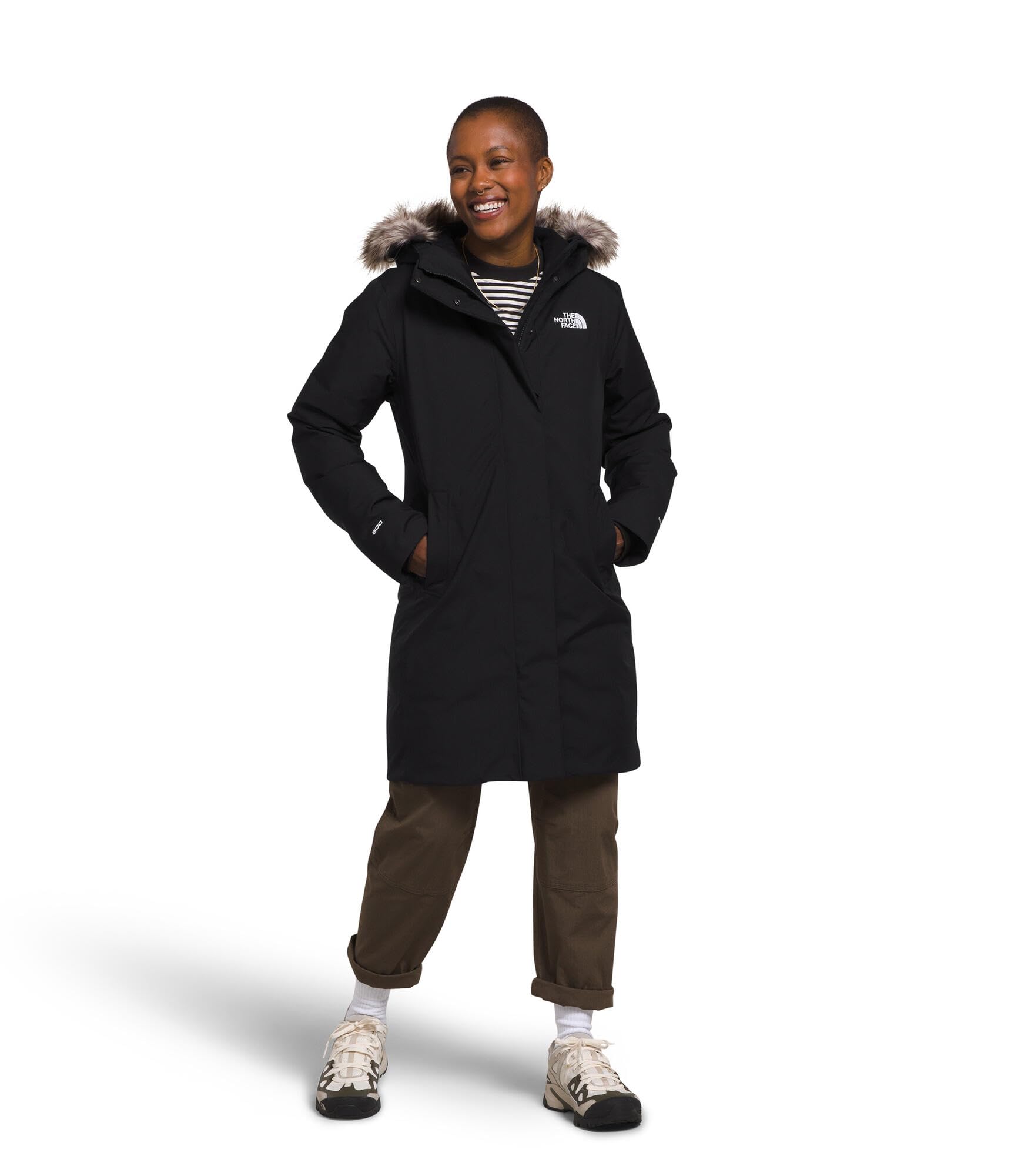
The combination most coats skip: a full DryVent waterproof shell wrapped around 600 fill recycled down.
Most down coats on this list are water-resistant. This one goes further. The shell is DryVent, a genuine waterproof membrane, and the insulation is 600 fill recycled down — so you get the loft and warmth of down without the usual panic when the weather turns to freezing rain. The adjustable hood, standard fit and full parka length round out a coat built for the worst a winter can throw at you.
The fit is one of its strengths. Feedback trends generous, and the length is appreciated by women who want real coverage rather than a hip-skimming jacket. It is also light for how much protection it carries, and the styling earns its share of compliments. Compared directly to The North Face Junction above, this is the heavier-duty sibling: a waterproof shell instead of a water-resistant DWR finish, and 600 fill down instead of 100g synthetic insulation.
The honest trade-offs: the zipper is the recurring weak point, drawing mixed feedback and reported problems. Durability opinions also split. And it is the priciest pick here by a clear margin, so you are paying for the waterproof membrane — worth it if you live somewhere wet and cold, less so if your winters are dry and you could spend less on the Waukee.
Why it stands out
- DryVent waterproof shell paired with 600 fill recycled down
- Generous fit and long coverage that owners value
- Light for the protection it delivers
The honest caveats
- Zipper is the point most likely to let it down
- Durability feedback splits, and it is the top-tier choice
Ideal for: wet, brutal winters where a waterproof shell is non-negotiable.
Not the one if: your climate is dry — you would be paying for waterproofing you rarely need.
Know the Specs
Fill Power and Down Blends
Fill power is a score for how much loft a given weight of down fluffs up to — higher numbers trap more air and give more warmth for the same weight. The Waukee runs 750+ fill power, the Marmot 700, and the Arctic Parka 600 fill recycled down. Higher is not automatically better for every climate: a very high loft coat is excellent in deep dry cold and overkill in a mild winter. Also read the blend — the Orolay’s 90% RDS-certified down and 10% duck feather is a genuine down fill, not a synthetic imitation.
Water-Resistant vs Waterproof Shells
A water-resistant shell with a DWR finish makes light snow and drizzle bead off, which handles the average commute. A waterproof shell like the DryVent on the Arctic Parka or the waterproof shells on the Pioneer Camp and Plus Size parka keeps out heavier, wetter weather. If your snow falls wet rather than dry, prioritise the waterproof shell — it is the difference between arriving dry and arriving damp.
Hood and Cuff Construction
Cold air finds the gaps, so a fleece-lined hood and ribbed or knit cuffs matter as much as fill. A fleece-lined hood sits soft against the neck; ribbed or knit cuffs seal the wrist gap; a removable fur ruff can be cinched around the face to cut wind. The Orolay’s fleece-lined adjustable hood, the Plus Size coat’s knit sweater cuffs and the Marmot’s fleece-lined cuffs all target those two spots.
Length and Layering Fit
Parka length determines coverage — long, mid-thigh and above-the-knee cuts each keep a different amount of you warm. Fit determines whether you can layer. Oversized cuts like the Orolay are built to go over a sweater and use side zippers for hip room; standard or regular fits like the Arctic Parka sit closer. Always measure bust, shoulders, sleeve and hips against the size chart, since several coats here have divided fit feedback.
Common Questions
Is down warmer than synthetic insulation in a parka?
What does fill power actually mean on a winter parka?
Do I need a waterproof shell or is water-resistant enough?
Should I size up or down in an oversized down parka?
Is a down parka safe to wear in rain?
How do I wash a down winter parka without ruining the loft?
What is the difference between the North Face Junction and the Arctic Parka?
How long should a good winter parka last?
Will a long puffer parka be too warm for mild winters?
Can I wear a parka over a thick sweater for layering?
The Bottom Line
For most women, the women’s winter parka coats winner is the Orolay Thickened Down Jacket, because genuine 90% down fill, a fleece-lined hood, 6 pockets and side zippers cover everyday winter without a premium price. If you want the most weatherproof option for wet, brutal cold, the The North Face Arctic Parka and its DryVent waterproof shell are the top-tier pick. And for deep dry cold at a lighter carry weight, reach for the Waukee Long Down Coat with its 750+ fill power. Do the one thing that separates a great fit from a return — measure against the size chart before you order.
How we choose
We do not accept paid placement. Every pick is matched to a real buyer and a real use-case; we do not hands-on test units.
Sources
Specifications: manufacturer listings and product documentation. Review insights: verified customer reviews. Pricing: not shown on this page (it changes often); check the current price via the retailer link.
As an Amazon Associate, Tactical Gear Guy earns from qualifying purchases. This does not affect which products we feature.