Specs are compiled from manufacturer listings and verified buyer reviews and can change over time — please confirm the key details on the product page before buying.
Cold feet on a winter trail are not a small annoyance — they end the walk early and make every icy step feel risky. The fix is a women’s winter hiking boot with real insulation, a waterproof barrier that actually holds, and an outsole that grips packed snow instead of skating across it. This guide covers nine boots that do all three, sorted by who each one actually fits so you can pick in minutes.
This guide is built by comparing the manufacturers’ published specifications and the patterns across verified customer reviews, so you get each pick’s real strengths and trade-offs instead of marketing spin.
Insulation weight, waterproof construction, and outsole grip separate a boot that handles a January trail from one that leaves you cold by the second mile. Below you’ll find the picks that get that balance right — the best women’s winter hiking boots for cold-weather trails, snowshoeing, and everyday snow.
Top Picks
How To Choose The Best Women’s Winter Hiking Boots
Buying a winter hiking boot for women is really three decisions stacked on top of each other. You need warmth that matches your activity level, a waterproof barrier that holds up in slush and wet snow, and a sole that bites into packed trail instead of sliding over it. Miss on any one of the three and the boot disappoints.
Match insulation grams to your output
Insulation weight is listed in grams, and it is the clearest signal of how warm a boot runs. A 200g boot like the Columbia Bugaboot III or the Oboz Bridger 7″ is built for cold day hikes where you are moving enough to stay warm. A heavier 400g build like the North Face Chilkat 400 or the Oboz Sapphire is meant for standing around in deep cold or slower snowshoe sessions. If you run hot on a steep climb, the lower weight keeps you from overheating; if you stop often or hike flat, go warmer.
Waterproof membrane beats water-resistant leather
A waterproof membrane such as B-DRY or KEEN.DRY sits inside the boot and blocks water while letting sweat escape. Water-resistant leather sheds light snow but soaks through in slush. Look for seam-sealed construction or an explicit waterproof membrane rating on the spec sheet — that is what keeps your socks dry after an hour of wet trail.
Grip is the safety feature
Grip on ice and packed snow depends on two things: the outsole rubber and its lug pattern (the raised tread blocks on the bottom). The Merrell Coldpack 3 uses Vibram Arctic Grip (a rubber blend made to stay soft in the cold), so it keeps hold on packed snow instead of hardening up. Deep lugs and a rubber toe cap also shield your foot from rocks and roots underfoot — handy when snow hides the trail.
Size for the socks you actually wear
Winter hiking usually means thicker wool socks, and that changes your fit. If a boot runs snug, size up half a size so your toes still have room to move without the heel lifting. A boot that is too tight pinches circulation and leaves your feet cold no matter how good the insulation is.
Side-by-Side Comparison
| Model | Best For | Insulation | Waterproofing | Outsole | Amazon |
|---|---|---|---|---|---|
| Columbia Newton Ridge Omni-Heat II★ Best Overall | Casual winter walks and light trails | Insulated (Omni-Heat) | Waterproof | Rubber | Amazon |
| Oboz Sapphire 8″ Insulated B-DRYDeep Cold Value | Slow snowshoeing and deep-cold outings | 200g 3M Thinsulate | B-DRY membrane | Swiftcurrent winterized | Amazon |
| KEEN Hightrail PolarLight Hiker | Sneaker-feel cold day hikes | 200g KEEN.DRY | PFAS-free waterproof | Rubber | Amazon |
| Columbia Bugaboot III | All-conditions winter treks | 200g | Waterproof seam-sealed | Injection-molded rubber | Amazon |
| The North Face Sierra Mid Lace | Everyday winter wear with style | Insulated | Waterproof | Rubber | Amazon |
| The North Face Chilkat 400 | Deep cold and snowmobiling | 400g level | Fully waterproof | Rubber | Amazon |
| KEEN Greta 2 Classic | Roomy fit for thick socks | 200g | Waterproof leather | Versatile traction rubber | Amazon |
| Merrell Coldpack 3 Thermo Mid Zip | Grip on snowy and icy paths | 200g | Waterproof | Vibram Arctic Grip | Amazon |
| Oboz Bridger 7″ Insulated B-DRY | Mixed winter activity and snowshoeing | 200g Freeze Guard | B-DRY membrane | Trail Tread | Amazon |
Detailed Reviews
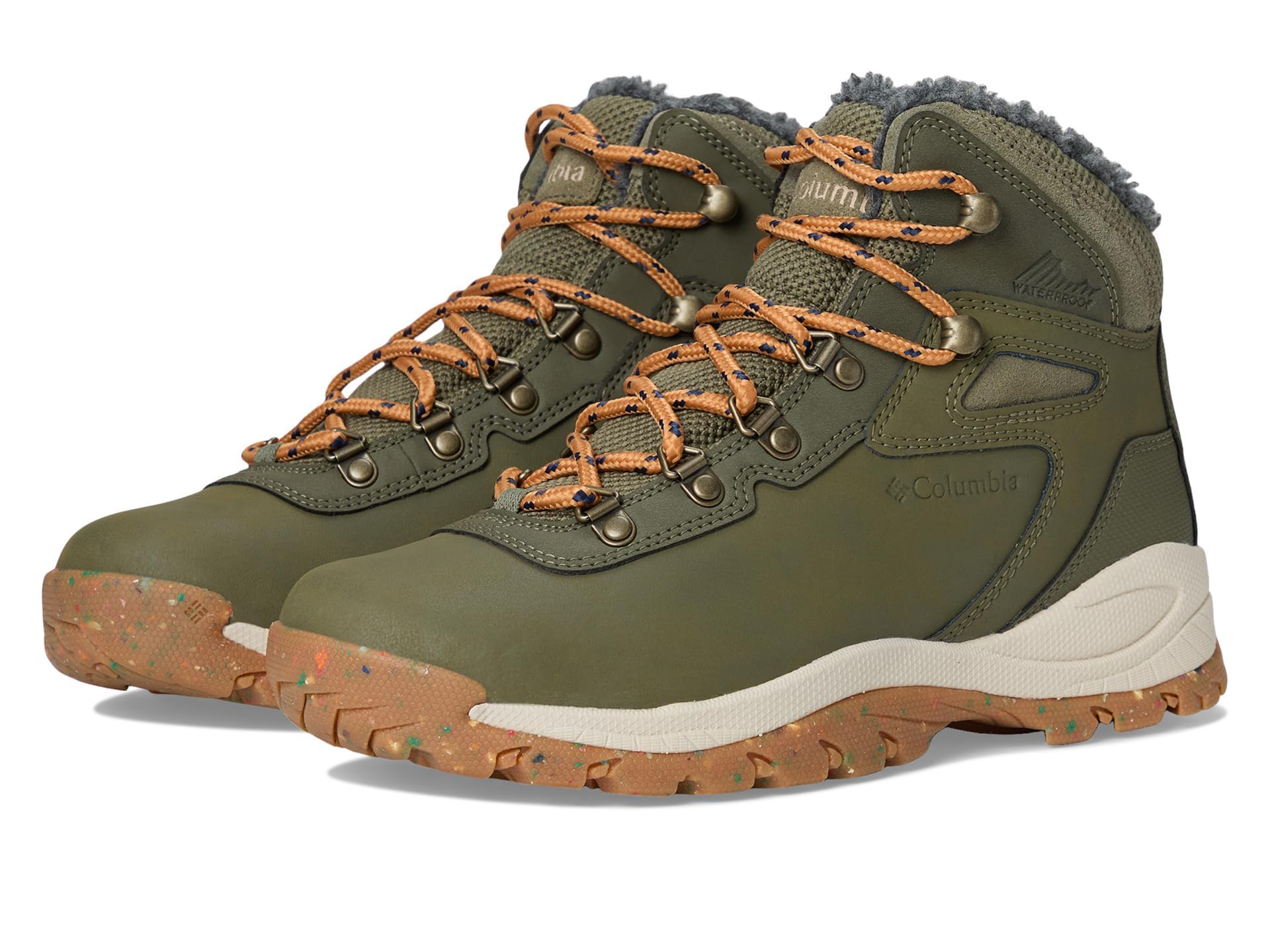
1. Columbia Newton Ridge Waterproof Omni-Heat II
Our pick — 4.5+★ from 450+ verified ratings; the strongest balance of quality and price.
The one that bridges icy sidewalk and snowy trail without asking you to pick a side.
For a boot that has to work on the pavement outside your door and on a groomed trail an hour later, the Newton Ridge Omni-Heat II is the pick. Columbia builds it waterproof and insulated under its Omni-Heat thermal-reflective lining, so your feet stay dry in slush and warm in cold wind. It is light underfoot for a winter boot, which matters when you are covering a few flat miles and do not want to feel like you are carrying bricks.
What wins people over is the looks-and-comfort combination. Owners single out the appearance more than anything else, and comfort is the next most-praised trait — this is a boot you can wear to the trailhead and not feel odd in town. One buyer’s feedback captures the roomy toe box: the boot gives “extra room for thick socks without binding the toes.” Warmth and water resistance round out the list of what people keep mentioning.
The honest catch is that insulation level. The Omni-Heat lining warms fast and suits active cold-weather use, but if you stand still in deep, bitter cold for long stretches, a heavier 400g-class boot will hold heat longer. For day hikes, snow walks, and general winter wear, though, it hits the balance most women actually want.
What earns its spot
- Waterproof plus Omni-Heat thermal-reflective insulation keeps feet dry and warm in cold, wet weather.
- Sleek everyday look that works on cement, tile, and trail without looking clunky.
- Roomy toe box gives space for thick winter socks without pinching.
Where it eases off
- Lining warms fast, but a heavier 400g-class boot holds heat longer when you stop moving in bitter cold.
- Best treated as a cold-weather trail and around-town boot, not a deep-winter standing-around boot.
Grab these for: cold day hikes, snowy commutes, and women who want one boot that looks right in town and holds up on a groomed trail.
Second-guess it if: you need maximum warmth while standing still in deep cold — a heavier insulated build serves that better.
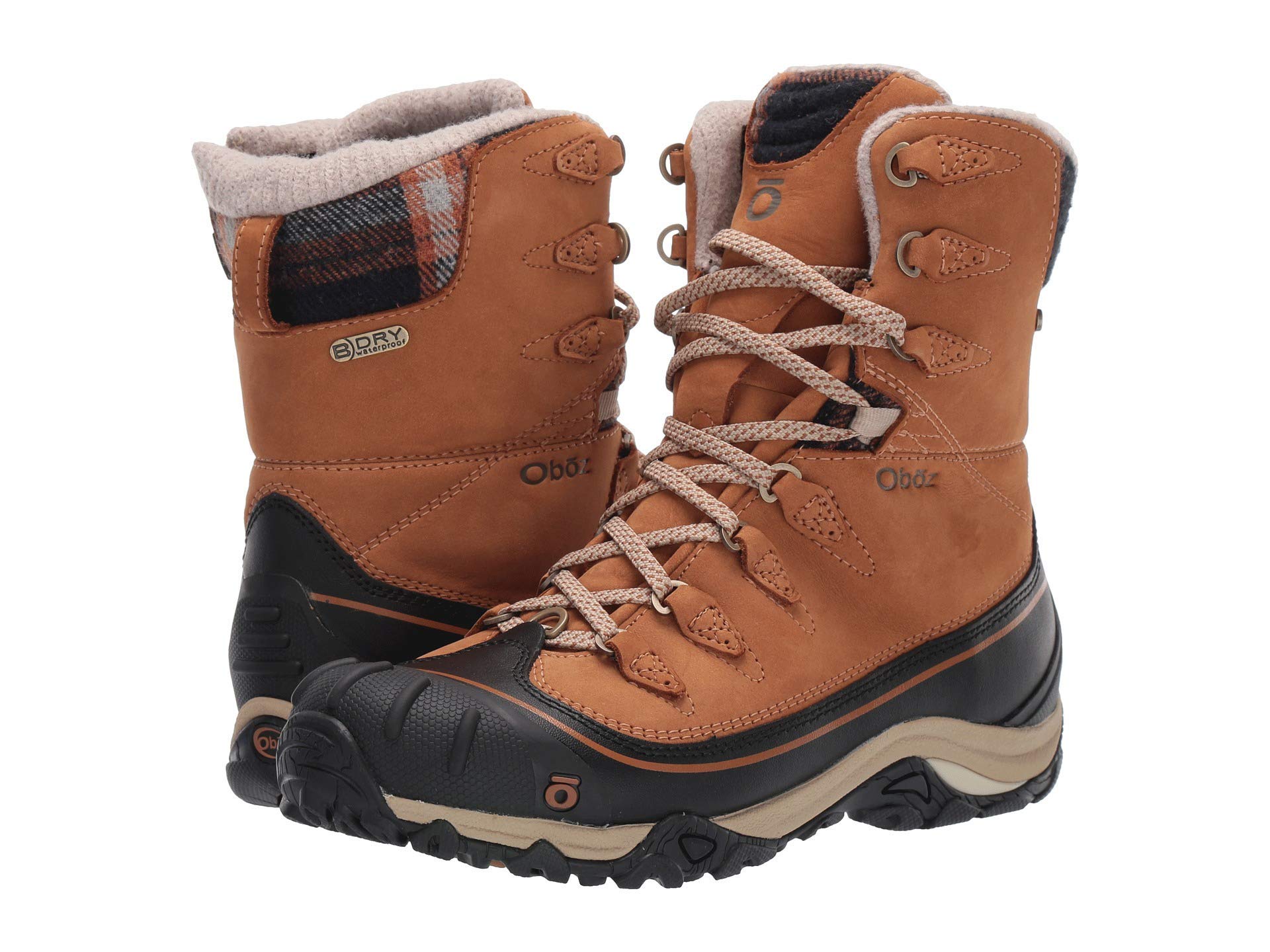
2. Oboz Sapphire 8″ Insulated B-DRY Boot – Women’s
An eight-inch winter boot built around a heat-trapping insole and 200g of Thinsulate.
The Sapphire is the value pick when your winter day means slower moving — snowshoeing, a long flat walk, standing around a fire. Oboz packs in 200g of 3M Thinsulate insulation, whose fine microfibers trap warm air, and pairs it with a B-DRY waterproof membrane so snowmelt does not seep through. The leather-and-synthetic upper takes the scuffs a trail throws at it.
Underfoot is where this boot does its quiet work. The O FIT Insole Thermal puts your foot in a neutral position and adds a Mylar base that cuts heat loss, with an EVA arch and deep heel cup for support. The winterized Swiftcurrent outsole gives you lugs made to bite cold ground, and a 1mm EVA plate under the forefoot keeps rocks from poking through. Quality is the clear headliner in owner feedback, with warmth right behind it.
The trade-off is weight and bulk — this is an eight-inch insulated boot, so it feels heavier and taller than a mid-cut sneaker-style hiker. If you want a low, flexible feel for fast miles, look at the KEEN Hightrail instead. For cold-weather outings where warmth beats speed, this is the smarter spend.
Heat-retention build: the Mylar-based thermal insole plus 200g Thinsulate is the combination that keeps a stationary foot from going numb on a cold snowshoe stop.
Worth knowing: tall shaft and warm insulation mean more bulk — great for slow cold days, less so for fast, low-profile hikes.
Made for: snowshoe outings, flat winter walks, and anyone who runs cold and wants insulation that holds while they pause.
Pass if: you want a light, low-cut boot for quick miles — the extra shaft and warmth become dead weight.
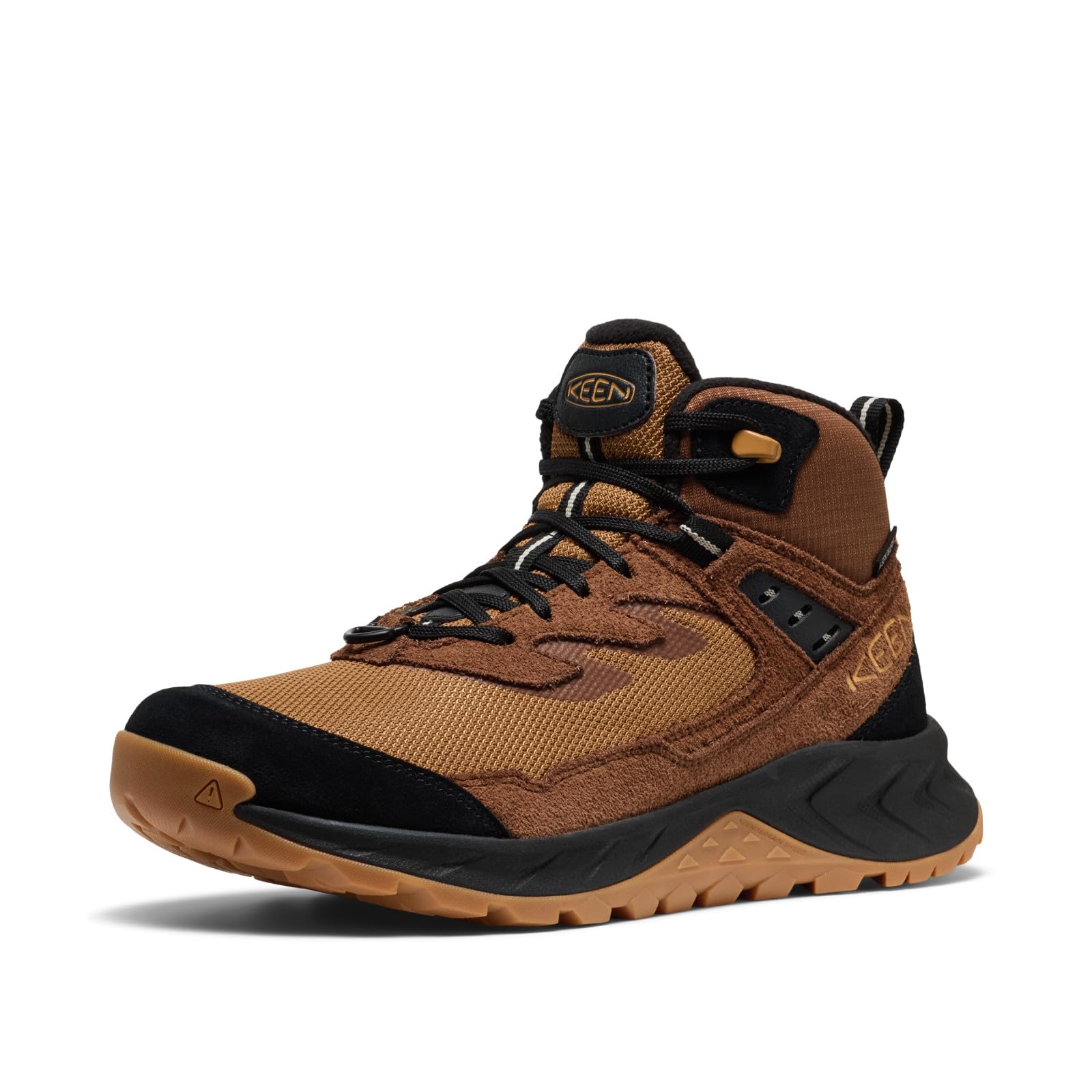
3. KEEN Hightrail Polar Hiking Boots
A sneaker-styled winter hiker that keeps the weight down and the waterproofing honest.
If your winter hiking looks more like a brisk two-hour trail than a deep backcountry push, the Hightrail Polar is the fast-and-light answer. KEEN builds it with 200g of KEEN.DRY recycled P.E.T. insulation and PFAS-free waterproof protection, so it shrugs off wet snow without a chemical treatment you might want to avoid. The upper blends water-resistant leather with a sneaker-like shape for a comfortable, low-bulk feel.
Fit is where KEEN makes its case. The boot is built on KEEN’s Contoured Fit, which curves with the natural shape of the foot for a more secure feel on the move. That makes it a good match for women who find blockier boots sloppy at the heel. The upside is agility on rolling trail; you feel the ground more than in an eight-inch insulated boot like the Sapphire.
The catch is comfort consistency. While quality reads strong, comfort draws mixed reactions — some find it very comfortable, others less so. That often means fit is the deciding factor, so try it with your winter socks and pay attention to the heel and instep before committing.
The weight angle: a low-profile insulated hiker that keeps you quick on rolling trail — a different brief from the bulkier cold-weather boots here.
Fit-first caution: comfort splits both ways in owner feedback, so treat the Contoured Fit as the make-or-break spec.
Reach for it if: you want an agile, sneaker-like winter hiker for fast cold-weather day hikes and light snow.
Look elsewhere if: you want guaranteed warmth while standing still, or you need a definitive comfort fit — this one is fit-dependent.
4. Columbia Bugaboot III
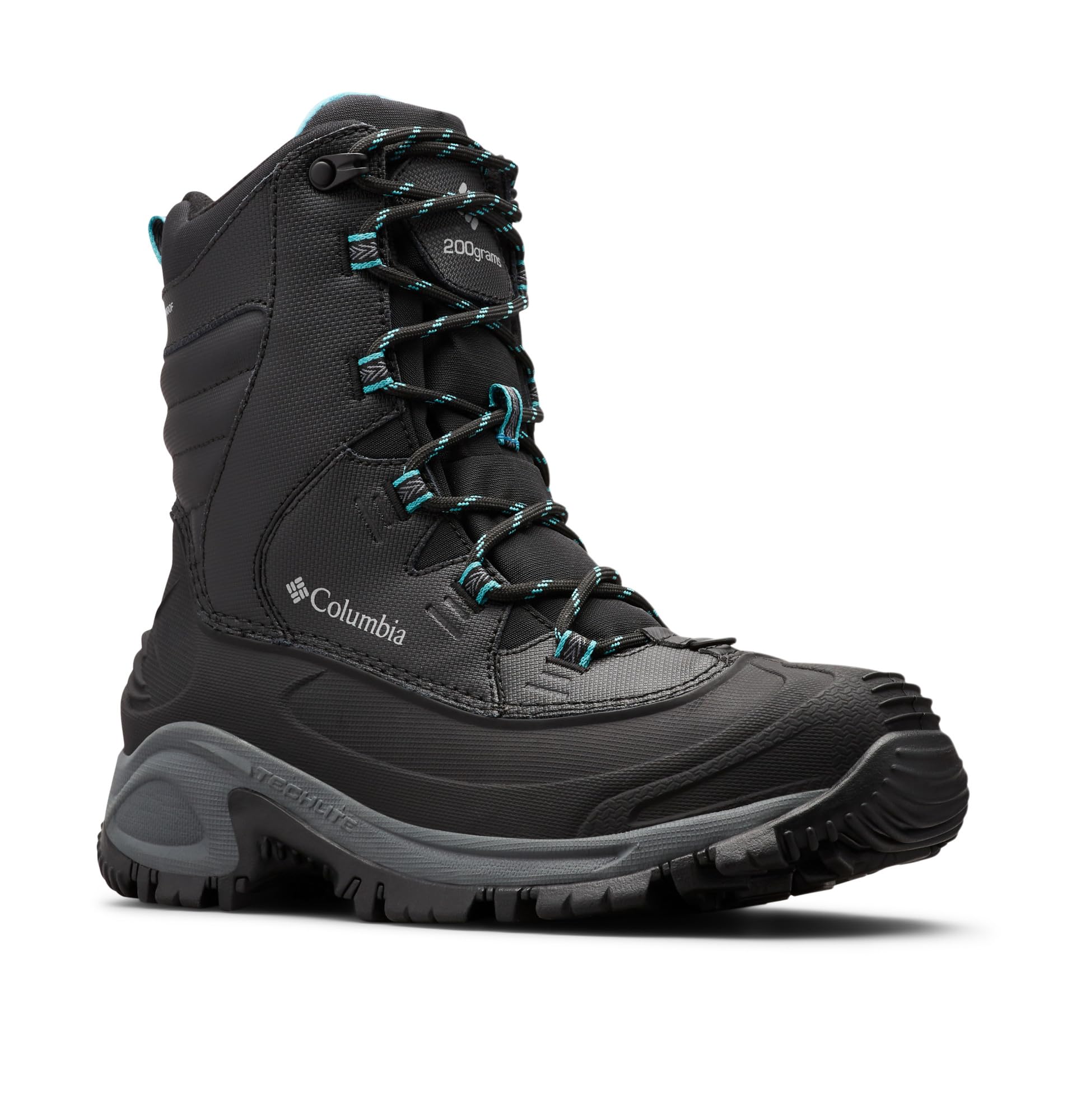
A three-season cold-weather boot stacked with insulation, a rubber shell, and seam-sealed coverage.
The Bugaboot III is the boot for the woman whose winter plans are unpredictable — a snowy trail one weekend, a slushy commute the next. Columbia fortifies it with 200g of insulation, a thermal-reflective lining, and a seam-sealed waterproof construction, then wraps the lower in an injection-molded rubber shell for splash protection. The PU-coated leather and textile upper holds shape through rough use.
Fit is the standout here — it is the trait owners praise most, and that matters in a boot this substantial. The support and traction also carry weight in the feedback, with owners calling out a supportive footbed and confident grip. It weighs 1.44 pounds, which is lighter than the North Face Chilkat 400 at 1.63 pounds — a real gap if you want insulation without extra heft. Some buyers find it bulky, so it sits on the beefier side of the mid-cut class.
Worth knowing before you buy: the true-to-size fit Columbia advertises is the reason so much of the feedback lands on fit in the first place. Size it with your winter socks and it rewards you with warmth and dryness across three seasons.
The case for it
- 200g insulation plus a thermal-reflective lining keeps feet warm across cold-weather seasons.
- Seam-sealed waterproof construction and a rubber shell handle slush and wet snow.
- At 1.44 pounds it undercuts the North Face Chilkat 400 (1.63 pounds) while staying fully insulated.
The trade-off
- Some buyers find it bulky — this is a substantial boot, not a slim profile.
- Fit is so central to the feedback that sizing with thick socks is essential.
The match: women who want one insulated, waterproof boot for mixed winter conditions and hard winter treks.
The mismatch: anyone after a trim, low-profile silhouette — the Bugaboot III is a solidly built boot with visible bulk.
5. The North Face Sierra Mid Lace
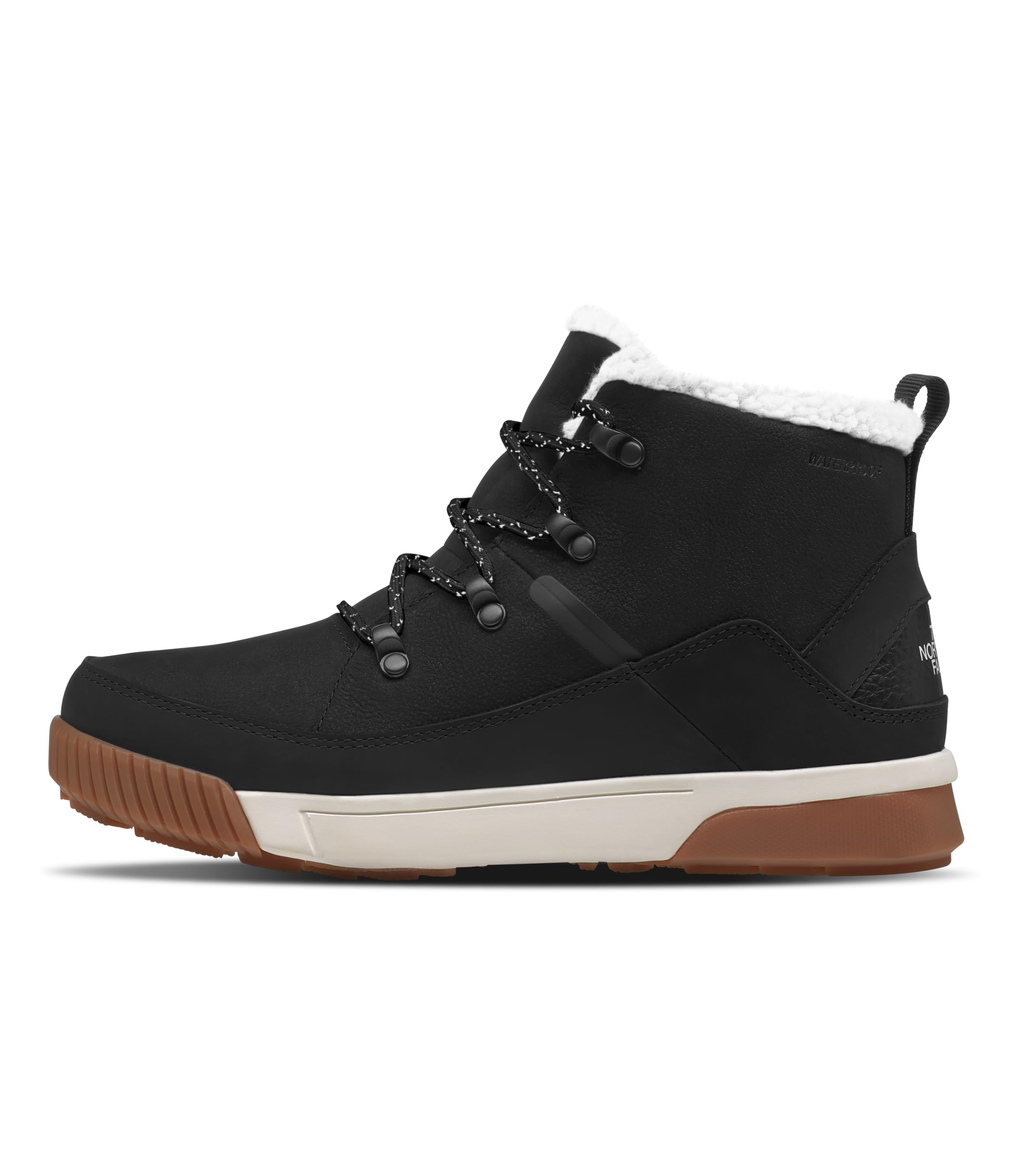
A leather mid-cut that leans on style and warmth more than on technical trail hardware.
The Sierra Mid Lace is the pick for the woman who wants winter boots that look put-together on a snowy walk or a day around town. It pairs a leather upper with a rubber outsole and insulated, waterproof construction under The North Face name — a boot built for cold, wet days where you are not necessarily chasing a summit.
Warmth is what owners talk about most, with appearance and comfort close behind and style getting its own share of praise. That tells you the boot delivers on its main promise: your feet stay warm, it looks good doing it, and it feels comfortable on the move. The leather-and-rubber build gives it a cleaner, more casual feel than the technical boots in this list.
Pay real attention to sizing. Fit splits both ways in feedback — some call it perfect, others find it snug — and sizing draws its own concerns. The safest play is to size with your winter socks and expect to possibly go up. It is a style-and-warmth boot first, so think twice if you need aggressive trail lug bite.
Where it shines
- Insulated and waterproof for cold, wet winter days.
- Leather upper with a rubber outsole gives a cleaner everyday look.
- Warmth and comfort both land positively in owner feedback.
What to watch
- Fit runs snug for some buyers — size with winter socks in mind.
- Style-forward build rather than a dedicated technical trail outsole.
Fits the brief for: women who want warm, waterproof, good-looking boots for daily winter wear and light trail.
Reconsider if: you need a locked-in technical fit on day one or serious lug traction for steep trail.
6. The North Face Chilkat 400

The heavyweight — built to keep feet warm when the temperature drops and you stop moving.
When the day is genuinely cold and you plan to be out in it — snowmobiling, snowshoeing, standing around a fire — the Chilkat 400 is the boot that holds heat. The 400 in the name signals its heavy insulation class, and it pairs that with a fully waterproof build and a non-PFC DWR treatment. It is the deepest-cold option in this lineup, and it shows.
Quality is what owners rave about most, with warmth right behind it, and the appearance and traction pull their own praise — grip holds on ice, so you are not second-guessing every step. The one thing to get right is fit. It runs tight at your regular shoe size for many buyers, so plan to size up. It is also the heaviest build of the daily-wear picks at 1.63 pounds, heavier than the Columbia Bugaboot III at 1.44 pounds.
The honest limit: all that insulation is overkill on a mild day or a fast climb where you generate your own heat. This is a cold-weather specialist, and its 400g insulation and fully waterproof build are tuned for exactly that.
Warmth ceiling: the 400-class insulation does the heavy lifting — this is the boot for deep cold and low-output activities, not a fast summer-style climb.
Sizing note: runs tight at your regular size for many women, so sizing up with winter socks is the smart move.
Built for: deep-cold days, snowmobiling, and slow winter outings where warmth is the whole point.
skip it if: you run hot or hike hard enough to generate your own warmth — the insulation becomes too much.
7. KEEN Women’s Greta 2 Classic Waterproof Insulated Boots

A leather hiker cut wide enough to layer two pairs of wool socks inside.
The Greta 2 is the boot for women who want generous room inside — the kind that swallows thick winter socks without squeezing. It is built off KEEN’s traditional wider footwear form, with 200g of insulation, waterproof leather, a quilted collar, and a glue-free fused construction meant to last. The quilted collar and insulated leather shell give it the look of a puffy jacket cut into a boot.
Roominess is the headline: owners comfortably stack even two pairs of Smart Wool socks inside. Quality and fit both land positively, and people give the style plenty of compliments — it looks good enough for a walk through town as well as the trail. The direct-attach construction skips glue in favor of a fused build for long-term durability.
The one weak point is the lacing hardware — some buyers have had lace hooks come off, so treat the eyelets gently and check them before you head out. On every other front, this is a comfortable, warm, roomy winter boot that suits the woman who prefers a wider fit.
Width advantage: the wider KEEN form gives real toe and instep room — enough to layer two pairs of wool socks on the coldest days.
Care point: lace hooks have come loose for a few buyers, so handle the lacing hardware carefully.
Best for: women who prefer a wide, roomy boot and want to layer thick socks for cold-weather comfort.
Think twice if: you have a narrow foot and want a snug, locked-in fit — the wider form may feel loose to you.
8. Merrell womens Coldpack 3 Thermo Mid Zip Waterproof
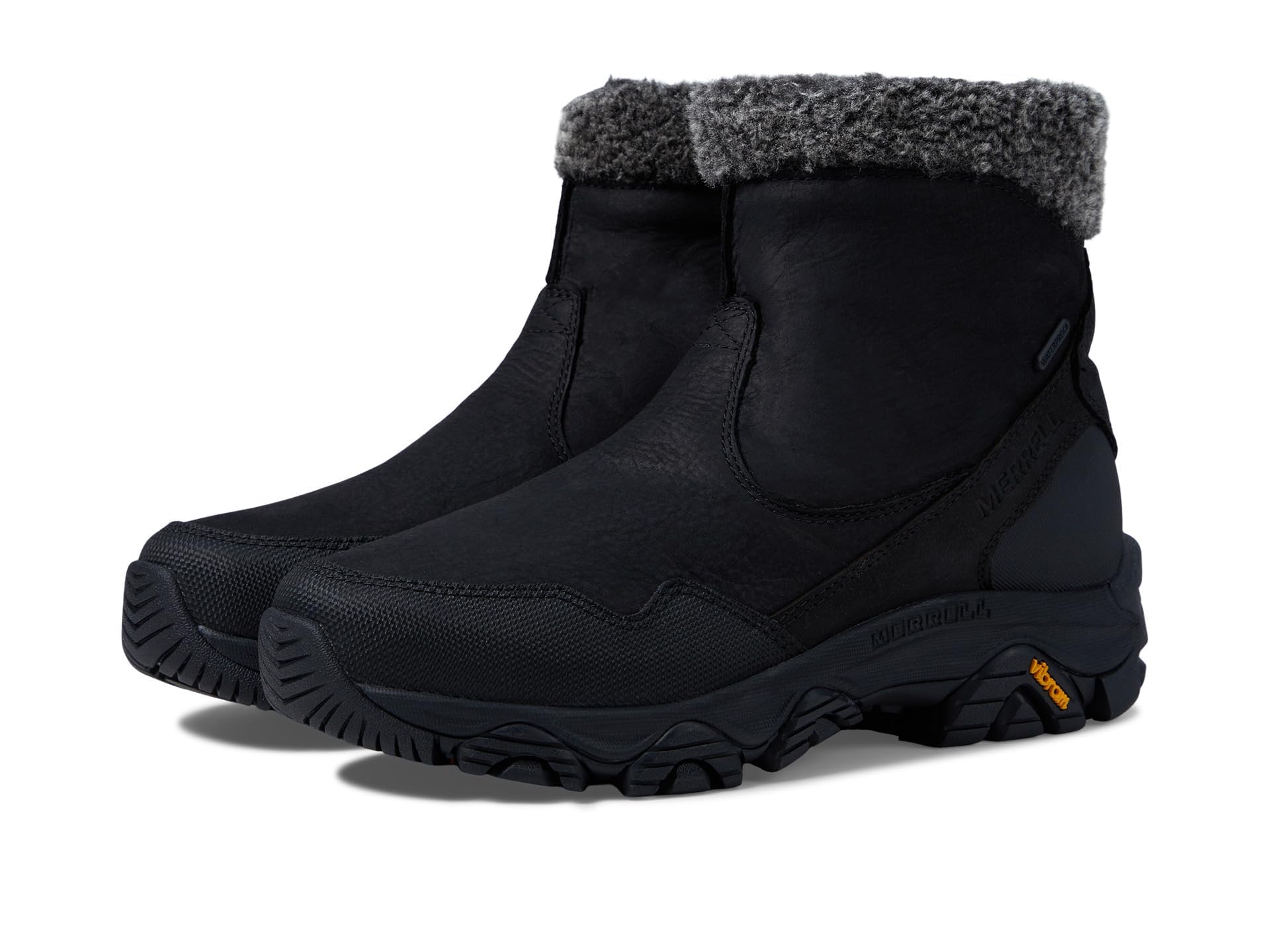
The traction specialist, with a soft-in-cold Vibram sole and a zip-up fleece-lined shell.
If your biggest winter fear is going down on an icy sidewalk, the Coldpack 3 is built to answer it. Merrell uses Vibram Arctic Grip underfoot, a rubber compound designed to hold its bite on cold, slick surfaces, and wraps it in 200g of insulation with a fleece lining. The mid-zip design makes the boot easy to pull on — until it is not, which is the catch below.
Grip is the trait owners praise most after overall quality, and it shows: plenty of traction to stop slipping on snow and ice. The boot looks good, too, and buyers describe it as durable enough for real walks. That Vibram Arctic Grip bite is the difference between a confident stride and a slip on an icy path.
Here is the honest catch: getting them on is the weak point. The fit runs narrow for many women, and the zip and stiff structure make the boot hard to slip into, especially at first. If you have a wide foot or want an easy on-off boot, size up and try them on for getting in as much as for comfort.
What it brings
- Vibram Arctic Grip outsole holds traction on packed snow and ice.
- 200g insulation plus a fleece lining for cold-weather warmth.
- Durable build and a smart look for everyday winter wear.
What will nag
- Narrow fit and a stiff shell make getting them on tough for some women.
- Zip entry is the weak point — size up and check the on-off feel before committing.
Reach for these when: icy sidewalks and slick paths are your daily concern and you want the best cold-surface grip here.
Test the entry first if: you have a wide foot or value easy on-and-off — the narrow fit and stiff shell are the known sore spot.
9. Oboz Women’s Bridger 7″ Insulated B-DRY
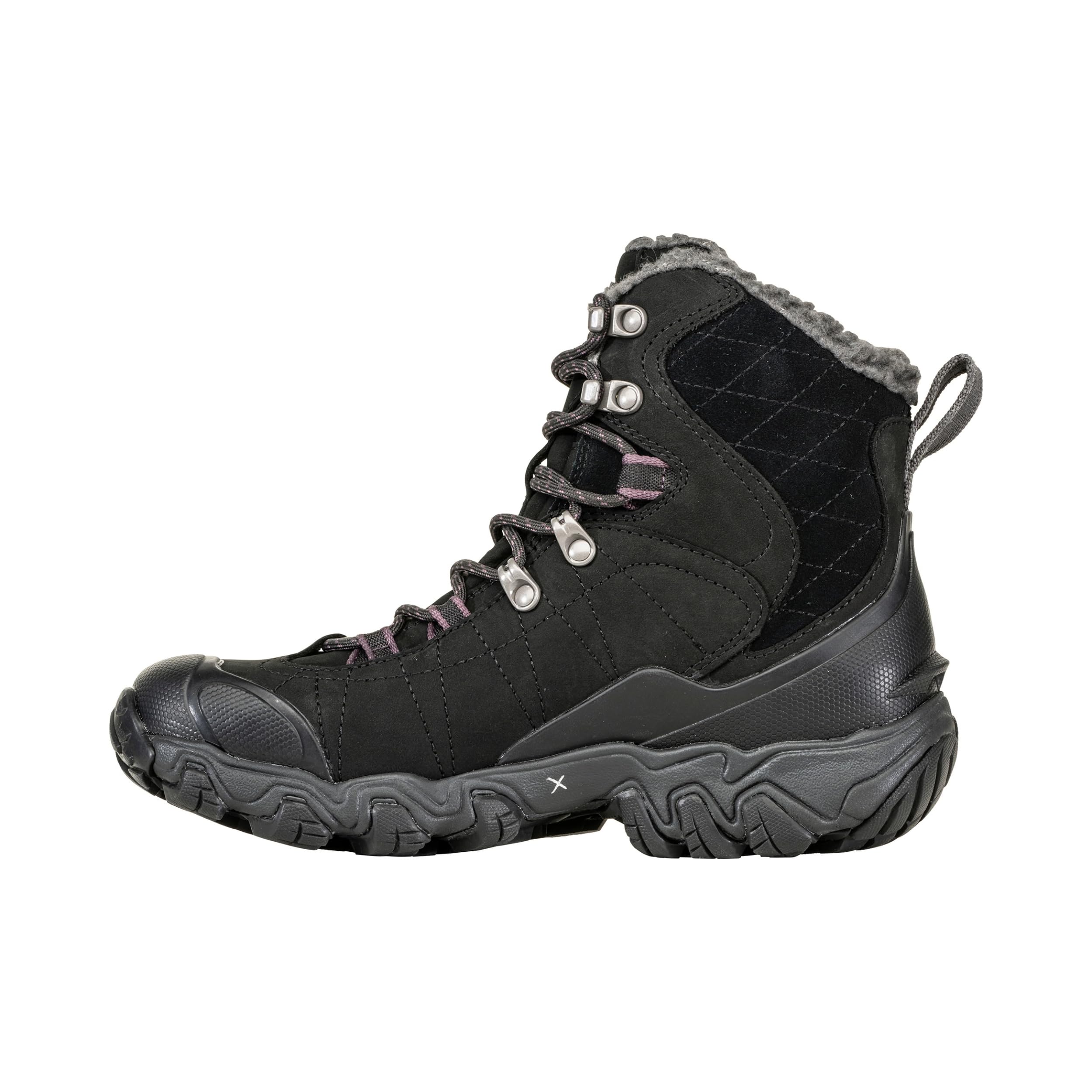
The premium trail boot — a nubuck leather hiker with support built for snowshoe days.
The Bridger 7″ is the top of this list for a reason: it is a serious trail boot for winter, not a cold-weather sneaker. Oboz builds it with a waterproof nubuck leather upper, a B-DRY membrane, and 200g of Freeze Guard insulation, plus a molded rubber toe cap and heel kick for protection. At 20.5 oz it stays reasonably light for a leather winter hiker.
Fit earns the most praise here, and warmth follows — this is a boot that keeps feet warm and dry on the move. The arch support gets its own steady stream of praise, and the Trail Tread outsole gives dependable grip across varied trail conditions. A gaiter D-ring lets you lock on gaiters for deep snow. The heel drop is 12mm, which gives a stable, planted feel underfoot. It is the priciest build in the lineup, and the nubuck leather, B-DRY membrane, and molded toe cap justify the premium.
The area to watch is long-term durability of the leather — some buyers report wear issues while others find them rugged. Keep the nubuck brushed and treated and it will hold up through winters of real use.
The premium case: nubuck leather, a B-DRY membrane, Freeze Guard insulation, and a gaiter D-ring make this the most trail-ready boot in the lineup.
The watch-out: leather durability gets mixed feedback over the long haul — regular care keeps it rugged.
The right call for: dedicated winter hikers and snowshoers who want support, arch comfort, and a genuinely trail-ready leather boot.
Only worth it if: you actually use the trail features — for a commute or casual snow walk, a lighter boot covers it for less.
Know the Specs
Insulation weight in grams
The number printed on a winter boot — 200g, 400g — tells you how much synthetic insulation fills the shell. A 200g boot like the Merrell Coldpack 3 or the Oboz Bridger 7″ keeps you warm while you are moving on a cold day. A 400g-class boot like the North Face Chilkat 400 holds heat longer when you slow down or stand still. Match the number to how much you move, not to how tough the boot sounds.
Waterproof membrane versus water-resistant
A waterproof membrane such as B-DRY or KEEN.DRY is a thin barrier inside the boot that blocks snowmelt while letting sweat vapor escape. Water-resistant leather sheds light snow but soaks through in deep slush. Look for the words seam-sealed or the named membrane on the listing — that is the difference between dry socks at mile three and wet feet at mile one.
Outsole compound and lugs
Winter grip depends on the rubber staying soft in cold and the lugs being deep enough to bite. A winterized compound like Vibram Arctic Grip on the Coldpack 3 stays grippier as temperatures drop than standard rubber. A molded rubber toe cap, as on the Oboz Bridger 7″, also shields your toes from rocks hidden under snow.
Fit and sizing for winter
Winter hiking means thicker socks, and that changes the fit. A roomy build like the KEEN Greta 2 gives space to layer wool socks, while a narrower boot like the Merrell Coldpack 3 may need sizing up. A snug boot pinches circulation and your feet go cold even with good insulation, so fit is a warmth feature in its own right.
Common Questions
Should I buy a 200g or 400g insulated winter hiking boot?
Are these winter hiking boots wide enough to wear thick wool socks?
How long do insulated waterproof hiking boots last?
Which winter boot grips best on ice and packed snow?
Do women’s winter hiking boots run true to size?
Can I wear these boots for everyday errands and not just hiking?
What does a gaiter D-ring on a winter hiking boot do?
Are waterproof membranes like B-DRY and KEEN.DRY breathable?
Is a stiffer winter hiking boot better for snowshoeing?
What should I do if a winter boot feels tight with thick socks?
The Bottom Line
For most women, the women’s winter hiking boots winner is the Columbia Newton Ridge Omni-Heat II. It keeps your feet dry and warm and still looks fine on pavement, so you can walk to the trailhead and keep going. If you face deep cold and low-output days, the The North Face Chilkat 400 is the warmth specialist worth the step up. If ice is your daily worry, the Merrell Coldpack 3 brings Vibram Arctic Grip to every slick path. For real trail-ready support, the Oboz Bridger 7″ is the most capable build here — a premium that pays off if you actually snowshoe or hike in winter.
One honest nudge: the Columbia Newton Ridge carries the highest owner satisfaction of any boot in this lineup, and that comfort-and-looks combination is exactly why it leads — start there if you want the safest all-round call.
How we choose
We do not accept paid placement. Every pick is matched to a real buyer and a real use-case; we do not hands-on test units.
Sources
Specifications: manufacturer listings and product documentation. Review insights: verified customer reviews, as of November 2026. Pricing: not shown on this page (it changes often); check the current price via the retailer link.
As an Amazon Associate, Tactical Gear Guy earns from qualifying purchases. This does not affect which products we feature.