Specs are compiled from manufacturer listings and verified buyer reviews and can change over time — please confirm the key details on the product page before buying.
If your heels lift off the floor at the bottom of a squat, the shoe is the problem before your legs are. A proper women’s weight lifting shoe fixes that with a raised, solid heel and a sole that refuses to squish under a loaded barbell. This guide sorts the five pairs worth considering by how they actually behave under weight, how they fit a woman’s foot, and who each one is really built for.
This guide is built by comparing the manufacturers’ published specifications and the patterns across verified customer reviews, so you get each pick’s real strengths and trade-offs instead of marketing spin.
You will see where each pair plants you, how the straps lock your foot down, and which ones survive a CrossFit class as well as a squat rack. Here is the shortlist of women’s weight lifting shoes that earns its place under the bar.
Top Picks

How To Choose The Best Women’s Weight Lifting Shoes
The first thing that separates a real lifting shoe from a gym trainer is what happens to the sole when you load it. A cross-trainer or running shoe has a soft midsole built to absorb impact. That same cushioning eats the force you are trying to drive into the floor. A weight lifting shoe uses a firm, non-compressible sole so your effort travels straight into the barbell instead of getting soaked up by foam.
The raised heel is a tool, not a gimmick
A raised heel tips you slightly forward and lets your ankle bend further into the squat. That lets you reach depth in a squat with a more upright torso. If your heels currently peel off the floor at the bottom of a rep, a lifted heel often solves the problem directly. The trade-off is that the same raised heel is awkward for walking or running, which is why these shoes stay near the rack.
Locking your foot down
Look at how the shoe closes. Some pairs use a plain lace-up, while others add a hook-and-loop strap over the laces. A strap spreads pressure across the top of your foot so it does not slide forward when you push through your midfoot. For heavy squats and deadlifts, that locked-in feel is worth checking before you buy.
Side-by-Side Comparison
| Model | Best For | Rating | Department | Weight | Amazon |
|---|---|---|---|---|---|
| Nordic Lifting Venja★ Best Overall | Best Overall | 4.5+ / 5 | Men’s & Women’s | 3.28 lb | Amazon |
| Osterland Weightlifting ShoesBreathable Value | Breathable Value | 4.0+ / 5 | Unisex-adult | — | Amazon |
| adidas Powerlift 5 | Balanced All-Rounder | 4.5+ / 5 | Mens | 2.43 lb | Amazon |
| adidas Adipower Weightlifting III | Heavy-Load Support | 4.5+ / 5 | Unisex-adult | 2.43 lb | Amazon |
| Reebok Legacy Lifter II | Arch Support Pick | 4.5+ / 5 | Womens | — | Amazon |
Detailed Reviews
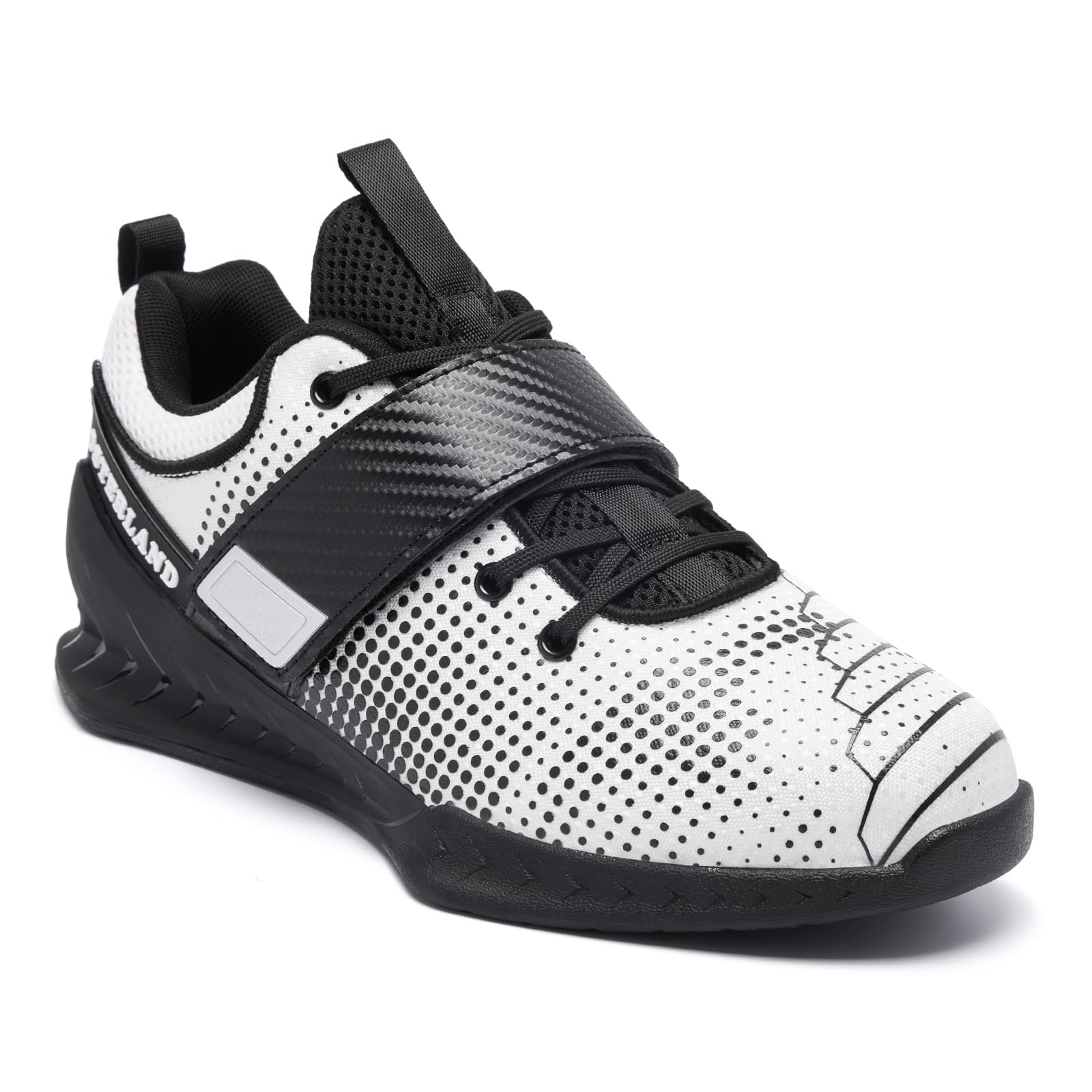
1. Nordic Lifting Venja Weight Lifting Shoes
Our pick — 4.5+★ from 650+ verified ratings; the strongest balance of quality and price.
The pair that plants you flat and keeps you there whether the bar is on your back or a box jump is next.
If you squat and then walk straight into a CrossFit WOD without changing shoes, the Nordic Lifting Venja is built for exactly that routine. It pairs a stable improve heel for Olympic lifts with a sole flexible enough to handle functional training. What wins people over here is the sheer build quality, which is the thing buyers single out more than any other trait. The grippy outsole holds traction through box jumps, lunges, and the rest of a functional session.
The raised heel gives your ankle more room to bend, so you can reach a deeper squat with better posture and stability. The secure strap system locks your foot in without pinching. The flat, non-compressible sole ensures force transfers cleanly through your foot instead of getting eaten by cushioning. Buyers report these holding up to 450lbs on lifts, so the build holds up under serious load. Fit runs true to size, though Nordic recommends sizing up if you have wide feet.
Here is the honest catch. These shoes are built for stability rather than cushioning, so they are not meant for high-impact cardio like running. That is the point of a lifting shoe, but it means this is not a one-pair-does-everything purchase. It is a dedicated strength-training tool.
What earns its spot
- Raised heel supports deeper squats and cleaner power transfer
- Grippy outsole handles cross-training moves, not just the rack
- Build quality is the most-praised trait across buyers
- Strap system locks the foot in without restricting movement
What to keep in mind
- Not cushioned for running or high-impact cardio
- Wide-footed buyers should consider sizing up
Made for: lifters who mix heavy squats and Olympic lifts with CrossFit-style sessions in one shoe.
Know first: it is a stability shoe, so it stays near the rack and out of your run.
2. Osterland Weightlifting Shoes for Men Women
A solid hard rubber sole that refuses to flex, wrapped in mesh that lets long gym sessions breathe.
Where the Nordic pair leans on a grippy outsole for cross-training, the Osterland puts its money on a solid hard rubber outsole with no compression under heavy weights. That firm base is the whole reason to own a lifting shoe, and it keeps force traveling into the barbell on squats and deadlifts. Buyers describe the shoe as effective for both movements and stable through heavy lifts. Build quality is the trait called out most, followed by lifting performance.
The breathable mesh and microfiber upper actively wick moisture and cut sweat through a long session. A hook-and-loop strap sits over the lace-up closure to spread pressure and hold your foot down. The higher heel improves ankle flexibility and supports deeper squats. Sizing advice from the maker is clear: it fits true to US standard sizing, but wide-footed buyers should go half a size up, and normal feet can pick their regular daily shoe size. One note worth taking seriously is that sizing feedback is mixed, since some buyers find it true to size while others find it runs a bit large, so a quick size check before ordering pays off.
Value read: for a mid-range price you get the two things that matter most, a non-compressing hard sole and a strap-over-lace lockdown, plus mesh that keeps your feet dry.
The trade-off: it is built for stability, not cushioning, so it is not suitable for high-impact cardio like running even though it handles leg presses and squats well.
Reach for this if: you want a firm, grippy lifting sole that breathes through long sessions while staying affordable.
Look elsewhere if: you need a pair that doubles as a running shoe, since the hard sole is made for the rack.
3. adidas Unisex Adult Powerlift 5 Weightlifting Shoes
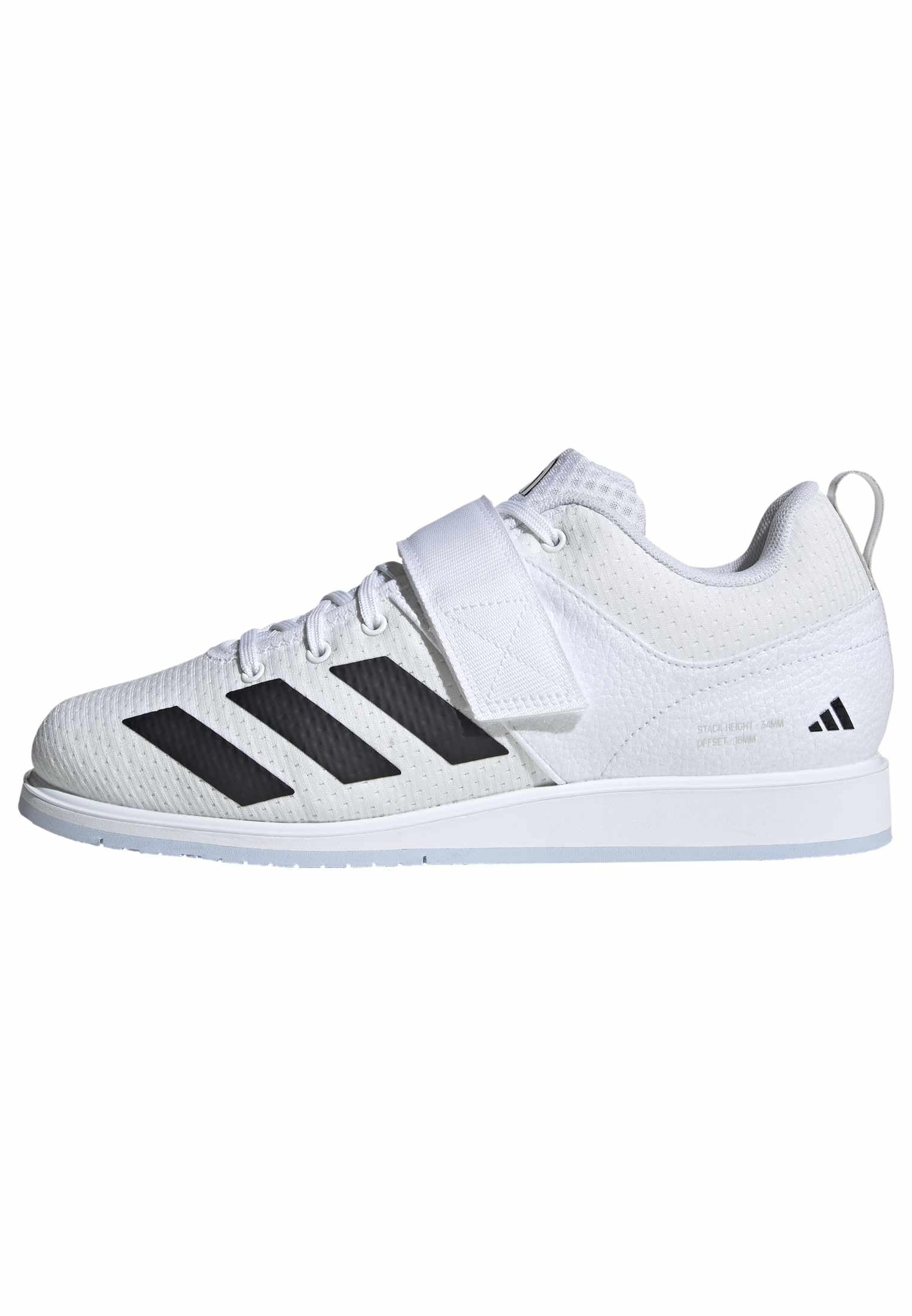
The featherweight of the shortlist at 2.43 pounds, built to lock your feet down through squats and deadlifts.
Picture a pair you can toss in a gym bag without thinking about the weight. At 2.43 pounds this is one of the lighter shoes here, matching the Adipower III on the scale while staying ranked among the more affordable mid-range picks. It earns consistent praise for build quality, and buyers confirm it makes a measurable difference to how they lift. Squat and deadlift performance both get strong backing from people who train in it.
What sets this apart from a plain trainer is the lock-down feel. Lifting in it translates to a stable base through the heaviest part of a rep, since your foot cannot slide forward when you drive off the floor. That makes it a natural fit for anyone whose sessions center on squats, deadlifts, and general gym work rather than Olympic-only training.
Why it lands mid-list: it is a dependable all-rounder, good quality with a lighter build than the Nordic pair, and it suits a lifter who wants one shoe for squats, deadlifts, and general gym days.
Fit note: sizing feedback is split, with some buyers finding the fit off, so it is worth checking the size chart against a shoe you already own before you commit.
Solid choice for: a lifter who wants a light, well-built all-rounder for squat and deadlift sessions.
Worth checking first: measure against a shoe you already trust, since fit feedback is divided.
4. adidas Men’s Adipower Weightlifting III Shoe
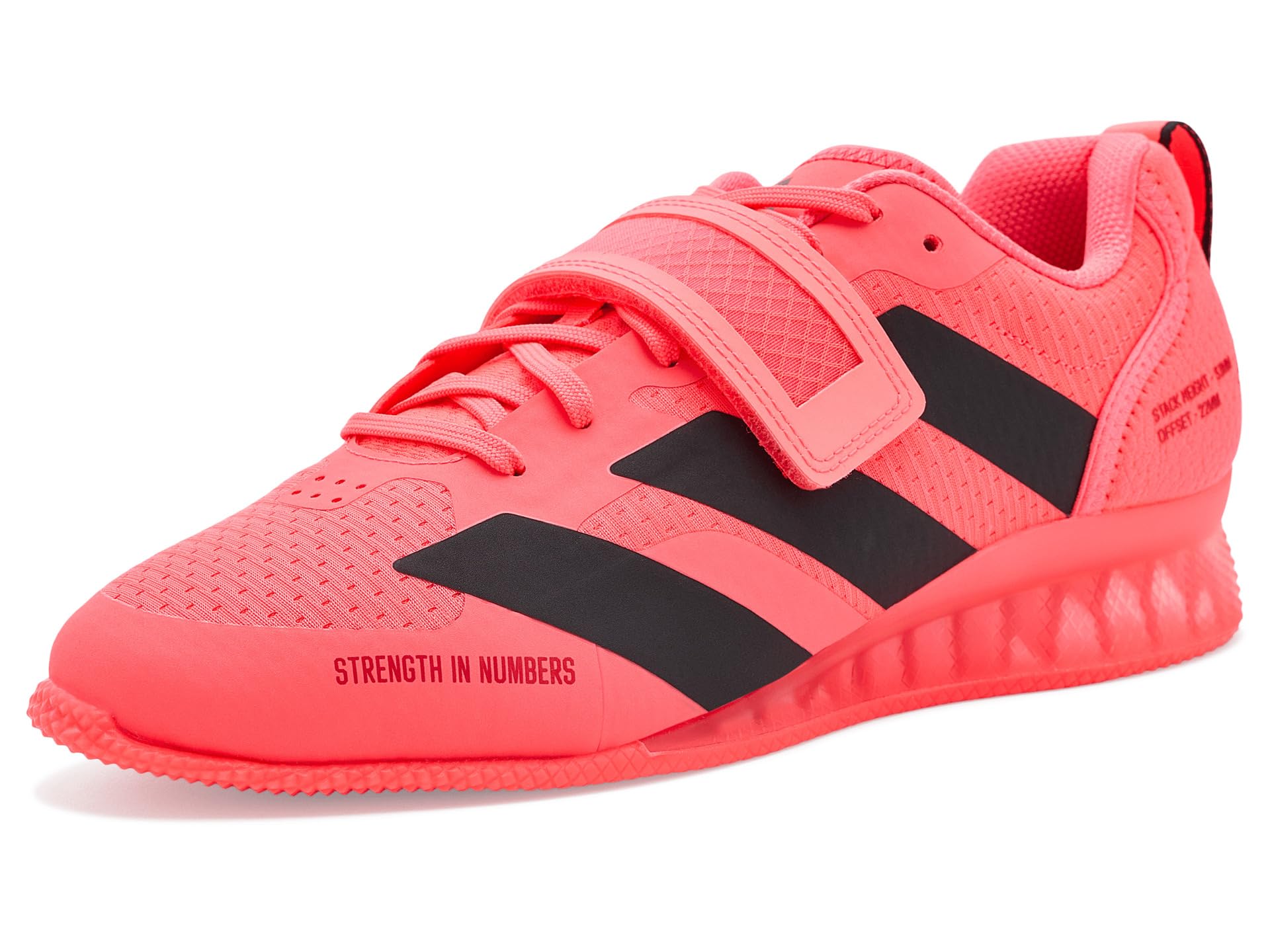
A high-density midsole built to carry heavy loads and keep a sleek, low profile while it does it.
When the bar gets truly heavy, the Adipower III answers with a high-density midsole, which is the part of the shoe that holds its shape and supports big loads instead of flattening out. The upper mixes textile and synthetic materials for a durable, structured feel, and the rubber outsole delivers grip while keeping a low-profile look. It matches the Powerlift 5 on weight at 2.43 pounds, so the extra structure does not come at a great penalty on the scale.
Owner response centers on the shoe doing its core job well: it is described as the best for its purpose, with solid outer soles and good stability, and it handles squats and deadlifts well. The closure is a hook-and-loop strap over a lace-up, which holds your foot securely through a rep. A round toe and removable insole add some flexibility for how you set your foot. It is built for weightlifting and indoor gym training.
The one thing to weigh against the Powerlift 5 above is fit, since the Powerlift has far more feedback on sizing while this model leans on the strap and removable insole to help you dial in comfort. For a lifter chasing maximum support under the heaviest sets, that structured midsole is worth the swap.
The case for it
- High-density midsole holds up under heavy loads
- Strap-over-lace closure delivers a secure feet-in-place feel
- Rubber outsole grips with a sleek, low-profile look
- Removable insole and round toe add setup flexibility
Before you buy
- Less sizing feedback available than the Powerlift 5
- Structured build suits the rack more than general cardio
Pick this for: heavy squats and deadlifts where you want a structured, high-density base under the bar.
Think twice if: you want plenty of sizing guidance before ordering, since feedback on fit is thinner here.
5. Reebok Womens Legacy Lifter Ii

The only pair here cut specifically for women, with arch support that helps your squat stance hold.
Every other shoe on this list is sold as men’s or unisex sizing, which makes the Legacy Lifter II the one true women’s build of the group. It is listed under the women’s department and stands out for arch support, the trait buyers appreciate most alongside its looks. If a flatter, less shaped footbed leaves your arches aching after a squat session, this is the pair to study first. Owners mention the arch support helps with squat stance and that the shoe stays comfortable through training.
Reebok builds this within its fitness-heritage approach, and the design leans on that support structure rather than a stripped-down flat platform. Buyers training in it report comfort through full sessions, with one noting lower-back relief. The fit is the part to watch: some buyers find it great while others say it runs on the small side.
Weigh that against the Osterland and Powerlift pairs above, which carry a lot more sizing feedback to guide you. The Legacy Lifter II gives you a women’s-specific shape and strong arch support, but you should size carefully. For a woman who wants a footbed that supports her arch under a loaded barbell, this earns the premium end of the list.
Best for: women who want a women’s-specific lifting shoe with real arch support under the bar.
The caveat: sizing is split, so some buyers will want to go up a size to get the right fit.
Know the Specs
Heel Height and Why It Matters
A raised heel tips you slightly forward and lets your ankle bend further at depth. That extra bend is what lets you reach depth in a squat with a more upright torso. If your heels lift at the bottom of a rep, a raised heel often fixes the problem directly. The downside is that a lifted heel is awkward for walking and running, so these shoes tend to stay near the rack.
Sole Firmness and Force Transfer
A lifting shoe uses a firm, non-compressible sole, such as the solid hard rubber or high-density midsole on the pairs here. That firmness means the force you drive through your foot reaches the barbell instead of getting absorbed by foam. Soft running-style cushioning is the enemy of a heavy squat for exactly this reason.
Closure and Foot Lockdown
How the shoe closes decides whether your foot slides forward under load. A plain lace-up works for many lifters, while a hook-and-loop strap over the laces spreads pressure across the top of the foot and holds your midfoot down. For heavy squats and deadlifts, the strap-over-lace setup gives a more locked-in feel.
Women’s Sizing Versus Unisex
Some pairs on this list are sold as men’s or unisex sizing, while others are listed specifically for women. A women’s-specific build can shape the footbed and arch to a woman’s foot more closely. When a shoe is unisex, check the size chart against a shoe you already own, since fit feedback can run mixed.
Common Questions
Should I size up in women’s weight lifting shoes?
Can I use weight lifting shoes for running or cardio?
What does a raised heel actually do in a squat?
Are weight lifting shoes different from regular gym sneakers?
Which pair is best for CrossFit and box jumps?
Do any of these come in women’s-specific sizing?
Are these shoes good for both squats and deadlifts?
How much does a lifting shoe weigh and does it matter?
Will a weight lifting shoe help if my arches ache after squats?
The Bottom Line
If you lift in a mix of strength work and CrossFit, the Nordic Lifting Venja is the one to buy. Its stable raised heel and grippy rubber outsole work under the rack and in the WOD. Want a firm, breathable sole that won’t squash under heavy weight? Pick the Osterland. For a women’s-specific fit with real arch support, reach for the Reebok Legacy Lifter II. It shares the top 4.5+ rating with the Nordic pair, so your choice depends on fit style, not quality.
How we choose
We do not accept paid placement. Every pick is matched to a real buyer and a real use-case; we do not hands-on test units.
Sources
Specifications: manufacturer listings and product documentation. Review insights: verified customer reviews, as of November 2026. Pricing: not shown on this page (it changes often); check the current price via the retailer link.
As an Amazon Associate, Tactical Gear Guy earns from qualifying purchases. This does not affect which products we feature.