Specs are compiled from manufacturer listings and verified buyer reviews and can change over time — please confirm the key details on the product page before buying.
Cold feet end a snowmobile ride faster than a bad trail. If you have ever cut a morning short because your toes went numb somewhere past the second field, the fix is not thicker socks — it is a boot with real insulation and a sole that grips packed snow. This guide ranks women’s snowmobile boots by measured insulation, waterproofing, and sole grip, sorted by what each one does best.
This guide is built by comparing the manufacturers’ published specifications and the patterns across verified customer reviews, so you get each pick’s real strengths and trade-offs instead of marketing spin.
You will see warmth ratings, waterproof layers, and outsole compounds side by side, so you can match a boot’s insulation and waterproofing to your riding climate instead of guessing. Below are the ten picks worth your attention as you shop for the best women’s warmest snowmobile boots.
Top Picks

How To Choose The Best Women’s Warmest Snowmobile Boots
A snowmobile boot has a harder job than a walking boot. Your feet sit still on a running board for hours while wind and snow spray at them, so the warmth has to come from the boot itself — not from moving around. That is why insulation and waterproofing matter more than sock thickness when you compare any two pairs.
Warmth ratings and temperature ranges
Some makers publish a comfort range in degrees Fahrenheit, which is the simplest number to compare. The Dryshod Arctic Storm models list a range of -50° to 65° F, for example. If your riding season starts in deep cold, that published range is a better guide than the thickness of the lining alone.
Insulation type: Thinsulate grams versus neoprene millimetres
3M Thinsulate is measured in grams, and a higher gram figure means more insulation packed into the boot. Neoprene boots are measured in millimetres instead — the MUCK Arctic Ice Mid uses a 5mm neoprene inner boot, and the Arctic Sport II Mid uses 5 mm neoprene as well. Grams and millimetres are not directly comparable; they simply describe two different ways to trap heat.
Waterproofing that survives spray
Snow melts on a warm boot and then refreezes, which is how feet get wet in the first place. A membrane like GORE-TEX is built to keep water out while letting moisture escape, and it is what the KLIM Aurora GTX uses. Rubber and neoprene shells achieve the same goal a different way — the Arctic Storm Mid-Calf uses genuine hand-laid natural rubber overlays rather than PVC or PU.
Calf fit, gaiter, and closure
Cold air creeps in at the top of the boot, so the opening matters as much as the sole. A snow shield gaiter with a bungee cord lock, like the one on the Castle X Barrier 2, seals that gap. An expandable gusset with a locking strap, as on the Dryshod Arctic Storm Hi Cut, lets you widen the calf to tuck in riding pants.
Side-by-Side Comparison
| Model | Best For | Insulation | Waterproofing | Height | Amazon |
|---|---|---|---|---|---|
| Castle X Women’s Barrier 2★ Best Overall | Riders who want a sealed gaiter | EVA footbed with thermal layer | Snow shield gaiter | Mid-Calf | Amazon |
| MUCK Arctic Ice MidBest for Ice | Ice and mixed terrain | 5mm neoprene + fleece | 100% waterproof shell | 12.2 in shaft | Amazon |
| Sorel Winter CarnivalBest Everyday | Mixed town and trail use | Not published | Waterproof | Not published | Amazon |
| MUCK Arctic Sport II Mid | All-day standing work | 5 mm neoprene + fleece | 100% waterproof | Mid-height | Amazon |
| The North Face Chilkat 400 | Deep snow and long rides | 200g heatseeker | Waterproof | Calf | Amazon |
| Dryshod Arctic Storm Mid-Calf | Extreme cold riding | 7 layers, -50° to 65° F | HYDROKOTE + rubber | Calf high | Amazon |
| DSG Rime Insulated | Sub-zero trail days | 800g Thinsulate | 100% waterproof | Ankle | Amazon |
| KLIM Aurora GTX | High-speed trail riding | 800g Thinsulate | GORE-TEX | Calf | Amazon |
| Dryshod Arctic Storm Hi Cut | Wide calves and layers | 6 layers, -50° to 65° F | HYDROKOTE + rubber | Calf high | Amazon |
| Baffin Impact | Snowshoe and deep snow | Removable liner | Polar Rubber outsole | Calf height | Amazon |
Detailed Reviews
1. Castle X Women’s Barrier 2 Boot
Our pick — 4.5+★ from 250+ verified ratings; the strongest balance of quality and price.
Built by a snowmobile brand, with a gaiter that shuts out the spray.
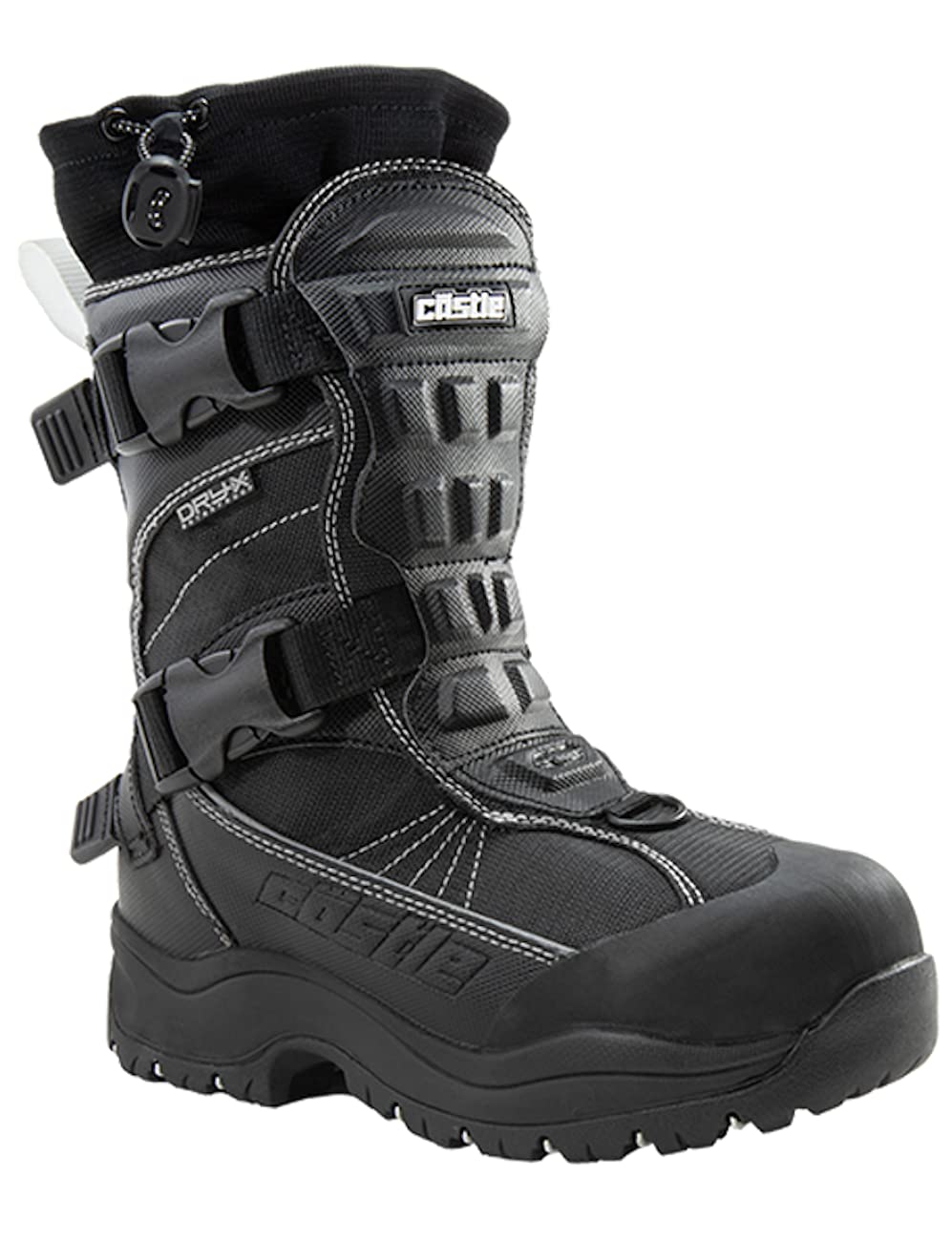
The reason this takes the top spot is simple: it is the one boot on this list designed from the ground up by a snowmobile company. Castle X builds the Barrier 2 as a dedicated winter-sports boot, and that shows in the closure and the collar rather than in a headline insulation number.
What wins people over is the warmth — it is the trait praised most across its feedback — followed closely by build quality and all-day comfort. The snow shield gaiter with its bungee cord lock cinches down over your pants so snow spray does not find the gap. A molded high-abrasion toe takes the scuffs from running boards and footwells, and the EVA footbed adds cushioning along with a thermal layer underfoot.
The catch is sizing, and it is worth reading carefully. The layered construction means you should order your actual shoe size, and if you wear a half size you order down rather than up. That runs against the instinct to size up for thick socks, so measure before you buy. The closure earns notice too — the Quick Connect buckle system is what makes these fast to get on and off with gloves on.
What Riders Get
- Warmth is the single most-praised quality across owner feedback
- Snow shield gaiter with bungee lock seals the cuff against spray
- Molded high-abrasion toe shrugs off running-board scuffs
- Quick Connect buckle is fast to work with cold hands
Where It Needs Care
- Half sizes must order down, not up — the layered build rewards exact sizing
- Fit is the mix point in feedback, so try before a long trip
Made for: the rider who wants a purpose-built snowmobile boot with a sealed gaiter and glove-friendly buckles.
Check the sizing: order your true size and go down if you are between sizes.
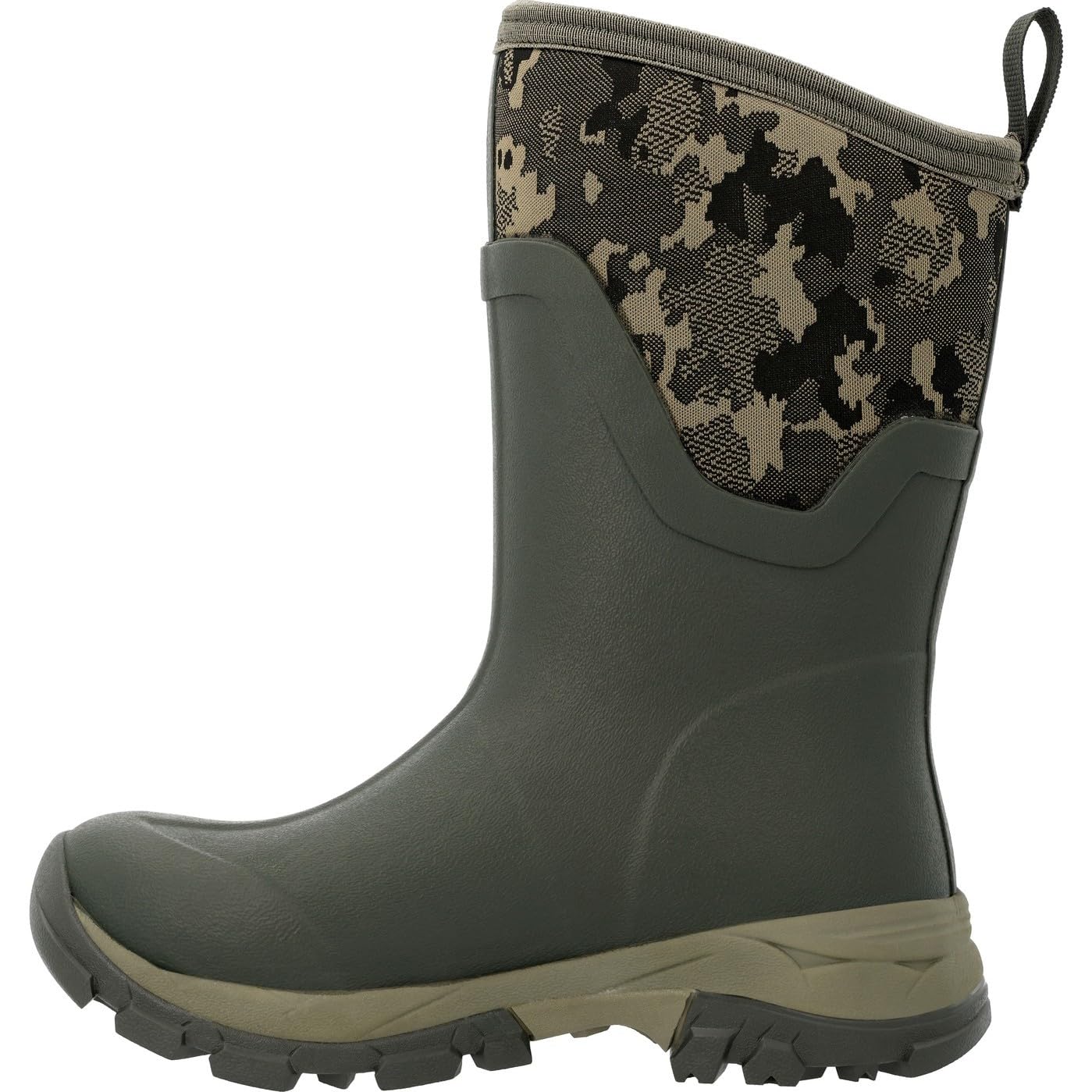
2. MUCK Women’s Arctic Ice Mid Boot + Vibram Arctic Grip A.T.
The boot you grab when the trailhead is a sheet of wet ice.
Traction is the whole story here. The Vibram Arctic Grip A.T. outsole with the XS Trek Evo compound is built for wet ice, snow, mixed loose surfaces, and hard pack — the exact footing you meet at a parking lot before you even reach the trail. It is also the heavier option at 4.5 pounds, against the Sorel Winter Carnival at 1.31 pounds, so you feel the difference on your feet all day.
Warmth comes from a 5mm neoprene inner boot layered with a fleece lining, and the whole shell is 100% waterproof. The stretch-fit top-line binding pulls snug to your leg to keep cold air from sliding down the shaft. Published comfort range runs -40°F to 40°F, and the shaft measures about 12.2 inches with a max calf circumference of about 14.6 inches — worth checking against your own calf before you order.
Water resistance is the mixed note in the feedback, so treat that as a fit point rather than a flaw: this boot is at its best in cold and dry conditions, and deep slush over long hours is where you want to watch it. The bioDEWIX footbed insert uses NZYM for odor and moisture management, which helps on multi-day trips.
Grip where it counts: the Vibram Arctic Grip sole is the standout feature for icy staging areas.
Weigh the trade-off: at 4.5 pounds it carries more mass than lighter winter boots, so long walking stretches will feel it.
Reach for this if: your riding days start on ice and packed snow, and you want the sole that handles both.
Look elsewhere if: you need a featherweight boot for long walks off the machine.
3. Sorel Women’s Winter Carnival Waterproof Boot
The light pair that crosses from trailhead to town without a second thought.
Not every snowmobile day ends on the machine. This boot is the crossover pick — Sorel builds the Winter Carnival as a waterproof boot for a cold walk with the dog, a stroll through the shops, or a drink after a day on the slopes, and it lists snowmobiling as one of the winter sports it handles. At 1.31 pounds it is a fraction of the MUCK Arctic Ice Mid’s 4.5 pounds, so it feels closer to a shoe than a rubber shell.
Owners describe it as excellent for snow and winter activities and say it keeps feet dry, with the look drawing plenty of compliments — that appearance is a real part of why people reach for it. Fit runs a bit big, and some find the ankle area uncomfortable over long wear, so try a half size down if you are between sizes.
Here is the honest limit: Sorel does not publish an insulation gram figure or a comfort temperature range for this boot, so it is not the one to pick for a -30°F morning on the trail. Treat it as a milder-day and off-machine boot, and choose one of the deep-cold picks for the harshest trips.
Best for: riders who want one lightweight pair that works on the machine and in town afterward.
Know its ceiling: no published cold rating, so save it for milder days and shorter rides.
4. MUCK The Original Boot Company Women’s Arctic Sport II Mid
Shaped on a women’s last, so the fit is the headline here.
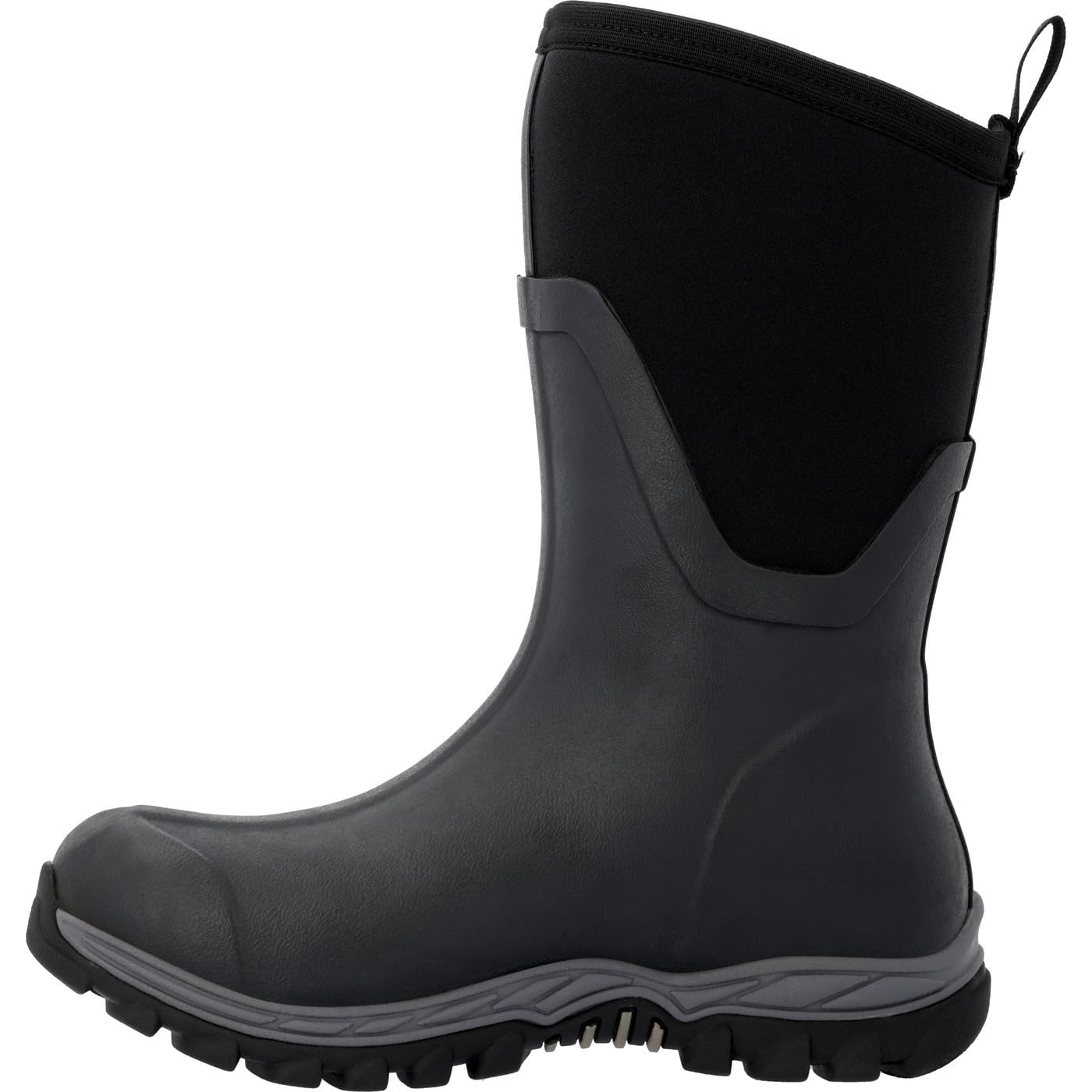
Fit is what people talk about most with this boot, and there is a physical reason. MUCK builds the Arctic Sport II Mid on a women’s last — the foot-shaped form the boot is made around — so the arch and heel sit where they should rather than in a scaled-down men’s shape. Warmth follows close behind as the second most-praised trait, thanks to 5 mm neoprene paired with a cozy fleece lining inside.
The shell is 100% waterproof, with an extended rubber upper over the neoprene. A rugged slip-resistant outsole gives you footing on wet and icy ground, and a soft insole adds cushioning for long hours of standing or shoveling. Owners note it handles deep windchills and holds up over seasons of use.
One thing to plan around: feedback on ease of use splits, with some finding them easy to slip on and off and others less so, and value is likewise mixed. Neither sinks the boot — it is a fit-and-expectation matter. If you want the simplest possible pull-on, check the collar before you commit.
Why riders like it: the women’s-specific last is the real reason this boot fits so many people well out of the gate.
Worth knowing: the pull-on ease and the value are the two split points in feedback — sensible to try the fit first.
Pick this when: a women’s-shaped fit and a waterproof rubber shell matter more to you than a published cold rating.
Move on if: you want the easiest glove-on pull-on in the whole lineup.
5. The North Face Chilkat 400

An insulated, waterproof boot built for heavy-duty snow conditions.
Quality is the trait this boot is known for, and warmth is right behind it. The Chilkat 400 pairs high-loft insulation with a waterproof build and a water-resistant, non-PFC DWR treatment — a coating that beads water off the outer surface — so snow and wind have a harder time getting in. At 1.63 pounds it stays reasonable on your feet.
Owners describe it as comfortable enough to ride in for a full day, and it has a reputation for handling heavy-duty snow. The waterproof design suits backcountry trails and everyday winter weather alike, which is exactly the range a snowmobile rider needs when a ride turns from groomed trail to powder.
Sizing is the honest caveat, and it is a big one to plan for. Feedback on fit and sizing splits sharply, with a real share finding it tight at regular shoe size. Order up if you plan to wear thick wool socks, and if you can, try the pair on before a long trip. The 15 x 15 x 6 inch package is the largest here — bigger than the Sorel Winter Carnival’s 13 x 13 x 6 inches — so storage in a small trailer takes a little more room.
Why It Earns a Spot
- Waterproof build with non-PFC DWR keeps snow and wind out
- High-loft insulation holds warmth on cold, long rides
- Comfortable enough for all-day wear on the machine
- Handles heavy-duty snow conditions off the trail
The One Real Catch
- Sizing runs tight for many — order up for thick socks
- Largest package footprint of the picks here
The one to beat: waterproofing and warmth together for deep-snow rides.
Order up: sizing runs tight, so size for the socks you actually wear.
6. Dryshod Arctic Storm Mid-Calf Women’s Winter Boot
A published -50° F comfort floor, built layer by layer.
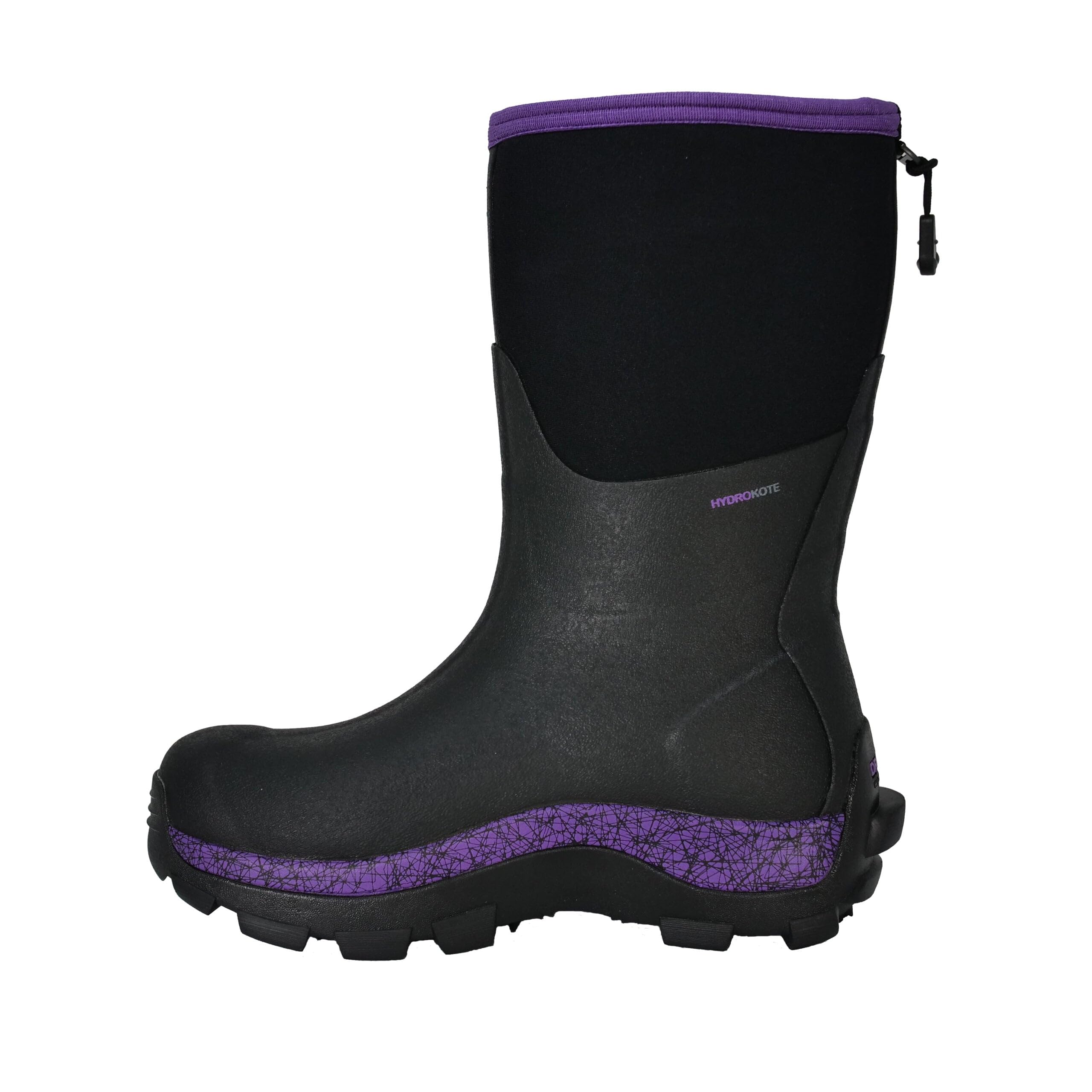
When you want a number to hold onto, this boot gives you one: a comfort range of -50° to 65° F. That range comes from stacked layers — a 5.5 mm bootie, 2.5 mm DENSOPRENE XD foam for extra density, 2 mm airmesh, and 2 mm warm fleece lining. Add the EVA cold-blocking midsole and the maker counts seven layers of protection in all.
Comfort is what people mention first about this boot, with warmth right behind. The DS1 premium outsole uses a two-piece design — a high-traction moulded-rubber outsole with inner-set lugs for any-angle grip and outer lugs for lateral support — and it sheds mud and debris rather than packing it in. The shell carries HYDROKOTE water-repellent treatment over the nylon outer, and the maker states all DRYSHOD boots are built to be 100% waterproof top to bottom.
Fit and size sit in the mixed column, so the sensible move is to check your calf measurement against the roll-down calf pipe before ordering. It is a pull-on, and the generous heel kick and sturdy pull tabs make that easier. Nothing about the mixed feedback suggests a bad boot — only that calf shape varies and this is a structured shell.
The number says it: a -50° F comfort floor for riders who ride in real cold.
Measure first: check your calf against the roll-down pipe, since fit is the split point.
7. DSG Outerwear Women’s Rime Insulated Snow Boots
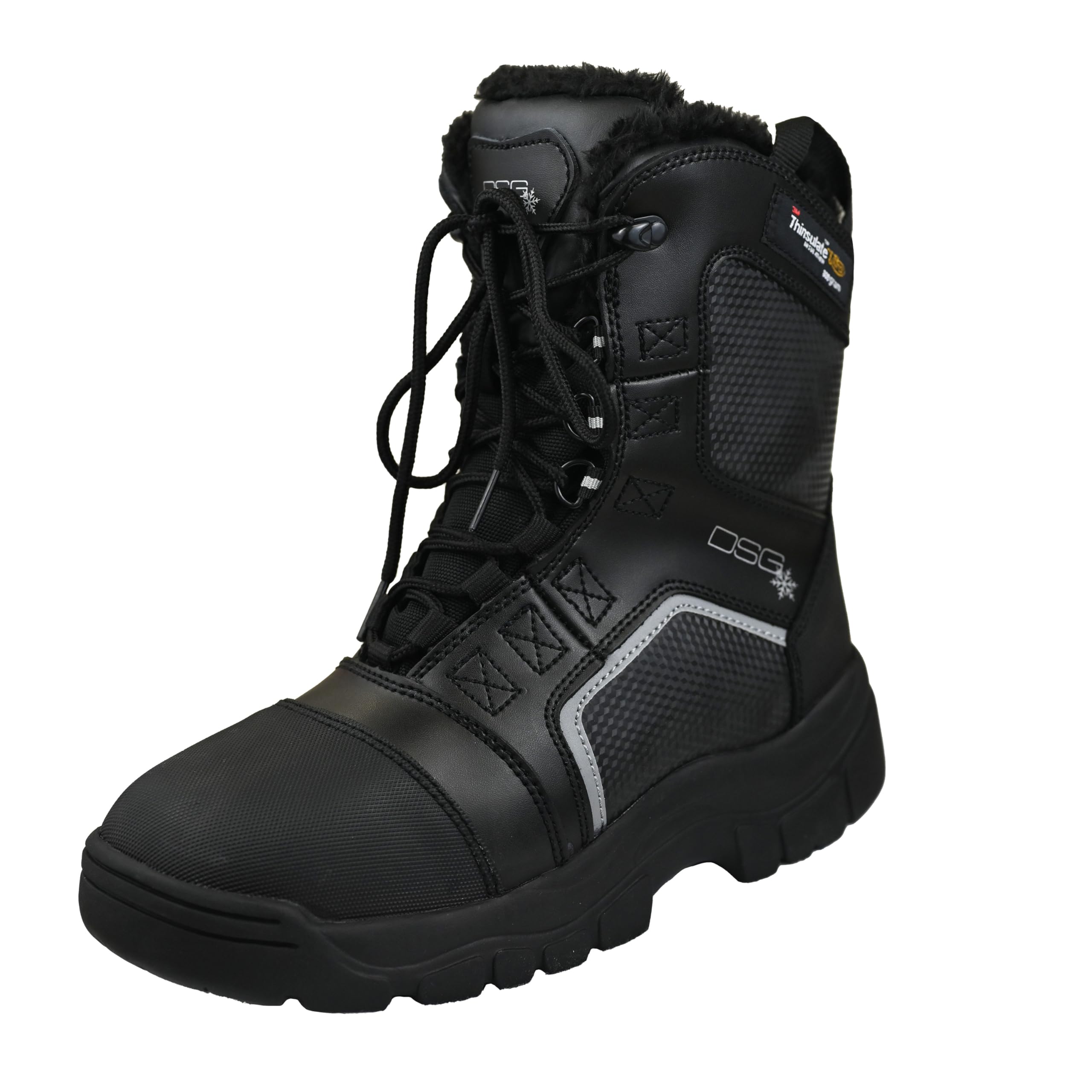
800 grams of 3M Thinsulate, aimed at sub-zero riding.
The insulation figure is the reason to look here: 800 grams of 3M Thinsulate, which DSG states keeps feet warm in sub-zero temperatures. That is the highest published insulation gram count on this list, and it sits inside a 100% waterproof shell that protects against snow, ice, and moisture.
Warmth and appearance are the two things people call out about this boot — it is a lace-up with a faux fur interior lining and a faux fur trim, plus four lace color options in Black, Pink, Blue, and Purple if you want to match your gear. A reinforced toe cap adds wear protection where boots take a beating, and a grip sole is built for traction on snow and ice. Cycle riders will note the maker lists snowmobiling among its winter uses.
The shape to know about is the ankle-height shaft and the fixed liner design, which gives support and stability but offers less calf coverage than the tall rubber boots here. In deep powder or on a wet seat, a gaiter over the top is a smart addition.
Insulation crown: 800 grams of Thinsulate is the heaviest fill in this lineup.
Coverage note: ankle height means less calf protection than the tall boots — pair it with a gaiter in powder.
For the cold-chaser: pick this when raw insulation grams are your priority.
Add a gaiter: the shorter shaft leaves the calf more exposed in deep snow.
8. KLIM Women’s Aurora GTX Snowmobile Boots
A rider’s boot from a rider’s brand, with a GORE-TEX shell.
KLIM builds this one specifically for snowmobilers, and it shows in the details a rider notices. A GORE-TEX membrane keeps water out while letting moisture escape, and — this is the clever part — it also keeps the insulation itself dry, so the fill does its job instead of soaking up sweat. There is 800 grams of 3M Thinsulate water-resistant insulation inside.
The outsole is Michelin rubber, chosen for durability, and the midsole is tuned for walking comfort so the boot works when you step off the machine. A moisture-wicking breathable liner and a removable moisture-wicking OrthoLite insole handle sweat across a long day. KLIM also includes a half-size insert for optimal fit, which is a smart way to fine-tune a boot you cannot try on first.
Around the edges you get scratch rubber toe and heel reinforcement, a lower D-ring to stop the cuff from rising, and a design aimed at everything from high-speed trails to deep powder. This is the most purpose-built snowmobile boot in the premium group, and the fit insert is what makes ordering it online less of a gamble.
Built for the Machine
- GORE-TEX membrane keeps the insulation dry as well as your feet
- 800 grams of 3M Thinsulate insulation
- Michelin rubber outsole for durability
- Half-size insert lets you dial in fit after delivery
Keep in Mind
- Premium-tier cost puts it above the value picks
- Purpose-built shape may feel stiff for casual walking
The rider’s choice: buy it if you ride hard and want a dry-insulation GORE-TEX shell.
Spend carefully: it sits in the premium tier, so it is worth it only if trail performance is the priority.
9. Dryshod Women’s Arctic Storm Hi Cut Gusset
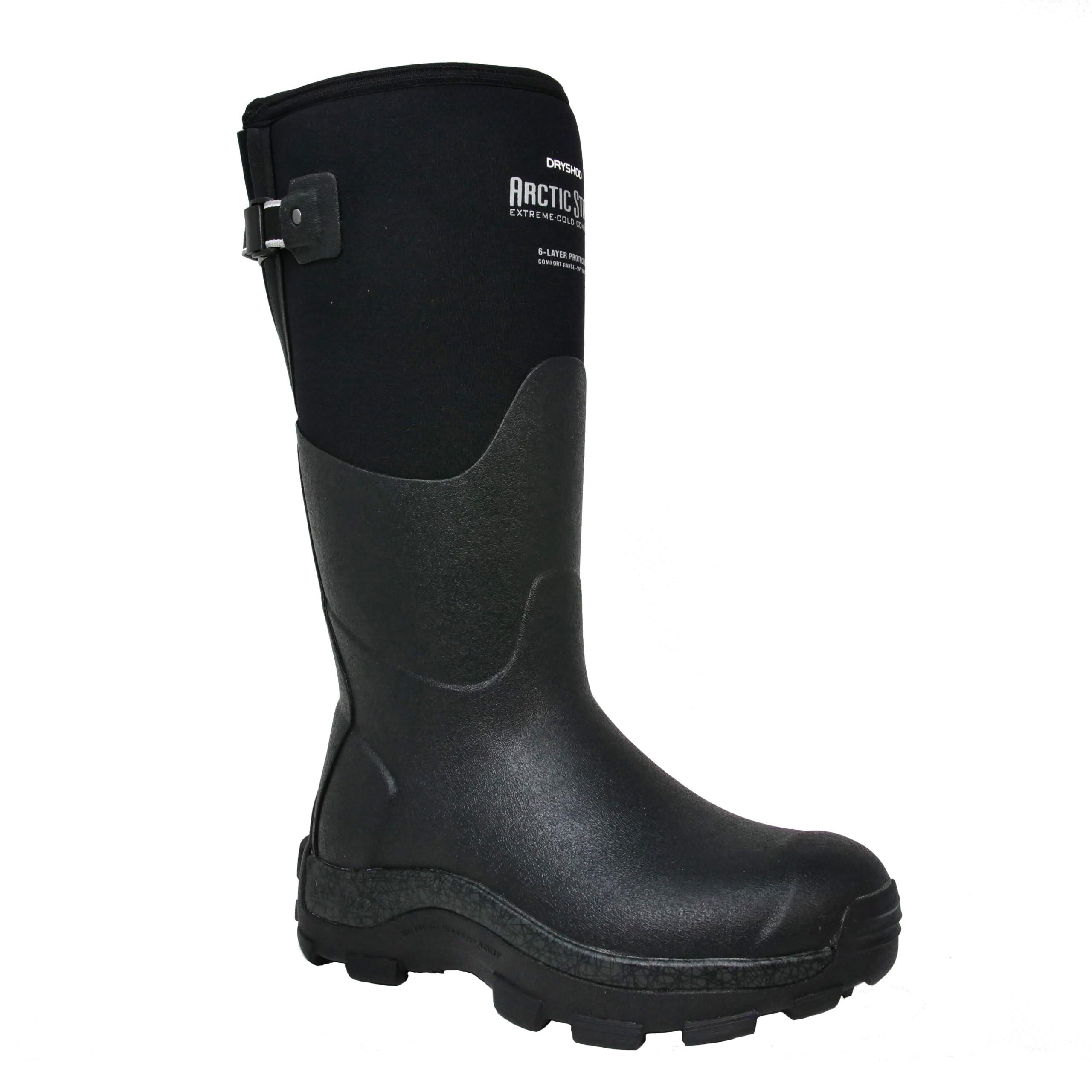
An expandable gusset that opens up for calves and tucked-in pants.
If tall boots usually pinch your calf, start here. The expandable gusset with an adjustable locking strap lets you widen the boot to fit your calf and to tuck in layers of clothing, and the roll-down calf pipe gives another inch of adjustment. That is a rare amount of fit control in a rubber snow boot.
Warmth is stacked in six layers, with a 5.5 mm bootie, 2.5 mm DENSOPRENE XD foam, 2 mm airmesh, and 2 mm warm Polar fleece lining, plus an EVA cold-blocking midsole. The published comfort range is -50° to 65° F, matching the mid-calf model. The outer carries HYDROKOTE water-repellent treatment — a nano-scale hydrophobic coating that repels water and mud on contact — so the textile resists icing up in freezing temperatures.
Comfort and quality are what people notice, with the inside described as softer than expected. A removable molded EVA sockliner, a nylon shank, and double Achilles and instep reinforcement give the boot real structure. The trade-off is the structure itself: it is a stiffer, taller boot, so if you want something low and flexible around the ankle, this is not that pair.
Fit-first pick: the gusset and locking strap make this the one for hard-to-fit calves.
Skip the bulk: it is a structured tall boot, so it suits riders who want support over a low, bendy feel.
10. Baffin Impact Women’s Boots
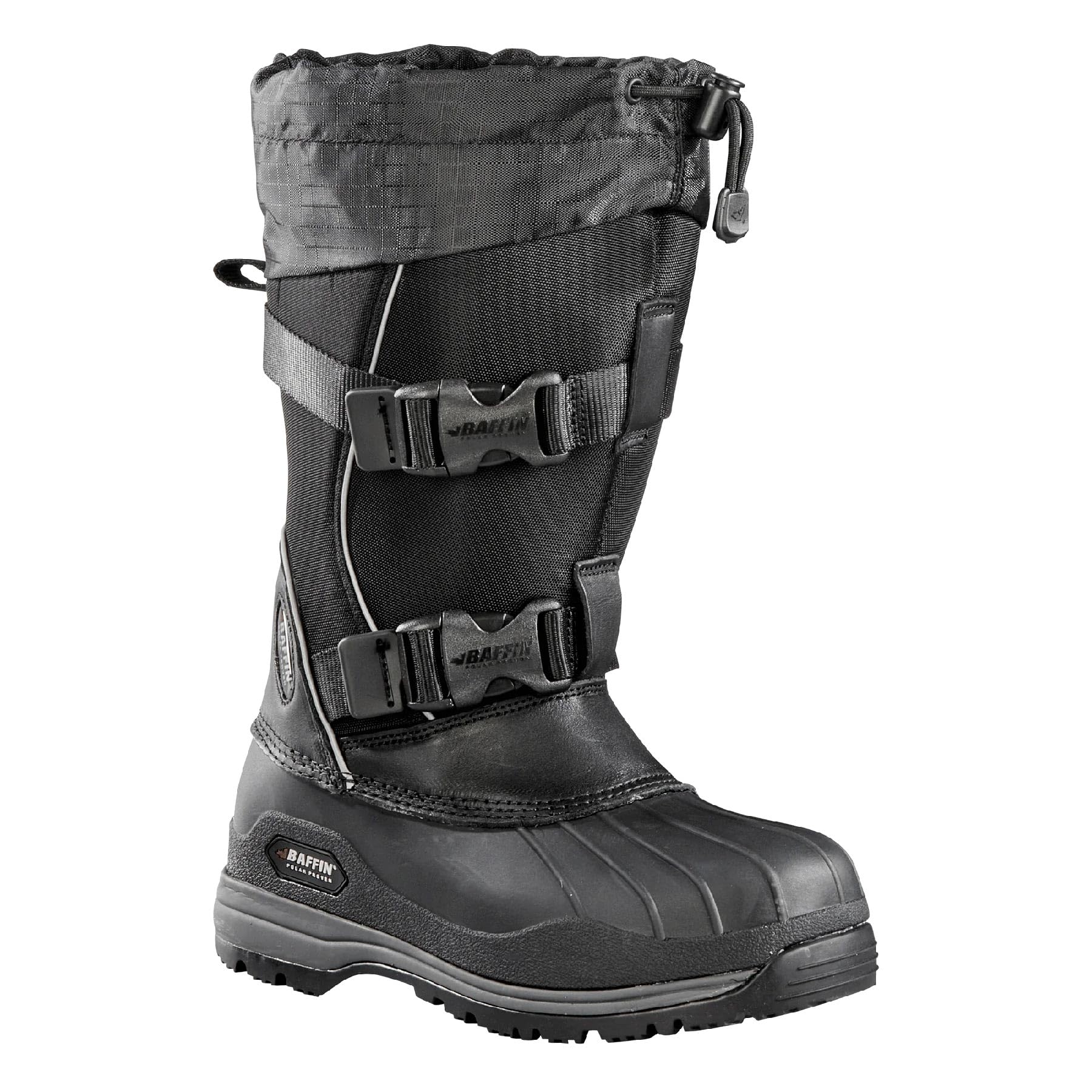
A tall, lined boot that handles snow-covered terrain on foot.
Warmth is what this boot is known for, and it is built for the worst weather — one owner reports it handling heavy snow at subzero temperatures. Baffin uses a removable insulation liner, so you can pull it out to dry between rides rather than letting damp insulation sit overnight. The tall shaft and locking snow collar seal out powder when you are standing in it.
The upper is a leather and nylon build with a locking snow collar, and the outsole is Baffin’s Polar Rubber, which is made for grip in cold conditions. It is snowshoe compatible and meant for snow-covered terrain, so it earns a place even if your day goes off the machine and onto your feet. Quality and comfort both draw steady praise alongside the warmth.
The one real fit note: the toe box runs narrow for some people, especially those wearing heavier socks. If you have a wide forefoot, take that seriously before you order. Otherwise this is a tall, warm, capable boot at 2.06 pounds — reasonable for the amount of coverage you get.
The warmth leader: a removable liner plus tall shaft and locking snow collar make it a genuine deep-cold boot.
Toe box note: it runs narrow up front, so wide feet should size carefully.
Pick this for: snowshoe days and standing around in deep powder.
Size for width: the toe box is the one spot to watch if your feet run wide.
Know the Specs
Insulation: grams versus millimetres
Thinsulate is measured in grams — a heavier gram figure means more insulation packed into the boot. Neoprene is measured in millimetres instead. The MUCK Arctic Ice Mid uses a 5mm neoprene inner boot, and the Dryshod Arctic Storm runs a 5.5 mm bootie. Grams and millimetres measure different materials, so neither number is inherently better; they just describe different ways of trapping warmth. Match the figure to the coldest temperature you actually plan to ride in.
Waterproofing: membrane versus coating versus rubber
A GORE-TEX membrane, as on the KLIM Aurora GTX, blocks water while letting moisture escape. A water-repellent coating like HYDROKOTE or a non-PFC DWR beads water off the surface but sits on the fabric. A full rubber or neoprene shell, as on the MUCK and Dryshod boots, blocks water by covering the foot entirely. All three block water; they just suit different amounts of slush and time outdoors.
Sole compounds and grip
Look for outsole names that mean something. Vibram Arctic Grip A.T. with XS Trek Evo is built for wet ice and mixed surfaces. Michelin rubber on the KLIM is chosen for durability. Baffin’s Polar Rubber is made for cold grip, and the Dryshod DS1 outsole uses inner-set lugs for any-angle grip plus outer lugs for lateral support. Traction on ice is where generic rubber soles fail first.
Height, gaiter, and calf fit
Taller shafts keep more snow off your legs, and a gaiter or locking snow collar seals the gap. The Castle X Barrier 2 uses a snow shield gaiter with a bungee cord lock; the Dryshod Hi Cut uses an adjustable gusset with a locking strap. Check your calf circumference against any published measurement — the MUCK Arctic Ice Mid lists a max of about 14.6 inches.
Common Questions
Will these boots fit over snowmobile riding pants?
What does a comfort range of -50° to 65° F actually mean?
Is 800 grams of Thinsulate warmer than 5mm neoprene?
Do I size up for thick wool socks?
Are these boots truly waterproof or just water-resistant?
How do I dry insulated boots without ruining them?
What kind of outsole gives the best grip on packed snow and ice?
Ankle-height or calf-height for snowmobiling?
How long should a snowmobile boot last?
Can I wear these boots off the machine too?
The Bottom Line
The women’s warmest snowmobile boots winner is the Castle X Women’s Barrier 2, because it is built by a snowmobile brand with a sealed gaiter and glove-friendly buckles. If raw cold is your concern, grab the Dryshod Arctic Storm Mid-Calf with its -50° F comfort floor. And for high-speed trail riding, the KLIM Aurora GTX is the one to reach for.
How we choose
We do not accept paid placement. Every pick is matched to a real buyer and a real use-case; we do not hands-on test units.
Sources
Specifications: manufacturer listings and product documentation. Review insights: verified customer reviews, as of November 2026. Pricing: not shown on this page (it changes often); check the current price via the retailer link.
As an Amazon Associate, Tactical Gear Guy earns from qualifying purchases. This does not affect which products we feature.