Specs are compiled from manufacturer listings and verified buyer reviews and can change over time — please confirm the key details on the product page before buying.
Most women buying track shoes end up with the wrong design for their event — a sprinter’s stiff spike plate for distance training, or a flimsy trainer for race day. The quickest way to get it right is to match the shoe to the event first, then worry about color and brand. Below are eight shoes that actually fit women’s feet, sorted by what each one does best on the oval.
This guide is built by comparing the manufacturers’ published specifications and the patterns across verified customer reviews, so you get each pick’s real strengths and trade-offs instead of marketing spin.
You will see which plate layout suits your distance, where sizing runs tight, and which spike counts need a replacement kit on hand before your first race. TheTHESTRON makes the strongest case as the most forgiving all-event entry into Women’s Track Shoes without a big outlay.
Top Picks


How To Choose The Best Women’s Track Shoes
The single biggest mistake women make is buying a sprint spike for distance work, or a distance spike for sprints. A sprint plate is stiff and built to push you onto your toes for a short, violent burst. A distance plate is flatter and built to keep you efficient over laps. Match the plate to the event and the rest of the decision gets simple.
Plate length and stiffness come first
A 3/4-length plate covers most of the forefoot and gives you a snappy, on-your-toes ride, which is what sprinters want. A 6-pin extended TPU plate spreads grip across the forefoot for cornering and acceleration over middle and long distances. Neither plate is “better” — the wrong one for your event will feel stiff or vague in the first 200 meters.
How many spikes do you actually need
Six replaceable spikes are common on sprint designs, giving sharp bite on the straightaways. Eight spikes across the forefoot give more contact points for jumping and sprint starts. More pins mean more grip but also more to replace, so keep the spare kit in your bag either way.
Sizing runs small more often than you expect
Across these shoes, small sizing is the most repeated complaint. Order by measured foot length rather than your everyday sneaker size, and leave room for a thin racing sock. If you are between sizes, go up — that holds for every brand here.
Side-by-Side Comparison
| Model | Best For | Plate / Spike Setup | Size Range | Stated Weight | Amazon |
|---|---|---|---|---|---|
| THESTRON 8 Spikes★ Best Overall | All-event starter | 8 spikes | US1–12 | — | Amazon |
| Ifrich Track & FieldBeginner’s Pick | Beginners on a budget | 8 spikes | US1.5–12 | — | Amazon |
| Nike Zoom Rival SprintSpeed Focused | Sprint events | 3/4-length plate, 6 spikes | — | 1 pound | Amazon |
| adidas Adizero Distancestar | Middle and long distance | Extended 6-pin TPU plate | — | 2.4 pounds | Amazon |
| adidas Adizero Sprintstar | Competitive sprinters | 6-pin TPU plate | — | 2.43 pounds | Amazon |
| ASICS Hyper MD 8 | Middle distance | EVA midsole | — | 1.44 pounds | Amazon |
| ASICS Hypersprint 8 | Short sprints | Resin plate | — | 1.44 pounds | Amazon |
| Nike Rival Sprint Spikes | Premium sprint pick | 3/4-length plate, 6 spikes | — | — | Amazon |
Detailed Reviews
1. THESTRON Track and Field Shoes 8 Spikes
Our pick — 4.5+★ from 350+ verified ratings; the strongest balance of quality and price.
Eight forefoot spikes and a wide size run make this the safest first track shoe for a woman.
If you are not yet locked into a single event, this is the shoe to start with. It carries 8 spikes across the front of the sole, which gives you real grip for sprint starts, jumps, and the occasional 800 without committing to a sprint-only plate. The build pairs a PU and air-mesh upper with a damping insole, so your feet stay dry and cushioned through a full practice session in hot weather.
Sizing is the thing to watch. This brand runs small often enough that a stepped-up size is the sensible call, and the US1–12 range covers juniors and adults in the same model. That spread is one of the widest in this comparison — the ASICS Hyper MD 8 publishes no size range at all, and the Nike models do not list one either. Fourteen color options mean a team or school can color-match without hunting.
What buyers like most is simply that the shoe feels well made for the money. The recurring note is that you should size up, and the spare spike kit in the box means you can refresh worn pins without a separate order. As a do-everything starter spike, it holds up better than most at this tier.
Track and field versatility
- 8 forefoot spikes give strong grip for starts, jumps, and sprint work
- US1–12 sizing spans kids and adults in one model
- Breathable PU and air-mesh upper with a damping insole for hot-weather comfort
- 14 color options for team matching; replacement spikes included
Sizing runs narrow
- The sizing runs small for many feet — plan to order a size up
- Not an event-specific plate, so a serious sprinter will want a stiffer design
Pick for beginners: a multi-event athlete or a first pair where grip and price matter more than a specialized plate.
Skip for wide feet: you need a sprint-only plate or you know your foot runs narrow and small.
2. Ifrich Spikes Athletics Racing Running Shoes
A first-season spike that arrives with spare pins and the tool to change them.
New to the oval, or buying for a daughter starting track? This is the pair most people should look at first. It ships with a shoe bag, extra spikes, and a replacement tool, so a lost pin mid-season is a five-minute fix rather than a new order. The outsole uses professional nails set into a wear-resistant base, and the upper is a breathable lightweight mesh that keeps feet relaxed through long practices.
The build is shaped to fit body structure, with the design aimed at adding explosive power at the start while keeping stability through turns. Buyers describe it as well made for what you spend, and comfortable enough for a beginner. The fit is the honest catch here: some feet find it true to size, others find it small, so measure your foot length and choose by that rather than your usual sneaker number. It runs US1.5–12 versus the THESTRON’s US1–12, which matters if you are buying for a young athlete.
Durability splits the same way — some pairs last a full track season, others less. That is normal at this tier, and it is why the beginner who only races a few times a season will be happiest here. A serious every-week sprinter should expect to replace them sooner.
Affordable sprint spikes: the included spike kit and tool plus the bag turn this from a bare starter shoe into a complete first setup. The 8-spike forefoot delivers the grip needed for starts and jumps, and the mesh upper stays breathable in warm weather.
Thin cushioning: fit and durability are both reported as mixed. Choose by foot length, and treat this as a first pair rather than a season-after-season investment.
Reach for budget: you or your young athlete are new to track and want a complete, affordable kit from day one.
Look elsewhere for comfort: you train hard every week and need the shoe to survive multiple seasons.
3. Nike Zoom Rival Sprint
The sprint shoe for an athlete who wants to stay up on her toes from the gun to the tape.
Here is the weight number that matters: the Zoom Rival Sprint comes in at 1 pound, against the adidas Adizero Distancestar’s 2.4 pounds. On a sprint, lighter means less to carry through the drive phase. It carries a 3/4-length plate under the forefoot that is lightweight and responsive, keeping you sprinting on your toes exactly where a sprinter wants to be.
Grip comes from 6 replaceable spikes in lightweight ceramic aluminum, a material chosen for durability. Rubber at the heel gives cushioning for footstrike and traction when you brake after the race. A midfoot band tightens the arch support through the lace-up, and the reinforced forefoot mesh stays breathable while holding its shape through the turns.
This is not the shoe for long distance. The plate is built for short, aggressive bursts, so anything from 400 meters up feels stiff. Pair that with the fact that it lists a men’s department and no published women’s size range on the listing, and a woman should confirm her size on the size chart before committing. As a sprint-specific tool, it is one of the sharpest builds in this group.
Built for sprinters: the sprinter who races short events and wants a light, snappy 3/4-length plate and 6 aluminum spikes.
Skip for distance: your events run beyond a sprint, or you need a clearly labeled women’s size line.
4. adidas Unisex Adult Adizero Distancestar Track and Field
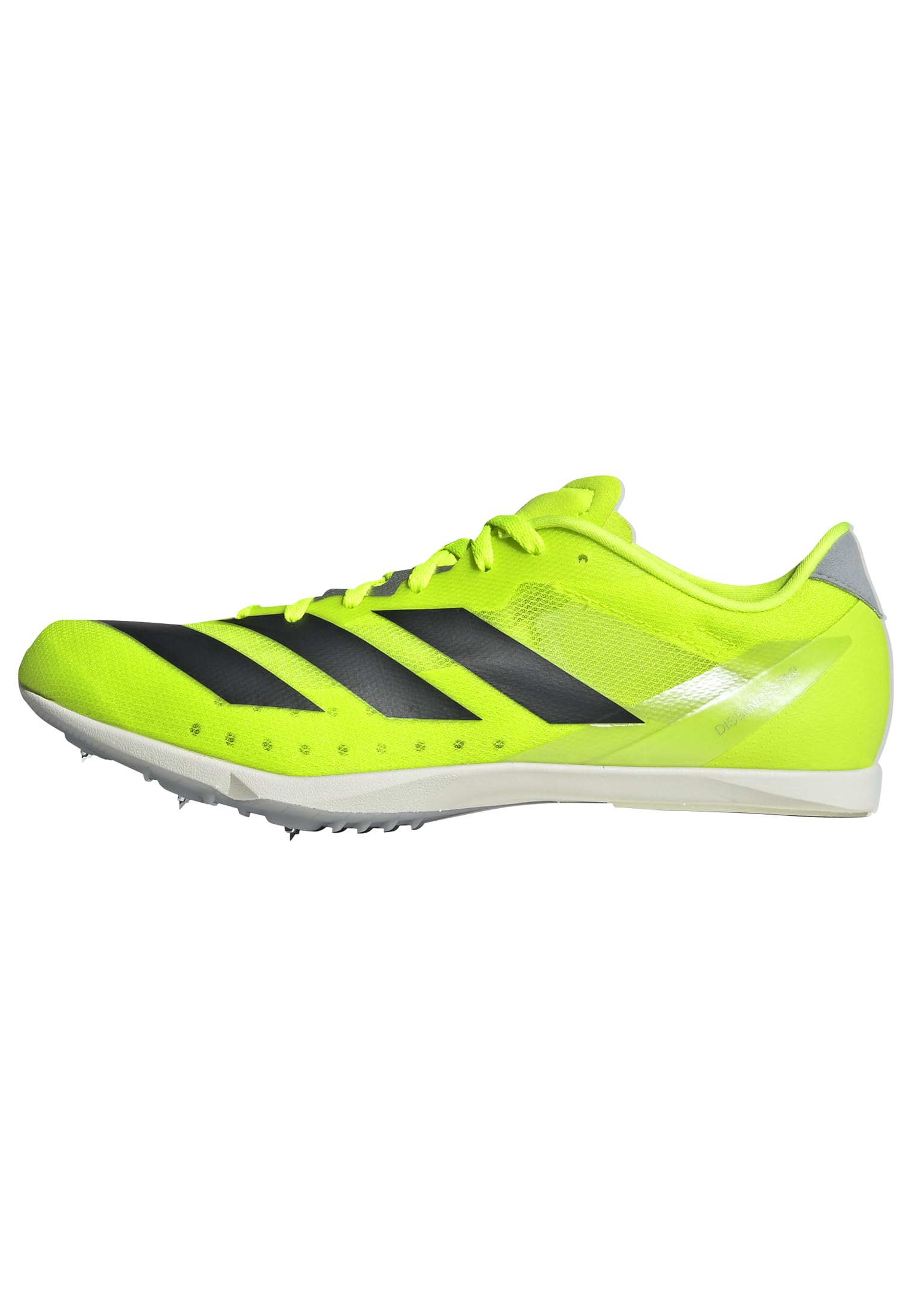
A distance spike with foam placed where mid-race propulsion actually needs it.
This shoe is built for 400 meters through the mile and beyond. It uses an extended 6-pin TPU spike plate that spreads grip across the forefoot for cornering and acceleration — the parts of a distance race where you gain or lose ground. Lightstrike Pro cushioning sits under the forefoot to give you return on every stride without extra weight, and a molded EVA layer runs heel to toe for a balanced platform.
Weighing 2.4 pounds versus the Zoom Rival Sprint’s 1 pound. A sprinter would feel that; a distance runner trading a little weight for cornering stability will not. The breathable synthetic upper wraps the foot to cut movement inside the shoe, and the regular fit handles different foot shapes. It carries a 4.5+ rating, the highest on this list, but on a smaller review base than the Ifrich — promising rather than proven.
For a distance runner, the spec sheet is a strong one.
Distance-ready plate: an extended 6-pin TPU plate and forefoot Lightstrike Pro cushioning combine for cornering grip and propulsion over 400m to the mile. The regular fit and breathable synthetic upper keep the foot locked through long efforts.
Early signal: the 4.5+ score comes from 40+ ratings versus the Ifrich’s 980, so treat it as promising rather than a settled track record.
Your pick for 400m: your events are middle to long distance and cornering grip plus propulsion matter more than shaving grams.
Consider softer options: you sprint short events, where the lighter Zoom Rival Sprint is the better tool.
5. adidas Unisex-Adult Adizero Sprintstar Track and Field
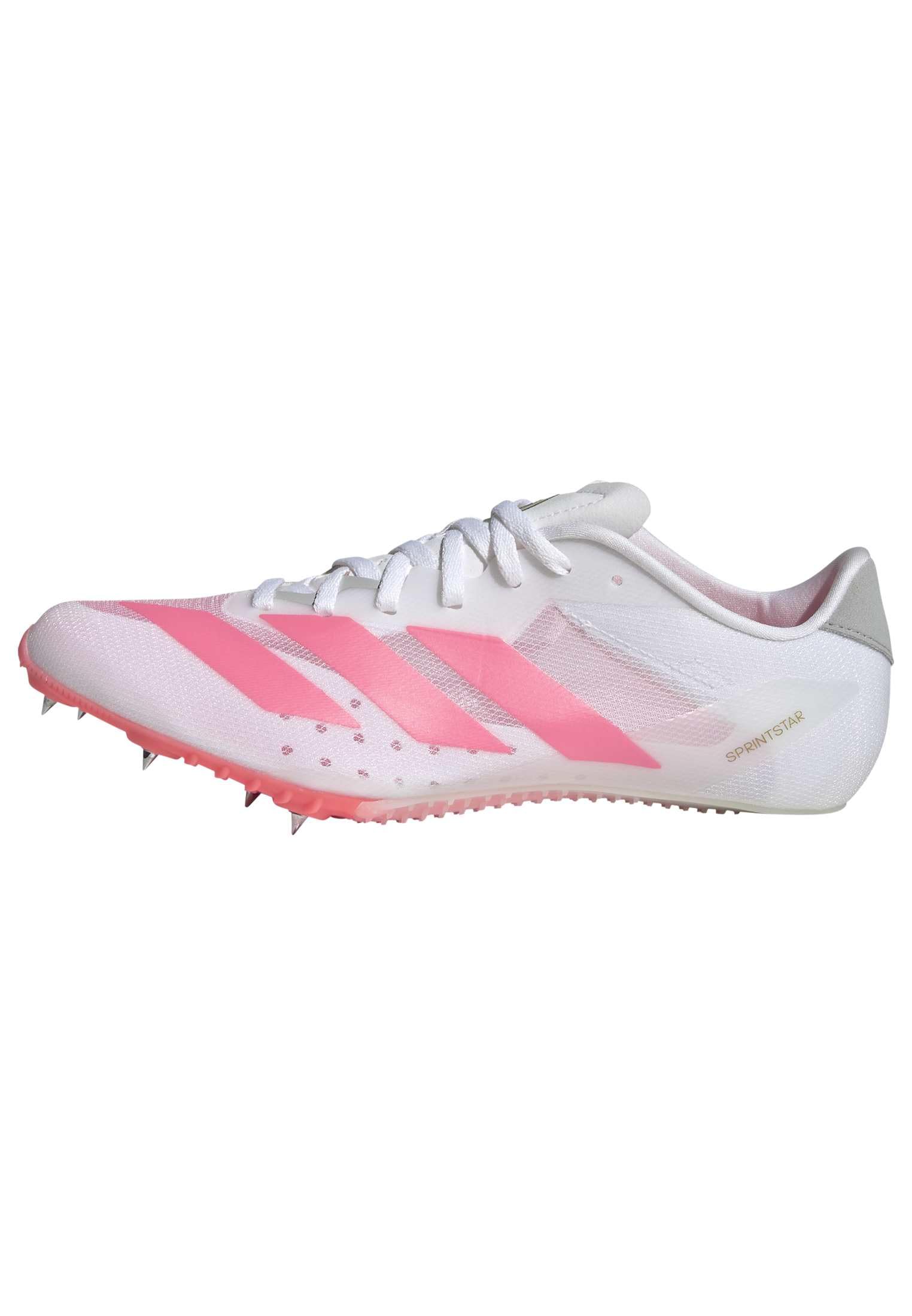
The Adizero Sprintstar is focused engineering for a sprinter chasing a personal best.
For acceleration, top-end speed, and holding your line through a curve, this is a purpose-built tool. The 6-pin TPU spike plate digs into the track and converts force into forward drive, with enough stability for an explosive start out of the blocks and a hard lean through the turn. Rubberized sections on the outsole defend the high-wear zones, and molded EVA gives a responsive ride from heel to toe without killing the direct ground feel track athletes want.
At 2.43 pounds, it is roughly the same weight class as the Adizero Distancestar’s 2.4 pounds — so the difference between them is not weight but plate intent. The Sprintstar plate is tuned for sprinting, while the Distancestar plate spreads grip for distance cornering. The breathable synthetic mesh upper keeps airflow moving, and a regular fit with secure lace closure locks the foot for start and finish.
What buyers consistently vouch for is quality; the thing to plan around is that it runs small, so order up a half size based on your foot length. It is built with recycled materials, which sits well if that matters to you. For a competitor in the short events, the plate layout and secure lockdown are the reasons to pick it.
Go with it for dashes: short sprint events are your focus and you want a stiff 6-pin plate tuned for acceleration and curve navigation.
Look elsewhere for training: you are a distance runner or need a shoe that does not run small from the start.
6. ASICS Unisex Adult Hyper MD 8 Track Shoes
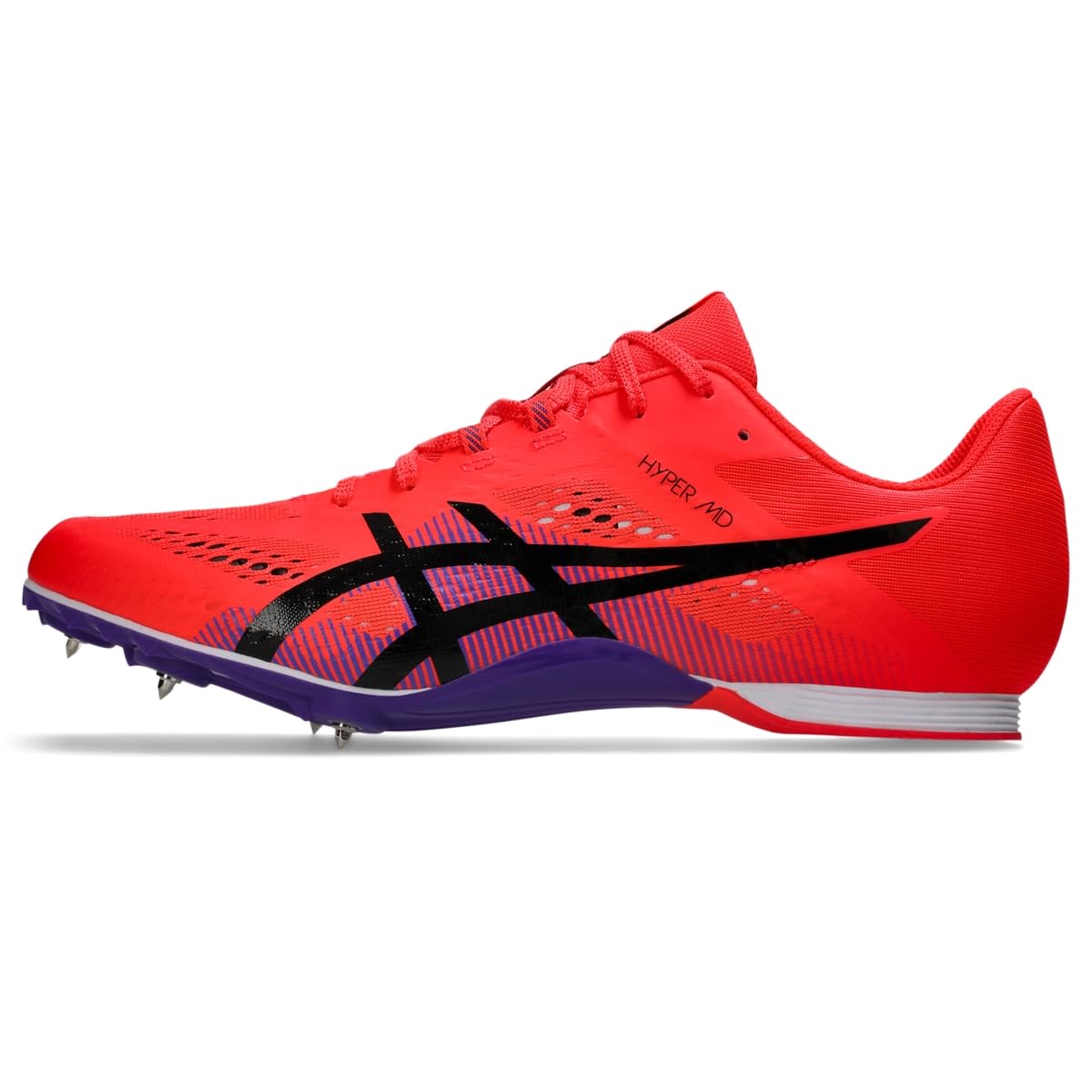
A middle-distance shoe that puts ventilation and underfoot support ahead of flashy features.
Crafted for the runner who races the 800 and 1500, the Hyper MD 8 keeps things simple. An open mesh structure drives airflow so feet stay cooler over longer efforts, and no-sew films reinforce the upper without creating seams that rub. Underfoot, an EVA midsole provides cushioning and support — the part that matters when you are logging laps rather than bursting over a sprint.
It weighs 1.44 pounds, against the Adizero Distancestar’s 2.4 pounds. Buyers describe the fit as landing true, and appreciate the appearance. Two things to sort before race day: the listing does not state whether spikes are included, and durability is split — some pairs hold up well, while soles separating after roughly two months of use does happen. Check your pair on arrival and keep an eye on the sole seam if you pound out heavy mileage.
For a middle-distance runner who wants a vented, comfortable ride and does not need a full spike plate, this fits the bill. If you race the short sprints, the missing spike spec is worth confirming before you commit.
ASICS mid-distance fit: the open mesh upper and no-sew film build keep the foot vented and chafe-free, while the EVA midsole gives the cushioning a middle-distance effort calls for.
Spike inclusion unclear: the listing does not state whether spikes are included, and long-term sole durability is reported as mixed.
Match it to 800m: the 800 or 1500 runner who values breathability and cushioned support over a rigid sprint plate.
Pass on it for sprints: you need confirmed spike inclusion or you plan to log heavy mileage and want more proven durability.
7. ASICS Unisex Hypersprint 8 Track & Field Shoe
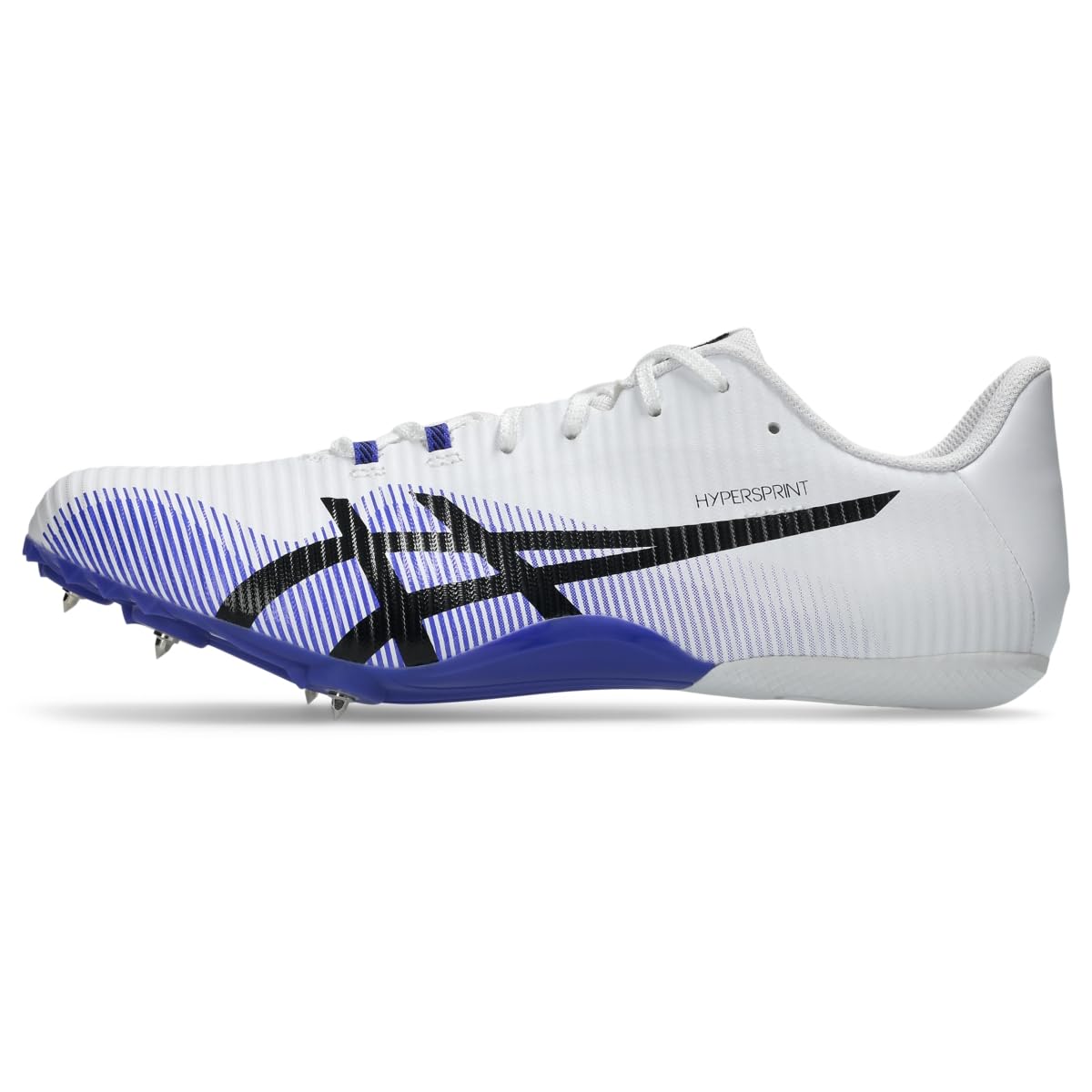
A resin-plate sprint shoe built to hold grip when you are at top velocity.
Short-distance sprinters get the most from this one. It uses a resin plate to improve propulsion and grip, and that combination keeps you locked to the track when you are running flat out without slipping. An EVA sockliner underfoot gives a flexible fit and extra support exactly where you need it, and the shoe measures 1.44 pounds — a light build for a full sprint effort.
Owners vouch for quality here more than anything, and the fit lands right for many women — this is the model that lists a women’s department, which not every shoe in this group does. Where it gets murky is spike inclusion: some pairs come with spikes, others do not. Sizing also runs small for several buyers, so order up rather than hope. Confirm the spike question before your first meet, or you may be shopping for a replacement set.
The resin plate and the light weight make this a natural option for a sprinter focused on the 100 and 200. For a distance runner, the sprint-tuned plate and the small sizing are the reasons to keep looking.
Choose this for speed: the sprinter who wants a resin plate for propulsion and grip at top speed, in a women’s-listed model.
Move on if flat-footed: you need confirmed spike inclusion, or your sizing often runs large — this one runs small.
8. Nike Rival Sprint Track & Field Sprinting Spikes
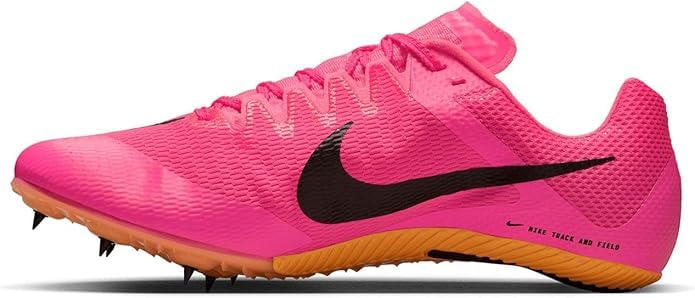
The premium sprint spike for the athlete who wants the same plate tech in a more polished build.
This is a sprint shoe first and foremost. An updated 3/4-length plate is lightweight, snappy, and sturdy enough to keep you on your toes from the start of the drive through the tape. Six replaceable ceramic aluminum spikes give optimal traction across all track surfaces, and rubber at the heel cushions the footstrike while giving a little traction when you brake after the finish. A midfoot band ties the lace-up to the arch for supportive containment.
The reinforced upper provides the containment needed to attack turns and straightaways. It lists no published size range on the listing, and it lists no stated weight — so a woman should confirm size on the size chart rather than guess. On quality and comfort, buyers are happy. On fit, the feedback is mixed, with some finding it true to size. That split means one trial race in the shoe before a meet matters.
If the Zoom Rival Sprint at 1 pound is the budget-conscious sprint option, this is the more premium take on the same plate concept. Choose it when polish and a reinforced upper are worth the step up.
Fits the bill for 100m: a sprinter who wants a reinforced 3/4-length plate build and six ceramic aluminum spikes with a premium finish.
Give it a miss for wide toes: you need a clearly stated size range or weight on the listing before you commit.
Know the Specs
The spike plate
The plate is a stiff layer under the forefoot that returns energy and keeps you on your toes. A short 3/4-length plate suits sprints, where you want a snappy, aggressive push. An extended 6-pin TPU plate spreads grip for cornering over distance — the difference between a shoe that fights you on a curve and one that holds your line.
Spike count
Six spikes are common on sprint designs, giving sharp bite on the straightaways. Eight spikes add more contact points for jumping and starts. More pins mean more grip but also more to replace, so check whether your pair ships with a spare kit and keep it in your bag.
Upper and ventilation
A breathable mesh or PU upper keeps feet dry and relaxed through hot practice sessions. No-sew films add reinforcement without seams that rub. The upper also matters for lockdown — it should wrap the foot to stop movement inside the shoe, which saps energy over a race.
Sizing for women
Many of these shoes list a men’s or unisex department, and small sizing is the most repeated complaint. Choose by measured foot length, not your everyday sneaker size, and leave room for a thin racing sock. When in doubt, go up.
Common Questions
Do these shoes come with spikes installed or do I need to buy them separately?
What is the difference between a sprint plate and a distance plate?
How many spikes do I need on the forefoot?
Do women’s track shoes run small?
Can I wear these for distance running or only sprinting?
Are these shoes suitable for kids starting track?
How do I replace a worn spike?
Do these shoes work for both sprint and jump events?
How long should a track spike last?
Do I need a different sock for track spikes?
The Bottom Line
The shoe that suits the most women here is the THESTRON 8-Spike — it handles sprint, jump, and the occasional distance event, spans US1–12, and includes replacement spikes so a loose pin never ends a session. If your events are middle to long distance, the adidas Adizero Distancestar is the plate-driven pick with the highest score on this list. And if you sprint the 100 and 200, the Nike Zoom Rival Sprint at 1 pound is the sprint-first tool. Order by measured foot length, confirm spike inclusion, and match the plate to your event.
How we choose
We do not accept paid placement. Every pick is matched to a real buyer and a real use-case; we do not hands-on test units.
Sources
Specifications: manufacturer listings and product documentation. Review insights: verified customer reviews. Pricing: not shown on this page (it changes often); check the current price via the retailer link.
As an Amazon Associate, Tactical Gear Guy earns from qualifying purchases. This does not affect which products we feature.