Specs are compiled from manufacturer listings and verified buyer reviews and can change over time — please confirm the key details on the product page before buying.
You plant your foot, spin, and feel it slide — that tiny slip is lost distance on every throw. The fix is a shoe built for the ring, not the open track. A proper throwing shoe has a flat, low sole and a strap across the top of your foot, so your foot stays locked while you rotate and drive. Below are three real options that do exactly that, sorted by what each one is actually good at.
This guide is built by comparing the manufacturers’ published specifications and the patterns across verified customer reviews, so you get each pick’s real strengths and trade-offs instead of marketing spin.
You will see which shoe suits the shot put ring, which one handles discus and javelin practice, and where each model’s fit runs wide or narrow. The goal is simple: a pair that keeps your foot planted through every rotation. A locked-in plant foot is what lets you commit to the drive instead of bracing against a slip.
Top Picks
How To Choose The Best Women’s Throwing Shoes
A throwing shoe is not a running shoe with a different label. Running shoes are built to roll you forward and absorb impact, which is the opposite of what you want inside a seven-foot circle. You need a firm platform, a flat sole, and something holding your foot down while you turn. Get those three right and the only variable left is sizing.
The sole is the whole point
A throwing shoe keeps you low and flat so your foot stays in contact with the ring surface. Cushioning works against you here — it lets your foot rock and costs you the stable base you rotate around. Look for a sole that feels firm underfoot rather than springy.
The strap across your instep
An instep strap (a band that crosses over the top of your foot) is what keeps your heel from lifting during the spin. Without it, your foot shifts inside the shoe mid-rotation. With it, you can drive harder because your foot stays where you put it.
Width and women’s sizing
Throwing shoes often run on a unisex or wider last, so your normal street size is not always the right call. If your feet are narrow, plan for a snugger fit or a thinner sock. If they are wide, a roomier cut can be a genuine plus — one of the picks below gets praised for exactly that.
Side-by-Side Comparison
| Model | Best For | Build Focus | Foot Hold | Fit Note | Amazon |
|---|---|---|---|---|---|
| VELAASA Stones★ Best Overall | All-around training and competition | Sturdy, supportive platform | Velcro instep strap | Women’s department sizing | Amazon |
| Nike Zoom Rival SD 2 | Budget-friendly ring work | Lightweight track build | Low-profile track fit | Listed in men’s sizing | Amazon |
| ASICS Throw PRO 3 | Wider feet, throwers | Synthetic leather overlays with mesh | Lightweight flexible upper | Unisex sizing, roomy cut | Amazon |
Detailed Reviews
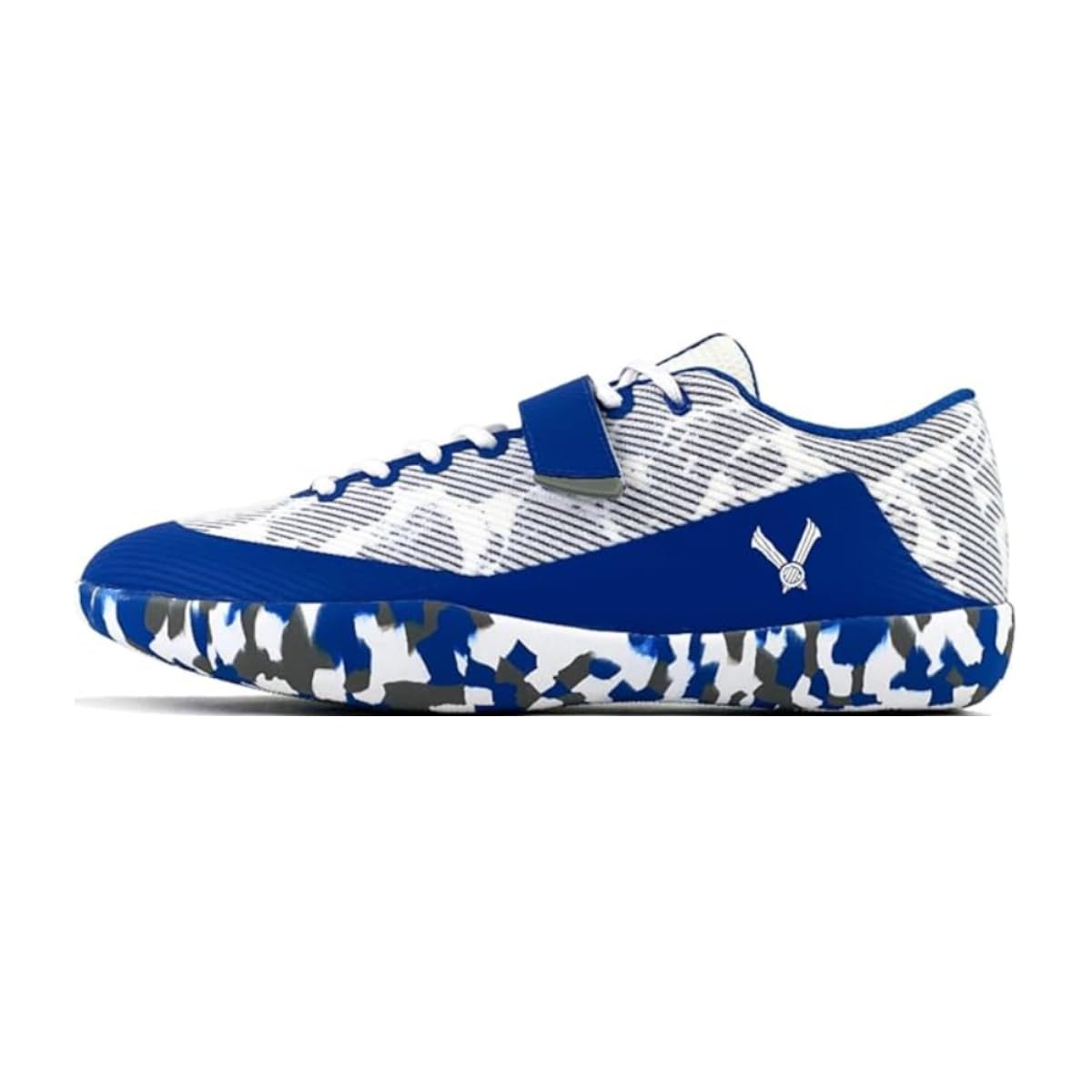
1. VELAASA Stones Throwing Shoe
Our pick — 4.5+★ from 250+ verified ratings; the strongest balance of quality and price.
The Velcro strap locks your instep down so the spin stops stealing your distance.
The VELAASA Stones is the pick that covers the whole season — discus, shot put, javelin, and the practice sessions in between. It is listed with women’s department sizing, which means you are not guessing at a conversion from a men’s last. For a thrower who wants one pair that handles training and competition without a second purchase, that combination is hard to argue with.
What wins people over is the build. The shoe feels sturdy and supportive through the throw itself, not just while you are standing in the ring waiting your turn. The Velcro strap across the instep is the detail that does the real work — it holds your foot down through the rotation so you can commit to the drive. Outdoors, on a track surface that gets slick in the spring, that grip is what keeps your plant foot honest.
The honest catch is weight and breathability. A sturdy, supportive platform is not the lightest thing on your foot, and if you are coming from a featherweight trainer you will notice it on the walk between events. This is a shoe built for the ring first. Judge it on ring stability rather than weight, and it covers shot put, discus, and javelin all season.
Why throwers keep coming back
- Velcro instep strap holds the foot down through the spin
- Sturdy, supportive platform that stays stable under load
- One shoe covers discus, shot put, and javelin
- Listed in women’s sizing, so no men’s-to-women’s guesswork
Where it asks something of you
- Sturdy build adds weight compared with a lightweight trainer
- Support-focused design gives up some breathability
- Strap needs to be snug — a loose fit defeats the purpose
Reach for this if: you throw more than one event and want a single pair that holds up in training and competition.
Look elsewhere if: you want the lightest possible shoe on your foot between throws.
2. Nike Zoom Rival SD 2 Track and Field Shoes
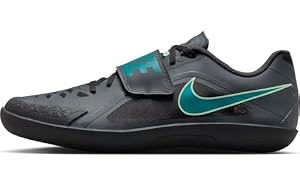
A lightweight ring shoe that gets you throwing for a lot less than the competition.
If you are outfitting a first season or buying for a growing athlete, this is the pair that makes the least painful dent. It fits well and feels comfortable from the first session, which matters when you are still learning the spin and spending more time in the ring than you would like. The value read here is genuinely strong for what you get.
Here is the trade-off you need to know before you commit. Durability on this one is mixed — some pairs hold up fine, while others start to tear at the bottom of the sole near the toes. That is the highest-stress spot on any throwing shoe, so if you train on rough surfaces or throw several times a week, expect to keep an eye on it. For a lighter schedule or a single season, it is a sensible call.
One more thing to plan for: this model is listed in men’s sizing, so women should size down or check the size chart carefully before ordering. Confirm the conversion, and you have a comfortable ring shoe for well under the premium models.
Value read: For a first throwing shoe or a backup pair, this delivers good fit and comfort without the premium outlay. It is the practical entry point into the category.
Sizing heads-up: The listing runs on a men’s last, so women should confirm the conversion before checkout rather than assuming their usual size works.
Smart buy for: newer throwers, single-season athletes, or anyone who needs a capable ring shoe without a big spend.
Think twice if: you train several times a week on abrasive surfaces and need the sole to hold up over multiple seasons.
3. ASICS Throw PRO 3 Track & Field Shoe
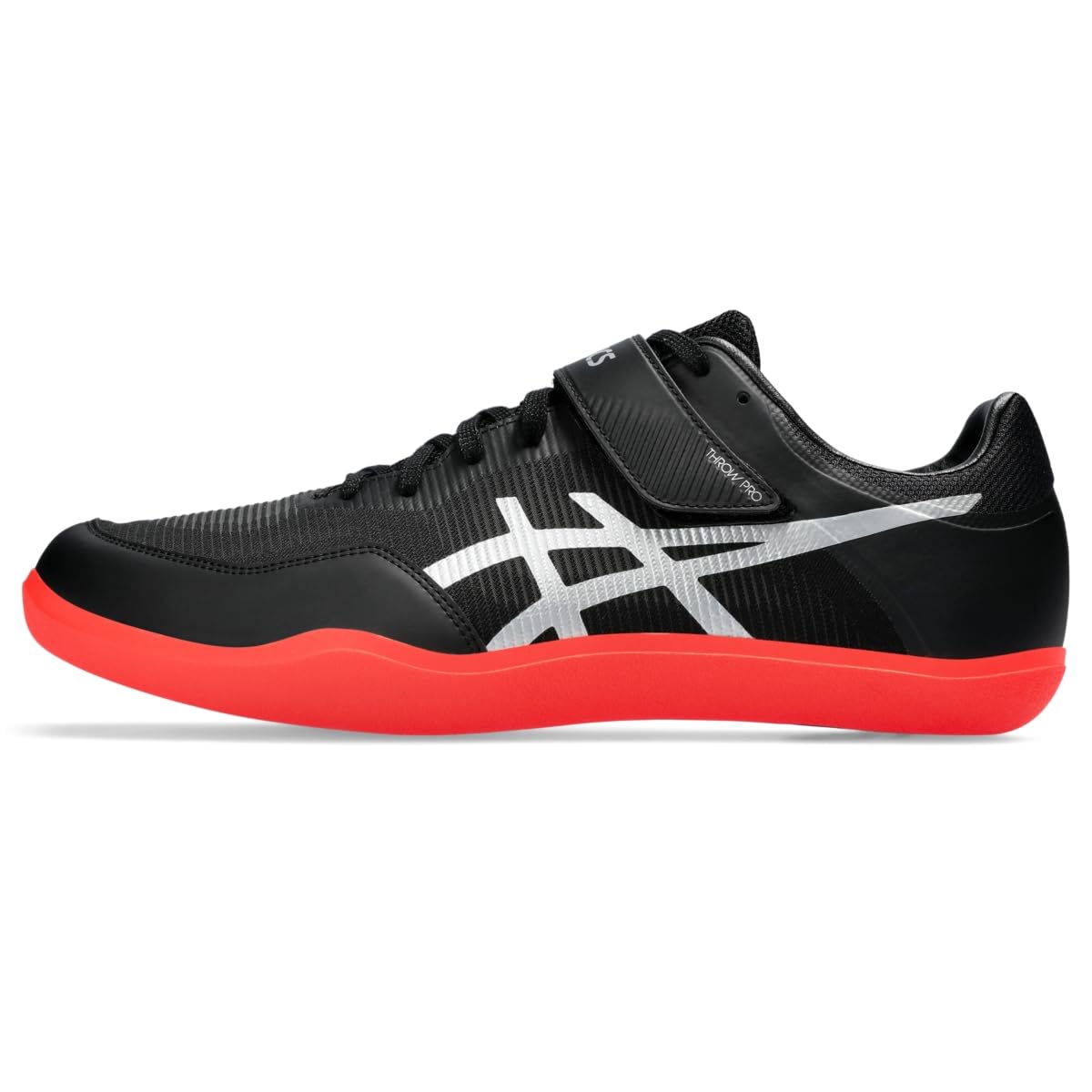
The roomy, breathable option for throwers whose feet never fit a narrow last.
Wide feet and throwing shoes are usually a bad match — most ring shoes run narrow and punish you for it. This ASICS model is the exception in this lineup, and it earns its place by being comfortable for feet that struggle elsewhere. If you have been squeezing into shoes that pinch across the forefoot, start here.
The build is a lightweight, flexible design with breathable mesh and durable synthetic leather overlays. In plain terms: the mesh lets heat out during a long practice, and the leather panels reinforce the spots that take the most wear. The whole shoe comes in at 1.44 pounds, which is light enough to forget about between attempts. It is unisex sizing, so women should account for the wider cut when choosing a size.
The flip side of that flexibility is that it does not feel as locked-down and rigid as the VELAASA. If you want maximum stiffness through the spin, that is the one to look at. But for a thrower who values comfort, airflow, and a fit that actually accommodates a wider foot, this delivers something the others do not.
The standout: Breathable mesh paired with synthetic leather overlays gives you airflow where you need it and reinforcement where the shoe wears hardest. Add the 1.44-pound weight and you have a light, comfortable ring shoe.
Fit reality: Unisex sizing runs roomy, which is a genuine benefit for wide feet but something narrow-footed throwers should plan around.
Go with this if: your feet run wide and other throwing shoes leave you pinched across the forefoot.
Skip ahead if: you want a stiff, maximally locked-down platform for the spin — the flexible build here trades some of that away.
Know the Specs
Why a flat, firm sole beats cushioning
Running shoes are built to roll you forward and soak up impact. In the throwing ring that works against you, because a soft, curved sole lets your foot rock and shift. A flat, firm platform keeps your whole foot in contact with the ground so you have a stable base to rotate around. When you are driving a shot put or spinning for a discus, that stability is what transfers your power into the implement instead of into a wobble.
What the instep strap actually does
An instep strap is a band that crosses over the top of your foot and cinches down. Its job is to stop your heel from lifting and your foot from sliding forward during the spin or glide. Without one, your foot moves inside the shoe mid-rotation, which costs you accuracy and distance. With a snug strap, your foot stays planted where you put it, so you can commit fully to the drive without bracing against a slipping shoe.
Women’s, men’s, and unisex sizing
Throwing shoes come in different sizing systems, and this is where most buyers get burned. A shoe listed in men’s sizing will run larger than your usual women’s size, and a unisex model often runs wider through the middle. Always check the size chart and the stated department before ordering. Get the sizing system wrong and you end up with a shoe that pinches across the forefoot or slides on every rotation.
Where throwing shoes wear out first
The highest-stress zone on any throwing shoe is the sole near the toes, where your foot pivots and pushes off against the ring surface. That is the area to inspect regularly, especially if you train on abrasive surfaces or throw several times a week. A reinforced upper and quality overlays help, but the sole edge is always the first place to show age. Check it before each season and you will not be caught out mid-competition.
Common Questions
Can I use running shoes for throwing events instead?
Do throwing shoes run true to women’s size?
What does the strap across the top of a throwing shoe do?
Are throwing shoes only for shot put?
How tight should the instep strap be?
Where do throwing shoes wear out first?
Can I wear throwing shoes for sprinting or jumping?
Is breathable mesh a real benefit in a throwing shoe?
Should a wide-footed thrower size up?
The Bottom Line
For most throwers, the women’s throwing shoes winner is the VELAASA Stones — it covers discus, shot put, and javelin with a sturdy platform and an instep strap that holds your foot down through the spin, and it is listed in women’s sizing so you are not guessing at a conversion.
If you are outfitting a first season or watching the budget, the Nike Zoom Rival SD 2 fits well and feels comfortable from day one, though you should size down since it runs on a men’s last. And if your feet run wide, the ASICS Throw PRO 3 is the one to reach for, with breathable mesh and a roomy unisex cut that finally gives your forefoot somewhere to go.
Match the shoe to your event schedule and foot width, and your plant foot stays put through the spin.
How we choose
We do not accept paid placement. Every pick is matched to a real buyer and a real use-case; we do not hands-on test units.
Sources
Specifications: manufacturer listings and product documentation. Review insights: verified customer reviews, as of November 2026. Pricing: not shown on this page (it changes often); check the current price via the retailer link.
As an Amazon Associate, Tactical Gear Guy earns from qualifying purchases. This does not affect which products we feature.