Specs are compiled from manufacturer listings and verified buyer reviews and can change over time — please confirm the key details on the product page before buying.
Snow on the outside of your lens brushes off; fog on the inside is what ends a run. Fog on the inside is what actually ruins a run, because you cannot wipe it out without smearing the coating. The three picks below all ship with an anti-fog coating and a women’s-specific fit, and one of them throws in a second lens so you are covered from flat grey light to blinding afternoon sun. If you want the safest all-round call, start with the Giro Moxie, which ships with both a 37% and an 84% VLT lens.
This guide is built by comparing the manufacturers’ published specifications and the patterns across verified customer reviews, so you get each pick’s real strengths and trade-offs instead of marketing spin.
Tightness around a helmet is the complaint that bites hardest here, so fit is weighed as heavily as lens tint. Read on for the picks that keep your field of view clear, which is the whole job of women’s snowboarding goggles.
Top Picks
How To Choose The Best Women’s Snowboarding Goggles
Shopping by looks is the fastest route to a goggle that leaks cold air at the brow. A goggle that pinches your temples after two hours is a goggle you will leave in the car. Size the frame to your helmet first, then pick the VLT tint for the light you ride.
Start with the fit on your helmet, not your face
Goggles are judged with a helmet on, because that is how you ride. A small-to-medium fit like the Giro Moxie is built for narrower faces, and it is designed to sit against Giro helmets specifically. If your helmet came from a different brand, expect to spend more time adjusting the strap to close the gap at the brow.
The clearance at the bridge is what decides whether your temples ache. A rimless frame like the Moxie’s has less material pressing back into your face, which matters if you have a wide head.
Read the VLT number before you buy a tint
VLT means visible light transmission — the percentage of light the lens lets through to your eye. A low number blocks a lot of brightness, so it suits bluebird days. A high number lets more light in, so it suits snowfall, shade, and late-afternoon runs.
The Moxie shows you both ends of that scale in one box. Its Amber Pink lens measures 37% VLT for mixed clouds, and a Yellow lens measures 84% VLT for night and race conditions. That is the practical answer to “which tint do I pack.”
Treat anti-fog as a coating, not a feature list
An anti-fog coating is a treatment on the inside of the lens that spreads moisture into a thin film instead of beads. It spreads moisture into a thin film instead of beads, so your view stays clear. It also wears away if you rub it. Keep your fingers off the inside surface and store the goggle in its bag, and the coating lasts far longer.
Know your goggle-over-glasses space
If you ride in prescription glasses, you need a frame with room behind the lens. OTG stands for over-the-glasses, and the Moxie is listed as OTG friendly. Not every goggle on a shelf has that clearance, so check it before you buy if you wear glasses under your goggles.
Side-by-Side Comparison
| Model | Best For | Lens Setup | Frame / Fit | Light Handling | Amazon |
|---|---|---|---|---|---|
| Giro Women’s Moxie★ Best Overall | All-round riding with one spare lens | Two lenses included | EXV rimless, small-to-medium fit | 37% VLT and 84% VLT lenses | Amazon |
| Odoland Photochromic | Riders who hate changing lenses | Photochromic single lens | Adjustable strap frame | Adapts to outdoor light | Amazon |
| Giro Dylan | Cold days and plush comfort | Two cylindrical lenses | Triple-layer fleece foam | Sunny and overcast lenses | Amazon |
Detailed Reviews
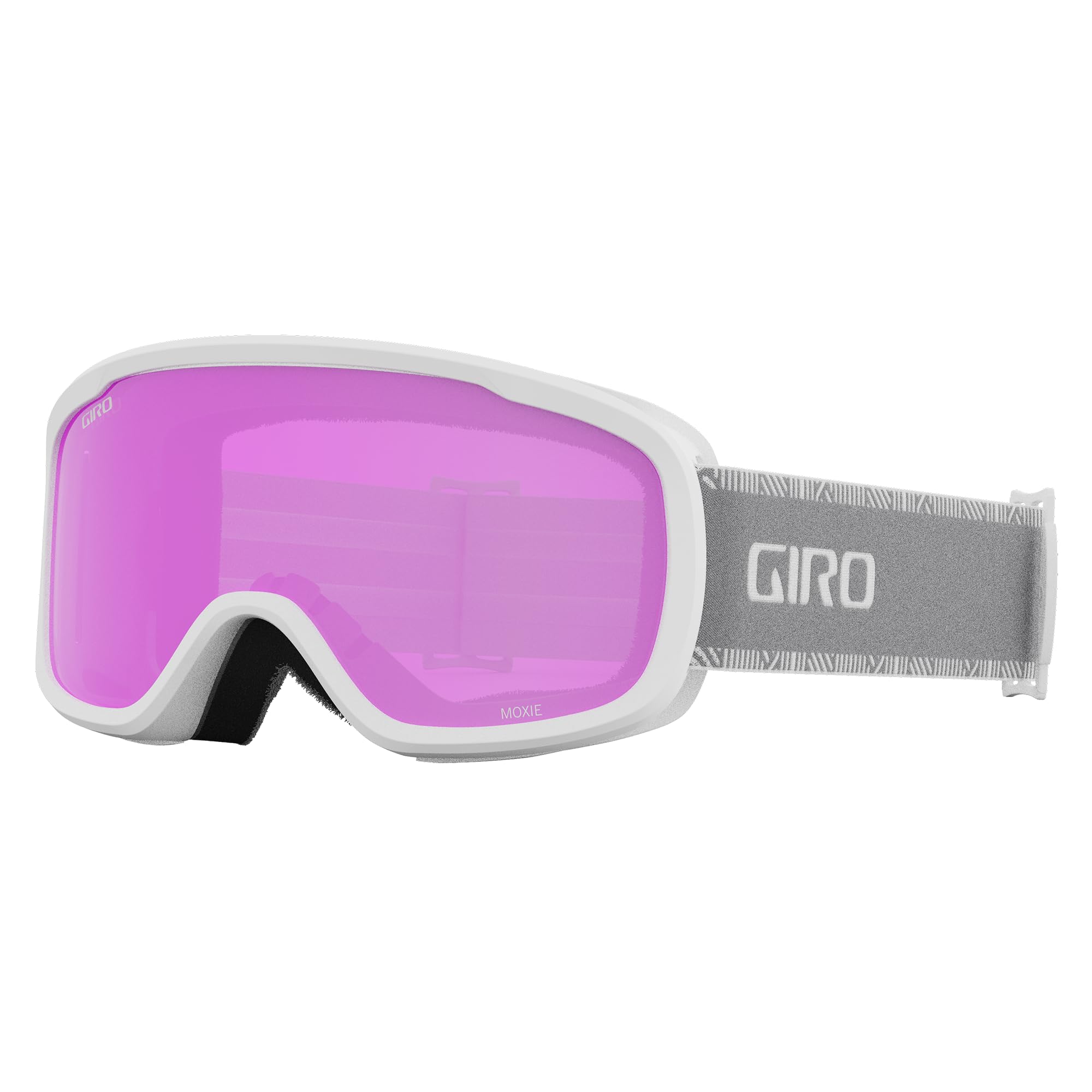
1. Giro Women’s Giro Moxie Ski Goggles
Our pick — 4.5+★ from 150+ verified ratings; the strongest balance of quality and price.
Two lenses in the box and a rimless frame that keeps the pressure off your face.
You get a spare lens without buying one separately. The Moxie ships with an Amber Pink lens rated 37% VLT for mixed clouds and a Yellow lens rated 84% VLT for night and race light. Swap the Yellow one in when the mountain turns flat and grey, and the terrain edge stops disappearing.
The frame is where Giro earns its keep. EXV is the brand’s wide-field frame shape, and it is cut rimless — no plastic rim running along the bottom edge, so there is less material pressing into your cheeks. Silicone strips on the inside of the strap hold it steady over a helmet or a beanie instead of sliding up. The double-layer face foam with a microfleece facing is the part that touches your skin all day.
Build quality is what wins people over here, with the anti-fog coating close behind it in how often it comes up in praise. Owners describe clear vision and minimal fogging in normal cold-weather riding. There is a real fit caveat worth knowing up front: this is a small-to-medium fit, and riders with medium adult helmets have found it snug to the point of tightness. Measure your helmet’s brow width before you commit.
What earns the top spot
- The 37% and 84% VLT pair covers bright afternoons and flat night light in one purchase.
- Rimless EXV frame leaves less material pressing against your cheeks.
- Silicone-lined strap grips a helmet or beanie instead of creeping upward.
- Built for Giro helmets, so the brow seal closes cleanly on that pairing.
Where it can disappoint
- The small-to-medium fit runs tight on some medium adult helmets.
- The soft fleece facing on the foam is the part that wears first over heavy use.
Reach for this if: you want a women’s-specific goggle with two real lens options and you ride a Giro helmet.
Look elsewhere if: your helmet is a large adult shell, where the small-to-medium fit is likely to pinch.
2. Odoland Anti-Fog Photochromic Ski Goggles with Pattern Strap
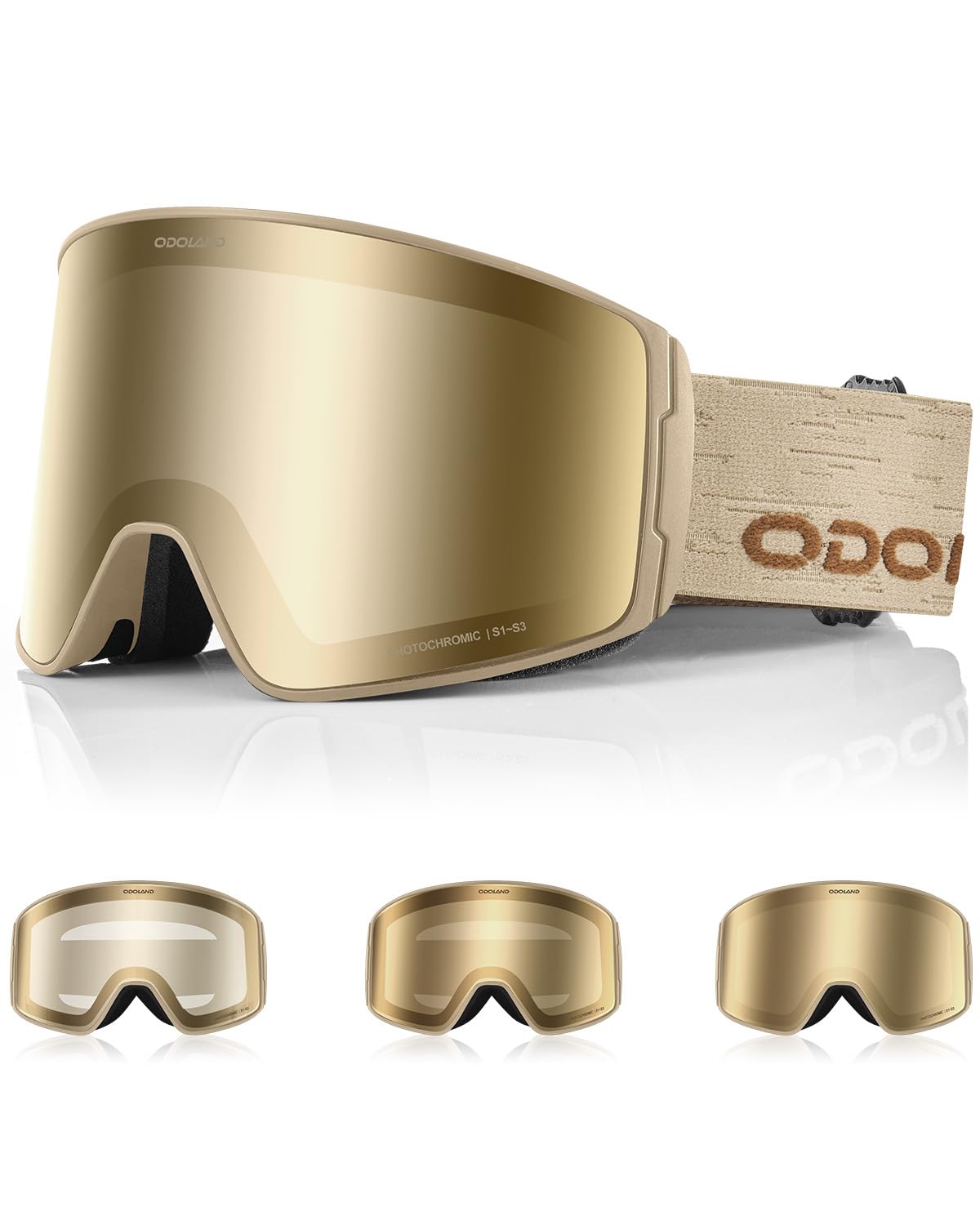
One lens that shifts with the light, so you never swap a lens at the top of a lift.
A photochromic lens darkens and lightens on its own as the light changes. That is the appeal here — you ride out in flat morning grey, the sun breaks through after lunch, and the lens responds without you touching it. Owners say it works, and it works best in sunny conditions where the tint has something to react to.
Where the Moxie gives you two fixed lenses to swap, the Odoland gives you one that adapts. The trade-off is that you have no spare to fall back on if you scratch the photochromic coating. Consider what you actually want: two lenses in a bag, or one lens you never touch.
Note what this listing actually is. The manufacturer description on this ASIN is written around a ski helmet rather than a goggle, and the only listed spec is Unisex, first available September 11, 2025. So the goggle details you are relying on come from owners rather than a detailed build sheet. What they report is solid quality and good value, with the adjustment working well enough to follow the light outside. Fogging is the split opinion — some ride sweaty and report nothing, others hit real fog. The fit is the other split, with some finding it comfortable and others finding it too big.
The value read: quality and value are the two things buyers keep coming back to, and the light-adapting lens does the job it is sold for. For a rider who hates fiddling with frames mid-run, that is the whole pitch.
The catch is fit: this one runs large for some riders, and the goggle does not carry a women’s-specific sizing label the way the two Giro picks do. If you have a narrow face, that is the risk to weigh.
The case for it: buy this if changing lenses mid-run sounds like a chore and you want one frame that follows the sun.
The honest snag: a large fit and a split record on fogging mean a narrow face or a heavy-sweat day is a gamble.
3. Giro Dylan Women’s Snow Goggles
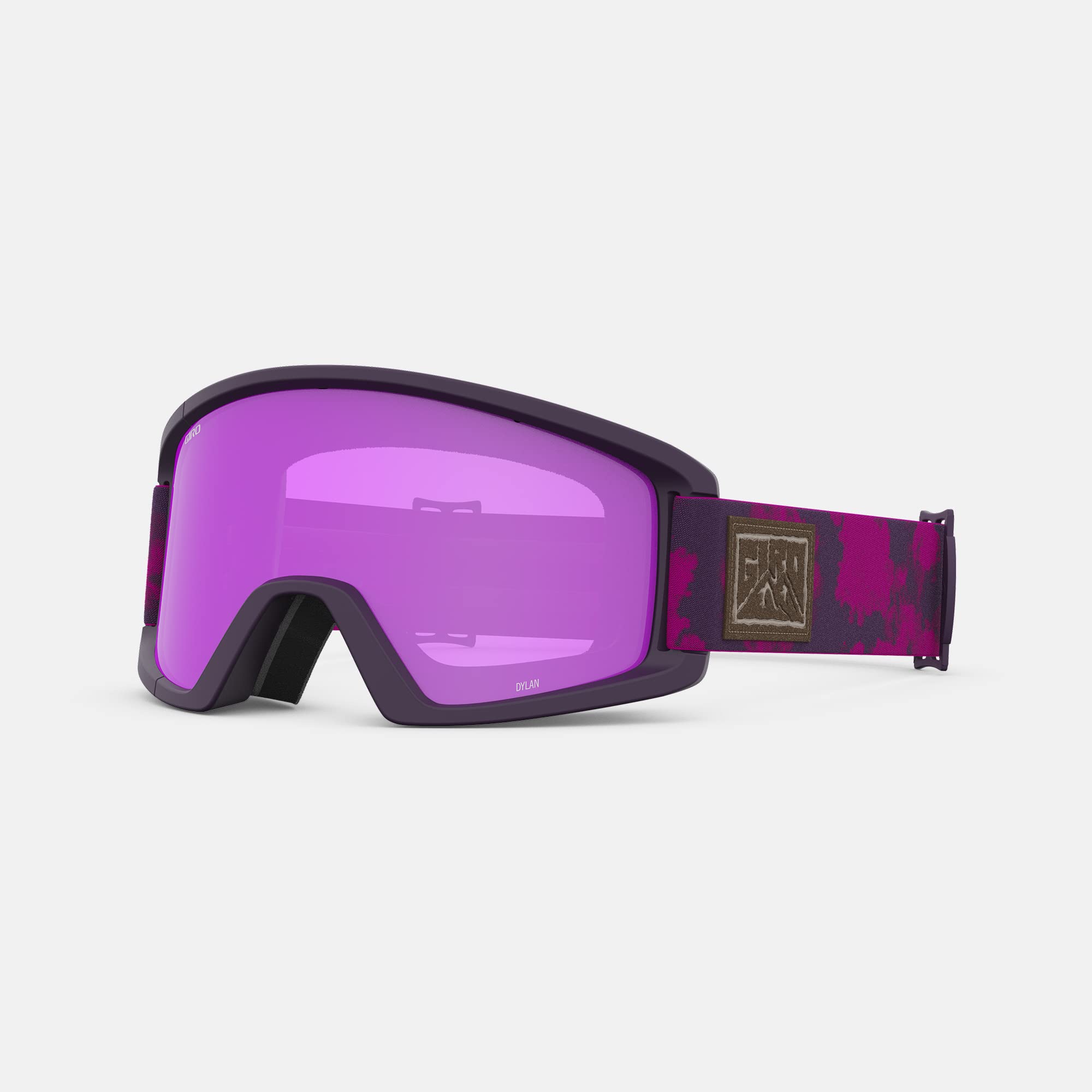
Triple-layer fleece foam built for the rider who feels every cold edge.
The foam is the story. Triple-layer face foam with maximum fleece means more cushion and more soft fabric between the frame and your skin. On a sub-zero chairlift ride, that fleece is the difference between a warm face and a frame you keep lifting off your cheeks.
Like the Moxie, the Dylan comes with two cylindrical lenses — one for sunny days and one for overcast. That is the same two-lens strategy, and it is the right one if you ride across changing weather in a single day. Cylindrical means the lens curves in one direction across the face rather than wrapping both ways, which is the more traditional shape.
Two things to know before you buy. This is the highest-tier pick of the three and it is a women’s department goggle from Giro, so the shape is cut for a narrower face. Lens-swap muscle memory matters too — with two lenses in the box, storing the spare safely in a pocket is part of the deal. On the upside, this one has been on sale since September 12, 2017, so the design has had years in the field rather than months.
Comfort-first build: if your priority is plush contact against the face on long, cold days, the triple-layer fleece lining is the reason to pick this over the Odoland.
Best suited to: a woman who rides cold mountains and wants the softest possible contact against her face.
One thing to plan for: with two lenses in the box you need a safe pocket for the spare, or it scratches in your jacket.
Know the Specs
VLT (Visible Light Transmission)
This is the percentage of light a lens lets through to your eye, and it is the single number that tells you what weather the lens is built for. A low VLT like the Moxie’s 37% Amber Pink lens blocks most brightness for sunny and mixed-cloud days. A high VLT like its 84% Yellow lens lets light pour in for night and race conditions. Match the number to the sky you actually ride in, not to how the lens looks in the box.
Photochromic Versus Fixed Lens
A photochromic lens is treated to darken in bright light and lighten in shade, all by itself. A fixed lens holds one tint, so you carry a spare and swap when the weather turns. Photochromic means no fiddling on the lift, but it also means no backup if it scratches. Fixed lenses give you a guaranteed second option in the bag — which is what both Giro picks here offer.
OTG (Over-The-Glasses) Clearance
OTG means the frame has cut-out space behind the lens so prescription glasses fit underneath. Without that clearance, your glasses get pressed into your brow and fog from both sides. If you wear glasses on the mountain, this is a filter to apply before anything else.
Face Foam Layers and Fleece
The foam is the cushion that sits between the frame and your skin, and more layers with a fleece facing means softer contact and better sealing against cold air. Triple-layer foam with maximum fleece, as on the Dylan, is the plusher build. Double-layer foam with a microfleece facing, as on the Moxie, is the lighter option.
Rimless Frame and Field of View
A rimless frame carries no plastic edge below or around the lens. That reduces the material pressing into your cheeks and opens up what you can see in your lower peripheral vision. On steep terrain, that lower field is the part you rely on to read the drop in front of you.
Strap Grip and Helmet Compatibility
Silicone applied to the inside of the strap stops the band creeping up the back of a helmet or beanie. Brand-matched pairs, like a Giro goggle on a Giro helmet, are shaped to close the gap at the brow more cleanly than a mixed pairing.
Common Questions
What does the VLT percentage on a goggle lens actually mean?
Is a photochromic lens better than carrying a spare lens?
Will these goggles fit over my prescription glasses?
Why do my goggles fog up even with an anti-fog coating?
How do I know if a goggle is cut for a woman’s face?
Do I need a Giro helmet to use a Giro goggle?
What is the difference between a cylindrical and a rimless lens frame?
How should I store goggles so the anti-fog coating lasts?
Can I wear these goggles without a helmet?
The Bottom Line
For most riders, the women’s snowboarding goggles pick is the Giro Women’s Moxie because it puts two usable tints in the box, stays OTG friendly, and is cut for a narrower face. If you would rather not touch a lens all day, the Odoland Photochromic adapts to the light on its own — just check the fit if your face is narrow. And for the coldest lift rides, the plush triple-layer fleece on the Giro Dylan is the comfort call.
How we choose
We do not accept paid placement. Every pick is matched to a real buyer and a real use-case; we do not hands-on test units.
Sources
Specifications: manufacturer listings and product documentation. Review insights: verified customer reviews, as of November 2026. Pricing: not shown on this page (it changes often); check the current price via the retailer link.
As an Amazon Associate, Tactical Gear Guy earns from qualifying purchases. This does not affect which products we feature.