Specs are compiled from manufacturer listings and verified buyer reviews and can change over time — please confirm the key details on the product page before buying.
If your knees ache after a mile or your toes go numb around the third, the problem is usually the shoe, not you. A running shoe for women has to do three plain jobs: hold your foot so it stops sliding, soften the road so your joints keep up, and stay light enough that you are not dragging extra weight with every step. The nine pairs below each do those jobs differently, and the right one for you depends on how far you run at a stretch and how much stability your ankles want.
This guide is built by comparing the manufacturers’ published specifications and the patterns across verified customer reviews, so you get each pick’s real strengths and trade-offs instead of marketing spin.
Some pairs here carry a 6mm heel drop while others are built for max cushioning, so the gap between them really is the ride. Below you will find the plain-English facts on each pair of women’s shoes for running.
Top Picks
How To Choose The Best Women’s Shoes for Running
Start with the surface and the distance. A treadmill session and a ten-mile road loop put very different demands on the foam under your foot. Pick your shoe around the longest run you actually do, not the shortest one you dream about.
Match the shoe to how your foot lands
Most runners land on the outside edge of the heel and roll inward, which is called pronation. If your ankle rolls hard enough that your arch feels tired after runs, look at a stability model with a wider base and higher sidewalls. If your stride feels neutral, a plain cushioned trainer keeps things simple.
Heel drop and why it changes your stride
Heel drop is simply the height difference between the heel and the toe, measured in millimeters. A 6mm offset sits your heel slightly above your toes, which suits most runners with a regular stride. Lower drops put more load on your calves, so switch gradually rather than jumping straight in.
Toe box room versus a locked-in heel
Your feet swell during a long run, so a roomy toe box keeps your toes from pressing against the front. The trade-off is that a wide front needs a tighter heel and midfoot to stop your foot sliding forward. Check both ends of the shoe, not just the length.
Weigh the foam against the miles
Softer foam feels wonderful on a short jog and can pack down faster once you pile on the miles. Read what the maker says about the foam compound, then weigh that against how often you replace your shoes. Durability is the one spec that quietly decides your true cost per mile.
Side-by-Side Comparison
| Model | Best For | Listed Weight | Heel-to-Toe Offset | Cushioning Type | Amazon |
|---|---|---|---|---|---|
| ASICS GT-1000 14★ Best Overall | Stable daily trainer | 1.44 lb | — | FF BLAST midsole | Amazon |
| Saucony Guide 18Best Cushioning | Max cushioning daily runs | 8.6 oz / 245 g | 6mm (35/29mm) | PWRRUN foam | Amazon |
| Nike Winflo 12Roomiest Toe Box | Wide forefoot comfort | — | — | Cushlon 3.0 + Nike Air unit | Amazon |
| New Balance FuelCell Rebel V5 | Fast, lively feel | 2.1 lb | — | FuelCell foam | Amazon |
| New Balance Fresh Foam X 880 V15 | Long walks and runs | 3 lb | — | Fresh Foam X | Amazon |
| Saucony Triumph 22 | Long-distance cushioning | — | — | PWRRUN PB | Amazon |
| Nike Vomero 18 | Soft everyday miles | — | — | ZoomX over ReactX | Amazon |
| New Balance Fresh Foam X More V6 | Plush all-day wear | 2.1 lb | — | Fresh Foam X | Amazon |
| Hoka Arahi 7 | Stability with a streamlined fit | 3 lb | — | Frame technology support | Amazon |
Detailed Reviews
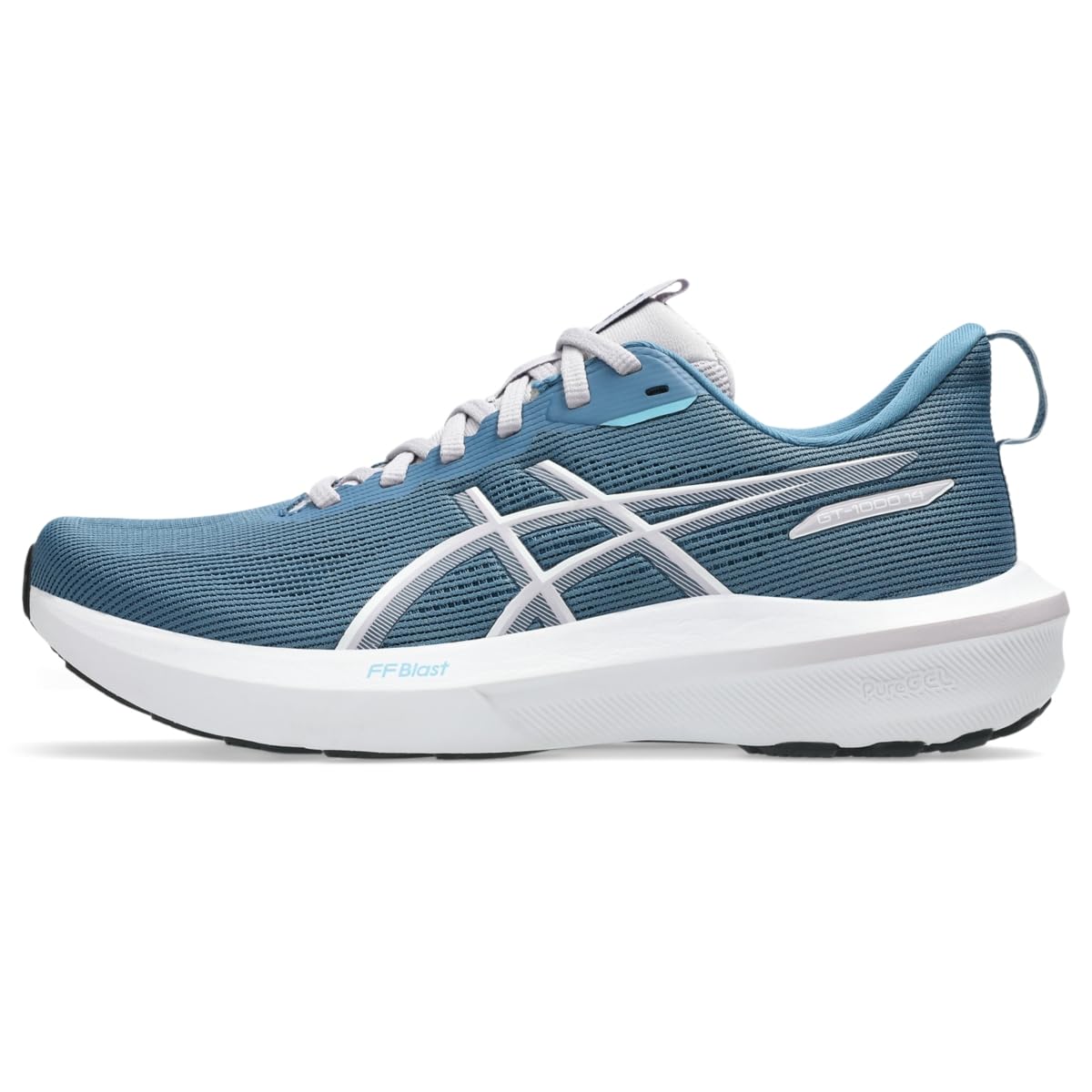
1. ASICS Women’s GT-1000 14 Running Shoes
Our pick — 4.5+★ from 750+ verified ratings; the strongest balance of quality and price.
A steady daily trainer that keeps your foot centered without feeling heavy.
The GT-1000 14 is the pair to start with if you run a few times a week on pavement and want the shoe to do some of the thinking. Its 3D GUIDANCE SYSTEM is a support structure built into the sole that nudges your foot back toward the middle as you roll through each step. That means less wobble at the ankle on uneven pavement, which is the thing most casual runners notice first.
Under your foot sits an FF BLAST midsole — the foam layer that takes the impact — and ASICS describes it as delivering a cloud-like feel with an energized bounce. Combined with the lightweight polyester upper, lining and insole, the whole package weighs 1.44 pounds, which puts it among the lighter pairs here. For comparison, the New Balance Fresh Foam X 880 V15 listed below is 3 pounds, so this ASICS carries noticeably less mass on your foot over a long stretch.
What wins people over is comfort above everything, and the second most-discussed point is build quality. Owners also single out the fit for narrow feet and the arch support, with cushioning and looks drawing steady praise. The recurring gripe is durability — some pairs wear faster than owners expect at the heel and outsole — so treat these as a training shoe you rotate, not your only pair for years of hard miles.
What earns it the top spot
- A guidance sole that steadies your foot on rough pavement
- FF BLAST foam gives bounce back rather than a dead landing
- Breathable polyester upper and lining keep the inside from turning swampy
- Comfort is the single most-discussed strength across owner feedback
What to plan around
- Outsole wear comes up more than owners would like on high-mileage use
- Sizing runs best for narrow feet, so wide-footed runners should size carefully
Reach for this if: you want one dependable trainer for pavement runs and daily miles with a stable, grounded feel.
Look elsewhere if: you need a shoe that survives heavy weekly mileage without visible sole wear.
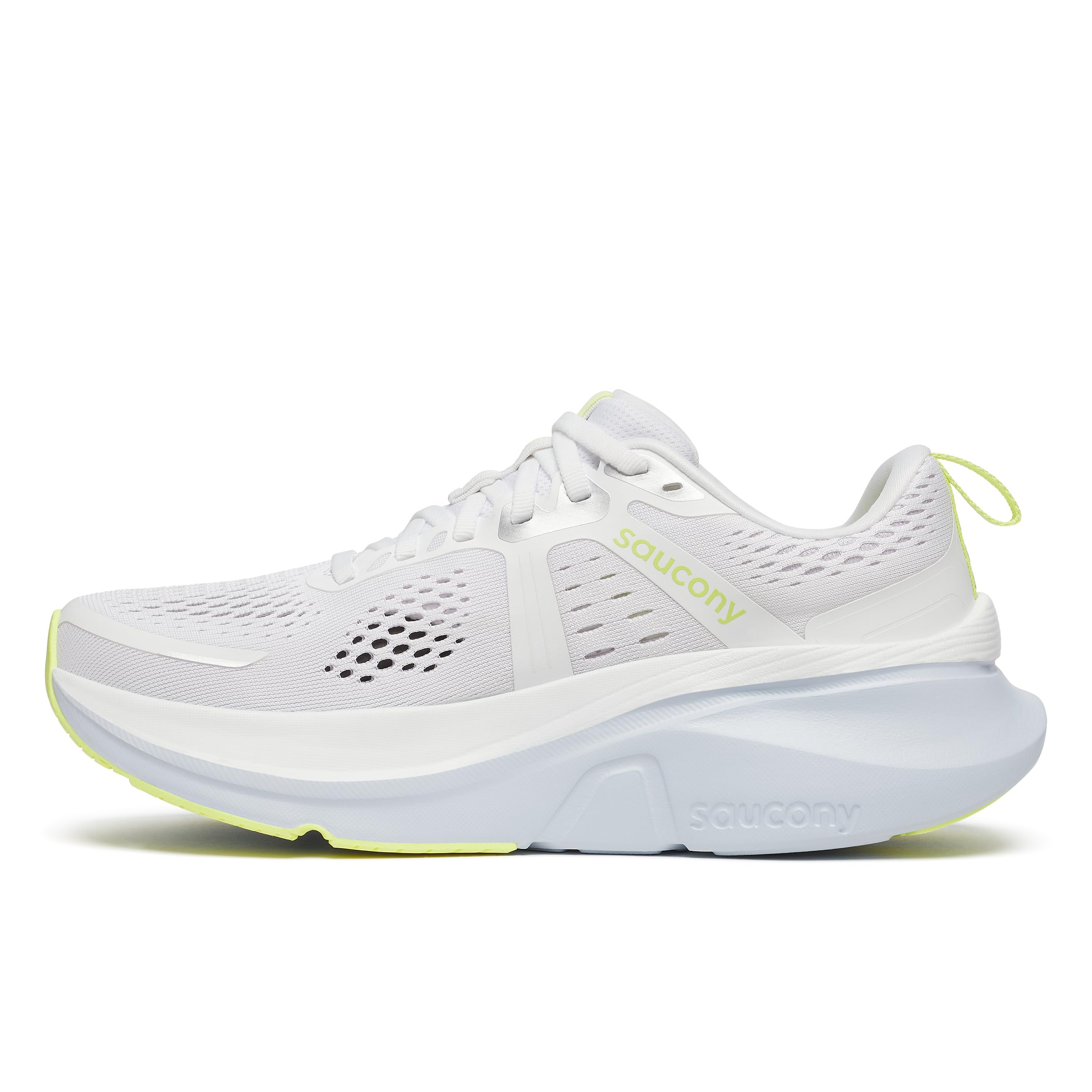
2. Saucony Women’s Guide 18 Sneaker
Saucony’s core max-cushion trainer, built on a rocker that rolls you through toe-off.
The Guide 18 tells you what it is right in the spec list: a 6mm heel-to-toe offset, measured as 35mm at the heel and 29mm at the toe. That slight lift at the back sits your heel above your toes and lets your foot roll forward naturally. The weight listed is 8.6 oz (245g).
Underfoot you get PWRRUN foam paired with a PWRRUN+ sockliner, which Saucony describes as giving a soft feel from the moment you step in. The Center Path Technology is the stability piece — a broad base platform with higher sidewalls that cradles your foot and keeps it centered. The sole is also built on a rocker shape to ease the toe-off, so the ride rolls rather than flexes flat.
What wins people over is the build quality and the pillow-soft comfort underfoot, with arch support and appearance drawing steady praise too. Be honest with yourself on sizing, though: fit comes up mixed, so some run with it perfectly while others land a half size off. Durability is the other split — a few pairs break down faster than owners hope, so rotate them rather than running one pair into the ground.
The cushioning case: 35mm of heel stack and a PWRRUN+ sockliner put a real layer between your joints and the road, which is why this is the pick for longer daily runs.
The sizing catch: because fit feedback splits both ways, order your true size first and only swap if the heel slips.
The right buyer: someone chasing maximum comfort on daily road runs who wants the foot cradled rather than left to wobble.
Think twice if: you want a precise, snug fit straight from the start — this one rewards a careful size check.
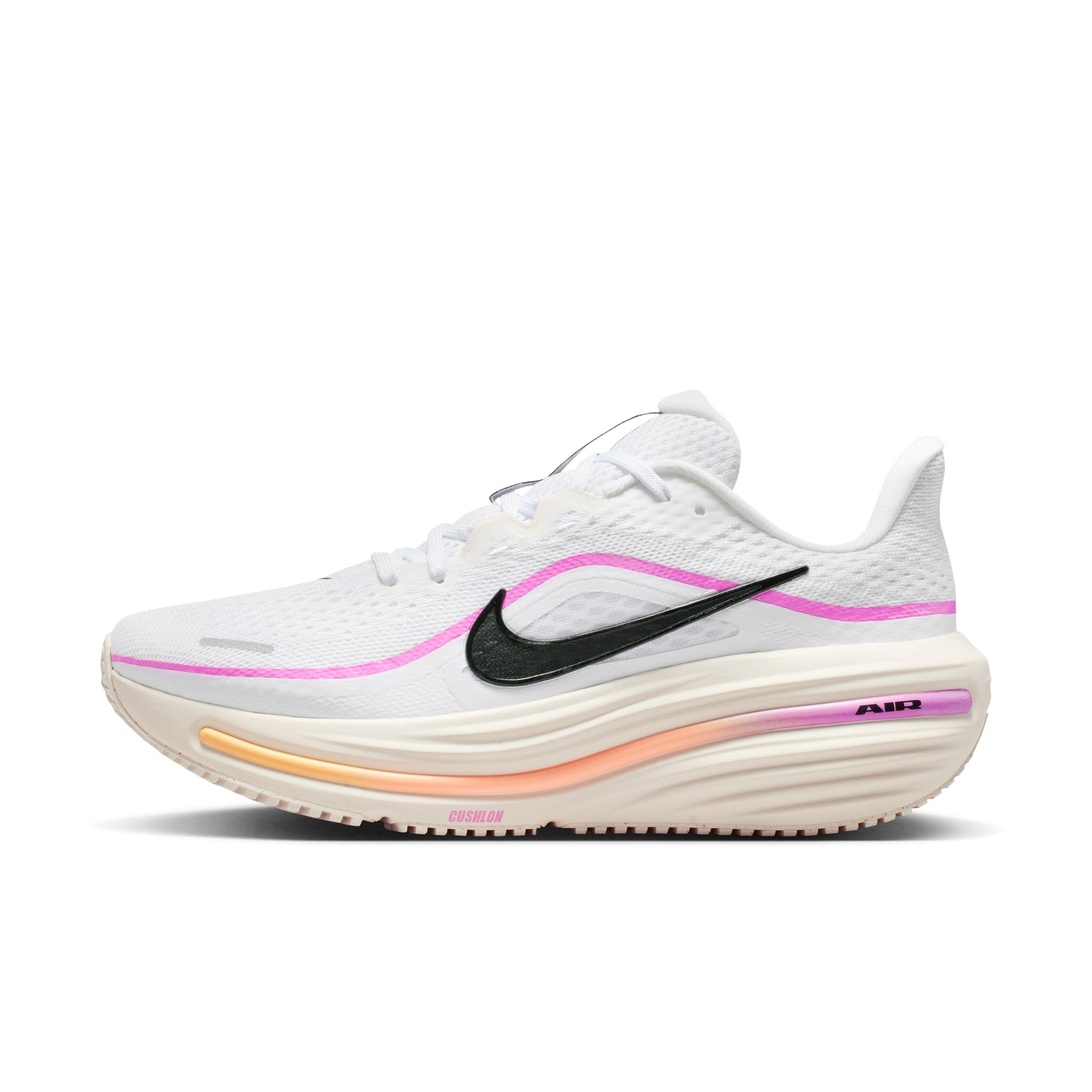
3. Nike Women’s Winflo 12 Road Running Shoes
A wider forefoot for toes that need breathing room on hot, swollen miles.
If your toes go numb on longer runs, this is the pair to look at first. Nike built the Winflo 12 with a wider toe box, so there is a little more room in the forefoot for your toes to spread as your feet swell. The upper is open-hole mesh — a perforated weave that lets heat escape — which keeps the inside cool when the pavement is baking.
The ride comes from an increased Cushlon 3.0 foam stack height, with a Nike Air unit built in for a springy return on each step. Stack height here simply means how much foam sits between your foot and the ground, and more of it means a softer landing. Together with the flexible forefoot, that adds up to a shoe that gives back energy rather than flattening under you.
Looks are the number one thing people bring up, closely followed by comfort, and the fit feedback is strongly positive with sizing reported as true. Buyers also use these well beyond running — cardio sessions, gym days and all-day wear all get mentioned, which tells you the shoe is not so specialized that it only works on a track.
Why the front end matters: open-hole mesh plus the wider toe box solve the two most common hot-weather complaints — sweaty feet and crushed toes.
One thing to know: the specs list no published weight or drop figure, so judge this one on fit and cushioning comfort rather than numbers.
Built for you if: your toes pinch in narrow shoes and you want a true-to-size fit with real forefoot room.
Not your pick if: you prefer a stiff, locked-down racing feel over a flexible, easygoing ride.
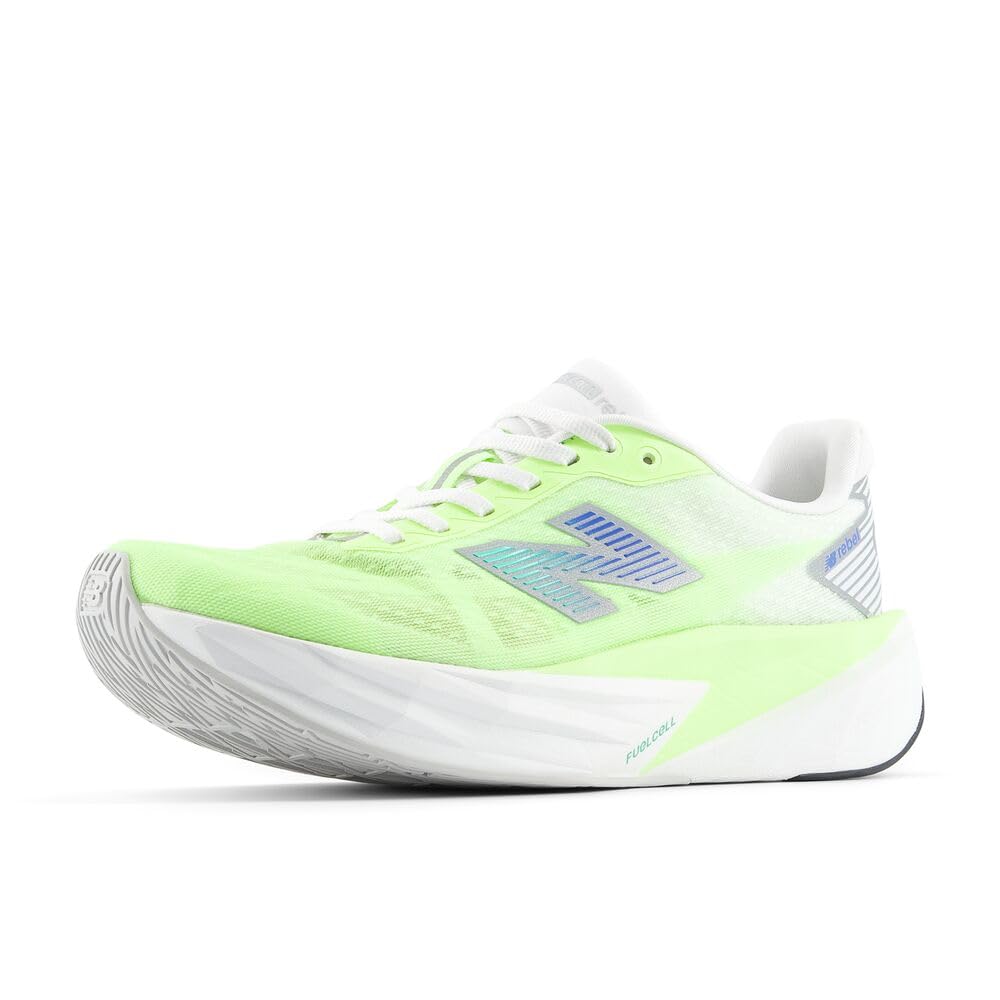
4. New Balance Women’s FuelCell Rebel V5
A trainer with a spring in its step for days you want to run quicker.
The Rebel V5 is for the runner who gets bored of plodding. Its FuelCell foam is built to feel propulsive, meaning it pushes back as you load it, so the shoe feels lively underfoot from the first stride. New Balance positions it as a trainer that swings from long steady runs to something swifter without changing shoes.
The FantomFit upper is a bonded overlay that holds your foot with very little material — that is the light-support approach, rather than a thick cage. Beneath it, a wider geometric midsole extends the platform so the landing feels more cushioned than the slim build suggests. The listed package weight is 2.1 pounds.
Fit is what owners talk about most, and comfort sits right behind it, with color and the squishy, cushiony feel getting plenty of mention. The mixed note is longevity — the foam outsole can break down sooner than some owners want. A few also find the sizing runs off their usual number, so try these against a shoe you already trust before committing miles to them.
The speed argument: FuelCell foam plus a wider midsole platform gives you a bouncy, quick-feeling ride without the harsh landing of a stripped-down racer.
The honest limit: foam breakdown on the outsole turns up often enough that this is best kept as a fast-day shoe rather than your only trainer.
Worth it for: runners who want an everyday trainer that feels energetic and fun on tempo days.
Skip if: you log very high mileage and need the outsole to hold up over months of hard use.
5. New Balance Women’s Fresh Foam X 880 V15 Shoes
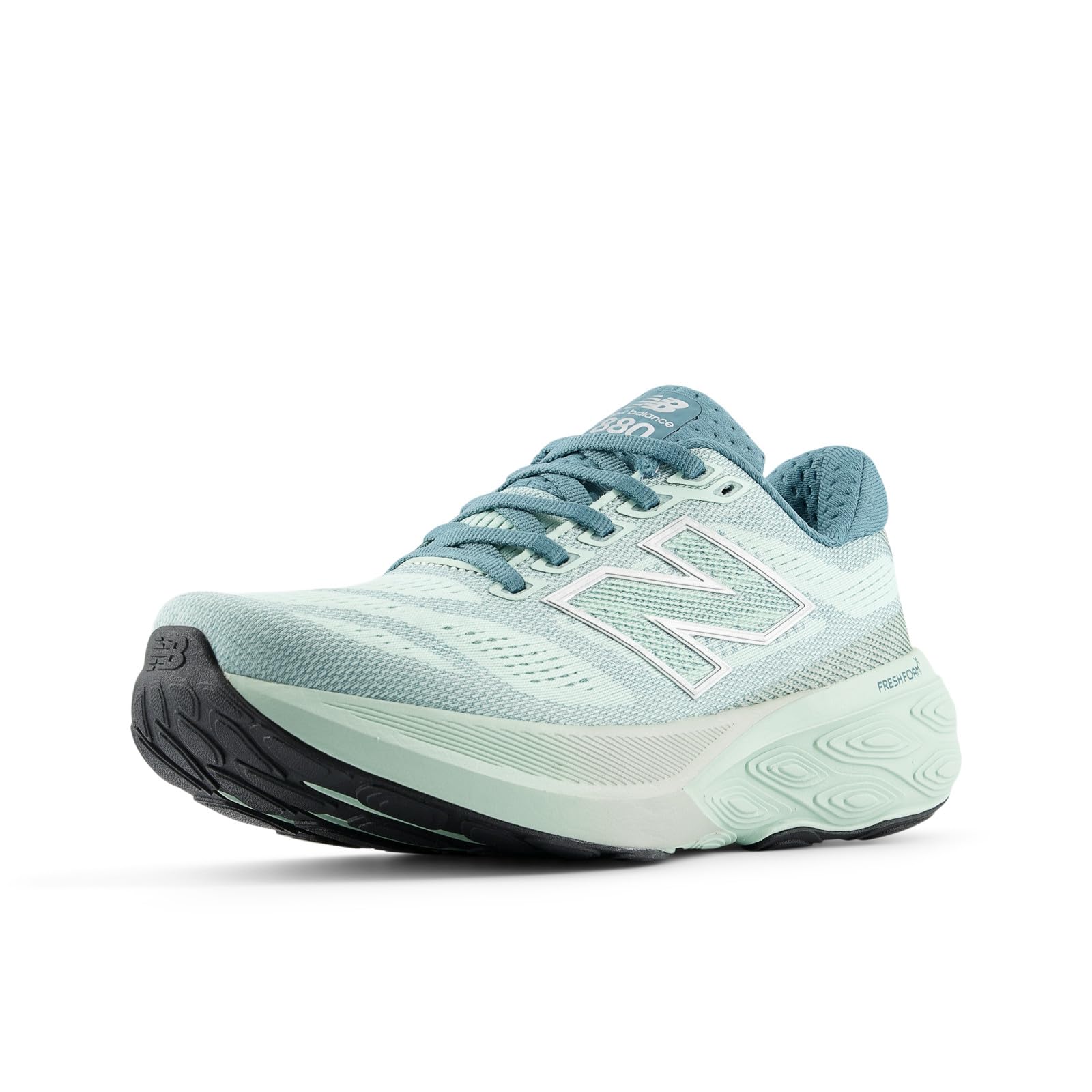
The one pair that handles your run, your walk and the rest of the day.
What sets the 880 V15 apart is how many jobs it takes on. Owners use it for running and for walking, including long stretches on their feet, which makes it a sensible pick if you want one shoe rather than a running pair plus a walking pair. Fresh Foam X is the cushioning layer underfoot, and buyers describe the ride as cloud-soft.
Cushioning and support for higher arches come through strongly in the feedback, and comfort lands without complaints of foot pain afterward. Styling is the most-discussed strength by a clear margin, so this is also the pair you will not mind being seen in. Listed weight is 3 pounds with a package size of 14 x 9 x 5 inches — heavier than the 1.44-pound ASICS GT-1000 14 up top, so expect a more substantial feel on your foot.
Fit is the split point, with plenty of owners finding their size perfect and others reporting it runs off from what they expected. That is a sizing question rather than a fault, so use the size chart rather than assuming your usual number carries over from another brand.
The value read: one pair that covers running, walking and casual wear means you are not buying two shoes to do two jobs.
The trade-off: at 3 pounds listed, it carries more weight than the lightest trainers here, which you will feel on the longest runs.
The fit for you: a runner who also walks a lot and wants a single, good-looking shoe to cover both.
Think twice if: you want the lightest possible shoe for pure speed sessions.
6. Saucony Women’s Triumph 22 Sneaker
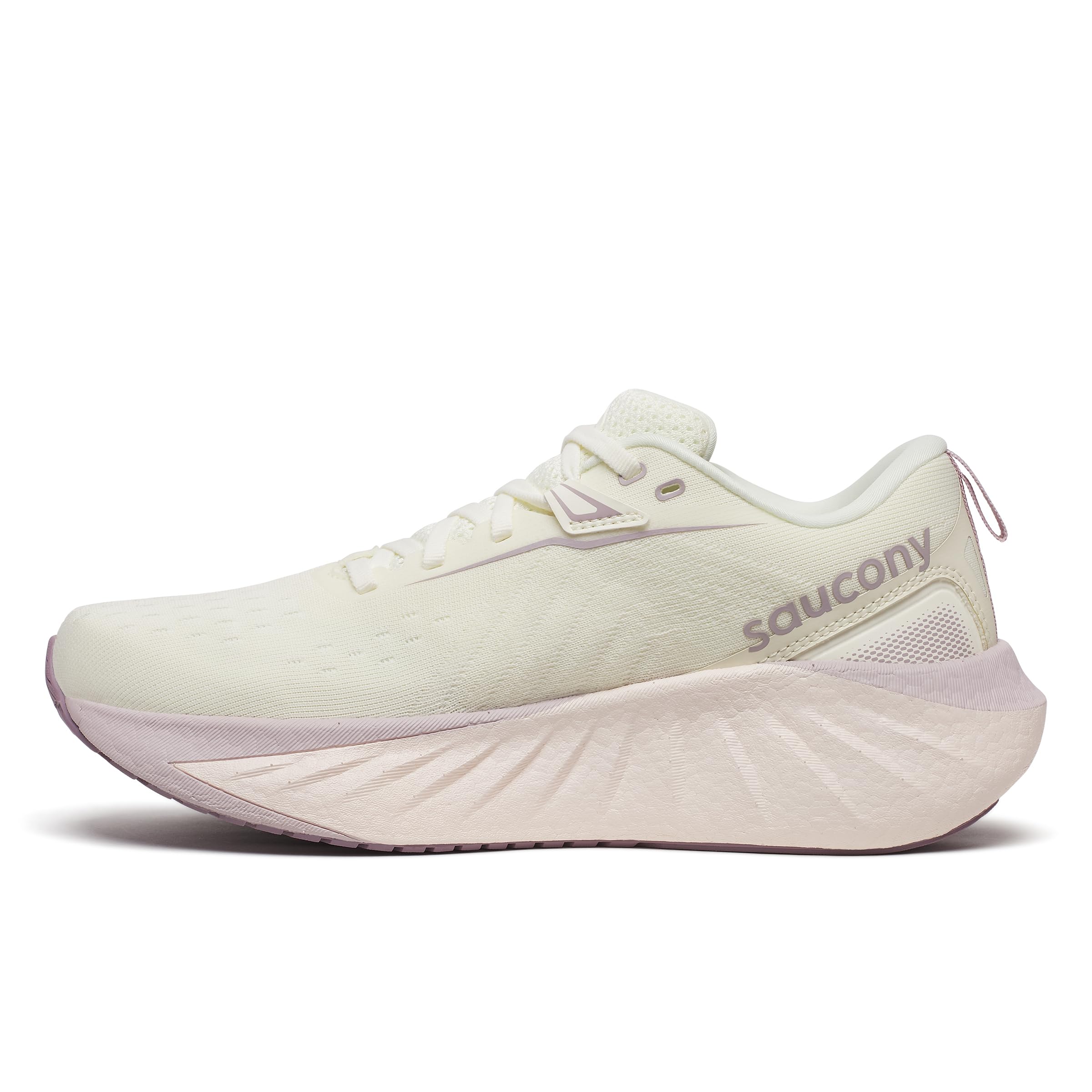
A premium-foam cruiser that keeps your legs fresher on the back half of a long run.
Saucony’s own comparison chart places the Triumph 22 on PWRRUN PB foam, which is the brand’s premium foam rather than the standard compound used in the Guide 18. In plain terms, that is the springier, more expensive layer that stays lively deeper into a run. If your long runs are where you feel the road most, this is the upgrade worth making.
Build quality is the most-discussed strength here, followed by comfort, and owners rate it among their favorites. Arch support and cushioning get plenty of attention, with enough toe-box room to avoid pinching, and the shoe holds up for long-distance runs and daily walks alike. At 11 x 4 x 7 inches it is a more compact package than the New Balance 880 V15 at 14 x 9 x 5 inches, so it will take up less room in a bag or a shoe rack.
The honest caveat is durability — some owners find the foam and outsole wear sooner than the premium materials suggest. Rotate them with a second pair and you will get far more life from them. Otherwise this is a comfortable, supportive shoe that earns its place as the long-run pick.
Where the premium shows up
- PWRRUN PB foam is the brand’s top-tier cushioning compound
- Build quality and comfort are the two most-praised qualities
- Roomy toe box with strong arch support and impact-dampening
- Works for long-distance running and everyday walking alike
The reality check
- Wear can show up earlier than owners expect for the tier
- Best kept in a rotation rather than run into the ground as a single pair
Go here for: long road runs where you want the softest, springiest foam Saucony makes under your foot.
Don’t go here for: a single-pair workhorse you plan to run every day for a year.
7. Nike Womens Vomero 18

Nike’s maximum-cushion cruiser, softest of the lineup for everyday road miles.
Nike calls the Vomero its softest, most cushioned ride, and the midsole backs that up with two layers working together. ZoomX foam — the lightest foam Nike makes — sits stacked on top of ReactX foam, so you get a plush top layer over a more responsive base. A redesigned traction pattern underneath also smooths the heel-to-toe transition, so the roll from landing to push-off feels steady.
For treadmill runners especially, this is a strong pick. Owners use these for long walks and report them well-cushioned and true to size, and the look and color draw real praise — the vivid shades add a lift to a dull gym session. Cushioning is the headline, but the everyday versatility for gym and road use is what makes them earn their keep.
One thing to weigh: fit opinions split both ways, so some find the shape perfect while others do not. That makes trying them or checking the size guide worthwhile before you commit. Otherwise this is a dependable, comfortable shoe for the runner who prioritizes softness over speed.
The softness read: a ZoomX layer over ReactX foam is a genuinely plush setup, built for runners who want their joints spared on long easy days.
Worth knowing: the fit split means this one benefits from a careful size check rather than a blind buy.
Made for you if: you want maximum softness for everyday runs and long walks, with a look you will actually enjoy wearing.
Not for you if: you want a firm, fast shoe for tempo work.
8. New Balance Women’s Fresh Foam X More V6
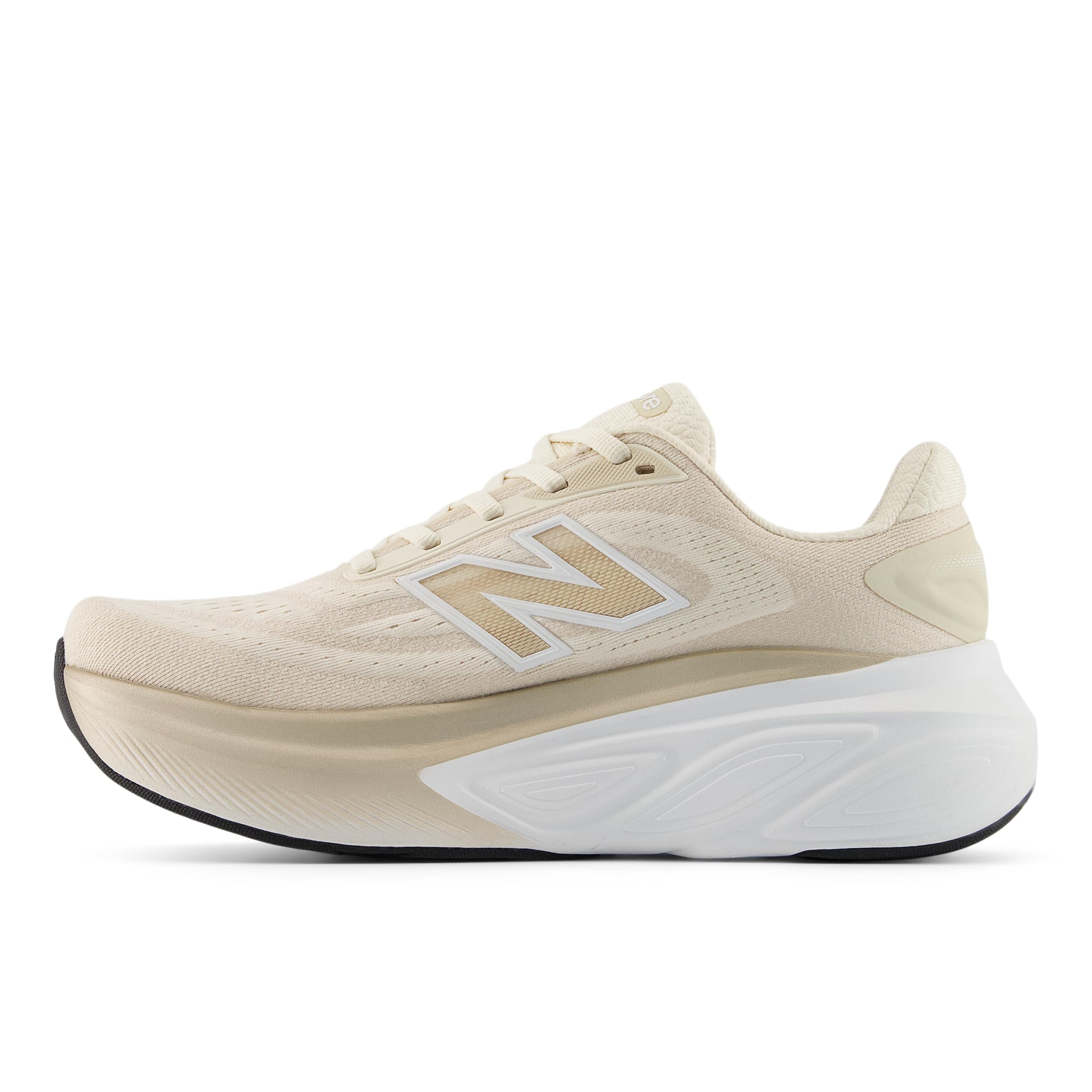
Breathable, plush and roomy — built more for comfort than for chasing split times.
The More V6 sits at the soft end of the New Balance range, with a breathable upper and deep Fresh Foam X cushioning aimed at all-day comfort. Owners describe the cushioning as genuinely plush, with a roomy toe box that lets your toes spread out as you land. The trade-off for that softness shows up on firm surfaces — some find the shoe feels unstable underfoot, so it works best on softer ground like grass or a gym floor.
Comfort is the most-discussed strength by a wide margin, followed by looks and the fit, and buyers use these for walking and running alike. The listed package weight is 2.1 pounds with dimensions of 12.7 x 7.9 x 4.5 inches. If you have wide feet or just hate a cramped toe box, that roomy front is the reason to pick this pair over the slimmer trainers here.
The stability question is the honest catch. A plush, tall cushioning stack is not the best match for runners who want a firm, planted feel underfoot. If you want maximum softness for walks, easy runs and long days on your feet, however, the More V6 delivers exactly that.
The comfort payoff: roomey toe box plus deep Fresh Foam X makes this the cushiest-feeling pair here for standing and easy movement.
The honest catch: a softer, taller stack gives up some stability, so runners who need a firm, planted ride should look elsewhere.
Buy this if: you want the plushest, roomiest feel for walking and easy runs, and you have wide feet or hate tight toe boxes.
Not for you if: you need a stable, firm platform for fast or technical running.
9. Hoka ONE ONE Womens Arahi 7
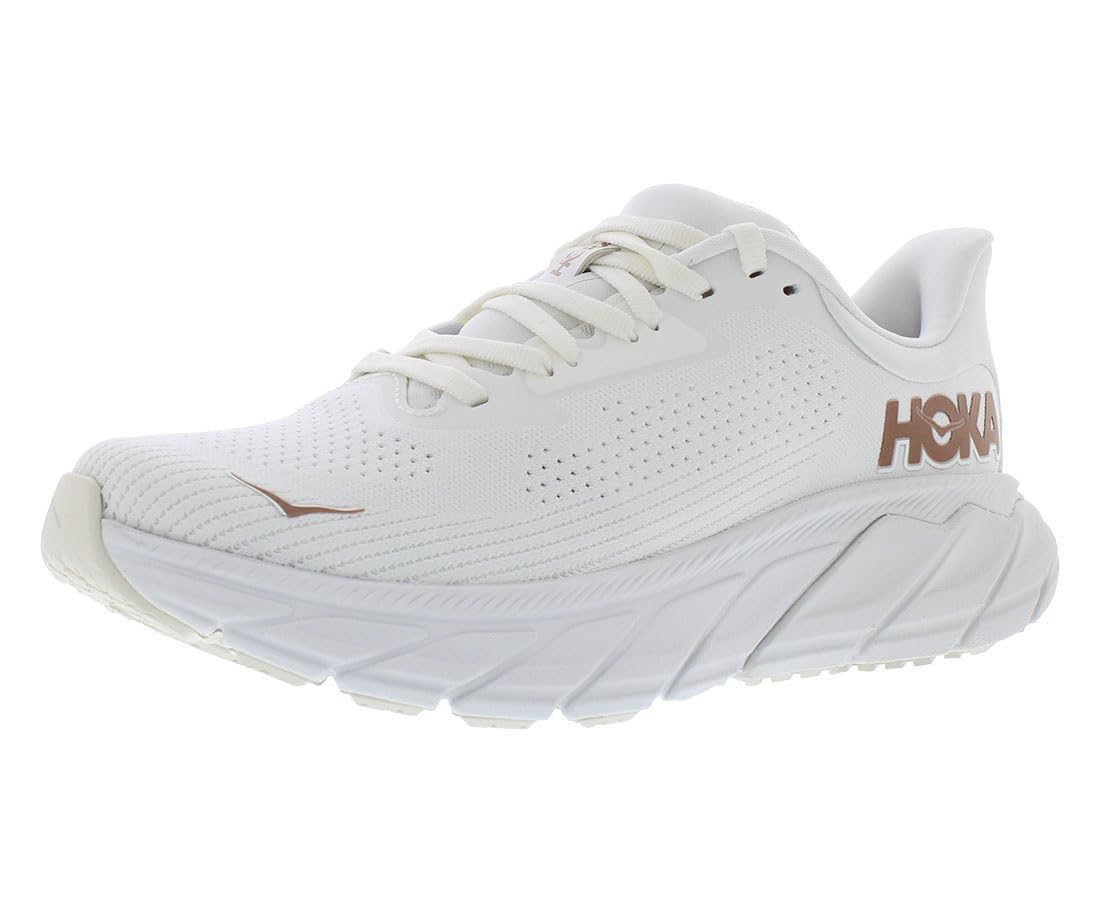
A stability shoe that holds your midfoot without the bulky feel of older support models.
The Arahi 7 is a stability shoe for runners whose feet roll inward and want that checked. Hoka’s Frame technology is the backbone here — a patented support structure that guides the foot rather than boxing it in. Hoka bills it as not your average stability shoe, and the streamlined shape keeps it from feeling like a heavy, stiff brick.
The upper is a zonally engineered, flat knit that improves midfoot lockdown, meaning it hugs the middle of your foot so it does not shift side to side. A plusher tongue, mid-foot ghillies and a stretchy dual gusset under the lace line work together to keep the tongue from migrating during a run. At 14 x 9 x 5 inches and 3 pounds listed, it carries real substance, so expect a grounded, protective feel.
Comfort is the most-praised quality by a long way, with arch support second, and owners also use these for lateral movements on a pickleball court, which says a lot about how well the foot stays planted. Fit comes up mixed, though, and value gets split opinions — so judge the size carefully against a shoe you already trust. Durability likewise splits, so treat them as your stability workhorse rather than an everyday pair for years of abuse.
Why the support works
- Frame technology guides a foot that rolls inward without a stiff cage
- Flat knit upper with midfoot ghillies keeps the heel and midfoot locked down
- Comfort and arch support earn the most praise by a clear margin
- Sturdy enough that owners use it for court-side lateral movement
What to keep in mind
- Fit runs mixed, so size against a pair you already own
- Value and durability both split opinions at this premium tier
The right fit: a runner who needs real stability support and wants it without the clunky feel of older support shoes.
Look elsewhere if: you have a neutral stride and want a pure cushioning shoe rather than a guided ride.
Know the Specs
Heel-to-Toe Offset
This is the height gap between the heel and the toe, written as two numbers in millimeters. Saucony lists the Guide 18 at 6mm, shown as 35mm at the heel and 29mm at the toe. A higher heel angle eases the roll forward and takes load off your calves. A lower drop shifts work onto the lower leg, so transition gradually rather than jumping straight from one to the other.
Foam and Cushioning Stack
Foam is the layer under your foot that absorbs impact. Names like FuelCell, Fresh Foam X and PWRRUN are different compounds, and the better ones stay springy deeper into a run. More foam means a softer landing but a heavier, less stable shoe. Weigh the depth against your longest run, not the shortest.
Stability and Guidance
A stability shoe holds your foot when it rolls inward, using a wider base and higher sidewalls. ASICS uses its 3D GUIDANCE SYSTEM and Hoka uses Frame technology for the same job. If your ankles feel tired after runs, a guided shoe helps. If your stride is neutral, a plain trainer is simpler and lighter.
Fit, Toe Box and Weight
Your feet swell on long runs, so a roomy toe box keeps toes from pressing the front. The numbers matter, too: the ASICS GT-1000 14 lists at 1.44 pounds while the New Balance 880 V15 and Hoka Arahi 7 both list at 3 pounds. More weight means more shoe to move with each step, so match it to how far you run.
Common Questions
How do I know if I need a stability shoe or a neutral one?
Is a 6mm heel drop good for women runners?
Why do my toes go numb in running shoes?
Should women’s running shoes be sized up?
Can I use running shoes for walking and the gym?
How long should a pair of running shoes last?
What does PWRRUN PB mean compared with regular PWRRUN?
Is a heavier shoe a bad choice for running?
How do I stop my foot sliding forward inside the shoe?
The Bottom Line
The pair that holds the top spot is the ASICS GT-1000 14. Its 3D GUIDANCE SYSTEM keeps your foot centered on pavement, the FF BLAST midsole gives bounce back, and it stays lighter than the 3-pound picks here — the crowd favorite at 4.5+ stars across 700+ ratings. If you want maximum cushioning, the Saucony Guide 18 gives you a 6mm drop and a PWRRUN pillow underfoot. For a stability shoe that locks the midfoot down without feeling bulky, the Hoka Arahi 7 is the one to reach for. And if you want a single shoe that handles runs and walks alike, the New Balance 880 V15 carries you from road to sidewalk without changing shoes.
How we choose
We do not accept paid placement. Every pick is matched to a real buyer and a real use-case; we do not hands-on test units.
Sources
Specifications: manufacturer listings and product documentation. Review insights: verified customer reviews, as of November 2026. Pricing: not shown on this page (it changes often); check the current price via the retailer link.
As an Amazon Associate, Tactical Gear Guy earns from qualifying purchases. This does not affect which products we feature.