Specs are compiled from manufacturer listings and verified buyer reviews and can change over time — please confirm the key details on the product page before buying.
You want one pair of glasses that handles the dashboard, the laptop, and the pill bottle without three separate swaps. That is exactly what progressive reading glasses do: the lens strength changes from top to bottom on a single no-line lens. The catch is that cheap progressives can blur the far zone, and poorly shaped frames slide down your nose. The picks below are ranked by how well each one keeps all three zones clear and the frame seated for your face, your desk, and your budget.
This guide is built by comparing the manufacturers’ published specifications and the patterns across verified customer reviews, so you get each pick’s real strengths and trade-offs instead of marketing spin.
You will see how each lens splits into distance, computer, and reading zones, and which frames stay put through a workday. This breakdown of the women’s progressive reading glasses covers lens zones, fit, and frame strength in plain terms.
Top Picks


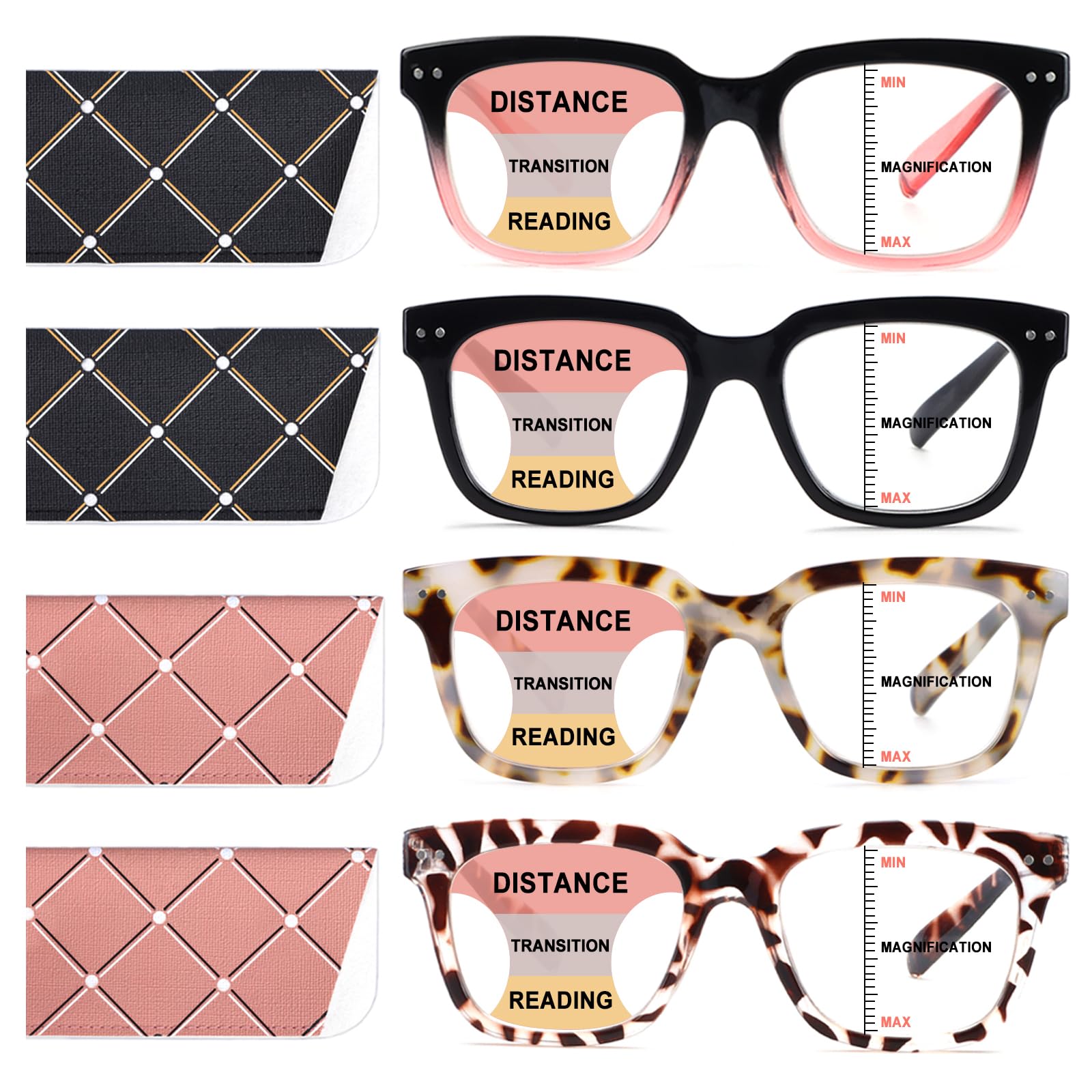
How To Choose The Best Women’s Progressive Reading Glasses
The single biggest mistake buyers make here is treating progressives like ordinary readers and buying only on magnification strength. A progressive lens is a map: the bottom is your reading power, the middle is tuned for arm’s-length screen work, and the top is meant to be clear for looking up across a room. If the top of the lens is blurry, you will still be lifting the glasses off your face — the exact habit you bought them to break.
Start with lens height, not magnification
Lens height is the vertical measurement of the lens opening. A taller lens gives the three zones room to graduate gradually. A very short lens squeezes the same three powers into less space, which can make the transitions feel abrupt. If a pair lists a lens height, mentally picture whether that is a shallow rectangle or a deeper square — deeper usually means a gentler shift between zones.
Then match the frame width to your face
A frame that is too wide slides forward when you look down. One that is too narrow pinches at the temples. Look for listed lens width and bridge width, and check whether the bridge sits close to your own. Buyers with narrow faces routinely notice wide frames riding low, which drops the reading zone out of position.
Check what the lens coating does for your day
Anti-reflective coating reduces glare bouncing off screens and overhead lights. Blue light blocking coatings filter a portion of the blue end of the screen spectrum. UV400 blocks UVA and UVB rays. None of these make the lens stronger — they make long sessions more comfortable, and they matter most if you spend hours at a monitor or near a window.
Plan for an adaptation period
Almost everyone needs a few days before a progressive lens feels natural. Your eyes have to learn to move down the lens instead of across it. If you have never worn a multifocal, expect a settling-in stretch and give yourself a short daily session first rather than a full workday on day one.
Side-by-Side Comparison
| Model | Best For | Lens Type | Frame / Fit Notes | Weight | Amazon |
|---|---|---|---|---|---|
| Foster Grant Conan Multifocus★ Best Overall | All-day desk-to-door wear | Multi-Focus, 3 zones | Scratch-resistant, anti-reflective polycarbonate | — | Amazon |
| LianSan Women’s Progressive MultifocalBest Value | Budget-friendly computer work | Progressive multifocal, blue light blocking | Lens 53mm wide, 34mm tall, 17mm bridge | 3.53 oz | Amazon |
| Progressive Multifocus Spring Hinge SquareMost Versatile | Sturdy everyday square frame | Progressive multifocal, blue light blocking | Spring hinges, square front | 7.2 oz | Amazon |
| SKYOAK Trendy & Retro 2.0x | Two-pair value and retro style | Three-zone multifocal, 2.0x | Spring hinges, CP temples, 2-pack | — | Amazon |
| MISSFIVE Premium Metal | Long desk sessions | Progressive multifocal | Metal frame | — | Amazon |
| ZESAKER Oversized Progressive | Tall lens for bigger faces | Three strength in one lens | Oversized front | 0.71 oz | Amazon |
| Foster Grant McKay Round Multi Focus | Round frame, named-brand lens | Multi-Focus, 3 strength in one pair | Round front | 1.5 oz | Amazon |
| Peepers To the Max | Premium blue-light progressive | Progressive, blue light blocking | Women’s frame | — | Amazon |
Detailed Reviews
1. Foster Grant Conan Multifocus Reading Glasses
Our pick — 4.0+★ from 400+ verified ratings; the strongest balance of quality and price.
One lens that follows you from a book to a screen to a conversation without a swap.
This is the pair to buy if your day jumps between a book, a laptop, and a face across the room. The Multi-Focus lens carries three strengths in one lens, so you tilt down for reading, look mid-lens for the laptop, and glance up to talk to someone across the room. That is the whole reason a three-zone progressive beats a single-vision reader when your day jumps between tasks.
Foster Grant builds the lens from polycarbonate with a scratch-resistant, anti-reflective finish. In plain terms, the coating cuts the glare that bounces off monitors and fluorescent ceiling lights, so an afternoon at a screen is less tiring on your eyes. The frame is designed for a unisex fit, which means it is cut to sit on a range of face shapes rather than one narrow template.
What wins people over is the optics. Owners describe the magnification graduating smoothly from top to bottom, and the pair working just as well for watching TV or reading a phone as for a book. Several also note the frames look more expensive than they are — useful if you want a pair you are happy to wear out of the house.
The honest limit is the lens itself: it is a stock multi-focus, not a prescription progressive ground to your own eyes. If you have a strong astigmatism or very different prescriptions in each eye, this will feel like a compromise. It is built for the everyday presbyopia correction most people need.
Where this pair earns its keep
- Three lens zones in one lens — read, work, and look up without removing them
- Anti-reflective polycarbonate cuts screen and overhead-light glare
- Scratch-resistant surface holds up to daily bag-and-desk life
- Frame styling reads dressier than the price tier suggests
What to weigh before you click
- Stock multi-focus, not a prescription lens ground to your own eyes
- Unisex fit means it is not cut specifically for a narrow women’s face
Reach for this if: your day bounces between reading, a monitor, and people across the room, and you want one pair to cover all three.
Look elsewhere if: you need a prescription-grade progressive ground to a specific astigmatism correction.
2. LianSan Progressive Reading Glasses
The lightest pair here, and the one that quietly undercuts prescription prices.
At 3.53 ounces, this LianSan pair is the featherweight of the group — the square-frame pick above it tips the scale at 7.2 ounces, so this one is the easier wear over a long afternoon. That weight matters most behind the ears, where a heavy frame starts to press by hour three.
The lens is a progressive multifocal with blue light blocking. The top zone is meant for distance viewing, the middle for arm’s-length work, and the bottom for close reading, so you adjust by looking through a different band rather than switching glasses. LianSan publishes the lens dimensions plainly: 53mm wide, 34mm tall, with a 17mm bridge and a 137mm temple. If you have a narrow face, that bridge and temple length are the numbers to check against your current pair.
Quality is what owners single out most. The pair is comfortable, stays on the head without slipping, and handles computer work well. The clarity is the split: plenty of wearers find the top genuinely clear for distance, while others find some zones soft. Comfort divides the same way — most are fine, but a few find the edges sharp and the nose piece awkward. If you are fussy about a snug, cushioned bridge, that is the risk to weigh.
The value math: a no-line bifocal feel without a prescription bill, which is why so many buyers keep this as their everyday pair and order a second.
Where it can trip you up: a progressive always asks for an adaptation stretch, and the mixed comfort feedback means the nose piece is the part to check first.
Best for: the woman who wants a light, blue-light-filtering progressive for desk and reading duty without a big outlay.
Think twice if: you have a very wide face — check the 137mm temple length against your current glasses first.
3. Progressive Multifocus Reading Glasses
A square-front workhorse that moves from reading to the room without a second thought.
Spring hinges are the star here. That means the arms flex outward past their resting position instead of snapping, which matters if you pull glasses off one-handed or toss them in a bag. Over a year of that habit, hinges are the part that usually goes first — so a flexing hinge is a real longevity play, not a decorative one.
The lens runs three zones with blue light blocking, and the front is a square shape that suits a wider range of faces than a round or cat eye. Owners call it versatile in a specific way: it works for computer work, and it transitions between reading and distance viewing without the wearer needing to swap frames. Style and build quality are the two things buyers praise in equal measure, with durability close behind.
Heads up on the number: this one lists at 7.2 ounces, roughly double the LianSan above. That is a substantial frame, so if you are used to a featherweight pair, expect a heavier feel on the bridge. It is built sturdy rather than delicate, which is the trade you are making.
The everyday case: a flexible hinge and a square front that copes with desk work, paperwork, and a quick look across the room.
The catch: at 7.2 ounces it is the heaviest pair on this list — great for sturdiness, less great if you want something barely-there.
Choose it: if you want a sturdy, flexible-hinged progressive that can take daily bumps and still look tidy.
Skip it: if a nearly weightless frame is your priority — the LianSan is less than half this weight.
4. SKYOAK Progressive Reading Glasses 2.0x
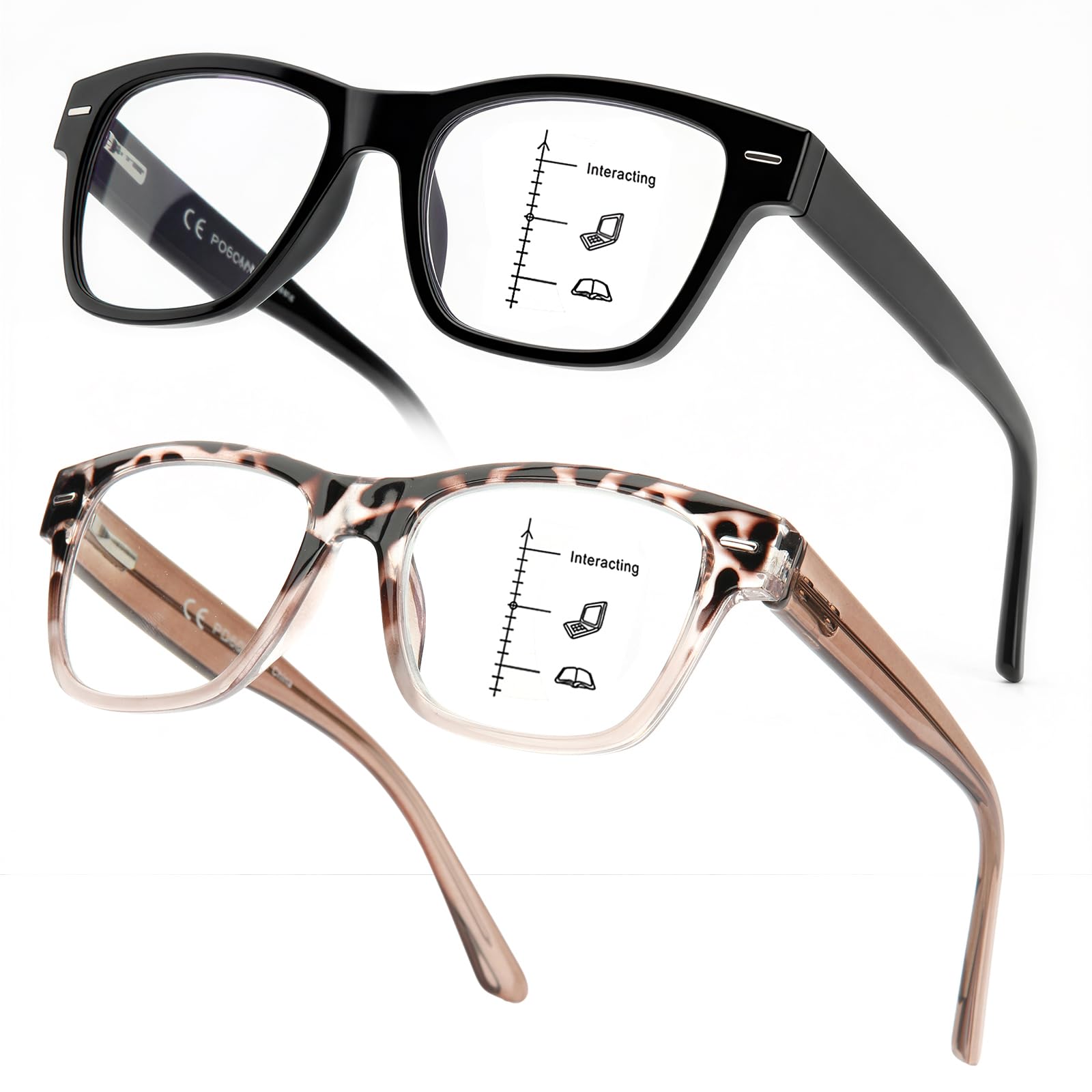
Two retro-framed pairs, a strap, and a lens tuned for arm’s-length screen work.
SKYOAK sets the intermediate zone at approximately three feet — that is the distance from your eyes to a desktop monitor, which is exactly where a lot of buyers feel caught between reader strength and distance clarity. The 3-in-1 lens stacks distance, intermediate, and near in one front, so you can glance at the screen, back to a document, then up at a colleague.
Where it separates itself from the Kafirlo cat eye below is the coating stack: over 95% light transmittance, a blue light-blocking coating, and UV400 protection against UVA and UVB rays. That combination is aimed at long phone and monitor sessions. The frame is a slightly thick-temple rectangle with metal core wire detailing, offered in a tortoiseshell gradient and a matte black, and the CP temples and spring hinges are there to keep the fit snug.
You get two pairs — one for the house and one for the office — plus two protective bags, a cleaning cloth, and a strap. The honest catch: two pairs is only good value if you actually want a spare. If you only ever wear one pair, you are paying for a second frame you will store.
The dual-pair play: one stays home, one rides in the bag, and the strap keeps them where you left them.
Worth knowing: the lens is fixed at 2.0x in this listing, so confirm that strength matches your reading needs.
Fits you if: you split time between a home desk and an office and want a stylish spare without buying twice.
Not your pair if: you need a different magnification than 2.0x.
5. MISSFIVE Progressive Metal Reading Glasses
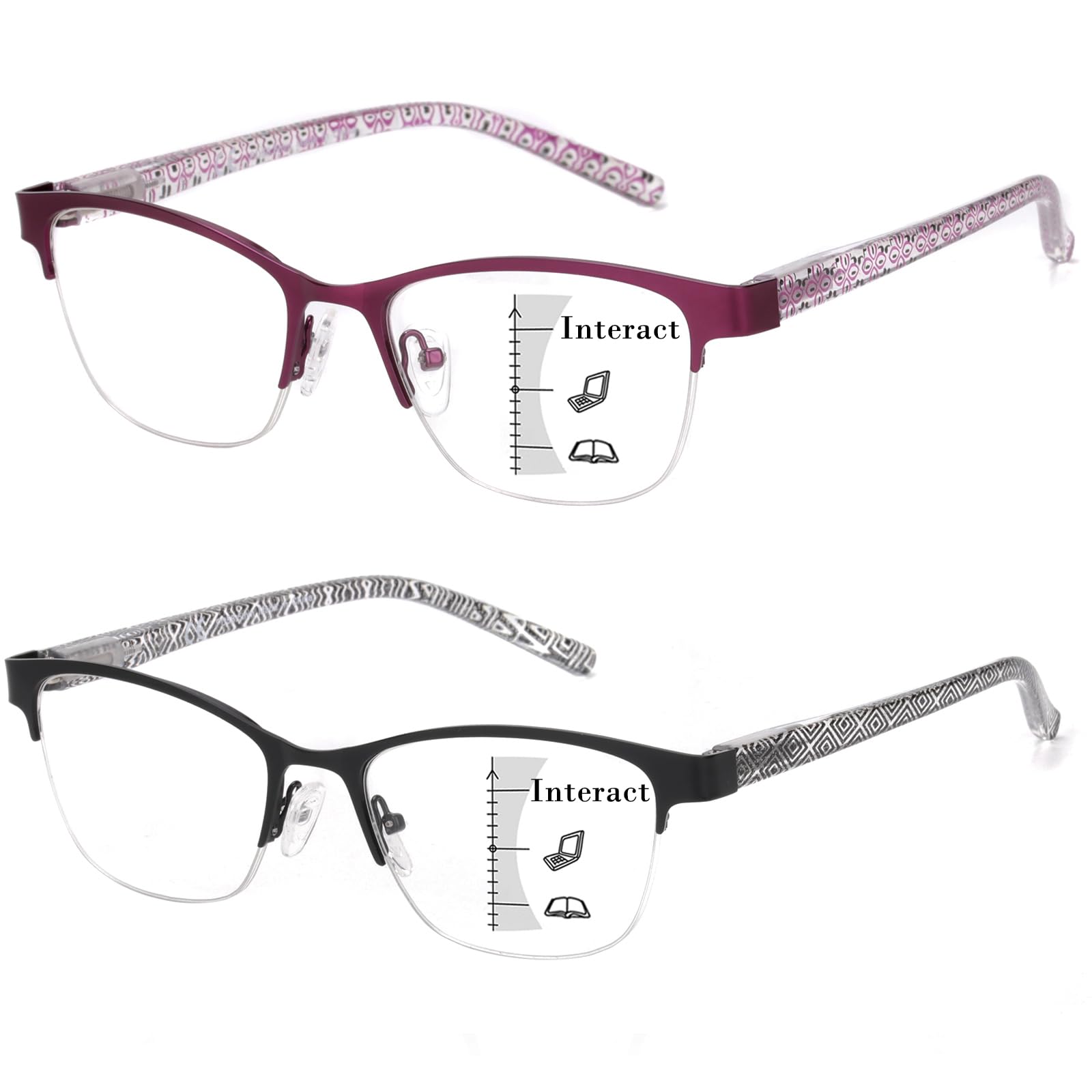
Built for the woman who lives at a desk and is tired of peeling her readers off.
MISSFIVE’s pitch is narrow and useful: ordinary readers force you to remove them the second you look at a monitor. This multifocal is aimed squarely at people who spend long stretches at a desk or in a confined workspace, where you go from paper to screen to doorway in the space of a minute.
The frame is metal, which gives it a slimmer profile than the chunky square plastics here, and the progressive lens carries the three-zone layout. That combination suits a professional setting where a plastic frame feels casual.
What it does not give you is a stack of published numbers — this listing is thin on lens dimensions and weight, so fit is more of a leap than with the LianSan. If you need exact bridge and temple measurements before you commit, that is the honest gap here.
The right call for: desk-bound professionals who want a slimmer metal frame and a no-swap lens.
One caveat: the listing does not publish lens height, width, or weight, so measure against your current glasses before ordering.
6. ZESAKER Oversized Progressive Reading Glasses for Women
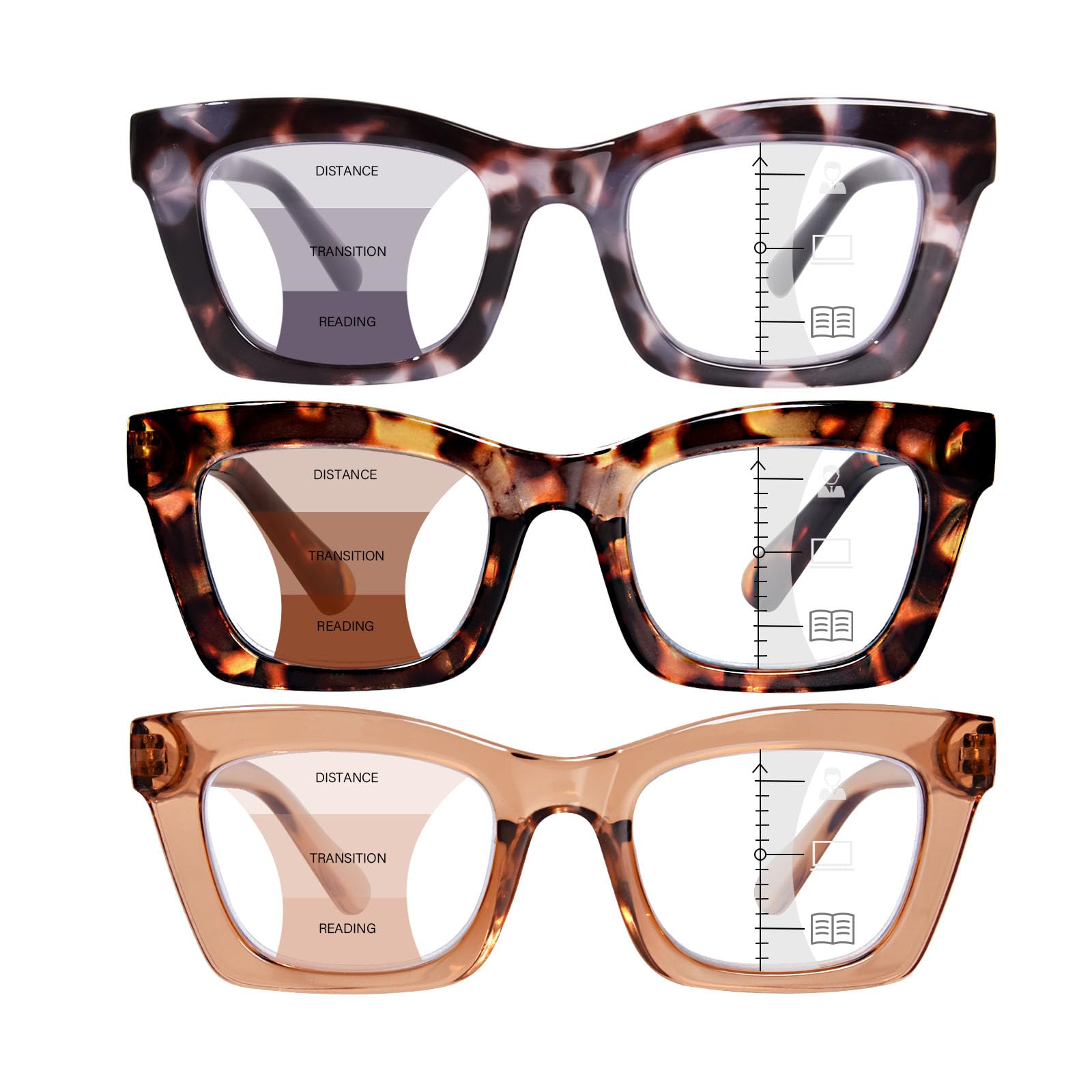
A bigger lens opening gives the three zones more room to graduate.
An oversized front is the practical answer to a progressive lens’s biggest fitting problem: the three zones need vertical space. A deeper lens lets the distance, middle, and reading bands sit farther apart, which means a gentler shift and a bigger reading window. At 0.71 ounces, this ZESAKER frame is also the lightest pair listed here, so the bigger front does not translate into a heavier feel.
ZESAKER builds three strengths into one lens, so you look low to read and high to see across the room. Owners describe the frame as high quality and comfortable, and it earns its keep as a pair that goes with any outfit. Fit and value both come in for praise alongside that.
Clarity is where it splits. Some wearers can see near, middle, and far clearly, while others find the top portion soft. Functionality draws the same mixed response. With a lens this shape, the top zone is the part to test in your first week — if it is not clear, you will still be peering over the frame.
The fit logic: a tall, oversized lens gives each of the three zones room to breathe, and the 0.71-ounce frame keeps it light.
The one risk: the distance zone is the weak spot for some wearers, so give yourself the adaptation period before you decide.
The right pick when: your current narrow frames feel cramped and you want a taller lens with a roomy reading band.
Hold off if: a large front overwhelms your face shape — this is a bold frame by design.
7. Foster Grant McKay Progressive Reading Glasses

A round front from the eyewear brand that named the multi-focus category.
Foster Grant’s second entry here takes the same three-strength-in-one-pair idea as the Conan above and wraps it in a round front. The lens lets you read, work at a computer, and talk to someone without removing your glasses — the brand’s whole reason for the multi-focus line. At 1.5 ounces, the frame is light enough to forget you have it on.
Clarity is the standout. Owners describe the focus as clear from reading all the way through looking up, and accuracy and quality both come in for steady praise. Appearance and comfort follow close behind, so it wears like a good pair of glasses rather than a utilitarian reader.
Two things to know before you commit. The nose piece runs narrow, which owners with a wider bridge notice quickly. And there is a real durability question: some frames have broken, which is why this pick is worth handling carefully. Treat it like a good pair of glasses rather than a toss-in-the-bag spare.
The case for the round front
- Three strengths in one lens for read, computer, and conversation
- Clear focus that holds from the bottom of the lens to the top
- Light 1.5-ounce frame
- Named eyewear brand with a recognizable look
Know before you order
- The nose piece runs narrow, which pinches a wider bridge
- Some frames have broken — handle with care
Reach for it if: you have a narrower bridge and want a round frame with genuinely clear multi-focus optics.
Consider another: if you need a wide bridge fit or want a frame that shrugs off rough handling.
8. Peepers Blue Light Progressive Reading Glasses
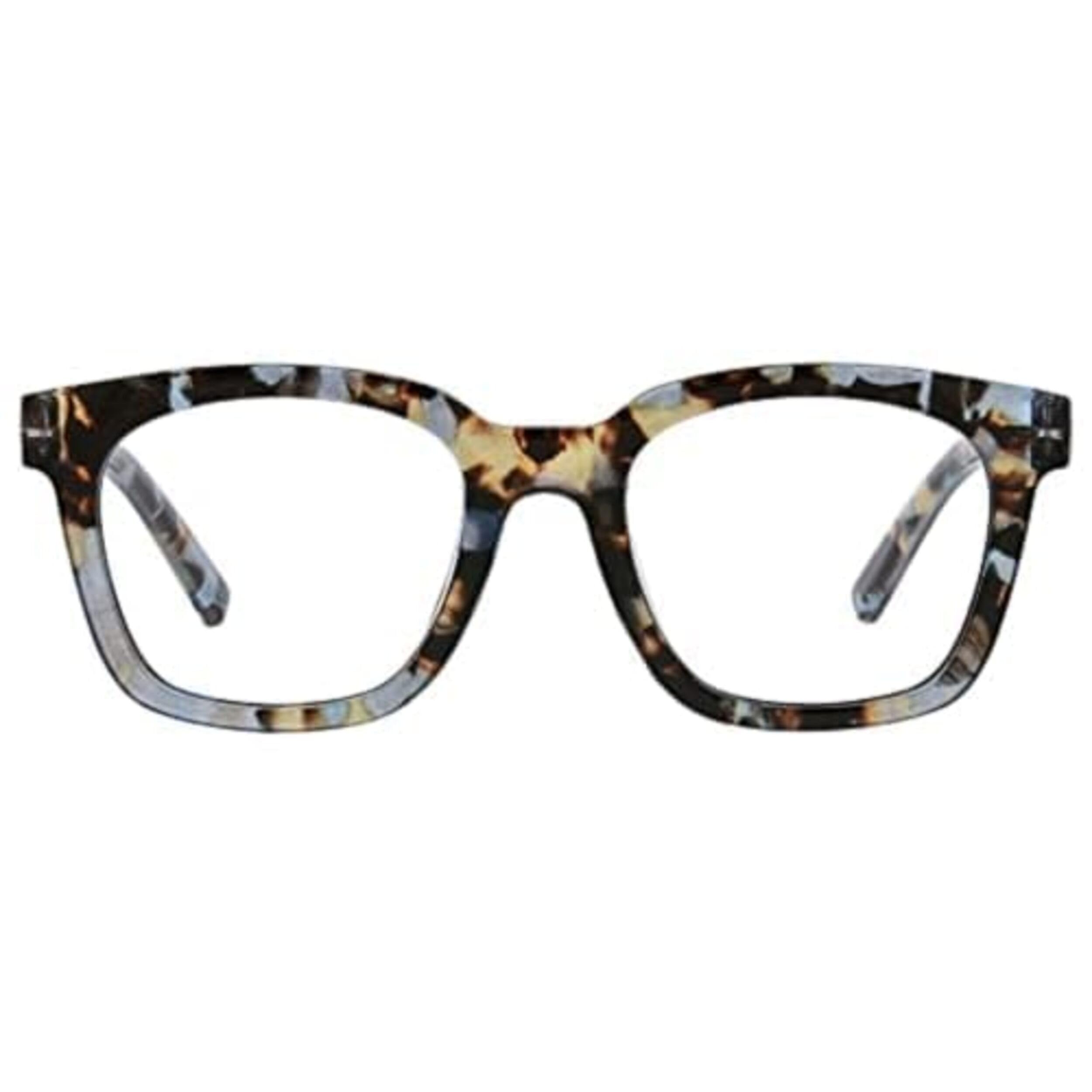
The top-of-list pick for anyone who lives on a screen and wants the frame to match.
Peepers builds this pair around blue light blocking plus a progressive lens, aimed at the woman who spends her day on a laptop and her evening on a phone. The frame is cut for a women’s fit and gets consistent praise for its appearance — this is the pair you get compliments on, not the one you hide.
Quality is what buyers notice first, followed by all-day comfort and straightforward ease of use. That combination is why it sits at the premium end: you are paying for a branded blue-light progressive lens and a women’s-fit frame that looks the part.
Two honest caveats. Clarity divides buyers — some find the top truly clear, others less so. And frame durability draws the same split, with some reports of breakage over time. Neither is a reason to skip it, just a reason to handle it with care and to give your eyes a fair adaptation stretch before you judge the lens.
Why it commands the premium slot: a women’s-fit progressive with blue light blocking, all-day comfort, and looks that earn compliments.
What divides buyers: clarity and frame durability are both split — treat the frame gently and test the top zone early.
This one suits: the screen-heavy professional who wants a branded blue-light progressive that looks sharp on video calls.
Look elsewhere if: you want the toughest frame available — durability is the trade at this tier.
Know the Specs
Progressive vs. single-vision lens
A single-vision reader has one power from edge to edge. A progressive lens changes power gradually as your eye moves down it, so the top is tuned for distance, the middle for arm’s-length work, and the bottom for close reading. That is why progressives cost more and why they need a few days of adaptation. If your day is one continuous task, a reader is fine — if it jumps around, a progressive saves you the constant on-off.
Lens height and where the reading zone lands
Lens height is the vertical opening of the frame. A taller lens gives the three zones more room, so the transition feels gentler and the reading band is wider. A shallow lens squeezes the same powers into less space. When a listing gives a lens height like 34mm, that tells you it is a mid-depth frame — deep enough for a gradual shift, shallow enough to stay out of your cheekbones when you look down.
Blue light blocking and UV400, explained
Blue light blocking is a lens coating that filters part of the blue end of the spectrum given off by screens. UV400 means the lens blocks UVA and UVB rays up to 400 nanometers. Neither changes your magnification. What they do is cut glare-related strain on long screen days and give the lens some outdoor protection. Light transmittance, often written as a percentage, tells you how much visible light reaches your eye — higher means a brighter, clearer view.
Spring hinges, bridge width, and staying put
Spring hinges let the arms flex outward past their resting position instead of snapping, which is why they matter on glasses you take off constantly. Bridge width is the gap that sits on your nose: too wide and the glasses slide forward when you look down; too narrow and the frame pinches. Temple length is the arm measurement from hinge to tip — get it close to your own and the glasses stay seated without constant pushing up.
Common Questions
How long does it take to get used to progressive reading glasses?
Do progressive readers work for computer work?
Will progressive reading glasses work while driving?
What is the difference between progressive and bifocal reading glasses?
How do I measure my face for the right frame width?
Do blue light blocking lenses actually help with screen strain?
Can I wear progressive readers all day?
Are transition lenses worth it for reading glasses?
Do progressive reading glasses need a prescription?
How do I keep the lens from scratching?
The Bottom Line
For most women, the women’s progressive reading glasses winner is the Foster Grant Conan because it splits one lens into reading, computer, and conversation zones and backs them with an anti-reflective, scratch-resistant coating — the complete daily pair. If your priority is a light frame at a budget-friendly tier, the LianSan is the one to reach for, with its published lens measurements and 3.53-ounce weight. And if you want a branded blue-light progressive that earns compliments on video calls, the Peepers To the Max fills that slot.
The honest nudge: the Conan clears 4.0+ stars because its three-zone optics and dressier frame line up, which the style-first picks above only partly match. That is why the Conan takes the top spot — one lens covers reading, monitor, and conversation, so you stop reaching to swap glasses.
How we choose
We do not accept paid placement. Every pick is matched to a real buyer and a real use-case; we do not hands-on test units.
Sources
Specifications: manufacturer listings and product documentation. Review insights: verified customer reviews, as of November 2026. Pricing: not shown on this page (it changes often); check the current price via the retailer link.
As an Amazon Associate, Tactical Gear Guy earns from qualifying purchases. This does not affect which products we feature.