Specs are compiled from manufacturer listings and verified buyer reviews and can change over time — please confirm the key details on the product page before buying.
You want a helmet that protects your head on a real trail, not one that shifts or pinches halfway through the descent. The short answer: a proper women’s mountain bike helmet gives you rotational-impact protection, a dial you can tighten with one hand, and vents that actually move air. Everything below is sorted by what each one does best, so you can pick by fit and features rather than guesswork.
This guide is built by comparing the manufacturers’ published specifications and the patterns across verified customer reviews, so you get each pick’s real strengths and trade-offs instead of marketing spin.
Trail riders now expect a brain-protection liner, a ponytail-friendly dial, and a visor that shades the eyes without blocking the view. Below is a straight read on every option worth your time, laid out so you can shop the best women’s mountain bike helmet with your eyes open.
Top Picks


How To Choose The Best Women’s Mountain Bike Helmet
A mountain bike helmet is the one piece of gear you buy hoping it never gets used. That is why the fit and liner choices matter more here than anywhere else in your kit. You do not need to learn engineering — you need four or five facts and a tape measure.
Start with your head circumference, not the label
Every helmet here lists a size band in centimetres, and that band is the hard limit. A universal women’s shell such as 50–57 cm covers a wide spread. A model listed at 58–61 cm is built around that spread, so it is a poor match for a much smaller head even with the dial fully tightened. Measure around the widest part of your head, just above the eyebrows, and buy inside that number.
Know what MIPS actually does
MIPS stands for Multi-Directional Impact System — a thin slip plane inside the helmet that lets the shell rotate slightly against your head in a crash. That reduces rotational force, which is the twisting motion that does damage. You will see it on most of the picks below; where it is missing, the helmet leans on shell shape and coverage instead.
Match vents to how you actually ride
A vent is a hole that channels air over your scalp. Fewer vents mean a stiffer, sometimes stronger shell but a hotter climb. Higher counts, like the 43 vents on one pick here, push air through even when you are grinding uphill at walking pace. If most of your riding is shaded singletrack at low speed, ventilation earns its place.
Decide if you need a full-face shell
A full-face helmet wraps a chin bar around your jaw. It suits downhill and bike-park days where you are hitting jumps. The trade-off is weight and heat — one pick here runs 700 g, another is listed at just under 750 g. For cross-country and commuting, a standard open shell with extended rear coverage is the saner choice.
Side-by-Side Comparison
| Model | Best For | Weight | Size Range | MIPS Liner | Amazon |
|---|---|---|---|---|---|
| Giro Fixture MIPS II★ Best Overall | Everyday trail riding | 1.6 pounds | 50–57 cm | Yes | Amazon |
| Fox Racing MainframeBudget Standout | Budget trail protection | 1.7 pounds | — | Yes | Amazon |
| Asteron SL029 LEDNight Rider’s Choice | Night and city visibility | 12.8 ounces | 58–61 cm | — | Amazon |
| Leatt MTB AllMtn 2.0 | Hot-weather airflow | 375 g | — | Turbine Technology | Amazon |
| Lixada Full Face | Downhill and park days | 700 g | 55–61 cm | — | Amazon |
| OutdoorMaster Rhino | Full-face with goggles | 0.75 kg | 57–62 cm | — | Amazon |
| Giro Verce MIPS | Women’s-specific trail fit | 1.5 pounds | 50–57 cm | Yes | Amazon |
| LIVALL MT1 Neo | Group rides and calls | 310 g | — | — | Amazon |
| POC Cularis | Enduro and technical trails | 0.5 kg | — | Yes | Amazon |
Detailed Reviews
1. Giro Fixture MIPS II Bike Helmet
Our pick — 4.5+★ from 700+ verified ratings; the strongest balance of quality and price.
The one that solves the fit problem before your first pedal stroke.
Here is the number that decides it: a 50–57 cm sizing band built specifically as a universal women’s shell. That means Giro shapes the shell around that range instead of asking you to force a generic lid down. The Roc Loc Sport dial tightens with one hand across a 7 cm adjustment range, and you can feel and hear each click as it locks in. If you have ever ridden with a helmet that creeps loose on rough ground, that audible click is a small relief.
MIPS is integrated here rather than bolted in afterward, so the slip plane sits between the foam and your head without adding a clunky layer. Construction fuses the polycarbonate shell directly to the impact foam, which keeps weight at 1.6 pounds and opens up airflow. Compare that to the Lixada full-face at 700 g and the weight difference is obvious the moment you pick each one up. Reflective detailing on the shell bounces headlights back at drivers, which matters on evening rides home along shared roads.
What wins people over is the build quality — it is far and away the most-discussed strength in owner feedback, with fit running a close second. The shell sits low around the ears and covers the back of the head fully, which is the kind of coverage that stops the helmet feeling perched on top of your skull. Breathability comes through too; the vents move air rather than just decorating the top. Ponytail wearers get a clear path through the dial mechanism, which sounds small until you are the one threading hair through a helmet every morning.
What earns the top spot
- Integrated MIPS slip plane for rotational-impact protection
- Roc Loc Sport dial with a 7 cm adjustment range and ponytail clearance
- Fused shell and foam keep it at 1.6 pounds while boosting airflow
- Reflective details for low-light visibility
The honest fine print
- Universal fit is a range, so a head on the far edge of 50–57 cm may want a tape measure first
- It is an open trail shell — downhill riders will want a full-face
Buy this if: you ride trails a few times a week and want MIPS, a one-hand dial, and a women’s shell that fits on the first try.
Think twice if: your measured circumference sits outside 50–57 cm or you need a chin bar.
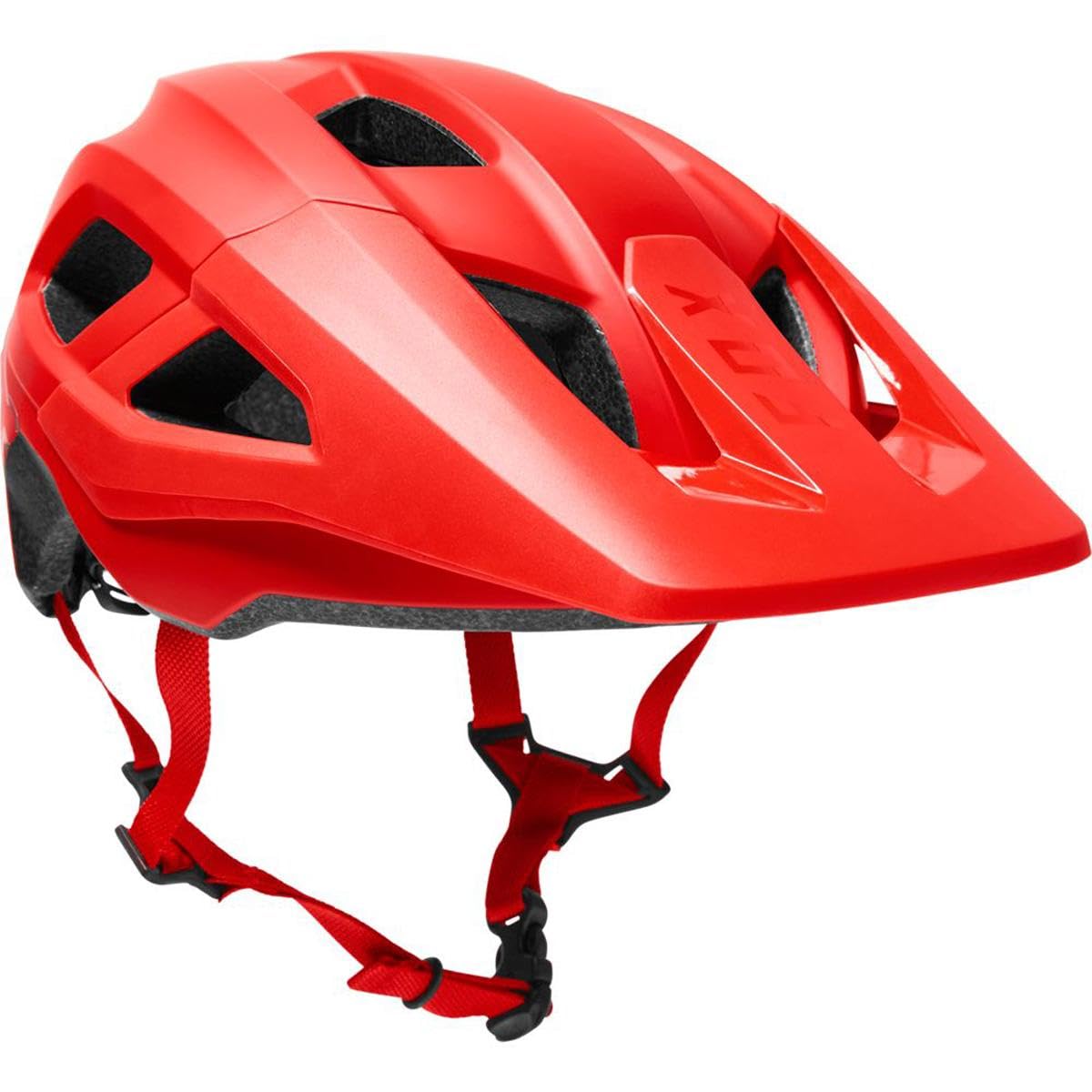
2. Fox Racing Mainframe Mountain Bike Helmet
Entry-level money, trail-grade protection — and the liner comes out for washing.
Fox puts a proven MIPS system in an open trail shell and calls it done, which is exactly the right call at this tier. The liner is removable and moisture-wicking, so you can pull it out and wash the sweat instead of living with it. Extended coverage wraps further down the back of the skull than a pure race lid, and the in-molded EPS foam has channeled venting cut into it so cooling does not rely on the vent holes alone.
Weight sits at 1.7 pounds against the Giro Fixture’s 1.6 pounds, so it is a fraction heavier on paper and unremarkable in the hand. What carries this helmet is the build quality and the fit — the ratcheting strap is the piece people single out, because it lets you snug the shell down without fighting a fiddly buckle. Comfort and durability both land high in owner feedback, and the design holds its shape after repeated rides.
The one thing to know before you click buy is colour fading. Owner feedback on colour durability is genuinely mixed, with some reporting fade inside a year. That does not affect how it protects you, but if you like a bright shell to stay bright, it is worth knowing. On the face of it, this is the helmet for a rider who wants real MIPS protection without spending a lot, and who does not mind a faded paint job down the road.
Where it shines: the ratcheting strap and the washable liner make daily trail use painless, and the MIPS system is the same category of rotational protection the pricier picks carry.
Reach for it when: you are kitting out your first trail season and want MIPS without stretching the budget.
Look elsewhere if: a bright colour that stays bright for years is a hard requirement.
3. Bike Helmet with Light
A lid that lights up — turn signals, brake warnings, and a display you program from your phone.
This is not really a trail helmet with lights glued on. It is a visibility device shaped like a helmet, with a smart LED display across the shell. The lights handle automatic left and right turn signals, a brake warning that shows “STOP”, and speed indication. The maker claims a 300% visibility boost, full 360° coverage, and US traffic-compliant light modes. On a shaded path or a winding road at dusk, the blinking is the whole point.
Then there is the fun side. You get 100+ dynamic LED patterns you can customise with text, emojis, logos, or festival themes through the free app. Group riders and event riders — the kind who show up to a Critical Mass ride — will find that genuinely appealing. The construction uses an ASTCore Impact Structure that pairs a high-strength shell with energy-absorbing foam. A dial-fit system locks it to heads from 22.8″ to 24″ (58–61 cm), so check that number carefully before ordering. Eight vents push air through, which is adequate for commuting and light trail use rather than all-day climbing.
What stands out to buyers is appearance — it is the aspect people bring up most by a wide margin, with value close behind. Visibility day and night also gets its due; the lights make your position obvious to traffic. The app-controlled functionality and battery life are both more polarising, so treat the smart features as a bonus rather than the reason to buy. If your riding is mostly city and you want drivers to see you, the LEDs are the point. If you want a quiet trail shell, this is a lot of electronics to carry.
Best for: commuters and night riders who want turn signals and brake lights built into the shell.
Skip if: you ride technical singletrack and want zero time managing an app or a charge.
4. Leatt MTB AllMtn 2.0 Helmet
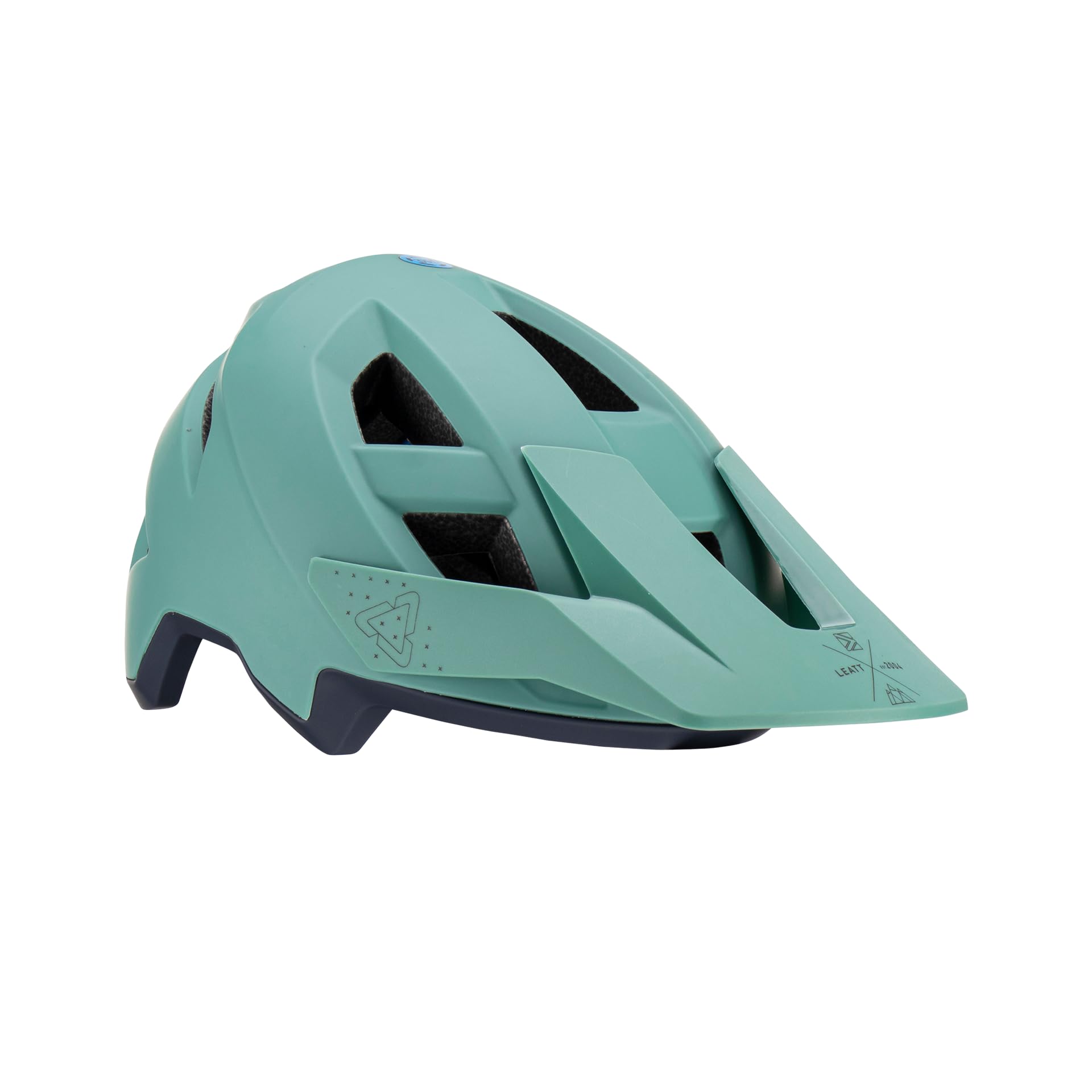
Forty-three vents and 375 g of shell — built for riders who overheat on the climb.
Here is the trade the Leatt makes: it goes all-in on airflow and weight and skips the MIPS name on the box. Instead, it uses Leatt’s 360-degree Turbine Technology inside the shell. The 43 vents are specified as effective even at low speeds, which is the honest test on a slow, steep climb where most helmets turn into ovens. At 375 g it is dramatically lighter than the Lixada full-face at 700 g — the sort of gap you notice when you pick both up in the same hand.
The shell is a two-piece polymer build with a sunglasses dock port, so your glasses have a secure home when you pull them off. The Fidlock buckle is magnetic, meaning it snaps closed without threading and finding a slot with gloves on. The inner liner is moisture-wicking, breathable, washable, and specified as no-odor. A visor rounds out the package. Every one of those touches is aimed at a hot, long, technical day.
This is the pick for a rider who sweats hard and climbs slowly. The ventilation-first design and the magnetic buckle are the reason to choose it over an MIPS-equipped lid. The trade is real: no MIPS branding, but better airflow and a lighter shell than most of the open lids in this list.
Standout spec: 43 vents that stay effective at low speeds, plus a 375 g shell and a magnetic Fidlock buckle you can close in one gloved motion.
Choose it if: hot climbs are your weak point and a magnetic buckle saves you real time.
Second-guess it if: MIPS-branded protection is a non-negotiable for you.
5. Lixada Adult Bike Helmet

A full-face shell for downhill days, at a weight you will feel on the lift ride up.
Two sizes take care of the fit question: medium at 55–58 cm (21.65–22.83″) and large at 59–61 cm (23.22–24″). Removable pads let you fine-tune the inside of the shell, which is how this one covers both men’s and women’s head shapes. The chin bar is built from EPP foam, a lighter, more recoverable material than standard polystyrene, and the helmet states compliance with the U.S. CPSC Safety Standard for Bicycle Helmets for Persons Age 5 and Older.
Weight is the number to look at: 700 g for medium and 720 g for large. Put that beside the OutdoorMaster Rhino at 0.75 kg and the two full-faces land in similar territory. Compared with the Leatt AllMtn at 375 g, the Lixada weighs 700 g up front. Over 31 vents aim to make up for some of that, pushing air through a shell that would otherwise cook you on a climb. The liner pulls out for washing, and the chin strap adjusts in length.
Build quality is what buyers rate highest, with the light weight for a full-face close behind. Fit is the split point — some riders get a good match and others find it runs small, so measure your head before you order and do not trust a guess. In practice this is a serious downhill shell for a rider who wants full-face coverage without paying premium money. It is not a commuter lid, and it is not the one to pick if you ride cross-country at pace.
The value read: EPP chin protection, 31+ vents, and a CPSC compliance statement make this a genuine full-face option for park days without premium pricing.
Pick it for: downhill runs and park days where a chin bar is the whole reason you are shopping.
Pass on it if: you mostly pedal cross-country — 700 g will wear you down.
6. OutdoorMaster Full Face Mountain Bike Helmet
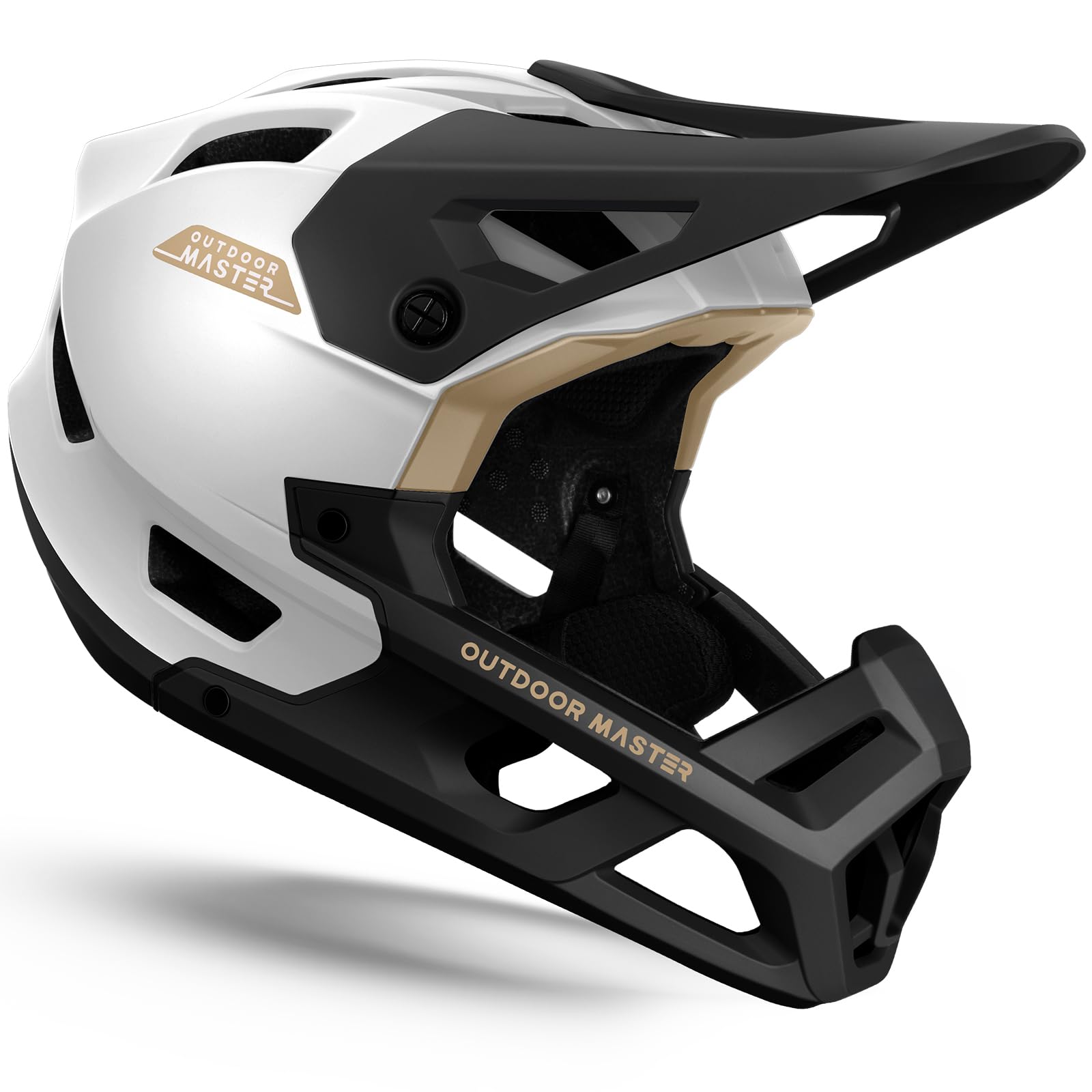
Full-face coverage with a goggle channel that keeps your lenses strapped where you put them.
Start with the head size: 57–62 cm (22.44–24.40″), which is a wider spread than the Lixada’s medium. The shell is molded from ABS plastic over EPP foam for the chin bar, with shock pads inside to soften impact. There is also an EPP collarbone impact system — the foam arranged to take pressure off that bone, which is a nice touch on parks days. The visor pivots, so you can tilt it into the sun rather than squint through it.
Ventilation runs through 27 injection-molded high-flow channels, and the whole helmet weighs in just under 750 g. Compare it to the Lixada at 700 g and the OutdoorMaster carries slightly more mass for its goggle-ready build. The goggle strap channel holds the band in place, which is the reason to pick this over the Lixada if you ride with goggles. The liner comes out for washing and you get two sets of D-rings in different thicknesses to adjust the strap feel.
Quality is the thing buyers rate most highly, with lightness and comfort following close. Protection and ventilation also earn steady praise for a full-face shell. Fit is the dividing line here — the sizing chart gets flagged as optimistic by some, so take your measurement and compare it to the real range rather than the label. That is not a defect, it is a reminder to measure. For goggles-wearing downhill riders, the channel and the collarbone foam are the reasons this one makes the shortlist.
what separates it: it is built for gravity riders (riders who take on steep, fast descents). A goggle-strap channel holds your goggles in place, a pivoting visor flips up out of your line of sight, and EPP collarbone impact foam (a softer foam pad over the collarbone area) adds protection where a fall often lands.
Yes for: downhill and bike-park riders who wear goggles and want the visor to move with the sun.
No for: anyone who wants a light cross-country lid — under 750 g is still a full-face weight.
7. Giro Verce MIPS Adult Mountain Cycling Helmet

The women’s-specific Giro that puts the dial right where your hand expects it.
Age range on this one reads simply “Women,” and the size band is 50–57 cm universal. That makes it a direct match for a lot of riders who find men’s shells sit too wide. The Roc Loc Sport system is the fit engine — you turn the dial and it cinches down evenly, with quick-dry padding that stays comfortable when you sweat. At 1.5 pounds it is the lightest of the open-shell Giro picks here, edging the Fixture MIPS II at 1.6 pounds.
The in-mold construction fuses a full hardbody shell to the foam, and reflective details add visibility in low light. The visor is removable, so you can strip it down for a cleaner look or keep it for sun and rain. MIPS is in the build for rotational-impact protection. The padding is plush and quick-drying, and combined with the fit system it makes the helmet easy to live with every day.
Buyers report that looks come first and fit comes a close second — it looks as good as it feels on the trail, so it keeps coming up in “how does it look” talk. Adjustability and comfort round out the strengths. The fair caveat is sizing: some riders find it runs small, so check the 50–57 cm size range against your own head measurement before you order. If you want the women’s-specific version of Giro’s dial system with MIPS (a liner that slides on impact to help reduce rotational force) inside, this is a strong second look alongside the Fixture.
Why it lands: women’s sizing, MIPS, and a plush quick-dry liner at 1.5 pounds make it a natural fit for riders who want full control of the dial.
For you if: the Fixture feels like a near miss and you want the women’s-specific shell with the same dial family.
Look elsewhere if: your head measures at the top of the 50–57 cm band and you prefer extra margin.
8. LIVALL MT1 Neo Bluetooth Bike Helmet

A helmet that calls for help, plays your music, and weighs 310 g while doing it.
The headline is patented fall detection with real-time GPS positioning. If the helmet senses an impact, it triggers an emergency signal and sends SOS alerts through the LIVALL app. You hope fall detection never fires, but it is a genuinely different reason to buy a helmet. The build meets both EN1078 and CPSC1203 certification standards, and the integrated LED turn signals and brake warning lights boost visibility day or night. A unibody molding pairs imported American EPS foam with a polycarbonate shell.
Communication is the second layer. A remote control on the handlebar handles calls through Bluetooth speakers and a wind-proof microphone, and group riders can use PTT walkie-talkie through the app. Twenty-one vents keep air moving over your head. Weight lands at just 0.68 lbs (310 g), which is the lightest open shell in this comparison — notably lighter than the Giro Fixture at 1.6 pounds and the POC at 0.5 kg. All of the smart features, though, depend on the app being connected successfully; fall detection, SOS, and walkie-talkie all require it.
Quality and sound quality are the strengths buyers appreciate most, with fit and lighting close behind. The Bluetooth connection and the handlebar controller are the areas where experience splits, so plan on treating the electronics as a bonus layer over a decent helmet. The check before you buy is a simple one: if you want the safety and comms features, make sure you are willing to keep the app connected on every ride. If you are not, the software layer will not earn its keep.
What it brings to a group ride
- Patented fall detection with GPS and SOS alerts via app
- Bluetooth speakers, wind-proof mic, and PTT walkie-talkie for group rides
- LED turn signals and brake warning lights
- Lightest open shell here at 310 g (0.68 lbs)
The condition on the box
- Fall detection, SOS, and walkie-talkie only work when the app is connected
- Bluetooth and handlebar control performance is uneven across riders
Best fit for: riders who want visible comms and a safety net that calls for help.
Not for: anyone who wants a helmet that runs zero software.
9. POC Cularis Bike Helmet
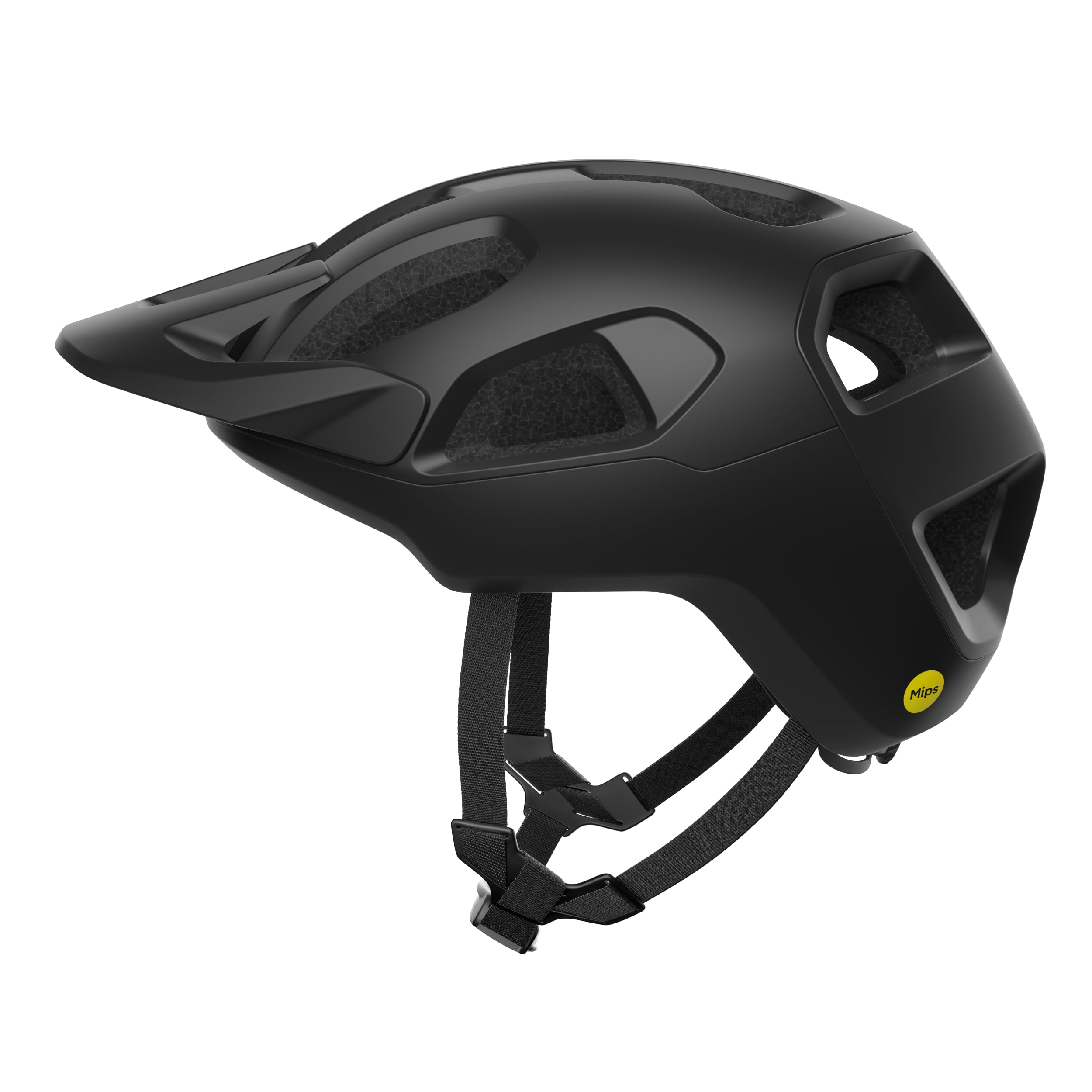
The enduro build with a visor designed to snap free instead of torquing your neck.
The feature worth the money here is the breakaway visor. POC patented it so the visor snaps off the shell on impact, which reduces the force that would otherwise transfer through the visor into your neck. That matters most on technical descents where a fall is likely. The MIPS liner sits inside for rotational-impact protection, coverage extends further at the temples and back of the head, and a goggle clip keeps your lenses ready. A Fidlock buckle secures it at the chin.
Structure is built to take a hit and keep its shape. A unibody polycarbonate shell, a reinforced EPS liner, and aramid bridges together improve the helmet’s structural stability — those bridges are aramid fibres woven in to resist splitting. Weight is 0.5 kg. The 360° size adjustment system handles fit, and ventilated airflow channels keep air moving through the hottest rides. It is a specialised MTB helmet across trail and enduro use, and that focus is the point.
Quality is the strength buyers bring up most, followed by ventilation and appearance. The sense of safety gets its own mention — this is a helmet riders describe as genuinely protective rather than cosmetic. Comfort holds up through long rides, without the temple pressure that some shells produce. Fit is the split point, so measure first. For an enduro rider who wants extended coverage and the neck-sparing breakaway visor, this is the premium pick of the group. It is not the lid for a casual commute.
The reason it costs more: a patented breakaway visor, aramid bridges in the EPS liner, extended temple and rear coverage, and MIPS — a build aimed at the trails that hurt most.
Go premium if: enduro trails are your regular ride and neck protection from the visor is worth the extra spend.
Stay with a cheaper pick if: you mostly ride smooth cross-country and don’t need extended rear coverage.
Know the Specs
MIPS and Rotational Protection
MIPS — a thin slip layer inside the helmet that lets the shell rotate slightly against your head — is the single most useful feature to understand. In a real fall your head almost never strikes the ground dead straight. It twists. That rotation is what the liner is built to reduce. Where a helmet carries MIPS, that is a real safety point in its favour. Where it uses a different system, such as Leatt’s 360-degree Turbine Technology, the brand is chasing the same goal with its own design. Read the label carefully and don’t assume every helmet in the category has it.
Weight and Vent Count
Weight decides comfort over a long ride, and it is measured in grams or pounds depending on the listing. Open trail shells tend to sit light — one pick here is 310 g and another 0.5 kg — while full-face designs are heavier, with 700 g and under-750 g listings in this group. Ventilation works the same way: the number of vents and the shape of the channels inside determine whether air flows. High counts such as 43 or 31+ vents help on slow climbs. Fewer vents, like the 8 on the LED helmet, are fine for commuting and stop-start city riding.
Size Range and Dial Fit
Size range in centimetres is the hard constraint. A shell listed at 50–57 cm is sized for that spread and is a poor match for a 59 cm head, though removable pads and strap adjusters give a little room to fine-tune. Look for a dial system that lets you tighten with one hand — the Roc Loc Sport range, for example, offers 7 cm of adjustment. If you have long hair, check for ponytail clearance; the dial housing often has a gap for it. Measure before you buy, and compare the number you get to the band on the listing.
Coverage and the Chin Bar
Extended coverage means the shell wraps further down the back of the head, which is protection you want on rough descents. A full-face adds a chin bar and jaw protection on top of that, at the cost of weight and heat. The lower coverage you need, the lighter the helmet you can buy. Confirm whether the visor is fixed, pivoting, or breakaway, because each one behaves differently in a fall — the breakaway version is designed to snap off rather than torque your neck.
Common Questions
Will a 50-57 cm helmet fit my head if I am near the top of that range?
Do I really need MIPS on a women’s mountain bike helmet?
Is a full-face helmet overkill for regular trail riding?
How many vents do I need for summer riding?
Can I wash the padding inside a mountain bike helmet?
What does a breakaway visor actually do?
Do Bluetooth helmets work without the app?
Is a lighter helmet always better?
What size helmet should I order if I am between two ranges?
Do these helmets work with goggles or sunglasses?
The Bottom Line
The winner is the Giro Fixture MIPS II, because it fixes the fit problem in one go: a women’s 50–57 cm shell plus integrated MIPS (a liner that slides on impact to help reduce rotational force). A 4.5+ star rating across 700+ owners backs that up, and the fused shell holds 1.6 pounds without choking airflow. If you want the women’s-specific dial system in the same family, grab the Giro Verce MIPS. And for downhill days where a chin bar matters more than weight, the OutdoorMaster Rhino is the one to reach for.
One nudge before you click buy: check your head measurement against the size band first. A helmet that fits correctly is the only one that protects you.
How we choose
We do not accept paid placement. Every pick is matched to a real buyer and a real use-case; we do not hands-on test units.
Sources
Specifications: manufacturer listings and product documentation. Review insights: verified customer reviews, as of November 2026. Pricing: not shown on this page (it changes often); check the current price via the retailer link.
As an Amazon Associate, Tactical Gear Guy earns from qualifying purchases. This does not affect which products we feature.