Specs are compiled from manufacturer listings and verified buyer reviews and can change over time — please confirm the key details on the product page before buying.
Cold feet ruin the whole walk, and most winter boots sold to women fail at exactly one thing: they look warm and are not. This guide separates the boots that carry real insulation ratings and a waterproof build from the ones that only carry a furry collar. Every pick below is a women’s boot with actual thermal lining, and each one gets a plain-language read on warmth, grip, and fit.
This guide is built by comparing the manufacturers’ published specifications and the patterns across verified customer reviews, so you get each pick’s real strengths and trade-offs instead of marketing spin.
The short answer most buyers want first: the Columbia Bugaboot III gets the nod for everyday winter wear, with 200g of insulation, a thermal-reflective lining and a waterproof build that holds up season after season. Below, eight women’s insulated snow boots ranked by what they actually do — read on for the full breakdown of women’s insulated snow boots.
Top Picks

How To Choose The Best Women’s Insulated Snow Boots
A snow boot is one part warmth and one part barrier. If either half fails, you feel it within a block. The three things to check before you buy are the insulation rating, the waterproof construction, and the soles — and each one is readable from the listing without any guesswork.
Read the insulation rating before anything else
Manufacturers rate insulation by its weight in grams. The Hobibear states 200g of insulation rated down to -25 degrees, and the Columbia Bugaboot III carries the same 200g fill. That gram number tells you the boot sheds cold across a normal winter errand instead of only a quick dash to the car. A thin fashion boot has no such number, and that is your clue it was never built for the weather.
Waterproof and water-resistant are not the same
Waterproof means the boot is sealed so moisture cannot pass through — Columbia calls its Bugaboot III seam-sealed, and Muck builds a 100% waterproof rubber upper. Water-resistant means the fabric sheds light snow but soaks through eventually. For slush and wet sidewalks, go waterproof. For a dry cold day, water-resistant is enough.
Match the sole and the fit to how you move
An outsole’s job is friction on ice and packed snow. Kamik names an ICEKISS rubber outsole, Hobibear a no-slip outsole, and the Free Soldier a lightweight rubber sole for wet, snowy conditions. Then think about fit: several picks here run generous or skip half sizes, so thick-sock wearers often size up rather than down.
Side-by-Side Comparison
| Model | Best For | Insulation | Waterproofing | Weight | Amazon |
|---|---|---|---|---|---|
| Columbia Bugaboot III★ Best Overall | Everyday winter wear | 200g | Waterproof, seam-sealed | 1.44 pounds | Amazon |
| Hobibear Winter BootsBest Value | Budget warmth and style | 200g, rated to -25 degrees | Water-resistant upper | — | Amazon |
| Free Soldier Winter Snow BootsMost Versatile | All-day flexible comfort | — | Waterproof, breathable upper | — | Amazon |
| Muck Arctic Sport II Mid | Wet and icy work | 5 mm neoprene | 100% waterproof | — | Amazon |
| Columbia Red Hills Omni-Heat | Sidewalk-to-trail wear | Thermal-reflective lining | Waterproof | — | Amazon |
| Kamik Momentum 3 | Deep cold on a budget | 3M Thinsulate, HEAT-MX | Seam-sealed waterproof | — | Amazon |
| The North Face Chilkat 400 | Long cold stretches | High-loft insulated build | Water-resistant DWR | 1.63 pounds | Amazon |
| UGG Adirondack Boot XXV | Luxury city snow days | Xerogel, rated to -32ºC | Fully waterproof leather | — | Amazon |
Detailed Reviews
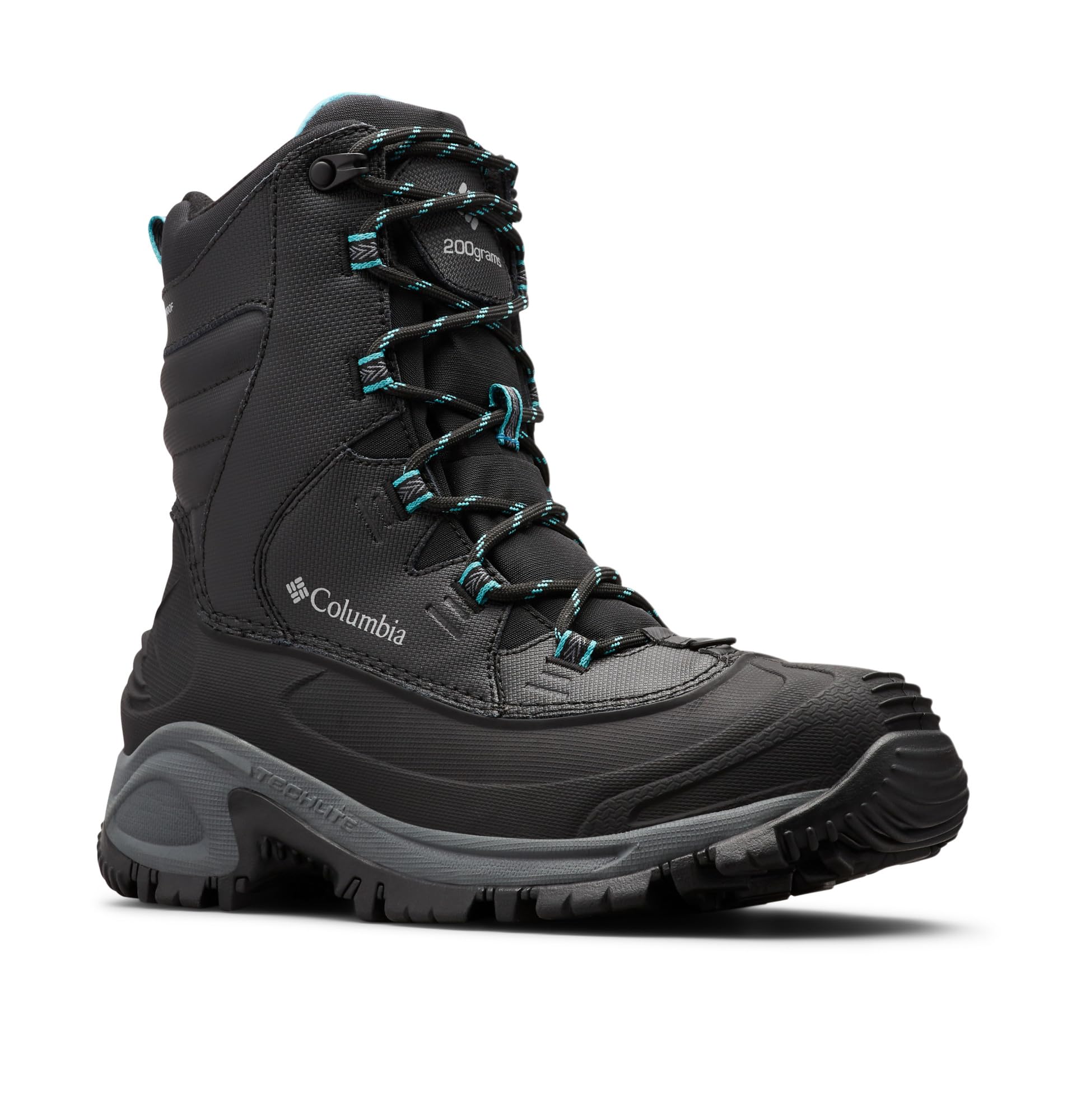
1. Columbia Bugaboot III
Our pick — 4.5+★ from 300+ verified ratings; the strongest balance of quality and price.
A waterproof, seam-sealed 200g boot that covers commuting, school runs and weekend walks in one pair.
Start with the build, because this is where the Bugaboot III pulls ahead. It is waterproof and seam-sealed — the seams are glued and taped so water cannot creep in through the stitching — and it packs 200g of insulation. That gram figure is a mid-weight fill, enough to keep a normal winter sidewalk walk comfortable without turning your feet into a sauna indoors. The PU coated leather and textile upper sits over an injection molded rubber shell and outsole, so the part that meets slush is the part that cannot soak.
What wins people over is the secure, supportive feel. The outsole grips and the footbed props up the arch, which is why the fit draws the most consistent praise of any single trait on this boot. The 1.44-pound weight is on the moderate side, and that is the honest trade-off — a few wearers wish it were lighter, while others like the substantial feel underfoot. The difference from the Kamik Momentum 3 is warmth engineering: the Kamik carries a -40F comfort rating, while this one leans on its 200g fill and thermal-reflective lining rather than a stated temperature floor.
Where It Delivers
- Waterproof and seam-sealed, so slush stays on the outside
- 200g insulation paired with a thermal-reflective lining
- Supportive footbed and a grippy outsole for icy sidewalks
- Bungee lacing that cinches quickly with gloves on
Where It Asks Something
- Weight splits opinion — some find it bulky at 1.44 pounds
- No stated temperature floor like the Kamik’s -40F comfort rating
Reach for this if: you want one do-everything winter boot that is genuinely waterproof and warm for commuting, school runs and weekend walks.
Look elsewhere if: you want the lightest possible boot on your feet for long distances.
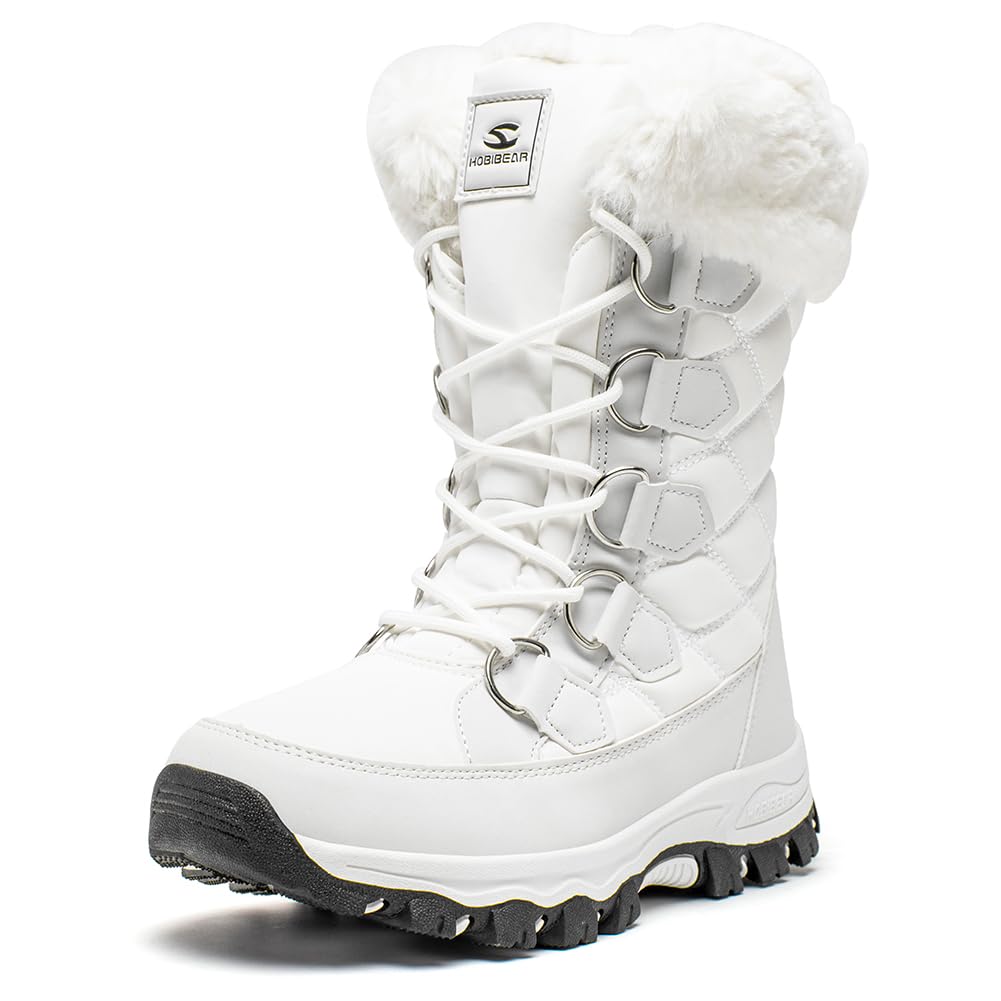
2. Hobibear Womens Winter Boots Faux Fur Lined
A lace-up faux fur boot with 200g of insulation rated to -25 degrees.
Here is the spec that matters on the Hobibear: the listing states “Warm Lined 200g of insulation temp rated -25 degrees to ensure a warm wearing experience.” Buyers report it backs that up in real cold. That -25 figure is the rated low temperature, so this boot is designed for deep winter days, not just a crisp morning. The upper is a water-resistant fabric that shrugs off snow, and the outer sole is a no-slip design made to create friction over slippery ground.
The thing that sells this boot at first glance is how it looks. It is the most style-praised pick on this list by a wide margin, and that matters if you want a winter boot you can wear to a dinner and not just the driveway. Comfort is the second strong suit — the soft faux fur lining and moisture-wicking interior keep feet dry rather than clammy after a long walk. The lace-up front with the faux fur snow collar lets you dial in a secure fit.
The styling edge: this is the pick for someone who wants a boot that reads as footwear, not equipment, while still carrying a real 200g insulation rating and a -25 degree cold rating.
Mind the sizing: fit is the one place reviewers split, so many buyers size up a half size to leave room for thick socks. Compared with the Columbia Bugaboot III above, you give up a money-back-sealed waterproof shell in exchange for a lighter, prettier daily boot.
Best fit for: a cold-weather wardrobe that wants warmth and a pulled-together look without a hiking-boot silhouette.
Think twice if: you regularly wade through deep slush and need a fully sealed waterproof upper rather than a water-resistant one.
3. FREE SOLDIER Women’s Waterproof Winter Snow Boots
A mid-calf duck-style boot with a waterproof breathable upper and a flexible lightweight rubber sole.
Warmth is the headline here, and it is the aspect buyers bring up most when they talk about this boot. The interior is a furry faux fur that keeps toes toasty, and it also wicks moisture if your feet warm up too fast — a useful trick on a long indoor-to-outdoor day. The upper fabric is waterproof and breathable, so wet snow stays out while trapped heat can escape. Reinforced stitching and ripstop fabric hold the upper together after repeated wear.
Where it stands apart from a stiffer boot like the Columbia Bugaboot III is give. The lightweight rubber sole flexes and grips on wet, snowy ground, and the relaxed fit means no pressure points across the top of the foot. The kick-resistant toe cap and abrasion-resistant sole guard against scuffs when you are stomping through parking lots and trailheads. It stands mid-calf, so it pairs with jeans and leggings alike.
What you are getting: a soft, non-restrictive winter boot you can wear all day without the break-in misery some rubber boots demand.
Size accordingly: this is a relaxed-fitting boot that does not come in half sizes, so if you plan to wear thick socks, order up. Reviewers split on whether it runs true or big, and that gap is exactly the thick-sock effect.
Pick this if: you want waterproof warmth plus all-day softness in a mid-calf boot that looks good with everyday winter clothes.
Skip the gamble on fit if: you need a precise half-size match, since this boot only comes in whole sizes.
4. MUCK Arctic Sport II Mid
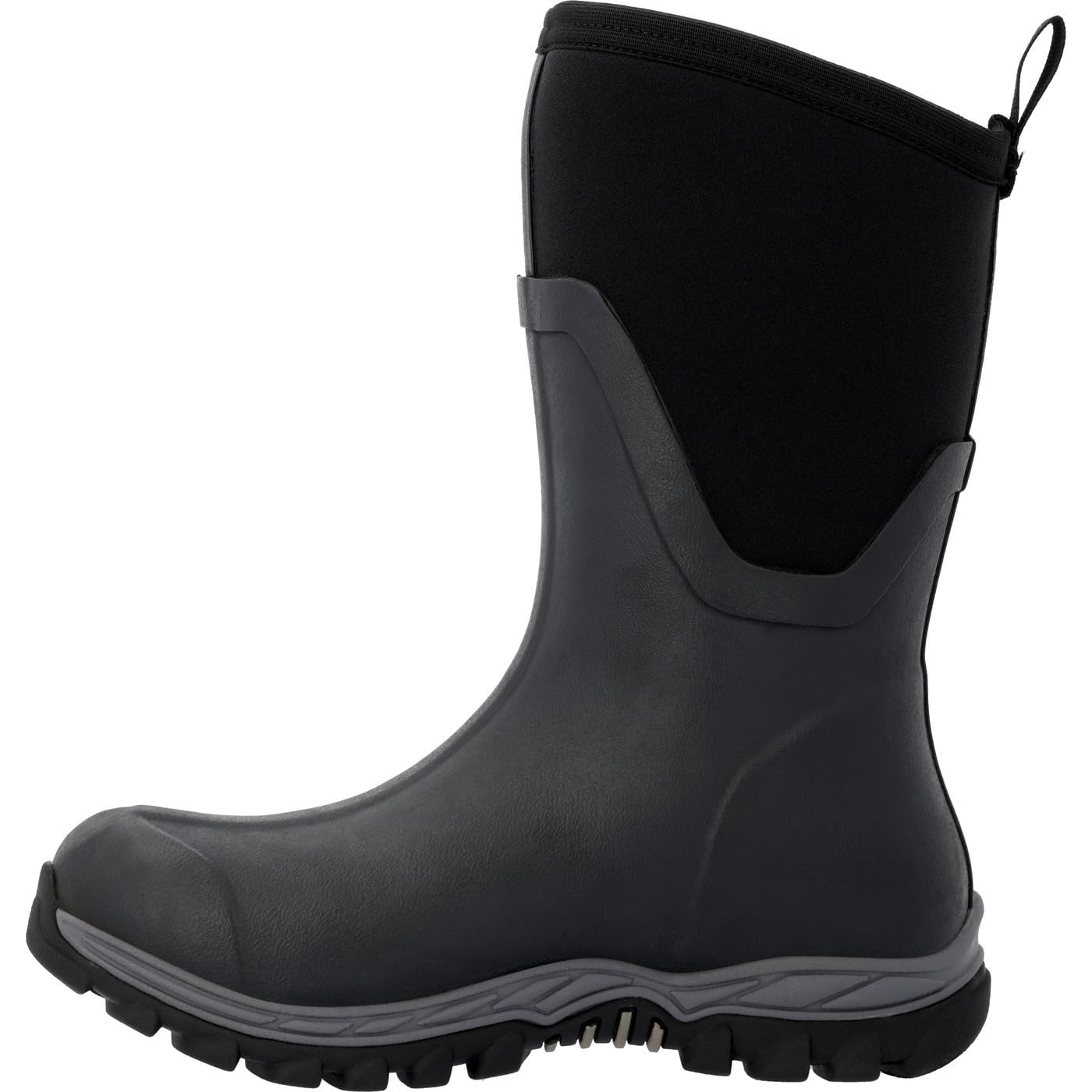
A 100% waterproof rubber and 5 mm neoprene shell for shovel days, icy driveways and outdoor work.
The number to know on the Arctic Sport II is 5 mm of neoprene. Neoprene is the same stretchy, insulating material used in wetsuits, and here it gives the boot flexibility along with warmth. Combined with the extended rubber upper, that makes this a 100% waterproof winter boot — water cannot get through the shell at all, which is a stronger promise than the water-resistant fabrics on lighter picks. The fleece lining and soft insole add coziness on top.
Fit and support are what owners talk about most. The women’s-specific last is shaped to hug and support the foot, which makes a difference when you are on your feet for hours in the cold. The rugged, slip-resistant outsole is built to keep footing on wet and icy terrain, and the mid-height cut gives ankle coverage without the bulk of a tall boot. It works as hard for a driveway shovel as it does for a walk into town.
Why It Holds Up
- 100% waterproof rubber and neoprene shell for wet, slushy work
- 5 mm neoprene stays flexible while insulate
- Women’s-specific last shaped for support over long hours
- Fleece lining and cushioned insole for warmth and comfort
The Honest Catch
- Getting them on and off splits opinion — some find it a struggle
- Sizing runs both small and big depending on the foot, so try before you commit
Who it beats all others for: anyone who spends real time in wet snow, slush or icy driveways and needs a boot that will not let water in, period.
Who should pass: buyers who want a slip-on-and-go fit, since the pull-on shell takes some effort to clear the heel.
5. Columbia Women’s Red Hills Omni-Heat Snow Boots
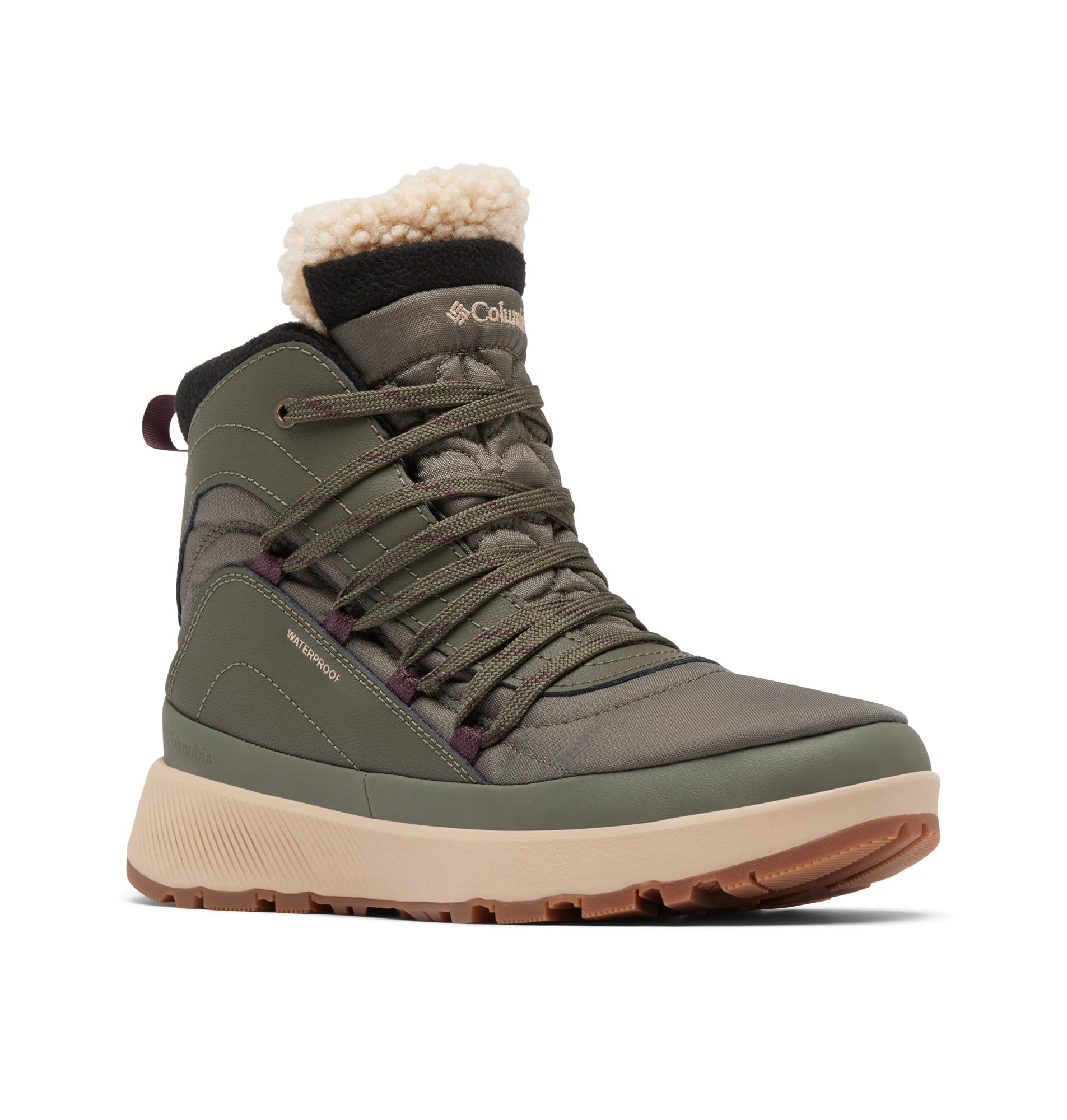
An Omni-Heat thermal-reflective lining bounces body heat back at your feet, with a plush collar on top.
The Red Hills is built around the lining. That inner layer bounces your own body heat back at your feet, and a plush collar adds softness at the top. It is waterproof too, so rain and snow bead off rather than soaking in. The build is aimed at the walk from sidewalk to trail rather than a deep-wilderness trek, and that is exactly how most people use a winter boot.
What buyers go back to again and again is how comfortable the boot feels underfoot, and the warmth holds up in ordinary cold. Style comes up next — it dresses up or down easily, so it works with a coat and jeans or a nicer outfit. It also keeps feet from overheating in regular cold conditions, which is rarer in a lined snow boot than you would think. The traction is steady with little foot slippage on packed snow.
The comfort-first read: if the last thing you want is a clunky, stiff boot and the first thing you want is to walk into town without sore feet, this is the pick. It trades the plush fur trim of the Free Soldier for a cleaner, more understated profile.
One size note: fit is mostly positive but there is a spread of opinions on sizing, so check the size chart against your measured foot before you commit rather than assuming your usual number.
Go here if: you want a waterproof winter boot that feels soft from the first wear and looks presentable beyond the trail.
Consider another pick if: you need a temperature rating spelling out the cold floor, which this Columbia does not state.
6. Kamik Women’s Momentum 3 Insulated Winter Boots
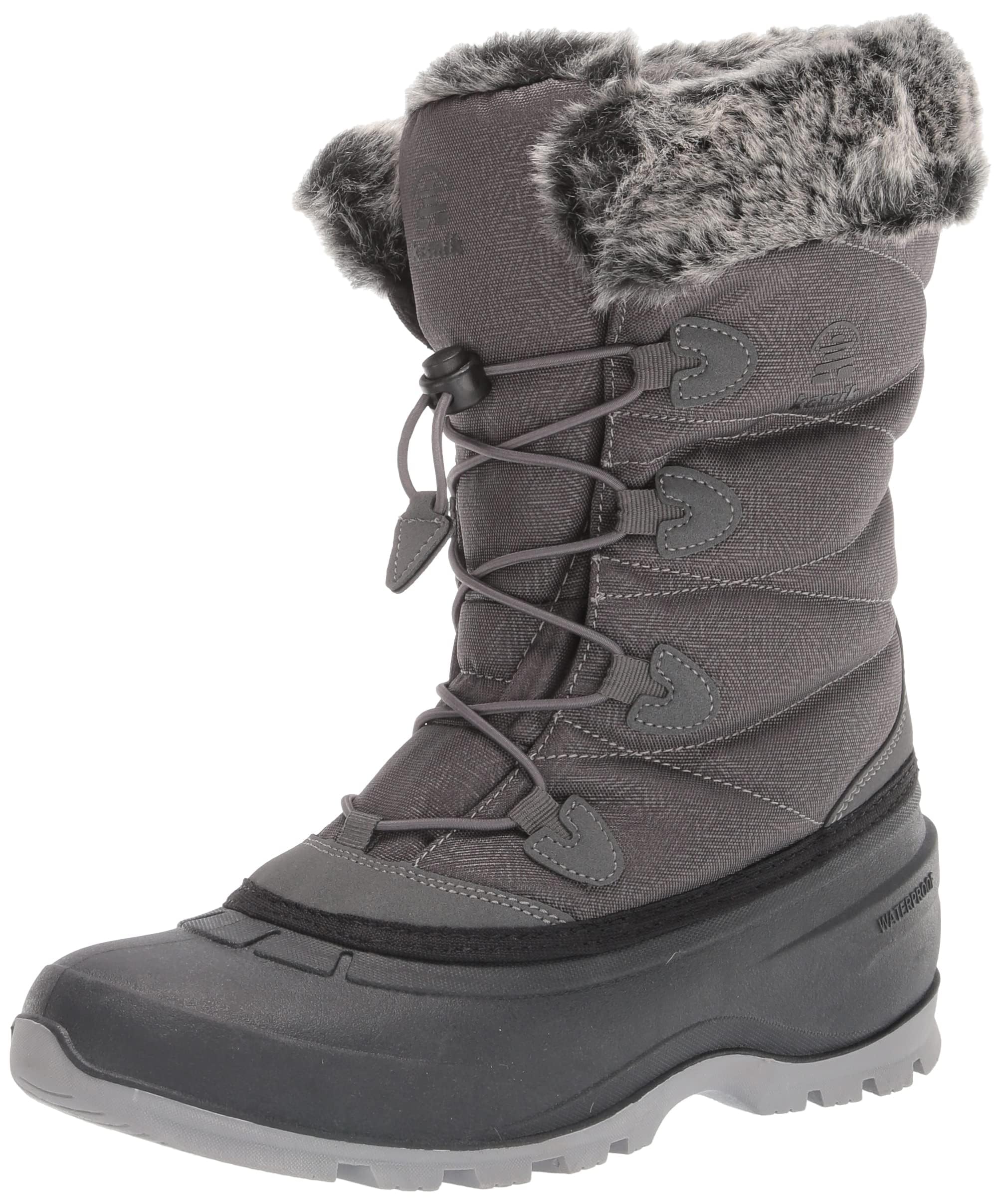
A stated -40F comfort rating backed by 3M Thinsulate and HEAT-MX warmth tech.
Most winter boots tell you nothing about the temperature they are built for. The Momentum 3 states a -40F comfort rating, and it backs that with 3M Thinsulate plus HEAT-MX warmth tech. Thinsulate is an insulating fill that traps warmth in thin layers, so you get cold protection without a balloon look. The waterproof nylon upper is seam-sealed, and the Zylex three-layer liner with a moisture-managing faux fur lining keeps the inside dry. Warmth, unsurprisingly, is the trait owners rate most highly.
Fit is the second strong suit — the snug fit draws steady praise, and the bungee closure lets you tighten or loosen as needed without dealing with laces. The ICEKISS rubber outsole is made for grip on snow and ice, and the faux-fur collar adds a finished look. The removable dual-density polyurethane foam footbed adds cushioned support underfoot for long days out.
The warmth read: if deep cold is your baseline rather than a rare cold snap, this is the pick that names a temperature floor instead of hiding behind a fabric description.
The one thing to watch: durability splits some opinion, and a few note stitching at the seams giving way. Treat it as a fit-and-finish trade-off on a warmth-first boot, and inspect the seams on arrival.
Choose it when: you live where the thermometer drops hard and want a stated -40F comfort rating and Thinsulate behind the warmth.
Pass if: you want a boot with a spotless durability record and can accept nothing less.
7. The North Face Chilkat 400

A high-loft insulated boot with a water-resistant non-PFC DWR finish from a brand that has outfitted cold-weather explorers since 1966.
The Chilkat 400 leans on high-loft insulation that traps heat and keeps the cold out, and it carries a water-resistant non-PFC DWR treatment — a finish that makes water bead up and roll off rather than sink in. The build quality is the trait buyers bring up most often, and it is the kind of boot that feels like it will keep going season after season. Warmth holds up even in demanding conditions like snowmobiling.
Traction is a quiet strength here. Snow and ice are handled confidently, and feet stay planted rather than skidding. The weight sits at 1.63 pounds, so it is a substantial boot — noticeably heavier than a lighter daily pick. That is a fair price to pay for the cold protection and the sturdy build, but if you want a featherweight walker, this is not it.
The build read: this is the premium pick for a buyer who wants a rugged, well-made winter boot from a name built for mountains and does not mind carrying some weight for it.
Size deliberately: the fit runs tight at your usual shoe size, so many buyers go up. It is a snug last, and a half size up is the common fix for a comfortable wear.
Built for: long cold stretches outdoors, snow days and any buyer who values a tough, high-loft insulated boot over a light one.
Reconsider if: you want minimum weight on your feet or a waterproof shell rather than a DWR finish.
8. UGG Women’s Adirondack Boot XXV
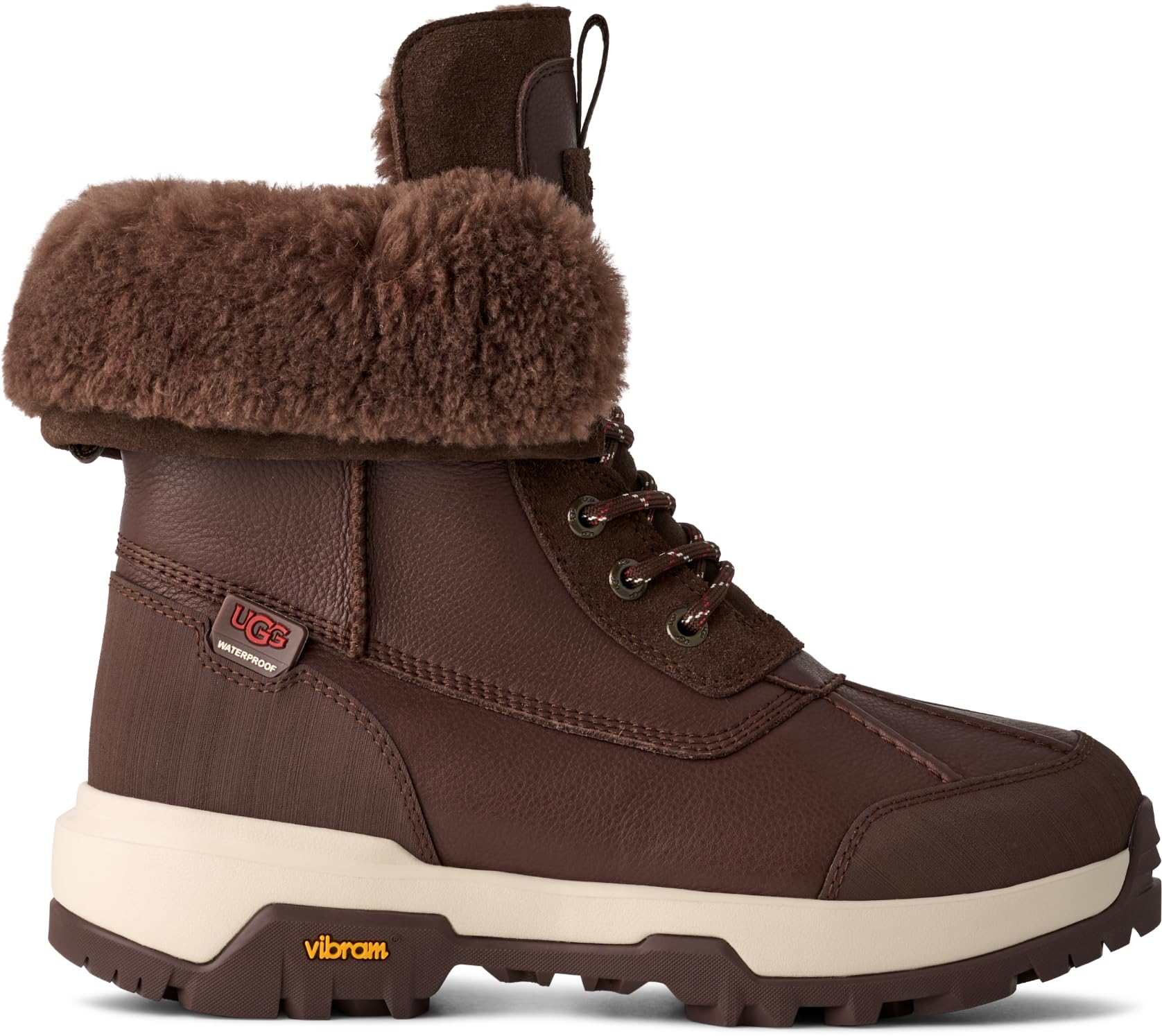
The crossover boot: genuinely cold-rated, then dressed up for the city.
The Adirondack XXV pairs fully waterproof genuine leather and suede with Xerogel insulation, which UGG says keeps you warm in temperatures as low as -32ºC. That is a stated cold floor at the deep end of the winter range. The higher tongue adds another layer of protection against snow sneaking in at the front. Waterproof leather means the exterior itself repels moisture, so you are not relying on a coating that wears off.
Looks drive the conversation here — appearance is the most appreciated trait by a clear margin — but the practical side holds up too. Owners find them well-fitting, sized about right, and not too heavy, which is a pleasant surprise for a leather snow boot. They keep feet dry and warm in real winter wear. The UGG heritage silhouette is rebuilt in waterproof leather and suede with Xerogel insulation.
The looks-and-warmth combo: this is the pick for a buyer who wants one boot that can walk a snowy street and then head straight into a nice restaurant without looking out of place.
The trade-off is cost: this is the top-price pick on the list, so you are paying for the leather, the brand and the styling as much as the warmth. If pure cold performance is your only measure, a less styled boot does the job for a lot less.
Best for: city winter days where your boot has to look the part and still keep feet warm and dry to -32ºC.
Think twice if: you want maximum warmth for the least spend, or prefer a rugged outdoor look over a dressed-up one.
Know the Specs
Insulation weight in grams
A boot’s insulation is measured by weight in grams. Hobibear and Columbia Bugaboot III both state 200g of fill, which is a moderate winter weight — warm enough for a normal cold-weather day and a walk through town. Heavier fills and named technologies like 3M Thinsulate (Kamik) or Xerogel (UGG) add more cold protection, and some boots quote a rated temperature floor instead, like Kamik’s -40F comfort rating or UGG’s -32ºC. Read whichever number the boot gives you and match it to your climate.
Waterproofing methods
Waterproofing comes in a few flavors. A seam-sealed construction (Columbia, Kamik) means stitched seams are glued and taped so water cannot slip through the needle holes. A rubber shell (Muck) blocks water entirely at the outer layer. A DWR finish (North Face) makes water bead off the surface without a full barrier. And a water-resistant fabric (Hobibear) shrugs off snow but will soak through in prolonged wet. Match the method to the mess you actually walk through.
Common Questions
What does 200g of insulation mean on a snow boot?
Is water-resistant as good as waterproof for snow boots?
Should I size up in women’s insulated snow boots?
How cold can I go in these winter boots?
Do insulated snow boots make your feet sweat?
What kind of outsole grips best on ice?
Are faux fur linings warm enough on their own?
How do I keep snow out of a mid-calf boot?
Can I wear these snow boots indoors all day?
The Bottom Line
For most buyers, the pick here is the women’s insulated snow boots winner, the Columbia Bugaboot III, because it balances a waterproof seam-sealed shell, 200g of insulation and a supportive, grippy build without a weight penalty that ruins the walk. If deep cold is your everyday reality, the Kamik Momentum 3 names a -40F comfort rating on a budget. And for city days when the boot has to look the part, the UGG Adirondack Boot XXV is the one to reach for. If you want a pick that leans on warmth over styling, the Hobibear gives you a -25 degree rating at a value-friendly point.
How we choose
We do not accept paid placement. Every pick is matched to a real buyer and a real use-case; we do not hands-on test units.
Sources
Specifications: manufacturer listings and product documentation. Review insights: verified customer reviews, as of November 2026. Pricing: not shown on this page (it changes often); check the current price via the retailer link.
As an Amazon Associate, Tactical Gear Guy earns from qualifying purchases. This does not affect which products we feature.