Specs are compiled from manufacturer listings and verified buyer reviews and can change over time — please confirm the key details on the product page before buying.
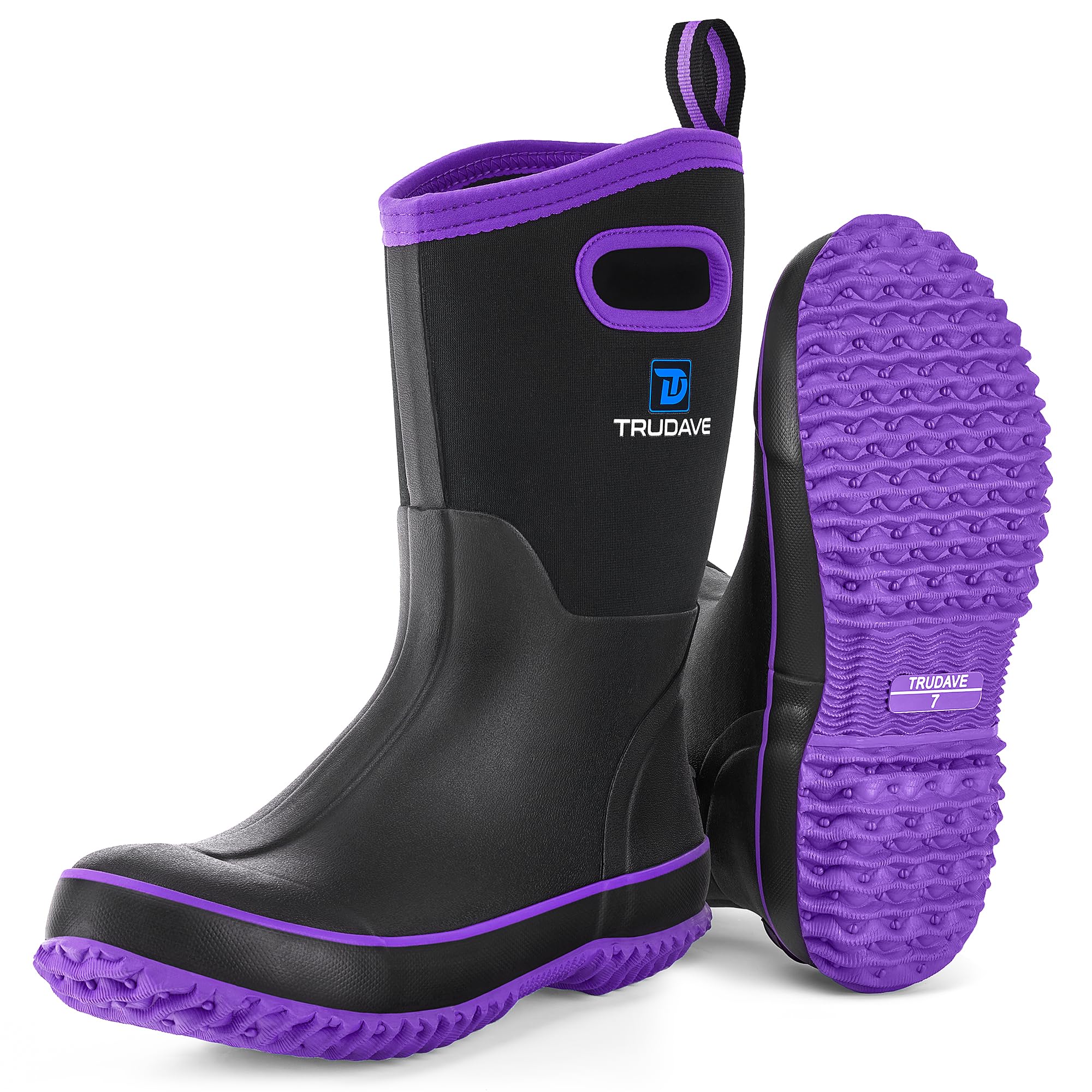
Cold, wet feet ruin a morning faster than anything else. The fix is a pair of insulated rubber boots that keeps water out and warmth in — and the strongest all-rounder here is the Trudave Mid Calf Rain Boot, which pairs a warm neoprene lining with a 3.5-pound weight that won’t drag you down through a long day outdoors. Below are eight pairs sorted by what each does best — from the 6mm steel-shank Trudave to the fleece-lined Muck Arctic Sport II — so you can pick in minutes instead of hours.
This guide is built by comparing the manufacturers’ published specifications and the patterns across verified customer reviews, so you get each pick’s real strengths and trade-offs instead of marketing spin.
Insulated rubber boots live or die on two things: whether the neoprene is thick enough to hold heat, and whether the fit leaves room for a real sock. This breakdown of the women’s insulated rubber boots worth your money covers both, plus the trade-offs nobody mentions.
Top Picks
How To Choose The Best Women’s Insulated Rubber Boots
A rubber boot that keeps water out but freezes your toes is not much use in February. The good ones combine a rubber shell that blocks water completely with a neoprene layer that traps body heat. Get those two right and you can stand in cold mud all morning without your feet going numb.
Neoprene thickness is the warmth dial
Neoprene is the spongy synthetic rubber that lines the inside of the boot, and its thickness in millimeters is the single best clue to how warm it runs. A 6mm layer holds noticeably more heat than a thinner one, which is why the hunting and work boots on this list tend to run thicker than the garden styles. If you only wear boots for quick dog walks, a thinner lining is fine and easier to move in. If you are standing still in a cold field, go thicker.
Fit and calf width beat the size number
Insulated boots hold air and padding, so the calf opening and foot box matter as much as the labeled size. A boot that is snug across the calf will fight you every time you pull it on, especially over thick socks. Look for side gussets with a cinch buckle or built-in pull handles — both let you get in and out without a wrestling match. If you wear heavy wool socks, size with that in mind.
Traction and shell durability for real ground
A deep-tread outsole grips wet grass and slimy rock; a built-in steel shank adds rigidity under the arch so your foot does not fold over roots and ruts. The rubber shell should be sturdy enough to shrug off thorns and fence wire. That combination — deep tread, rigid sole, thick shell — is what separates a boot that lasts several seasons from one that splits at the seam after a year.
Side-by-Side Comparison
| Model | Best For | Neoprene | Weight | Notable Extra | Amazon |
|---|---|---|---|---|---|
| Trudave Mid Calf Rain Boots★ Best Overall | Best overall everyday work boot | — | 3.5 lb | Built-in pull handles | Amazon |
| WTW Womens Mid Calf Rain BootsBudget Champion | Budget-friendly everyday chores | 5.5 mm | — | Anti-slip outsole | Amazon |
| Trudave Steel Shank 6mmTop Performer | All-season work and farm duty | 6 mm | — | Steel shank, reinforced toe | Amazon |
| HISEA Tall Neoprene | Adjustable tall-calf fit | 5 mm | — | Cinch buckle side gussets | Amazon |
| Kalkal Insulated Hunting Boots | Hunting and tall coverage | 6 mm | 4.51 lb | Tall camo mud boot | Amazon |
| WOVENPAK Steel Shank Boots | Mud and farm traction | 6 mm | — | Steel shank, deep tread | Amazon |
| Muck Arctic Sport II Mid | Premium extreme-cold winter | 5 mm | — | Fleece lining, soft insole | Amazon |
Detailed Reviews
1. Trudave Rubber Boots Mid Calf
Our pick — 4.5+★ from 550+ verified ratings; the strongest balance of quality and price.
The everyday work boot that gets on fast, stays warm, and won’t weigh you down.
For a boot you will actually wear through winter chores, this Trudave is the one that keeps coming out on top. At 3.5 pounds a pair it is notably easier to haul around than the thickest hunting boot here — the Kalkal tall boot sits at 4.51 pounds for the same kind of job. That difference matters on the third trip down a muddy path, when a heavy boot starts to feel like an anchor.
What wins people over is the build quality, and the fit that follows close behind. Buyers describe pulling them on over thick socks without a fight, which lines up with the built-in handles Trudave puts on each side. The boots also hold warmth through winter and shrug off water after a rain — the kind of reliability you want for dog walking, gardening, and hunting. A 100% waterproof rubber shell with a warm neoprene lining is the reason.
The one thing to plan around is sizing. Feedback on fit is genuinely split, with a fair slice of wearers finding they run a little big — so if you are between sizes and plan to wear thin socks, consider stepping down. Reach for these if you want one pair that handles wet grass, cold mornings, and a quick clean-up without a fuss.
What earns it the top spot
- Warm neoprene lining keeps feet toasty through winter chores
- Built-in handles make them quick to pull on and off
- 3.5 pounds per pair — light enough to walk miles in
- 100% waterproof shell wipes clean in seconds
Where it needs a heads-up
- Sizing runs a touch big for some wearers
- Mid-calf height leaves the shin exposed in deep drifts
Made for: gardeners, dog walkers, and light farm work who want one warm, light, waterproof pair for the whole cold season.
Think twice if: you need tall coverage in deep snow — a mid-calf cut stops well below the knee.
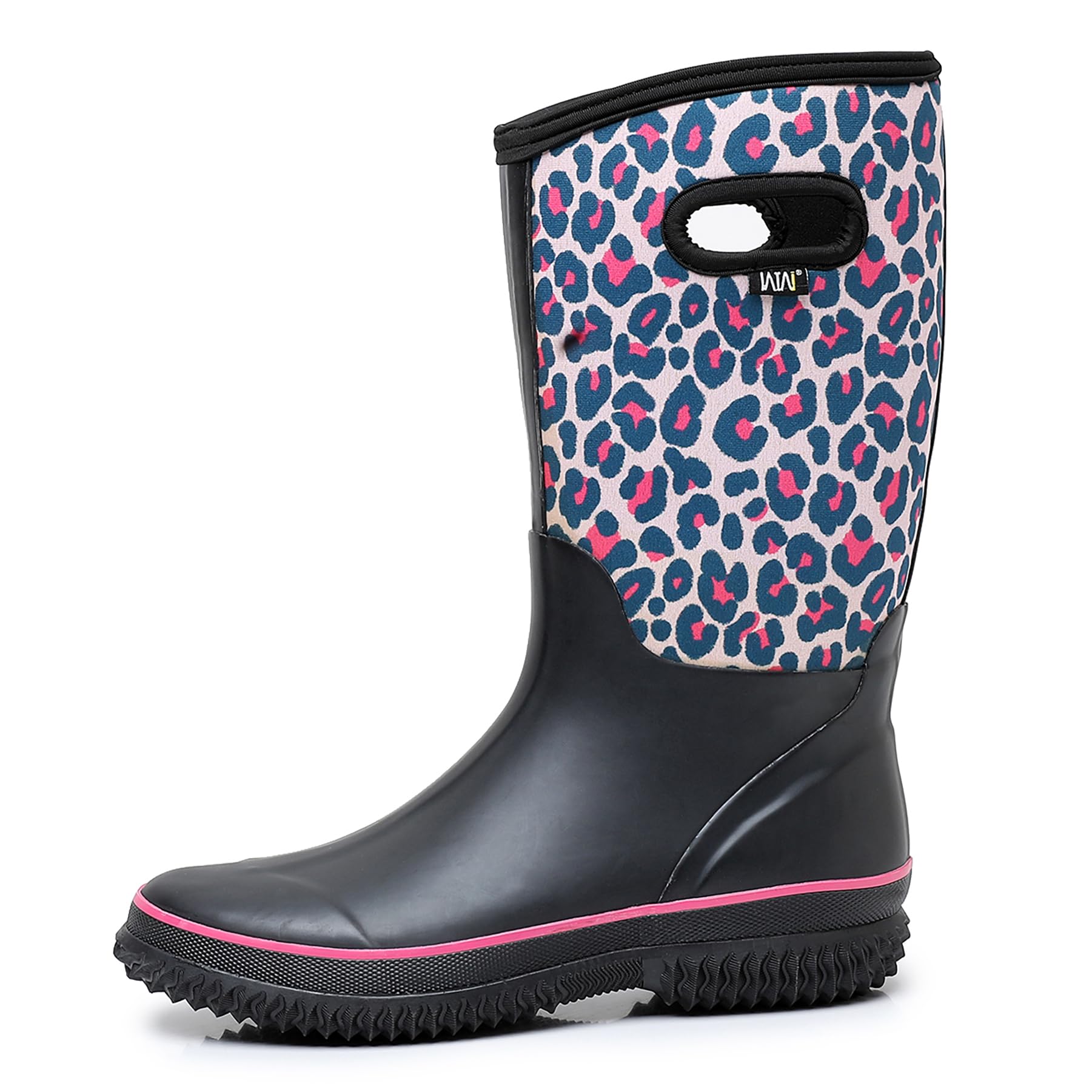
2. WTW Womens Mid Calf Rain Boots
Thick 5.5mm neoprene warmth at the friendliest end of the list.
The WTW is the pick for anyone who wants warm feet on a tight budget. Its shell combines 5.5mm neoprene with rubber, so it traps heat the way a much dearer boot does — you get genuine insulation without paying premium money.
Owners find them good quality, sharp-looking, and quick to slip on and off, with feet staying warm in snow and dry in rain. The pull-on handle and flexible rubber outsole do most of that work. The anti-slip tread adds confidence on wet steps, and the mesh lining helps them breathe between wears.
Here is the honest catch: fit is the dividing line. Some wearers find the calf comfortably roomy, while others find it runs on the tighter side with limited width and foot space. If you have wide calves or plan on heavy socks, that is the thing to weigh. For narrow-to-average calves on a budget, it is a lot of warmth for the outlay.
Value read: you are getting 5.5mm of neoprene insulation and a waterproof rubber shell for entry-level money — the best warmth-per-dollar on this list.
The catch to weigh: calf width runs snug for some, so measure before you commit if you wear thick socks.
Right for you if: budget is the deciding factor and you want real cold-weather warmth for everyday rain and chores.
Best to pass if: you have wide calves or need generous room for heavyweight socks.
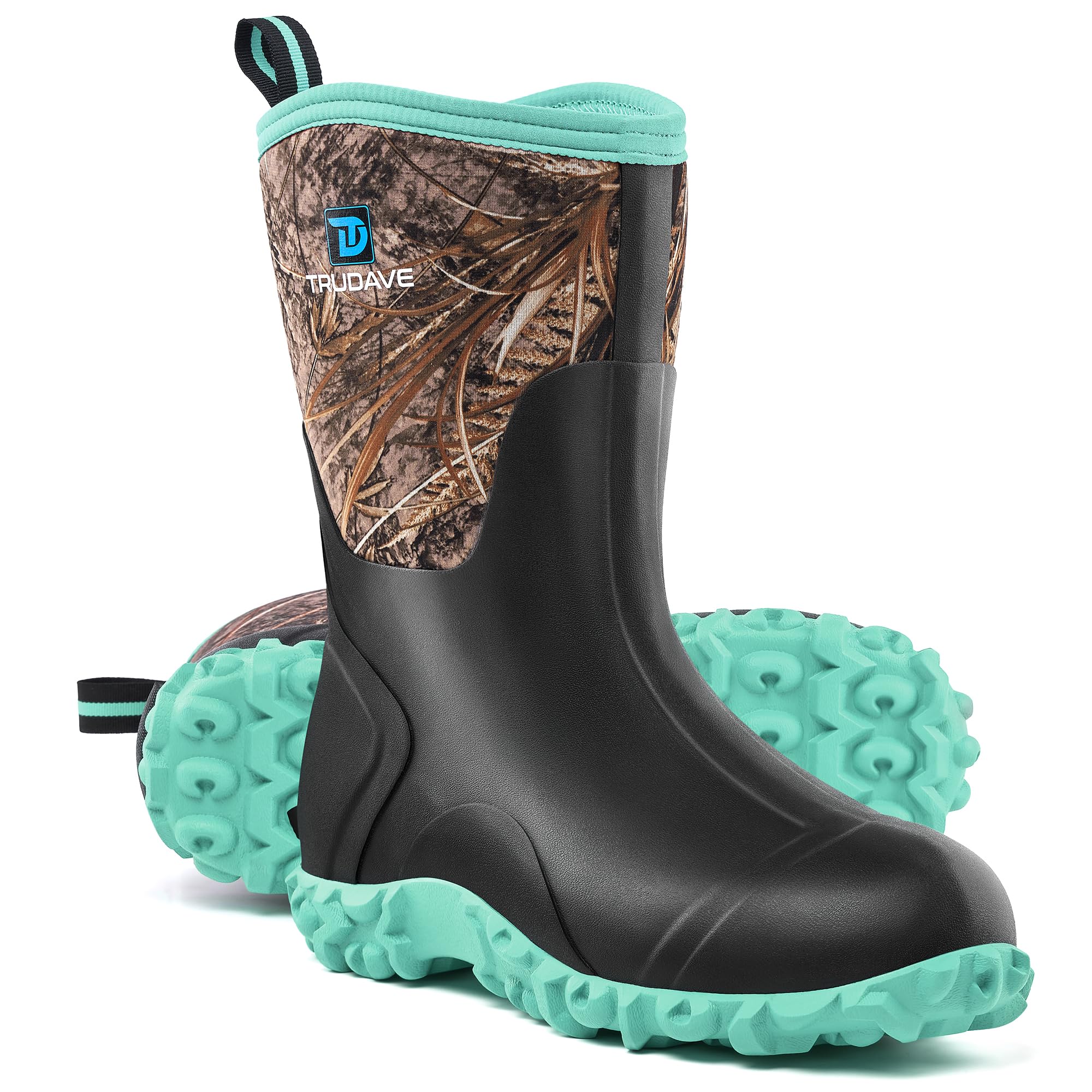
3. Trudave Rubber Boots Steel Shank
Six millimeters of neoprene plus a steel shank — built for all-season farm work.
If you stand on uneven, cold ground for hours, this is the Trudave to pick. Its 6mm neoprene lining holds more heat than a 5mm boot — the HISEA tall boot, for comparison, runs 5mm. That extra millimeter is the difference between “fine for a walk” and “fine for a whole morning in a wet field.”
Underfoot is where it earns its keep. A built-in steel shank stiffens the sole under your arch so your foot does not roll on roots and ruts, and the deep-tread, anti-slip outsole grips mud with confidence. The reinforced protective toe guards against a stray kick, and the thickened rubber shell plus pull tabs make it easy to live with. Owners rate the traction on snow and ice highly, and the boot draws the most praise for sheer build quality and a fit that works over both thin and thick socks.
Durability gets real-world confirmation: buyers report these boots holding up to the cold, wet work of a Thoroughbred farm. The trade-off is height: mid-calf coverage means splashes stay out but deep drifts do not. Reach for this one when the job is messy, cold, and long.
Why it lands high on the list
- 6mm neoprene — thickest lining among the Trudave picks
- Steel shank steadies your footing on ruts and roots
- Reinforced protective toe guards against bumps
- Deep-tread anti-slip outsole for muddy paths
The trade-off to know
- Mid-calf cut leaves the shin exposed in deep snow
- Heavier build than a plain garden boot
The pick for: all-season farm, garden, and work duty where footing and warmth both matter.
Not the one for: deep-snow trekking that needs tall coverage — go taller for that.
4. HISEA Womens Tall Neoprene Rain Boots

The tall boot with a cinch buckle — the answer when the calf fit is the whole problem.
Tall rubber boots are notorious for being either too tight or too loose at the top. The HISEA solves that with side gussets and cinch buckles, so you tighten the opening down to your own calf for a secure custom fit. If you have ever fought a boot that flapped or pinched, that adjustable collar is the feature worth paying attention to.
The rest of the package is built for wet, muddy ground. A 5mm neoprene lining gives flexibility and shock absorption while holding warmth, and the anti-slip rubber outsole bites into mud so you can step with confidence. It stays fully waterproof while keeping feet dry and warm, and owners routinely call it good value, with the pink sole and trim drawing kind words on looks.
The honest part: fit and longevity are the two mixed signals. Owners mention the size runs big and the boots start coming apart after 15 months — so size down if you are between sizes, and treat them as a working pair rather than a forever boot. For an adjustable, warm, great-value tall boot, it still earns its place.
Fit story: the adjustable gusset-and-buckle collar is the standout — it lets you dial the calf opening to your own leg instead of hoping the stock width fits.
Fine print: reports of a roomy run and splitting at roughly the 15-month mark mean sizing down and lower long-term expectations.
Choose this if: you want tall coverage and a calf that adjusts to you, at a fair mid-range price.
Look elsewhere if: you need a boot proven to survive many hard seasons — plan for a shorter lifespan here.
5. Rubber Boots 6mm Neoprene Camo
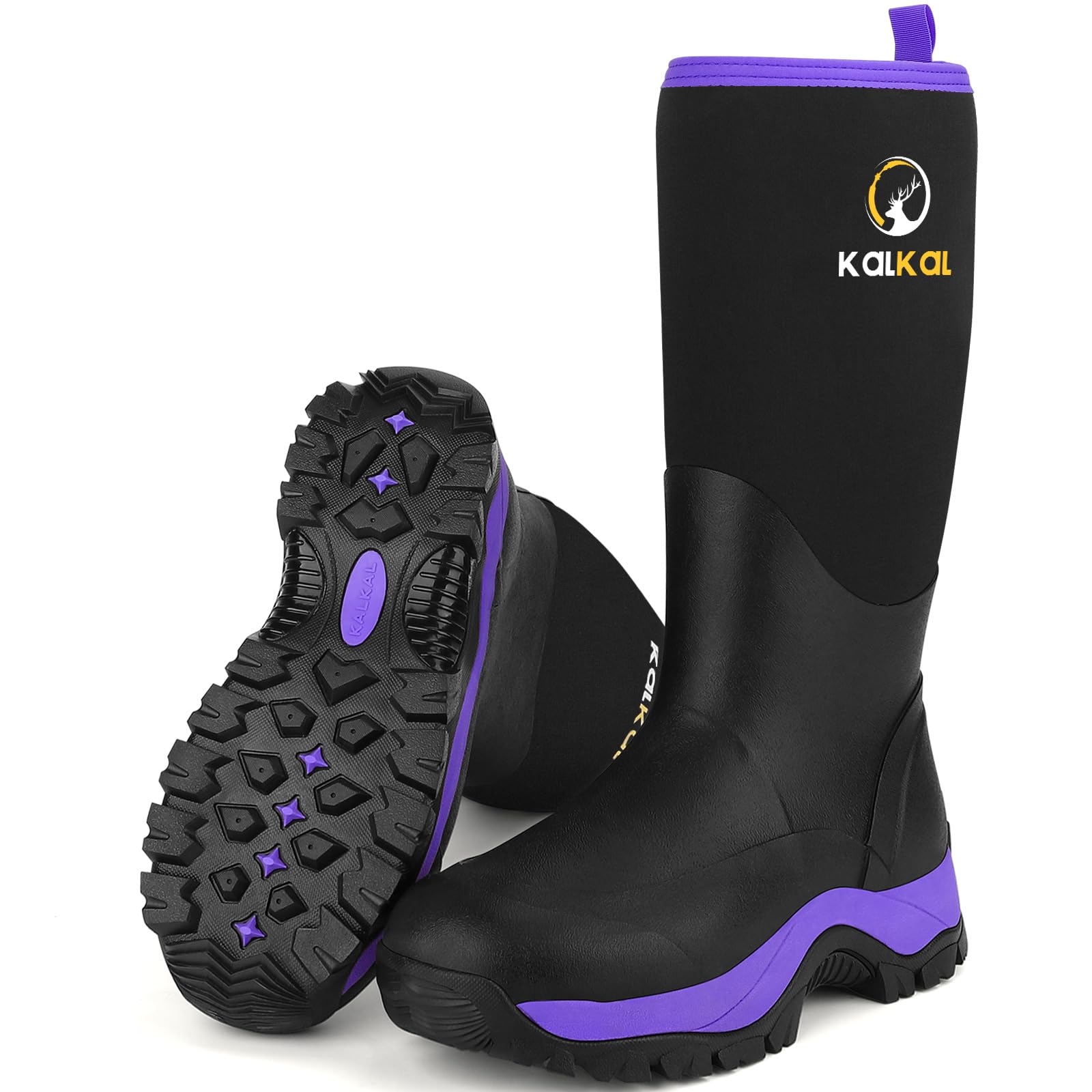
A tall camo boot with 6mm neoprene for hunters who stand in cold mud.
Hunting and tall marsh work call for two things this boot delivers: height to keep water from topping the rim, and 6mm neoprene to hold heat while you wait. The camo shell also blends in where you set up. It is the tallest insulated option here, with shin-high coverage well above the mid-calf Trudave pair at position one.
Owners describe them as excellent in quality, appearance, and everyday function, easy to slip on and off, and reliable in water — the neoprene top keeps splash out on wet days. Traction earns steady praise too, holding firm even on slimy rocks. That last point is the one hunters and anglers care about most when the bank gets slick.
The weight is the number to know: 4.51 pounds a pair. That is more heft than the 3.5-pound Trudave, so it suits a boot you wear to a stand or a blind rather than one you power-walk in. Fit draws some mixed feedback, so mind your calf measurement if you plan to layer socks. For cold, wet, tall-coverage duty, it is purpose-built.
Where it shines: tall height plus 6mm neoprene makes it the warmest-coverage pick for hunting, angling, and deep-mud work.
Heft warning: at 4.51 pounds a pair it is the heavy one of the group — fine to stand in, less fun to slog miles in.
Built for: hunters, anglers, and tall-mud workers who need coverage up the shin and warmth that lasts.
Skip if: you want a light boot for long walks — the extra coverage adds weight.
6. WOVENPAK Rubber Boots Steel Shank
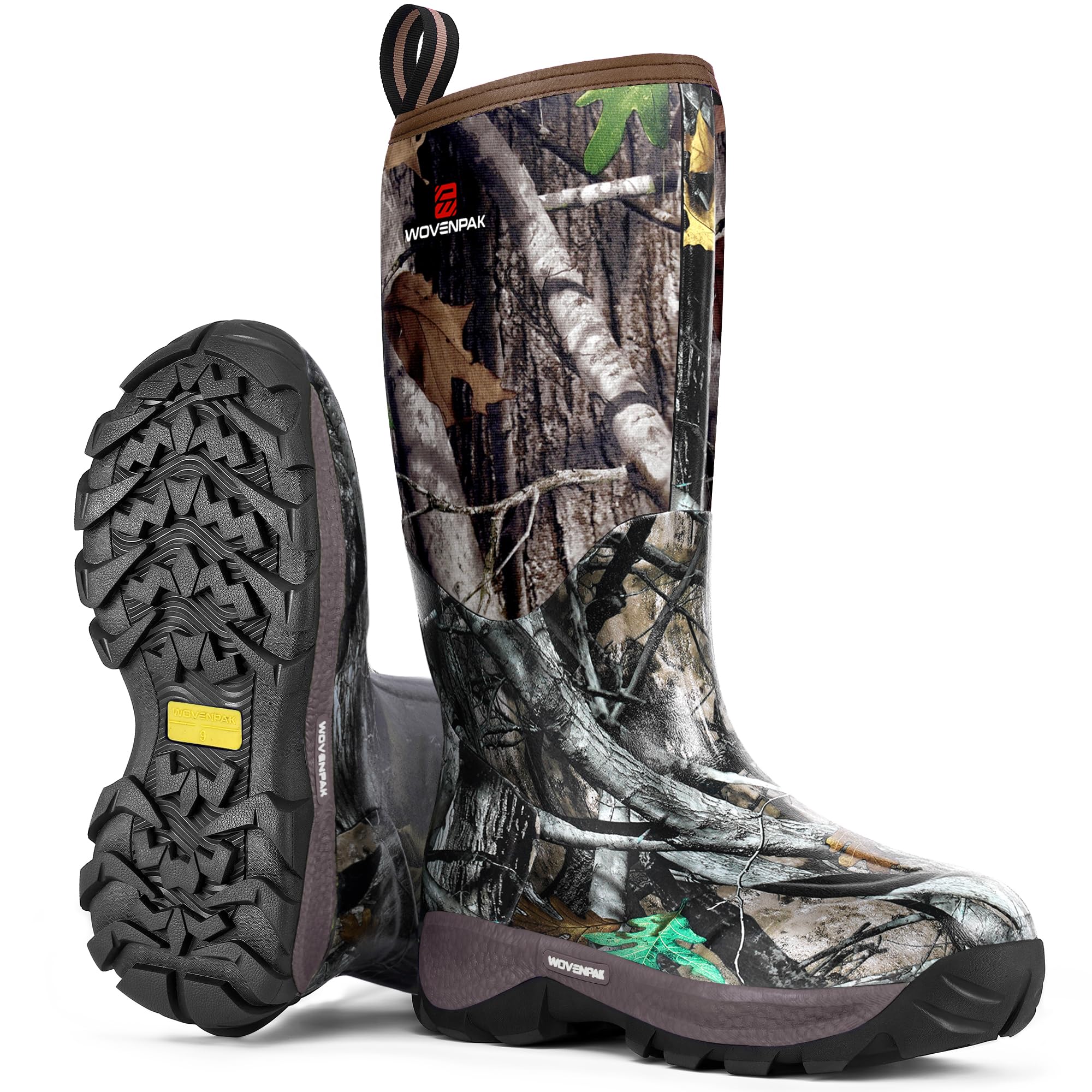
A steel-shank mud boot that keeps its footing and its warmth on farm ground.
The WOVENPAK is built for people who stomp through real mud, not puddles. A 6mm neoprene shell keeps water out while holding warmth, deep-tread soles grab slush and muck, and a built-in steel shank stiffens the sole so your feet stay steady on farm ground. It is a newer boot on the list, first listed in May 2024, and its steel shank and 6mm neoprene make it a purpose-made mud tool.
Comfort is the thing buyers bring up most, close behind quality. The boots fit well and run true to size, and the top is wide enough to slip on and off easily. Feet stay dry and warm, the build feels durable, and the camo pattern wins fans on looks. On a muddy, slushy day, they do exactly what a garden and hunting boot should.
It is the top of the mid-range group, priced for that steel shank and 6mm build. Weigh that against the plain WTW budget boot if simple rain duty is all you need. For serious mud work where traction and rigidity matter, the extra spend is easy to justify.
Traction verdict: deep tread plus steel shank is a strong combination for slush, muck, and farm ruts — this is the mud specialist.
Spend check: it sits near the top of the mid-range tier, so only step up if traction and a rigid sole are worth it to you.
Reach for this if: mud, slush, and farm terrain are your daily reality and you want grip and rigidity.
Step back if: you just need light rain protection — a cheaper boot covers that fine.
7. MUCK The Original Boot Company Women’s Arctic Sport II Mid
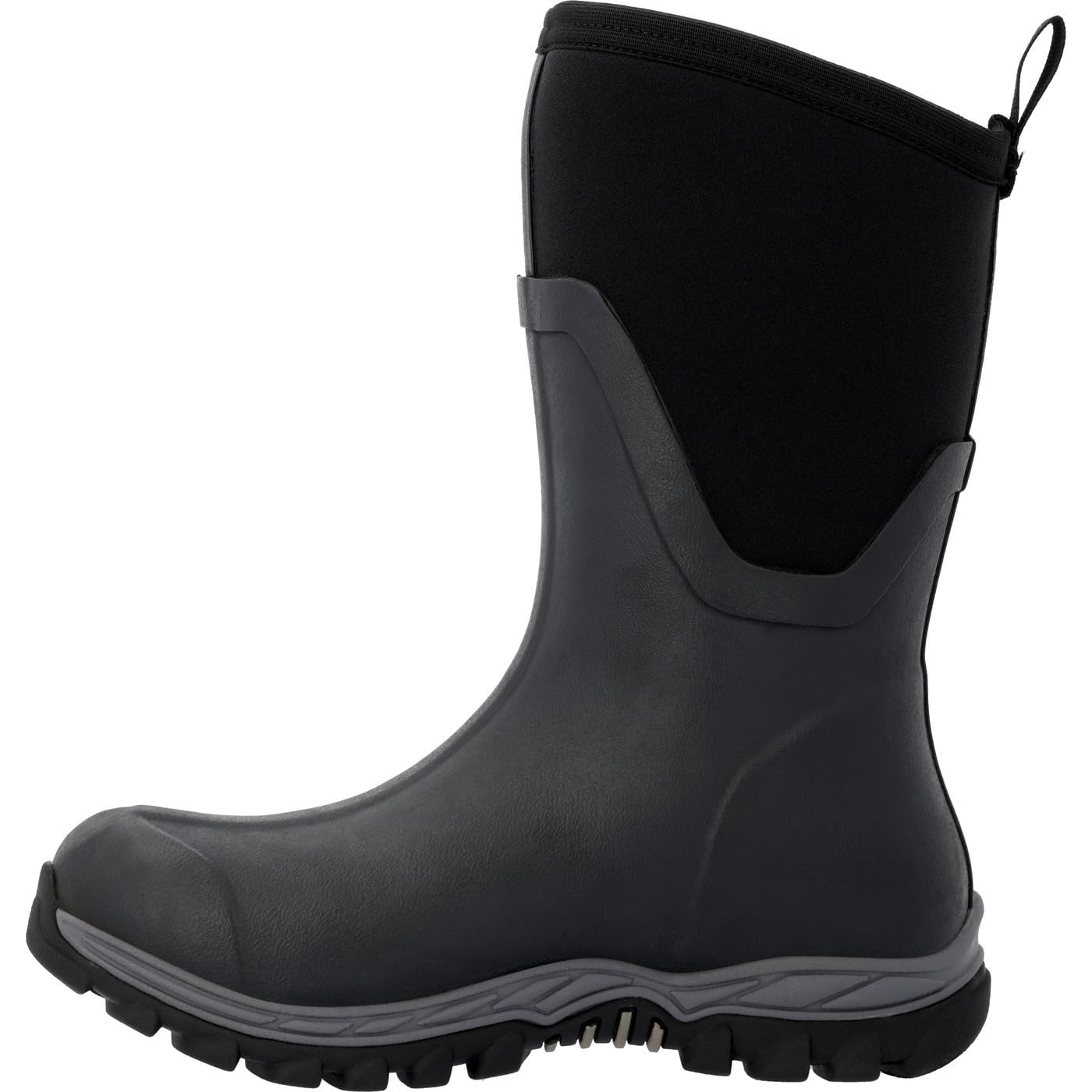
The premium winter boot built for icy driveways and long cold marches.
Muck’s Arctic Sport II is the top-tier pick for genuinely cold, icy weather. A 5mm neoprene shell wraps your foot in flexibility and comfort, an extended rubber upper makes it a fully waterproof winter boot, and a cozy fleece lining traps warmth around your toes. A soft insole adds cushioning underfoot for long days on your feet.
Owners find these warm, comfortable, and versatile — one buyer puts them to work on long winter marches — with solid water resistance and a fit that supports extended wear. The rugged, slip-resistant outsole helps you keep your footing on wet and icy ground, which is the whole point when the driveway turns to glass.
Two honest notes before you commit. Getting them on and off splits opinion — some find them easy, others find them a fight — and sizing feedback bends both ways, so try your usual size with your winter socks in mind. It is also the priciest boot on the list, which is fair for the fleece-lined winter build but worth weighing against the mid-range picks.
What makes it premium
- Fleece lining for real cold-weather warmth
- Extended rubber upper for full waterproof coverage
- Slip-resistant outsole for icy, wet ground
- Soft insole and cushioned comfort for long wear
Before you order
- On/off can be a struggle for some wearers
- Sizing feedback is mixed — try your winter sock fit
The one for: cold-climate winters, icy driveways, and anyone who wants a fleece-lined boot that stays warm for hours.
Pause on this if: you want to spend less or need a boot that slides on without effort every time.
Know the Specs
Neoprene Thickness (mm)
Neoprene is the spongy synthetic rubber lining inside an insulated boot, and its thickness in millimeters tells you how much warmth it holds. A 6mm layer traps more heat than a 5mm one, which matters if you stand still in cold mud. Thinner linings are easier to move in and breathe better for long active days. Match the thickness to how cold and how still your feet will be.
Weight Per Pair
Weight decides whether a boot feels like a tool or a chore. A pair around 3.5 pounds is light enough to walk miles in; a pair near 4.5 pounds is heavier and better suited to standing, hunting, or short trips. If your day involves a lot of steps, the lighter boot will tire your legs less by the end.
Steel Shank
A steel shank is a stiff bar built into the sole under your arch. It keeps the boot from folding over roots, ruts, and uneven farm ground, and it adds support when you carry weight. If you work on lumpy terrain, a shank makes footing noticeably steadier than a soft, flexible sole.
Calf Fit and Gussets
The calf opening decides whether a tall boot fits or fights you. Adjustable side gussets with a cinch buckle let you tighten the top to your own leg, while built-in pull handles make a snug boot easier to get into. Wide or narrow calves, thick or thin socks — check this before you buy.
Common Questions
How warm are insulated rubber boots in freezing weather?
Do these boots run true to size?
Will a mid-calf boot keep water out in deep puddles?
What does a steel shank actually do in a rubber boot?
Are neoprene rubber boots fully waterproof?
How long do insulated rubber boots usually last?
Can I wear thick wool socks inside these boots?
Which boot is best for hunting versus gardening?
Do rubber boots get too hot in warmer weather?
How do I clean and store rubber boots so they last?
The Bottom Line
For most people, the women’s insulated rubber boots winner is the Trudave Mid Calf Rain Boot: a warm neoprene lining, a 100% waterproof shell, and 3.5 pounds per pair, backed by 4.5+ stars across 500+ ratings. If footing and a steel shank matter more to you, grab the Trudave with Steel Shank and its 6mm neoprene. And for genuine cold-weather winters, the fleece-lined Muck Arctic Sport II is the one to reach for.
How we choose
We do not accept paid placement. Every pick is matched to a real buyer and a real use-case; we do not hands-on test units.
Sources
Specifications: manufacturer listings and product documentation. Review insights: verified customer reviews, as of November 2026. Pricing: not shown on this page (it changes often); check the current price via the retailer link.
As an Amazon Associate, Tactical Gear Guy earns from qualifying purchases. This does not affect which products we feature.