Specs are compiled from manufacturer listings and verified buyer reviews and can change over time — please confirm the key details on the product page before buying.
Your first women’s hydration pack decision is not how many liters it holds. It is whether the vest actually sits on a woman’s shoulders without riding up, chafing your collarbone, or bouncing on the downhill. Get the fit wrong and even a premium vest turns into a constant tug-of-war. Get the chest size right and the vest stays put without a single mid-run adjustment.
This guide is built by comparing the manufacturers’ published specifications and the patterns across verified customer reviews, so you get each pick’s real strengths and trade-offs instead of marketing spin.
Some vests here are tailored to a woman’s torso and come in multiple chest sizes, while others are really unisex shells with women’s branding. Below are the pack capacities, reservoir volumes, and chest-size fit notes for all nine vests, so you can pick once. This breakdown of the women’s hydration packs ranks all nine vests by measured pack capacity, reservoir volume, and chest-size fit.
Top Picks

How To Choose The Best Women’s Hydration Packs
The thing that decides whether a women’s hydration pack works for you is not the brand name. It is whether the vest was cut for a woman’s shorter torso and narrower shoulders, and whether the straps lock down tight enough to stop the pack shifting while you run. Liter count, pocket layout, and bladder versus bottles only matter once the harness fits your chest.
Start with chest size, not height or weight
Several vests here come in three sizes based on chest circumference, which is the measurement that governs whether the sternum straps can pull the pack snug against your ribs. A vest that is too loose slides forward on descents and rubs at the neck. Measure your chest, check the brand’s size chart, and pick from that number rather than your usual clothing size.
Know your reservoir number versus your storage number
These are two separate specs. Reservoir volume is how much water you carry — a 1.5-liter bladder, two 14-ounce flasks, a 50-fluid-ounce reservoir. Storage capacity in liters is the total pack volume, including water. A 12-liter pack does not mean 12 liters of water. Read both to know whether you are getting a race vest or a daypack with straps.
Decide between a back bladder and front flasks
A back bladder holds more water but you sip through a tube and cannot see your level. Front soft flasks are quicker to grab and let you pace your drinking on a climb. Many of these vests support both, so you can run flasks on short efforts and swap to a bladder for long unsupported days.
Look for bounce control and reflective trim
Dual sternum straps, stretch back panels, and adjustable chest cords are what keep a pack from slapping your shoulders. If you run early or late, reflective graphics and accents add visibility when the light drops. On a fast descent, both keep you visible and keep the pack from slapping your shoulders.
Side-by-Side Comparison
| Model | Best For | Pack Capacity | Reservoir/Water Included | Vest Weight | Amazon |
|---|---|---|---|---|---|
| Nathan Women’s Hydration Vest (Pinnacle Breeze)★ Best Overall | Overall fit and stability | 4 liters | 2 x 14oz flasks, 2L bladder ready | 8 ounces | Amazon |
| CamelBak Women’s Ultra Pro Running VestFeatherweight Pick | Lightweight premium fit | — | Two 500 mL Quick Stow Flasks | 5.28 ounces | Amazon |
| Osprey Dyna 6L Women’s Running VestTrail Hauler | Long trail days with storage | — | Hydraulics 1.5 L LT reservoir | 15.04 ounces | Amazon |
| CamelBak Women’s Circuit Run Vest 50oz | Half-marathon hydration | — | 50 fl oz reservoir | 5.6 ounces | Amazon |
| Nathan Women’s Pinnacle Race Vest 12L | Four-hour run storage | 12 liters | 1.6L Hourglass bladder | 12.48 ounces | Amazon |
| Osprey Duro LT Women’s Running Vest | Minimal soft-flask carry | — | Two Hydraulics 500 mL soft flasks | 141 g (vest, medium) | Amazon |
| N NEVO RHINO Small Running Vest | Pockets on a small frame | — | 1.5L water bladder | 208 g | Amazon |
| 5L Running Vest for Women (BECOJADDE) | Budget entry to vest running | 1.5 liters | One 1.5L water bladder | 7.8 oz (220 g) | Amazon |
Detailed Reviews
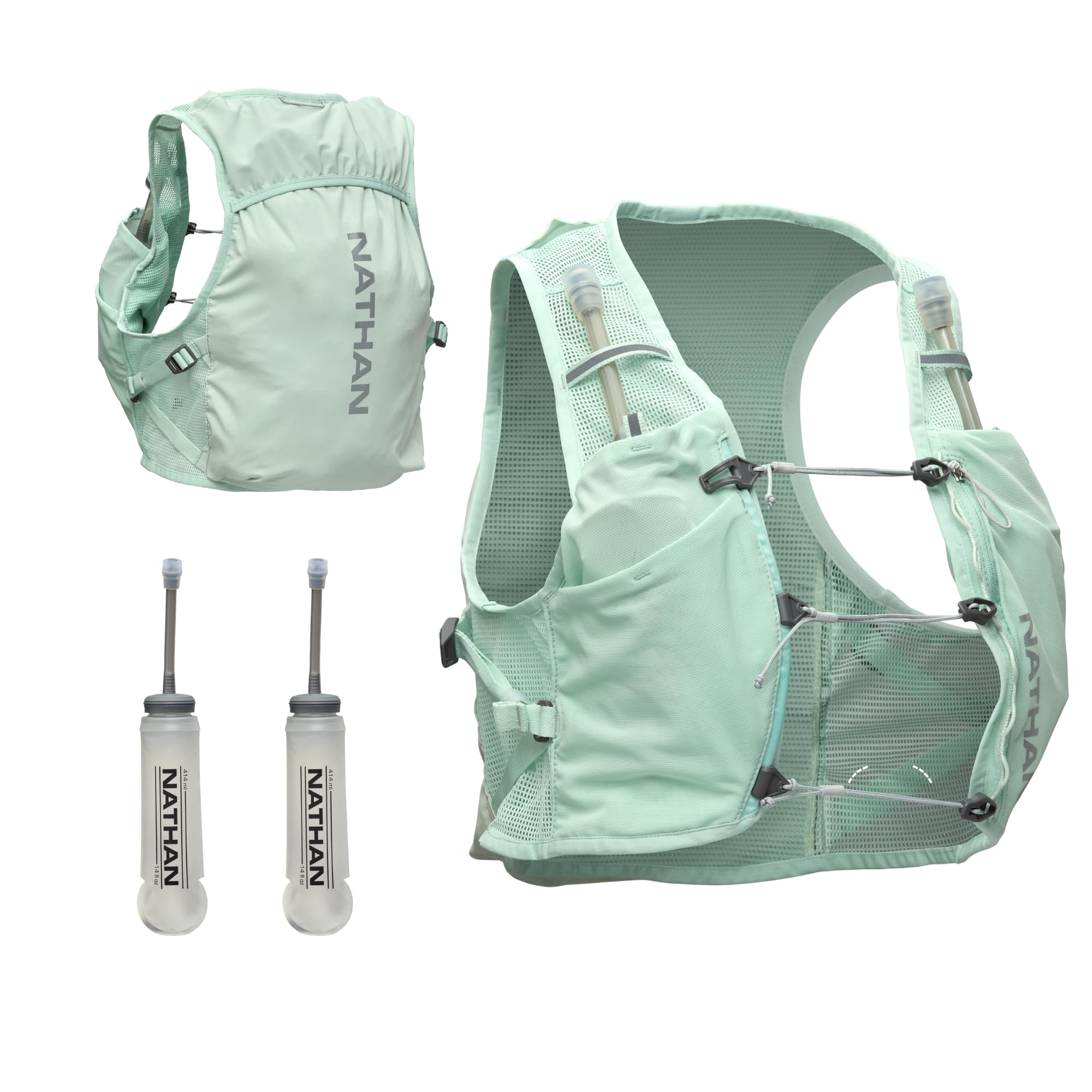
1. Nathan Pinnacle Breeze Hydration Vest
Our pick — 4.5+★ from 60+ verified ratings; the strongest balance of quality and price.
An eight-ounce mesh vest that stays put on a woman’s frame and carries all the water you need.
At 8 ounces on the scale, this vest is the lightest of the full-featured picks here — noticeably lighter than the Nathan Pinnacle Race Vest at 12.48 ounces. That matters on long descents, where a heavy pack starts tugging at the shoulders by mile ten. The 4-liter pack volume covers the flasks and a little gear without turning into a daypack.
The Quick-Fit size system with sternum slider cords lets you micro-adjust on the move. Two 14-ounce Nathan x Hydrapak flasks come included with extended straws, so you sip without breaking stride. The tiered power mesh pockets accept up to 20-ounce soft flasks if you want a bigger front load, and a large back pocket holds a 2-liter bladder for longer unsupported days.
Fit is the trait buyers praise most on this vest, ahead of pocket layout and weight. It earns the most praise of any trait on this vest, and the recurring theme is that it swallows everything you need to carry while staying snug enough not to shift. Reflective trim runs for 360-degree visibility on early or late runs. If you have wider shoulders you may find the sternum cords pull tight before you reach a relaxed setting.
Why runners reach for it
- 8-ounce mesh body keeps your shoulders fresh past the halfway mark.
- Two 14oz Hydrapak flasks with extended straws included for stride-side sipping.
- Quick-Fit sliders let you tune the fit without stopping.
- 360-degree reflective trim for low-light visibility.
Where it pushes back
- Broader shoulders may max out the sternum cord adjustment.
- The 4-liter pack volume leaves little room for bulky layers.
Made for: the runner who wants one vest that stays put on road and trail and carries flasks plus a back bladder.
Pass if: you need to haul a jacket and gear for an ultra — the 4-liter pack runs tight.
2. CamelBak Women’s Ultra Pro Running Hydration Vest
The vest that disappears on your back at 5.28 ounces, until you need the storage.
If the Nathan Pinnacle Breeze is the do-everything pack, this is the one you wear when speed is the point. At 5.28 ounces it is one of the lightest vests on this list — over two ounces under the CamelBak Circuit Run. CamelBak cut it specifically for a woman’s frame with an adjustable harness and dual sternum straps, so the reduced weight does not come with a sloppy fit.
Two 500-mL Quick Stow flasks come with the vest for chest-level sipping. The pack will also take a 1.5-liter Crux reservoir if you want a bigger reservoir for long efforts. Storage covers the essentials: a secure zippered phone pocket, a stretch overflow pocket sized for a rain shell, and a trekking pole carry you can load or drop without stopping.
Here is the honest catch: buyer reviews split on fit, with some calling it locked-in and others unflattering. Buyers rate the look highly, but the fit itself splits them — some find it flattering and locked-in, others find it unflattering. On a pack this close to the body, that usually depends on your chest size rather than the vest. CamelBak backs the materials with a lifetime guarantee against manufacturing defects.
The weight argument: 5.28 ounces against the field’s 8- and 12.48-ounce vests — this is the pick for a fast race where you feel every added gram on the last mile.
Reach for this if: you race short and want a woman-specific harness with dual sternum straps and barely-there weight.
Look elsewhere if: you want a padded, forgiving feel — this vest runs deliberately close and trim.
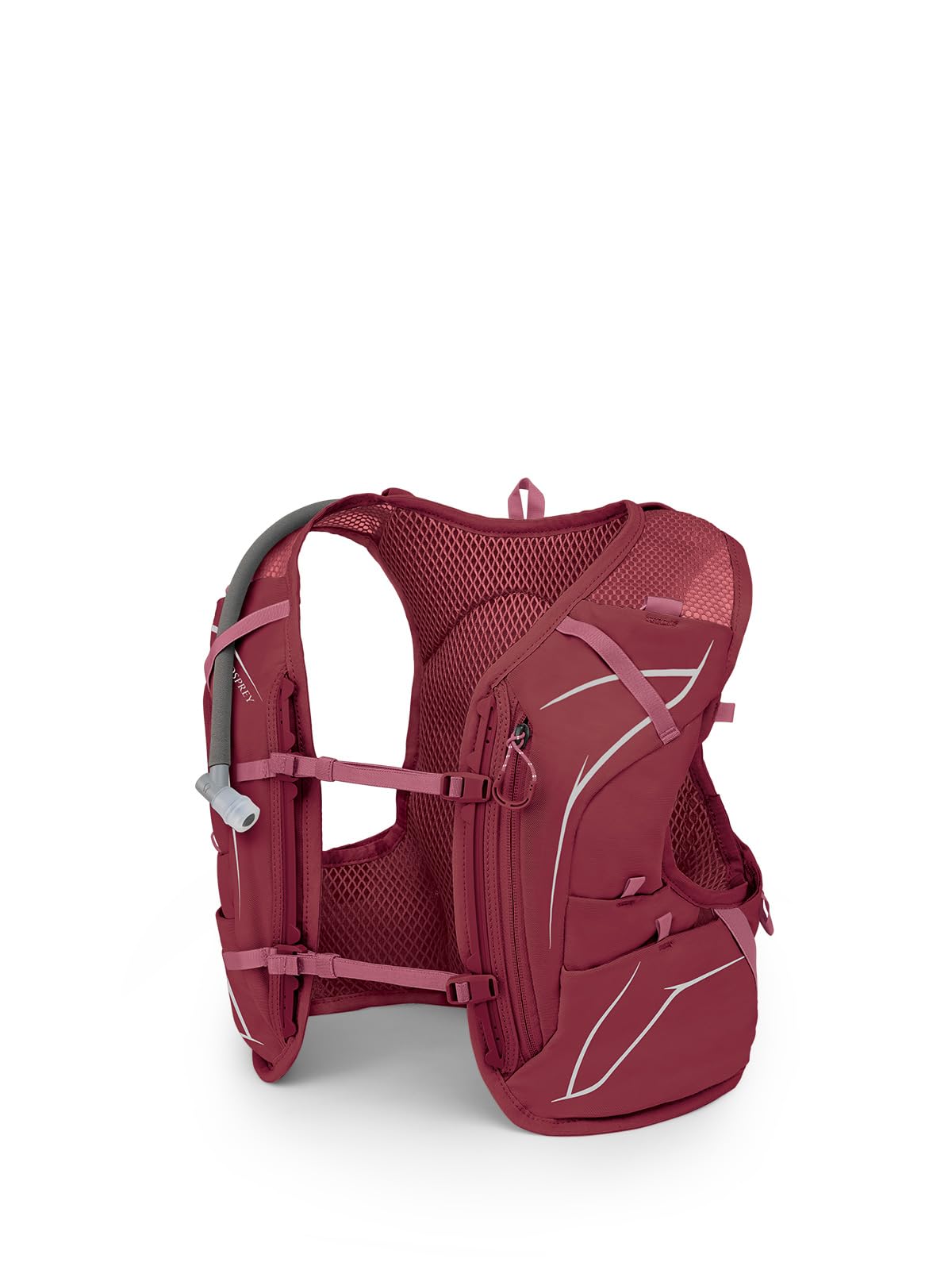
3. Osprey Dyna 6L Running Hydration Vest
Osprey’s women’s trail vest, built to stay put on long unsupported days with a reservoir already inside.
A 1.5-liter Hydraulics LT run-specific reservoir ships with this vest, so you are not buying a bladder separately. Osprey designed the Dyna for a close-to-body fit that stays quiet on your shoulders, which is the difference between a vest you forget and one you fight. It carries a 0.94-pound listed ship weight and 15.04 ounces on the spec sheet.
Smart pocketing is where this vest earns its keep. Five pockets keep hydration, gels, a whistle, and your phone reachable on the move. Reflective graphics add visibility for pre-dawn starts. A trekking pole and ice axe attachment turns it into a mountain vest when the trail turns steep.
What people rave about is the build. Quality is the trait praised most on this pack, and the comfort and pocket layout draw consistent approval alongside it. Fit and stability follow close behind. One recurring annoyance is zipper accessibility — a few find the pockets fight them when their hands are cold. The Dyna is heavier than the Pinnacle Breeze at 15.04 ounces versus 8 ounces, so this is a pack for carrying, not for pure featherweight racing.
What a trail day feels like: water on your back, gels in reach, poles clipped on the descent, and no constant tugging at the sternum strap.
Built for: the woman logging long trail days who wants a reservoir included and pole carry on board.
Think twice if: you are chasing a race-day weight — at 15.04 ounces this is a gear-hauler, not a featherweight.
4. CamelBak Women’s Circuit Run Hydration Vest 50oz
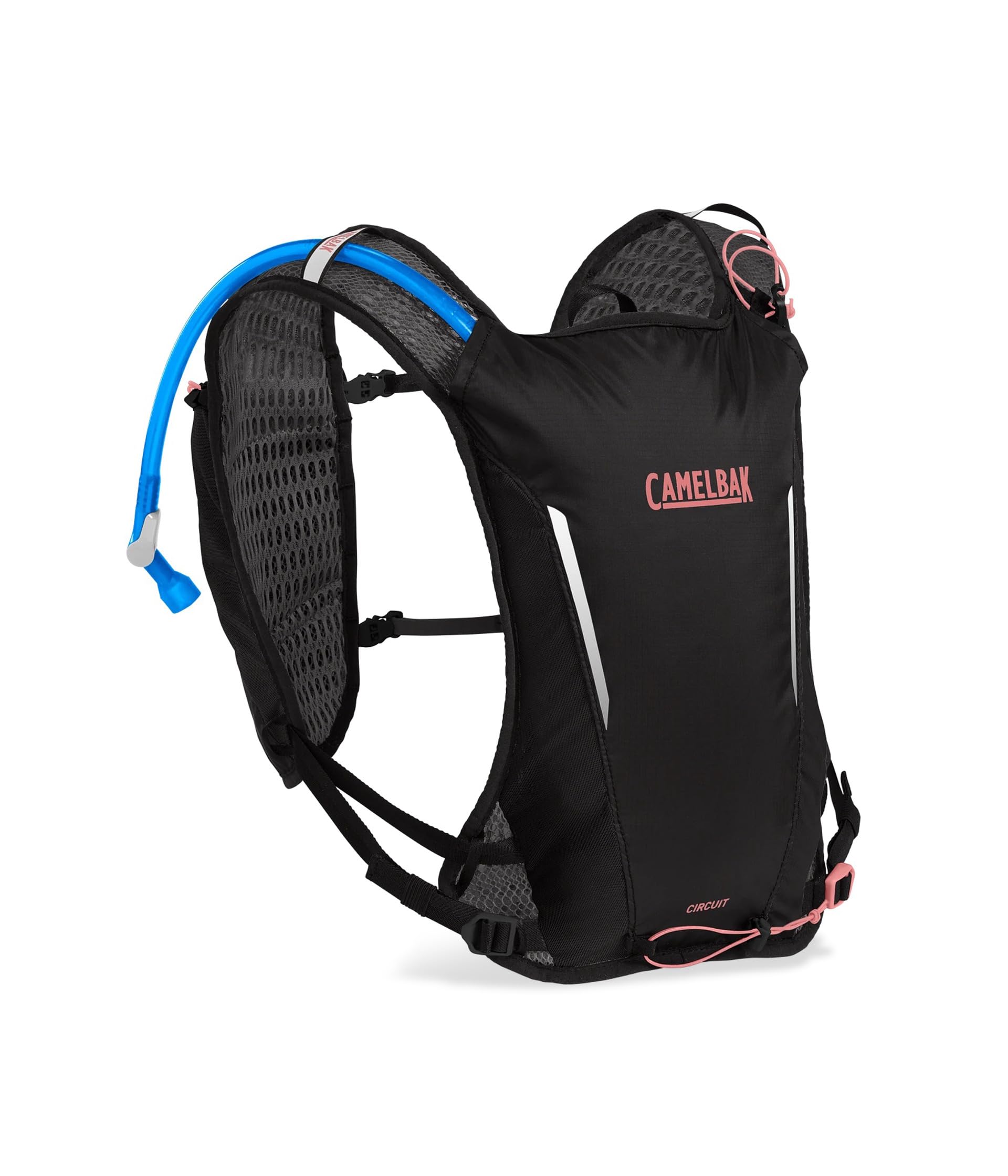
A 50-fluid-ounce reservoir vest at 5.6 ounces, tuned for the half-marathon distance.
CamelBak built this one around a body-mapped S-curved shoulder harness. The curve follows a woman’s shoulders instead of a straight line, which is where the stability comes from over long efforts. A 50-fluid-ounce reservoir is included, so you are covered for a half marathon or a long trail outing without topping up.
Five pockets hold nutrition, keys, and a zippered phone pocket. The 3D Vent Mesh panels move air across your back as the miles pile up. Reflective accents, an integrated safety whistle, and trekking pole attachments round out the trail-ready spec, so you are set for technical or low-light routes.
Fit is the standout. It is praised more than any other trait on this vest, and comfort and versatility follow — plenty of runners call it a natural for half marathons. The honest caveat is the reservoir: a handful of buyers have hit leakage from the bladder itself. It is a minority experience, but worth a leak test at home before you trust it on a race morning.
The fit story: an S-curved harness that hugs the shoulders is why this vest stays quiet, and it is the reason to pick it over a flat-strapped unisex shell.
Pick this for: half marathons and long training runs where a single 50oz reservoir covers the distance.
Test first if: you are hard on bladders — a few units leak, so fill and squeeze it before race day.
5. Nathan Pinnacle Race Vest 12L

Twelve liters of storage and a 1.6-liter bladder for the four-hour days most vests cannot cover.
This is the biggest pack on the list by far. Twelve liters of capacity against the BECOJADDE vest’s 1.5 liters is the real gap, and it is why buyers take this vest on long mountain days. At 12.48 ounces with a 1.6-liter Hourglass bladder onboard, it balances storage and water in a way the race-cut vests cannot.
Thirteen exterior pockets cover just about every item you might carry, with a side pocket for quick access and a vertical pocket for larger gear. Moisture-wicking tapered back panels and chafe-free trim keep the contact points honest on multi-hour efforts. As owners describe it, the vest “fits well and is super soft,” and it holds enough water for a 4-hour run.
Build quality is what buyers praise most, followed by storage capacity and comfort. This is a woman’s-specific build, so the tapered panels actually follow your torso rather than a unisex shape.
The “four-hour run” test: enough water and storage for a long day out is the whole reason this vest exists, and the pocket count delivers it.
The one for: ultra training and long mountain days where you need gear, nutrition, and a full bladder on your back.
Careful with: the sizing chart — the mixed feedback lives there, so go by your measured chest.
6. Osprey Duro LT Running Hydration Vest
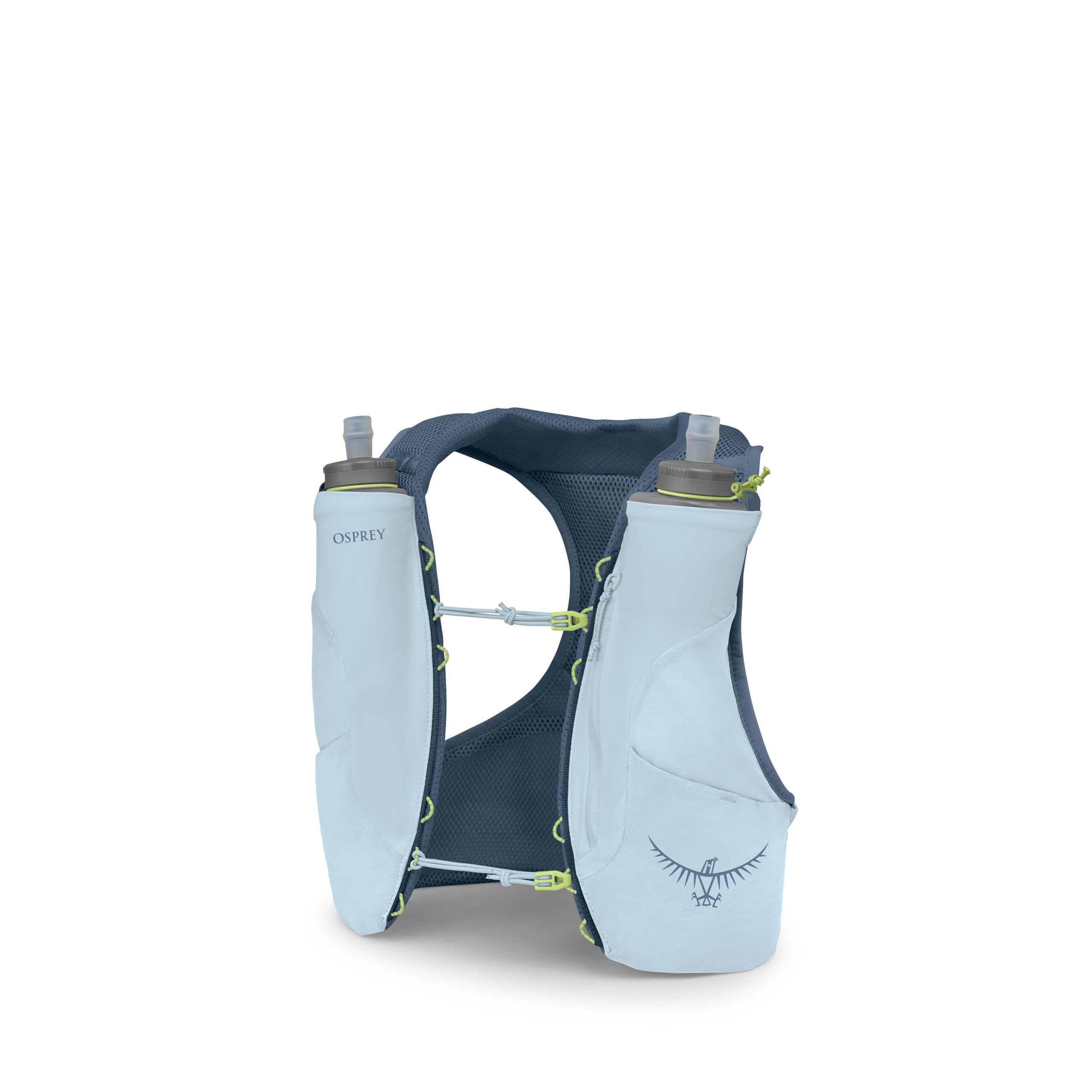
A 141-gram vest that carries two soft flasks and nothing more than you need.
Osprey’s Duro LT strips the vest down to essentials. 141 grams for a medium vest without flasks, plus 85 grams for the two 500 mL Hydraulics soft flasks at 40 grams each. WingStay stabilizers on the flasks can be pulled out when you want a softer feel. The 360-degree stretch back panel and dual sternum straps keep the whole thing locked against your back.
Storage is streamlined but thoughtful: dual stretch food and supplement pockets, a vertical-zip front pocket, and a spacious pass-through lumbar pocket. That pass-through lumbar slot is the one spot that takes a layer or a small extra without adding bulk to the front. The vest comes in three sizes based on chest circumference, so measure before you order.
The catch is straightforward. This vest is built for running with soft flasks, not for hauling gear, and there is no big rear reservoir day in it. If you like a hydration bladder on long unsupported runs, the Dyna 6L down the list covers that. Weigh 141 grams against the Dyna 1.5L and the Duro LT gives up a bit of front pocket count for a slightly lighter shell.
Best for: the runner who wants a soft-flask vest with a roomy lumbar pocket and no extra bulk.
Not for: long reservoir-fed days — the Duro LT is a flask-first vest with limited gear volume.
7. N NEVO RHINO Small Running Vest
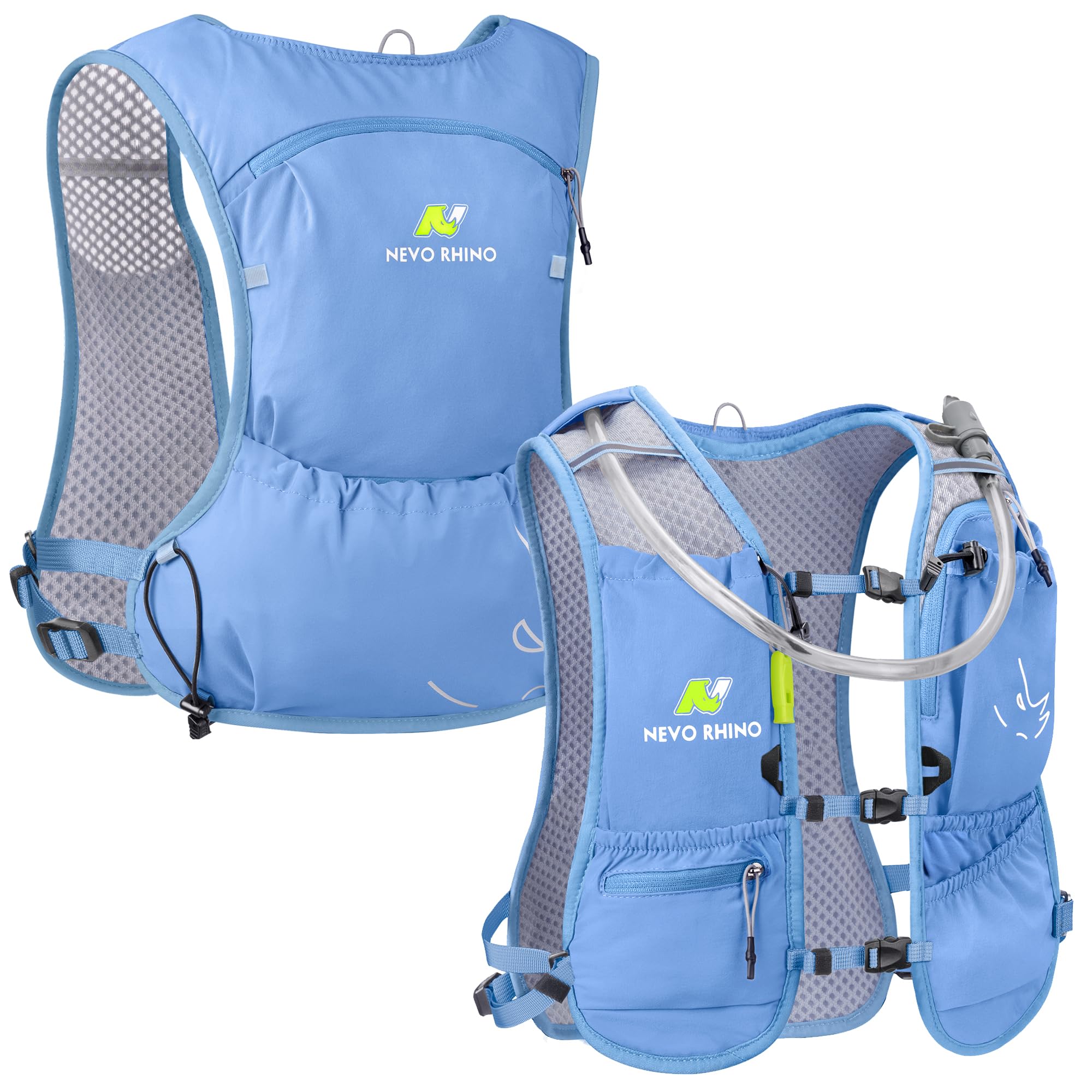
Eleven pockets on a vest cut for a smaller frame, with a bladder already inside.
If you want a small running vest that still carries the kitchen sink, this is the one. Seven front pockets put two elastic bottle sleeves, two zip pockets, and three small stash spots within reach, with toggle cords for trekking poles. A dedicated rear sleeve holds the included 1.5-liter hydration bladder and a large main compartment sits beside it.
At 208 grams the vest is light for that pocket count. The 3D performance fabric and contoured mesh-padded back panel spread pressure across your upper body and let air through. A length cut for smaller frames is the reason it sits correctly on shorter torsos. Finished seams on the shoulder and neck contact points are made to avoid irritation on long-distance wear.
Two separate bottle pockets and a back bladder give you two drinking options on the same run, which is more flexibility than most vests at this price. The trade is that eleven pockets can mean eleven places to hunt for a gel mid-stride — you will want to learn where things live before race day.
What you gain
- Seven front pockets plus a rear bladder sleeve for organized carry.
- Length tailored for smaller frames so it sits right on a short torso.
- 208 g is light for this much pocketing.
- Included 1.5L bladder means no extra purchase.
What to watch
- Eleven pockets take some learning before you can grab on the move.
- Fabric and zips need a little care to stay smooth over time.
Right pick for: a shorter-torso runner who wants every pocket and a bladder included in one vest.
Skip if: you want a barebones race vest — this one is built for carry, not featherweight speed.
8. 5L Running Vest for Women
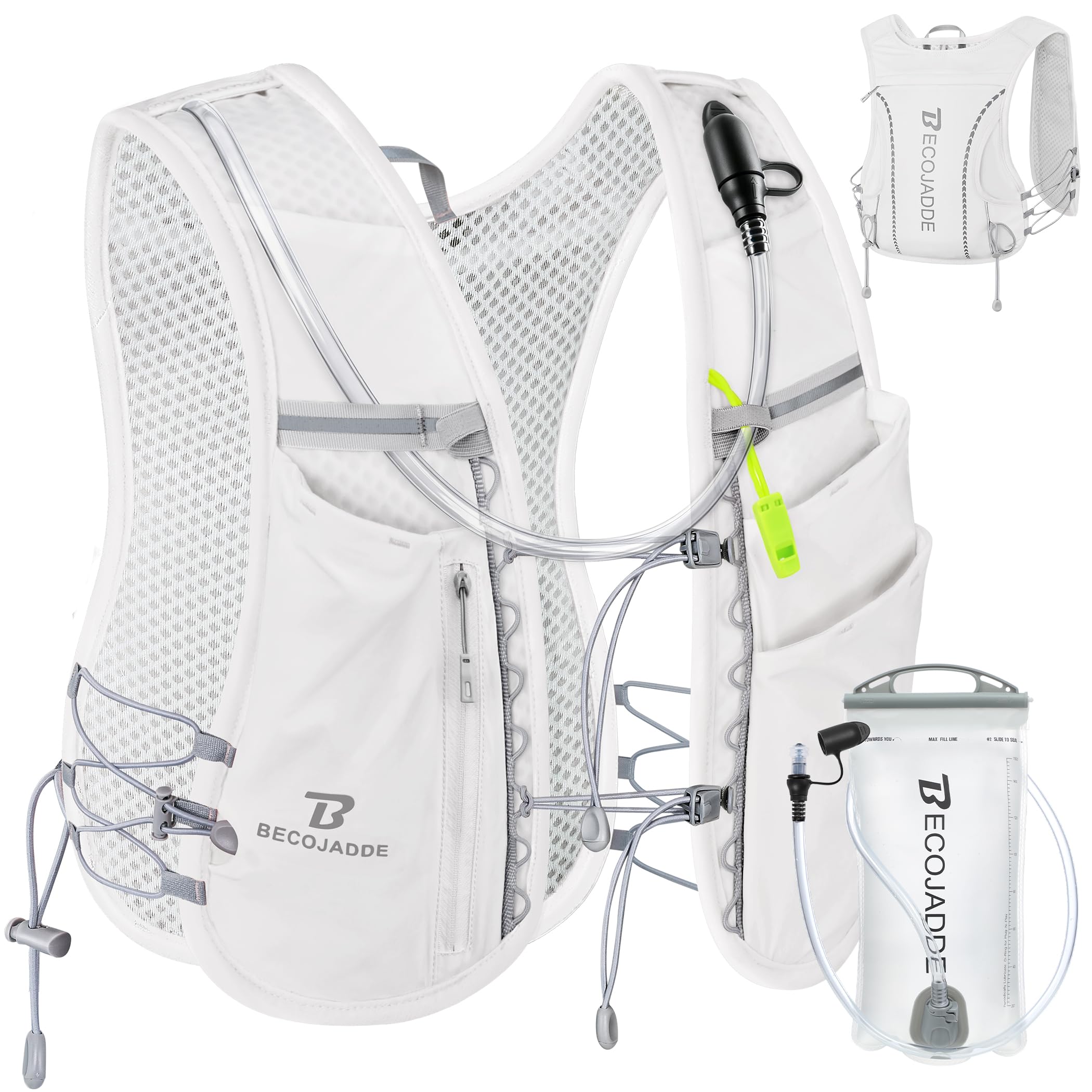
The entry-level vest that gets you running with a bladder without overspending.
At 220 grams and a 5-liter pack volume, this is the lightest entry point in the lineup for someone trying a hydration vest for the first time. It ships in three versions — vest only, vest with one 1.5-liter bladder, or vest with two 500 mL soft bottles — so read the listing carefully before you add to cart. The bladder version is the one in the spec above.
Adjustable elastic chest and waist straps give a range of chest sizes and let you dial the vest snug to cut bounce. Mesh shoulder straps and a mesh back panel move air through to keep you cool on a summer run. Front pockets hold bottles, phone, keys, and snacks, while a rear pocket takes the 1.5-liter bladder. Dual pass-through side pockets and a bottom elastic cord handle a towel or trekking poles.
Reflective details help you stay seen at dusk. This is an unisex cut rather than a women-specific harness, so a smaller-framed runner may find the chest range a touch wide. For a first vest or a backup to leave in the car, it covers the basics without any premium pricing.
The starter play: 220 grams and a bladder option is the cheapest way to find out if vest running suits you before you commit to a premium harness.
Ideal when: you want to try a hydration vest on a budget and do not need a women-specific harness.
Look higher if: you are small-framed and want a tailored fit — this is a unisex chest range.
Know the Specs
Capacity in liters
Capacity is the total pack volume, pockets and gear included — not the water. A 12-liter pack like the Nathan Pinnacle Race Vest swallows a jacket and extra layers; a 1.5-liter pack like the Osprey Dyna 1.5L is a race-cut vest with room for flasks and food only. Match the liter count to your longest day, not to your usual run.
Reservoir and flask volume
This is the number you drink from. A 1.5-liter bladder is a long-run reservoir; two 500 mL soft flasks are about a short effort with refills. A 50-fluid-ounce reservoir like the CamelBak Circuit Run sits in between. Check whether the pack includes the water carrier or sells it separately — several vests ship with flasks or a bladder, one version here ships vest-only.
Vest weight
Weight is grams or ounces for the vest without water. It decides how tired your shoulders feel late in a run. A 141-gram vest is a featherweight racer; a 15.04-ounce pack carries more storage and poles. Ultralight and big storage rarely come together, so choose which one you actually need for your distance.
Size and chest fit
Tailored women’s vests often come in sizes based on chest circumference. That measurement governs whether sternum straps can pull the pack snug. Get the chest size right and the vest stays put; get it wrong and it rides up or rubs the neck, no matter the brand.
Common Questions
How do I measure for a women’s hydration vest size?
Is a back bladder or front soft flask better for running?
What does bounce-free actually mean on a hydration vest?
Can a 1.5L pack carry enough for a marathon?
Will a women’s-specific vest fit better than a unisex one?
How should I care for the bladder to stop leaks?
Are reflective and whistle features necessary on a running vest?
What is the difference between pack capacity in liters and reservoir volume?
Can I use trekking poles with these hydration vests?
How long should a hydration vest last?
The Bottom Line
For most runners, the women’s hydration packs winner is the Nathan Pinnacle Breeze. It keeps the load locked to your shoulders, and it pairs an 8-ounce mesh shell with flasks, a bladder-ready back pocket, and 360-degree reflective trim (a full ring of reflective edging so drivers see you from any angle). Want featherweight race weight? Grab the CamelBak Women’s Ultra Pro. And for long unsupported days with gear, reach for the Nathan Pinnacle Race Vest 12L.
How we choose
We do not accept paid placement. Every pick is matched to a real buyer and a real use-case; we do not hands-on test units.
Sources
Specifications: manufacturer listings and product documentation. Review insights: verified customer reviews, as of November 2026. Pricing: not shown on this page (it changes often); check the current price via the retailer link.
As an Amazon Associate, Tactical Gear Guy earns from qualifying purchases. This does not affect which products we feature.