Specs are compiled from manufacturer listings and verified buyer reviews and can change over time — please confirm the key details on the product page before buying.
You want a shoe whose sole lets your feet touch the earth — and the truth is most so-called grounding shoes are ordinary rubber sneakers with a marketing sticker. Rubber blocks the connection, so a pair with a rubber outsole does nothing for you. What you actually need is a conductive path: a leather sole, a copper rivet, or a purpose-built conductive plug that carries electrons from the ground to your foot. That single detail is what separates a real earthing shoe from a shoe that just says “earthing” on the box.
This guide is built by comparing the manufacturers’ published specifications and the patterns across verified customer reviews, so you get each pick’s real strengths and trade-offs instead of marketing spin.
Fit is the thing that decides whether a grounding shoe ever leaves your closet, so each pick below is judged on its sole material, its sizing behavior, and how it holds up on pavement. Here is my read on the four strongest options for women’s grounding shoes.
Top Picks
How To Choose The Best Women’s Grounding Shoes
The first decision is not the brand — it is the sole. A grounding shoe only works if something conductive sits between your foot and the ground. Rubber and EVA foam insulate, so a sneaker with a rubber outsole and a foam insole is not earthing you no matter what the listing promises. Look for a leather sole, a copper rivet set into the footbed, or an explicitly named conductive plug in the sole. That is the mechanical difference that matters.
The conductive path: leather sole, copper rivet, or plug
Three designs show up in this category. A full natural leather sole lets your foot sit directly against a material that passes electrons, which is the closest thing to barefoot you can wear on pavement. A copper rivet inside the shoe adds a highly conductive metal contact point against your foot. A conductive plug in the sole acts as the transfer point from earth to body. All three are legitimate; the leather sole is the most natural-feeling, the rivet the most direct, and the plug the most shoe-like.
Sizing runs unusual in this category
Grounding footwear is often handmade or built on a minimalist last, and that shows up in the fit. Some pairs run a full size large; others come up short in length. Before you order, read the maker’s own sizing note rather than assuming your usual number works. For a handmade moccasin with no foam, the listing itself may tell you to go down a size and a half for half sizes. For a knit trainer, the brand may say true to size. Those two instructions are not interchangeable.
Sole thickness, toe box, and heel drop
A thin, flexible sole lets your foot read the ground, which is the whole point of a barefoot-style shoe. A wide toe box gives your toes room to spread instead of being pinched into a point. Zero drop means the heel and forefoot sit at the same height, so your ankle is not tilted forward. Together these three traits change how a shoe feels over a long day — more ground feedback, less cramped toes, a flatter stance. If you are used to a cushioned running shoe, give yourself a few short wears to adjust.
Side-by-Side Comparison
| Model | Best For | Grounding Method | Sole | Upper / Fit Note | Amazon |
|---|---|---|---|---|---|
| Flux Footwear Adapt Knit Trainers★ Best Overall | All-day wear and light training | Earth-Link grounding tech | Flexible zero-drop | Knit, wide toe box, true to size | Amazon |
| Grounding Earthing Shoes with Breathable Mesh Upper | Warm-weather everyday grounding | Black conductive plug in sole | Rubber with conductive foam insole | Breathable mesh, runs tight for some | Amazon |
| Grounding Shoes for Women, Barefoot Leather | Handcrafted leather look | Copper rivets inside | Natural leather sole | Leather, wide toe box, runs large | Amazon |
| Bastien Industries Moose Hide Moccasins | True barefoot earthing, indoors or out | All-natural leather sole for Earthing | Natural leather, no foam | Genuine moose hide, order a full size down | Amazon |
Detailed Reviews
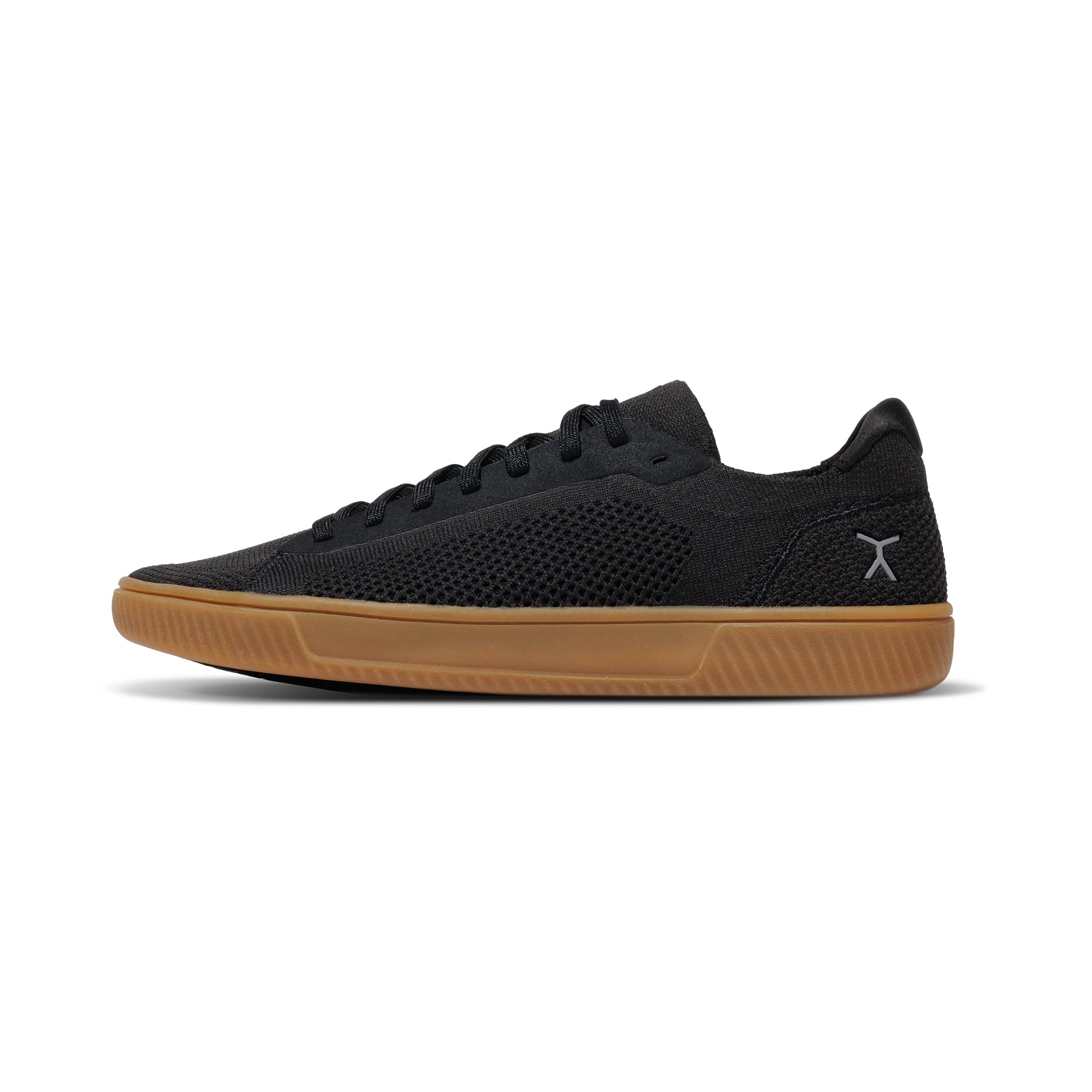
1. Flux Footwear Adapt Knit Trainers
Our pick — 4.0+★ from 150+ verified ratings; the strongest balance of quality and price.
A grounding sneaker that looks like a sneaker, not a wellness experiment.
This is the pick that solves the wardrobe problem. Most earthing shoes look like slippers or handmade moccasins, so you wear them around the house and nowhere else. The Adapt Knit Trainer is a knit sneaker with a wide toe box and a flexible zero-drop sole, built for all-day wear and light training, and it runs on the brand’s Earth-Link grounding tech. You get a conductive path plus a shoe you can wear to the store without feeling like you left the house in footwear.
Buyers mention comfort more than anything else. Reviewers call them comfortable, lightweight, and supportive, and enough report back-pain relief from the foot support that it’s worth noting. The brand says they run true to size, and the wide toe box gives your toes room instead of squeezing them — the difference between a shoe you keep on for an hour and one you forget you’re wearing. Fit is where it needs care: some buyers find the length extremely short, and some find the toe box shape odd. Exercise and durability get mixed reviews, so treat this as an everyday and light-training shoe rather than a gym workhorse.
Against the mesh grounding shoes below, this one wins on style and on being a true sneaker silhouette — the other is a mesh slip-on-and-lace hybrid. The point of the category is a real ground connection, and the Earth-Link tech is the brand’s own claimed grounding system rather than a bare leather sole.
What earns its keep
- Earth-Link grounding tech inside a shoe that looks like a normal trainer
- Wide toe box plus flexible zero-drop sole for a natural, flat stance
- Lightweight and supportive enough for all-day wear
- Sized true to the brand’s guidance, so ordering your usual number is the starting point
Where it asks patience
- Length complaints cut both ways — some find them extremely short, so check the size chart
- Exercise and durability get mixed reads; keep it to light training rather than hard gym sessions
Wear these if: you want one grounding pair that doubles as an everyday sneaker and a light-training shoe, with a wide toe box and a flat zero-drop stance.
Hold off if: you need a guaranteed half-size match — the mixed length feedback means a try-on or a careful size-chart read is the safer route.
2. Grounding Earthing Shoes
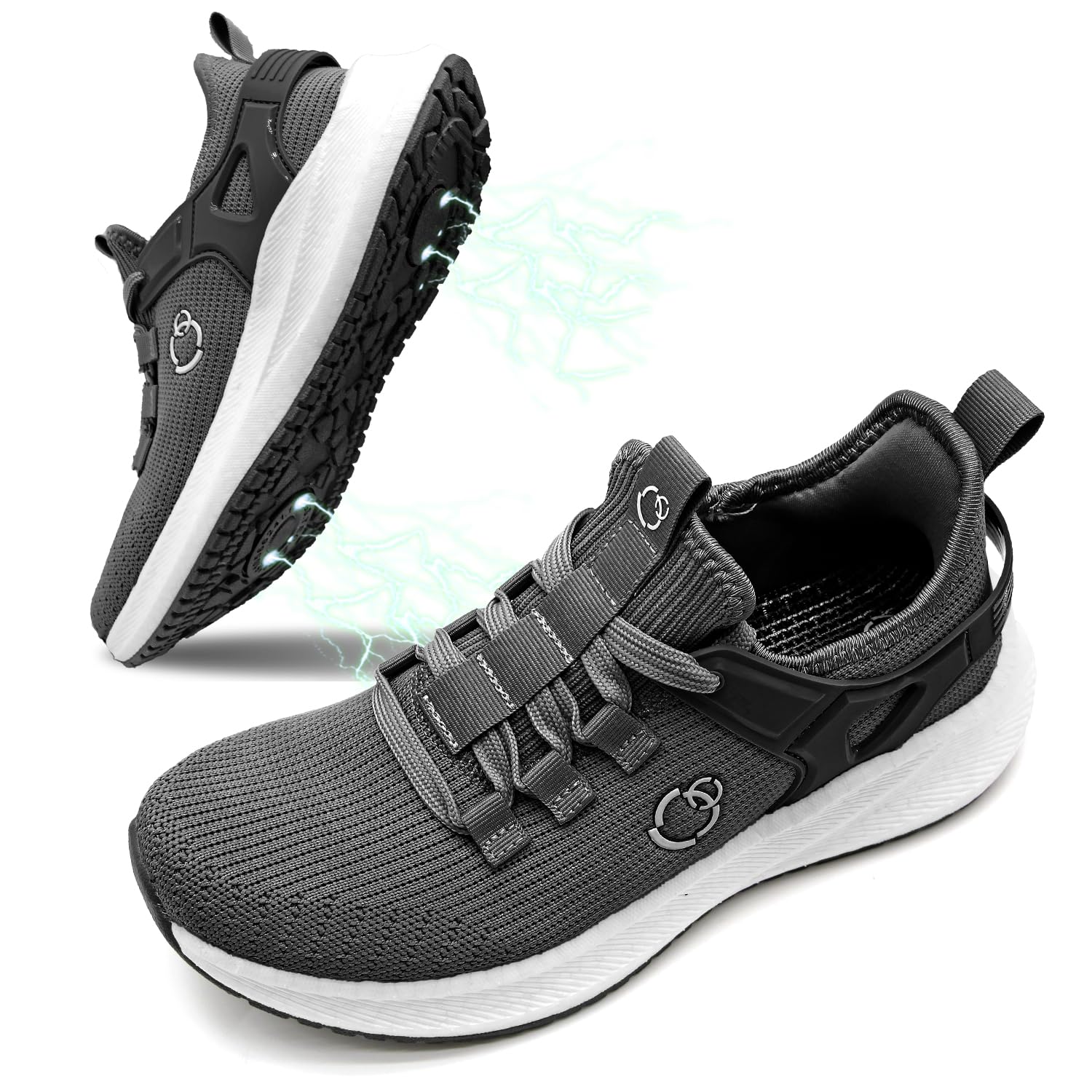
The pair that spells out exactly how the grounding works, plug and all.
This is the pick that explains its own mechanism instead of hiding behind a logo. A black conductive plug set into the sole is the conductor — the maker describes it as the point where electron flow travels from the earth to your body, and it is what makes the shoe genuinely grounding rather than just rubber-soled. The insole is conductive foam, and the upper is a breathable mesh, so air moves through on warm days. If you want to understand the physics before you buy, this listing tells you more than any other in the category.
Owners talk about comfort and quality most, and the soft conductive foam insole is why. Fit is the honest caveat: some buyers report the shoes fit well, others find them too tight, and size comes up as a negative point more than once. If you are between sizes, size up rather than down. Grounding and durability both get mixed reads, so treat the plug as the transfer point it is and keep the soles out of rough terrain that would chew through them.
Set against the Flux knit trainers above, this is the budget-friendly route to a real conductive sole — and it is the only pick here with an explicitly named plug. That transparency is worth something, even though the overall durability picture is less settled than the premium leather options. Wear them as warm-weather everyday shoes, not as a trail or gym pair.
The plain-spoken mechanism: a black conductive plug in the sole plus a conductive foam insole gives you a grounding path you can actually point to, and the breathable mesh upper keeps the shoe from cooking your feet in summer.
What to budget for: fit skews tight and size complaints are on the record, so ordering a half size up costs you nothing and saves you a return — durability and grounding effectiveness are the two areas where the feedback splits.
Reach for this if: you want the most affordable entry into a documented conductive sole and you prefer a mesh shoe for warm weather.
Think twice if: you need a precise fit from the start — the tight-fit reports mean a size-up is the smart move, not a gamble.
3. Grounding Shoes for Women
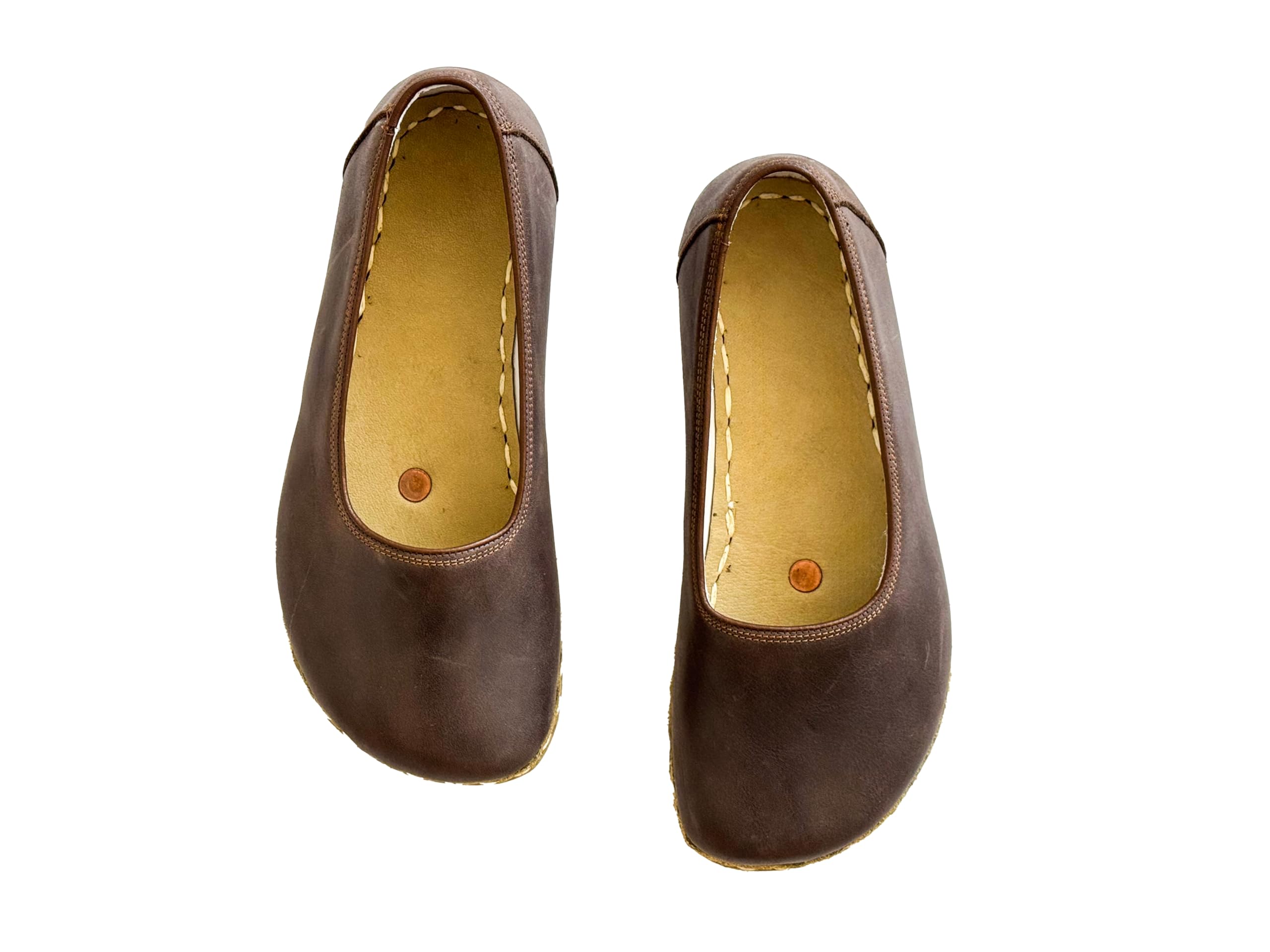
Handcrafted leather with copper rivets set right into the footbed.
The two-part grounding design is what stands out here. The sole is made entirely of natural leather, so your foot sits on a material that passes current rather than a rubber barrier. Copper rivets are then set inside the shoe as a second contact point, because copper is among the most conductive metals you can put against your skin. That pairing is a more deliberate earthing build than most shoes in the category bother with, and the leather upper with a wide toe box makes it a genuinely comfortable shoe to wear all day.
Quality is what lands with people — owners call them excellent in quality, comfortable, and nice-looking, which is unusual for a category that often looks clinical. The fit is where you should slow down. Some find the shoes run bigger than expected, while others find them too short. Those two complaints point in opposite directions, so the only reliable move is to measure your foot and check the listing’s own size guidance before ordering. The upside is that a leather shoe with a wide toe box gives your toes room even when the length is imperfect.
Compared with the mesh grounding shoes above, this is the dressier, more natural-material option — leather instead of mesh, rivets instead of a plug, a wider toe box and a more minimal look. It is also the pick for anyone who wants a shoe that reads as a real leather shoe rather than an athletic one. The mixed fit feedback is the honest cost of a handmade build, and it is worth being patient with.
Why the build is different: a full natural leather sole plus copper rivets set inside the shoe gives you two conductive contact points instead of one, and the leather upper with a wide toe box keeps it comfortable enough for everyday wear.
The sizing caution: fit feedback splits between running large and running short, so the leather is the star and the length is the variable — measure first, order after.
Pick this when: you want a leather grounding shoe with copper rivets and a wide toe box, and you are willing to check sizing carefully before you commit.
Skip it when: you need a guaranteed length from the start — the split fit feedback makes this a measure-first purchase, not an impulse one.
4. Bastien Industries Earthing Moccasins
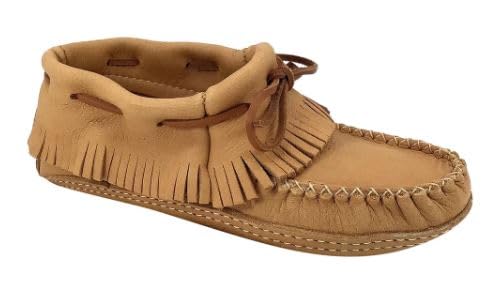
Handmade moose hide, an all-leather sole, and the closest thing to barefoot you can wear outside.
If you want the most literal interpretation of the category, this is it. The sole is all-natural leather with no foam, which the maker points to as ideal for Earthing outdoors — your foot sits against leather, and leather is the ground connection. These are genuine moose hide leather in Maple Tan, handmade, ankle high, with rawhide leather laces and a fringe around the top. That build is why they feel like a moccasin rather than a shoe, and it is the closest a buyer gets here to a true barefoot feel without going outside in nothing.
Comfort is what carries these — soft enough to wear without breaking in, with a supple suede interior and a build that holds up to being pulled on and off. Sizing is the trap, and the maker says so plainly: the earthing style with no foam fits large, so order a full size down from your regular shoe size, and for half sizes go down one and a half sizes. That is a real adjustment, not a rounding error. Sizes run 4 to 10, so check you are inside that range before you order.
Next to the copper-rivet leather shoes above, this is the more traditional, handcrafted option — fringe and all — and the more committed barefoot feel, since there is no foam layer between you and the leather. It is an indoor-leaning moccasin with outdoor capability, not a shoe you would wear to the gym. For a woman who wants her earthing footwear to look like a heritage piece, this is the pair.
Why it stands out
- All-natural leather sole with no foam, so the earthing connection is the leather itself
- Genuine moose hide in Maple Tan, handmade, with rawhide laces and fringe detailing
- Soft suede interior that needs no break-in
- Holds up to being pulled on and off repeatedly
The fit reality
- Fits large by design — order a full size down, and a size and a half down for half sizes
- Available in ladies sizes 4 to 10 only, so check your size is covered
Go with these if: you want the most authentic barefoot earthing shoe in a handmade, heritage moccasin, and you are happy to size down as the maker instructs.
Look elsewhere if: you want a sneaker silhouette you can wear to the gym — this is a moccasin, and its strength is the all-leather sole, not athletic support.
Know the Specs
Conductive Sole vs Rubber Sole
Rubber and EVA foam insulate, so they block the electron flow that grounding depends on. A leather sole, a copper rivet, or an explicitly named conductive plug is what creates the path from ground to foot. If a listing describes a rubber outsole and never names a conductive element, treat it as an ordinary shoe. The four picks here each name their own method: Earth-Link tech, a conductive plug, copper rivets, or an all-natural leather sole.
Zero Drop and Wide Toe Box
Zero drop means the heel and the forefoot sit at the same height, so your foot lies flat instead of tilting forward the way a cushioned running shoe does. A wide toe box gives your toes room to spread. Together they deliver more ground feedback and less toe crowding, which is the barefoot-style feel the category is built around. Expect a short adjustment period if you are coming from a thick-soled trainer.
Sizing in Handmade Grounding Shoes
Handmade and minimalist footwear do not all run to standard sizing. One maker here says true to size; another says order a full size down, and a size and a half down for half sizes, because the no-foam build fits large. A third draws split feedback between running large and running short. Read the maker’s own note before ordering, and if a listing gives you no guidance, size up rather than down on a mesh shoe that fits tight.
Upper Materials and Breathability
Mesh uppers move air and suit warm weather and long summer wear. Leather uppers, including moose hide and natural leather, are more durable and hold their shape over time, but they breathe less. Knit uppers sit between the two — flexible and lightweight, closer to a sneaker. Match the upper to how and when you plan to wear the shoe, not to a trend.
Common Questions
Do grounding shoes actually work if the outsole is rubber?
Should I size up or down in women’s grounding shoes?
What is the difference between a copper rivet and a conductive plug?
Can I wear grounding shoes for the gym or running?
How long do leather-soled grounding shoes last?
Are grounding shoes the same as barefoot shoes?
Can I wear these indoors and still be grounded?
What if the shoe does not fit — which picks are safest to order?
Do grounding shoes need a special insole or liner?
Are these shoes suitable for wide feet?
The Bottom Line
For most buyers, the women’s grounding shoes winner is the Flux Footwear Adapt Knit Trainers because it is the one grounding shoe here you can wear as an everyday sneaker — Earth-Link grounding tech, a wide toe box, and a flexible zero-drop sole, all in a knit upper that runs true to size. If you want the most transparent grounding build for less, grab the Grounding Earthing Shoes with Breathable Mesh Upper, where the conductive plug in the sole is spelled out and the mesh breathes. And for a handmade all-leather sole that connects the way a barefoot walk does, reach for the Bastien Industries Moose Hide Moccasins — just order a size down as the maker instructs.
How we choose
We do not accept paid placement. Every pick is matched to a real buyer and a real use-case; we do not hands-on test units.
Sources
Specifications: manufacturer listings and product documentation. Review insights: verified customer reviews, as of November 2026. Pricing: not shown on this page (it changes often); check the current price via the retailer link.
As an Amazon Associate, Tactical Gear Guy earns from qualifying purchases. This does not affect which products we feature.