Specs are compiled from manufacturer listings and verified buyer reviews and can change over time — please confirm the key details on the product page before buying.
If your toes feel pinched by lunchtime and your arches ache by dinner, the shoe is usually the problem, not your feet. Barefoot shoes fix that by letting your toes spread flat and your heel sit level with your toes. Below are nine women’s barefoot shoes that genuinely deliver a flat sole, a wide toe box, and a thin flexible base — sorted by what each one is actually good at.
This guide is built by comparing the manufacturers’ published specifications and the patterns across verified customer reviews, so you get each pick’s real strengths and trade-offs instead of marketing spin.
Some pairs here are built for lifting plates, others for gravel trails, and a few for standing all day on concrete. The picks below cover every one of those jobs, so you can match a pair to your own week. That is the whole point of this rundown of the best women’s barefoot shoes.
Top Picks
How To Choose The Best Women’s Barefoot Shoes
The wrong barefoot shoe feels like a sock with a brick strapped under it — flat, but stiff and cramped. The right one disappears on your foot. Three things decide which camp you land in: how level the sole sits, how much room your toes get, and how much material sits between you and the ground.
Check the drop before anything else
Drop is the height difference between heel and toe. A true barefoot shoe has zero drop, meaning both ends sit at the same height so your ankle stays neutral instead of tipping forward. If a listing will not state the drop plainly, treat that as a warning sign.
Measure your toes, not just your length
Most women buy their normal size and get pinched at the pinky toe. Trace your foot on paper while standing, then measure across the widest part of your forefoot. Compare that number to the maker’s width guidance. A wide toe box should let all five toes lie flat and spread, not curl under each other.
Decide how much ground feel you want
Stack height is how much material sits under your foot, measured in millimeters. Lower stack means more feedback from the ground, which helps balance and lifting. A slightly taller stack softens rocky trails and long pavement stretches. Neither is better — pick the one that matches where you actually walk.
Match the upper to the season and the job
Leather uppers handle scuffs and casual wear. Knit and mesh uppers breathe better in heat and dry faster after rain. Wool blends resist odor on multi-day trips. Think about where the shoe will live, then pick the material that survives that environment.
Side-by-Side Comparison
| Model | Best For | Drop | Stack Height | Upper | Amazon |
|---|---|---|---|---|---|
| Flux Footwear Adapt Graphene XT★ Best Overall | Cross-training and lifting | Zero drop | — | Graphene knit | Amazon |
| Orthopedic Wide Toe Box Barefoot ShoesBest Everyday Comfort | Everyday walking comfort | Zero drop | — | Breathable knit | Amazon |
| Hike Footwear Comforto MaxBest for Recovery | Recovery and indoor wear | Zero drop | — | Stretch knit | Amazon |
| Merrell Vapor Glove 6 LTR | Minimal trail and casual wear | Zero drop | 6 mm | 100% leather | Amazon |
| Vivobarefoot Primus Lite 3.5 | Running and cross-training | Zero drop | — | Vegan knit | Amazon |
| Vibram FiveFingers V-Trek | Hiking and light trail | Zero drop | 4 mm outsole | Wool-synthetic | Amazon |
| Vivobarefoot Primus Lite III | Breathable everyday vegan wear | Zero drop | — | Vegan knit | Amazon |
| Merrell Trail Glove 7 | Trail running and mixed gym use | Zero drop | 14 mm | Mesh | Amazon |
Detailed Reviews
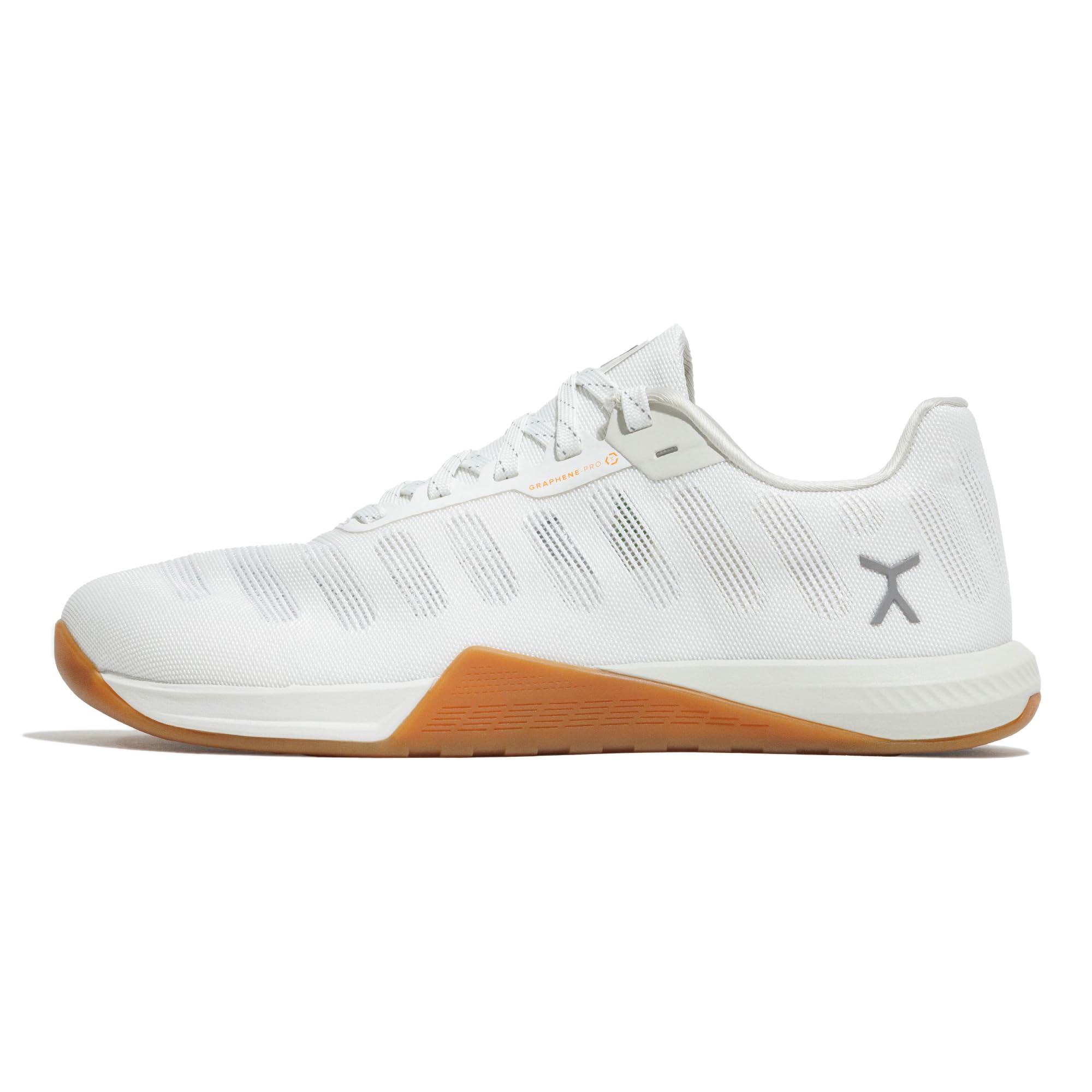
1. Flux Footwear Adapt Graphene XT Cross Training Shoes
Our pick — 4.5+★ from 250+ verified ratings; the strongest balance of quality and price.
A flat, wide lifting shoe that doubles as a daily sneaker.
If your week mixes barbell work with errands and school runs, this is the pair that keeps up with both. The Adapt Graphene XT sits at zero drop, meaning your heel and toes rest at the same height, so your weight stays balanced instead of tipping forward under a bar. The wide toe box lets your toes spread flat while you press through the floor.
The upper is a graphene knit — graphene being a single-atom-thick carbon layer that the maker describes as 200x stronger than steel while staying thin and flexible. In practice that means a shoe that grips your foot without a stiff cage over the toes. Sizing runs small for most, and the maker recommends going up a half size, which is worth doing if you are between sizes.
What wins people over is comfort first and foremost, with versatility a close second — owners wear them for CrossFit, powerlifting, and weightlifting without swapping shoes. The recurring honest gripe is fit on genuinely wide feet, and some found value slightly harder to justify. For most women this is the safest all-round pick here.
Where it earns its keep
- Comfort is the quality owners mention first and most often
- Zero drop keeps you flat and stable under weight
- Graphene knit upper is thin, light, and flexible
- Works across lifting, CrossFit, and everyday wear
What to plan around
- Runs small — order a half size up
- Owners with very wide feet report a tighter fit
- Spot clean only, and no machine washing
Best fit for: women who train with weights and want one shoe for the gym and the rest of the day.
Measure first: go a half size up and check the maker’s chart if your forefoot is broad.
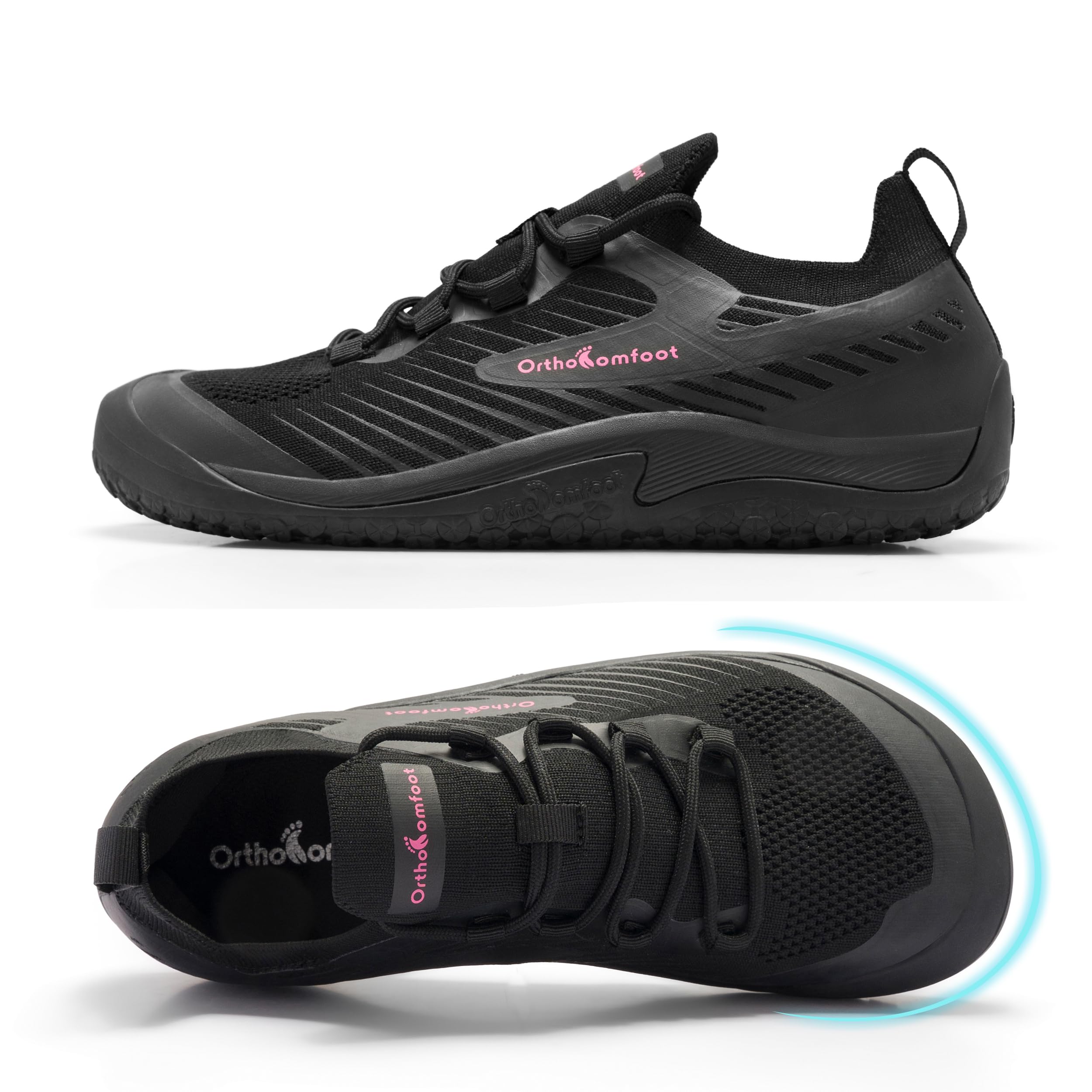
2. Orthopedic Wide Toe Box Barefoot Walking Shoes
Built for the woman who stands all day and wants her toes back.
Brick-and-mortar floors are brutal on feet, and this pair is aimed squarely at that problem. The sole sits at zero drop so your ankle stays neutral, and the wide toe box lets your toes lie flat instead of curling under. The outsole is built non-slip, which matters on tile and polished concrete.
Fit and comfort are the two things this shoe does best. That is the whole pitch — no exotic materials, no extra tech, just a roomy forefoot and a flexible base. The upper is breathable, so your feet stay drier through a long shift.
Here is the catch worth knowing before you order. Some wearers find the shoes run large, which means a snug fit is not guaranteed from the start. Order your normal size, measure your forefoot first, and you will land where you want to be.
The honest read: a straightforward, budget-friendly walking shoe that gets the barefoot basics right — flat sole, wide front, grippy base — without adding complication.
Who it suits: nurses, retail staff, and anyone logging long hours on hard floors who wants zero drop without a premium tag.
Reach for this if: your day is spent standing and you want a roomy, flat walking shoe.
Look elsewhere if: you need a confirmed true-to-size fit and dislike ordering without trying.
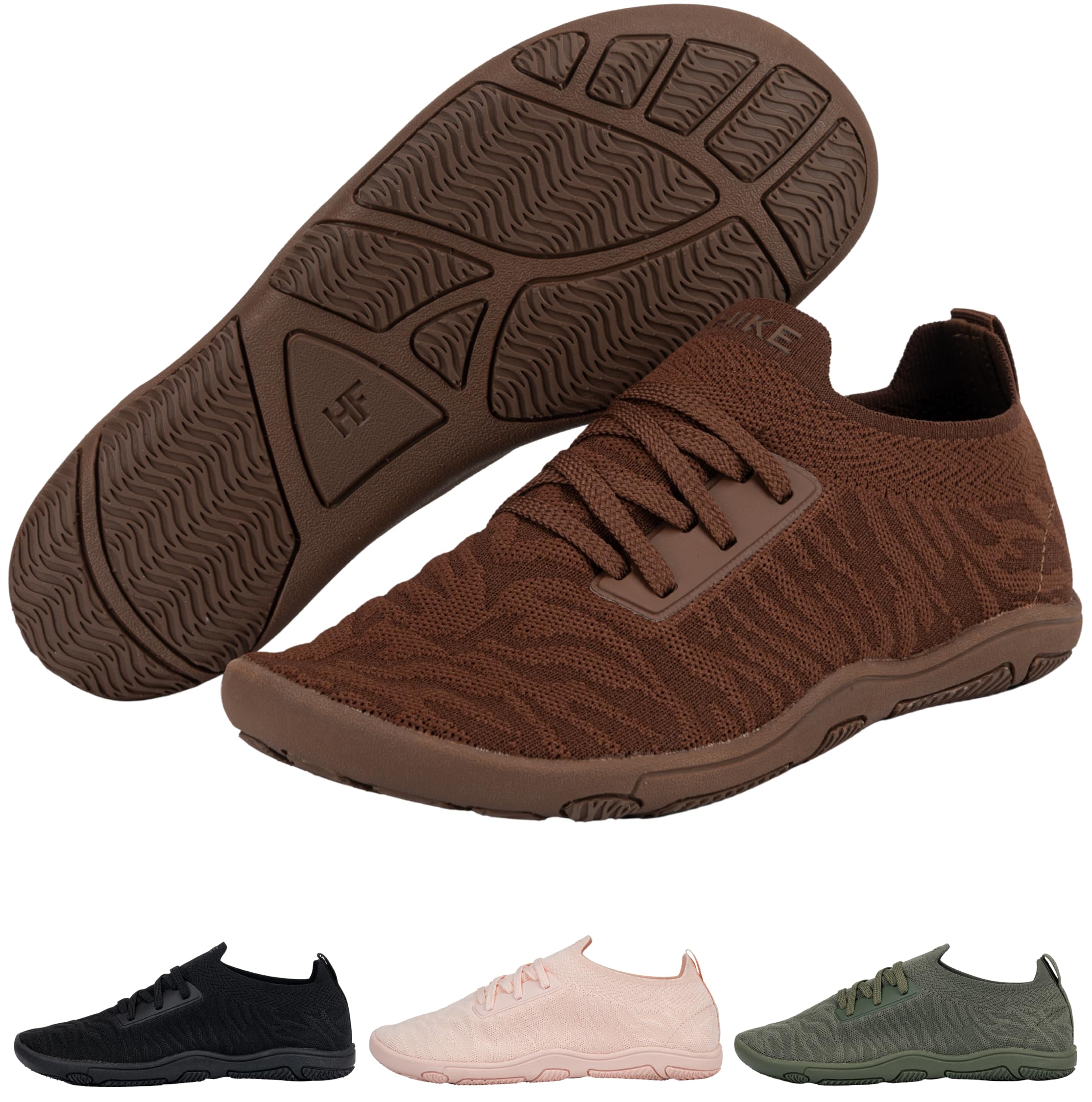
3. Hike Footwear Comforto Max Barefoot Shoes
The stretchy, featherweight pair for sore feet and slow mornings.
Some days your feet just want out of structure. The Comforto Max is built for exactly that — Hike calls it their lightest barefoot shoe, aimed at recovery walking, indoor wear, and travel. The upper stretches, the sole is zero drop, and the toe box is described as extra-wide so your toes can spread freely.
Walkers describe feeling the ground through the sole, and they call out the stability — the shoe feels more planted than a running shoe underfoot. Light weight plus that ground contact makes for confident, steady steps rather than a floaty ride.
An honest note: this is a comfort-first shoe, not a performance trainer. Take it on the trail or into a lifting session and you have picked the wrong tool. For recovery days, hotel hallways, and errands, it does what it promises.
Its real lane: soft, stretchy, and light enough to slip on when your feet are tired and you still need to move.
The trade-off: comfort priority means it is not built for high-impact work or rough terrain.
Made for: recovery days, indoor wear, and travel when you want a soft zero-drop shoe.
Not the one for: trail runs or barbell sessions — pick a trainer for those.
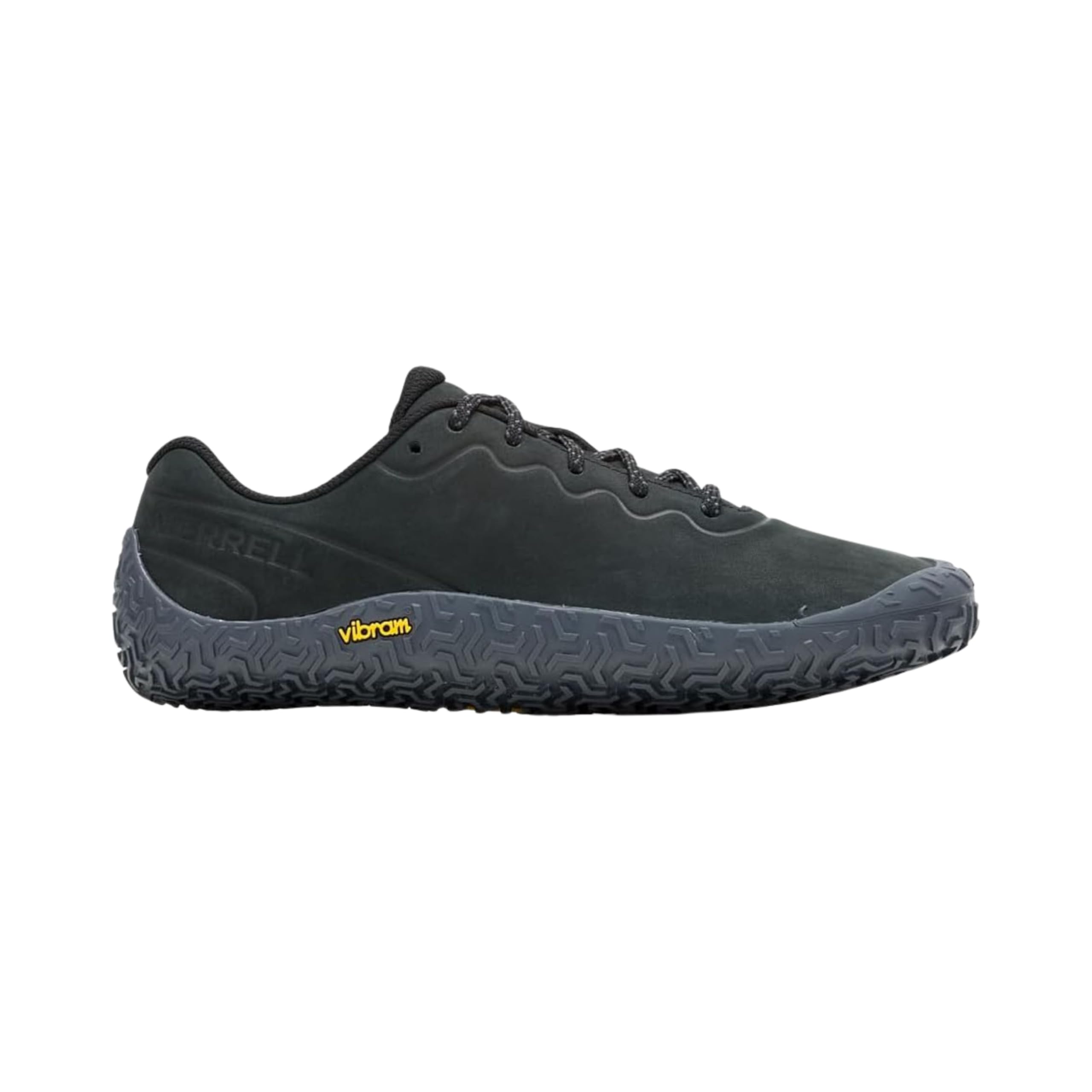
4. Merrell Womens Vapor Glove 6 LTR
The most minimal shoe Merrell makes, wrapped in leather.
A 6 mm total stack height is about as close to barefoot as a shoe gets while still having a sole. That number is the whole story here — it means you feel almost every contour of the ground, which is great for balance work and lousy for long rocky descents. The Vibram EcoStep outsole wraps the foot to boost grip and connection, and the upper is 100% leather for a look that passes in casual settings.
Your foot stays in a natural position thanks to Merrell’s Barefoot 2 construction. The sustainable details include 100% recycled laces, 100% recycled breathable mesh lining, and a 100% recycled mesh footbed cover. The Vibram Ecostep Recycle outsole (a rubber sole made partly from recycled material) uses 30% recycled rubber. The integrated insole is 30% recycled EVA foam (a lightweight cushioning foam). Each shoe weighs 180 g for a women’s half pair, so it disappears on your foot.
The fit is the part to watch closely. Several wearers find it runs narrow and small for the suggested size, so try before you commit to a long hike. Comfort and looks are the two things people praise most.
The standout spec: 6 mm stack height with a Vibram EcoStep outsole — maximum ground feel with real grip underneath.
Take care with: sizing runs narrow and small, and a leather upper needs more break-in than knit.
Pick it for: minimalist trail days and casual wear when you want a leather look and true barefoot feel.
Try before you buy: the narrow fit bites women with broad forefeet.
5. Vivobarefoot Women’s Primus Lite 3.5

A versatile trainer that is wide for stability and thin for feedback.
Running, cross-training, and dynamic daily movement all fall inside this shoe’s brief. Vivobarefoot builds it wide for natural stability, thin for natural feedback, and flexible for natural movement — the three words that define the whole barefoot school. The shoe is part of a circular-design push, where an old Vivo can be remade into a new one.
Fit is the thing this pick gets right more often than most. Owners describe a properly fitting shoe with a wide toe box, and they notice the surface underfoot as they walk. That ground feedback is the point, not a flaw.
Where it draws mixed feelings is longevity and value — this is a premium-priced shoe and some wearers want it to last longer at that level. If you go in expecting a thin, flexible trainer that gives you real ground signal, you will be happy. If you want a plush, cushioned ride, this is not it.
What makes it click: a genuinely wide, flexible fit that lets you feel the ground while training.
The honest caveat: durability and value draw mixed feedback, so treat it as a performance tool rather than a long-haul beater.
Made for you if: you want one flexible shoe for running, gym work, and everyday movement.
Think twice if: you expect a cushioned ride or long wear at a premium outlay.
6. Vibram Women’s FiveFingers V-Trek

Five toes, one flexible grippy sole, and a walk that feels like bare feet.
The separate-toe design sets this shoe apart from everything else on the list — you get direct ground contact under each toe, which is the most literal version of barefoot you can buy. The outsole is 4 mm of Megagrip rubber, and the midsole uses a cushioned polyurethane for a bit of shock absorption. A 50/50 wool-synthetic upper adds breathability and helps cut odor.
Traction and the barefoot-like feel are the two things owners value most. It handles wet and dry ground with confidence, and the mid-cut design gives ankle support on uneven paths. Hikers call it comfortable and stable on trails.
Sizing is the tricky part. Many wearers report the shoe runs small and needs careful checking against the size chart, and durability draws some mixed notes. That is normal for a thin-soled trail shoe — you are trading longevity for ground feel.
What hikers like
- 4 mm Megagrip outsole delivers strong traction wet or dry
- Separate toes give the truest barefoot ground contact
- Mid-cut design adds ankle support on uneven ground
- Wool-synthetic upper cuts odor on multi-day trips
Know before you go
- Sizing runs small for many women
- Durability draws mixed feedback on hard use
- Toe-by-toe design takes adjustment time
The right choice when: you hike, walk trails, and want maximum ground feel plus megagrip traction.
The trade-off: the toe design and sizing need a patient first try-on.
7. Vivobarefoot Primus Lite III

A vegan, breathable trainer with a sole that stays out of the way.
For a woman who wants a plant-based shoe that still gives real barefoot feel, this is the one to shortlist. The upper is vegan and breathable — a light knit that keeps air moving through the shoe. The barefoot sole is flat and flexible, so your foot moves the way it wants to. The listed package weight is 1.1 pounds.
Fit is genuinely mixed here, and the toe box is the reason. Several wearers find it wider than they expected, which is great if you have broad feet and less ideal if you are used to a tapered shoe. Comfort splits the same way — some walk for hours without issue, others find it uncomfortable from the start.
Treat this pick as a good match for wide feet rather than a universal fit. If your forefoot is narrow, go a size checking against the chart before ordering. If your toes feel crowded in everything else, this could finally be the shoe that gives them room.
The reason to choose it: vegan build, breathable knit upper, and a flat sole that lets your toes spread.
Where it can bite: the extra-wide toe box suits broad feet best and can feel loose on narrow ones.
Best match: wide-footed women who want a vegan, flat-soled trainer that breathes well.
Skip this if: your forefoot is narrow and you prefer a snug, tapered fit.
8. Merrell Women’s Trail Glove 7

Enough shoe for a trail race, light enough for the gym.
At 14 mm of total stack height, this Merrell puts more foam underfoot than the Vapor Glove, which is the one place the two Merrell picks split. That extra material is a FloatPro Foam midsole — Merrell’s own better-cushioned midsole foam — with FLEXconnect dual-directional flex-grooves cut in for enhanced ground connection. A Vibram EcoStep outsole wraps the foot for grip.
Versatility is the whole argument for this shoe. It is sleek enough for casual wear, light enough for gym workouts, and equipped enough for trail racing and cross country. The reviews back that up — the quality and comfort are what owners notice most, and grip on wet surfaces gets specific praise.
Durability and fit both draw some mixed notes, which is worth knowing if you plan to run heavy mileage in one pair. Sizing runs slightly inconsistent for some women, so a quick check against the chart helps. For everything from a muddy trail to a barbell, this is the most flexible single-shoe answer.
Where it shines
- 14 mm stack height with FloatPro Foam for a touch more cushion
- Vibram EcoStep outsole grips wet and dry surfaces
- Works for trail running, gym work, and casual wear
- Quality and comfort are what owners praise most
What to weigh up
- Durability gets some mixed feedback under heavy use
- Sizing runs inconsistent for a few women
- More foam than a pure minimalist shoe
Choose this if: you want one shoe that handles trail, gym, and errands competently.
Not for: purists who want the absolute thinnest sole available.
Know the Specs
Stack Height in Millimeters
Stack height is the amount of material under your foot, measured in millimeters. A lower number like 6 mm leaves you closer to the ground and gives more feedback for balance and lifting. A higher number like 14 mm adds cushion for rocky trails and longer pavement runs. Neither is better — it depends on where you walk.
Wide Toe Box and Toe Splay
The toe box is the space at the front of the shoe. A wide toe box lets all five toes lie flat and spread naturally, which keeps pressure off the outer edge. Measure your forefoot at its widest while standing, then match that to the maker’s guidance. If the box is too narrow for your foot, no amount of cushioning fixes the pinch.
Zero Drop Explained
Drop is the height difference between heel and toe. Zero drop means both ends sit at the same height, so your ankle stays neutral instead of tilted forward. That is the foundation of barefoot feel. It also means your calves and ankles adjust if you have worn raised heels for years, so ease in rather than going all-in on day one.
Outsole Grip and Rubber
The outsole is the bottom layer that touches the ground. Tread depth and rubber compound decide whether you stay planted on wet trails and polished floors. Megagrip and EcoStep are rubber compounds chosen for wet and dry traction. A thinner outsole gives more ground feel; a thicker one lasts longer on rough terrain.
Common Questions
Will barefoot shoes work for plantar fasciitis or heel pain?
Do I need to size up in women’s barefoot shoes?
How much ground feel should I expect from a thin sole?
Can I run in barefoot shoes right away?
What is the difference between the Merrell Vapor Glove 6 LTR and the Trail Glove 7?
Are FiveFingers shoes good for hiking on rough ground?
Which is better for wide feet, Vivobarefoot or Merrell?
How do I keep leather barefoot shoes clean?
Which barefoot shoe is best for the gym and lifting?
The Bottom Line
For most women, the women’s barefoot shoes winner is the Flux Footwear Adapt Graphene XT because it handles lifting, CrossFit, and daily wear in one flat, wide design — and the crowd behind it is deep, with 4.5+ stars across 275+ ratings. If you want the truest barefoot feel on trails, grab the Merrell Vapor Glove 6 LTR with its 6 mm stack. For all-day standing on hard floors, the Orthopedic Wide Toe Box pair is the one to reach for.
One honest nudge before you decide: every shoe here rewards a measured first step, because zero drop asks new work of your ankles. Order a half size up where the listing says so, measure your forefoot, and break them in slowly. Get that right and your toes will notice the difference within a week.
How we choose
We do not accept paid placement. Every pick is matched to a real buyer and a real use-case; we do not hands-on test units.
Sources
Specifications: manufacturer listings and product documentation. Review insights: verified customer reviews, as of November 2026. Pricing: not shown on this page (it changes often); check the current price via the retailer link.
As an Amazon Associate, Tactical Gear Guy earns from qualifying purchases. This does not affect which products we feature.