Specs are compiled from manufacturer listings and verified buyer reviews and can change over time — please confirm the key details on the product page before buying.
If you want one speaker that plays your music, answers questions, and turns your lamps on by voice, the Amazon Echo Dot is still the safest first buy — it is the crowd favorite, holding 4.5+ stars across 200,000+ ratings. But “wireless smart speaker” covers two very different machines, and buying the wrong type is the mistake most people make. One type puts a voice assistant first and treats sound as a bonus. The other puts real drivers (the speakers that produce sound) and streaming quality first and adds voice control on top.
This guide is built by comparing the manufacturers’ published specifications and the patterns across verified customer reviews, so you get each pick’s real strengths and trade-offs instead of marketing spin.
Below you will find picks split by what they actually do best, from a nightstand alarm clock to a 270W room-filler. Every pick is a true wireless smart speaker with a built-in voice assistant, so you are never choosing between good sound and hands-free control when you shop for a wireless smart speaker.
Top Picks

How To Choose The Best Wireless Smart Speaker
Start by deciding which job the speaker has to do first. If it lives on a nightstand and mostly wakes you up and plays background audio, a small unit with a display beats a big box. If it anchors a living room and you actually sit down to listen, driver size and amplifier power matter far more than the assistant. Getting this order right saves you from buying a voice gadget when you wanted a music speaker.
Check which assistant is built in, not just which app it works with
A true smart speaker has the assistant inside it, so it keeps working when your phone is in another room. Alexa and Google Assistant are the two common ones here, and a few picks run both at the same time. Read the listing carefully: “works with Alexa” often means it can be controlled by a separate Echo device, which is not the same as having Alexa built in.
Decide if you need a battery or a wall outlet
Portable models carry their own battery, so you can move them to a patio or a bathroom shelf without hunting for a socket. The trade-off is that a battery adds weight and cost, and you eventually have to remember to charge it. A plug-in speaker never runs flat, but it stays where you put it.
Match driver size and power to the room
A single full-range driver suits a bedroom or a kitchen counter. For a living room you want a dedicated woofer for bass plus separate tweeters for vocals and cymbals. Amplifier power in watts is the number that tells you how much headroom you have before the sound starts to compress at high volume.
Know your streaming ecosystem before you commit
AirPlay is the one to watch if you are an iPhone household. Spotify Connect, TIDAL Connect, Chromecast and Alexa Cast each let the speaker pull music directly over Wi-Fi, which keeps your phone free. A speaker that skips AirPlay will still play your music, but you will have to reach for Bluetooth or the maker’s own app instead.
Side-by-Side Comparison
| Model | Best For | Power / Drivers | Voice Assistant | Connectivity | Amazon |
|---|---|---|---|---|---|
| Amazon Echo Dot★ Best Overall | First smart speaker, bedrooms | — | Alexa | Wi-Fi, Bluetooth | Amazon |
| Amazon Echo SpotNightstand Pick | Nightstand alarm clock | — | Alexa | Wi-Fi, Bluetooth | Amazon |
| JBL Charge 5 Wi-FiBest for Outdoors | Outdoor and travel listening | — | Alexa Multi-Room Music | Wi-Fi, Bluetooth | Amazon |
| WiiM Sound Lite | Hi-res on a budget | 100W peak, 4″ woofer + dual 1″ tweeters | Alexa, Google Assistant | Wi-Fi, Bluetooth, Ethernet, Aux | Amazon |
| WiiM Sound | Touchscreen control | 2.1 stereo, 4″ woofer + dual tweeters | Alexa, Google Assistant | Wi-Fi, Bluetooth, Ethernet, Aux | Amazon |
| Denon Home 150 | Compact hi-fi multi-room | 1″ tweeter + 3.5″ woofer, two Class D amps | Alexa, Siri via AirPlay 2 | Wi-Fi, Bluetooth, USB | Amazon |
| Bose Lifestyle Ultra Speaker | One speaker, whole room | — | Alexa+ | Wi-Fi, Bluetooth, AirPlay, AUX | Amazon |
| JBL Authentics 500 | Loudest, deepest bass | 270W, 3.1 channel, three 1″ tweeters + three 2.75″ woofers | Alexa, Google Assistant | Wi-Fi, Bluetooth, Ethernet, USB, Aux | Amazon |
Detailed Reviews
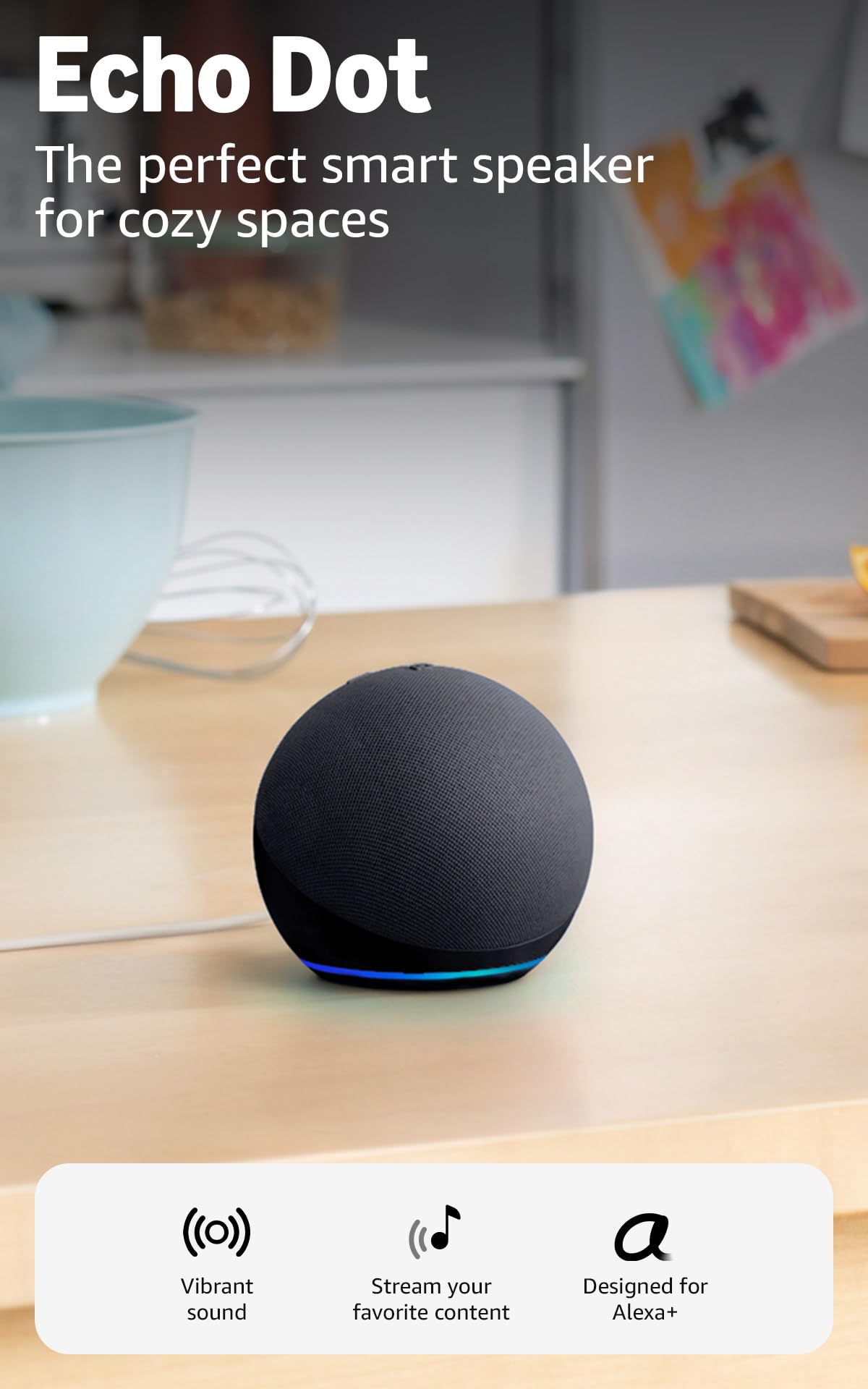
1. Amazon Echo Dot
Our pick — 4.5+★ from 202,000+ verified ratings; the strongest balance of quality and price.
The small puck that made voice control normal in millions of bedrooms.
For the money, nothing else here does as many separate jobs. You get Alexa built in, so it answers questions and sets hands-free timers without your phone nearby. You can tap the top to snooze your alarm when the morning goes sideways. And it controls compatible smart home gadgets by voice, with routines you can trigger from built-in motion or indoor temperature sensors.
The sound is fine for a nightstand, a dining room or an office, and you can push music to it over Wi-Fi from Amazon Music, Apple Music, Spotify and others, or over Bluetooth. Pair it with other compatible Echo devices in different rooms and you get music following you around the house. Hook it to a Fire TV and it becomes part of a home theatre. One feature buyers underuse: eero Built-in turns the Dot into a mesh Wi-Fi extender that adds up to 1,000 sq. ft. of coverage to an existing eero network — a small speaker that quietly patches a dead spot in the hallway.
What wins people over is how many jobs it handles for the price, and setup is quick enough that non-technical buyers get through it without a call for help. The honest catch is reliability. A recurring thread in the feedback is a unit that stops responding or switches itself off. Most Dots run for years, but enough units fail that you should keep the return window in mind. Privacy controls are solid — there is a physical mic-off button and multiple layers of privacy settings.
What earns its place
- Alexa built in, plus hands-free timers and smart home control
- Doubles as an eero mesh Wi-Fi extender adding up to 1,000 sq. ft. of coverage
- Physical mic-off button for privacy
- Groups with other Echo devices for multi-room music
Where it asks patience
- Occasional units stop working or power off on their own
- No display, so no clock or song title to glance at
- Sound suits a small room, not a party
The short answer: if this is your first smart speaker and you want voice control plus decent background music, buy this one and move on.
Look elsewhere when: you want to sit down and listen critically — that job needs a real woofer.
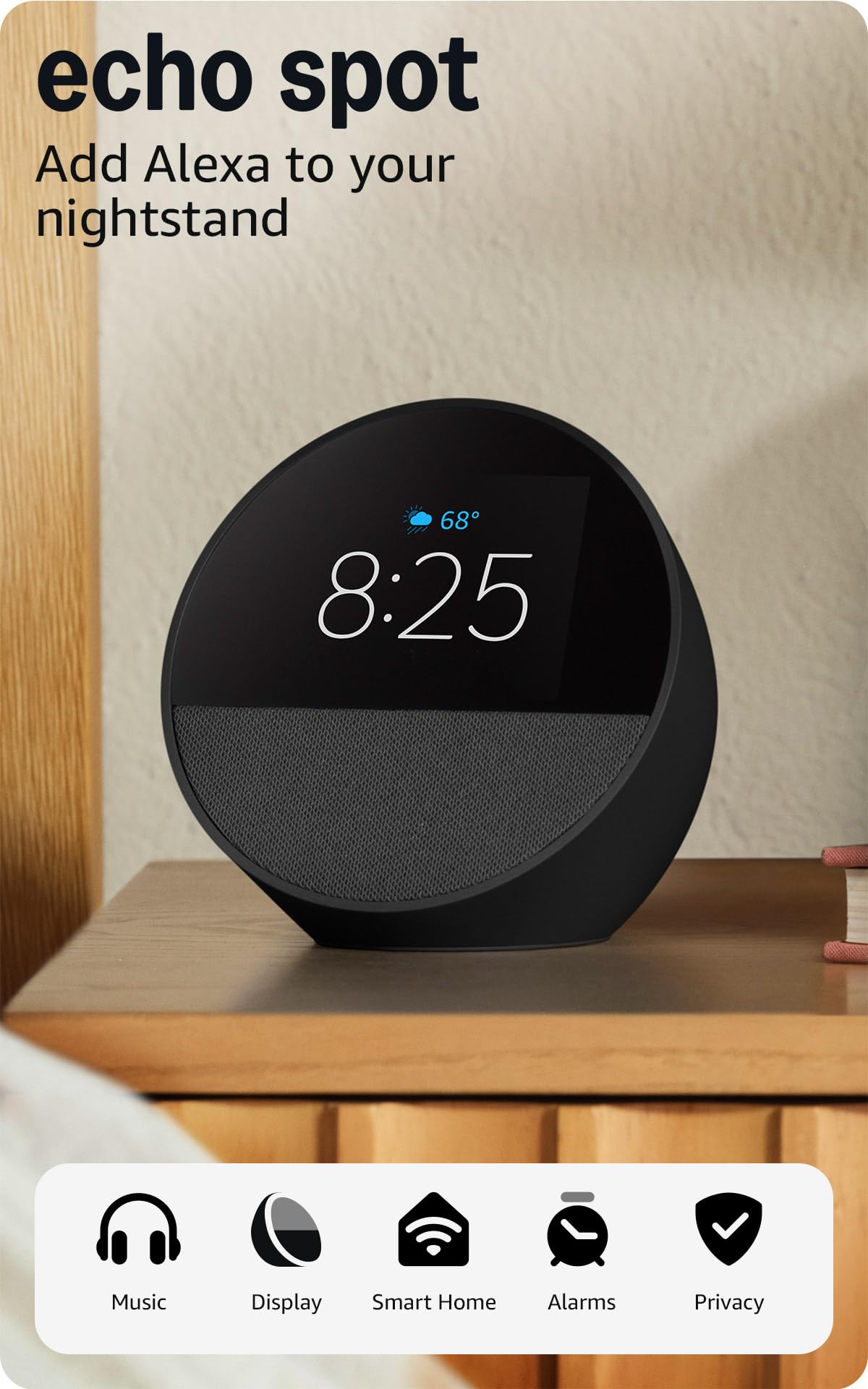
2. Amazon Echo Spot
A bedside clock that hides a full Alexa assistant behind a small colorful screen.
If your nightstand already has a phone, a lamp and a glass of water, this is the smarter shape for that space. The Spot shows the time, weather and song titles at a glance, and you can swap in your favorite clock face and colors so it blends instead of blaring. Ask Alexa to play music, podcasts or audiobooks and the screen shows what is playing so you can touch to control it.
Waking up is where it earns its keep. You can build an Alexa routine that eases you in with music and gradual light, then glance at the time or check reminders without lifting your phone. It also runs the smart home — ask it to turn on lights, or touch the screen to dim them. Motion-detection routines can turn down the thermostat as you leave or open the blinds when you walk in.
It is built from 36% recycled materials, keeps the Dot’s eero Built-in mesh extender with up to 1,000 sq. ft. of added coverage, and adds a mic-off button plus in-app privacy controls. The one thing to weigh honestly is the screen size, which splits opinion — some find it exactly right for a bedside glance, others expect a bigger panel. The value story is decent rather than glowing. If you mainly want a timer with legs, the Dot above covers that for less. If you want a clock you can talk to, this is the better fit.
Why it lives on a nightstand: a clock face, an alarm you can snooze by voice, and routines that fade the lights up make the morning less of a scramble.
Weigh this first: the display is a glance-only size, so treat it as a clock with smarts rather than a media screen.
Reach for this if: you want the alarm clock role and the speaker role handled by one object.
Think twice if: you were hoping for a proper video or photo display — this is built for time and weather.
3. JBL Charge 5 Wi-Fi
The one you can carry to the pool and still stream over Wi-Fi at home.
Most smart speakers are furniture. This one is luggage. An IP68 rating (a waterproof and dustproof score) means it survives a seaside picnic where other speakers would not — the maker’s own framing puts it from a poolside party to a backyard cookout. Up to 20 hours of battery life means you are not hunting for an outlet halfway through the day, and the built-in powerbank lets you top up your phone instead of pausing the music.
At home it streams over Wi-Fi through AirPlay, Alexa Multi-Room Music, Chromecast built-in and Spotify Connect. Take a call or scroll your feed and the music keeps going — the connection does not get cut off by your phone screen. When you head outside, switch to Bluetooth and it keeps playing. A self-tuning feature uses dual built-in microphones to detect the surroundings and adjust the audio for wherever the speaker sits, and the JBL One app lets you set the EQ and group compatible JBL Wi-Fi speakers.
The split personality is also the honest weak point. Bluetooth works well, but Wi-Fi setup and stability draw the mixed feedback, so the feature you paid extra for is the one most likely to test you. Treat it as an outdoor champion that can stream at home, not a multi-room system you build an apartment around. What everyone agrees on is the sound itself: bold JBL Original Pro Sound with deep bass that punches far above its footprint.
Carries its weight outside
- IP68 waterproof and dustproof rating
- Up to 20 hours of battery life
- Built-in powerbank charges your phone
- Self-tuning via dual microphones adapts to the room or the yard
The honest trade-offs
- Wi-Fi connectivity draws mixed reports; Bluetooth is the steadier path
- Battery means you have one more thing to charge
- Alexa Multi-Room Music support is not the same as a full built-in assistant
Best matched to: renters, patio hosts and anyone who carries their music between rooms and the garden.
Pass on it if: your speaker stays plugged in on a shelf and never leaves the house.
4. WiiM Sound Lite Smart Speaker
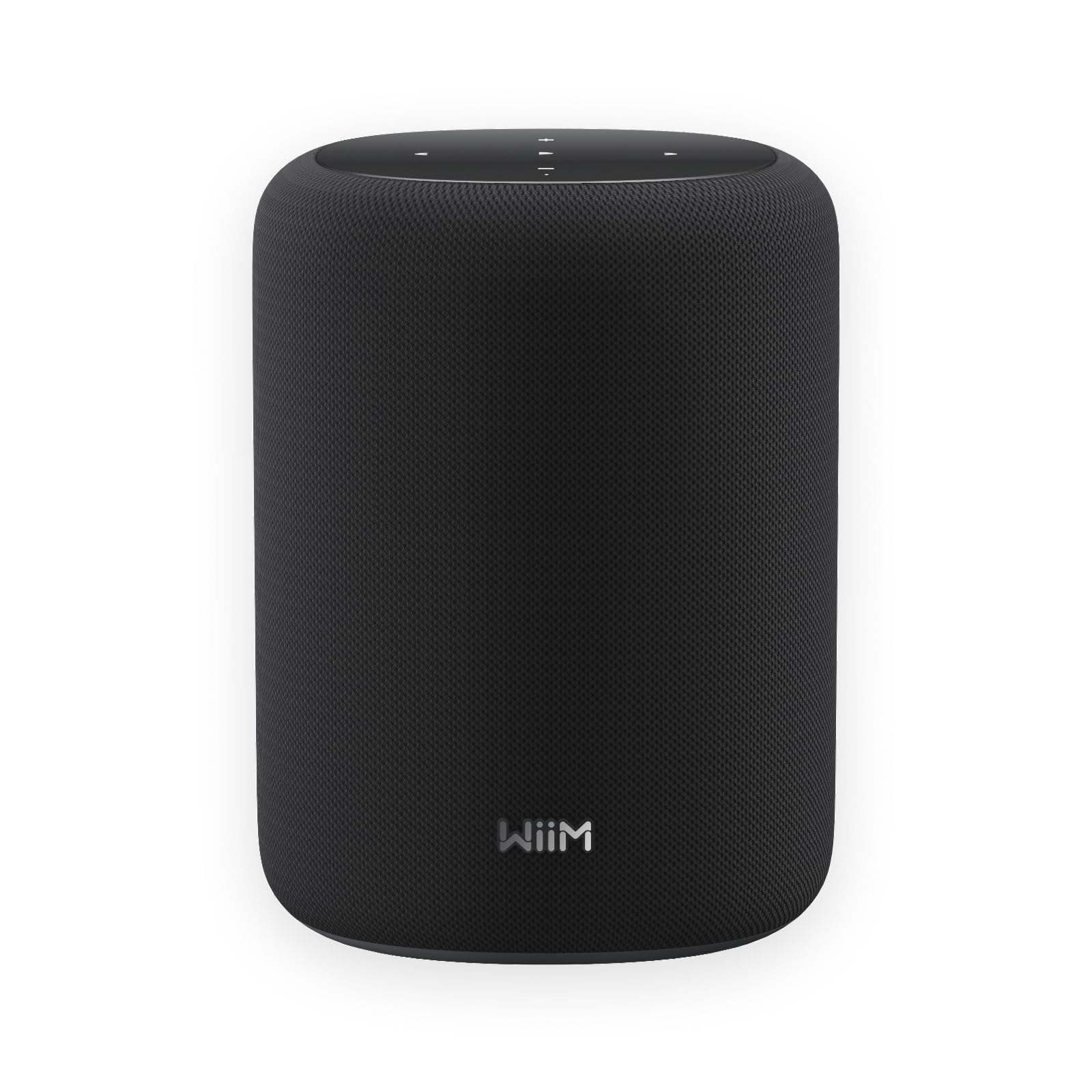
Hi-fi hardware numbers on a speaker that still takes voice commands.
Here is where the two halves of this category finally meet. You get up to 24-bit/192 kHz hi-res streaming — the file format close to what the studio recorded — pushed through a 100W peak amplifier. Underneath that sit a 4″ paper-cone woofer for body and dual 1″ silk-dome tweeters for vocals and cymbals. In plain terms: it has the separate drivers a small puck-based speaker cannot fit, so voices stay clean and highs do not turn harsh when you turn it up.
AI RoomFit listens to how your room colors the sound and corrects it, which matters if the speaker has to sit near a wall or in a corner. Open streaming is the other draw. You can cast from the WiiM Home App, Google Cast, Spotify, TIDAL and Qobuz Connect, Alexa Cast, DLNA and Roon or LMS, and join WiiM, Google Cast or Alexa multi-room groups. Unlike the JBL Charge 5 Wi-Fi above, Wi-Fi here is the primary path rather than the afterthought, and connectivity is one of the things buyers praise.
Voice control comes through Alexa or Google Assistant with compatible devices, and there are physical buttons on the cabinet. Setup through the app is quick and the footprint is small enough for a bookshelf. The practical limits: there is no screen and no remote, so the app is your control panel, and the 50 milliseconds of audio latency is not tuned for lip-synced video. Pair two for true stereo, or add a WiiM Sub Pro if you want more low end, which is the smart path if you plan to grow the system.
What you are really buying: real tweeters and a real woofer at a mid-range outlay, tuned automatically to your room.
What to plan around: the app is the remote, and this is a music-first speaker rather than a TV companion.
Worth it for: listeners who care about vocal and treble clarity and stream from TIDAL, Qobuz or Spotify.
Not the one if: you want a screen, a remote, or a display to glance at from across the room.
5. WiiM Sound Smart Speaker
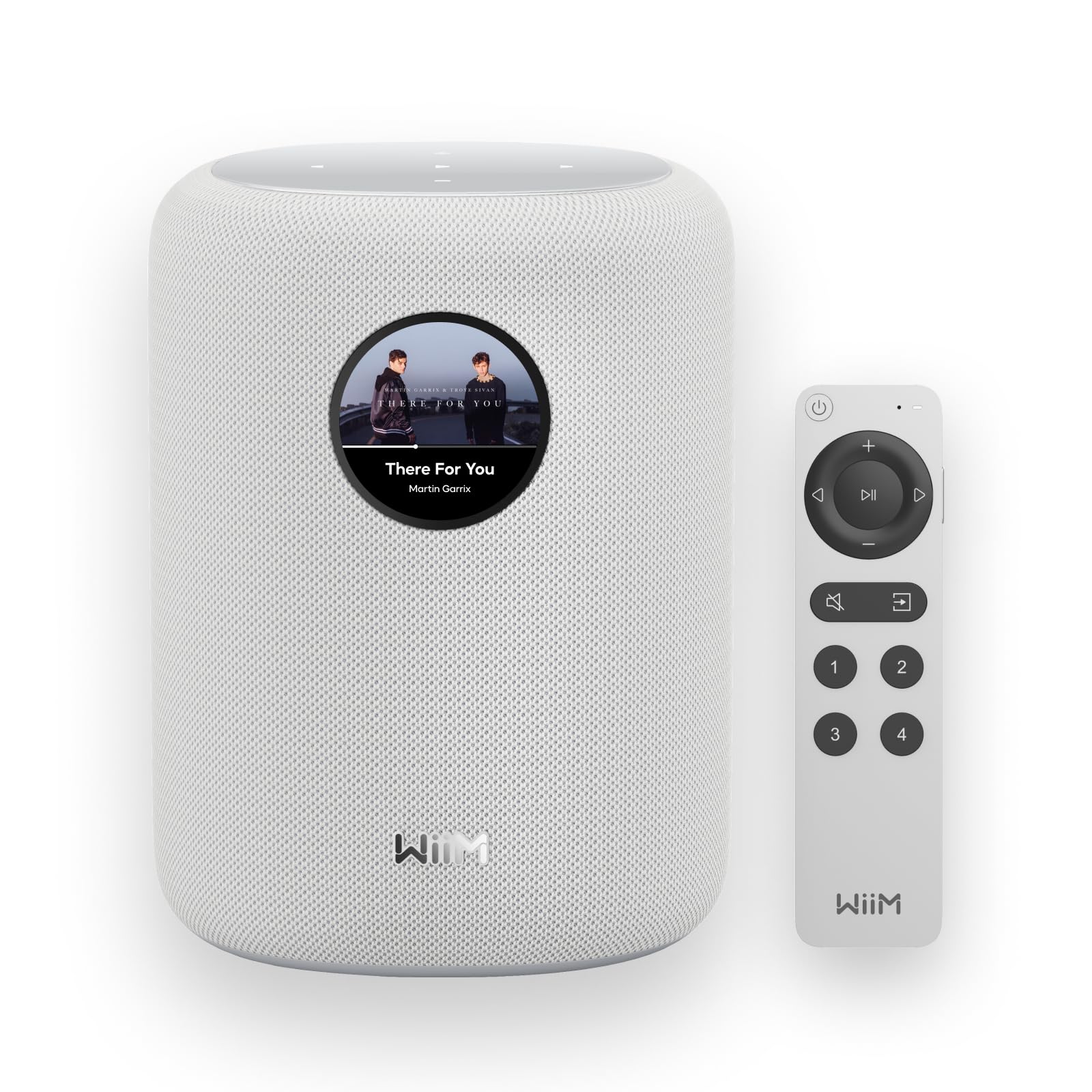
The step-up WiiM adds a screen, a remote and a sub-ready 2.1 system.
Take the Sound Lite and give it a face. The 1.8″ color touchscreen shows album art, track info, playback controls, EQ settings and presets right on the cabinet, so you can skip a track without opening an app or raising your voice. The audio side is a tuned 2.1 stereo system with a dedicated 4″ woofer and dual tweeters, holding the same up to 24-bit/192 kHz hi-res ceiling as its cheaper sibling.
It arrives with a WiiM Voice Remote 2 Lite and a 3.5 mm RCA cable, and it takes app, remote, touch and voice control — four ways in instead of one. Personalized sound is unusually deep here: AI RoomFit room correction plus a 10-band graphic and parametric EQ let you shape the response properly rather than pick between presets. Stream over Wi-Fi through Spotify Connect, TIDAL Connect, Qobuz Connect, Google Cast, Alexa Cast and DLNA, and access 20+ music services through the WiiM Home App. Add a second unit for stereo, or grow into a multi-room setup with compatible WiiM devices.
The gap worth knowing: there is no AirPlay, so an iPhone household loses the easiest hand-off path and leans on Google Cast or the app instead. The remote also draws mixed feelings — some love having one, others never pick it up. Otherwise this is the WiiM to choose if you want control at arm’s length, and the Lite remains the better buy if you will only ever use the app.
The case for the step up
- 1.8″ color touchscreen for album art and controls
- 2.1 stereo with dedicated 4″ woofer and dual tweeters
- 10-band graphic and parametric EQ plus AI RoomFit
- Ships with a voice remote and RCA cable
What to know before you buy
- No AirPlay support
- Remote control appeals to some, gathers dust for others
- 50 ms audio latency is not built for video sync
Pick this one when: you want to see what is playing and adjust the sound without reaching for a phone.
Stay with the Lite if: AirPlay matters or you are happy running everything from the app.
6. Denon Home 150
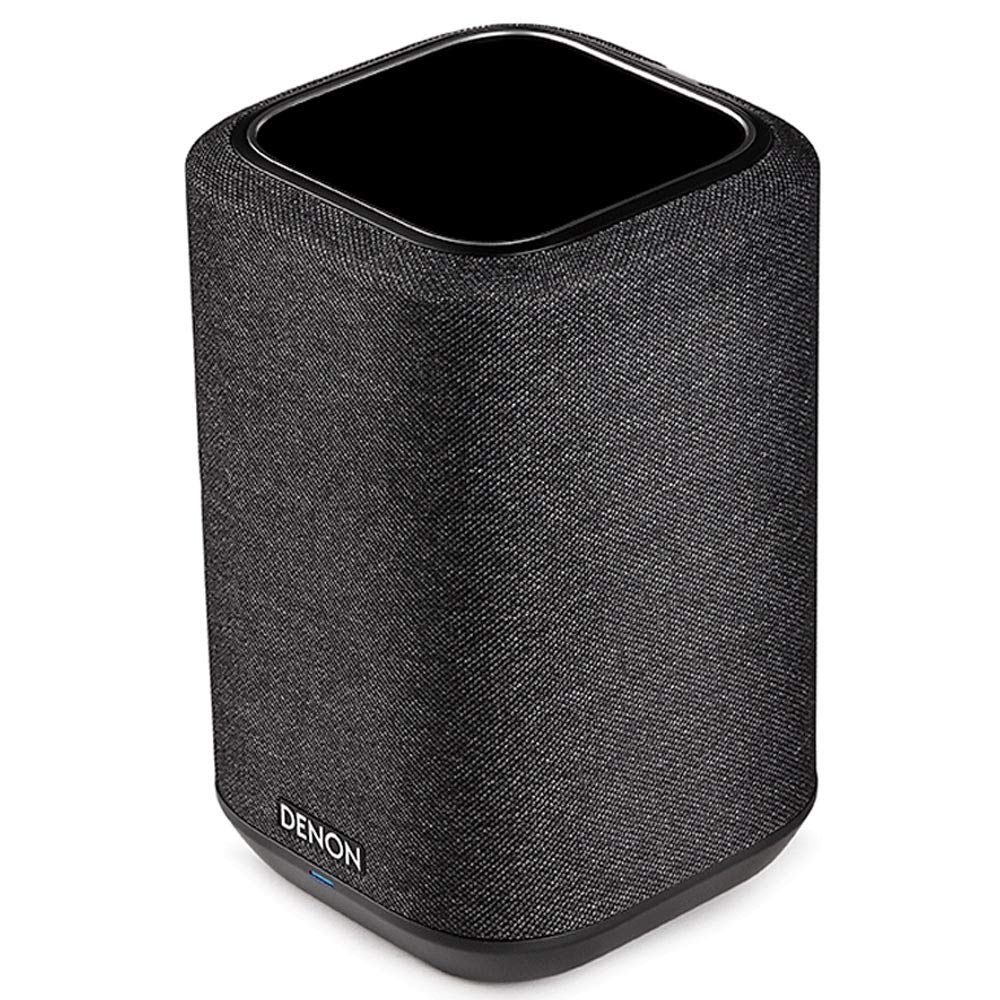
A bookshelf-sized box with proper hi-fi parts inside and HEOS for the rest of the house.
Denon built this like a small component speaker rather than a voice gadget. A 1″ tweeter handles the top end and a 3.5″ woofer handles the body, each driven by its own Class D amplifier, with tuned DSP keeping distortion low when you push it. The separate tweeter and woofer fill a medium-sized room, and setup is short enough that most people are listening within minutes.
The multi-room story is HEOS built in. Play the same song in every room or a different one in each, and group it with other Denon Home speakers, sound bars or AVRs. Streaming covers Spotify, TIDAL, Pandora and more over Wi-Fi, AirPlay 2 or Bluetooth, and there is a USB port for playing files from a drive in MP3, WAV, AAC and WMA. Pair two as surrounds behind you, or add the Denon Home Soundbar 550 and Subwoofer for a 5.1 setup — this is the pick for someone building toward a home theatre rather than stopping at one speaker.
Alexa is built in, and Siri arrives through AirPlay 2 on an iPhone. Where it asks for patience is the software: the HEOS app and Bluetooth pairing are the friction points, and reliability draws its share of gripes. The hardware is the strong half. If you already own Denon gear, HEOS grouping with your other Denon Home speakers makes the app worth tolerating. If you do not, a WiiM or a JBL will feel friendlier on day one.
Hardware-first design: separate tweeter, woofer and dual Class D amps give it detail a single-driver speaker cannot match in the same footprint.
The friction to expect: the HEOS app and Bluetooth pairing are where owners lose their temper, so budget a calm first evening with the setup.
Fits best in: a Denon household, or a room you plan to expand into surround sound later.
Not for you if: you want setup to be a two-minute job with no app wrangling.
7. Bose Lifestyle Ultra Speaker

Bose’s play for the room where one speaker has to be enough.
The pitch is width. Bose calls this its most flexible home speaker, built around TrueSpatial Audio and CleanBass — the aim being sound that wraps around the room instead of shooting from one spot on the shelf. Adjustable EQ then lets you nudge the balance toward crisp highs and clear vocals or richer bass, either in the Bose app or by voice. It is the pick here for someone who wants a single box to disappear into a den or bedroom and still fill it.
Controls come three ways: touch, app and voice, with the all-new Alexa+ handling entertainment and smart home requests. Streaming covers Wi-Fi, Bluetooth, AirPlay, Spotify and Google Cast, and an AUX input lets you plug in a turntable or a CD player — genuinely useful if you have older gear you are not ready to retire. Pair two for stereo or link several through the house for multi-room listening.
Bluetooth connectivity is the recurring gripe, particularly staying connected to Amazon Music, and setup splits between easy and fiddly. It is also the one pick here not rated waterproof, so keep it out of splash range. What earns it the price of entry is the staging: owners describe a wide, dimensional soundstage that makes a single speaker feel like more than one. If that is what you want from a living room, it is worth a listen.
The draw is the soundstage: TrueSpatial Audio creates width that a conventional single box struggles to produce.
Size up the fit: Bluetooth dropouts and non-waterproof construction mean this belongs on a shelf indoors, not by the pool.
Right answer for: a living room or den where one speaker must cover the whole space and a turntable needs a home.
Skip it when: you need portability or splash resistance.
8. JBL Authentics 500

The loudest thing on this list, and the one most likely to annoy the neighbours.
Read the power figure against the rest of the list and the gap is obvious. This is a 270W, 3.1-channel speaker with three 1″ tweeters and three 2.75″ woofers — against the 100W, two-tweeter design of the Authentics 300 above. That extra driver count is what gives it the low-end slam owners keep coming back to, while staying quiet in the soft passages rather than hissing or humming between notes. Dolby support and a 6.5″ driver round out the movie-night side of the job.
Streaming runs over built-in Wi-Fi with AirPlay and Qplay for interruption-free playback, and the connection lets the speaker update its own software. Controls sit on the cabinet for volume, bass and treble, Alexa or Google Assistant handles voice, and the JBL One app opens up deeper settings. Automatic self-tuning recalibrates each time you power it on, so it adapts to wherever it ends up. The recycled build is unusually specific: 100% recycled fabric, 85% recycled plastics and 50% aluminum, in an FSC-certified carton printed with soy ink.
The catch is that this is a piece of furniture with a plug. There is no battery, so it lives where the outlet is. It is also the biggest outlay on this list by a clear margin, which only makes sense if you actually want room-shaking bass. For a bedroom or a desk, the WiiM Sound Lite does the job for far less. For the living room where you want to feel the kick drum, this is the one.
Where the money goes: 270W across six drivers, with the bass authority to carry a large room and a film soundtrack.
Be honest about the fit: no battery and a large cabinet mean it stays put, and the outlay only pays off if you will use that headroom.
Made for: a main living-room speaker where volume and bass depth matter more than portability.
Wrong choice if: you want something for a nightstand or a room you carry music through.
Know the Specs
Amplifier Power and Driver Count
Power in watts tells you how much headroom a speaker has before it starts to strain. Two speakers with the same wattage can still sound different because driver count changes the job each part does — a dedicated woofer handles bass while tweeters handle vocals, which keeps the sound clean at higher volume. A 100W speaker with two drivers and a 270W speaker with six are built for different rooms, not different quality tiers.
Hi-Res Audio Figures
Numbers like 24-bit/192 kHz describe the resolution of the audio file the speaker can accept and decode. Higher figures mean the speaker can carry more detail from a high-resolution source such as TIDAL or Qobuz. If you stream from a standard service, the ceiling will not change what you hear — but it means the speaker will not be the bottleneck if you upgrade your source later.
Wi-Fi Versus Bluetooth
Wi-Fi lets the speaker pull music directly from the internet, so your phone is free and the stream does not break when a call comes in. Bluetooth is simpler and travels with you, but it ties the speaker to your phone and compresses the audio. A speaker with both gives you Wi-Fi at home and Bluetooth when you are away from your network.
IP Ratings and Portability
An IP rating like IP68 describes resistance to dust and water — the first digit covers dust and the second covers water, with higher numbers meaning more protection. That rating is what makes an outdoor speaker practical. Battery life in hours then decides how long it lasts away from an outlet, and how much charging you have to plan around.
Common Questions
Do I need Wi-Fi for a wireless smart speaker to work?
Can I use a smart speaker without a subscription?
What is the difference between a smart speaker and a Bluetooth speaker?
Will a smart speaker work with both Alexa and Google Assistant?
How much speaker power do I need for a living room?
Can I connect a turntable to a smart speaker?
Is AirPlay the same as Bluetooth?
Can I pair two smart speakers for stereo sound?
Does a built-in Wi-Fi extender really help my home network?
Which smart speaker is easiest to set up?
The Bottom Line
For most people, the wireless smart speaker to buy first is the Amazon Echo Dot, because it delivers the voice assistant, smart home control and a mesh Wi-Fi extender (a device that widens your home Wi-Fi coverage) in one small unit that is easy to live with. If you want to actually sit and listen, the WiiM Sound Lite brings a 4″ woofer (the driver that handles bass), dual tweeters (the drivers that handle high notes) and up to 24-bit/192 kHz streaming (a high-resolution audio format) to a bookshelf without giving up voice control. And for a living room where bass matters, the JBL Authentics 500 and its 270W of 3.1-channel sound (three main channels plus a subwoofer) is the one to reach for.
One last nudge: the Echo Dot is the lowest-risk entry point on this list, and it is the only pick here whose built-in extender can quietly fix a weak Wi-Fi corner while it plays your morning podcast.
How we choose
We do not accept paid placement. Every pick is matched to a real buyer and a real use-case; we do not hands-on test units.
Sources
Specifications: manufacturer listings and product documentation. Review insights: verified customer reviews, as of November 2026. Pricing: not shown on this page (it changes often); check the current price via the retailer link.
As an Amazon Associate, Tactical Gear Guy earns from qualifying purchases. This does not affect which products we feature.