Specs are compiled from manufacturer listings and verified buyer reviews and can change over time — please confirm the key details on the product page before buying.
Rear speakers are the part of a surround setup that quietly decides whether a movie feels big or flat, and wireless models let you put them behind your couch without pulling speaker cable along the skirting board. The catch is that “wireless” means something different on almost every box: some speakers need a specific brand of soundbar, some need a specific model year, and some stream music on their own. This guide sorts the real options by what each one asks of you before you buy it.
This guide is built by comparing the manufacturers’ published specifications and the patterns across verified customer reviews, so you get each pick’s real strengths and trade-offs instead of marketing spin.
Below you will find the exact soundbar or receiver each set needs, the driver sizes and power figures that shape the sound, and the one compatibility line most listings bury. Every pick here is a genuine wireless satellite set worth considering, and this breakdown of the best wireless satellite speakers explains which one fits your room and your existing gear.
Top Picks


How To Choose Wireless Satellite Speakers
The first thing to accept is that “wireless” refers to the audio signal only. Nearly every rear satellite here still needs a power cable to a wall socket, so the battle is fought over sockets and pairing, not over cable-free magic. Work out where your two rear positions fall, check that a plug is reachable, then check compatibility before anything else.
The compatibility list is the whole purchase
Each set is built for a specific family of soundbars or receivers, and the listing usually spells the models out in capitals. The Samsung kit names the 2025 Samsung soundbars it works with. The Sony SA-RS3S lists BRAVIA THEATER BAR 8 and BAR 9, plus the HT-A7000, A5000, A3000 and S2000 soundbars and the STR-AN1000 receiver. The TCL Z100 lists only the QM6K, QM7K, QM8K, QM9K and X11L televisions. Read that line twice — a rear kit that will not pair is a very expensive paperweight.
Driver size and cabinet design shape the rear channel
A bigger driver moves more air, which matters when a rear channel has to push an explosion across a wide room. The Bobtot rear satellites carry a 3-inch driver, while the Samsung set uses a 6-inch driver. The Polk SR2 and its siblings take a different route, using a custom-tuned 3-inch driver in a compact cabinet each with a built-in amplifier. Two-way designs, like the Sony SA-RS8 with its separate woofer and tweeter, split the work so dialogue and effects land in different places.
Decide if you want a rear kit or a whole streaming speaker
A dedicated rear kit is the tidy answer if you already own the matching soundbar. A self-contained streaming speaker is the answer if you want music in the kitchen and the option of cinema duty later. The WiiM Sound Lite pair and the Yamaha MusicCast 20 pair both live in that second world, and both can be pressed into surround service when you add the right pieces. Decide which of those two worlds you are in before comparing prices.
Side-by-Side Comparison
| Model | Best For | Driver Size | Connection | Pairs With | Amazon |
|---|---|---|---|---|---|
| Roku Wireless Speakers, Set of 2★ Best Overall | Roku TV owners wanting instant rears | — | Bluetooth, wireless | Roku TV, Streambar, Streambar Pro, Smart Soundbar | Amazon |
| Samsung 9250S Wireless Rear Speaker KitCleanest Add-On | 2025 Samsung soundbar owners | 6 inches | Bluetooth | HW-Q600F, HW-B750F, HW-B630F, HW-B550F | Amazon |
| Bobtot Wireless Rear Satellite SpeakersFull System Pick | Full 5.1 system from scratch | 6.5 inches | Bluetooth, ARC, optical, coaxial | TV, projector, computer, laptop | Amazon |
| Polk Audio SR2 Surround Sound Speakers | Polk React and Magnifi owners | 3-inch driver per speaker | Wi-Fi, wireless | Polk React, Polk Magnifi | Amazon |
| Sony SA-RS3S Wireless Rear Speakers | Sony soundbar and receiver owners | — | Bluetooth, wireless | BAR 8, BAR 9, HT-A7000/A5000/A3000/S2000, STR-AN1000 | Amazon |
| Sony BRAVIA Theater Rear 8 (SA-RS8) | Newer Sony BRAVIA setups | 15.5 centimeters | Bluetooth, wireless | BRAVIA Theater Trio/Bar 9/Bar 8/Bar 7, HT-A7000/A5000/A3000, STR-AN1000 | Amazon |
| WiiM Sound Lite Smart Speaker (2 Pack) | Streaming-first listeners | 4″ woofer plus dual 1″ tweeters | Wi-Fi, Bluetooth, Ethernet, Aux | Any phone or TV via app and casting | Amazon |
| TCL Z100 Wireless Home Theater Speaker (2 Pack) | Dolby Atmos without a soundbar | 5.22 inches | Bluetooth, wireless | QM6K, QM7K, QM8K, QM9K, X11L TVs | Amazon |
| Yamaha WX-021 MusicCast 20 (Pair) | Multi-room across the house | — | Wi-Fi, Bluetooth | Phones, tablets, laptops, desktops | Amazon |
Detailed Reviews
1. Roku Wireless Speakers, Set of 2 (Pack of 1)
Our pick — 4.5+★ from 5,500+ verified ratings; the strongest balance of quality and price.
The simplest route to rear-channel sound if a Roku TV already sits in your living room.
Here is the pick that earns the top spot, and it earns it on a straightforward promise: plug two speakers into the wall, pair them to the television you already own, and the sound moves behind you. It is the crowd favourite by a wide margin — 4.5+ stars across 5,000+ owners — and owners credit the clear dialogue and tight audio-video sync. Voices stay clear through the loudest action scene, and the speakers keep audio and picture locked together so nothing drifts out of sync.
Speech Clarity lifts dialogue above background effects with a single control. Volume Leveling flattens the jump when adverts arrive louder than the film. Night Mode keeps the explosions quiet enough that the rest of the house stays asleep. Bluetooth streaming at a 10-metre range lets you push music from your phone to the same pair when the TV is off.
What you need to know first is the compatibility line, because it is strict. These work with a Roku TV, a Roku Streambar, a Roku Streambar Pro or a Roku Smart Soundbar — and Roku notes the Streambar SE is not compatible. The recurring gripe in owner feedback is pairing and reliability, so budget a little patience for the first connection. Once it settles, it stays settled for most people.
What earns it first place
- Speech Clarity, Volume Leveling and Night Mode are the three controls you actually use nightly
- Bluetooth streaming at 10 meters turns the rears into a music pair when the TV is off
- Audio and video stay in sync, so lip movement never drifts from the dialogue
- Easiest setup of the group for anyone already inside the Roku ecosystem
Where it draws the line
- Roku-only pairing: no other brand of soundbar or TV will drive these
- Streambar SE is explicitly excluded from the compatibility list
- First-time pairing can take a couple of attempts before it holds
Made for: a household already watching on a Roku TV or Roku soundbar that wants surround sound without a receiver.
Think twice if: your television is another brand — nothing here will pair with it, however good the speakers sound.
2. Samsung 9250S Wireless Rear Speaker Kit
Six inches of driver per box and no module to hide behind the sofa.
The headline here is the clean install. These rear speakers talk to your Samsung soundbar without a separate receiver module sitting on the floor and without cable running to the back of the room. Each cabinet carries a 6-inch driver — smaller than the 6.5-inch unit in the Bobtot system below, but working inside a soundbar ecosystem that already handles the front channels. For music-led shows and live sport, the extra spread behind your seat is the whole point.
Two sound modes are worth knowing about before you buy. Private Rear Sound turns the rear channel into a personal listening zone, so the person nearest the speaker hears more without raising the whole room. Sound Grouping lets the rears join in as a grouped zone. Both are extras layered on top of standard surround, not replacements for it.
Now the fine print, which decides everything. This kit is listed as compatible with four 2025 Samsung soundbars — HW-Q600F, HW-B750F, HW-B630F and HW-B550F — and nothing else. Owner feedback splits on the wireless handoff, and the cable that ships in the box draws its share of grumbles, so plan your socket positions. Get the pairing right and the result is a tidy, cinema-leaning rear stage behind your seat.
Best reason to pick it: no receiver module, no cable run to the back wall, and a proper 6-inch driver doing the work in each cabinet.
The honest limit: it is a four-model kit — if your Samsung soundbar is not on that list, it will not join your system at all.
Reach for this if: you own one of the four listed 2025 Samsung soundbars and want the rear channel filled without extra hardware on the floor.
Look elsewhere if: your soundbar predates the listed models or comes from another brand.
3. Bobtot Wireless Rear Satellite Speakers
A whole 5.1 rig in one box, with the two rear speakers cutting the cable.
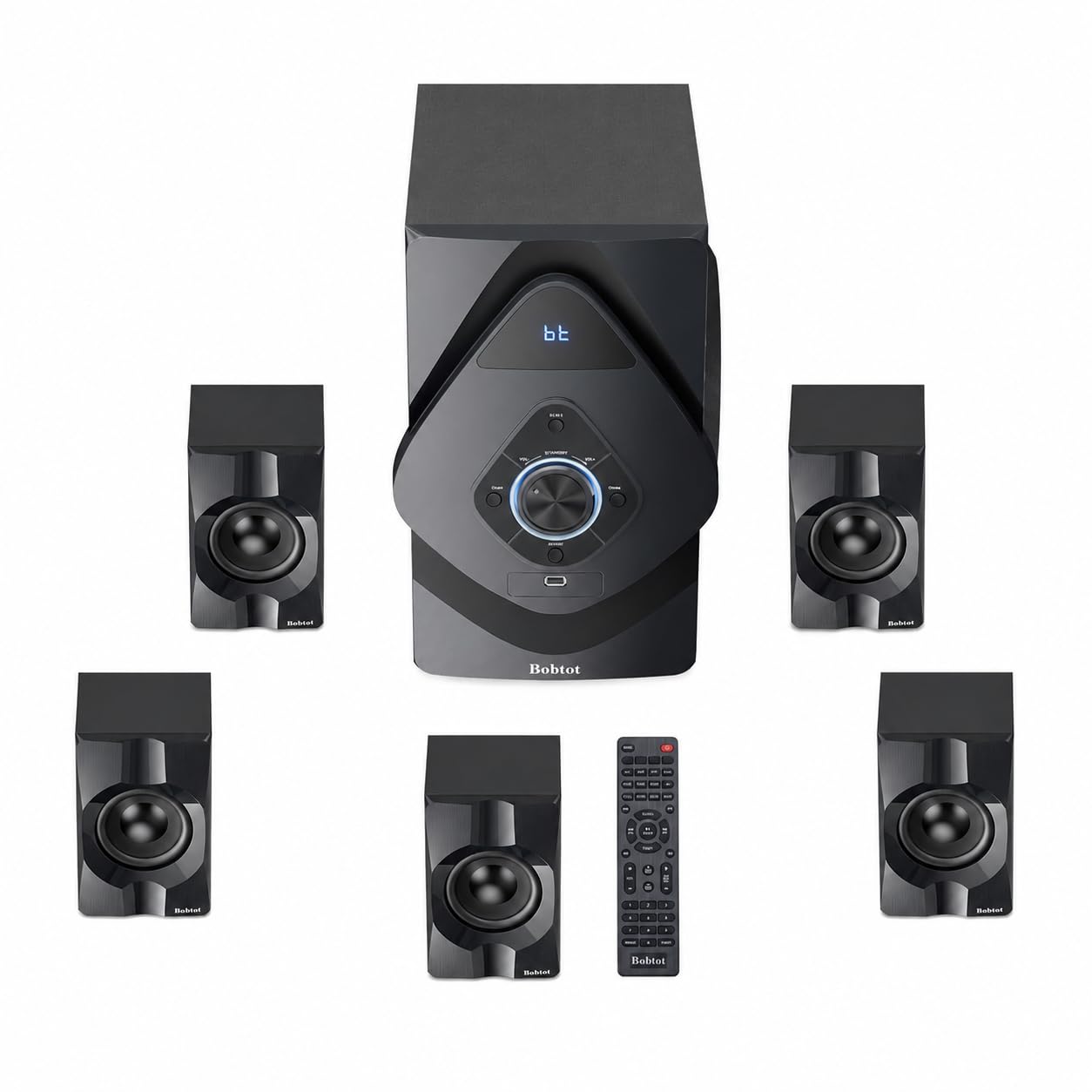
If you are building from nothing rather than adding to an existing soundbar, this is the set that does the most in one purchase. You get three front speakers wired to the subwoofer for a stable connection, plus two wireless rear satellites you can place freely behind the couch. The 6.5-inch subwoofer handles the low end while 3-inch surround speakers cover the mids. Total system output is rated at 800W peak.
Connectivity is unusually generous for the tier: ARC, optical, coaxial, FM and USB all feed the same box, so a television, a USB stick of music and a radio station can all share one system. Bluetooth reaches 33 feet, which comfortably covers a normal living room. There are also five listening modes — jazz, country, classic, pop and rock — and a microphone input for singing at family gatherings.
Buyers report setup going smoothly, with one noting a 5-minute Bluetooth connection. The catch is sync: the sound quality feedback is mixed, and some owners flag audio drifting out of step with the picture. Give the rear satellites a clear line to the subwoofer and a fair amount of that settles. For a first home theatre build, the reach here is hard to match elsewhere in this group.
The scope you get: five speakers, a 6.5-inch subwoofer, a remote and a full cable bundle in the box — front, rear, bass and wiring in one purchase.
What to watch: sync between audio and picture is the recurring complaint, so test a dialogue-heavy scene on day one and adjust placement if it drifts.
Built for: the buyer starting a home theatre from scratch who wants front, rear and bass handled together.
Less suited to: anyone who already owns a good soundbar and only needs two extra rears.
4. Polk Audio SR2 Surround Sound Speakers, 2 Count (Pack of 1)

Shelf-sized rear speakers that mount on the wall and stay out of the way.
Small rooms are where this pair shines. Each cabinet carries a custom-tuned 3-inch driver with its own built-in amplifier, and the pair is labelled left and right so you cannot get the placement backwards. A mounting template ships in the box, which means wall placement is a measured job rather than a guessing game. Owners routinely point to the size as the reason it works — it disappears onto a shelf or a wall bracket.
The design also carries a 20 KHz frequency response figure, and the wireless link is rated over Wi-Fi rather than Bluetooth. Setup is the most-praised part of the package, and the pairing to a Polk bar takes minutes.
Where this one asks for care is reliability over time. Feedback on connectivity and long-term function is genuinely split — some owners mention trouble keeping the pair working consistently. Treat it as a fit question: if your space is tight and your bar is a React or Magnifi, this is the neatest answer on the list. If your room is large and you want big rear volume, the Bobtot system or the Sony pairs below give you more to work with.
Why it suits small rooms
- Each cabinet has its own built-in amp, so no separate box to house
- Left and right labelling removes the guesswork from placement
- Included mounting template makes wall fitting a measured job
- Compact enough to sit on a bookshelf without dominating it
What to weigh first
- Built only for Polk React and Polk Magnifi soundbars
- Connection reliability is the split point in owner feedback
- A 3-inch driver will not pressurise a big room the way a larger cabinet does
Made for: a Polk React or Magnifi owner in a compact lounge who wants rears that vanish into the room.
Think twice if: you need rear channels to carry weight across a wide open-plan space.
5. Sony SA-RS3S Wireless Rear Speakers for Soundbar
The widest Sony compatibility list in this group, and an omnidirectional cabinet to match.
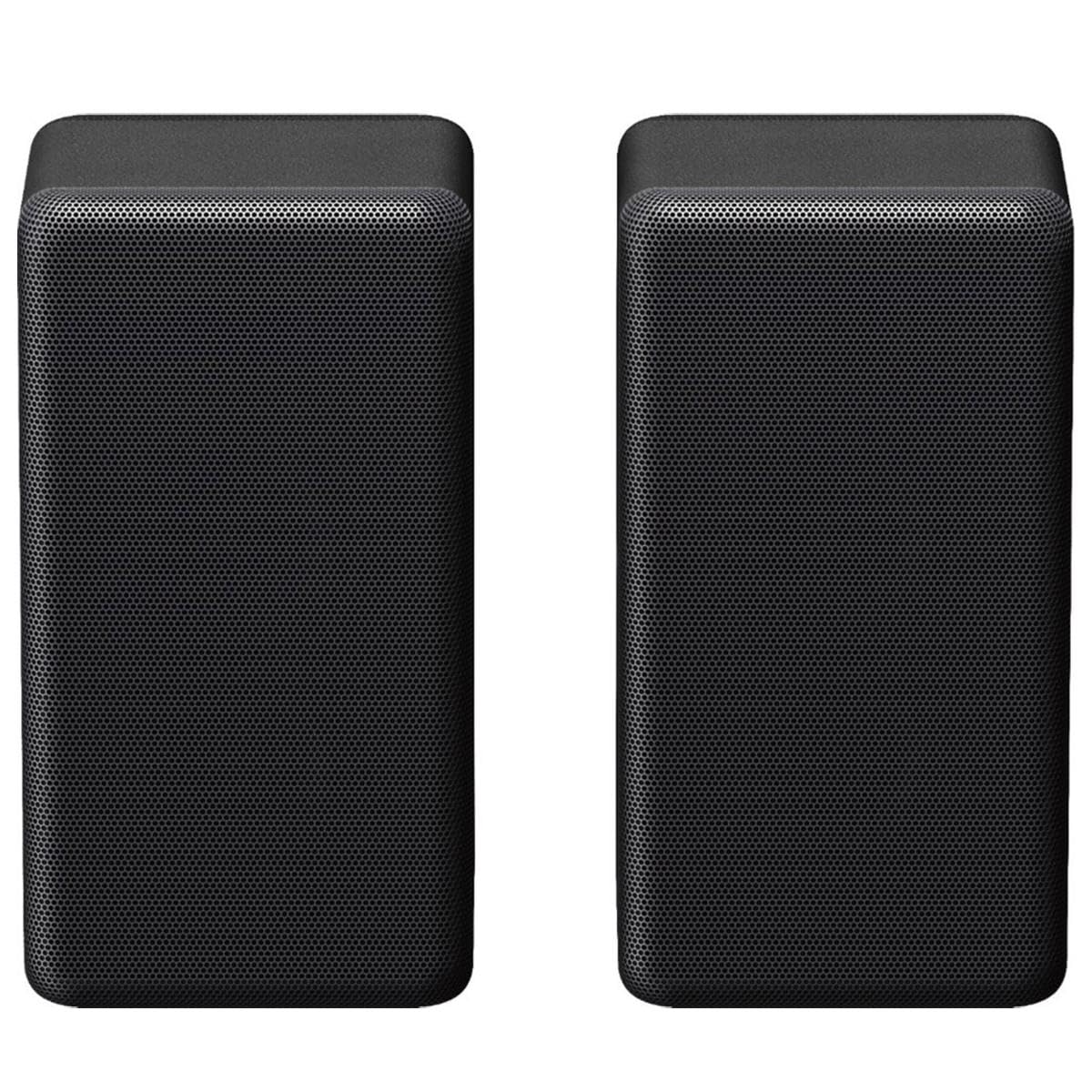
Sony spreads its bets wider than Samsung does. This pair pairs directly with BRAVIA THEATER BAR 8 and BAR 9, the HT-A7000, A5000, A3000 and S2000 soundbars, and the STR-AN1000 AV receiver — a list that covers both recent bars and a receiver-based setup. The cabinets use an omnidirectional block design, which is Sony’s way of spreading sound around the room rather than straight at your ears. Each is a two-way speaker, and both are wall-mount capable.
Sound is the part that lands. Explosions have real push behind them, and effects sweep across the rear stage rather than sitting in one spot. Setup is quick, and the app handles control without another remote on the coffee table. Bluetooth range is rated at 10 meters, so the speakers and the source need to stay on the same floor.
The split in owner experience centres on value and the wireless handoff. Some listeners find the result outstanding for the money; others feel it is priced high for what arrives. Connectivity complaints exist but are not the majority. If you already run a Sony bar from that list, this is a safe pairing; if you are starting fresh, the SA-RS8 below adds newer spatial features for a step up.
The compatibility advantage: it works across two BRAVIA THEATER bars, four HT-A soundbars and the STR-AN1000 receiver, which is the broadest Sony reach on this page.
The honest trade-off: value is the divided opinion here — the sound convinces, the asking position less so for some buyers.
Reach for this if: you own a Sony bar or the STR-AN1000 receiver and want rears that mount on the wall and spread sound wide.
Look elsewhere if: your soundbar is from another brand — the direct connection is Sony-only.
6. Sony BRAVIA Theater Rear 8

Sony’s newer rear stage, built to widen 360 Spatial Sound Mapping across the room.
The spec that defines this cabinet is 15.5 centimeters — that is the driver size, and it is the detail that separates it from the SA-RS3S above. Each speaker is two-way, with a woofer and a tweeter doing separate jobs, so dialogue and effects do not compete for the same cone. Paired with a compatible Sony soundbar, it extends 360 Spatial Sound Mapping and pushes cinema-style surround further past the screen.
There is a second trick that no other set here offers: it will connect wirelessly straight to a compatible BRAVIA television and expand the sound beyond the screen with no soundbar in the chain at all. Sony notes this function needs a compatible BRAVIA and the latest software. Setup runs through the BRAVIA Connect App, and the speakers are designed to sit wherever the room suits rather than wherever the cable reaches.
The catch is the wireless link itself. Sound quality and easy setup draw warm feedback, but connectivity and reliability are the divided points, with several owners reporting the speakers failing to stay connected. It also carries real weight at 2.2 kg per cabinet, so wall mounting needs a solid fixing. Nail the connection and you get the most spacious rear stage Sony offers at this level.
Where it leads: a 15.5-centimeter driver and a two-way woofer-plus-tweeter layout give it more cone area and more separation than the SA-RS3S above.
What to prepare for: at 2.2 kg per cabinet, wall brackets need proper fixings, and the wireless link is the part owners find least dependable.
Best suited to: a newer BRAVIA Theatre setup where you want spatial mapping and the option of a soundbar-free connection to the TV.
Not the one for: a household that wants a set-and-forget link with no troubleshooting.
7. WiiM Sound Lite Smart Speaker 2 Pack
Two speakers that stream on their own and can still serve as your rear pair.
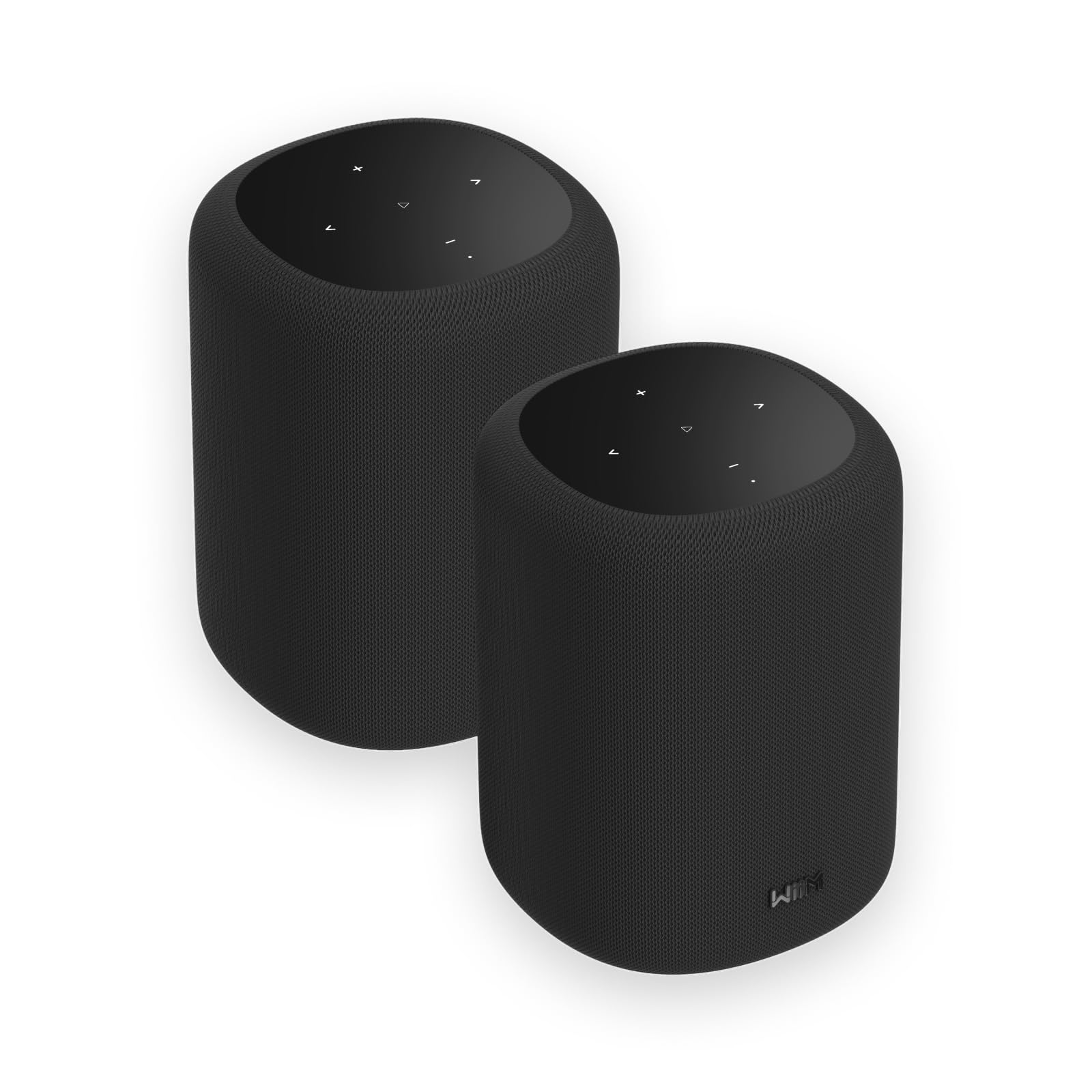
Most of this list assumes a soundbar already owns the front of your room. This pair does not need one. Each speaker carries a 4-inch paper-cone woofer, dual 1-inch silk-dome tweeters and a 100W peak amplifier, and streams at up to 24-bit/192 kHz — a resolution figure that means lossless-grade audio rather than a compressed stream. Mid and treble clarity is the part owners single out, and the app makes setup quick.
Casting is where it opens up: the WiiM Home App, Google Cast, Spotify, TIDAL and Qobuz Connect, Alexa Cast, DLNA and Roon or LMS all feed it, and it will join WiiM, Google Cast or Alexa multi-room groups. Pair two and you have true left/right stereo. Add a WiiM Sub Pro for more bass, or combine it with compatible WiiM pieces as centre and surround for cinema duty. Audio latency is listed at 50 milliseconds.
Smaller details that shape daily use: the enclosure is polycarbonate with glass fibre, there is a 3.5mm aux input for a wired source, and Bluetooth range is 10 meters. AI RoomFit adjusts the sound to the room and the placement, which matters more in a corner than in open space. The catch is that rear-channel duty runs through the WiiM ecosystem, not a soundbar pairing.
What makes it versatile
- Streams at up to 24-bit/192 kHz with a 100W peak amplifier per speaker
- Casts from Google Cast, Spotify, TIDAL, Qobuz, Alexa Cast, DLNA and Roon or LMS
- Two units pair into true left/right stereo, with a WiiM Sub Pro for extra bass
- AI RoomFit adapts the sound to the room and to where you place it
What it asks of you
- Not a dedicated soundbar accessory — rear-channel duty comes through the WiiM ecosystem
- Extra bass needs the separate WiiM Sub Pro
- Multi-room groups mean learning one more app
Reach for this if: music streaming matters as much as film night and you want speakers that work across both roles.
Look elsewhere if: you only want two dumb rear speakers plugged into an existing bar.
8. TCL Z100 Wireless Home Theater Speaker
Dolby Atmos from a single wireless speaker, with no soundbar anywhere in the chain.
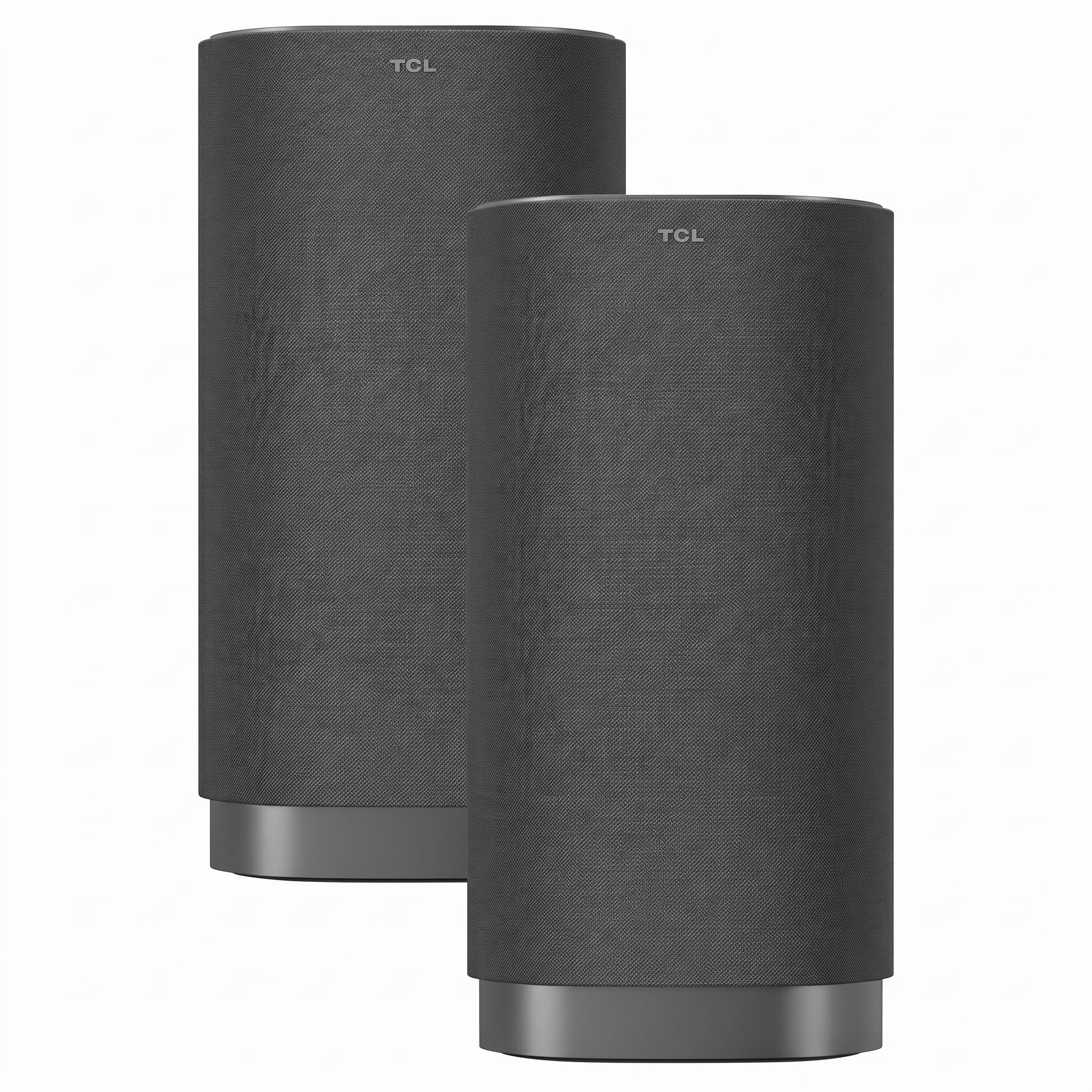
The idea here is genuinely different. Dolby Atmos FlexConnect delivers spatial audio from one wireless speaker, so the height and surround effects that usually need a soundbar arrive from a compact cabinet instead. The driver is listed at 5.22 inches, and output is rated at up to 220W — the listing also states 170W in the product name, so treat the rated figure as the one to check on the box. Spatial Soundstage Calibration then adjusts the sound to your room layout and where each speaker sits.
Expansion is the other half of the pitch. You can start with one speaker or build to a full surround system with up to 4 speakers and an optional subwoofer, and the wireless tech is listed without distance restrictions between units. Each cabinet measures 5.42 inches wide, 5.22 inches deep and 11.87 inches tall, so it will fit on a shelf or a stand beside the sofa.
Here is the line that decides it: this is listed as compatible only with the TCL QM6K, QM7K, QM8K, QM9K and X11L televisions. If your TV is not one of those five, the set has nothing to talk to. Where it does pair, sound quality is the strength and wireless connectivity is the divided point. On a matching TCL set it is the cleanest path to Atmos in the room.
The whole idea in one line: spatial audio and up to 220W of output without a soundbar, calibrated automatically to your room.
The gate you must clear: five TCL TV models only — everything else is out.
Best suited to: an owner of one of the five listed TCL televisions who wants Atmos without adding a soundbar.
Not the one for: anyone with a different brand of TV, however good the sound reads on paper.
9. Yamaha WX-021 MusicCast 20 Wireless Speakers – Pair (Black)

A pair that moves around the house as happily as it sits behind the sofa.
Build quality is the thing that impresses here, and sound quality alongside it. Owners describe the pair as excellent rear-surround speakers and equally good multi-room units, and the freedom to carry one out onto the deck is the kind of detail a fixed rear kit can never offer. Stereo pairing is built in, and the radio feature adds a listening option most of this list does not include. Control is by voice rather than a remote.
The wireless side is well covered: Wi-Fi and Bluetooth both connect, and the range of compatible devices includes phones, tablets, laptops and desktops. In the box you get a wireless streaming speaker, a 10-foot AC power cord, four self-adhesive pads, the quick manual and the Spotify Premium sheet.
Setup is the honest sticking point. Some buyers find the pairing process simple, others find it difficult, and that split is the main reason this pair sits below the Sony sets on rating despite stronger build feedback. Give yourself an undisturbed half hour with the MusicCast app on first setup and it goes far more smoothly. Buy it for the sound and the portability, not for a five-minute install.
What buyers like best: build quality and sound come through strongly, and the pair works as rear surround or as a multi-room pair you can carry from room to deck.
What to set aside time for: the initial setup is the divided experience — some find it simple, others difficult, so plan for a patient first session with the app.
Reach for this if: you want speakers that do double duty behind the sofa and around the house, with build quality to match.
Look elsewhere if: you want the shortest possible install or a dedicated soundbar-matched rear kit.
Know the Specs
Wireless signal versus power cable
A “wireless” satellite still plugs into a wall socket for power. What is wireless is the audio path between the speaker and its soundbar, receiver or subwoofer. That is why placement planning starts with sockets, not with cables — two reachable plugs behind the sofa matter more than anything on the spec sheet. Bluetooth range figures in this category tend to sit around 10 meters, and one system here states a 33-foot range for its rear link.
Driver size, two-way designs and cabinet volume
A driver is the cone that actually moves air, and its size sets how much low-end push a small cabinet can manage. A 6.5-inch driver in the Bobtot system gives more cone area than the 6-inch unit in the Samsung kit. A two-way speaker, like the Sony SA-RS8, splits the job between a woofer and a tweeter so different frequencies come from different parts of the box. Compact designs such as the Polk SR2 use a 3-inch driver with a built-in amplifier instead, trading scale for size.
Compatibility lists and why they are strict
Wireless rear kits are engineered around a particular brand’s wireless protocol, which is why each one names the exact models it works with. Samsung lists four 2025 soundbars, Sony lists its BRAVIA THEATER and HT-A bars plus the STR-AN1000 receiver, Polk limits the SR2 to the React and Magnifi, and TCL limits the Z100 to five television models. Check that list before anything else; no amount of good sound on paper fixes a device that will not pair.
Spatial audio and calibration
Spatial audio formats such as Dolby Atmos place effects above and around you rather than only in front. Calibration does the fitting work: it measures the room and adjusts the sound to where the speakers actually sit. The TCL Z100 uses Spatial Soundstage Calibration for this, and the WiiM Sound Lite uses AI RoomFit. In a corner placement or an awkward room, that automatic adjustment is worth more than a bigger driver.
Common Questions
Do wireless rear speakers still need a power outlet behind the sofa?
Will the Samsung 9250S rear kit work with an older Samsung soundbar?
Can I use the Roku Wireless Speakers without a Roku TV?
Is a 6.5-inch driver better than a 6-inch driver for a rear channel?
What is the difference between the Sony SA-RS3S and the SA-RS8?
Can I add a subwoofer to a wireless satellite speaker set later?
Does the TCL Z100 really work without a soundbar?
How much delay should I expect between picture and rear audio?
Can I use a MusicCast 20 pair as surround speakers for my television?
Why do some rear speaker kits list a Wi-Fi connection and others Bluetooth?
The Bottom Line
For most people, the Roku Wireless Speakers are the easiest buy. They ask the least of you: a Roku TV or Roku soundbar, two wall sockets, and one pairing. They also add real controls like Speech Clarity and Night Mode, which change how a room listens at night. Every other pick here lives or dies by its compatibility list. Pick Bobtot if you are building a 5.1 system (five speakers plus a subwoofer) from nothing. Pick Samsung if you own one of its four listed 2025 soundbars. Pick WiiM if streaming music matters as much as the rear channel. Check the listed soundbar or TV models before you buy. That compatibility line decides more than any driver size on this page.
How we choose
We do not accept paid placement. Every pick is matched to a real buyer and a real use-case; we do not hands-on test units.
Sources
Specifications: manufacturer listings and product documentation. Review insights: verified customer reviews, as of November 2026. Pricing: not shown on this page (it changes often); check the current price via the retailer link.
As an Amazon Associate, Tactical Gear Guy earns from qualifying purchases. This does not affect which products we feature.