Specs are compiled from manufacturer listings and verified buyer reviews and can change over time — please confirm the key details on the product page before buying.
Your cable box, receiver, or Blu-ray player sits inside a wooden cabinet, and your remote can’t reach it. A plain IR repeater (a device that relays your remote’s infrared signal) gets your remote talking to it again. But “wireless” on the box doesn’t always mean what you think. Some kits still need a cable between two little modules; others beam the signal by radio (RF) right through the cabinet door. The pick that suits you depends on how far apart your gear sits and whether your remote is infrared or Bluetooth. Below are the seven worth your time, sorted by what they actually do.
This guide is built by comparing the manufacturers’ published specifications and the patterns across verified customer reviews, so you get each pick’s real strengths and trade-offs instead of marketing spin.
You’ll see the classic layout — a receiver that watches for your remote’s beam and a transmitter that fires it at your gear — plus the radio-frequency versions that skip the cabinet door entirely. That range and frequency detail is what separates the models in this wireless infrared repeater roundup.
Top Picks


How To Choose The Best Wireless Infrared Repeater
The first thing to settle is what you mean by wireless. In an IR repeater, “wireless” can mean two very different things. One is that the receiver and transmitter talk to each other without any cable run through your wall or cabinet — they use radio waves. The other is simply that no cable runs from the remote itself. Read the listing carefully, because a kit that still needs a cable between its two halves won’t help if you’re trying to reach gear two rooms away.
Know your remote before you buy anything
An IR repeater only speaks infrared — the invisible beam a classic remote fires at a sensor, usually in the 20–60 KHz band. If your remote is Bluetooth, or your streaming stick is controlled through an app or Wi-Fi, no repeater in this list can touch it. Fire TV Stick and Roku Express are the common culprits. Check the remote in your hand first: if it works by pointing, it’s IR.
Match the range to your rooms
Range figures in the listings assume open space and drop once walls get in the way. A short hop from a cabinet to the sofa is easy. Sending a signal upstairs to a bedroom needs the longer-range radio kits. Place any extension emitter within about 2 inches of the sensor it’s targeting; that single rule prevents most “it doesn’t work” outcomes.
Side-by-Side Comparison
| Model | Best For | Stated Range | IR Frequency | Devices Supported | Amazon |
|---|---|---|---|---|---|
| Fourair Long Range 500 FT Kit★ Best Overall | Hiding gear in a cabinet or wardrobe | 700 feet | 20–60 KHz | — | Amazon |
| SPENFiLY WL-E1Longest Reach | Through-wall control across floors | 200 meters | — | 4 | Amazon |
| Inteset Bi-Directional Pro | Multi-room, multi-device theater racks | 300 feet | 20–60 kHz | 10 | Amazon |
| Nextgen 100 ft Kit | Simple cable-box control through walls | 100 feet | — | 1 | Amazon |
| SofaBaton R1 | SofaBaton X2/U3 owners only | 40 feet | — | 8 | Amazon |
| SIIG CE-RC0014-S1 | Compact placement behind closed doors | 656 feet | 20–60 KHz | 1 | Amazon |
| SIIG CE-RC0111-S1 | Large homes needing interference-free pairing | 200 meters | 20–60 KHz | 10 | Amazon |
Detailed Reviews
1. Fourair IR Repeater 500 Feet Kit
Our pick — 4.0+★ from 150+ verified ratings; the strongest balance of quality and price.
The kit that lets your remote find gear you’ve hidden inside a wardrobe.
The whole idea here is tidiness. If you want your streaming box, DVD player, and cable receiver completely out of sight inside a cabinet or wardrobe — but still controllable from the sofa — this is the cleanest match for that job. It covers the full 20–60 KHz band, which is the frequency window almost every infrared remote uses, so the odds your existing handset works with it are high. The listing puts the range between the emitter and the receiver at 700 feet, and it’s the widest stated span in this group.
Setup tends to go smoothly because the emitter lights up when it catches a signal, so you can confirm the handshake before you tuck the boxes away. What people appreciate most is that it functions as promised, with no noticeable lag between pressing a button and the gear responding. The honest catch is range and connectivity. Some buyers report the receiver can be fussy about angle and distance, so the real usable reach may be shorter than the headline number suggests. An occasional owner also finds it a touch expensive for what it is.
One thing you cannot work around: it will not control a Bluetooth remote or a device managed by an app or Wi-Fi. Fire TV Stick and Roku Express are called out specifically by the maker as incompatible. Confirm your remote is infrared before you buy.
what separates it
- 700-foot stated range between emitter and receiver — the longest span here.
- Full 20–60 KHz band covers nearly every infrared remote in a normal home.
- Built-in LED confirms the signal is being caught before you hide the gear.
- Compact 3″D x 2″W x 1″H body hides easily behind a component.
Where it asks you to compromise
- Real-world reach trails the claimed range once walls get involved.
- Cannot drive Bluetooth or app-controlled streaming devices.
- Extension cables need to sit within about 2 inches of the target sensor.
The right call for: anyone whose gear is sealed in a cabinet or wardrobe and whose remotes are still infrared.
Sound the alarm: if your main remote is Bluetooth, this kit is a dead end — no amount of range changes that.
2. SPENFiLY WL-E1 Infrared Transmitter and Receiver Kit
Built for the house where the gear sits two floors below the TV.
Most repeaters cover a room. This one is aimed at whole-house reach. It beams your remote’s command over a 433 MHz radio link (a short-range wireless frequency that travels through walls far better than infrared). The maker quotes more than 50 meters indoors and more than 200 meters outdoors, with a maximum range of 200 meters. That’s the difference between controlling a cabinet across the room and controlling a media closet from an upstairs bedroom.
The external antenna gives it a 130° reception angle, which means you don’t have to be precise about where you point. Frequency-wise, the radio link is doing the heavy lifting — this isn’t depending on line-of-sight between the two halves. It handles up to 4 infrared devices, and you can add more transmitters or receivers later to extend the setup into other rooms.
Worth knowing before you commit: the kit is a two-piece system with two USB cables and two power adapters, so both ends need an outlet. And because it leans on a 433 MHz radio band, very crowded wireless environments are where you’d want to test placement first rather than assume open-field range.
Why multi-floor homes fit it: the 200-meter maximum range and the 130° antenna angle mean one remote can serve gear on a different level without you chasing a beam.
The practical catch: both the receiving and transmitting hosts need power, so plan two outlets where you intend to put them.
Reach for this if: your components live in a different room or on a different floor than your seating area.
Look elsewhere if: you’re only hiding one box in a single cabinet — the long-range radio hardware is more system than that job needs.
3. Inteset Infrared Wireless Pro Bi-Directional Repeater

Run ten separate device groups in one building without them stepping on each other.
If you’re wiring a home theater with a rack of components — or an office with several A/V zones — channel interference is the hidden enemy. This unit handles as many as 10 different device groups in the same building without cross-talk, and its automatic channel pairing lets multiple units sit close together without conflict. Both halves are interchangeable: each one sends and receives IR, so a single unit doubles as a repeater, which makes it unusually flexible for expansion.
Coverage is broad at 20–60 kHz, which the maker says takes in virtually all standard A/V devices. It carries CE, FCC, and EMC licences, a detail the listing points out that many competing products skip. Range between IR units is up to 300 feet in open space, though the maker is upfront that walls can shorten that. It’s designed to work with the Inteset INT422 remote, and importantly, it’s not for RF remotes.
The real question is whether the flexibility is worth the trade-offs. The units are boxier than the compact kits — 4.5″D x 4.5″W x 2″H — so they need more shelf room. It’s also the lowest-rated pick here at 3.5+ stars over a modest review base, so budget extra time with the setup guide.
The multi-zone advantage: ten device groups and auto channel pairing make this the pick for a rack full of gear where you can’t have signals colliding.
Where it’s chunky: at 4.5″D x 4.5″W x 2″H per unit, it wants more room than a compact extender and rewards careful placement.
Best suited to: installers and theater setups juggling several IR devices across more than one zone.
Think twice if: you want a one-box fix for a single cabinet — the extra channels add setup complexity you won’t use.
4. Nextgen IR Remote Repeater 100 ft Kit

The clever one — it slides into your remote’s battery bay to turn IR into RF.
Here’s the trick that makes this kit different: instead of a line-of-sight emitter watching for your remote, you drop a small transmitter into one of the AA or AAA battery slots in your handset. Your remote then broadcasts by radio, and the receiver turns it back into infrared at the gear. That’s why the maker’s “instant IR to RF conversion” pitch resonates — it sidesteps the whole aiming-a-beam problem. Reach is up to 100 feet through walls, floors, windows, and doors, including from outdoors.
The design also lets you extend TV power and volume control to certain streaming remotes. It’s compatible with the Chromecast remote, the Alexa voice remote and voice remote pro, and the Roku simple remote. It is not compatible with the Roku voice remote, Apple TV, or Roku Remote Pro, so check your remote’s exact model. The kit includes a receiver, power adapter, single-eye emitter, transmitter, an AA compartment adapter, and two rechargeable power cells.
The battery cells are the talking point — some owners are pleased with how long the rechargeables hold up, while others end up replacing them fairly regularly. It’s also a one-device extender, so a multi-box rack needs a different solution. Given how simple the battery-swap setup is, though, it remains an easy first repeater for one stubborn box.
Why it’s genuinely clever
- Transmitter slots into your remote’s AA/AAA bay — no beam aiming required.
- 100-foot through-wall reach covers upstairs-to-downstairs control.
- Works with Chromecast, Alexa voice remote, and Roku simple remote.
- Two rechargeable power cells included in the kit.
What to plan around
- The rechargeable cells’ lifespan draws split feedback — some swap them often.
- Not compatible with Roku voice remote, Apple TV, or Roku Remote Pro.
- Controls a single device, so a multi-component rack needs more than one kit.
Made for the streaming-first home: one cable box or streaming setup you want to command from another room.
Check your remote first: if it’s an Apple TV or Roku voice remote, this kit won’t talk to it.
5. SofaBaton R1 Infrared Repeater for X2/U3 Universal Remote
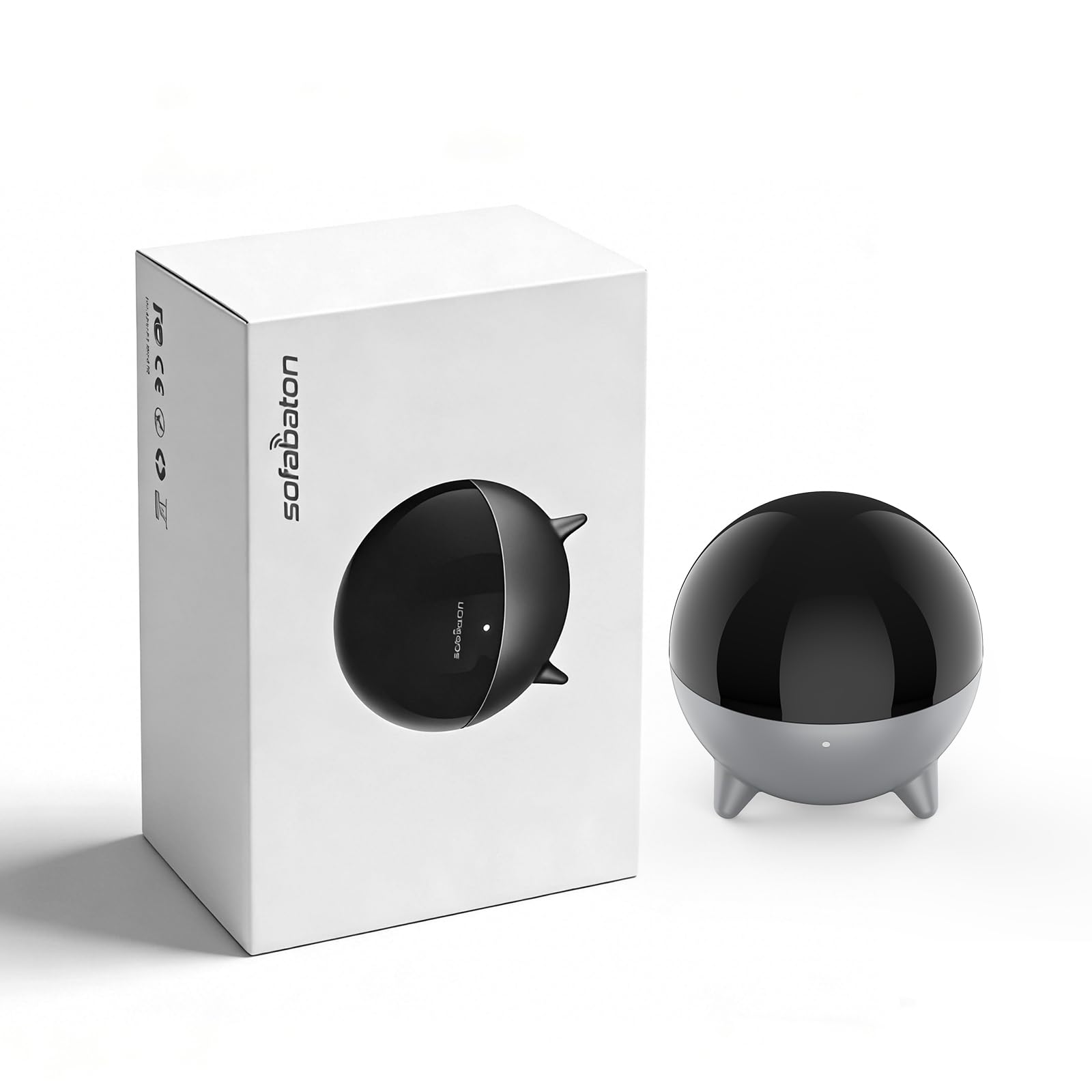
Dead simple if you already own a SofaBaton — useless if you don’t.
This one is a companion, not a standalone. It’s built exclusively for the SofaBaton X2 and U3 universal remotes, and pairing goes through the SofaBaton app rather than a line-of-sight learn-and-blink routine. Each repeater can be assigned as an “IR Emitter” for specific devices in your setup, which is how you point one unit at a cabinet door and another at gear in a second room. It supports up to 8 devices and covers a maximum range of 40 feet.
The emitter layout is the standout: seven internal high-power emitters broadcast horizontally and upward, so it floods a cabinet from within rather than needing to aim at one sensor. The maker is clear that the coverage does not extend downward, so mount accordingly. A 3-meter IR blaster cable is included for precise targeting in tight or awkward racks. The aluminum build feels solid in the hand, and owners single it out as genuinely good-looking kit.
Two honest caveats. The 40-foot range is the shortest in this group, so it suits a cabinet or adjacent room rather than a multi-floor sprawling house. And the setup draws mixed feelings: some find the app pairing straightforward, while others hit a learning curve. If you’re comfortable in the SofaBaton app, that fades fast.
Where it shines: seven upward-and-horizontal internal emitters flood a closed cabinet, and the 3-meter blaster cable reaches the awkward spots.
The catch that won’t budge: it’s locked to SofaBaton X2/U3 remotes — a plain universal remote gets nothing from it.
For SofaBaton owners: an X2 or U3 already in your hand makes this the natural, well-built cabinet extender.
Walk on by if: your remote is any other brand — this repeater won’t pair with it at all.
6. SIIG CE-RC0014-S1 IR Extender Repeater Kit

Tiny enough to vanish behind the furniture, with range for the whole house.
What wins people over here is that it simply works where you put it — including behind a shut wooden door. The other strength is the near-total absence of lag: press a button and the gear responds instantly. The kit handles 20–60 KHz, so most infrared devices from DVD players to cable boxes to Hi-Fi stereo are covered. Stated range runs up to 200 meters (656 feet) depending on obstruction, and two power adapters are included.
The compact footprint is a real practical benefit for a cramped rack — it tucks away rather than announcing itself. Setup is straightforward: hook up the receiver, place it in line-of-sight with your gear, and you’re running in minutes. The maker recommends using it without the extension cables first and only adding them if needed, placing any extension within about 2 inches of the target sensor.
Set expectations on both range and device count. Range feedback is mixed, so treat the headline figure as a best case and test placement before committing. It also controls a single IR device, so it’s not the pick for a multi-component rack.
What earns its spot
- Up to 656-foot stated range with 20–60 KHz coverage.
- Ultra-compact body fits cramped cabinets and tight racks.
- Two power adapters included so both ends are powered.
- Real-time transmission with no meaningful lag.
What to watch
- Range draws mixed feedback — test placement rather than trusting the headline.
- Single-device support, so a full rack needs a second kit.
- Extension cables need to sit within about 2 inches of the sensor.
Ideal for the space-tight setup: one component, a shallow shelf, and a door that stays shut.
Pass if: you need to drive several devices at once — one kit, one device.
7. SIIG Wireless IR Remote Control Extender Kit CE-RC0111-S1

A locked radio link that keeps neighbours and gadgets from cutting in.
The feature that sets this kit apart is its Click Lock ID button, which pairs the transmitter and receiver so that other wireless devices in the area can’t interfere with your signal. Run it on the 915 MHz band with 10dBm power gain and you get a stable radio handshake rather than a beam that gets drowned out. Stated reach is up to 200 meters (656 feet) line-of-sight, though the maker notes obstructions will shorten it. It covers 20–60 KHz and drives up to 10 devices.
The housing is the other differentiator: an aluminum body that the maker says improves heat dissipation and durability. In a busy home or office with plenty of competing wireless traffic, that pairing lock is what keeps commands accurate over distance. The receiver does the IR translation at the far end, and both the transmitter and receiver are USB-powered. Setup is generally quick and the Click Lock pairing connects without fuss, with owners pointing to its range and control as the highlights.
Value is the one point of contention — some find it a fair buy for the feature set, others feel it runs toward the pricey side. It’s also a USB-powered pair, so plan for two power sources. If interference is your core frustration, though, the locked link is worth the extra setup care.
The anti-interference edge: Click Lock ID pairing on 915 MHz with 10dBm power gain keeps the signal yours alone — a real benefit in a wireless-crowded home.
The trade-off to accept: value feedback splits, and with two USB-powered units you’ll want two outlets ready.
Pick this when: competing wireless devices are muddying your signal and you need a locked, interference-free link.
Not your answer if: you’re after the smallest possible footprint — the aluminum housing and two-unit design want a bit more room.
Know the Specs
IR frequency (20–60 KHz)
This is the band of invisible light your remote pulses at the sensor. Most A/V gear falls inside 20–60 KHz, so a repeater that covers the full span should understand nearly any standard handset. If a repeater’s stated band is narrower, double-check your device before buying.
Emitter and receiver
The receiver watches for your remote’s beam and passes the command along; the emitter fires the same signal at your gear’s sensor. Placement matters — many kits ask that any extension emitter sit within about 2 inches of the target sensor for a clean catch.
Wireless vs wired
Some “wireless” kits still need a cable between their two halves. True RF kits carry the command over radio waves through walls, cabinets, and floors — that’s the kind you want when gear sits far from the remote. Check which type a listing actually is before committing.
Stated range vs real range
Range figures are usually open-space best cases and shrink once walls and furniture get in the way. Treat the headline number as a ceiling, not a promise. Placement, not the spec sheet, decides whether a kit reaches comfortably.
Common Questions
Will a wireless IR repeater work through a closed wooden cabinet?
Can I use a repeater with a Fire TV Stick or Roku Express?
What does 20–60 KHz mean for my existing remote?
Do I still need line-of-sight between the remote and the repeater?
How many devices can these repeaters control at once?
Will a repeater introduce a delay between button press and response?
Why does my repeater work with one device but not another?
Is the SofaBaton R1 usable with a regular universal remote?
Does an RF repeater interfere with my Wi-Fi or other wireless gear?
The Bottom Line
For most people hiding gear in a cabinet, the wireless infrared repeater that fits best is the Fourair Long Range 500 FT Kit. Its 700-foot stated span and full 20–60 KHz coverage (the range of infrared frequencies most remotes use) cover the widest range of everyday remotes and devices. It’s the highest-rated pick here at 4.0+ stars across 170+ owners. If your gear lives two floors away, the SPENFiLY WL-E1 and its 200-meter radio link are built for that distance. And if competing wireless signals are your headache, the SIIG CE-RC0111-S1 wins on its locked Click Lock pairing. Whichever you choose, check that your remote is infrared before it ships.
How we choose
We do not accept paid placement. Every pick is matched to a real buyer and a real use-case; we do not hands-on test units.
Sources
Specifications: manufacturer listings and product documentation. Review insights: verified customer reviews, as of November 2026. Pricing: not shown on this page (it changes often); check the current price via the retailer link.
As an Amazon Associate, Tactical Gear Guy earns from qualifying purchases. This does not affect which products we feature.