Specs are compiled from manufacturer listings and verified buyer reviews and can change over time — please confirm the key details on the product page before buying.
You will live with one spec every day, so buy on that one: battery hours, noise cancelling strength, or bass you can feel. The logo on the cup will not help you. The picks below cover all three. The crowd favorite is the Skullcandy Crusher Evo, at 4.5+ stars across 19,000+ ratings. Its patented dual bass drivers give movies and music a physical thump you can feel, not just hear.
This guide is built by comparing the manufacturers’ published specifications and the patterns across verified customer reviews, so you get each pick’s real strengths and trade-offs instead of marketing spin.
You will see how each model handles battery drain, clamping pressure, and multipoint switching. By the end you will know exactly which pair of wireless bluetooth over-ear headphones fits your commute, your desk, or your next flight.
Top Picks

How To Choose The Best Wireless Bluetooth Over-Ear Headphones
You can sort every pair on this list by three real-world questions. How long does it run with noise cancelling switched on? How hard does it press on your head after three hours? And does it connect to your laptop and your phone at the same time without you fiddling with menus? Get those three right and the spec sheet stops mattering day to day.
Battery hours with ANC on, not the biggest number on the box
On a plane or a train you will run noise cancelling, so ignore the battery number quoted with it switched off. Look for the second figure. The Marshall Monitor III publishes both: 70 hours with active noise cancelling running and 100 hours without. The Bose QuietComfort 2nd Gen states 24 hours with full noise cancelling engaged, and 18 hours once TrueSpatial rich Audio (Bose’s spatial sound mode) is turned on.
Charging speed counts too, because nobody plans a dead battery. Rapid Charge on the Skullcandy Crusher Evo gives you 4 hours of listening from a 10-minute top-up. The JBL Tune 780NC states a 5-minute speed charge adds 5 hours of playtime. A 5-minute top-up is the difference between a dead commute home and a working one.
Noise cancelling, transparency, and the modes between
Active noise cancelling (ANC) uses built-in microphones to sample the noise around you and play an opposite signal to cancel it. Transparency mode does the reverse: it pipes the outside world back in through the mics, so you hear a platform announcement without lifting a cup. Most of these pairs give you both, plus an off setting. The Bose QuietComfort Ultra adds Immersion Mode, which runs full noise cancelling and Bose rich Audio together.
Clamping force and earcup padding decide all-day comfort
A tight seal gives you better bass and better noise cancelling, but too much clamp pressure gives you a headache by lunchtime. The Bose QuietComfort 2nd Gen uses a headband wider than the previous generation to spread that pressure out. The Beats Studio Pro goes the other way with UltraPlush comfort cushions built for long listening. If you wear glasses, clamp pressure is the spec you should care about most — arms under a tight cup get painful fast.
Multipoint, codecs, and why they matter at your desk
Multipoint pairing lets one pair of headphones hold two devices at once and switch automatically when a call comes in. The soundcore Q20i, the JBL Tune 780NC, and the Sennheiser Momentum 5 all offer it. Codecs matter next: aptX Lossless and AAC on the Momentum 5 are compression formats that preserve more of the original file, while Hi-Res certified audio on the Q20i open up only over the included AUX cable, not over Bluetooth.
Side-by-Side Comparison
| Model | Best For | Battery Life | Driver Size | Bluetooth Version | Amazon |
|---|---|---|---|---|---|
| Skullcandy Crusher Evo★ Best Overall | Bass you can physically feel | 40 hours | 40 millimeters | 5 | Amazon |
| soundcore by Anker Q20iBest Value | Long-haul battery on a budget | 60 hours | 40 millimeters | 5 | Amazon |
| JBL Tune 780NCLongest Playtime | Marathon playtime and fast top-ups | Up to 76 hours | 32 millimeters | 6 | Amazon |
| Beats Studio Pro | Apple and Android one-touch pairing | Up to 40 hours | — | — | Amazon |
| Bose QuietComfort (2nd Gen) | Quiet listening with a wide headband | 24 hours (18 with rich Audio) | 30 millimeters | 5.4 | Amazon |
| Marshall Monitor III ANC | Month-long battery and physical buttons | 70 hours with ANC / 100 without | 32 millimeters | 5 | Amazon |
| JBL Tour One M2 | Spatial sound and voice control | 50 hours without ANC / 30 with | 40 millimeters | 5.3 | Amazon |
| Bose QuietComfort Ultra | All-out noise cancelling and immersion | 24 hours (18 with rich Audio) | — | 5.3 | Amazon |
| Sennheiser Momentum 5 | Reference-grade audio and long battery | 57 hours with ANC | 42 millimeters | 5.4 | Amazon |
Detailed Reviews
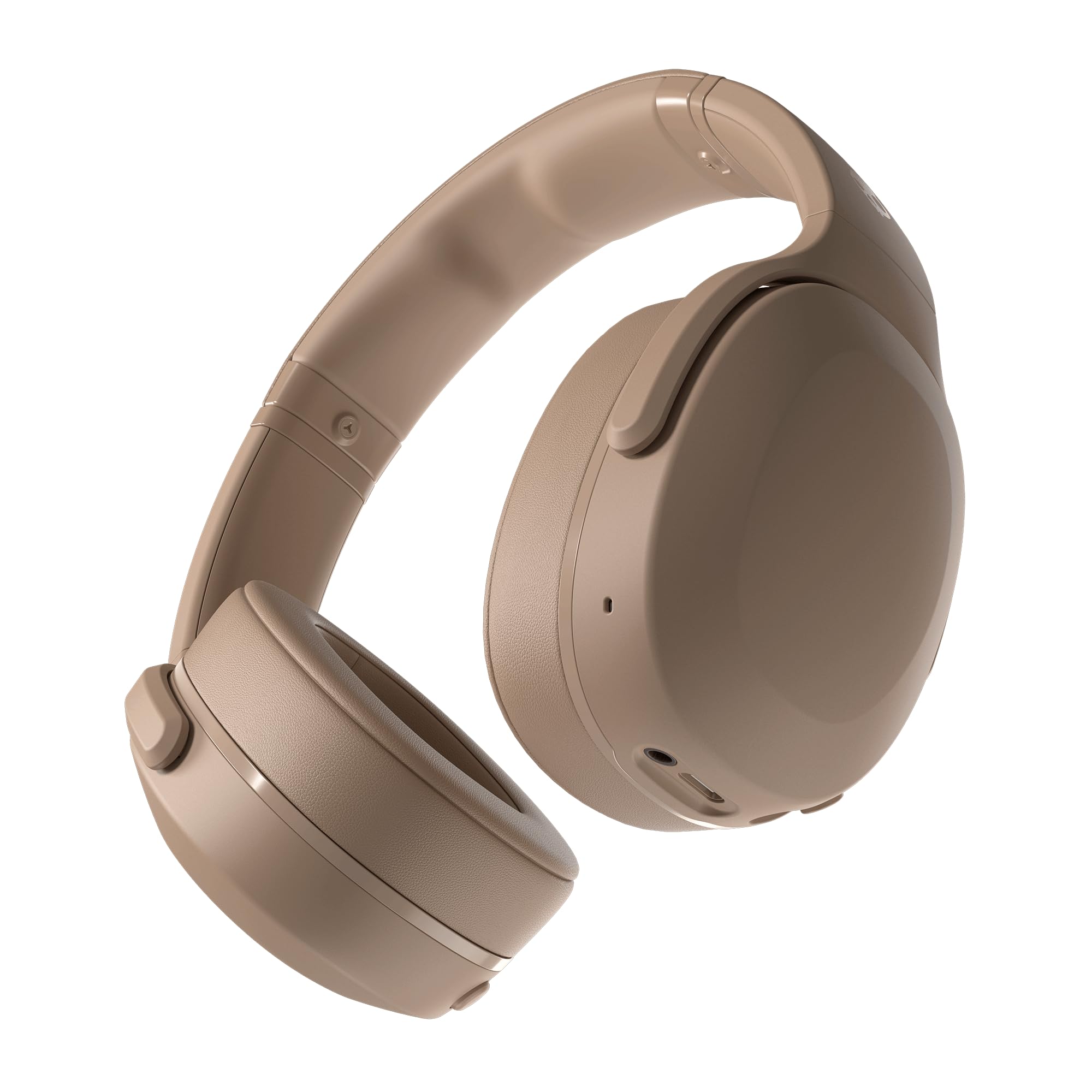
1. Skullcandy Crusher Evo Headphones
Our pick — 4.5+★ from 19,500+ verified ratings; the strongest balance of quality and price.
The pair that turns a movie night into something you feel through your skull.
If you have ever wanted a subwoofer strapped to your head, this is the pair. Two full-range 40-millimeter audio drivers (the round speaker units inside each cup that move air to make sound) handle the music, and Skullcandy adds a set of dedicated bass drivers whose rumble you feel against your ears. That is the whole pitch, and it is why the lows land harder here than anything else on this list.
A dedicated slider on the headphones lets you dial the bass up or down without opening an app — useful when the soundtrack is dialogue-heavy and you do not want the explosions rattling your jaw. Battery runs up to 40 hours, and Rapid Charge means a 10-minute top-up returns 4 hours of listening. Compare that with the Sennheiser Momentum 5 at 57 hours with ANC on, and the Crusher Evo gives up some endurance for that physical thump.
Comfort and fit are the honest sticking point. The cups stay put on some heads and slide on others, which is a fit lottery rather than a defect. Noise cancelling earns mixed reactions too: it holds off steady drone like an engine but lets sharper sounds through. These are headphones for people who want to hear the music, not erase the world.
What won buyers over
- Sound quality is what owners praise most, well ahead of every other trait, and it is the dual-driver arrangement doing the work.
- The bass slider gives you on-head control of the low end — no app, no menu, just a thumb.
- 10 minutes on the charger returns 4 hours of playtime.
- Flat-folding, collapsible build with a protective case in the box makes it a bag-friendly pick.
Where it needs a caveat
- Fit is a coin toss — the cups grip well on some heads and slip on others, so try before you commit to a long flight.
- Noise cancelling is the weakest link; it handles constant hum far better than sudden noise.
Made for: movie watchers, gamers, and anyone who wants bass with a physical presence.
Think twice if: you fly often and need silence above everything else.
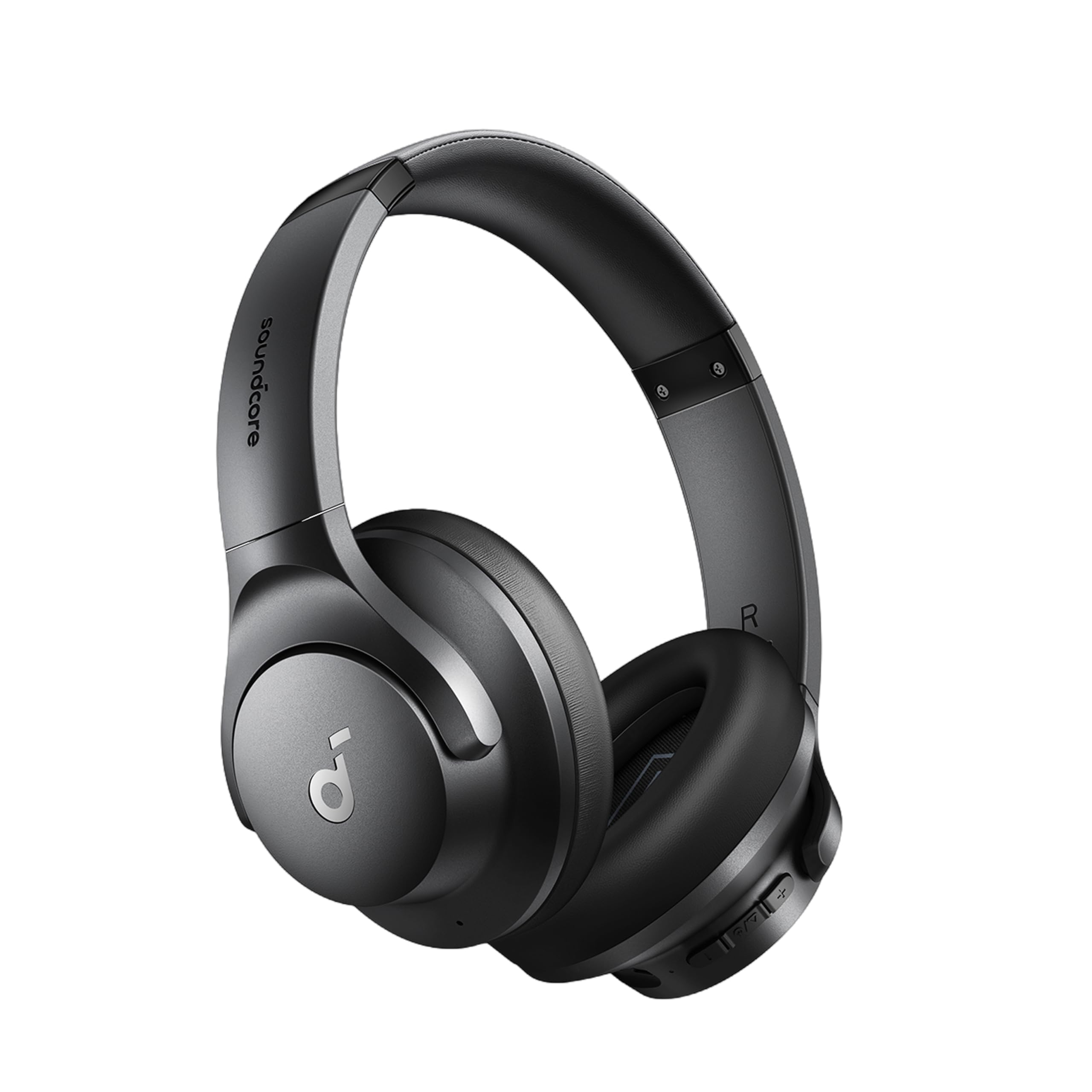
2. soundcore Q20i Headphones
Run the numbers and this is the endurance champion of the group.
The Q20i carries a battery rating of 60 hours, which puts it a full stretch ahead of the Skullcandy Crusher Evo at 40. For a commuter who charges once a week and resents every minute tethered to a cable, that gap is the whole buying decision. Four built-in mics (the small microphones that listen to ambient sound and generate the cancelling signal) do the noise-cancelling work — note they only operate in wireless mode, not over the AUX cable.
Plug the included cable in, though, and the story changes: Hi-Res certified audio open up over the wire, so the same pair can play wired-clean when battery is not a concern. The soundcore app adds EQ presets, ANC and Transparency switching, and built-in white noise for winding down. BassUp lifts the low end in wireless mode, and the same 40-millimeter driver size matches the Skullcandy and the JBL Tour One M2.
The Q20i pairs with two devices at once, so a laptop call and a phone playlist can share the same cups without re-pairing. Build quality is the trait that carries the most weight with owners, and it holds up to daily bag life. The recurring fit note is that the cups do not grip every head type firmly — treat that as a sizing question rather than a fault.
The endurance argument: at 60 hours on the rated battery, this is the pair to grab if you have ever finished a workday with a dead set of headphones in your bag.
Worth knowing: the noise cancelling only works in wireless mode, so the AUX cable is for clean audio, not quiet.
Reach for this if: you want the longest battery of any pair here without paying premium money.
Look elsewhere if: you need the cups to clamp hard and stay put during movement.
3. JBL Tune 780NC Headphones
A week of listening between charges, and a five-minute rescue when you forget.
Seventy-six hours with noise cancelling off, per JBL’s own figure — that is the biggest number on this entire list — and up to 50 hours with ANC running. At a couple of hours a day, that is a battery you charge roughly monthly, not nightly. When it does run dry, a 5-minute speed charge hands you 5 more hours, and a full refill takes about two hours, though the charging cable is not in the box.
Bluetooth 6.0 (the wireless standard version, where higher numbers generally mean lower latency and lower power draw) is the newest here. The Skullcandy Crusher Evo runs Bluetooth 5, and the Bose QuietComfort Ultra sits at 5.3. Multipoint lets you hold two devices at once, and buyers report it working in practice: “They are comfortable, long-lasting, and work well, with one customer noting they can connect to both their Firestick 4K and phone simultaneously.” Fast Pair on Android and Swift Pair on Windows handle setup without menu diving.
The 32-millimeter driver is the smaller end of this group — the Sennheiser Momentum 5 runs a 42-millimeter — so expect a leaner low end rather than a thumping one. What JBL does sell here is voice clarity: two beamforming mics focus on your speech and filter background chatter, which is why calls from a busy café hold up. The JBL app adds Personi-Fi 3.0 to shape sound to your hearing profile.
The verdict: if battery anxiety is your main grief, nothing here outlasts the Tune 780NC.
One catch: the smaller driver means bass-heavy tracks will not hit like the Skullcandy, and you supply your own USB-C cable.
4. Beats Studio Pro Headphones

One-touch pairing on both Apple and Android, and a case that travels well.
Most headphones pick a side — Apple-friendly or Android-friendly — and the Studio Pro refuses. One-touch pairing works with both, and a single button switches between devices, so an iPhone and a work laptop can share the cups without a trip into Bluetooth settings. Class 1 Bluetooth (the higher-power radio class, which trades range for connection stability) keeps the link steady with fewer dropouts as you move around the house.
Battery tops out at up to 40 hours, and Fast Fuel returns up to 4 hours from a 10-minute charge — identical figures to the Skullcandy Crusher Evo above, so neither wins that race. Where the Beats pulls away is the wired route: USB-C lossless audio passes an uncompressed signal for better detail than Bluetooth can carry, and a 3.5-millimeter cable is in the box for older gear. Spatial Audio with dynamic head tracking moves the soundstage as you turn your head, which is genuinely good for films on a tablet.
Sound and noise cancelling are where opinions split. Some owners find the low end thin and report static in one ear, while others are perfectly happy — so this is a pair to audition if bass is your priority. Fit runs the same way: the cushions suit some heads and press too tight on others. For the traveler with a mixed Apple-and-Android household, though, the switching is the reason to pick it.
The crossover case: Apple and Android in one household is exactly the situation this pair was built for.
Worth knowing: the bass response draws split reactions, so listen before you buy if low-end punch is your thing.
Right for: households split between iPhone and Android, plus anyone who wants a wired lossless option over USB-C.
Not the pick: if you want a bass-forward sound from the start.
5. Bose QuietComfort Headphones (2nd Gen) – Black
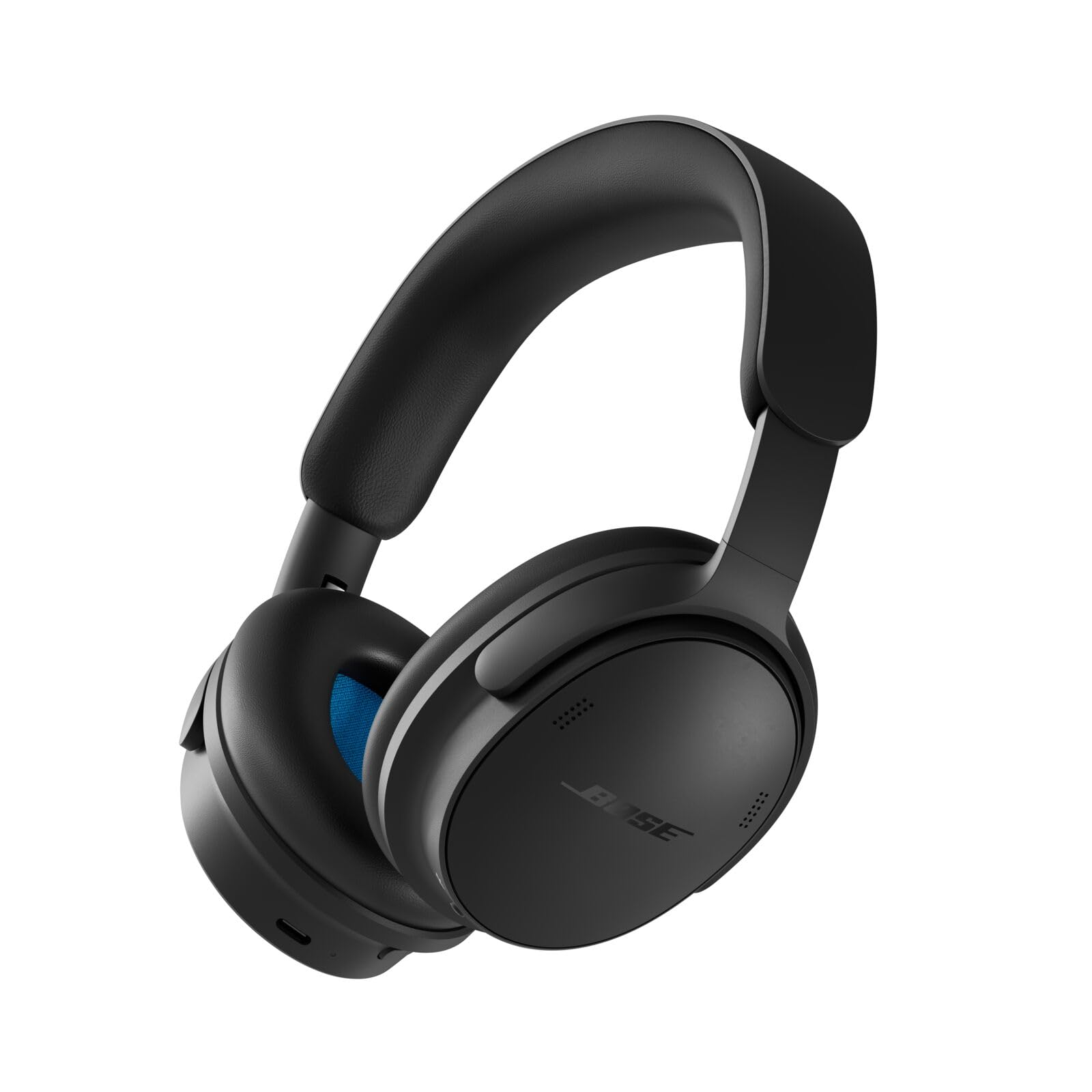
The wide headband is the quiet fix that makes a long flight bearable.
Bose’s second-generation redesign puts its effort where you feel it: the new headband is wider than the previous generation and carries more of the supple synthetic leather used on the earcups. That spreads clamping pressure over a bigger patch of skull, so a four-hour flight ends without the familiar ache. The 30-millimeter drivers are the smallest here — the Sennheiser Momentum 5 runs 42 millimeters — which is why this pair chases balance over punch.
You get 24 hours with full noise cancelling engaged, or 18 hours once TrueSpatial rich Audio is switched on. A 15-minute quick charge returns 2.5 hours of playback, and a full refill takes 3 hours. That is a shorter day than the Marshall Monitor III at 70 hours with ANC, so this is a pair you plug in nightly rather than weekly.
QuietControl noise cancelling adds ActiveSense Tech, which smooths sudden noise spikes while you are in Aware Mode — the difference between a siren making you flinch and a siren just passing through. Bose TrueSpatial Technology widens the soundstage, and high-fidelity lossless audio arrives over USB-C. Modes go beyond the usual two: Quiet, Aware, Immersion, Cinema Mode for video, and ANR off. Controls sit on the earcups themselves, and a hard-shell carry case is in the box.
Why it earns a spot: the widest headband in this group plus Bose QuietControl is a combination built for hours of wear.
The trade-off: 24 hours with ANC is modest next to the long-haul picks, so nightly charging is the routine.
6. Marshall Monitor III ANC Headphones

At 70 hours with ANC on, you plug it in roughly once a month.
Seventy hours of wireless playtime with active noise cancelling running, and 100 hours with it off — those are the figures that turn a headphone into a piece of furniture you stop thinking about. Against the Bose QuietComfort 2nd Gen at 24 hours, the difference is not marginal; it is a whole different charging habit.
Where the Monitor III splits from most modern cans is the controls. Real physical buttons handle play, volume, and mode changes — no touch panel to misread with a cold thumb in gloves, and no accidental track skip when you adjust the cup. The noise cancelling is upgraded from the previous model and continuously measures ambient sound, with three levels to pick from plus a Transparency setting for letting the world back in.
Dynamic Loudness adjusts treble, mids, and bass at every volume level, so turning the music down does not hollow out the low end. Soundstage spatial audio pushes the music out of your head for a wider feel. The build is rugged and folds into a hard case for travel. Owners consistently point to sound quality as the reason they keep them on, and comfort without ear pressure runs a close second — a pair you can wear all day without the cups pressing back.
The draw
- 70 hours with ANC on and 100 hours without — the biggest endurance margin of any pick here.
- Physical buttons instead of touch controls, so a gloved thumb still works.
- Dynamic Loudness keeps bass and treble balanced as you change volume.
- Hard case included, and the design folds flat for travel.
The honest note
- A 2.5-hour charge is slower than the quick top-ups on several pairs here — plan for a full evening plugged in.
- Bluetooth 5 rather than the newer 5.3 or 6.0 on some rivals means less advanced wireless features.
Built for: the traveler who hates charging cables and wants tactile buttons over a touch panel.
Skip over: if you want the latest Bluetooth standard and fast top-up charging.
7. JBL Tour One M2 Headphones

Forty-millimeter drivers and a spatial mode built for films on a laptop.
The Tour One M2 runs 40-millimeter dynamic drivers (the speaker size inside each cup), the same size as the Skullcandy Crusher Evo and the soundcore Q20i. Adaptive noise cancelling adjusts to what is happening around you rather than sitting at one fixed level. JBL Spatial Sound widens the stage for movies, and Personi-Fi shapes the sound curve to your own hearing preferences through the JBL Headphones app.
Battery runs up to 50 hours without ANC and 30 hours with it switched on, with a 2-hour charge time. That puts it between the Bose QuietComfort 2nd Gen and the Marshall Monitor III in endurance terms — plenty for a work week, short of a month. Four beamforming microphones handle calls and cut wind noise, and voice control means you can issue commands without reaching for a button mid-commute.
The box is the giveaway that this is a travel pair: a carrying case, a 3.5-millimeter audio cable, a flight adapter, and a USB-C charging cable all come included. Bluetooth 5.3 keeps it current, and the removable audio cable means you can go wired on a plane entertainment system without hunting for an adapter. If your long-haul listening is more film than music, the spatial mode and the included flight kit are the reason this made the cut.
The case for it: a flight-ready bundle — case, cable, and adapter included — with spatial sound for in-seat movies.
Before you commit: 30 hours with ANC is a shorter run than several picks here, so charge it mid-trip.
8. Bose QuietComfort Ultra Headphones

The one that treats noise cancelling as the headline act, not a side feature.
Bose built a mode system here rather than a switch. Quiet Mode kills the background completely, Aware Mode opens it up, and Immersion Mode runs full noise cancelling and Bose rich Audio together, so the music surrounds you while the world stays out. CustomTune technology shapes the sound to your ears specifically, which is why this pair’s reputation rests on the listening experience rather than raw spec numbers.
Battery matches the QuietComfort 2nd Gen at 24 hours, or 18 hours once rich Audio is on. A 15-minute charge buys up to 2.5 hours of playtime. That is the shortest endurance on this list: you trade battery for the deepest silence. Advanced Bluetooth 5.3 connects within 30 feet, and SimpleSync lets you pair with a Bose smart soundbar and listen to TV at your own volume while someone else uses the room.
Touch controls on each earcup handle volume, track skips, calls, and mode changes, and a head-motion gesture turns the Bluetooth on or off. The microphone array focuses on your voice and filters background noise for calls. Where buyers split is on reliability and connectivity — the Bluetooth link is flawless for some setups and inconsistent for others, so keep the receipt and test pairing early. The comfort and the noise cancelling are the traits that hold up consistently.
What it does best: Immersion Mode plus CustomTune is a combination aimed squarely at the person who wants the world gone.
Fair warning: connectivity has been inconsistent for a portion of owners, so verify the pairing on your own devices while returns are still easy.
Pick this when: silence and immersion outrank a long battery number in your priorities.
Pick otherwise when: you need a pair that runs all week without charging.
9. Sennheiser Momentum 5 Wireless Headphones, ANC, White

The biggest driver here, and the battery to go with it.
Forty-two millimeters is the largest driver on this list — the JBL Tune 780NC runs 32 millimeters — and it is drawn from Sennheiser’s HD 600 lineage, tuned for clarity and a natural balance at any volume. Support for aptX Lossless and aptX Adaptive (codecs are the compression methods used to send audio over Bluetooth) plus AAC means the signal reaching your ears loses less along the way, assuming your phone supports the format.
Battery runs up to 57 hours with ANC on, and the battery itself is replaceable — a rare detail that stretches the usable life of the pair. Hybrid adaptive ANC with 8 digital microphones is the quietest Sennheiser has made, and the company states it beats the Momentum 4 Wireless in the midrange. Natural Transparency brings the surroundings back without pulling the cups off, and an Anti Wind Mode keeps outdoor listening clear.
Comfort comes from a carefully set balance between clamp force and seal — the kind of tuning you only notice on hour four. Touch controls handle playback. Value is where opinions diverge, since this sits at the top of the premium tier next to the Bose QuietComfort Ultra, so it rewards the buyer who cares about codec support and driver quality over a fashionable name. The white finish is the least common colorway in this group.
Where it pulls ahead
- 42-millimeter HD 600-inspired drivers — the largest in this lineup.
- 57 hours of playtime with ANC switched on, plus a replaceable battery.
- aptX Lossless and aptX Adaptive support for high-resolution sources.
- Natural Transparency plus Anti Wind Mode for outdoor use.
The honest edge
- You only get aptX Lossless if your source device supports it, which many phones do not.
- Premium-tier money for anyone who mainly streams standard-quality audio.
The sound-first choice: if you own a source that supports high-resolution codecs, this is the pair that uses them.
Not the value pick: premium pricing means the driver and codec quality have to justify it for you.
Know the Specs
Battery Hours With ANC On
On a flight you will run noise cancelling, so the marketing number on the box (usually quoted with it switched off) will not match your real use. Always look for the second figure. The JBL Tune 780NC publishes both: up to 76 hours without ANC and up to 50 with it on. The Marshall Monitor III lists 70 hours with ANC and 100 without, while the Bose QuietComfort Ultra stays at 24 hours and drops to 18 with rich Audio engaged. Compare the with-ANC figures, never the headline.
Driver Size and What It Changes
The driver is the speaker unit inside each cup, measured across its diameter in millimeters. A larger driver moves more air, which generally gives you more low-end weight and less distortion at high volume. Sennheiser runs 42 millimeters on the Momentum 5, the Skullcandy Crusher Evo and soundcore Q20i both run 40, and the JBL Tune 780NC sits at 32. Bigger is not automatically better — tuning and enclosure design matter just as much — but the 42-millimeter unit is a reasonable stand-in for a fuller low end.
Bluetooth Version and Codecs
The Bluetooth version number signals how recent the wireless standard is, and newer versions generally lower latency and power draw. The JBL Tune 780NC runs Bluetooth 6.0, the Bose QuietComfort Ultra and JBL Tour One M2 use 5.3, and the Sennheiser Momentum 5 uses 5.4. Codecs are where the real audio difference lives: aptX Lossless and AAC preserve more of the original file, and Hi-Res certified playback on the soundcore Q20i requires the AUX cable, not Bluetooth.
Multipoint Pairing
Multipoint lets one set of headphones hold two devices at once and switch automatically when a call comes in. The soundcore Q20i, JBL Tune 780NC, Sennheiser Momentum 5, and Bose QuietComfort Ultra all include it. Without multipoint, you re-pair manually every time you move from laptop to phone, which gets old quickly if you work at a desk and take calls on the same cups.
Common Questions
Will over-ear headphones work with my laptop and phone at the same time?
How many hours does the battery really last with noise cancelling on?
Do I need active noise cancelling or is a good seal enough?
What does transparency mode actually do?
Is a bigger driver always better for sound quality?
What is aptX Lossless and do I need a special phone for it?
Can I use these headphones with a cable when the battery runs out?
Which pair is best for a long-haul flight?
Does clamping force cause headaches after a few hours?
What Bluetooth version should I look for on over-ear headphones?
The Bottom Line
For most people, the winner in this lineup of wireless bluetooth over-ear headphones is the Skullcandy Crusher Evo, because that dual-driver bass gives movies and music a physical dimension no equalizer can fake. If you would rather never hunt for a charger, grab the soundcore Q20i at 60 hours. The Q20i has 80,000+ ratings to the Skullcandy’s 19,000+, but the Evo holds the higher score. And for the flight where silence beats everything, the Marshall Monitor III ANC with 70 hours of noise-cancelled listening is the one to reach for.
How we choose
We do not accept paid placement. Every pick is matched to a real buyer and a real use-case; we do not hands-on test units.
Sources
Specifications: manufacturer listings and product documentation. Review insights: verified customer reviews, as of November 2026. Pricing: not shown on this page (it changes often); check the current price via the retailer link.
As an Amazon Associate, Tactical Gear Guy earns from qualifying purchases. This does not affect which products we feature.