Specs are compiled from manufacturer listings and verified buyer reviews and can change over time — please confirm the key details on the product page before buying.
If you have ever fed a wire into a wall and felt it jam two feet in, you already know the real question here: which fish tape actually glides through the bend instead of kinking and stalling. The short answer is that steel gives you push and reach, while non-conductive PET and polymer tapes give you flexibility and safety near live circuits. Below you get both kinds, matched to the jobs they win.
This guide is built by comparing the manufacturers’ published specifications and the patterns across verified customer reviews, so you get each pick’s real strengths and trade-offs instead of marketing spin.
You will see how length, thickness, and tape material change the way a pull feels in your hands. Every pick here is a real listing with real specs, which makes choosing the Best Wire Pulling Fish Tape a matter of matching the tape to your conduit, not guessing at the label.
Top Picks


How To Choose The Best Wire Pulling Fish Tape
Buying a fish tape is really three decisions stacked on top of each other: what the tape is made of, how long it needs to be, and how thick it can be before it stops turning corners. Get those right and the rest is handle comfort.
Steel or non-conductive material
Steel tape is the classic choice for long, straight conduit runs because it stays firm and pushes hard. A non-conductive tape made from PET or extruded polymer will not carry current, so it is the safer option when you are working anywhere near a live circuit. The trade-off is that softer materials can go floppy in an open wall cavity where a stiffer steel tape would hold its line.
Length versus the run you actually have
A tape that is exactly as long as your run leaves you nothing to grab. Buy enough length to cover the conduit plus the bends plus a few feet of slack at both ends. If your longest pull is a wall drop from an attic, a longer tape saves you from splicing two pulls together.
Thickness and how it turns a bend
A thicker tape resists kinking but fights you in tight radius bends. A thinner tape glides around corners but can double back on itself when you push. Match the diameter to the pipe: narrow conduit and multiple turns favor the slimmer tape, while long straight runs reward the stiffer one.
Case, handle, and the rewind
Pulling the tape out is the easy half. Winding 100 feet back into the case is where cheap housings show up, so look at the handle geometry and any brake or thumb lock that holds the tape while you guide the wire.
Side-by-Side Comparison
| Model | Best For | Length | Tape Material | Diameter / Width | Amazon |
|---|---|---|---|---|---|
| Klein Tools 56333★ Best Overall | Long conduit runs with measurable footage | 120 ft | Steel | 1/8 inch | Amazon |
| Ninja Fish Tape 100FTTop Performer | Conduit pulls and pool light wiring | 100 ft | Polyester | 6 mm | Amazon |
| Southwire Non-ConductiveEveryday Standard | Everyday professional conduit work | 125 ft | Extruded polymer blend | 4.5 mm | Amazon |
| 125 ft PET Puller (ISLEWIRE) | Multi-bend EMT and wall drops | 125 ft | PET polyester | 3/16 inch | Amazon |
| Ideal 31-056 Blue Steel | Heavy pulls with high tensile strength | 120 ft | Carbon steel | 1/8 x 0.060 inch | Amazon |
| 82FT Flexible Rodding Kit | Short runs and tight indoor corners | 82 ft | Steel rod | 4.5 mm | Amazon |
| 50 FT Non-Conductive PET | Small jobs and home wiring | 50 ft | PET | 4.5 mm | Amazon |
| VEVOR 120-Foot Fish Tape | Budget entry into long steel pulls | 120 ft | High-manganese steel | 1/8 inch | Amazon |
Detailed Reviews
1. Klein Tools 56333 1/8-Inch x 120-Foot Steel Fish Tape
Our pick — 4.5+★ from 450+ verified ratings; the strongest balance of quality and price.
A steel tape that tells you exactly how much conduit you have already eaten.
This is the one to buy if you want to know, mid-pull, how many feet are left in the pipe. The tape is laser etched with descending markings every 1 foot (0.3 m), so you read the footage like a ruler instead of guessing. On a long run that turns a frustrating back-and-forth into a single clean measurement.
The steel itself is 1/8-inch wide, described as high-carbon strength and firm yet flexible for long runs and large wire pulls. The housing does real work too: it angles the payout to reduce friction, the slip-resistant body gives your winding hand leverage, and a multi-position handle keeps your grip steady while you haul wire. A protective coating fights corrosion from non-contact moisture and humidity, which matters in a damp basement or garage.
Owners praise its build quality and functionality most, with value close behind. The honest caveat is retraction. Winding the tape back in takes steady effort, and a minority find the reel fussy enough to be annoying. At 4.5+ stars across 490+ ratings it is the crowd favorite in this group, though the Southwire has far more reviews on the board.
Where it earns its keep
- Laser-etched marks every 1 foot (0.3 m) turn the tape into a measuring tool for conduit runs
- Firm 1/8-inch steel pushes through long runs and big wire pulls without folding
- Angled payout and slip-resistant housing cut the friction of feeding and winding
- Protective coating slows corrosion in humid spaces
Where it asks for patience
- Retraction is the recurring gripe — expect to work the reel rather than flick it
- Steel construction means you keep it away from live circuits
Buy it for: anyone running conduit who wants to measure the pull as they go.
Think twice if: you mostly work short wall drops where a lighter non-conductive tape is easier to live with.
2. Ninja Fish Tape 100FT Polyester Wire Puller, 6mm
The polyester tape that treats a 90-degree bend like a straight line.
Pool light conduit is where this tape made its name. Owners describe pushing through turns that stop stiffer tapes, and the numbers explain why: the polyester body is 6 mm across, noticeably chunkier than the 4.5 mm tape further down this list. That extra girth gives it something to push against inside the pipe.
Because it is polyester rather than steel, there is no rust to worry about and no conductive path to a live circuit. The leader tip is changeable, so you can swap the end for different work rather than buying a second tape. It comes in 50, 75, and 100 foot lengths, and this 100 foot version stores in its own case.
Buyers rave about its durability and how well it threads conduit, with functionality right behind. The trade-off is durability under real abuse: a share of owners find the tape less sturdy over repeated heavy pulls, and the grip draws mixed notes. Treat it as a careful worker’s tape, not a demolition tool. It holds 4.5+ stars across 180+ ratings.
The case for polyester: no rust, no conductivity, and a thick 6 mm body that pushes around corners instead of kinking at them.
Handle it with care: the tape rewards steady hands — yank it hard through a sharp bend and you shorten its life.
Reach for this if: you pull wire through curved conduit, pool light runs, or anywhere a steel tape would snag.
Look elsewhere if: you need to muscle a heavy cable through a dead-straight 100-foot run.
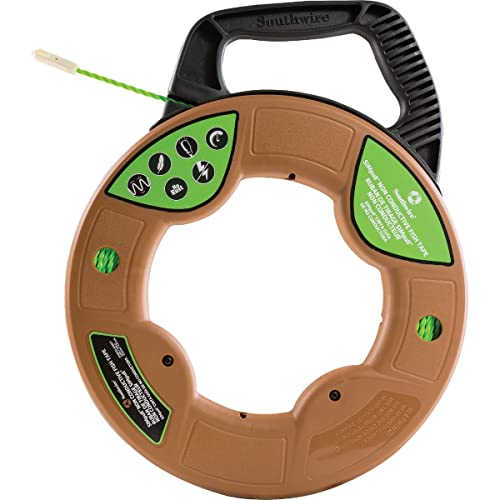
3. Southwire Non-Conductive Flexible Fish Tape, 4.5mm, 125ft
Slim, spiral-wound polymer that is built for the pull you do every week.
There is a reason this one has been around long enough to gather the biggest review base in the group. The spiral extruded polymer design is meant to glide through conduit with less push and pull effort, and the non-conductive polymer tip keeps it clear of live current. At 4.5 mm it slips into narrow pipe where a wider tape will not enter.
Real jobs back it up. Owners describe threading it through long runs of PVC pipe with multiple 90-degree turns and finishing the pull without drama. Build quality dominates owner feedback, with effectiveness second — this is a tape people reach for out of habit because it keeps working.
Here is the catch, and it is a real one: flexibility is a double-edged trait. Some owners find it too soft to push through a ceiling or an open wall cavity, while others want it stiffer still. If your work is all closed conduit, that softness is an asset; if you spend your day in empty stud bays, it can feel floppy. It scores 4.5+ stars across 750+ ratings, and it weighs 2.4 pounds.
Why it sticks around: a 125 ft non-conductive polymer tape that slides through PVC and multiple turns, priced like a working tool rather than a specialty item.
The honest limit: soft enough that open-wall and ceiling pushes give it trouble — plan on a stiffer tape for those jobs.
Best matched to: electricians who pull through finished conduit day in and day out.
Less suited to: a first-timer fishing a wire down an open stud wall.
4. 125 ft PET Non-Conductive Fish Tape
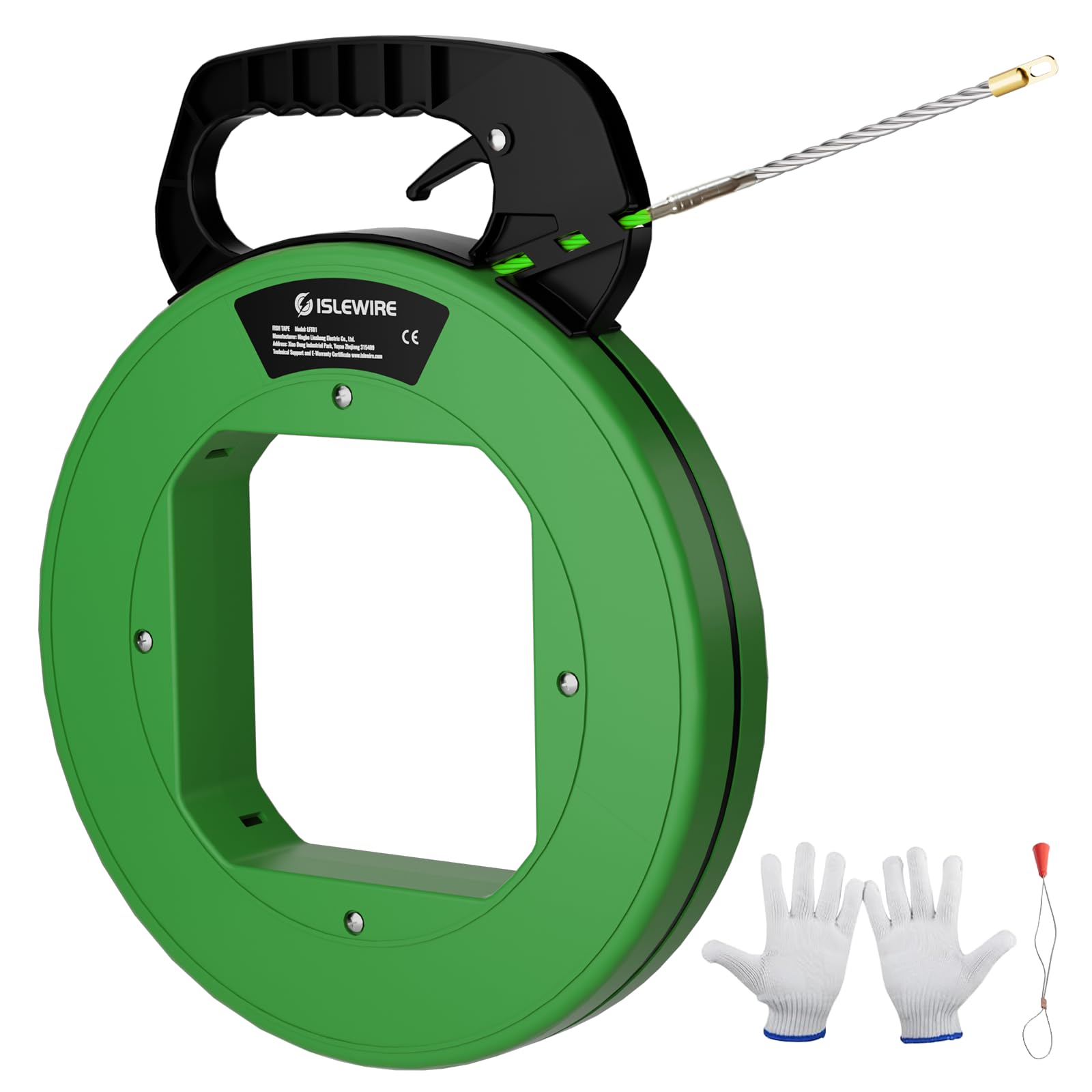
A braided PET tape with a thumb lock, made for EMT runs full of bends.
High-strength PET polyester, 125 feet, 3/16-inch across — this is the tape you want when a run snakes instead of runs straight. The braided, low-friction body cuts snagging while keeping enough pulling force to drag wire behind it. It is non-conductive, so it has no business carrying current to your hand.
What owners describe is a tape that moves without catching on corners, including one long multi-bend EMT run that got snaked clean through. Owners rate it above the steel tapes they were used to, and flexibility comes up again and again. Functionality leads owner feedback, with value close behind.
The housing backs that up with a heavy-duty PP case that shrugs off jobsite knocks, plus a built-in thumb lock that holds the tape while you guide wire. It weighs 3.8 pounds, which you feel on a ladder but not in your grip. Gloves and an instruction manual come in the box. It sits at 4.5+ stars across 120+ ratings.
What you get in the case
- 125 ft of 3/16-inch PET polyester that navigates 90-degree bends without rusting or snapping
- Braided low-friction surface keeps it from snagging on corners
- Thumb lock holds the tape steady while you guide the wire
- Heavy-duty PP case survives drops and daily jobsite knocks
What to keep in mind
- 3/16-inch body is thicker than a 4.5 mm tape, so very tight pipe is a tighter fit
- Non-conductive tape is not a substitute for de-energizing a circuit
Pick this one when: your conduit has more turns than straights and you want a tape that follows them.
Skip the upgrade if: your runs are wide-open straight shots where a stiffer steel tape reaches faster.
5. Ideal Electrical 31-056 Blue Steel Fish Tape, 120 ft

Built for the pull that fights back, with 1,600 lb of tensile strength behind it.
When the wire is heavy and the conduit is long, you want a tape that will not stretch or give. This blued carbon steel tape is rated at 1,600 lb of tensile strength, which is the number that matters if you are dragging thick cable through a run. It measures 1/8 x 0.060 inch and comes in a 120 ft length.
Footage markings are laser etched every 12 inches so you can read conduit length at a glance. The finish is non-oily blue, which resists rust and corrosion and keeps your hands cleaner than an oiled steel tape. The Tuff-Grip Pro case and handle are impact resistant, and the design keeps the wire inside the case even after a long fall.
This tape is a heavyweight in the literal sense: at 4.8 pounds versus 2.9 pounds for the 50 ft PET tape further down the list, and 120 ft versus that tape’s 50 ft. That mass is what gives it authority on a big pull. Owners praise its build quality most, though functionality draws a split verdict — a share find it hangs up where they expected it to slide. It holds 4.0+ stars across 100+ ratings.
The heavyweight case: 1,600 lb tensile strength, 120 ft of blued carbon steel, and etched 12-inch increments for measuring the run.
Not a light carry: 4.8 pounds of case and steel is a load on a ladder — this is a toolbox tape, not a pocket one.
For the big jobs: long heavy-cable pulls where the tape has to stay firm under real tension.
Wrong tool for: quick interior work where you want a light tape in one hand.
6. 82FT Flexible Wire Rodding Guide Kit with Storage Case

Eighty-two feet of rod that bends where fiberglass snaps.
This kit targets the indoor job: 82 feet of 4.5 mm rod on a spool, feeding out of a storage case with a large handle that makes payout steadier. The head wheel at the tip rotates a full 360°, so it rolls around a bend instead of jamming against it. For home rewires and short commercial pulls, that combination covers most of what you will meet.
Buyers highlight build quality most, with value next in line — the kit is priced like a starter tool and behaves better than that suggests. The maker backs the rod with a one-year warranty on the wire, which takes some of the sting out of a first-time purchase.
The caution worth hearing: flexibility cuts both ways here. This rod is supple enough that some buyers report it is too flexible for pushing through insulated walls, and a few had it fail on a first hard use. In a thin pipe with tight corners it shines; in a batt-filled wall cavity you will want more backbone. It sits at 4.0+ stars across 180+ ratings and weighs 3.01 pounds.
Worth it for: DIYers and contractors doing short indoor pulls through thin pipe and tight corners.
Not the one for: long attic-to-basement drops where you need a tape that pushes hard and stays stiff.
7. 50 FT 4.5mm Non-Conductive PET Fish Tape Wire Puller Tool
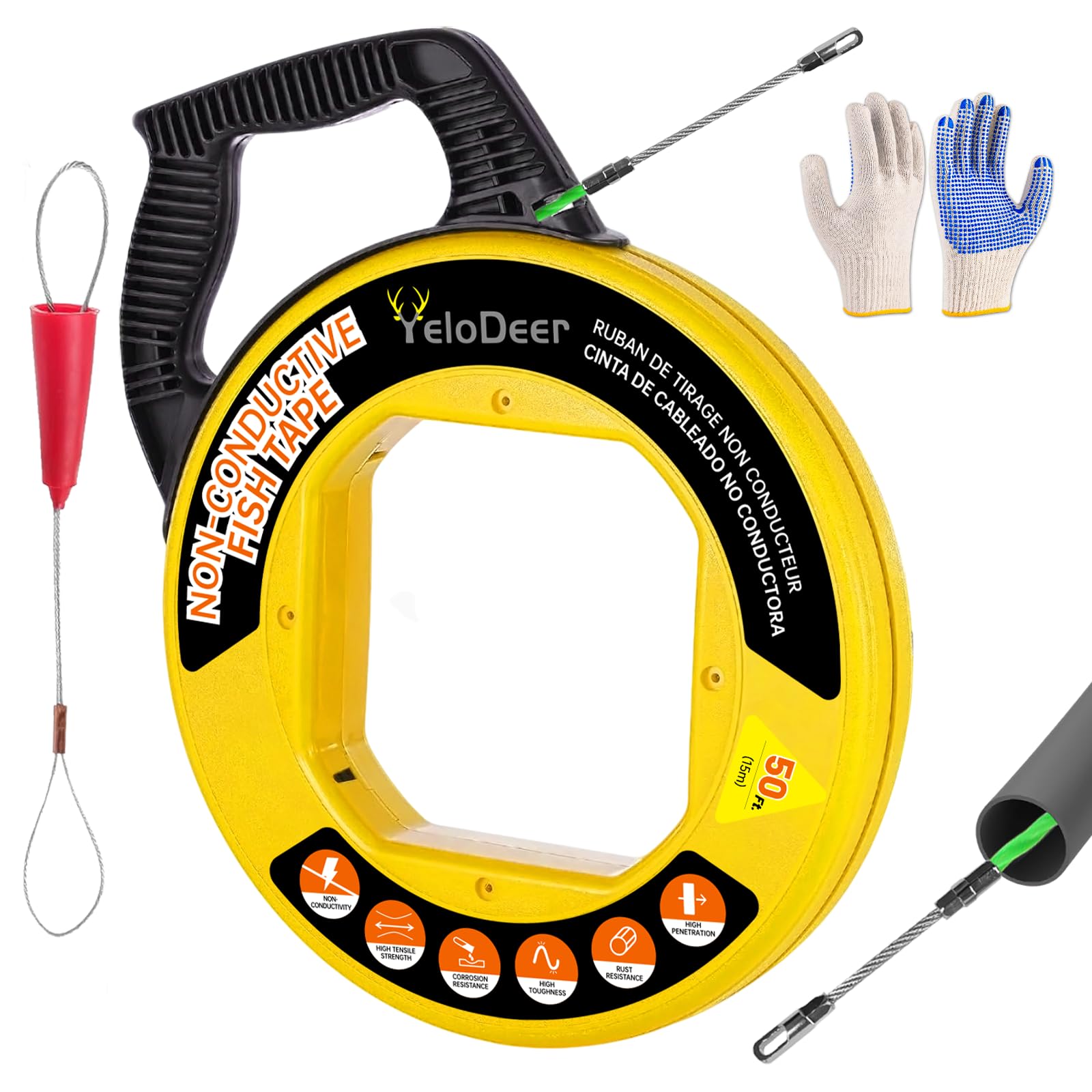
A fifty-foot PET tape for the job that never needed a hundred.
Fifty feet of 4.5 mm PET guide wire, a wire puller, and a pair of gloves in one package. This is the tape for the homeowner running a new outlet or pulling a cable through a short conduit, not the electrician fishing a full commercial run. It weighs 2.9 pounds, so it hangs on a hook without pulling the shelf down.
The material choice is deliberate. PET does not snap when you over-bend it the way fiberglass or steel can, and it is non-conductive, which is the safer thing to have in your hand around household wiring. The screw head rotates a full 360°, so the tip threads through corners rather than catching on them. The case is built to take a drop without cracking, and the sloped handle helps when you reel the tape back in.
Size is the obvious constraint. Against the 120 ft steel tapes here, 50 ft falls far short of a full run, and it will not reach one without a splice. Within its range, though, it is the easy tape to hand to someone who has never fished a wire before.
What it is: a 50 ft, 4.5 mm non-conductive PET tape with a 360° rotating head and a protective case.
What it is not: a long-run tape — measure your conduit first, because 50 ft runs out fast on a two-story drop.
Right choice for: home and small-job pulls where safety and bendability matter more than reach.
Plan on something longer if: your conduit runs past the fifty-foot mark.
8. VEVOR Fish Tape, 120-foot, 1/8-inch Steel Wire Puller
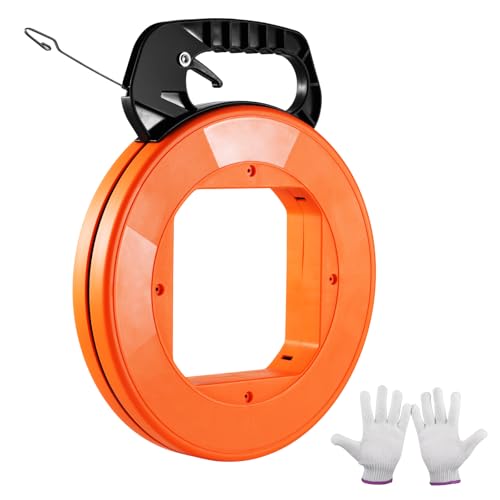
A 120-foot steel tape at the entry point, with a brake that holds the line.
Everything you want in a first steel tape shows up here: 120 feet of high-manganese steel at 1/8 inch, a nickel-plated carbon steel pulling head that slides through conduit bends, and a thumb lock that grips the tape while you guide wire. It handles 90° bends, and the ABS and PP case is built to survive the odd drop.
Owners mention it handles long runs, with owners pushing it well past its nominal 120 feet. The thickened handle keeps your hand off the tape during reeling, which your palms notice on a long pull.
The fair warning is durability. Reports are mixed, and a share of users had the tape break under hard use, so treat it as a capable budget tool rather than a lifetime investment. It weighs 3.97 pounds and carries 4.0+ stars across 270+ ratings — the lowest in this group, but also the cheapest way in.
The budget argument: 120 ft of steel, an impact-resistant case, and a thumb lock brake, all at entry-level money.
The honest trade: durability is the weak spot — go gentle on the pull and it will serve you.
Good fit if: you need long steel reach occasionally and want to spend as little as possible.
Spend more if: this tape will be in your hand every working day.
Know the Specs
Tape material: steel versus PET and polymer
Steel tape is stiff and pushes hard, which makes it the tool for long straight conduit and heavy cable. PET and extruded polymer tapes are non-conductive (they will not carry current to your hand) and bend without breaking, which suits curves and tighter pipe. The trade-off is that a soft tape goes floppy in an open wall cavity where steel holds its line.
Diameter or width, and why it changes the pull
A wider or thicker tape resists kinking but fights tight radius bends. A slimmer tape turns corners easily but can double back when you push. That is why a 6 mm polyester tape feels different in the pipe from a 4.5 mm one, and why a 1/8-inch steel tape behaves differently again.
Footage markings
Laser-etched increments turn a tape into a measuring device. When the marks step in 1-foot or 12-inch intervals, you can read how much conduit you have covered and how much tape is left, which saves hauling wire back out to guess.
Brake, thumb lock, and case design
Pulling tape out is easy; winding it back is where housings prove themselves. A thumb lock or brake holds the tape in place while you guide the wire, an angled payout reduces friction, and an impact-resistant case survives the drop off a ladder that eventually happens.
Common Questions
Is a steel fish tape or a non-conductive fish tape better for conduit work?
Will a 4.5mm fish tape fit through 1/2-inch conduit?
How long a fish tape do I need for a two-story wall drop?
Can a fish tape break if I bend it too much?
What does non-conductive mean on a fish tape?
Why do fish tapes have laser-etched markings?
How do I stop a fish tape from kinking when I push it?
Do I need a fish tape with a changeable leader tip?
How do I care for a steel fish tape so it does not rust?
Is a heavier fish tape harder to use?
The Bottom Line
For most people buying a wire pulling fish tape, the Klein Tools 56333 is the pick because its laser-etched footage marks let you measure the run as you pull, and its firm 1/8-inch steel handles long conduit without folding. If curved pipe and pool light runs are your work, the Ninja Fish Tape 100FT bends around corners that stop a steel tape. And for everyday non-conductive conduit work, the Southwire 4.5mm is the one to reach for — it is the most-reviewed tape here, and a proven name in the trade.
How we choose
We do not accept paid placement. Every pick is matched to a real buyer and a real use-case; we do not hands-on test units.
Sources
Specifications: manufacturer listings and product documentation. Review insights: verified customer reviews, as of November 2026. Pricing: not shown on this page (it changes often); check the current price via the retailer link.
As an Amazon Associate, Tactical Gear Guy earns from qualifying purchases. This does not affect which products we feature.