Specs are compiled from manufacturer listings and verified buyer reviews and can change over time — please confirm the key details on the product page before buying.
Standing on a frozen scaffold at dawn, the wrong winter work clothes make an eight-hour shift feel like punishment. You want one thing from this category: gear that keeps you warm and dry while you actually move, bend, and reach. The nine picks below cover the real jobs — insulated bibs, hi-vis bombers, coveralls, and work pants — and each entry tells you which body type, climate, and job site it truly suits.
This guide is built by comparing the manufacturers’ published specifications and the patterns across verified customer reviews, so you get each pick’s real strengths and trade-offs instead of marketing spin.
Cold-weather layering fails for predictable reasons: too little insulation, a shell that traps sweat, or reflective tape that stops reflecting. Below you’ll find warmth numbers, reflective strip counts, and honest fit notes, so you can pick the right winter work clothes for your job without guessing.
Top Picks

How To Choose The Best Winter Work Clothes
Winter workwear is not a fashion purchase — it is equipment you wear for a shift in weather that punishes bad choices. The trick is matching the garment’s construction to your job’s demands. A welder crouching in a trench has different needs from a surveyor standing on a roadside for six hours.
Insulation Measured In Grams
Warmth in this category is usually stated as a fill weight in grams, such as 150g or 160g of quilted thermal material. That number tells you how much lofted insulation sits between you and the cold. A 160g jacket runs warmer than a bare shell, but it also feels different on the body. Match the fill weight to your climate instead of buying the heaviest option.
Reflective Tape And Class 3 Visibility
Hi-vis gear carries a visibility class (Class 3 here), and the tape does the actual work at night. Two-inch-wide reflective strips around the shoulders, waist, and arms throw light back at drivers. Count the strips and check where they sit — tape across the chest does less for a worker facing traffic than tape on the arms and shoulders.
Bibs, Coveralls, Or Pants
Bibs cover from the ankle to the chest and leave your arms free for layering underneath. Coveralls wrap your whole body in one insulated piece, so they run warm but restrict you less than you’d think. Insulated work pants are the least bulky and the easiest to wear under a separate jacket. Pick the shape based on how much bending and layering your job requires.
Side-by-Side Comparison
| Model | Best For | Insulation | Shell / Fabric | Hi-Vis Tape | Amazon |
|---|---|---|---|---|---|
| Carhartt Yukon Extremes Coverall★ Best Overall | Deep-cold coveralls | 150g 3M Thinsulate | 6.5-oz, 500-denier Cordura nylon | 3M Scotchlite Carbon Black | Amazon |
| TCCFCCT Hi Vis Bomber JacketBest Value | Wet-weather hi-vis | Lightweight lining | 300D coated PU Oxford | 2-inch reflective stripes | Amazon |
| CARWORNIC Hooded Active JacketBest Everyday | Everyday work jacket | Quilted lining | — | — | Amazon |
| JKSafety HV Winter Bomber | Multi-pocket hi-vis | 160g quilted thermal | Oxford with PU coating | Five 2-inch strips | Amazon |
| Wrangler Insulated Duck Bibs | Flexible bib coverage | Insulated quilted lining | Duck fabric | — | Amazon |
| Realtree Insulated Hunting Bibs | Cold-weather hunting | Insulated | Water resistant, breathable | — | Amazon |
| Pioneer Hi Vis Waterproof Bib Pants | Rain-and-cold bibs | 180 GSM quilted lining | 300 denier PU coated Oxford | Startech reflective tape | Amazon |
| HISEA Insulated Coveralls | Budget coveralls | 100g thermal cotton | Water-repellent canvas | — | Amazon |
| TRUEWERK T3 WerkPant | Cordless leg warmth | Hex Fleece backing | 84% ripstop polyester | — | Amazon |
Detailed Reviews
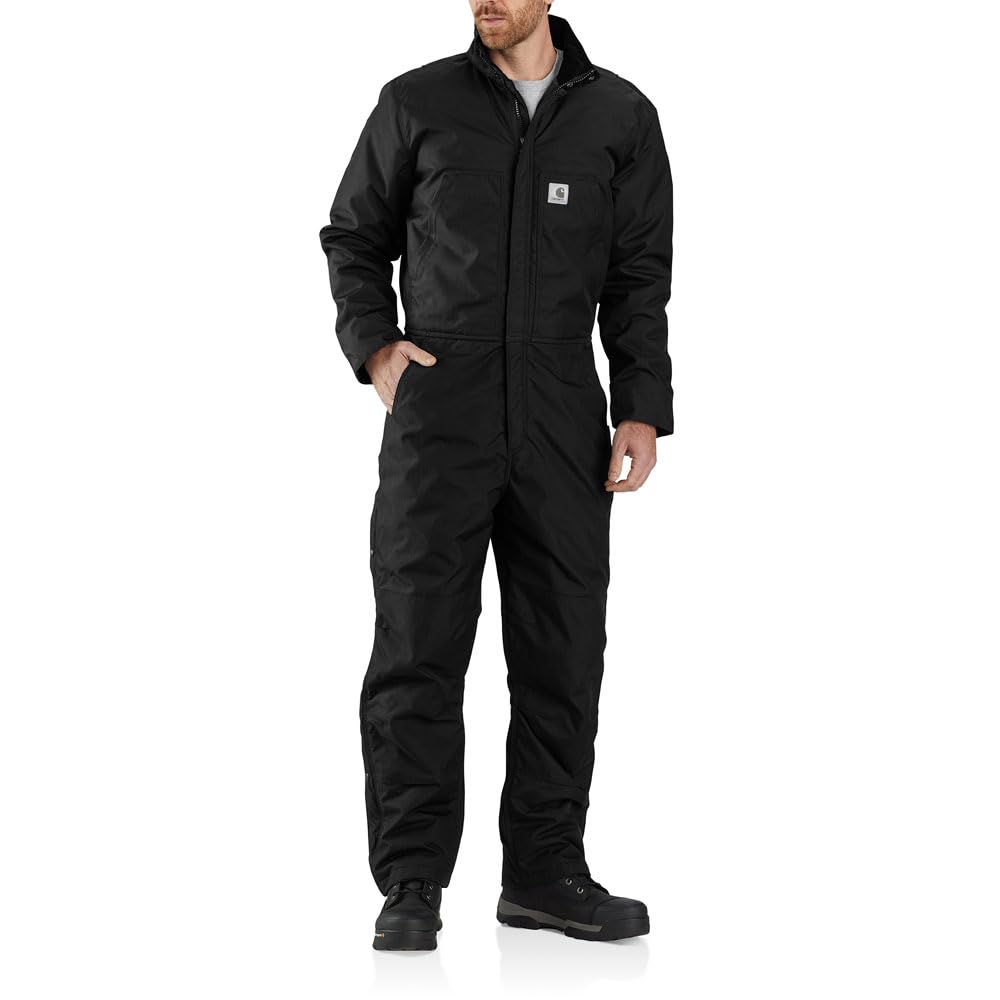
1. Carhartt Men’s Yukon Extremes Insulated Coverall
Our pick — 4.5+★ from 650+ verified ratings; the strongest balance of quality and price.
A full-body cold shield with 500-denier armor on the outside and 150g of fill inside.
What earns this coverall the top spot is the shell: 6.5-ounce, 500-denier Cordura nylon built to shrug off scrapes against scaffolding and truck beds. Inside sits 150g of 3M Thinsulate insulation, the lofted fill sold in grams that traps your body heat without turning you into a snowman. Compare it with the JKSafety bomber’s 160g fill and the gap is small — 150g vs 160g — which means this coverall holds serious warmth while adding a tougher outer layer.
Carhartt layered in cold-specific hardware you’ll notice on a long shift. Wind Fighter technology cuts the wind that erodes warmth on an open site, and Rain Defender DWR (a durable water repellent that beads light rain on the fabric) keeps a drizzle from soaking through. The two-way center front zipper lets you open the bottom for stride, and the ankle-to-thigh leg zippers with storm flaps mean you can pull the coveralls on over boots without a wrestling match. Double-layer knees, with openings for adding knee pads, are the kind of detail that only matters after you’ve knelt on frozen concrete.
What wins people over across the whole review set is the overall build quality, followed closely by how genuinely warm it runs in cold weather. The honest catch is sizing: the legs tend to run long and the body runs big, so the fit is the one thing to plan around. As buyers report, some find them too long, and the sizing runs big. The zipper quality is also mixed, with some finding it sturdy while others report it breaking within 9 months. Order toward your true size rather than up, and treat the zipper as a wear item to check.
What earns its keep
- 500-denier Cordura shell resists abrasion on rough job sites.
- 150g 3M Thinsulate plus Wind Fighter keeps cold and wind out.
- Ankle-to-thigh zippers let you dress over boots fast.
- Double-layer knees with pad openings for kneeling work.
Where it asks patience
- Legs run long and the body runs big — size carefully.
- The zipper is the wear point to watch over the long haul.
Made for: anyone working full days in deep cold who wants one insulated piece with a hard-wearing shell.
Think first if: you’re between sizes or need a trim leg — the fit runs generous and long.
2. TCCFCCT High Visibility Jacket Class 3 Hi Vis Bomber
A rain-ready neon bomber that keeps drivers seeing you and rain off your back.
If your winter shift happens near traffic, the safety gear matters as much as the warmth. This jacket is built for that job: 300D coated PU Oxford fabric (a heavy, coated weave that sheds water) with a lightweight lining that adds warmth without weight. Two-inch reflective stripes wrap the shoulders, waist, sleeves, and cuffs, throwing light back at oncoming headlights. The neon-yellow body with black cuffs and hem does double duty — it boosts contrast and hides dirt where you rub against everything.
The design is built around a working day outdoors. A detachable hood gives you the choice on a dry but brisk morning, and the ribbed elastic cuffs with hook-and-loop straps seal the cold wind out at the wrists. There’s a transparent ID holder on the left chest, dual microphone buckles on the shoulders for a walkie-talkie, and large zippered side pockets for tools. The water resistance earns real praise from people who wear it in weather — it keeps rain out when the sky opens up mid-shift.
What people praise most is the overall quality, with warmth right behind it, and the value side of the ledger comes back clean. The catch worth flagging is the cut: this jacket tends to run a little big, so a snugger base layer beats sizing up. Durability is the split opinion in the mix — most find it solid, while a few push it hard enough to see early wear — so treat it as a solid everyday hi-vis rather than a bombproof shell.
Fit and sizing note: it runs a little big, so order toward your normal size and let the ribbed cuffs and adjustable straps handle the seal.
Fair-weather friend: the coated Oxford shell earns credit for keeping rain out, which is exactly what a roadside worker needs on a wet, cold day.
Reach for it if: you work near traffic in wet, cold weather and want Class 3 visibility and rain protection in one jacket.
Look elsewhere if: you need maximum warmth on its own — the lining is lightweight, so it works best with a layer underneath.
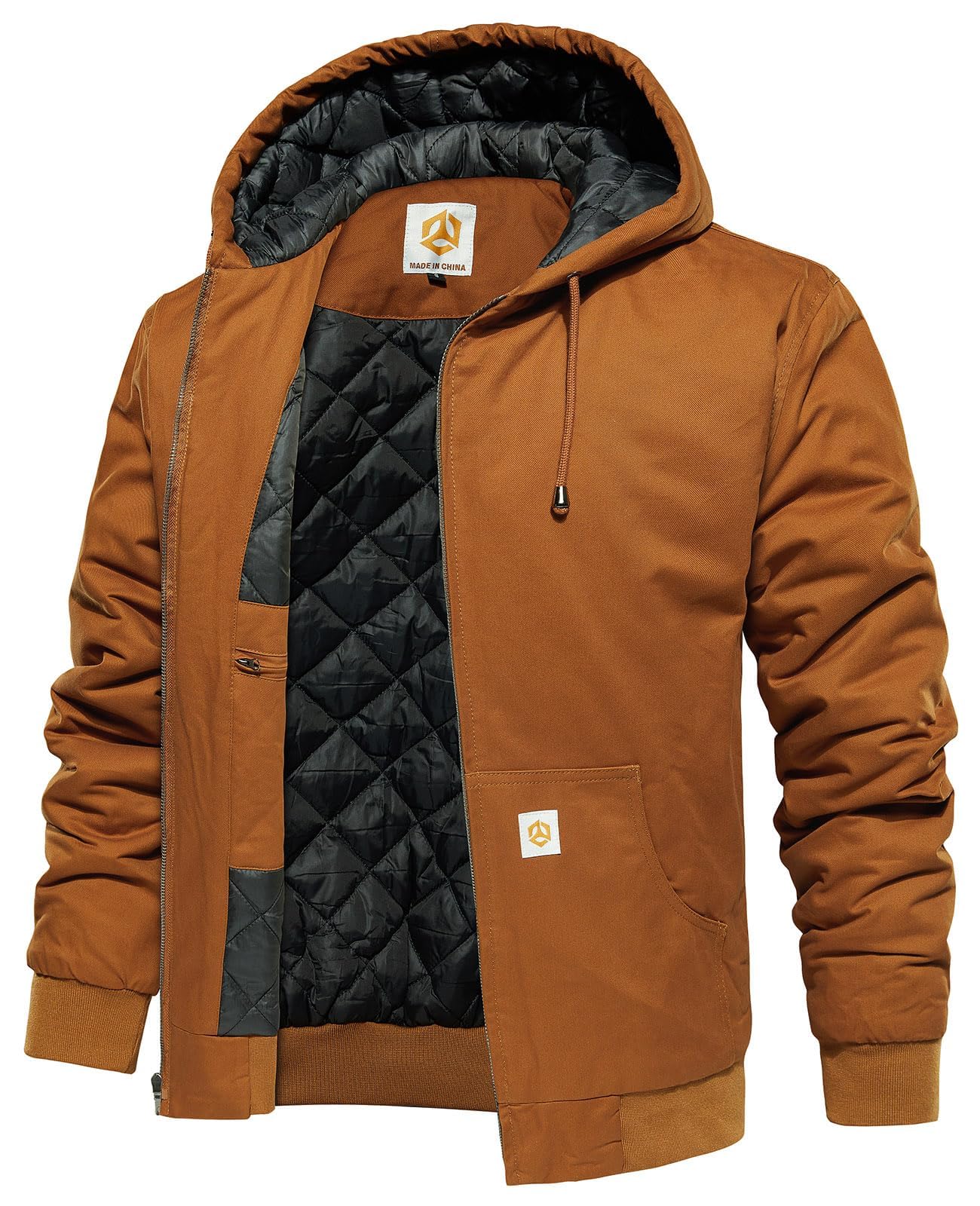
3. CARWORNIC Men’s Winter Hooded Active Jacket
The hooded work jacket that layers under a vest and keeps your core warm all shift.
Not every winter job needs full-body coverage, and this is the pick for the days a jacket alone is enough. The quilted lining traps body heat, and the attached hood covers your head on a raw, gusty morning — the spot that drains warmth fastest when you’re standing still. Two inner pockets and two front pockets cover a phone, gloves, and a small tool without reaching into a bag. An elastic hem and cuffs hold the heat in and keep the cold from sneaking up your sleeves.
The construction earns the most positive notice in the review set, and warmth comes in right behind it — owners describe it as a genuine work jacket rather than a fashion layer. Value holds up too, with people saying they’d buy it again, and the fit is well liked. That combination makes it an easy choice for the guy who wants one hooded jacket for the colder months and doesn’t want to fight with a full bib every morning.
Here’s the two-part catch, and both pieces matter before you order. The sizing runs very small, so the sensible move is to size up rather than trust your usual number. And the zipper draws consistent complaints, which means treat it with care, zip it straight, and don’t yank. Get past those two and you have a warm, durable hooded jacket that carries value as well as the pricier names.
Why owners keep reaching for it
- Quilted lining and a warm attached hood for cold mornings.
- Two inner plus two front pockets for gloves, phone, and tools.
- Elastic hem and cuffs seal out the wind at the seams.
- Quilted lining and attached hood hold warmth on cold mornings.
Know before you click buy
- Sizing runs very small — order up one size.
- The zipper is a repeated weak point; zip it with care.
Right call for: the worker who wants a warm, hooded everyday jacket and can size up confidently.
Wrong call for: anyone who wants to order their exact chest size and never worry about a zipper — check the next hi-vis pick instead.
4. JKSafety Reflective Safety Jacket Hi Vis JK116

A winter bomber that carries 160g of warmth and enough pockets to skip the tool belt.
The standout figure on this one is the insulation: 160g of quilted thermal fill, the lofted material that traps body heat, and it’s washable, which matters once you’ve spilled coolant on it. That fill beats many hi-vis shells that have no insulation at all. Around it wraps Oxford fabric with a PU coating for waterproofing and dirt resistance, and every seam is sealed with waterproof strips so a wet day doesn’t soak you through the stitching. A fleece-lined standing collar and a storm flap over the industrial-grade zipper seal the two spots where cold usually gets in.
Visibility runs on five 2-inch reflective strips — three across the body and two on the arms — that light up when a headlight or work lamp hits them. Then there’s the storage: six utility pockets, including a 2-tier ID pocket, an inner strapped pocket, a passport pocket, and two large utility pockets. For a municipal worker, surveyor, or warehouse hand who carries badges, a phone, and odds and ends, that’s a jacket that replaces a bag. Adjustable elastic cuffs and hems let you tune the seal as you move.
Quality and warmth are the two things people praise most, and the wind resistance — blocking cold gusts and wet weather — earns steady credit on top. Sizing is the piece to plan for: this jacket runs small and isn’t true to size, so size up. Durability draws a split verdict in the mix, with most finding it tough and a few pushing past its limits. The 160g fill also runs a touch warmer than the Carhartt coverall’s 150g, so if raw warmth per garment is your goal, this one edges ahead.
Where it shines: five reflective strips and six pockets make it a working-uniform jacket, not just outerwear — everything you carry has a home.
Fit reality: it runs small, so go up a size; combine that with the winter work clothes urge to layer and you’ll want the extra room.
Pick this if: you want insulated hi-vis warmth plus serious pocket storage for a badge-and-tools shift.
Skip this if: you wear a true-to-size fit — this jacket demands a size up to sit right.
5. Wrangler Men’s Insulated Duck Bibs

Duck-fabric bibs built to bend, with articulated knees that follow you into a crouch.
Bibs are the working-man’s cold-weather armor, and these make their case with movement. Articulated knees and a hidden knee barrier let you kneel on cold ground without the fabric fighting back. The insulated quilted lining runs warmth through the front and back of the bib, so your chest and back stay covered on a chilly morning. Adjustable suspenders keep the whole thing riding where it should, and a heavy-duty metal zipper handles the front closure on your own.
What earns the most praise is the top-quality construction, and warmth follows close behind — the front-and-back insulation is exactly what owners point to. The chest patch and side-leg tool pockets give you a spot for a tape measure and fasteners, and the hem-to-knee zipper means you can get the bibs on over boots without a struggle. Value comes back strong too, with owners saying they’d buy them again in a heartbeat.
The one thing to sort out before ordering is the fit: opinions split cleanly on this, with some finding it perfect and others finding it runs oversized and long in the leg. Construction and comfort both come back clean, but durability is the split call — most find them solid, while a few flag the hooks breaking. Read the fit chart carefully, size to your actual measurements, and these bibs pull their weight on a cold job.
What makes them bend with you
- Articulated knees and a hidden knee barrier for kneeling work.
- Insulated quilted lining warms both the front and back.
- Hem-to-knee zipper speeds getting them over boots.
- Chest and side-leg tool pockets keep gear close.
The honest rub
- Fit splits both ways — some find them oversized and long.
- A few report the hooks breaking over time.
Best for: the worker who kneels and climbs all day and wants insulated bibs that move.
Check your fit first if: you’re between sizes — the fit runs generous for some wearers.
6. Realtree Men’s Camo Insulated Hunting Bibs

Camo bibs that hold warmth in a cold blind and keep you dry in the field.
Sitting still in a stand turns any chill into a deep one, which is why insulated bibs earn their place in a hunting kit. These are built as water-resistant, breathable, midweight coverage, so your body heat can escape as vapor instead of trapping sweat that later turns cold. The insulated build keeps your legs warm through a long sit, and the camo pattern blends you into the surroundings rather than announcing you to everything within sight.
The fit is what people like most about these bibs, with warmth right up there, and quality holds a strong score on its own. Comfort and value both come back fully positive — owners describe them as comfortable and worth the money, the kind of gear they’d buy again. That trio of fit, warmth, and value is a good balance for a bib you’ll wear through a full season of cold mornings.
The trade-offs are specific and worth planning for. Sizing is split, with some finding it true to size and others finding the large a touch smaller than expected. The legs tend to run long, so if you’re shorter, plan to account for extra length. Durability draws a mixed read too, with most finding them tough while a few point to thin material at the leg bottoms. Order to your measurements and treat the lower legs as the spot to watch.
Field comfort: water-resistant and breathable, so a fast walk to the blind doesn’t leave you clammy and chilled once you sit.
Sizing heads-up: the legs run long and the large can come up a touch small, so check the chart against your height before you commit.
Worth it for: cold-weather hunters who want insulated, camo bibs that fit well and hold warmth through a long sit.
Not ideal if: you’re on the shorter side — the running-long legs will need a fix at the hem.
7. Pioneer Hi Vis Waterproof Bib Pants

Insulated hi-vis bibs that tackle rain and cold at the same time, seam by seam.
This is the bib for the worker whose job doesn’t stop when it rains. The 300 denier PU coated Oxford polyester shell carries heat-sealed seams for water resistance, and inside sits a 180 GSM quilted polyester lining for insulation. That GSM number is a fabric weight, and at 180 it adds a real layer of warmth under the shell.
Visibility comes from a full tape layout of Startech reflective strips, the material that bounces light back at drivers in low light. The details are built for a moving workday: adjustable elastic suspenders with quick-release clips, an elastic waist, two front slash cargo pockets, and a sealed inside chest pocket with a pen slot. Two-way leg zippers with snap storm covers mean you can pull them on over work boots and close the flaps down against weather.
What people like most is the quality, with warmth right behind it, and the promise is simple — these keep you dry and warm on a cold, wet shift. The catch is the fit: this one runs a little snug for some, with others finding it matches the stated sizing. Water resistance also gets a split read, with most finding them fully waterproof and a few hitting the limit. Size up if you’re between sizes, and you get real warmth with a waterproof shell.
Rain-day rock: heat-sealed seams plus a 300 denier PU coated shell is a build aimed squarely at wet work, and the 180 GSM lining adds warmth underneath.
Snug in the middle: the bibs run a bit snug for some frames, so a size up is the safer call for layering.
Go for it if: you work outdoors in rain and cold and want hi-vis bibs with sealed seams and reflective tape.
Hold up if: you want a loose, roomy fit — these tend toward snug, so size up to layer comfortably.
8. HISEA Insulated Coveralls for Men

A loose-fit canvas coverall that keeps the cold off without feeling like a suit of armor.
The build here starts with 100g lightweight thermal cotton, the lofted fill that holds heat, and the word to hold onto is lightweight — it keeps you warm without the bulk that makes a coverall hard to move in. Around it sits a water-repellent, high-density canvas shell, so a drizzle beads up instead of soaking in, and the canvas resists abrasion, tearing, and daily wear. A diamond quilted lining locks in the heat, a full-length double-ended metal zipper with weatherproof snaps makes getting in and out easy, and nine pockets hold tools and everyday gear across construction, farm, ranch, garage, and carpentry work.
Warmth is what the reviews praise most, with quality right beside it — owners describe these as good for winter use and made well. Value comes back fully positive as well, the sense of money well spent. The loose-fit cut also means the coverall goes over work clothes without fighting your movement, which is the whole point of the shape.
Now the sizing reality, and it’s the piece to plan around: these run about 3-4 inches too long according to some wearers, and can feel a little snug through the body even with the loose fit. The zipper draws a split read — some find it well-made, others hit trouble. Neither issue is a reason to look away from a coverall at this value; it just means check the length against your height and treat the zipper with a straight, deliberate pull.
Best fit: budget-minded workers who want a loose canvas coverall that goes over clothes and keeps them dry in a drizzle.
Then again: if you’re short, budget for a hem adjustment — the legs run 3-4 inches long for some wearers.
9. TRUEWERK Men’s Insulated Work Pants – T3 WerkPant
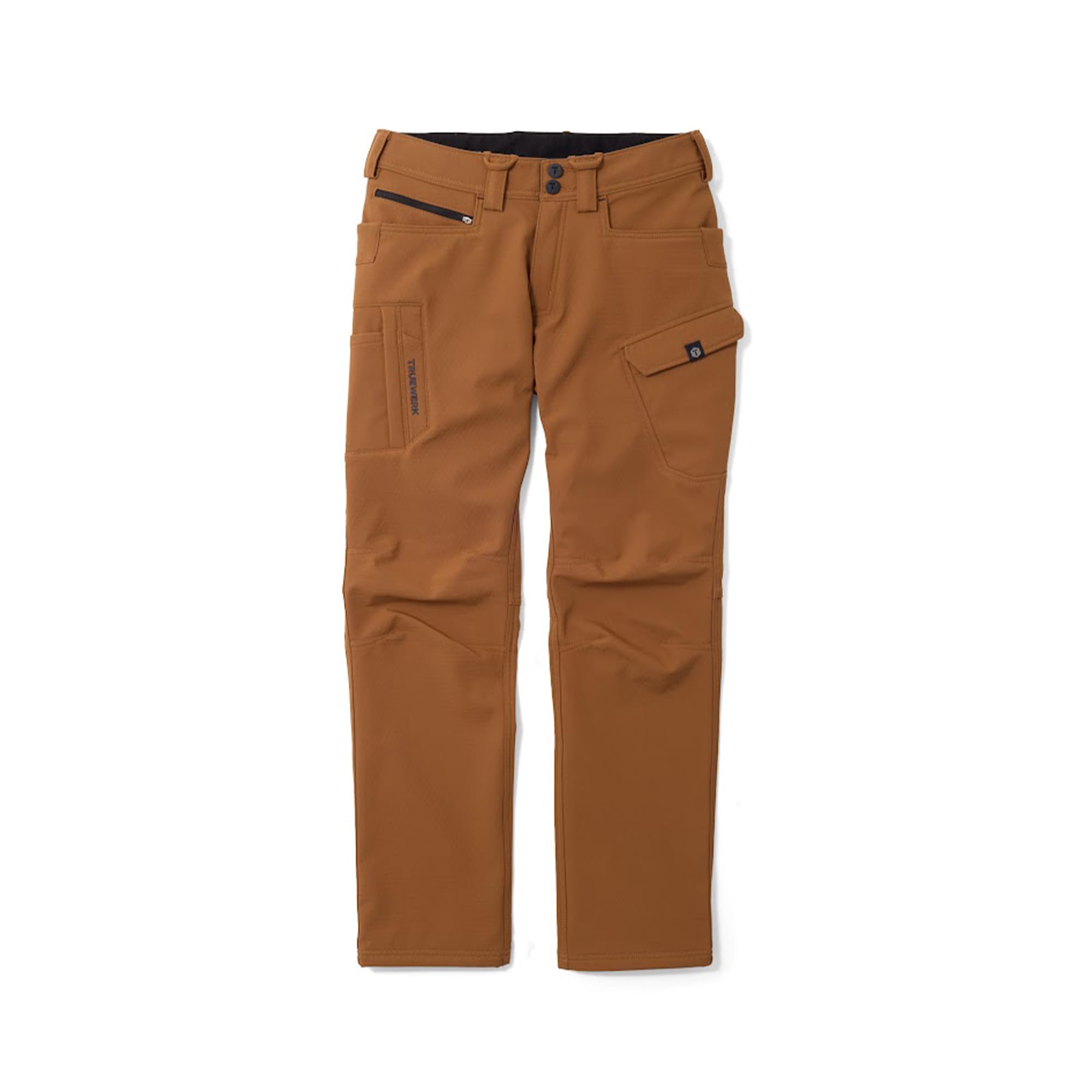
Frigid-weather work pants with a warmth-rated build and a fleece backing inside.
If a full bib is too much on a milder cold day, insulated pants cover the gap. These are the T3 in the maker’s T-Line, which they rate for frigid conditions and extreme weather. The fabric is 84% ripstop polyester with 16% spandex and a Hex Fleece backing, the fleece layer that traps heat close to your legs, and the ripstop weave resists snags. Four-way stretch and a DWR treatment (a durable water repellent that beads rain) round out the build, and at 24.40 oz they carry real substance compared with the maker’s lighter T1 and T2 pants.
What earns the most praise is the overall quality, with warmth close behind and comfort right there too. Owners note the warmth handles cold weather without leaving them overheated — a good sign the fleece backing breathes alongside you. Water resistance earns full marks from those who mention it, repelling rain and keeping you protected as you work. The pants are built as a standalone winter layer under a separate jacket, which keeps your arms free and your layering options open.
The fit is the honest caveat. Some find these roomy in the waist, others find them snug through the crotch, and the waist measurements are called unreliable by some. Value is a split call, with some finding them worth it and others a bit pricey. The maker’s own advice: size up if you’re between sizes, because the waistband is more structured than the stretchy rest of the pant. Nail the waist size and the warmth and build do the rest.
What these pants bring
- Rated for frigid conditions, with a Hex Fleece backing for warmth.
- 84% ripstop polyester and 16% spandex give stretch and snag resistance.
- DWR treatment repels rain effectively.
- Four-way stretch keeps you moving on the job.
The fit question
- Waist fit is inconsistent — some find it roomy, others snug.
- Value is a split call, with some calling them pricey.
Right for: workers in frigid climates who want a warm, stretchy pant without a full bib.
Think twice if: your waist sits between sizes — the maker advises sizing up for the structured waistband.
Know the Specs
Insulation Fill In Grams
The fill number — 100g, 150g, 160g — is the weight of the lofted insulation packed into the garment. Higher means more warmth built in. A 160g jacket holds more fill than a 150g one, but the shell and wind protection around it decide how warm you actually feel. Read the fill alongside the shell, not on its own.
Reflective Tape And Visibility Class
Hi-vis workwear carries a visibility class, like Class 3 here, and the tape makes it work after dark. Two-inch-wide strips positioned around the arms, shoulders, and waist bounce headlights back at drivers. The class only counts if the tape faces the right direction and stays clean, so check strip placement against the traffic you work near.
Water Resistance: DWR vs Sealed Seams
A DWR treatment beads water on the fabric surface and sheds light rain. Heat-sealed seams stop water getting through the stitching itself, which is where a shell usually fails first. A PU-coated Oxford fabric adds another layer of defense. For wet work, look for sealed seams and a coated shell, not just a water-repellent finish.
Bibs, Coveralls, and Pants
Bibs cover the ankle to the chest and free your arms for layering. Coveralls wrap your whole body in one insulated piece and run warmer but restrict movement slightly more. Insulated pants are the least bulky option and pair with a separate jacket. Match the shape to how much bending, climbing, and layering your day requires.
Common Questions
Do insulated bibs or coveralls run true to size?
What does 150g or 160g insulation actually mean?
Is Class 3 hi-vis enough for roadside work in winter?
Can I wear insulated work pants instead of bibs in cold weather?
Are these winter work clothes waterproof or just water resistant?
How should I wash insulated coveralls and bibs?
Do I need a hood or just a collar on cold work days?
Which is warmer for a deep-cold shift, a coverall or separate bibs and jacket?
What are the zipper issues buyers mention on winter workwear?
The Bottom Line
For most workers facing a cold shift, the winter work clothes winner is the Carhartt Yukon Extremes Coverall because its 150g Thinsulate fill, 500-denier Cordura shell, and Wind Fighter protection deliver a full-body cold shield built to take a beating. If you work near traffic in wet weather, the TCCFCCT Class 3 Hi Vis Bomber keeps you visible and dry, and the JKSafety Reflective Jacket adds 160g of warmth plus six utility pockets. For frigid days with less bulk, the TRUEWERK T3 WerkPant warms your legs without the full bib.
How we choose
We do not accept paid placement. Every pick is matched to a real buyer and a real use-case; we do not hands-on test units.
Sources
Specifications: manufacturer listings and product documentation. Review insights: verified customer reviews, as of November 2026. Pricing: not shown on this page (it changes often); check the current price via the retailer link.
As an Amazon Associate, Tactical Gear Guy earns from qualifying purchases. This does not affect which products we feature.