Specs are compiled from manufacturer listings and verified buyer reviews and can change over time — please confirm the key details on the product page before buying.
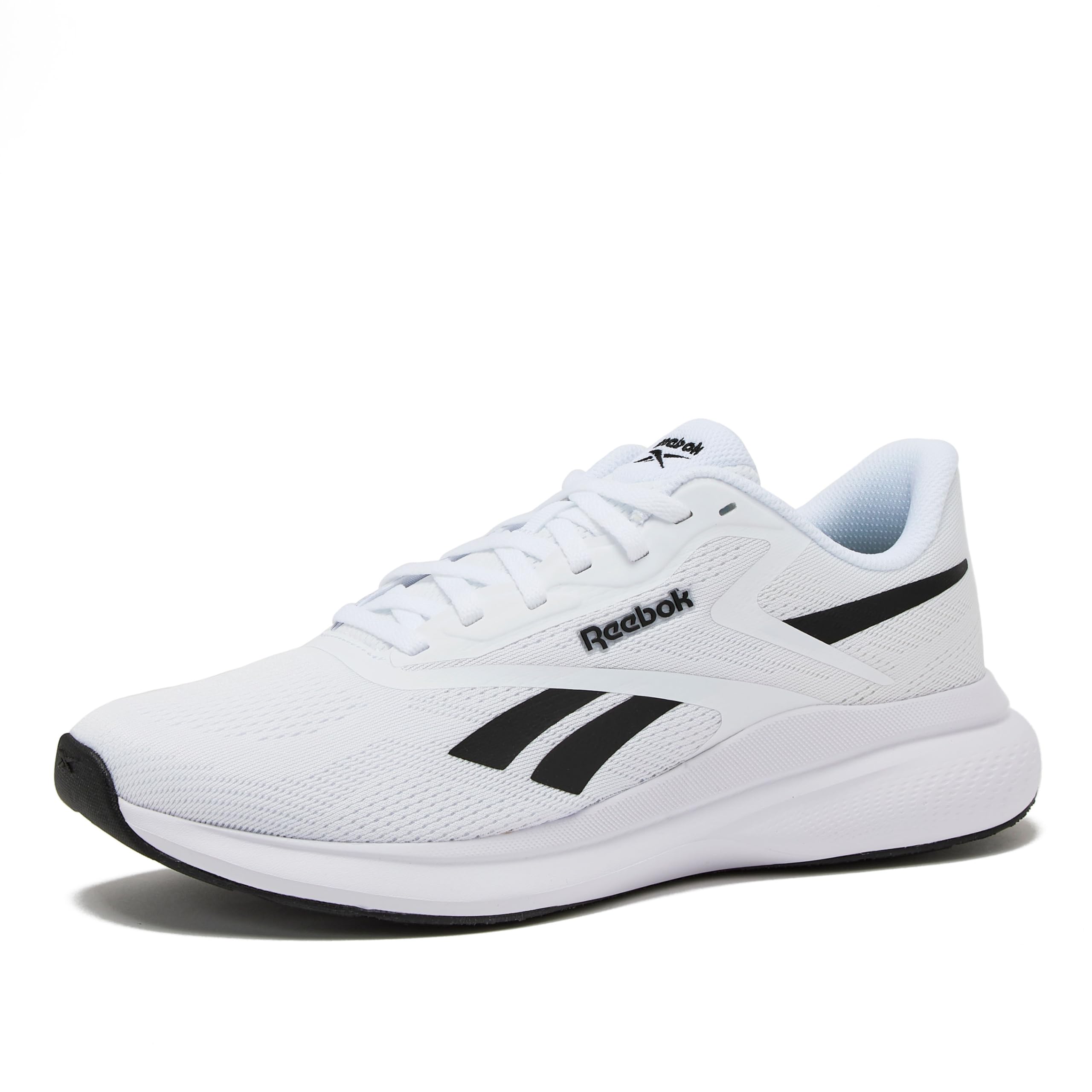
If your standard-width sneakers leave your little toe rubbing the side wall by lunchtime, the fix is a wider last, not a bigger size. Going up a half size adds length you do not need and still leaves the toe box narrow. The nine picks below are all built on genuinely wide widths — 2E, 4E, or a wide toe box shape — so your forefoot gets room to spread while the heel stays put. Start with the Reebok Energen Run 4 if you want the most well-rounded everyday pair.
This guide is built by comparing the manufacturers’ published specifications and the patterns across verified customer reviews, so you get each pick’s real strengths and trade-offs instead of marketing spin.
Wide sizing is where most sneaker shopping goes wrong, so every pick here has been checked for a real wide fitment rather than a stretched standard last. Below you will find honest fits, real upper materials, and the trade-offs that matter before you commit to a pair of wide size sneakers.
Top Picks


How To Choose The Best Wide Size Sneakers
The single most common mistake with wide sneakers is treating width as a size problem. If your toes feel pinched at the sides, a longer shoe will not fix it — the toe box is still narrow, and now your heel slides. What you want is the right width on the right length.
Width labels, decoded
You will see widths written as 2E, 4E, or simply “wide” and “extra wide.” A 2E is a step wider than standard through the forefoot, while a 4E adds more room again. FitVille, for example, sells its walking shoe in both Wide (2E) and X-Wide (4E), so you can pick a genuinely roomy fit rather than a compromise. If you have been squeezing into standard width for years, start at 2E and only move to 4E if you know your forefoot needs it.
Upper material and breathability
An engineered mesh upper lets hot air out and keeps the shoe light, which matters if you wear them for a full shift or a long run. A leather upper is the opposite trade: heavier and warmer, but easy to wipe clean and water-resistant on wet days. Mesh wins for miles; leather wins for standing still.
Drop, cushioning, and what your arch needs
Drop is the height difference between heel and toe. A zero-drop sole puts your heel and forefoot on the same level, which many wide-foot buyers prefer for a flatter, more grounded feel. Cushioning is separate: a cushioned midsole softens impact on hard pavement, while a firmer sole gives more stability underfoot. If you overpronate — your foot rolls inward as you land — look for a shoe that explicitly states stability support rather than just “cushioned.”
Side-by-Side Comparison
| Model | Best For | Width Options | Upper | Best Use | Amazon |
|---|---|---|---|---|---|
| Reebok Energen Run 4★ Best Overall | All-round everyday wear | Men’s size 6 to 14 | Engineered mesh | Running, gym, walking | Amazon |
| HOBIBEAR Unisex Barefoot ShoesBest for Wet Weather | Minimalist zero-drop feel | Wide toe box | Leather | Daily wear, wet weather | Amazon |
| Slow Man Wide Toe Box ShoesBest Cushioned Value | Neighborhood walking | Wide toe box | — | Walking, road running | Amazon |
| Wide Toe Box Slip-On (Women) | Easy on and off | Wide toe box | — | Long standing shifts | Amazon |
| Nike Revolution 8 Easy On | Quick-pull lacing | — | Mesh | Road running | Amazon |
| New Balance Fresh Foam 680 V9 | 2E width daily trainer | 2E | Engineered mesh | Road miles and gym | Amazon |
| FitVille Extra Wide Walking | Extra-wide everyday walker | 2E to 4E | — | Daily walking, standing | Amazon |
| ASICS GT-1000 14 | Overpronation support | Wide sizes offered | — | Daily training | Amazon |
| FitVille Wide High-Top Basketball | Ankle support on court | Wide and X-Wide | — | Basketball, flat feet | Amazon |
Detailed Reviews
1. Reebok Energen Run 4 Running Shoes for Men
Our pick — 4.5+★ from 950+ verified ratings; the strongest balance of quality and price.
The all-rounder that cools your feet while it cushions them.
At 1.87 pounds for the pair, it disappears into your gym bag. That low weight comes from the engineered mesh upper, a woven fabric that lets hot air escape instead of trapping it. If you walk to the office and then hit a treadmill, your feet stay dry through both.
The cushioning is handled by a FuelFoam Plus midsole, the springy foam layer under your foot that absorbs impact and pushes back. Underneath that sits a Pulsion foam insole made by Insite, which adds soft support so your arches do not ache after a long day. A rubber outsole grips street, track, and gym-mat surfaces, so one pair covers running, walking, and light weight-lifting. Colors run from black to white, navy, and grey.
Here is the catch a wide-foot buyer needs to hear. The fit is the one split point among buyers — plenty call it roomy, but a noticeable group finds it a touch narrow through the forefoot. If your feet are genuinely 4E-wide, treat this as a moderate wide rather than a true extra-wide, and look to the FitVille options instead. For a standard-to-2E foot, it is a very safe everyday choice.
What earns it the top spot
- Breathable engineered mesh keeps feet cool on long days
- FuelFoam Plus and Pulsion foam layer cushion without bulk
- Rubber outsole grips road, track, and gym floors
- 1.87 pounds for the pair, in four colorways
Where it runs tight
- Forefoot fit is split — some wide-foot buyers want more room
- Not a true extra-wide for 4E feet
Go for it: You want one breathable, cushioned pair for running, gym, and casual wear on a moderate wide foot.
Look elsewhere: Your feet need a genuine 4E width — the FitVille pairs below offer that.
2. HOBIBEAR Unisex Wide Barefoot Shoes
A barefoot feel with a leather shell that shrugs off puddles.
This one is for the buyer who wants their toes to actually spread. The wide toe box is cut specifically so your toes do not squeeze together — the exact pressure point that sends most wide-foot buyers searching in the first place. It is a unisex design, so the fit logic works the same whether you shop the men’s or women’s listing.
Underfoot, the zero-drop sole keeps heel and forefoot level, a flatter stance many people like for walking and standing. The rubber bottom is slip-resistant, which helps on wet pavement. Inside, a removable memory foam insole adds a soft layer you can pull out and replace if you wear custom inserts. The leather upper is waterproof and wipes clean, so a rainy commute does not mean squelching feet all morning — the review pages confirm dry feet as a genuine strong point.
The honest note is the barefoot part itself. With minimal padding underfoot, this is not the shoe for someone who wants plush cushioning on concrete all day. If you are used to a soft trainer, the flat, thin ride will feel like a big change at first — give it a few short walks. Runners chasing cushioning should look at the New Balance or ASICS picks instead.
Who it is built for: Anyone wanting a roomy, flat-sole shoe that keeps feet dry and lets toes spread naturally.
The trade-off: Minimal padding means a firmer, thinner ride than a cushioned trainer.
Best match: Wet-weather commuters and minimal-shoe fans who want a wide toe box.
Not your pair: You need thick, soft cushioning under every step.
3. Slow Man Wide Toe Box Shoes for Men
The fit-first walker that lets wide feet finally relax.
Fit is the headline here, and buyers report so loudly — the wide toe box is what gets called out first, with owners describing it as accommodating their feet perfectly. That is the whole point of a wide sneaker, and this pair delivers it for neighborhood walks, road running, and gym sessions alike.
Cushioning is the second thing people notice, giving a soft landing on pavement without feeling mushy. Quality and appearance also get steady praise, so the pair holds its look through regular wear. It handles the four basics in its own description — walking, running, athletic use, and exercise — which makes it a straightforward one-pair-for-everything option.
Arch support is where opinions divide. Some buyers find it helpful; others want firmer support under the midfoot. If your arch needs are specific, plan on adding an insert you already trust rather than relying on the built-in shape. Everyone else gets a cushioned, genuinely wide walker that does the everyday job well.
Why owners keep it
- Wide toe box that wide-foot walkers describe as a true fit
- Soft cushioning for road and neighborhood walks
- Handles walking, running, and gym in one pair
Plan around this
- Arch support is split — firm-support seekers may want an insert
Reach for this if: You walk daily and want a cushioned, roomy forefoot at a fair everyday level.
Think twice if: You need strong built-in arch support and would rather not add an insert.
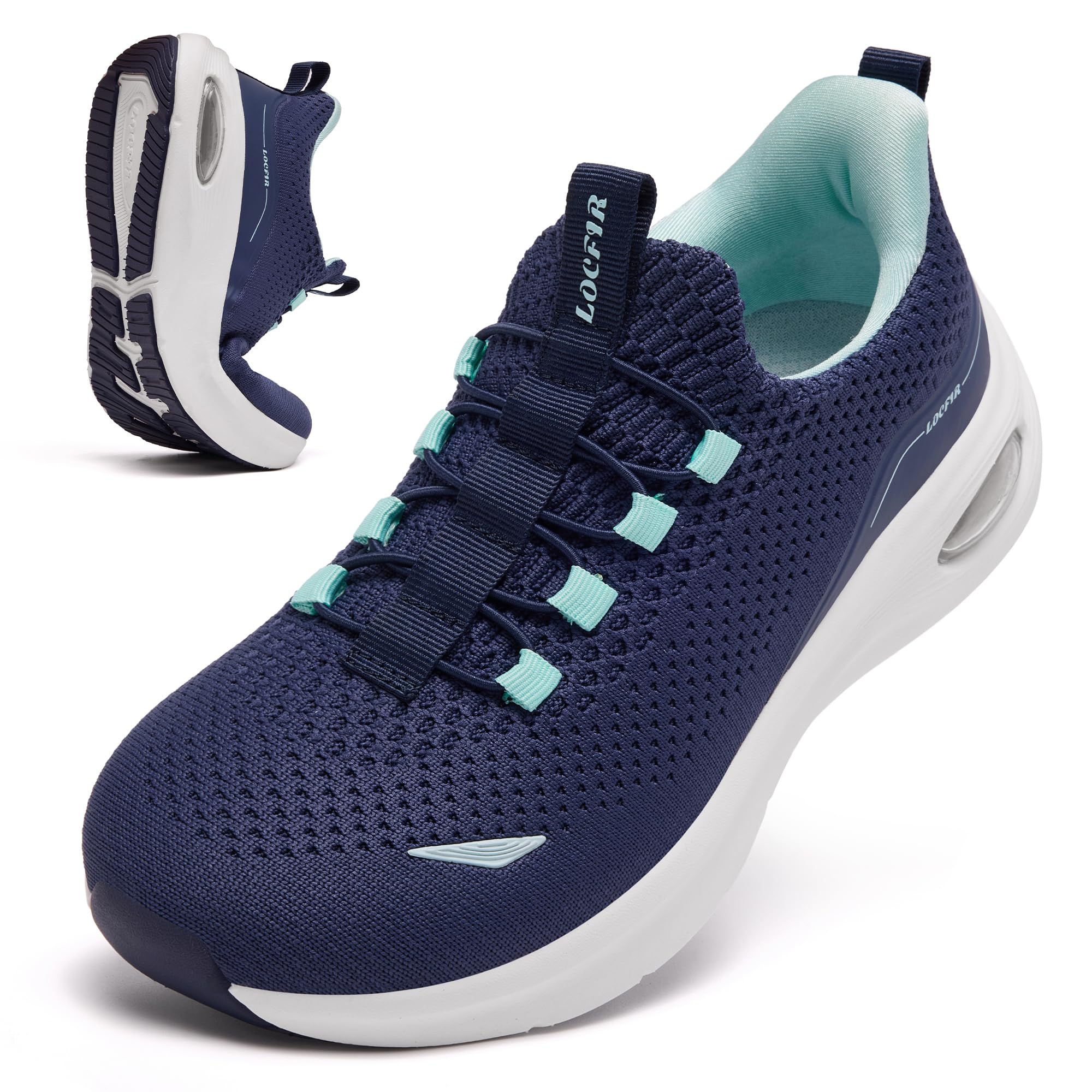
4. Wide Toe Box Slip-On Sneakers for Women
No laces, no squeeze — built for long shifts on your feet.
For anyone who stands through a twelve-hour shift, getting shoes on and off should not be a fight. This slip-on women’s pair solves that with a laceless design you step straight into, and the wide toe box means your toes are not pinched by the end of the day. Owners specifically call out that they do not squeeze the toes, and plenty wear them with or without socks.
The Phylon midsole — a lightweight foam layer underfoot — provides the cushioning that carries you through extended standing. Arch support is a stated feature, and the zero-drop, cushioned build keeps the ride comfortable for tennis, gym, and casual wear. It runs slightly large by design, and the maker advises high-instep wearers to go half a size up only if they want extra looseness.
Sizing is the mixed area. Some buyers find the fit true, others feel theirs ran small — so measure your foot against the size chart rather than assuming. Once you dial the size in, the ease of a slip-on with genuine forefoot room is the whole appeal.
Standout detail: A laceless slip-on with a wide toe box and cushioned Phylon midsole — a rare combo for long shifts.
Sizing caution: Fit reports are split, so check the size chart before ordering.
Pick this for: Nurses, teachers, and anyone on their feet for hours who wants slip-on ease and toe room.
Skip if: You prefer a laced, locked-in fit for running.
5. Nike Men’s Revolution 8 Easy On Road Running Shoes

The pull-on Nike that saves your back on the way out the door.
Nike built this one around a simple idea: get it on fast. The “Easy On” design is the star of the show, and buyers consistently praise how quick they are to slip on and off — handy if bending down to lace up is a chore. The mesh upper keeps things breathable, so feet stay cooler on a run or a long walk.
The ride comes from a foam midsole with comfort-focused rocker geometry, a curved sole shape that rolls your foot forward as you stride. Forefoot flex grooves let the shoe bend naturally at the ball of your foot rather than fighting it. Together they make for an easy, forgiving run on the road.
The wide-foot caveat is real: the fit is described as split, and a chunk of feedback says it runs small, with arch support drawing mixed reactions too. This is not the pick for a genuinely extra-wide foot. It is the pick for someone with a slightly wider foot who values pull-on convenience above all else.
What people like
- Easy On design for fast, fuss-free wear
- Breathable mesh upper
- Rocker geometry rolls the stride forward smoothly
What to watch
- Reported to run small — consider that before ordering
- Not built for genuinely extra-wide feet
The right buyer: You want a breathable, easy-on running shoe and your foot is only slightly wide.
Not ideal for: True extra-wide feet or anyone needing firm arch support.
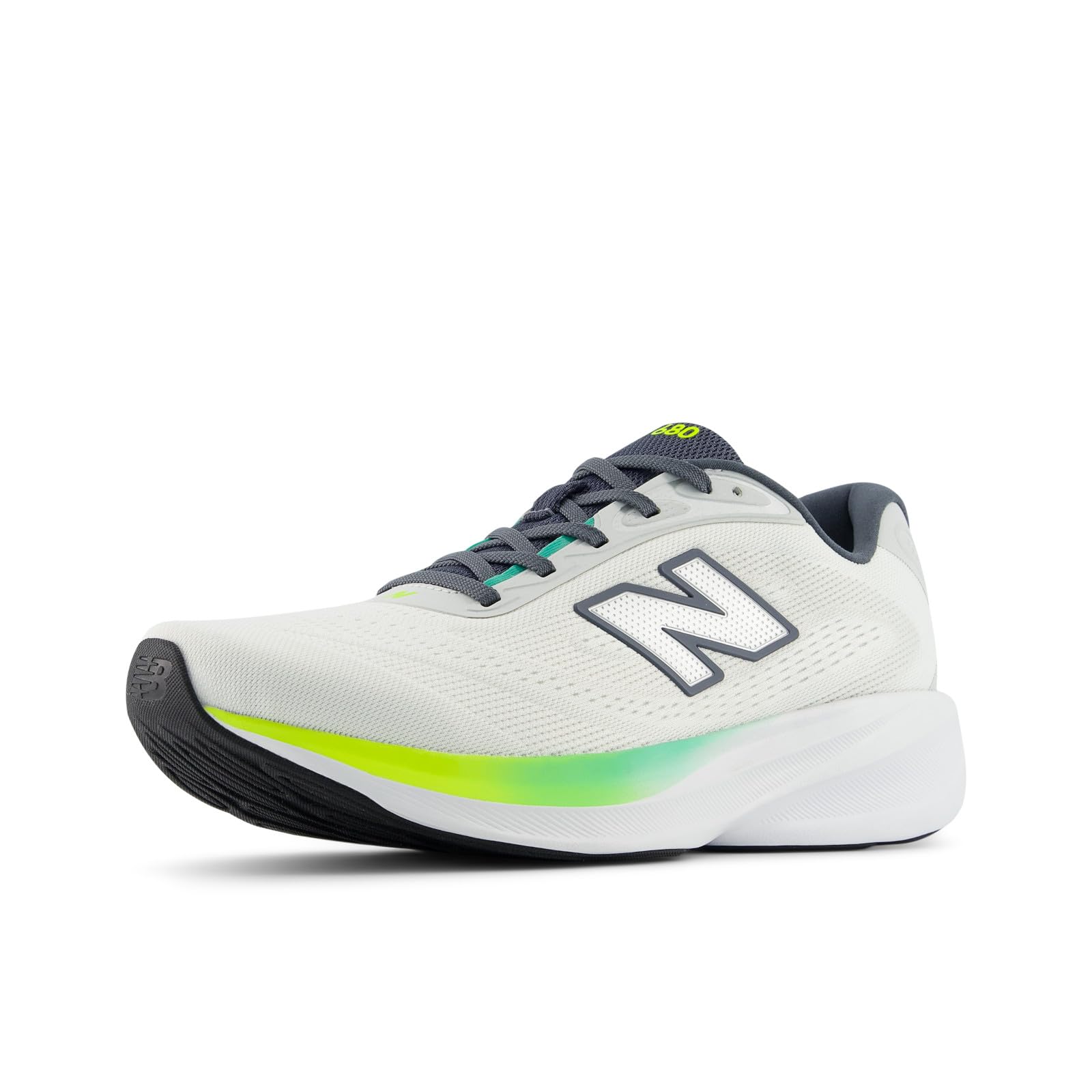
6. New Balance Men’s Fresh Foam 680 V9
A 2E trainer that fits like it was measured for you.
At 9.7 ounces, it is the lightest structured trainer here — enough shoe for daily miles, not so thin that long runs hurt. The 2E width is the defining spec here, and owners describe it as a perfect 2E with true-to-size length. That combination is rarer than it should be in wide sneakers.
The Fresh Foam midsole, roughly 3 percent bio-based, cushions landings and returns energy through the stride. A molded engineered mesh upper keeps air moving so feet stay cool and dry through a hard session. An integrated rubber outsole grips roads, sidewalks, and gym floors.
Compare it to the ASICS GT-1000 14 below: the New Balance leans on cushioning comfort, while the ASICS leans on stability for overpronation. If your foot rolls inward hard, the ASICS has the edge; if you want a plush neutral daily ride in a true 2E, this is the one. Durability draws a few mixed notes, so rotate it rather than wearing it every single day.
The fit story: A genuine 2E width with true-to-size length and a plush Fresh Foam ride at 9.7 ounces.
Worth knowing: Some long-term notes on durability are mixed, so alternating pairs helps.
Made for: Neutral runners with a 2E foot who want a light, cushioned everyday trainer.
Better elsewhere: You overpronate and need stability support, which the ASICS below handles.
7. FitVille Extra Wide Walking Shoes

The one that finally gives a 4E foot somewhere to go.
Most wide sneakers stop at 2E. This FitVille keeps going, offering widths from Wide (2E) all the way to X-Wide (4E) — so if you have spent years in shoes that pinch, this is the pair that lets your foot spread out. The wide toe box and high instep design add room up top as well, not just at the sides.
The cushioning is a two-density, high-rebound EVA midsole, meaning different foam firmness under the forefoot and the heel. That gives a softer landing at the back and steadier push-off at the front. Base stability is a highlight — owners note being able to get through a full work shift without foot pain. The removable ArchCore insole provides arch support and can be swapped for your own custom orthotic.
Cushioning is the one place opinions split: some find it nicely padded, and some want more give. If softness matters most to you, the Slow Man above runs softer. For sheer width choice and a stable, supportive everyday walker, this fits the bill.
Why it stands out
- Widths from 2E to 4E — real extra-wide room
- Removable ArchCore insole accepts custom orthotics
- Two-density EVA midsole for forefoot and heel support
- Stable enough for full work shifts
Set your expectations
- Cushioning level is a split opinion — not the softest out there
Right choice if: You need a genuine 4E width with arch support and a stable walk.
Consider alternatives: Soft heel-to-toe cushioning is your top priority.
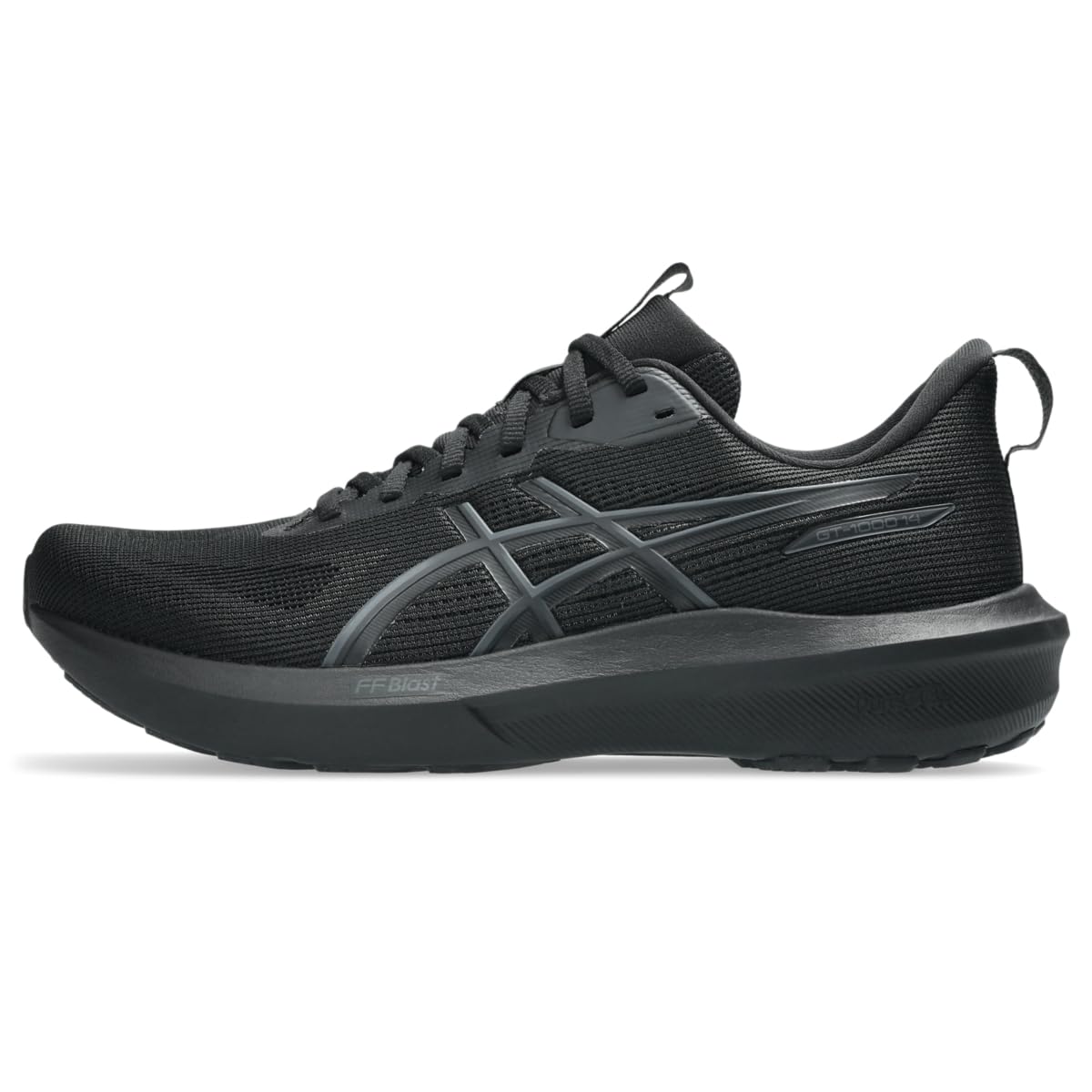
8. ASICS Men’s GT-1000 14 Running Shoes
Stability for the runner whose ankles roll inward.
If your foot rolls inward as you land — overpronation — this is the shoe that addresses it head-on. ASICS built the GT-1000 14 with extra support to guide the foot through a steadier stride, and the pronation support is a genuine selling point owners specifically praise. It is also sold in wide sizes, so you are not forced to choose between stability and room.
The cushioned, energized midsole underfoot is described as “cushy” by buyers, soft enough for daily treadmill runs and general workouts while still providing the support above it. Arch support is another strength, helping midfoot comfort over longer training sessions. At 1.44 pounds, it is light for a stability trainer.
Against the New Balance 680 V9 above, the split is clear: ASICS wins on stability for inward-rolling feet, New Balance wins on plush neutral cushioning. Durability is the honest caveat — some report the sole peeling up over time, so check the outsole when yours arrives and keep an eye on it. If stability matters more than softness, it remains a solid daily trainer.
The stability angle: Extra support for overpronating runners with cushioned, energized comfort and wide sizes available.
Worth a look: Outsole durability draws some mixed feedback, so watch the sole over time.
Choose this if: You overpronate and want a supportive daily trainer that comes in a wide fit.
Wrong fit: You want maximum soft cushioning and a neutral ride.
9. FitVille Wide High-Top Basketball Shoes

A classic high-top cut wide, so flat feet fit the court too.
High-tops are the classic answer for ankle protection, and this FitVille keeps that iconic basketball look while building in the width that most court shoes skip. It comes in both Wide and X-Wide, so a broad forefoot gets real room instead of being wedged into a standard last.
The patented PropelCore sole cushions underfoot, and the length runs true to size. The extra width is deep enough to accommodate orthotic inserts — owners mention fitting their orthotics in with room to spare. A firm outer sole adds stability, which flat-footed players tend to appreciate.
Cushioning and long-term durability are the two split areas, so if you need a softer court shoe or play daily at high intensity, keep that in mind. For flat feet that need ankle support and genuine width, it fills a gap few basketball shoes do.
The key benefit: High-top ankle protection combined with Wide and X-Wide options and PropelCore cushioning.
Bear in mind: Cushioning and durability opinions are mixed, so it suits the occasional court player best.
Best for you if: You have wide flat feet and want ankle support plus orthotic room in a basketball shoe.
Hard pass if: You play intense daily games and need plush cushioning that lasts.
Know the Specs
Width Labels (2E and 4E)
A 2E is a step wider than the standard width through the forefoot, and a 4E adds more room again. Choosing the right letter is what actually solves toe squeeze — sizing up adds length, not width. Buyers who have squeezed into standard shoes for years often settle happily at 2E, while those with extra-wide forefeet need 4E.
Zero Drop and Cushioning
Drop is the height difference between heel and toe. A zero-drop sole levels them out for a flatter, grounded feel. Cushioning is separate — the softness of the foam underfoot. A cushioned midsole softens hard pavement, while a firmer sole gives more stability. Match the two to how you actually use the shoe: long walks favor cushioning, standing shifts favor stability.
Upper Material and Breathability
An engineered mesh upper is a woven fabric that lets heat escape and keeps the shoe light for runs and gym sessions. A leather upper resists water and wipes clean but runs warmer. Pick mesh for active days and leather for wet commutes or easy-clean everyday wear.
Stability Support and Pronation
Overpronation is when your foot rolls inward as you land. A stability shoe adds extra support to guide that roll and keep your stride steadier. These are built for runners who feel their ankles cave, not for neutral runners who just want a soft, cushioned ride.
Common Questions
Should I size up or buy a wide width for wide feet?
What do 2E and 4E mean on a sneaker?
Are wide sneakers good for plantar fasciitis?
Can I put custom orthotics into wide sneakers?
What is the difference between zero drop and cushioned shoes?
Do wide sneakers run true to size in length?
Are wide toe box shoes good for standing all day?
Which is better for flat feet, a walking shoe or a basketball shoe?
How do I stop wide sneakers from making my heel slip?
Will a waterproof wide sneaker stay cool enough for summer?
The Bottom Line
For most wide-foot buyers, the wide size sneakers winner is the Reebok Energen Run 4 — breathable mesh, a cushioned FuelFoam Plus midsole, and one pair that covers running, walking, and gym days. If you need a genuine extra-wide fit, the FitVille Extra Wide Walking Shoe goes all the way to 4E with a removable orthotic-ready insole. And for inward-rolling feet that need stability, the ASICS GT-1000 14 is the one to reach for. Choose your width first, then match the shoe to how you will use it.
How we choose
We do not accept paid placement. Every pick is matched to a real buyer and a real use-case; we do not hands-on test units.
Sources
Specifications: manufacturer listings and product documentation. Review insights: verified customer reviews, as of November 2026. Pricing: not shown on this page (it changes often); check the current price via the retailer link.
As an Amazon Associate, Tactical Gear Guy earns from qualifying purchases. This does not affect which products we feature.