Specs are compiled from manufacturer listings and verified buyer reviews and can change over time — please confirm the key details on the product page before buying.
You want a hot shower that never fades and a utility closet you can actually use. The truth is that most people pick the wrong unit because they shop the flow number first and their electrical service last — and that is the mistake this article fixes. Below you get eleven whole-house picks, each paired with the fuel type, the flow rate, and the install reality that decides whether it works in your home.
This guide is built by comparing the manufacturers’ published specifications and the patterns across verified customer reviews, so you get each pick’s real strengths and trade-offs instead of marketing spin.
Fuel type and electrical capacity matter far more than brand name, so every pick below is sorted by what your house can actually feed it. Here is the straightforward truth about the whole house tankless water heater worth putting on your wall.
Top Picks
How To Choose The Best Whole House Tankless Water Heater
Start with the wall, not the wish list. A tankless heater is a heating appliance that takes cold water and warms it as it passes through, so it can only raise the temperature at a rate your fuel and wiring allow. That single fact drives every decision below.
Decide Gas Or Electric Before Anything Else
An electric unit runs on household current and needs no venting, which makes it simpler to place. A natural gas unit burns fuel and needs a vent pipe run to the outside, but it typically reaches far higher flow without pulling a huge electrical load. Look at your panel and your gas line first — the rest of the shopping list follows from that.
Match GPM To Your Bathrooms
GPM stands for gallons per minute, the volume of hot water the unit can deliver at a stated temperature rise. One shower head is often listed at 2.5 GPM, so two showers plus a dishwasher running together pulls a lot of flow. Larger households should aim higher on the list and smaller homes can save with a mid-flow unit.
Read The Breaker And Wiring Line
Every electric tankless heater spells out its breaker count and wire gauge, and this is where most surprises happen. A high-output electric model can ask for several dedicated double-pole breakers and a large main service panel. If your panel is already crowded, the install may cost more than the heater.
Check The Warranty And Vent Path
Heat exchanger coverage is the number that matters for a major appliance, and the picks below range from 5 years up to 15 years. Gas units also need a clear path outside for the exhaust, so measure the run to your exterior wall before you commit.
Side-by-Side Comparison
| Model | Best For | Fuel Type | Flow Rate | Heat Output | Amazon |
|---|---|---|---|---|---|
| ThermoMate 36kW Electric★ Best Overall | Large electric homes | Electric 240V | 8.0 gpm | 36 KW | Amazon |
| Westinghouse 24kW ElectricBest for Small Homes | Apartments and cabins | Electric 240V | 5.55 gpm | 24000 watts | Amazon |
| Mizudo 120,000 BTU GasIndoor or Outdoor | Indoor or outdoor gas installs | Natural gas | 5.1 gpm | 120000 BTU | Amazon |
| Rheem RTEX-24 | No-vent electric retrofits | Electric 240V | 5.9 gpm | 24 KW | Amazon |
| GASLAND Gasmart E CE686NG | High-efficiency gas value | Natural gas | 7.6 gpm | 199000 BTU | Amazon |
| Ecosmart ECO 36 | Tight electric spaces | Electric 240V | 6 gpm | 36 KW | Amazon |
| Stiebel Eltron Tempra Plus 29 | Steady electric temperature | Electric | — | 98350.75 BTU | Amazon |
| Rheem RTG Series 9.5 GPM | Multi-bathroom gas homes | Natural gas | 9.5 gpm | 199900 BTU | Amazon |
| Rinnai RE199iN | Whole-house gas workhorse | Natural gas | 9.8 gpm | 199000 BTU | Amazon |
| A. O. Smith ATI-540P-N | Instant hot with recirculation | Natural gas | 10 gpm | 199000 BTU | Amazon |
| Rinnai RXP199iN | Biggest homes, top efficiency | Natural gas or propane | 11.1 gpm | 199000 BTU | Amazon |
Detailed Reviews
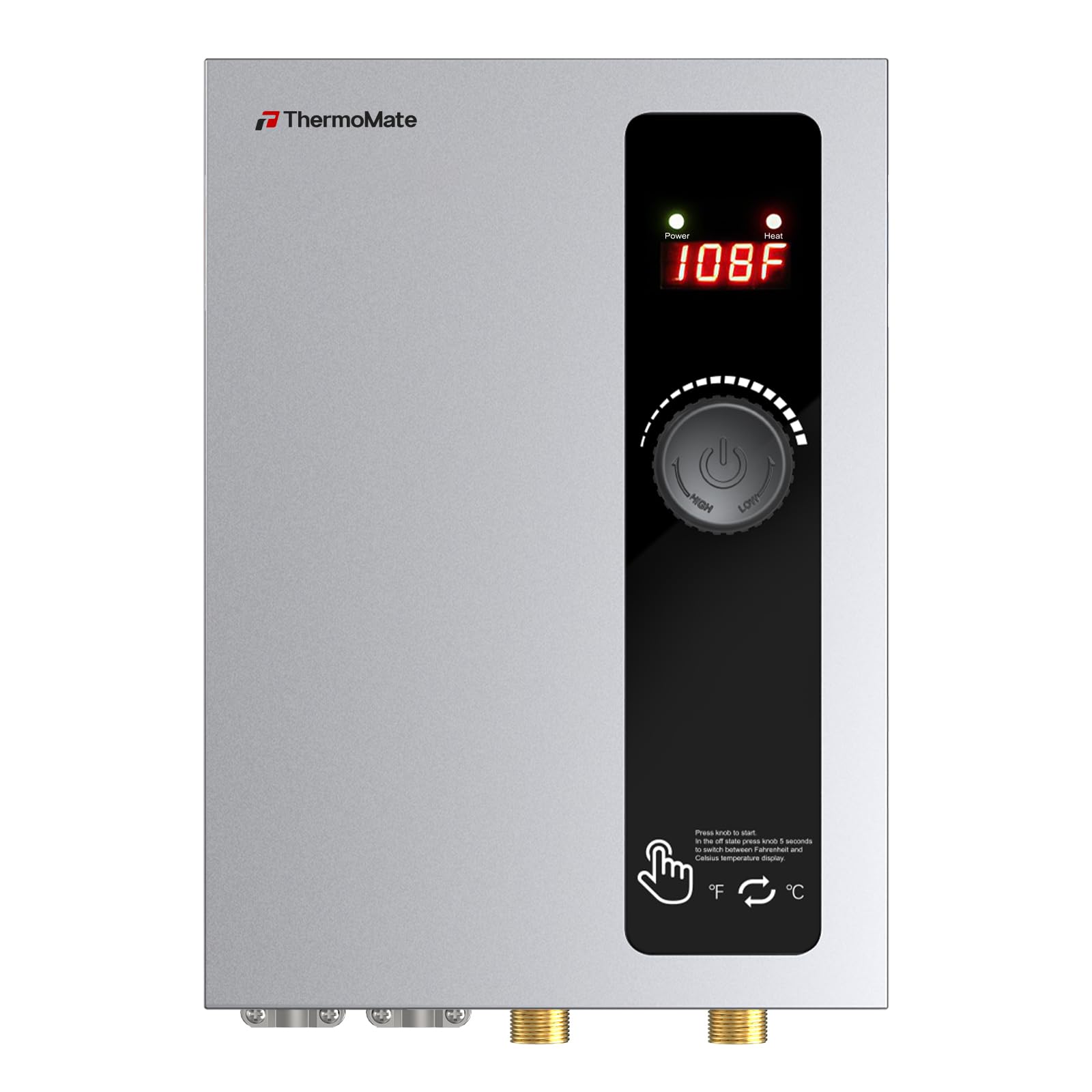
1. ThermoMate 36kW Tankless Water Heater Electric Max 8.0 GPM
Our pick — 4.0+★ from 750+ verified ratings; the strongest balance of quality and price.
The electric heavyweight that can feed four showers off one wall.
A 36 KW heat output (36 kilowatts — the electrical muscle the unit draws to warm water) puts this at the top of the electric class. In a big family home, that gap is the difference between four showers running together and a queue at the bathroom door.
It also carries 150 psi maximum pressure (the highest water pressure the unit is built to handle safely), matching the Mizudo and the GASLAND. If your home has strong mains pressure, this unit will not be the weak link. The trade-off is weight and wiring: at 27 pounds it is heavier than the Westinghouse electric unit at 17 pounds, and it wants four dedicated double-pole 40A breakers on a 200-Amp main service. That is an electrician job, not a weekend one.
The self-modulating control trims power to match the draw, which is why buyers report lower electric bills over a full season. You set the temperature in 1-degree steps anywhere from 80°F to 140°F on the digital display. What wins people over is the endless supply — once it is on, the hot water simply does not stop. That said, some owners mention lukewarm water on certain settings, so plan your sizing carefully before you buy.
Where it earns its keep
- 36 KW output and 8.0 gpm flow handle a full house at once
- Self-modulating power trimming cuts standby waste
- ETL certified with dry-fire shutdown, over-heat and anti-freeze protection
- Compact 12.99″W x 18.31″H wall mount frees the floor
What to plan around
- Four 40A breakers and a big main panel are non-negotiable
- Water temperature and flow drew mixed feedback — size it right
- Heavier than the Westinghouse electric pick at 27 vs 17 pounds
Buy it for: a large electric home with panel capacity to spare, where four bathrooms run hot at the same time.
Look elsewhere for: a cabin or a small panel — the breaker count will not fit.
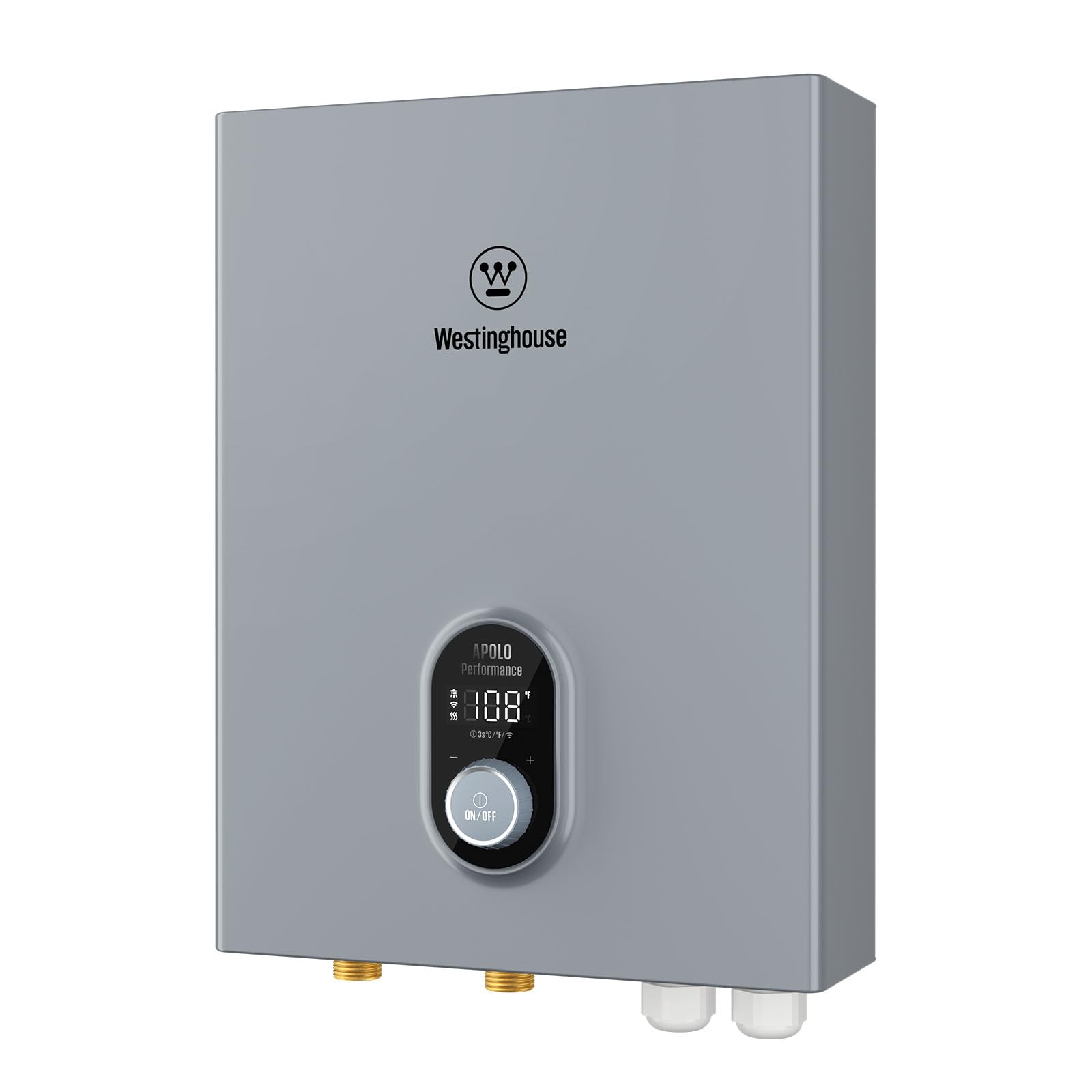
2. Westinghouse 24kW Tankless Water Heater
A smart-home electric unit that hangs flush and starts heating from a trickle.
Most tankless heaters need a meaningful flow before they fire up. This one starts at 0.79 GPM, so even a bathroom tap on low will trigger the burner — a small detail that matters if you are washing dishes or shaving rather than running a full shower. Peak flow reaches 5.55 GPM, which is plenty for a couple of fixtures at once in an apartment or a cabin.
The 24,000-watt output is the electric side of that flow, and it runs off three 40A double-pole breakers with 8 AWG wire on a 100A service. That is a lighter electrical ask than the ThermoMate’s four-breaker, 200-Amp setup — and at 17 pounds this unit is easier to hang solo. It also takes Wi-Fi control through Alexa and Google Home, so you can adjust temperature from your phone before you get home.
Owners keep coming back to one point: it does exactly what the listing says. Reviewers repeatedly describe it working as advertised, with no surprises. The honest caveat is that 5.55 GPM will not cover a large family running everything at once. For a small household, that ceiling never comes up.
Smart-home comfort: Voice and app temperature control is rare at this flow tier, and it makes cold-morning adjustments a one-touch job.
The ceiling to know: Load this up with a full house of simultaneous draws and it will start to fall short — plan for the household you have, not the one you might build.
Right fit: apartment and cabin owners who want app control and a light electrical load.
Wrong fit: a four-bathroom home that runs laundry and two showers together.
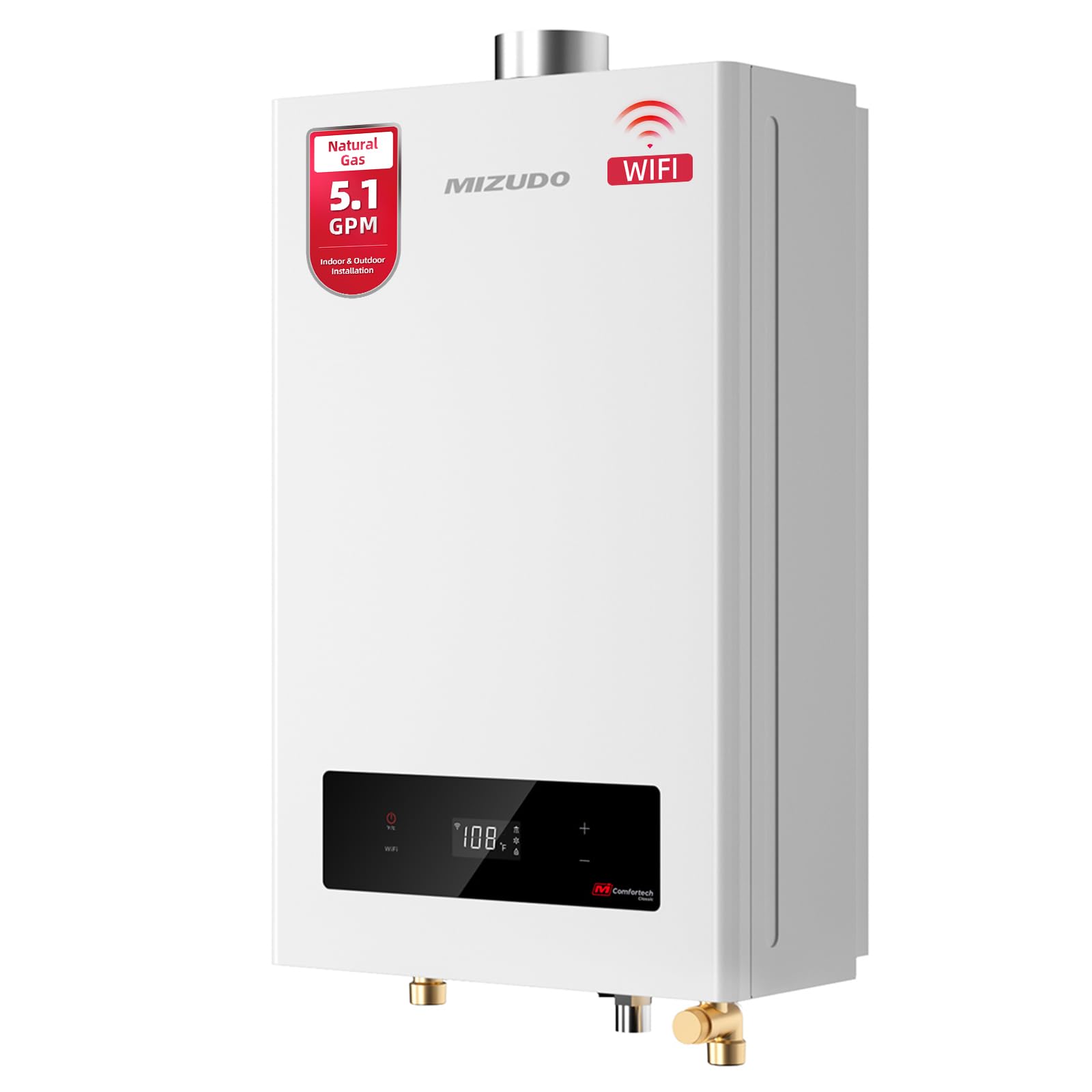
3. 120,000 BTU Natural Gas Tankless Water Heater
The rare gas unit that can live inside or out, with tight temperature holds.
Gas tankless heaters usually lock you into one location. This Mizudo model is built for indoor mounting but converts to outdoor use with an accessory kit you buy separately, which is a real advantage if you cannot find wall space inside or you want the unit out of the way on an exterior wall. At 120,000 BTU (British thermal units — a measure of gas heating power) it delivers 5.1 GPM.
Temperature control is the star. The unit monitors water flow and adjusts the gas feed together, holding output within 1°F even when several taps run at the same time. It tops out at 149°F, higher than the 140°F ceiling on the ThermoMate, the GASLAND and the Rheem RTG. Built from a phosphorous-deoxidized copper heat exchanger and a stainless steel combustion chamber, it comes with a 2-year full unit warranty and 5-year heat exchanger coverage.
Performance wins buyers over by a wide margin, with build quality a close second. Both draw warm reviews. The honest catch is heating speed: some customers note it produces 60-90 seconds of hot water before turning cold, so keep your expectations tied to your own usage.
Flexibility that pays: Indoor or outdoor conversion and 1°F temperature stability give you placement freedom most gas units do not offer.
Know before you buy: You need the 3-inch vent pipe system for indoor use or the outdoor vent cap kit for exterior mounting — neither is standard.
Choose it if: you want a gas unit with app control and the option to move it outside.
Reconsider if: you need a steady stream for a long shower rather than quick reheats.
4. Rheem RTEX-24 24kW 240V Electric Tankless Water Heater, Gray

No vent pipe, no gas line — just three breakers and a wall.
The install story is the sell here. Because it is electric, this Rheem needs no venting at all, which simplifies placement compared to any gas unit on this list. It moves 5.9 GPM with a 24 KW heat output, and the 3.5-inch depth means it sits flat against a basement or utility room wall.
Wiring is spelled out: 240V single-phase power, three 40A double-pole breakers, three sets of #8 AWG copper, and a recommended minimum 200-Amp service panel. That is a real electrician conversation, but it is a lighter burden than the ThermoMate’s four breakers. Temperature is set digitally in 1-degree steps from 80°F to 140°F.
Rheem backs it with a 5-year leak warranty and 1-year parts. Owners value the unlimited hot water and the temperature control, and it earns a reputation as an easy install. The catch is heat-up time — some find it takes 10-15 seconds longer to reach full hot water, so expect a short wait at the tap.
The space win: No venting plus a 3.5-inch depth makes this the easiest fit in a tight utility closet.
The patience tax: Expect a brief 10-15 second wait before the water reaches full temperature.
Pick this if: you are retrofitting an electric home and want the simplest vent-free install.
Pass if: you need instant full-temperature water the moment the tap opens.
5. GASLAND Gasmart E CE686NG Tankless Water Heater
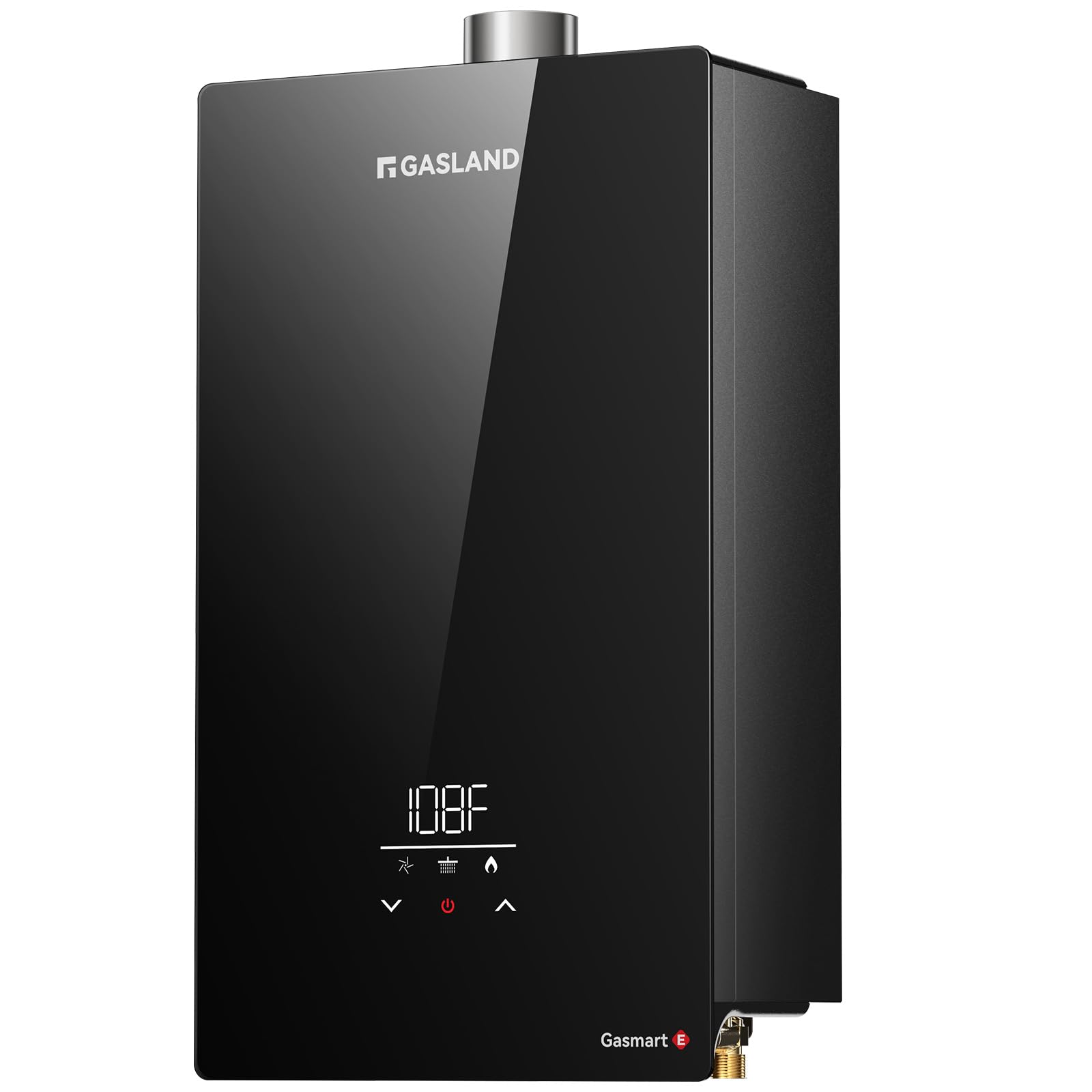
199,000 BTU of gas power for buyers who want flow without the electric panel fight.
If your service panel is maxed out, this is the answer. At 199,000 BTU and 7.6 GPM it delivers a big flow without any breaker math — just a gas line and a vent. The maker lists a UEF (Uniform Energy Factor — the efficiency rating for water heaters) of 0.8, which it says beats a 50-gallon tank heater at 0.6. That 0.8 UEF edge over a 0.6 tank is why owners call it good value for the money.
Performance is the clear favorite — it is what buyers praise most, with heat output close behind. Ownership experience lines up: it heats water quickly and provides sufficient hot water flow, and plenty of reviewers point out they would buy it again. The unit is CSA certified with overheat, flame-out and freeze protection, and it measures 14.25″W x 24.69″H for a wall mount.
Installation is where reviews split. Some find it easy, while other shoppers say poor instructions, so budget for a pro if you are not comfortable with gas work. Weighing 37.5 pounds, it needs two hands and a helper to hang. The iron-and-copper build plus a free-replacement policy inside the first year round out a solid package.
What buyers gain
- 199,000 BTU and 7.6 GPM for big flow without a panel upgrade
- 0.8 UEF efficiency rated against a 0.6 tank baseline
- CSA certified with freeze, overheat and flame-out protection
- Free unit replacement if it fails within the first year
What buyers report
- Install instructions drew mixed reports — a pro install is safer
- 37.5 pounds needs a helper on the wall mount
Good match: gas-ready homes that want high flow and skip the electrical load entirely.
Skip the DIY: if you are not confident running a gas line, hire out the install.
6. Ecosmart ECO 36 Tankless Water Heater

Big 36 KW output in a compact white box that frees up floor space.
Tight closets love this one. The ECO 36 is a sleek, compact unit with a digital output temperature display, and it is rated at 99.8% energy efficient (almost all the power goes into heating the water, not into waste). It runs 6 GPM at a 36 KW heat output, so it holds its own on flow. The compact 21″W x 17″H body is the reason it is the cheapest way onto a 36 KW electric setup.
Wiring runs through 3/4-inch NPT pipe fittings and needs four 40A breakers — the same heavy electrical ask as the ThermoMate. Weighing 18.4 pounds, it hangs without a struggle. The limited lifetime warranty is a strong promise on a budget unit, and the US-manufactured copper and stainless steel build adds confidence.
Owners are split more than any other unit here. The space-saving shape and the endless hot water are the points that land, but functionality, hot water delivery, durability and heating time all draw a mixed response. Some report it works well and delivers hot water, while others say it can stop working or take longer than expected. For a budget buyer with realistic expectations, it is a fair way to get 36 KW — just size your household honestly.
The honest budget play: 36 KW of heat in a compact case at the lowest cost on the list — ideal if floor space is your priority.
The trade-off: Mixed reports on long-term function mean you should plan for the possibility of a warranty claim.
Best for: budget-conscious buyers who need 36 KW output and have the breakers to feed it.
Think twice if: you want the most proven reliability — the mixed feedback is real.
7. Stiebel Eltron Tempra Plus 29 Tankless Water Heater
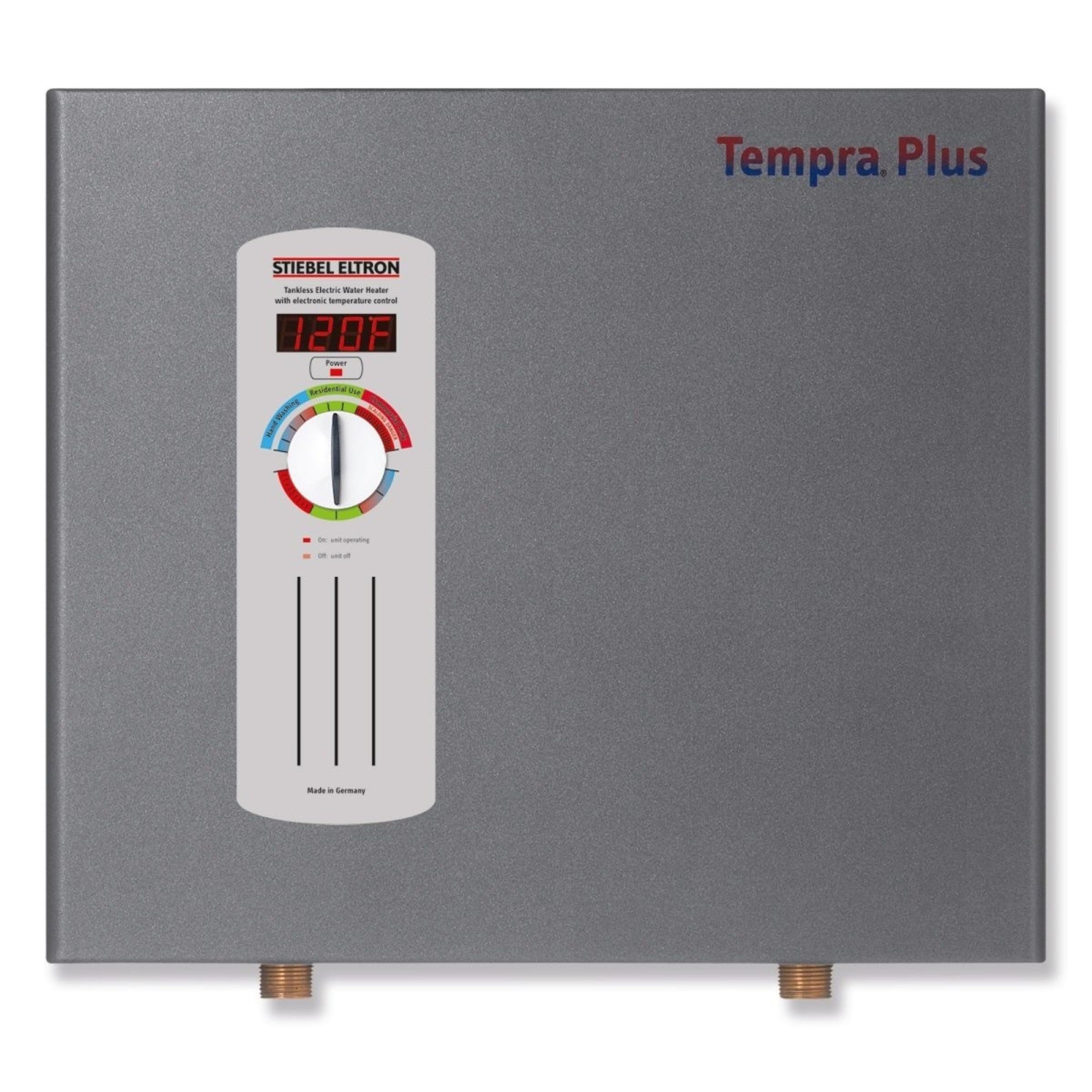
The premium electric unit built to hold temperature no matter what you run.
Temperature swings are the enemy of a good shower. This Stiebel Eltron answers that with self-modulating power technology (it trims its own output to keep the water steady) and advanced flow control, so the temperature holds even as other taps open. It is electric, needs no venting, and the stainless steel body with a 4-5/8 inch depth keeps the wall profile slim.
The heat output is listed at 98,350.75 BTU. It carries a 150 psi maximum pressure rating and a warranty that runs 7 years on leaks and 3 years on parts. The gray housing is designed to fit just about anywhere, and the no-vent install means you can put it in a space a gas unit could never live.
What owners value most is how constant the temperature stays — it never runs cold in the shower, and it holds up under multiple demands at once. Owners also report lower electric bills, and the unit has a record of running for years. Set it up for the household size you have and it stays quietly competent.
The steady-shower promise: Self-modulating power plus flow control is the whole reason people pay premium for this name.
What to weigh: The electrical load and the 7-year leak warranty mean your panel and your electrician matter as much as the unit.
Worth it for: electric homes that hate temperature swings and want a long warranty on leaks.
Not for: gas-ready homes looking for the highest flow — this stays in the electric lane.
8. Rheem RTG Series 9.5 GPM Tankless Water Heater
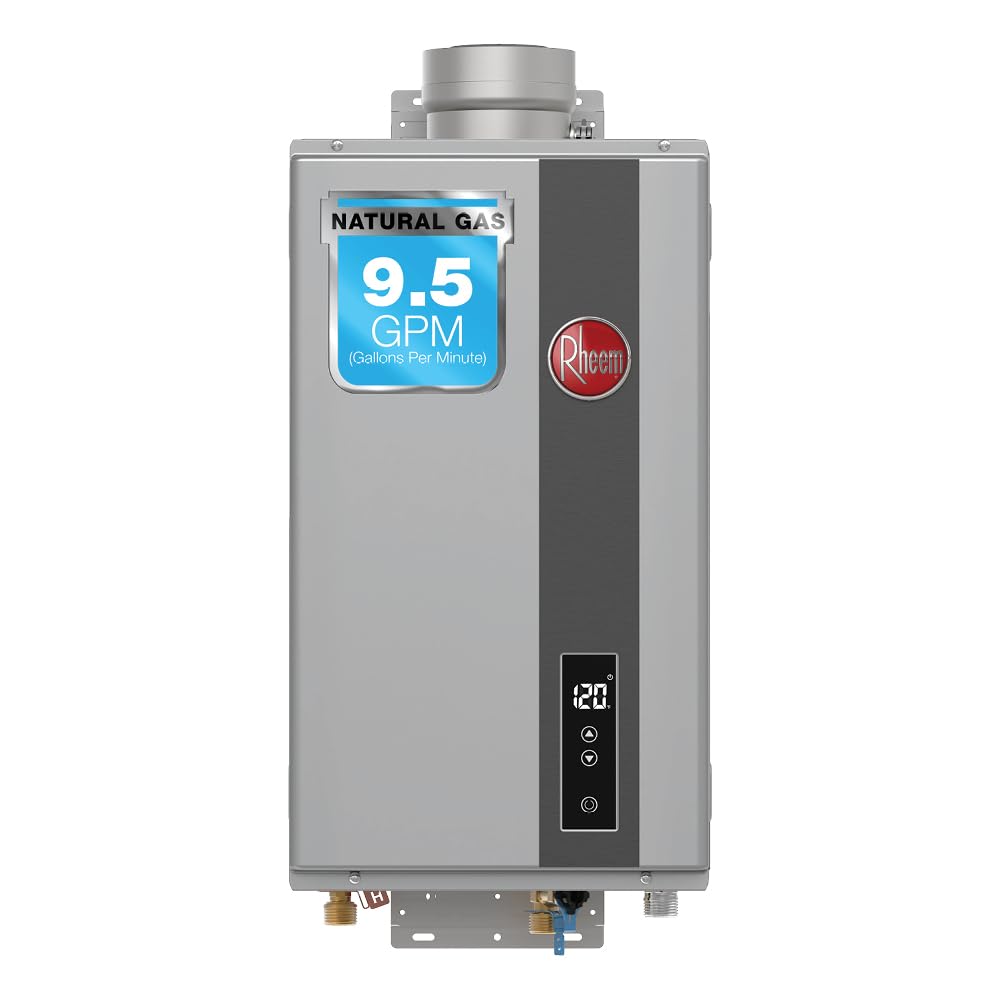
199,900 BTUs aimed squarely at the three- and four-shower family.
This is the largest BTU number on the list, and it is paired with 9.5 GPM at a 35°F temperature rise (how much the water warms as it passes through). Rheem rates it for 3-4 simultaneous showers, so a big family can run the laundry and the dishwasher without a cold surprise. The 0.82 UEF efficiency rating is a real step up from the GASLAND’s 0.8, and it is non-condensing, which means it needs a direct vent run to the outside.
The digital LED panel adjusts temperature in ±1°F steps, and the unit is CSA certified with freeze protection and flame failure protection. It measures 13.5″W x 24.2″H and weighs 46.5 pounds, so mounting it takes a helper. The warranty is the headline: 15 years on the heat exchanger, 5 years on parts and 1 year on labor.
The comfort story lands — hot water is abundant and it heats up fast. But the same buyers flag noise, and efficiency draws a mixed verdict. Some say it saves on gas bills while others push back. Plan the vent run and the sound before you commit; a utility-room install keeps the noise where you want it.
Flow for a full house: 9.5 GPM and 199,900 BTU is built for multi-bathroom homes running everything at once.
The honest catch: It runs noisier than the electric picks, and gas-bill savings are not guaranteed for every household.
Suits: large gas homes with three or four bathrooms and a clean vent path.
Does not suit: noise-sensitive spaces or homes without a direct vent route.
9. Rinnai RE199iN Tankless Water Heater

9.8 GPM from a name that builds its reputation on gas flow.
Flow is the number that sells this Rinnai. At 9.8 GPM and 199,000 BTU it edges past the Rheem RTG at 9.5 GPM and stays within reach of the A. O. Smith’s 10 GPM. That is enough to run showers, laundry and a dishwasher at once, which is why it sits in the whole-house tier. The LED display shows diagnostic codes and service reminders so you are not guessing when it needs attention.
The warranty is generous: 15 years on the heat exchanger, 5 years on parts and 5 years on labor — but only if you register within 90 days of install, or the labor coverage drops to 1 year. It weighs 52.1 pounds and measures 14.05″W x 27.28″H, so plan for two people on the mount. Wi-Fi is available only with the separate Controlr module.
Build quality and performance are the two things that earn the most approval here, and easy installation is close behind. People also like that it holds a consistent temperature and guards against accidental scalding. Set it up through a qualified technician to protect that warranty, and it does the quiet, long-haul job a whole-house heater is meant to do.
Proven build: Rinnai pairs 9.8 GPM flow with a 15-year heat exchanger warranty that rewards proper registration.
Do not forget: The 5-year labor coverage only holds if you register inside 90 days — miss it and you fall back to 1 year.
The right call: gas homes that want a long-lived workhorse with strong flow and solid warranty support.
One thing to note: Wi-Fi is not built in, so smart control means buying the separate module.
10. A. O. Smith ATI-540P-N Water Heater
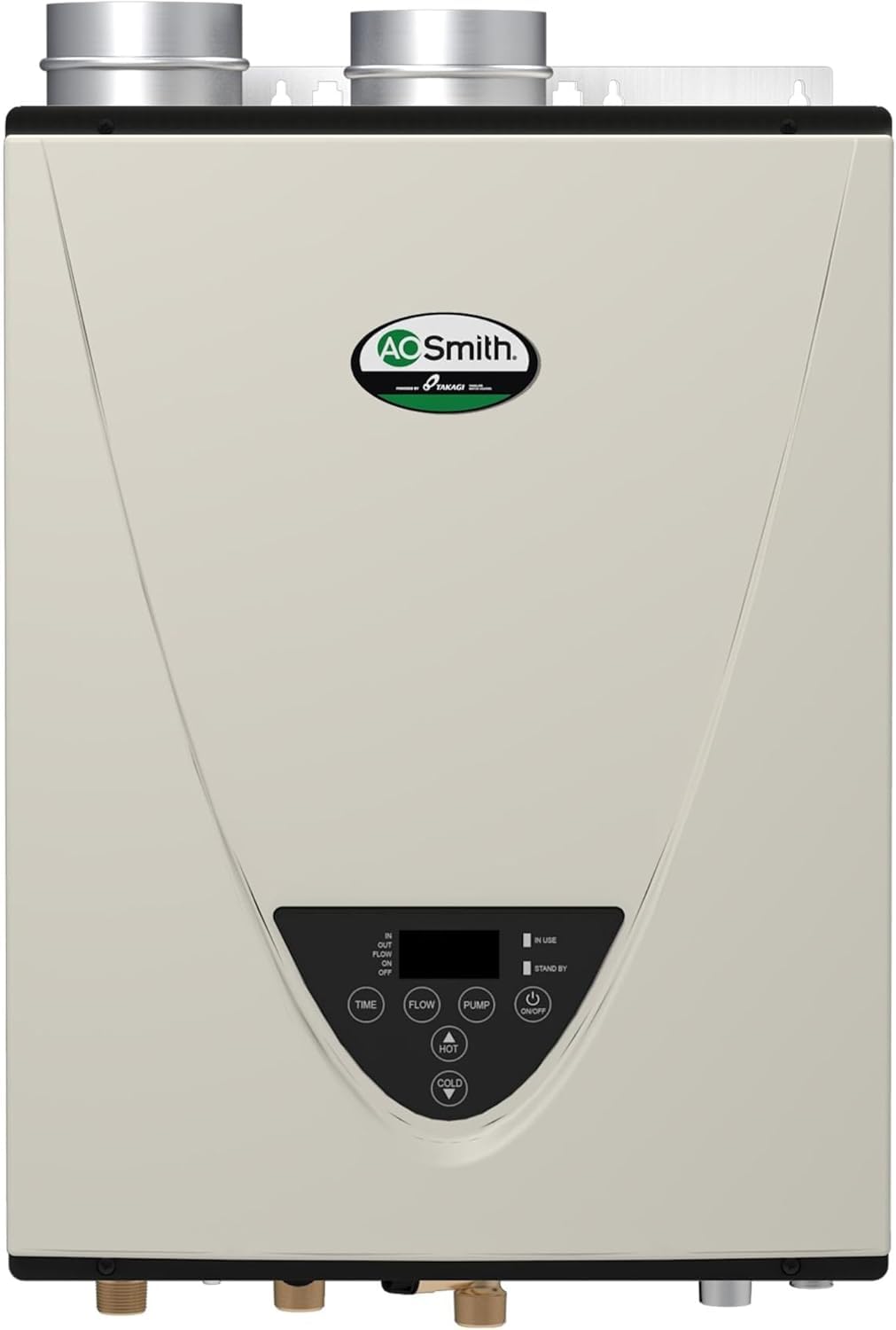
The one that pushes hot water to your tap before you open it.
Waiting for the shower to warm up is the small daily irritation tankless heaters usually leave in place. This A. O. Smith unit closes that gap with an integrated hot water recirculation pump (it circulates water through the pipes so hot water is already at the tap). The flow is the highest listed here at 10 GPM, and it is aimed at homes with 3-4 bathrooms depending on climate.
The 199,000 BTU gas output is paired with a 0.93 UEF — the highest efficiency rating on the list, ahead of the Rheem RTG’s 0.82 and the GASLAND’s 0.8. The build uses marine-grade 316L stainless steel, and the warranty runs 15 years on the heat exchanger and 5 years on parts. It weighs 61 pounds, the heaviest pick here, so budget a two-person lift.
Safety features include exhaust and water temperature controls, an overheat cut-off fuse and an air-fuel ratio sensor. Note that the recirculation pump may need a bypass valve, which is not included. For the buyer who wants instant hot water throughout the house, this is the design that delivers it — the catch is the install, which calls for a licensed plumber.
The instant-tap edge: A built-in recirculation pump means hot water at the faucet without the wait tankless usually carries.
The unlisted extra: A bypass valve may be required for the recirculation loop and it is not in the box.
Built for: large homes that want instant hot water and 10 GPM of flow.
Account for: the 61-pound wall weight and the plumber’s bill for a proper install.
11. Rinnai RXP199iN Condensing Smart Sense Tankless Water Heater

11.1 GPM, UEF.98, and a recirculation pump that learns your shower schedule.
Everything top-tier lands on this one. It moves up to 11.1 GPM and handles 7 fixtures at once, the most flow of any pick here and clear of the Rinnai RE199iN at 9.8 GPM. It is also the most versatile on fuel and location: the Smart Sense gas control lets it burn either natural gas or propane, and Versa Vent lets you mount it indoors or outside. A UEF of.98 puts it at the top of the efficiency table, ahead of the A. O. Smith’s 0.93.
The Smart-Circ internal pump learns your water-use patterns and schedules recirculation around them, so hot water is waiting at the tap when you usually need it. A Quick Flush feature speeds up maintenance, and the unit is sized like a small suitcase despite its output. It weighs 58 pounds and measures 19″W x 31″H, so plan the wall space before it arrives.
Quality and heating speed are the two things buyers value most, and the fast hot water at the faucet is the everyday payoff. Functionality and value draw mixed response, and so does noise, so set it up with a qualified technician and keep it in a utility room if sound matters. Register within 90 days to protect the 5-year labor coverage.
Why it sits at the top
- 11.1 GPM handles up to 7 fixtures at once
- UEF.98 is the highest efficiency on the list
- Runs on natural gas or propane, indoors or out
- Smart-Circ recirculation learns your usage patterns
Worth knowing
- 58 pounds and 31 inches tall — measure the wall first
- Wi-Fi needs the separate Controlr module
- Some owners mention noise and questionable value
For the biggest homes: 7-fixture capacity and 0.98 UEF for buyers who want the most flow and the least waste.
Before you buy: confirm the venting path for an indoor or outdoor install and plan the 58-pound mount.
Know the Specs
Flow Rate (GPM)
GPM stands for gallons per minute, the volume of hot water the unit can deliver. It is often quoted at a specific temperature rise, so the same unit gives less flow on colder groundwater. Match it to how many fixtures you run at once — a single shower is typically listed around 2.5 GPM, and larger homes with three or four bathrooms want the higher end of the range.
Heat Output (BTU Or KW)
Gas units are rated in BTU and electric ones in KW, but both measure how much heating power the unit brings. Higher output supports higher flow, so a 36 KW electric unit and a 199,000 BTU gas unit both aim at large homes. Check this number against your fuel supply and electrical service before anything else.
Electrical Load And Breakers
Electric tankless heaters pull serious current. The wiring notes specify the breaker count, the wire gauge and the recommended main panel size. A unit that wants four 40A breakers and a 200-Amp service panel is a bigger project than one wanting three breakers on a 100A service. Add the electrician’s time to your planning.
Efficiency and Venting
UEF is the efficiency rating for water heaters, and higher is better. Gas units need a vent to the outside, while electric units need none. Condensing gas models recover more heat from the exhaust, which is why the top units here reach the highest UEF figures. Confirm your vent route before you commit to a gas pick.
Common Questions
What GPM do I need for a whole house tankless water heater?
Can I install an electric tankless heater myself?
Do gas tankless water heaters need a vent?
Will a tankless heater really give unlimited hot water?
How long does a tankless water heater last?
Is gas or electric better for a whole house tankless heater?
What does UEF mean on a tankless water heater?
How much wall space does a tankless heater take up?
Why does my tankless heater take a few seconds to get hot?
Can I put a gas tankless heater outdoors?
Does a tankless water heater lower my electric or gas bill?
The Bottom Line
For most homes, the whole house tankless water heater to start with is the ThermoMate 36kW Electric, because its 36 KW output and 8.0 gpm flow cover four showers at once and the self-modulating control keeps the electric bill in check. If your panel is already full, the Mizudo 120,000 BTU Gas gives you steady 1°F temperature control and the option to mount indoors or out. And for the biggest households that want the most flow and the highest efficiency in one unit, the Rinnai RXP199iN with its 11.1 gpm capacity and.98 UEF is the one to reach for.
Before you order any of them, settle two things: your fuel type and your electrical service. Those decide which half of this list you can even install. Get those right and the rest of the choice gets simple.
How we choose
We do not accept paid placement. Every pick is matched to a real buyer and a real use-case; we do not hands-on test units.
Sources
Specifications: manufacturer listings and product documentation. Review insights: verified customer reviews, as of November 2026. Pricing: not shown on this page (it changes often); check the current price via the retailer link.
As an Amazon Associate, Tactical Gear Guy earns from qualifying purchases. This does not affect which products we feature.