Specs are compiled from manufacturer listings and verified buyer reviews and can change over time — please confirm the key details on the product page before buying.
Your oven is probably lying to you. That baking sheet of cookies that came out pale on one side and scorched on the other, or the casserole that needed an extra twenty minutes — most of the time the heat sensor is the part that drifted out of spec, not your cooking. The fix is a small probe that screws into the back wall of the oven cavity, and the whole job usually takes about ten minutes with a screwdriver. This guide sorts the real Whirlpool-compatible replacements from the near-misses, so you buy the right probe once.
This guide is built by comparing the manufacturers’ published specifications and the patterns across verified customer reviews, so you get each pick’s real strengths and trade-offs instead of marketing spin.
Every part below has been checked against its own listing data for fit and fault-code coverage.
Top Picks

How To Choose The Best Whirlpool Stove Heat Sensor
An oven heat sensor — also called a temperature probe or thermistor — is the small metal rod mounted inside the back wall of your cooking cavity. It reads the actual temperature and tells the control board whether to keep heating. When it drifts, the oven runs hot, runs cold, or throws an error code and refuses to start. Buying the right one is less about brand loyalty and more about matching three hard facts.
Match the part number before anything else
A replacement sensor has to physically interchange with the one you are removing. The strongest signal is the cross-reference list on the listing, because those numbers are printed on the old sensor body or molded into the cavity bracket. A sensor listed as replacing WPW10181986, W10131826, 8273902, AP6016450, and PS11749737 covers a huge swath of Whirlpool, Maytag, Kenmore, Amana, KitchenAid, Roper, and Crosley ranges. A sensor listed for W10833885 or W10586204 covers a different family. Read your model plate, then read the listing. If the two do not line up, nothing else on the page matters.
Understand the error code your oven is throwing
The control board uses codes to flag a sensor that has gone open, shorted, or drifted outside its allowed window. F3 and F4 usually point at the sensor circuit on electronically controlled ovens. F2 and E2F3 show up on models that read the probe as out of range. F6 E1 is another sensor-related alarm on certain Whirlpool builds. Matching your code to the part is half the diagnosis — a sensor that fixes an F6 E1 fault is doing a very specific job that a wrong cross-reference will not do.
Think about tolerance, not just fit
Accuracy is the number that decides whether your bread browns evenly. One sensor in this group publishes a tolerance of ±50 degrees, which is a wide window — workable for rough baking, less ideal if you rely on the oven for precise work. The tighter your cooking, the more the accuracy rating matters. Fit gets the part in the door; tolerance decides whether the oven actually behaves afterward.
Choose genuine OEM or a trusted aftermarket
A genuine Whirlpool part is built to the factory spec and carries the manufacturer’s own warranty — one year on the OEM models here. Aftermarket sensors can cost dramatically less and often fit identically, but the durability record varies widely by seller. Neither path is automatically right. What matters is that the seller names the exact part numbers covered, publishes the materials, and stands behind the unit with a real warranty window.
Side-by-Side Comparison
| Model | Best For | Part Number Cross | Warranty | Sensor Type | Amazon |
|---|---|---|---|---|---|
| TOMOON WPW10181986★ Best Overall | Most Whirlpool owners | WPW10181986, 8273902, W10131826 | 360-day | Oven probe, ±50° accuracy | Amazon |
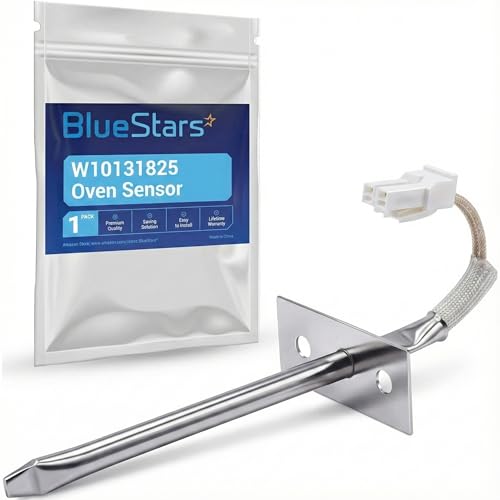
| BlueStars W10131825Lifetime Coverage | KitchenAid and Jenn-Air ranges | W10131825, 4455636, WPW10131825 | Lifetime protection | Oven probe, stainless outer | Amazon |
| Wholesale Sensors W10833885 | Built-in and freestanding models | W10833885, W10586204 | 12-month | Stainless probe, heat-resistant wiring | Amazon |
| Wholesale Sensors W10181986 | Wide brand coverage | W10181986, WPW10181986, 8273902 | 12-month | Flange-mount probe | Amazon |
| LANDSIN W10833885 | Budget-first replacement | W10833885 | — | 304 stainless thermistor | Amazon |
| Whirlpool WPW10181986 OEM | Genuine factory part | WPW10181986, W10131826, 8273902 | 1-year | Genuine OEM range sensor | Amazon |
| Whirlpool W10833885 OEM | Premium factory replacement | W10833885, W10586204 | — | Genuine OEM, 0.639 oz | Amazon |
Detailed Reviews
1. WPW10181986 W10181986 Oven Temperature Sensor by TOMOON
Our pick — 4.0+★ from 600+ verified ratings; the strongest balance of quality and price.
The sensor that covers the widest spread of Whirlpool-family ovens on one part number.
If your range carries a burner from Whirlpool, Maytag, Kenmore, Amana, KitchenAid, Roper, or Crosley, this is the one to check first. The TOMOON WPW10181986 replaces WPW10181986, 8273902, W10131826, AP6016450, and PS11749737, and it is the broadest cross-reference in this whole group. That matters because most people never find their exact model on a listing — the part number on the old probe is what gets them home. Mounting holes sit 1 ¼ inches apart center to center, so measure your old sensor before you spend a screwdriver turn on the install. You need a #2 square head (Robertson) or a #2 Phillips screwdriver, and the oven has to be unplugged first.
The job itself is not intimidating. Owners routinely describe a swap that lands around ten minutes of real work — two screws, a connector, done. What wins people over is simply that the oven starts heating correctly again, and that is the top theme across the feedback. Installation is the clear second. The part is built from ABS, aluminum, and stainless steel, with a published accuracy of ±50 degrees. That ±50 figure is worth pausing on, because it is a fairly wide tolerance band. For casseroles and roast chicken it is fine. For a baking project where five degrees matters, it is not a precision instrument.
The honest catch sits in the fit and durability column, both of which land mixed rather than clean. Some ranges take this sensor happily and never look back; a few report the probe failing early, and a small number find the bracket does not seat where the original did. The 360-day warranty is the safety net under that. Check the model list — the sensor covers WFG374LVB2, WFE710H0AS1, WFG540H0AH0, SF368LEPQ0, RF368LXPS2, and Maytag MGR7661WB0 among others — and if yours is not named, ask the seller through Amazon messaging before ordering.
Where it earns its keep
- Five part numbers cross to one sensor, covering seven brand names
- Roughly a ten-minute swap with a #2 square or Phillips driver
- 360-day coverage answers the most common worry outright
The parts to weigh
- ±50 degree accuracy is a loose band for precise baking
- Fit is a mixed record — measure your bracket before ordering
- A minority report the probe quitting sooner than they hoped
Reach for this if: your range badge reads Whirlpool, Maytag, Kenmore, Amana, KitchenAid, Roper, or Crosley and you want the widest safety net of part-number coverage.
Hold off if: your cooking depends on tight temperature control — the ±50-degree tolerance will frustrate a serious baker.
2. BlueStars W10131825 Oven Temperature Sensor
Built for KitchenAid and Jenn-Air owners who want a lifetime promise instead of a year.
Here is the standout number on the BlueStars W10131825: the warranty is a 100% lifetime protection, not a fixed window. If this probe develops a defect, the seller’s stated coverage does not expire. For anyone who has already replaced an oven sensor once and resented it, that is a meaningful difference. The probe is 4.89 inches long with a 0.99-inch immersion depth, wrapped in stainless steel outer material. It is a direct fit for KitchenAid, Whirlpool, Jenn-Air, and Maytag model families, and it replaces 4455636, WPW10131825, WPW10131825VP, PS11748765, and AP6015486.
Fit is where this sensor shines. It matches the original cleanly enough that people describe it as a match rather than a workaround, and that is the aspect that carries the most weight in the feedback. Value is the strong runner-up — the part is inexpensive enough that fixing the oven beats thinking about replacing the appliance. The symptoms it addresses are the familiar set: oven running too hot, little to no heat when baking, uneven heating, or a unit that will not start at all. On electronically controlled ovens, F3 and F4 codes most often trace back to a failed oven sensor like this one.
The trade-off you need to know about is temperature accuracy. A recurring thread in the feedback is that the oven reads consistently 25 degrees lower than expected, which pushes you toward setting a higher temperature than the recipe asks. That is a calibration quirk you can work around, not a failure. A smaller group also reports the part not lasting as long as an OEM, and a few find the mounting holes do not line up with the existing bracket. If your model is on the list — KEBC208KSS04, KEMS308SSS, RMC305PVS01, KERS807SSS00, RBS305PRB00 and more — the ladder of risk drops sharply.
Worth knowing
- Its 100% lifetime protection outlasts every other warranty in this group
- Stainless steel outer shell with a 0.99-inch immersion depth
- Crosses to KitchenAid, Whirlpool, Jenn-Air, and Maytag
Fair warnings
- Oven can read around 25 degrees cooler than the setting
- Mounting holes occasionally need finessing to seat
- A portion of buyers find the life span shorter than OEM
The smart buy for: a KitchenAid or Jenn-Air kitchen where you want one sensor with permanent coverage behind it.
Think twice if: you bake by the book and cannot tolerate a 25-degree offset to compensate for.
3. W10833885 / W10586204 Oven Temperature Sensor
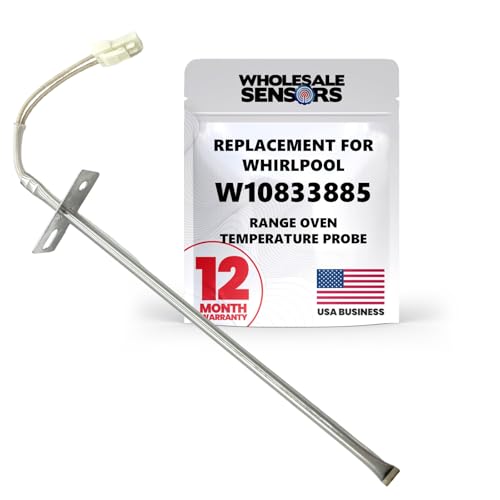
A newer Whirlpool part family with a stainless probe and a support line you can actually call.
This sensor is the answer for the W10833885 and W10586204 family, which covers a different generation of Whirlpool, KitchenAid, Maytag, JennAir, Amana, and Kenmore ovens than the WPW10181986 group. It is built with a high-grade stainless steel probe and heat-resistant wiring — the two parts that take the most abuse in a hot cavity. If your range dates from roughly 2005 forward and uses either part number, this listing is aimed squarely at you. Wholesale Sensors states that each unit is inspected for resistance accuracy before it ships.
The installation story is a good one. Owners consistently describe a job that needs basic tools and minimal disassembly, and it resolves the usual faults: uneven cooking, overheating, underheating, and F3 or F4 fault codes. That functionality is the strongest theme in the feedback, and how simple the swap feels runs a close second.
Two honest caveats. The accuracy record is mixed, with some buyers finding the readings off and compensating manually. Durability is the bigger watchpoint, since the most common long-term complaint is the sensor reaching about a year and then giving out. Neither has stopped the part from earning solid marks overall, but if you want the longest possible service life out of a single install, a genuine OEM sensor edges this one out. For a fast, well-supported fix on the right model, it is a perfectly sensible choice.
Cross it off fast: if your plate lists W10833885 or W10586204 and you want USA support behind the part, this is the low-risk call. If you want maximum expected life from one install, spend up.
Best matched to: the 2005-forward Whirlpool build that needs a W10833885 or W10586204 sensor with real human support on the other end.
Where it falls short: the year-ish durability pattern means you may be doing this repair again sooner than with a factory part.
4. Wholesale Sensors W10181986 Range Temperature Sensor

The second W10181986 option — same part family as our top pick, different seller and support path.
This is the same part number as our best overall, the W10181986, made by Wholesale Sensors and sold with a 12-month warranty and a US support team that will confirm your model before you buy. That last detail is genuinely useful. Oven model plates are tucked in awkward places, and a seller willing to verify compatibility removes the most common reason these orders go wrong. The cross-reference reaches Whirlpool, Maytag, Kenmore, Amana, KitchenAid, Estate, Inglis, Roper, Magic Chef, and Crosley ranges and covers part numbers W10131826, W10181986, WPW10181986, WPW10181986VP, 8273902, AP6016450, and PS11749737.
Installation mirrors the top pick closely: unplug the range, remove two screws, swap the connector. The listing calls for a #2 square head or Phillips screwdriver. This specific probe is the one to note if your oven has flashed an F6 E1 code — that alarm is a sensor fault, and this replacement is documented against it. The flange mount seats the probe firmly against the back wall. Between this and the TOMOON above, the real difference is who backs the sale rather than what is in the box.
Where it gives ground is the temperature and durability columns, which both lean mixed. Some owners find it resolves the heating problem outright and some find it never quite reaches the target under load. A few report a fast failure — the three-month range comes up — while others get years out of it. That spread is typical of aftermarket sensors in this price tier. If you want the soundest odds, the genuine OEM Whirlpool part further down this list is a different class of buy. If you want a solid gamble with a 12-month net, this fits the bill.
Pick this when: you have a W10181986 range, an F6 E1 code, and you want a seller who will verify your model number before shipping.
Look elsewhere if: longevity is the deciding factor for you — the three-month failures here are real, if uncommon.
5. LANDSIN W10833885 Oven Temperature Sensor Thermistor

The most affordable way into the W10833885 family, made from 304 stainless steel.
If your range takes the W10833885 sensor and your budget is thin, this LANDSIN probe is the entry point. It is built from 304 stainless steel and high-temperature wire — a real material advantage over plastic-bodied sensors at the same tier, because the probe has to live inside a cooking cavity that cycles through extreme heat. The job calls for a screwdriver and needle-nose pliers, which is it. No specialty tools, no service call.
What this sensor fixes is the standard checklist — almost no heat during baking, an oven running too hot, uneven heating, or a unit that never reaches the set temperature. The way the sensor does its job is worth understanding: it monitors the cavity temperature, compares that reading against what the thermostat has asked for, and tells the control board whether to fire the heating element again. When the probe is good, that loop runs invisibly. When it drifts, everything you bake comes out wrong.
The durability record is the honest limit here. This is one of the sensors in the group with the most talk about a short life span, with the four-month mark coming up repeatedly. Owners who bought this specifically to avoid a dealer service bill see real savings, so the economics work — but you are taking a modest risk that the part outlives the warranty rather than the oven. If you want one install and done, go OEM. If you want to fix a cold oven cheaply and move on, the trade works.
The plain read: 304 stainless construction at the lowest entry point into the W10833885 family — the right call if you are comfortable with a shorter expected life in exchange for the savings.
Best for: the budget-conscious DIYer whose range takes a W10833885 probe and who wants to skip the service call.
Not for: the owner who wants one sensor to last years — a handful of these quit at four months.
6. Whirlpool WPW10181986 Genuine OEM Range Temperature Sensor
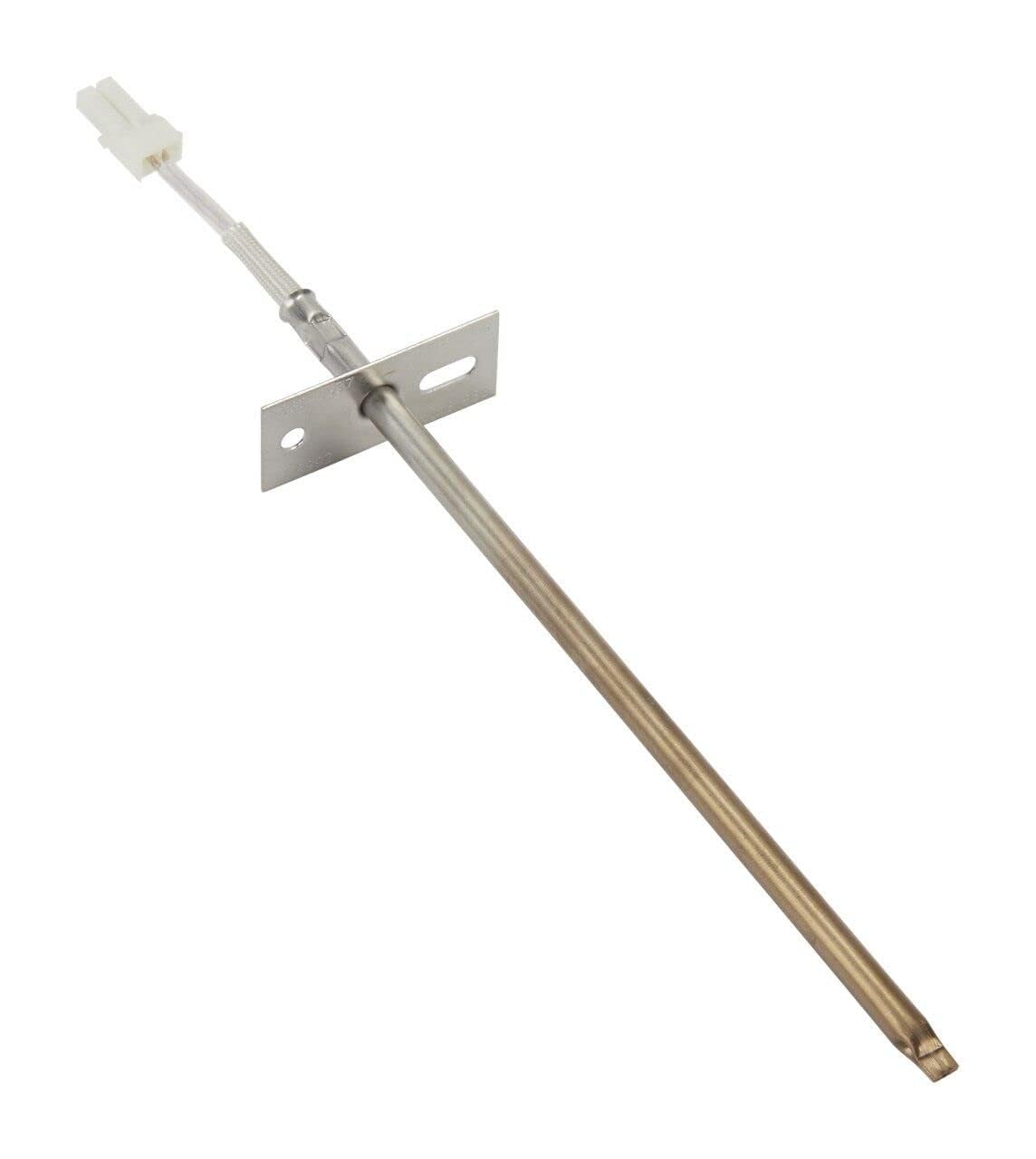
The factory part, built to Whirlpool’s own engineering standard, with the maker’s warranty behind it.
When you want no third-party guesswork, this is the Whirlpool Genuine OEM WPW10181986. It replaces W10131826, 8273902, and W10181986, and it is the part Whirlpool itself designed for models such as WFG320M0BS, WFE515S0ES, WFE320M0ES, WFG505M0BS, and WFG320M0BW. The listing carries a one-year warranty from the manufacturer, and it is built from metal rather than the plastic-body construction some aftermarket sensors use. The lower temperature rating is listed at 100 °F. Flange mount, single item, single pack — the exact configuration that came out of your range in the first place.
What you are paying for here is confidence, and people do perceive the difference. Across the feedback, the theme is that it fixes the oven without any fuss, and owners clearly register it as a genuine part rather than a lookalike. That authenticity — it actually being a Whirlpool piece — is the second strongest note in the reviews, right after the fact that it works. For anyone whose last aftermarket sensor failed and who is now in no mood for another gamble, a factory part removes a variable from the repair.
The catch is the cost, and it lands where you would expect — split opinions on whether the part is worth its premium. Some see the value plainly; some grit their teeth at how much a small probe can cost. What that price buys is the least uncertainty in this list: a factory-spec sensor, a real one-year warranty, and knowledge that the fit and materials match the appliance it was engineered for. This is the pick for the owner who has decided that this repair happens once and only once.
Choose this if: your oven is a named Whirlpool model and you want the factory part, factory warranty, and no cross-reference guesswork.
Reconsider if: the higher outlay for a small sensor is hard to swallow — several cheaper sensors here fit the same models.
7. Whirlpool W10833885 Range Oven Temperature Sensor

The top-of-the-list factory probe for the W10833885 family — and the lightest part here at 0.639 ounces.
This is the Whirlpool Genuine OEM W10833885, and for the right model it is the safest single sensor you can buy for a W10833885 range. It is a manufacturer substitution for W10586204, meaning it may look different from the older part but functions as the equivalent. The compatibility list runs deep — JES1750FB0, WFG525S0HT0, KSEG700EWH1, YWEE730H0DW0, YKSDG950ESS0, YKFEG500ESS2, WFG515S0EB0, KSGG700EBS1, MGR8800FZ0, WFG745H0FH1, and a long tail beyond. It covers Whirlpool, KitchenAid, Maytag, Jenn-Air, Amana, Kenmore, Ikea, and Kenmore Elite badges. The part weighs 0.639 ounces, which is the lightest in this group, and it is a simple bolt-on that plugs straight in.
The install story is the cleanest you get: no adaptation, no bracket-bending. It bolts on and plugs in, exactly as the original did, and owners confirm it fixes the oven problem without drama. That ease of installation is the second strong theme behind the fact that it simply works. It is a factory part, so the materials and the connector match what came out, and there is no calibration dance afterward. If the OEM part you are replacing is W10833885 or W10586204 and you want zero surprises, this is it.
Against the OEM WPW10181986 above, this sensor costs more and sits at the top of the range — you are paying the premium for the newer part family and the deeper model list. For owners of those specific built-in and freestanding models, that is money well spent, because the fit is guaranteed by the manufacturer rather than inferred from a cross-reference table. If your range instead takes the W10181986 family, this part will not do the job. Confirm the number on your old sensor first.
What it brings
- Genuine OEM fit for the W10833885 family, no adapter needed
- Covers Whirlpool, KitchenAid, Maytag, Jenn-Air, Amana, Kenmore, and Ikea badges
- Bolts on and plugs in with the original hardware
What to expect
- Highest outlay in this group of seven
- Won’t fit W10181986 ranges — model match is mandatory
- Substitution part can look different from the sensor you remove
The one to buy if: your plate reads W10833885 or W10586204 and you want a factory part that eliminates all fit risk.
Skip the guess: confirm the old sensor’s number first — a premium part for the wrong family is the costliest mistake here.
Know the Specs
What an oven heat sensor actually is
A thermistor, which is a resistor that changes its electrical value as it warms up. The control board reads that changing value to work out the real temperature inside the cavity. When the sensor drifts, the board misjudges the heat and fires the element at the wrong time — that is why an oven with a failing sensor bakes unevenly. Once you know the probe feeds the board, the swap is a ten-minute screwdriver job. You are not fixing the board; you are replacing the probe that feeds it.
Reading the part number and cross-reference
Every listing here publishes its part numbers and the model numbers it fits. The safe way to shop is to find the number stamped on your old sensor or listed on the model plate and match it against that published list. A number like WPW10181986 crossing to five related part numbers is a strong signal of wide coverage. A sensor listed for W10833885 only covers that family. A matching part number is the only reliable fit signal. A mismatched number means a return, no matter how good the reviews are.
What the tolerance figure means for your baking
Accuracy is quoted as a temperature band. A ±50 degree tolerance means the sensor can read off by up to fifty degrees in either direction and still be considered within spec. For everyday roasting and casseroles that is invisible. For a bake where the recipe relies on exact heat, it is the difference between a golden crust and a pale one. Tighten the tolerance and the oven behaves more predictably. Accuracy versus price is the real decision on this list.
Genuine OEM versus aftermarket
A genuine part is made by the brand that built your range — Whirlpool in most cases here — and comes with the factory’s warranty. Aftermarket sensors are built by third parties to meet the factory specification, and they cost less. The aftermarket units here use stainless steel probes, heat-resistant wiring, and published accuracy figures. What separates a good one from a weak one is durability. Part numbers, probe materials, and warranty length are the three specs that predict which sensor actually lasts.
Common Questions
How do I confirm a Whirlpool oven sensor fits my range?
Is it safe to replace the oven temperature sensor myself?
What does the F3 or F4 error code on a Whirlpool oven mean?
Can a faulty oven sensor cause an F2 or E2F3 code?
How accurate is a replacement oven sensor?
Is a genuine Whirlpool sensor better than an aftermarket one?
How long should a Whirlpool oven temperature sensor last?
Will a new oven sensor fix uneven baking?
Does a replacement oven sensor need calibration after install?
Can I use a W10833885 sensor on a W10181986 range?
The Bottom Line
For most Whirlpool-family owners, the winner on this list is the TOMOON WPW10181986 sensor, and the reason is simple breadth. One part number that crosses to five others and covers Whirlpool, Maytag, Kenmore, Amana, KitchenAid, Roper, and Crosley gives you the widest chance the sensor fits without a return. If your kitchen wears a KitchenAid or Jenn-Air badge, the BlueStars W10131825 pairs that same direct-swap convenience with a lifetime protection guarantee you will not find on the OEM models. And if your range takes the W10833885 family and you want the surest possible fit, the Whirlpool W10833885 OEM sensor is the factory-correct answer. Steer toward the OEM parts if you want the repair done once. Take the value-tier sensors if you are fixing a cold oven on a budget and are comfortable doing the job again down the road.
How we choose
We do not accept paid placement. Every pick is matched to a real buyer and a real use-case; we do not hands-on test units.
Sources
Specifications: manufacturer listings and product documentation. Review insights: verified customer reviews, as of November 2026. Pricing: not shown on this page (it changes often); check the current price via the retailer link.
As an Amazon Associate, Tactical Gear Guy earns from qualifying purchases. This does not affect which products we feature.