Specs are compiled from manufacturer listings and verified buyer reviews and can change over time — please confirm the key details on the product page before buying.
Wet feet are what end a good hike early. Once water soaks through a shoe, every step turns cold and heavy, and blisters follow soon after. The nine shoes below all carry a stated waterproof membrane (a built-in layer that blocks water), so the difference between them is how they handle a stream crossing, a muddy climb, and a full day of wear — not whether they keep water out at all. The short answer up front: the KEEN Targhee 4 Low is the strongest all-round pick for most men, while the Columbia Peakfreak II Outdry is the women’s shoe to beat on comfort and traction.
This guide is built by comparing the manufacturers’ published specifications and the patterns across verified customer reviews, so you get each pick’s real strengths and trade-offs instead of marketing spin.
You’ll see what each membrane actually means on a wet trail, which outsoles hold their bite on slick rock, and where weight costs you. By the end you’ll know which of these wet hiking shoes fits your feet and your terrain.
Top Picks
How To Choose The Best Wet Hiking Shoes
Buying for wet conditions changes the checklist. You are not shopping for the lightest trail runner or the stiffest mountaineering boot. You want a shoe where the waterproof layer is stated outright, the outsole still bites on slick rock, and the fit leaves room for your feet to swell over a long day. Get those three right and the rest is preference.
Start With The Membrane, Not The Label
A waterproof membrane is a thin layer built into the shoe that blocks water from passing in while letting sweat vapor escape. It is the part that actually keeps a stream crossing from ending your day. A water-repellent coating on the outside helps rain bead off, but it wears away with use. Look for the membrane name in the listing — KEEN.DRY, Outdry, or Gore-TEX are the ones named in the shoes here. A shoe that only says “water-resistant” is not the same thing, and it will soak through faster on a wet trail.
Match Lug And Rubber To Your Terrain
Lugs are the raised teeth on the bottom of the outsole. Deeper lugs bite into mud and loose dirt; a sticky rubber compound holds on wet rock. The North Face Ultra 112 lists 5mm lugs, which gives you a reference point for a shoe built to dig in on muddy backcountry paths. On smooth wet rock, the rubber matters as much as the depth, and that is where outsole names like KEEN.RUGGED and Vibram earn their keep.
Get The Fit Right For Wet Feet
Feet swell over a long hike, and a closed waterproof shoe traps heat. A wider fit like KEEN’s Original Fit leaves room without letting your heel slide. If you wear orthotics, check that the insole is removable and the shoe has volume for it — the Merrell Moab 3 is noted for room in that department. Never size down hoping a waterproof shoe will stretch; it will not.
Side-by-Side Comparison
| Model | Best For | Listed Weight | Waterproof Layer | Outsole | Amazon |
|---|---|---|---|---|---|
| KEEN Men’s Targhee 4 Low★ Best Overall | All-round men’s pick | 530 g | KEEN.DRY membrane | KEEN.RUGGED rubber | Amazon |
| Columbia Women’s Strata Trail LowBudget Trail Pick | Budget women’s trail shoe | — | Waterproof-breathable construction | Rubber sole | Amazon |
| Columbia Men’s Redmond IV LowEveryday Value | Everyday wet-weather walking | — | Waterproof construction | — | Amazon |
| ECCO Sport Rugged Track | City-to-trail crossover | — | Waterproof lining | sturdy sole | Amazon |
| Merrell Men’s Nova 4 Waterproof | Light trail and road crossover | — | Waterproof construction | — | Amazon |
| Columbia Women’s Peakfreak II Outdry | Women’s comfort and traction | — | Outdry waterproof | — | Amazon |
| Salomon X-Adventure Recon Gore-TEX | Gore-TEX protection | — | Gore-TEX | — | Amazon |
| The North Face Ultra 112 | Muddy, rugged backcountry | — | Waterproof ripstop leather upper | Rubber outsole, 5mm lugs | Amazon |
| Merrell Women’s Moab 3 Waterproof | Women’s long-distance durability | — | Waterproof construction | Vibram outsole | Amazon |
Detailed Reviews
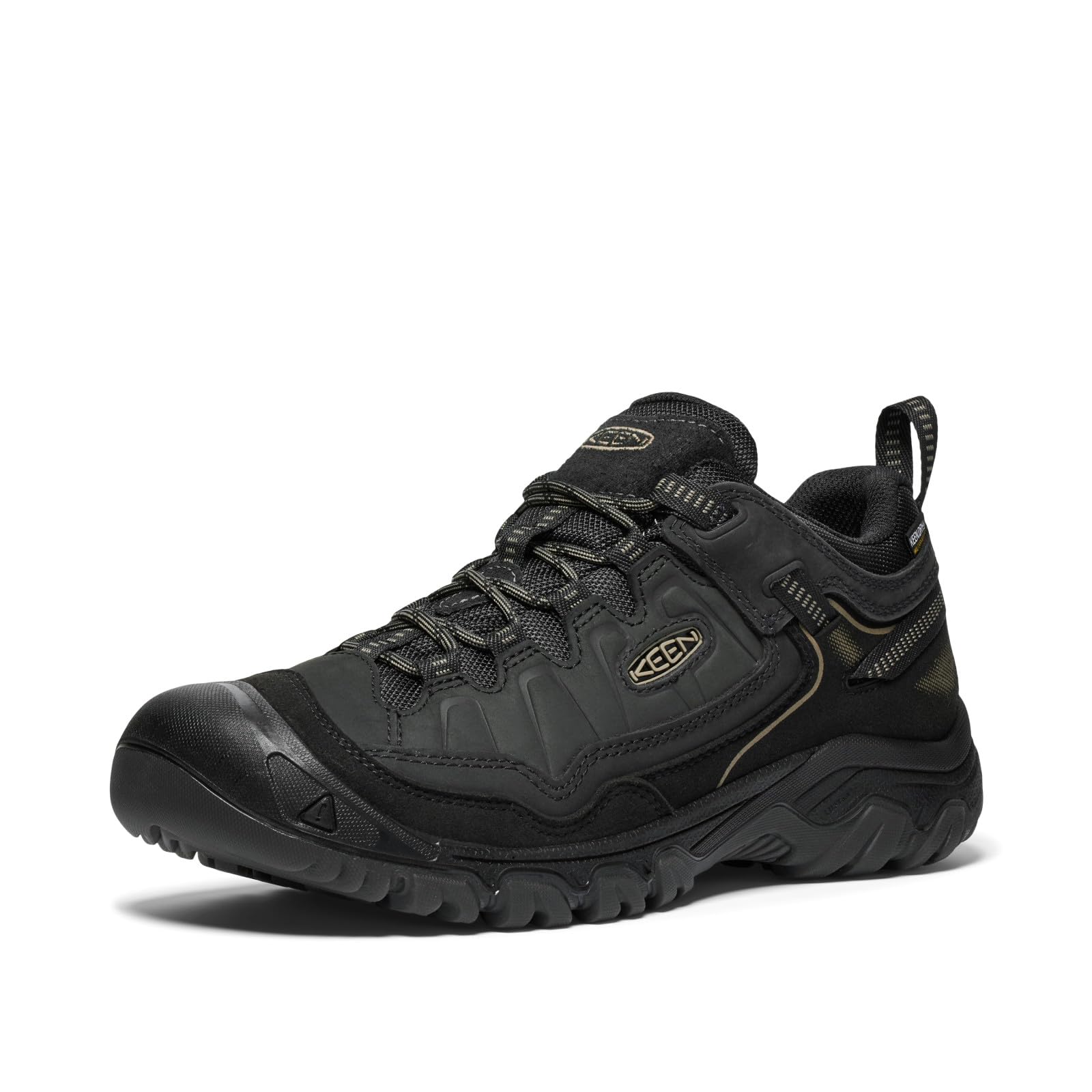
1. KEEN Men’s Targhee 4 Hiking Shoes
Our pick — 4.5+★ from 950+ verified ratings; the strongest balance of quality and price.
A wide-fit workhorse that treats a stream crossing as a normal part of the hike.
What makes this the pick for most men is the combination — membrane, outsole, and fit — rather than any single headline number. The waterproofing comes from a KEEN.DRY membrane inside the shoe, backed by a water-repellent treatment on the outside. That pairing means a splash rolls off the leather while anything that gets past the surface meets the membrane before it reaches your sock. Wear these on a rainy trail and your feet stay dry the whole way in, which is the entire point of shopping for wet hiking shoes.
The durability story is where the Targhee has built its following. The KEEN.FUSION bond is glue-free, and KEEN claims it resists delamination — the slow sole peeling that ends many wet-weather shoes early. Underneath, KEEN describes the KEEN.RUGGED outsole as twice as abrasion-resistant as rubber, so the lugs hold their edges on rock and mud. What wins people over most here is the build quality — it is the thing this shoe is known for across the trail community.
Consider the weight before you commit. At 530 g it is the heaviest of the KEEN shoes in this line-up, and that extra substance is exactly what buys the durability. If you want a featherweight day shoe, this is not it. The flip side is a wider Original Fit that suits most foot shapes, including men who find standard trail shoes pinch across the toes. This is also the highest-rated mens pick in this group at 4.5+ stars across 900+ ratings, though the Merrell Moab 3 further down has more reviews behind it.
What earns the top spot
- KEEN.DRY membrane inside plus water repellency outside keeps feet dry on wet trails
- Glue-free KEEN.FUSION bond resists the delamination that kills wet-weather shoes
- KEEN describes the KEEN.RUGGED outsole as twice as abrasion-resistant as rubber
- Original Fit gives a wider toe box for men who get pinched by standard trail sizing
What to weigh up
- At 530 g it is the heaviest KEEN listed here — you feel it on long climbs
- Substance over speed; not a shoe for fast, light trail days
Settle on this one if: you hike wet trails regularly and want a wide-fit shoe that outlasts the weather it is built for.
Pass it by if: low weight matters more to you than durability on a long day out.
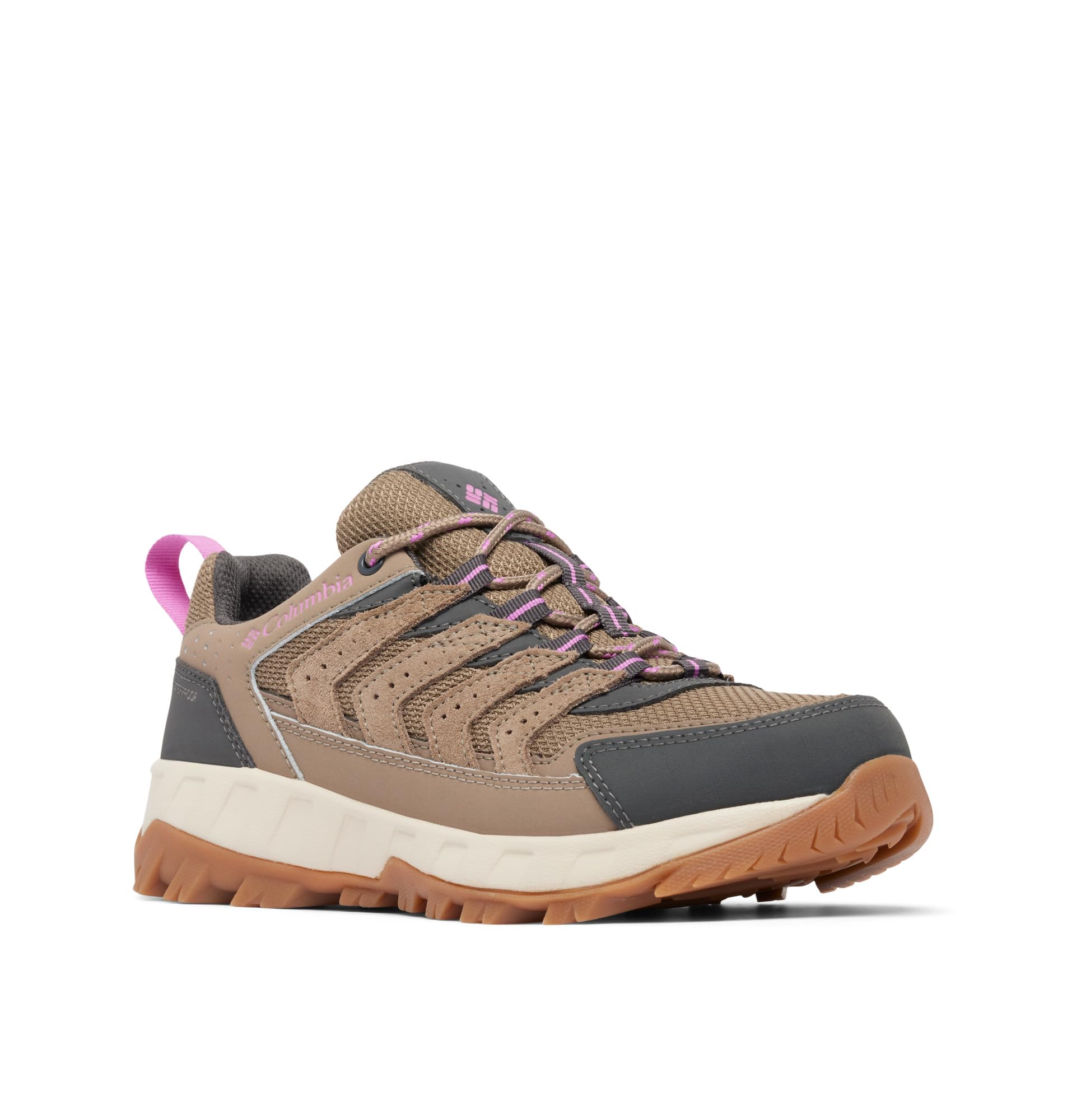
2. Columbia Women’s Strata Trail Hiking Shoe
The entry-level women’s shoe that quietly handles mud, rock, and a full season of trail days.
The detail that matters most for wet conditions on the Strata Trail Low is the gusseted tongue. That is a tongue stitched to the upper along its sides, so it seals the gap where water and grit normally sneak in. Pair it with Columbia’s waterproof-breathable construction and you have a shoe that keeps splash and mud out of the sock without turning into a sauna. For a first pair of wet-trail shoes, that closed upper is the difference between a dry day and a soggy one.
Cushioning is described as responsive and supportive mile after mile, and the rubber sole is built for grip on rugged, rocky terrain. This is not the shoe to reach for on an alpine scramble, but on a damp forest loop with roots and loose stone it holds its own. Columbia lists it in multiple colors and sizes, which helps if you want a neutral look that doubles as an everyday shoe.
Where it earns its place: the gusseted tongue and waterproof upper do the practical work, and the shoe is priced as an entry point into the category rather than a splurge. Buyers who walk mixed terrain regularly tend to get their money’s worth here.
The honest limit: at 4.0+ stars across 300+ ratings it sits a notch below the leaders, and a trail shoe at this tier will not match the abrasion resistance of a premium outsole over years of hard use. Know that going in.
Reach for this if: you want a women’s waterproof shoe for regular damp-trail walks without spending premium-tier money.
Look elsewhere if: you need a shoe that will survive year after year of aggressive wet-rock hiking.
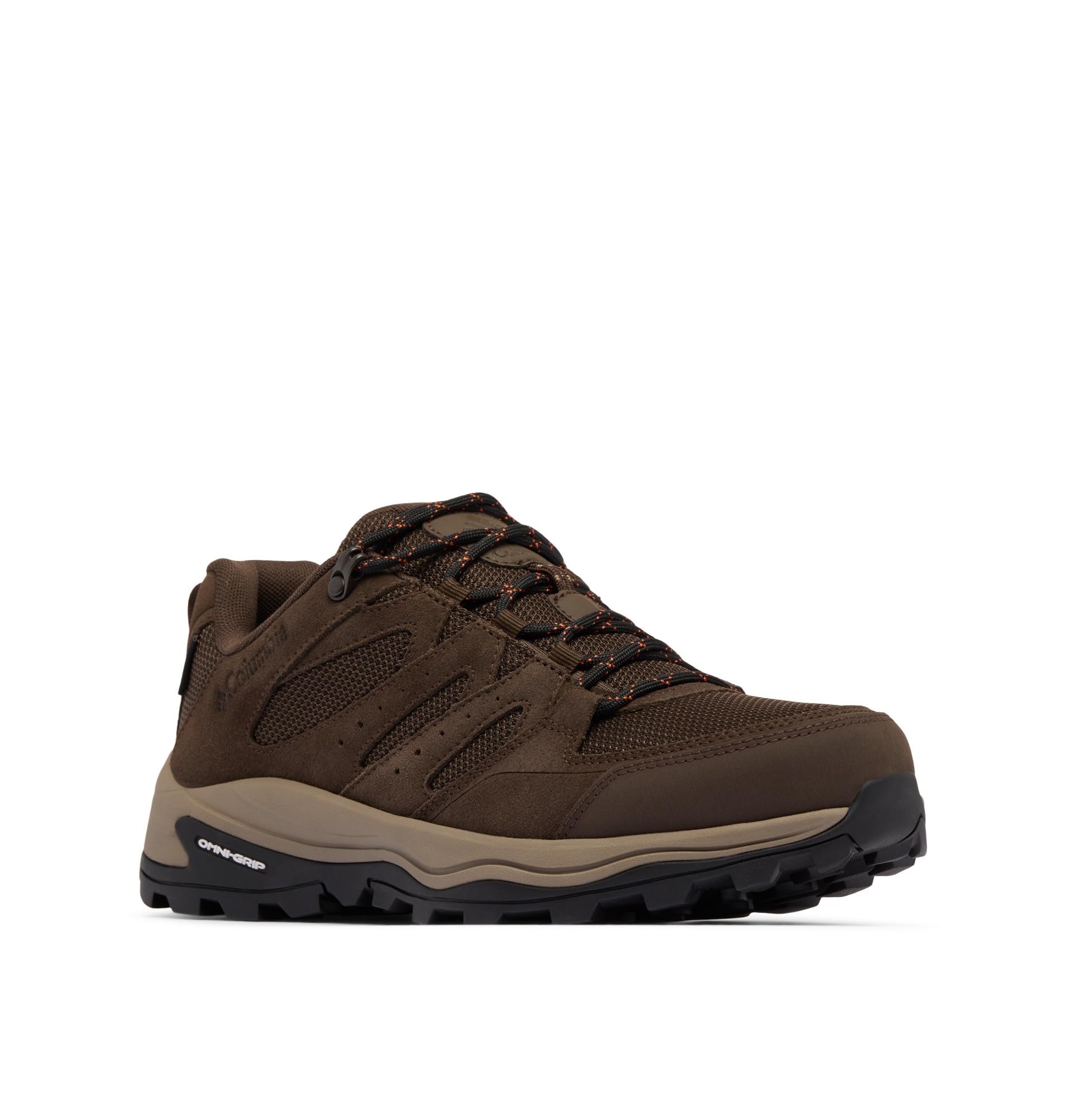
3. Columbia Mens Redmond IV Low Waterproof
A do-it-all men’s shoe for wet pavement, damp gravel, and the trail at the end of it.
Columbia builds the Redmond IV Low for the man whose day starts on a wet sidewalk and ends on a muddy path. The waterproof construction is meant to keep you dry and comfortable on any type of terrain, wet or dry, and the sole is tuned for sure footing rather than technical scrambling. It is the kind of shoe you leave by the door and grab for a wet commute or a damp dog walk without thinking.
Comfort is what customers praise most on this model, with build quality close behind. The shoe is also well-constructed in a way that suggests it will hold together through regular wear. If you want one men’s shoe for errands, dog walks, and the occasional wet trail, this covers that ground cheaply.
Two things to plan for. Sizing runs mixed — some men find it true to size, others find it comes up smaller than expected, so ordering your usual size with room to spare is the safer call. Weight is also debated, with some finding it light and others finding it heavy. Neither is a defect, just a reminder to buy this as a general-purpose wet-weather shoe rather than a specialist.
The daily-driver case: strong comfort and construction notes at a value-tier position, plus waterproofing that handles rain and wet grass without drama.
Skip past if: you need a dialed-in technical fit for steep wet scrambles — this shoe is built for mixed everyday terrain.
Best matched to: the man who wants one waterproof shoe for commutes, weekend walks, and light trail use.
Think twice if: you already know you need a precise, consistent size across brands — the sizing reports here vary.
4. ECCO Sport Rugged Track Plain Toe Low Waterproof Hiking Shoe

A low-cut leather shoe that looks at home on the street and still takes a wet weekend trail in stride.
ECCO positions the Rugged Track as the shoe you wear to the office and then to the trailhead. The plain-toe leather upper reads as a casual shoe, but a waterproof lining behind it handles the weather, and the sturdy sole gives you steady support underfoot. If you want one pair that does not look out of place downtown but can still handle a muddy path, this is the crossover in this group.
The build quality is the strongest signal here. Customers rate the shoe highly for construction, with the tread noted as holding up without showing wear. That is the trait you want from a shoe that splits its time between pavement and wet dirt — an outsole that does not chew itself up on abrasive surfaces.
Comfort and fit are the other standouts, and the shoe is considered worth the mid-range spend. It is not the highest-rated shoe in this article and it is not the cheapest, so it lands as a sensible middle option for a man who wants one shoe for both settings. If you hike seriously every weekend in wet conditions, the KEEN or the Salomon will out-perform it on purpose-built trail grip.
Why it lands mid-list
- Waterproof lining handles rain and wet trails without looking like a trail shoe
- Tread is reported to hold up well, so the sole resists early wear
- sturdy sole gives steady support on uneven ground
The trade-off
- A crossover, not a specialist — serious wet-rock scramblers will want more dedicated grip
Suits you if: you want a leather shoe that handles rain on the commute and a damp trail on the weekend.
Not your match if: your hikes are technical and wet most weekends.
5. Merrell Men’s Nova 4 Waterproof
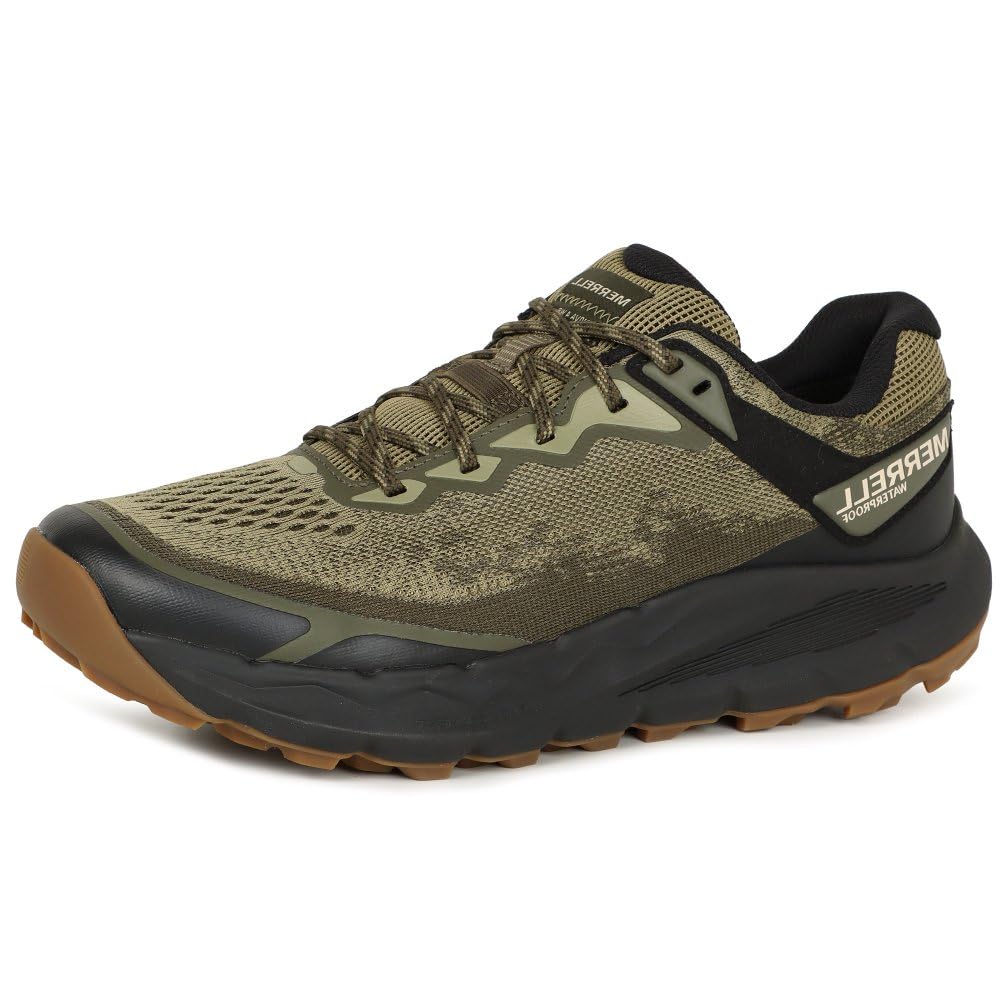
Merrell’s running-shoe DNA, waterproofed for the wet trail days when a boot feels like too much.
Merrell rebuilt its trail shoe with a cleaner athletic shape while keeping the running comfort that made the line popular. For wet conditions that means a shoe you can move fast in — better for a damp dirt path, a rainy trail run, or a quick summit push than for standing around in the cold. The waterproof construction is there to keep your feet dry, but it is the athletic fit that sets this one apart from the heavier shoes in this list.
Comfort is the headline, with buyers reporting pain-free feet over months of use, and quality close behind. That makes it the pick for a man who wants a waterproof shoe that feels like a running shoe rather than a stiff hiking boot.
Read the fine print on water before you buy. Customer feedback on water resistance is mixed — some praise how dry it keeps their feet, others find it does not hold up the way the label suggests. Sizing also splits, with some men finding it true to fit and others finding it too wide. If you run hot on long wet climbs, remember a waterproof membrane traps warm air. Treat this as a light-trail shoe and it delivers; treat it as a wading boot and it may disappoint.
The runner’s angle: athletic comfort and a clean design make this the most running-forward shoe in the group, and buyers report comfortable feet over months of wear.
Be clear on the boundary: water resistance reports vary, so this is best for wet trails and rain rather than standing water.
Pick it up if: you move fast on damp trails and want a waterproof shoe with running-shoe feel.
Leave it if: you need a shoe that wades through standing water without question.
6. Columbia Womens Peakfreak Ii Outdry

The women’s shoe that takes wet trekking seriously without weighing you down.
If you are shopping for a women’s shoe that handles wet terrain and keeps going, this is the one to start with. Columbia builds the Peakfreak II with Outdry waterproofing, a membrane bonded to the inside of the upper so there is no gap for water to pool in. The result is a shoe that sheds rain and wet grass while staying light enough for long days. Traction on wet rock is a recurring strength here too, which matters more than any single spec when the surface turns slick.
Comfort is the strongest suit. Buyers mention no blisters, which is the sign of an upper that does not rub when it gets damp and a fit that stays put. That comfort is paired with a wide, flat-friendly shape that suits women who find narrow trail shoes uncomfortable. Durability and lightweight design both show up as strengths, which is a hard combination to get in a waterproof shoe.
It is also one of the higher-rated women’s picks in this article at 4.5+ stars across 700+ ratings. The only thing to think through is purpose: this is trekking footwear, not a burly mountaineering boot, so it suits wet trails and hikes rather than full-on alpine conditions. For everything short of that, it is a confident pick.
Where it delivers
- Outdry waterproofing bonds the membrane to the upper so there is no pooling gap
- Comfort that keeps blisters away on long days
- Traction and water resistance both rate as strengths
- Suits wide and flat feet that struggle with narrow trail shoes
Set your expectations
- Trekking-level build, so it is not meant for alpine conditions
The closest match: you want a women’s shoe that stays dry, grips wet rock, and does not blister on a long hike.
Keep looking if: you need mountaineering-grade support for serious alpine routes.
7. Salomon Men’s X-Adventure Recon Hiking Shoes
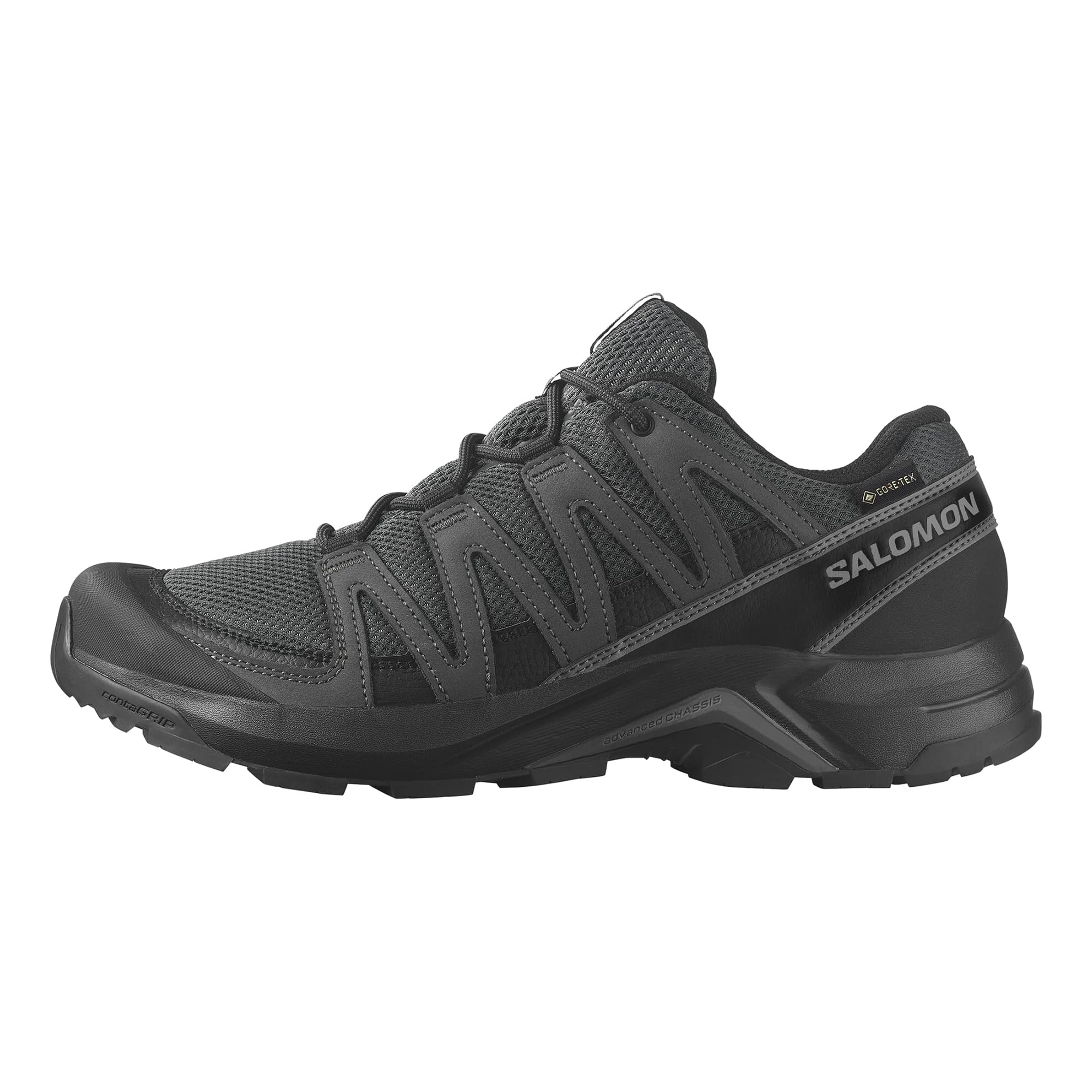
The serious wet-weather name in this group, built around a Gore-TEX liner.
Gore-TEX is the waterproof membrane brand most hikers know by name, and it is the core of this Salomon shoe. That liner sits inside the upper to keep water out while letting vapor escape, which is the setup you want when a hike turns from damp to properly rainy. Salomon is a brand built on trail footwear, and this model sits in the premium tier here with its waterproofing as the main draw.
Build quality is where the shoe earns its keep, with comfort a close second. That points to a shoe that feels well-made on the foot and holds up under regular trail wear — exactly what you would expect from a premium pick with a branded membrane.
Fit is the thing to resolve before you order. Customer feedback on sizing goes both ways, with some finding the shoe too tight and others finding it too wide — a sign that the fit is sensitive to your foot shape. Durability reports are also split, with some finding them solid and others noting stitching coming apart. Neither is universal, but if you are particular about fit or plan hard use, order with a return plan in mind and inspect the upper when they arrive.
The premium case: a real Gore-TEX liner and Salomon’s trail pedigree make this the most weather-focused men’s shoe here, with quality driving the highest praise.
Your due diligence: fit divides reviewers, so try before you commit and check the stitching on arrival.
Choose it for: a Gore-TEX liner from a trail specialist on properly wet hikes.
Mind the fit: if you have a hard-to-fit foot, be ready to send this pair back.
8. THE NORTH FACE Men’s Ultra 112 Hiking Shoe
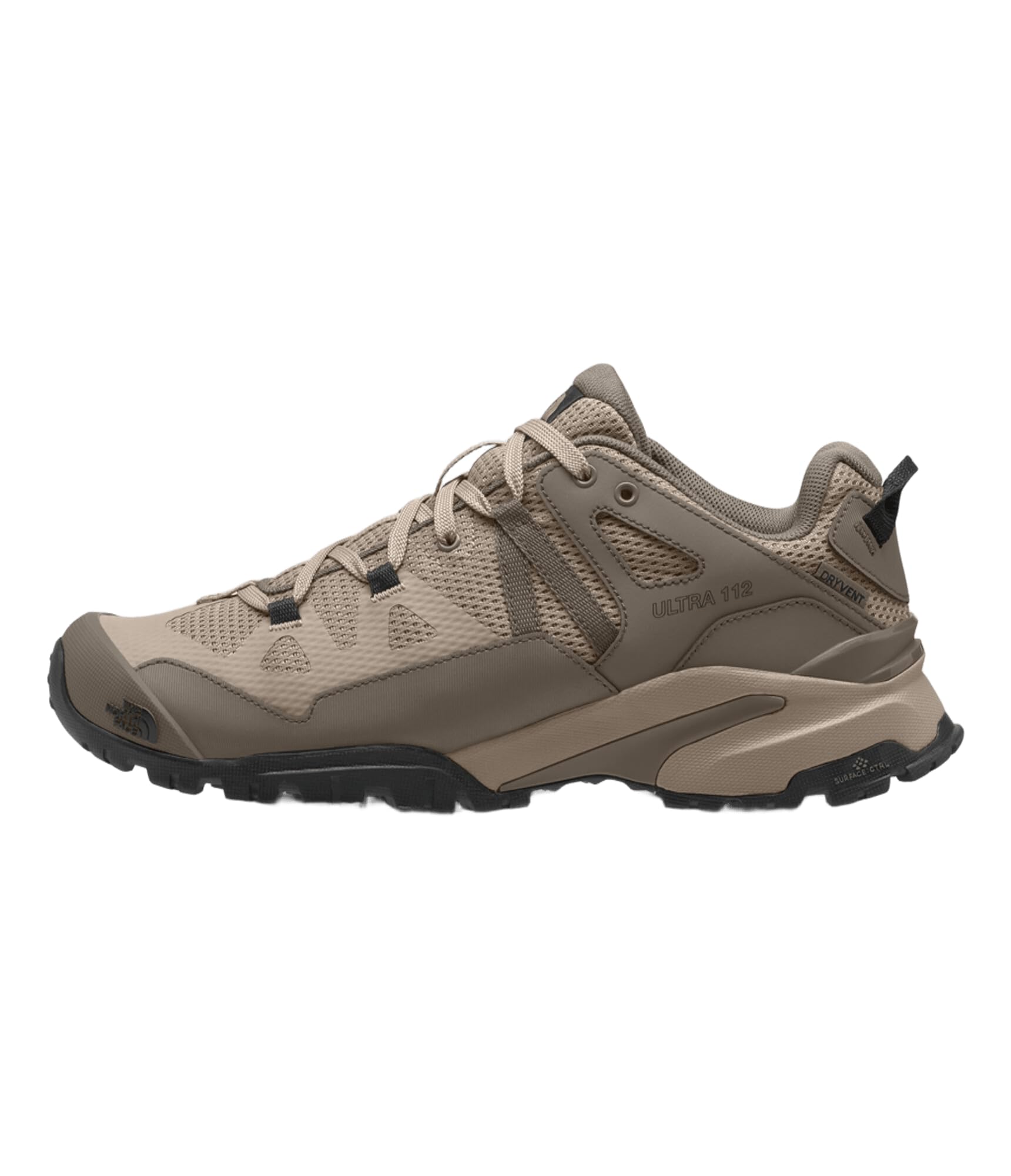
Built with 5mm lugs to dig in when the trail turns to mud and roots.
The number to know on the Ultra 112 is 5mm — the depth of the lugs on its rubber outsole. Lug depth is what lets a shoe bite into soft, wet ground instead of skating across it, so this is the pick aimed squarely at muddy backcountry and rooted trails. Wrap that in a ripstop leather upper with waterproof protection and you have a shoe meant for streams, peaks, and the muck in between.
Comfort and heel support are where the shoe lands well, and it holds up in rainy weather. The roomy toe box and structured midsole are built to cut down on blisters and fatigue over a long day, which matters on wet hikes when your feet are already working harder.
The durability story is mixed. Some users report the shoe still going strong after a year of wear, while others find it does not match older versions of the North Face trail shoe they remember. That is a fair thing to weigh against the rugged intent of the design. This is the pick for a man who needs aggressive grip on rough, wet terrain and is willing to treat the shoe as a trail tool rather than a lifelong investment.
The case for the 112
- 5mm lugs on the rubber outsole bite into mud and loose wet ground
- Ripstop leather upper with waterproof protection for rainy hikes
- Roomy toe box and structured midsole aim to reduce blisters and fatigue
- Good heel support for rough, uneven terrain
The catch to plan for
- Durability reports vary against older versions of the shoe — not a lifetime buy
Built for you if: your wet trails are muddy, rooted, and rough and you want 5mm lugs underfoot.
Keep shopping if: you expect a premium shoe to last through years of hard use.
9. Merrell Women’s Moab 3 Waterproof Hiking Shoe
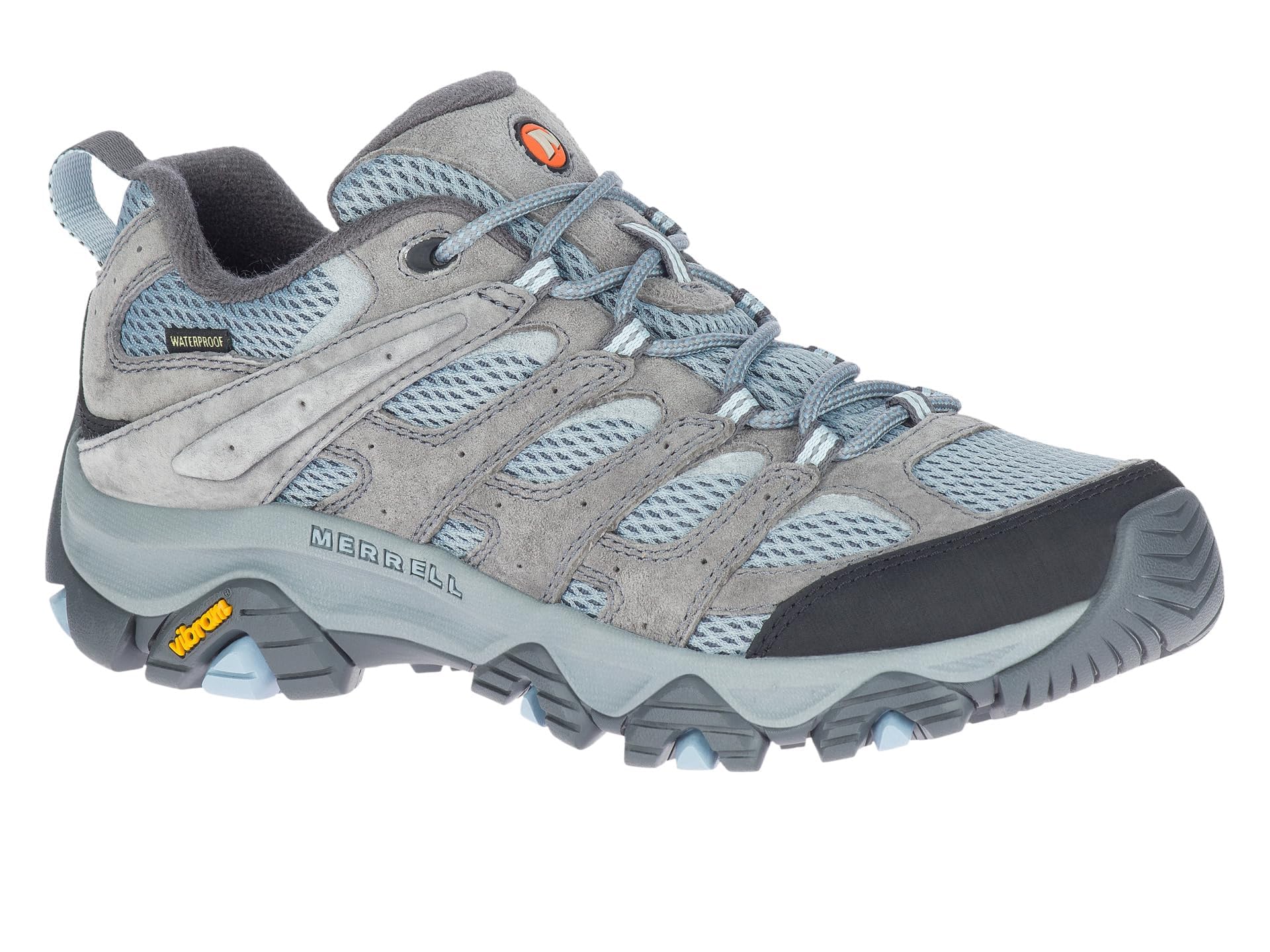
The shoe that turns up on wet Pacific Northwest trails without needing a break-in period.
Version 3 keeps that comfortable reputation and adds a more supportive insole, a softer midsole, and a grippier Vibram outsole. Vibram is a rubber compound brand known for wet and dry grip, so this is the women’s shoe here built to hold on slick rock.
The waterproof build holds up in wet conditions, and the shoe is worn for easy to moderate trails including damp Pacific Northwest days. Durability is strong — owners mention the Moab 3 lasting at least a year while staying comfortable on long stretches. Arch support is another strength, and there is room inside for orthotics, which is a real plus if you wear inserts.
What makes this the most-reviewed pick in the group is simple: it fits well, it grips, and it goes the distance. Comfort is the thing owners praise most and quality is right behind it. The one thing to accept is that it is a waterproof shoe — it is warmer and heavier than a breathable summer trail runner, so if you hike in heat, you may not want a membrane between you and the air.
Why it carries the biggest following: a decade-long fit record, a grippy Vibram outsole, and a waterproof build that survives regular wet wear. It is the safest women’s bet on this list if you want proven trail performance.
The knowledge to have: a waterproof membrane trades breathability for dryness, so this is a cool-and-wet-day shoe more than a hot-weather one.
The safest bet if: you want a women’s shoe with a proven fit and wet-rock grip that needs no breaking in.
Keep it in the closet if: you mostly hike hot, dry trails where you want maximum airflow.
Know the Specs
Waterproof Membrane vs. Water-Repellent Coating
A membrane is a thin layer bonded inside the shoe that blocks liquid water while letting sweat vapor out. Names like KEEN.DRY, Outdry, and Gore-TEX are all membranes. A water-repellent coating sits on the outside and makes rain bead off, but it wears away with use — so it is a first line of defense, not the one that keeps a stream out. A shoe that only says “water-resistant” without naming a membrane will soak through faster in real wet conditions. Wet hiking shoes that last do both: coating outside, membrane inside.
Lug Depth, Rubber, And Grip On Wet Ground
Lugs are the raised teeth on the outsole. Deeper lugs bite into mud and loose dirt, while a sticky rubber compound holds on wet rock. The North Face Ultra 112 lists 5mm lugs, which gives you a reference for a mud-ready shoe. Outsole names matter too — Vibram is a rubber brand known for grip, and KEEN describes its KEEN.RUGGED rubber as twice as abrasion-resistant as standard rubber. Match lug depth to your terrain: deeper for mud and roots, shallower and stickier for smooth wet rock.
Gusseted Tongue And Debris Control
A gusseted tongue is stitched to the upper along its sides, so it forms an uninterrupted seal around the top of the foot. That keeps water, grit, and small stones from sneaking in around the tongue, and it is why shoes like the Columbia Women’s Strata Trail Low handle wet, muddy trails so well. On a long wet hike, a standard free-floating tongue can let water reach your sock even when the rest of the shoe is sealed.
Fit, Break-In, And Room For Orthotics
Waterproof shoes run warm and feet swell over a day, so width matters. A wider fit like KEEN’s Original Fit leaves room without letting the heel slide, and the Merrell Moab 3 is noted for space that accommodates orthotics. Buying a waterproof shoe too tight is the most common mistake — the membrane does not stretch. If you wear inserts, confirm the insole lifts out and the shoe has volume for your own.
Common Questions
Will these shoes keep my feet dry in a stream crossing?
What is the difference between waterproof and water-resistant hiking shoes?
Should I size up in a waterproof hiking shoe?
Do waterproof hiking shoes make my feet sweat more?
How deep should the lugs be for muddy wet trails?
Will a gusseted tongue really stop water getting in?
Can I wear orthotics in waterproof hiking shoes?
Is Gore-TEX better than other waterproof membranes?
How long do waterproof hiking shoes usually last?
Are these shoes good for wet city walking as well as trails?
The Bottom Line
The wet hiking shoes that make the most sense for most buyers are the KEEN Targhee 4 Low, because its KEEN.DRY membrane, abrasion-resistant outsole, and wide fit come together in a shoe that genuinely outlasts wet weather. If a women’s pair is what you need, the Columbia Peakfreak II Outdry pairs blister-free comfort with a membrane bonded to the upper, and it rates among the highest women’s picks here. And for muddy, rooted backcountry where grip on soft ground is everything, the North Face Ultra 112 and its 5mm lugs is the one to reach for. Pick the fit that matches your foot first, and the membrane will do the rest.
How we choose
We do not accept paid placement. Every pick is matched to a real buyer and a real use-case; we do not hands-on test units.
Sources
Specifications: manufacturer listings and product documentation. Review insights: verified customer reviews, as of November 2026. Pricing: not shown on this page (it changes often); check the current price via the retailer link.
As an Amazon Associate, Tactical Gear Guy earns from qualifying purchases. This does not affect which products we feature.