Specs are compiled from manufacturer listings and verified buyer reviews and can change over time — please confirm the key details on the product page before buying.
You want mesh that keeps rabbits out, holds its shape for years, and does not rust into lace after one wet season. The four buying decisions below cover the whole market: the 1/2 inch mesh size is the animal barrier, the gauge number is the wire thickness, the galvanizing method is the rust clock, and the roll width is how much you get versus how much you carry. Get those four right and the rest is fastening and gloves.
This guide is built by comparing the manufacturers’ published specifications and the patterns across verified customer reviews, so you get each pick’s real strengths and trade-offs instead of marketing spin.
Some rolls are sold as predator defense and are genuinely single-layer small-animal mesh, which is a different job entirely. The list below separates those jobs so you buy the right roll for your fence line instead of guessing at the shelf. These are the picks that most honestly match the job described in any welded wire mesh listing.
Top Picks
How To Choose The Best Welded Wire Mesh
Most mesh disappointments come from a mismatch of job to roll, not from bad wire. A roll rated for rabbits is not a roll rated for foxes, and no gauge thickness fixes a mesh opening that is simply too wide for the animal you are trying to stop. Decide the animal, then the opening, then the wire, then the length.
Start With the Opening, Not the Roll Length
The opening is the gap between wires, and it sets what physically cannot get through. A 1/2 inch opening blocks rabbits, rats, snakes and squirrels — the size that matters for gardens and coops. A 1/4 inch opening is finer still and suits mice and very small pests. A 2 x 3 inch opening is a fence panel for boundary and pet areas, not a small-animal barrier. Buy the opening that matches the smallest animal you need out.
Read the Gauge as Thickness, Not Quality
Gauge is the wire diameter, and lower numbers mean thicker wire. A 16 gauge wire is heavier than a 19 gauge wire, so a fence built from 16 gauge holds its shape under a leaning dog or a pushed-in gate better than 19 gauge does. Thin 19 gauge is still the right call for coop skirting, tree guards and soil sifters, where you want it flexible and easy to cut. Match thickness to the pressure the mesh will actually face.
Check the Galvanizing Method Before the Wet Season
Hot-dipped galvanizing after welding coats the wire and every welded joint, which is why it holds up in soil and rain. Pre-galvanized wire is coated before the joints are welded, leaving bare metal at the weld spots where rust starts. If the roll will be buried, half-buried or in constant rain, look for the words galvanized after welding. A PVC or vinyl coating on top adds a second layer, but it is a coating, not a substitute for the galvanizing underneath.
Size the Roll to the Job, Then to Your Arms
Roll length is coverage, and weight is handling. A 100 foot roll covers more fence line than a 50 foot roll, but it also arrives heavier and harder to unroll alone. Measure your run first and write it down before you order. A short chicken run needs a 50 foot roll; a full boundary fence or a long row of raised beds is where a 100 foot roll saves you a splice in the middle of the job.
Side-by-Side Comparison
| Model | Best For | Mesh Opening | Wire Gauge | Roll Size | Amazon |
|---|---|---|---|---|---|
| Amagabeli Hardware Cloth 1/2 inch★ Best Overall | Long boundary runs | 1/2 inch | 19 gauge | 36 in x 100 ft | Amazon |
| Hardware Cloth 48in x 100ftTallest Coverage | Raised beds and tall barriers | 1/2 inch | 19 gauge | 48 in x 100 ft | Amazon |
| VEVOR Hardware ClothEasiest First Build | First-time coop builds | 1/2 inch | 19 gauge | 24 in x 50 ft | Amazon |
| Hardware Cloth 36in x 100ft Green | Green-toned garden fencing | 1/2 inch | 19 gauge | 36 in x 100 ft | Amazon |
| Gbekery Hardware Cloth 1/2in | Small runs on a budget | 1/2 inch | 19 gauge | 16 in x 50 ft | Amazon |
| Black Welded Wire Fence 36 in x 50 ft | Boundary and pet enclosures | 2 x 3 inch | 16 gauge | 36 in x 50 ft | Amazon |
| 1/2″ Hardware Cloth 36 in x 50 ft Black PVC | Year-round outdoor barriers | 1/2 inch | 19 gauge | 36 in x 50 ft | Amazon |
| Zevemomo 24″ x 100′ 1/4inch | Fine mesh for mice and small pests | 1/4 inch | 21 gauge | 24 in x 100 ft | Amazon |
| 16″ x 50′ Hardware Cloth | Small coops and quick patches | 1/2 inch | 19 gauge | 16 in x 50 ft | Amazon |
Detailed Reviews
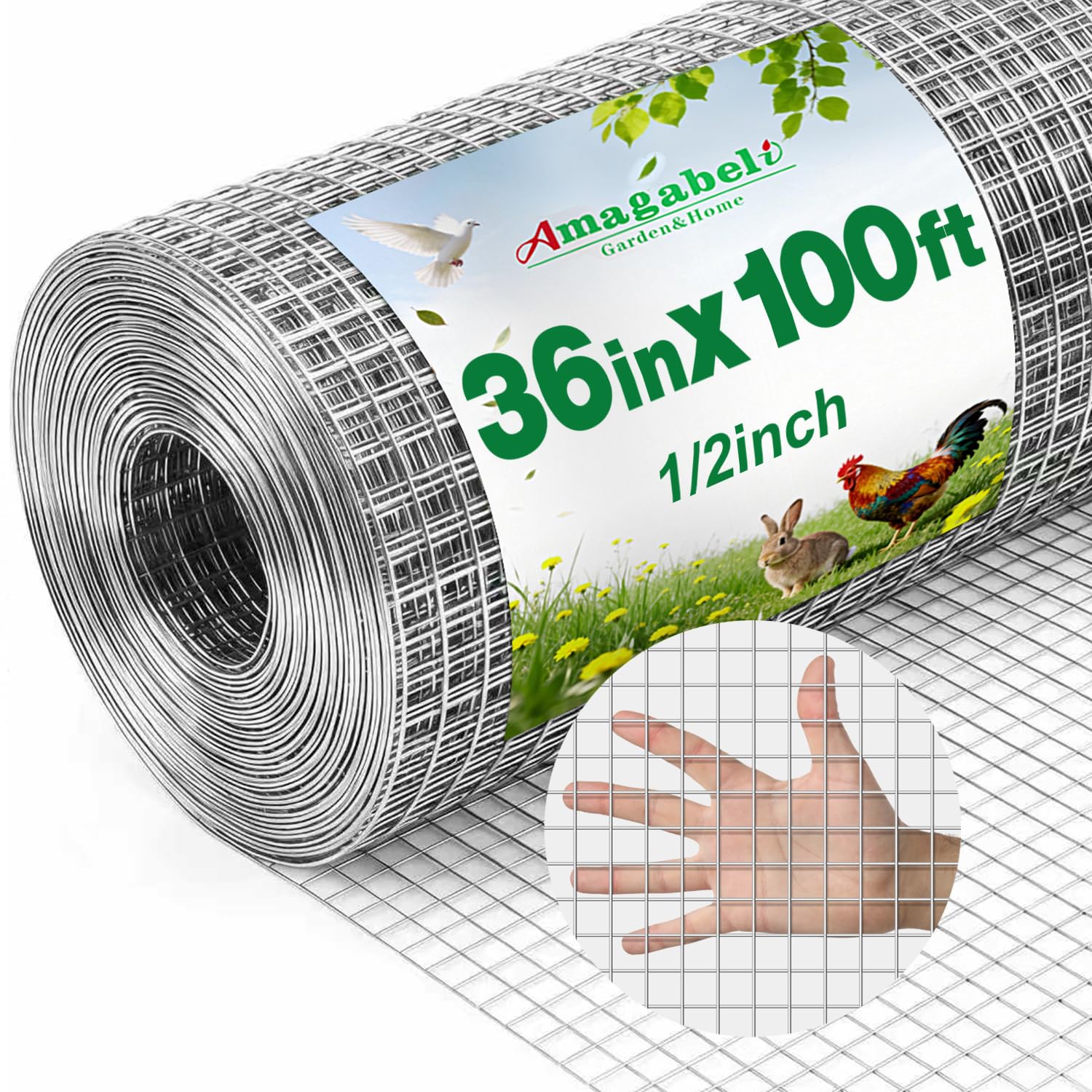
1. Amagabeli Hardware Cloth 1/2 inch 36 x 100 ft 19 Gauge
Our pick — 4.5+★ from 700+ verified ratings; the strongest balance of quality and price.
The roll that gives you 100 feet of snake-stopping half-inch mesh in one haul.
If your fence line is long, this is the roll that removes the mid-job splice. It runs 100 feet of length where the 16-inch roll below stops at 50 feet — twice the coverage in a single unwrap, so a boundary fence or a long row of raised beds goes up in one pass. The 36 inch width gives you 3 feet of vertical coverage, which clears the height a rabbit stands up to and covers the skirting on a coop.
The 1/2 inch opening is what makes it a garden barrier: rabbits, snakes, squirrels and rats cannot squeeze through a half-inch gap. At half an inch, rabbits, snakes, squirrels and rats cannot squeeze through, and the welded joints hold that shape instead of sagging between posts. The steel takes hot-dip galvanizing after welding, which coats the joints as well as the wire — the spots where rust normally starts on cheap mesh. Buried or half-buried in wet ground, that coating is what buys you years instead of seasons.
Owners keep coming back to how many seasons the coil lasts. Gardeners use it as hail guard over beds and as tree protection around fruit trunks, and buyers report the roll holding up over multiple growing seasons. It cuts clean with wire cutters or scissors, so you shape a guard for a trunk or a skirting panel without special tools. The catch is weight and handling: a 100 foot roll is a two-person job to unroll straight, and a single layer of 19 gauge will not stop a determined fox on its own. Plan a buried skirt and a second layer for anything bigger than a raccoon.
Where the coverage pays off
- 100 feet of length — double what the 16-inch roll offers, so fewer splices
- 1/2 inch mesh blocks rabbits, snakes, squirrels and rats
- Galvanized after welding, coating the joints where rust begins
- 36 inch width suits coop skirting and garden borders alike
- Cuts with wire cutters or scissors, no special tooling
Where it asks for planning
- Heavy roll — plan for a second set of hands to unroll
- 19 gauge single layer will not hold against fox-sized pressure
- Modular cut-to-size approach means measuring first or wasting material
Built for: the gardener or poultry keeper with a long run who wants one roll to cover it and rust protection at the joints, the crowd favorite at 4.5+ stars across 700+ owners.
Plan around: the weight and the 19 gauge limit against digging predators; add posts and a buried skirt for fox country.
2. Hardware Cloth 48in x 100ft 1/2in Mesh
Four feet of height where most rolls stop at three, and a hundred feet of it.
The 48 inch width is the spec that separates this from the pack. That is a full 4 feet of vertical coverage, against the 36 inch width most rolls here give you — a foot of extra height that matters when you are lining an improve garden bed or shielding a tree trunk from groundhogs. Paired with 100 feet of length, it covers a tall barrier run without stacking two rolls end to end.
The 1/2 inch openings keep the same rabbit-and-snake protection as the Amagabeli above, but the build differs in one place: this wire is double galvanized after welding, so the welded points get a second zinc pass rather than a single coating. For a roll that spends years half-buried around planters, that double pass on the joints is the durability story. The packaging also arrives wrapped in film and boxed, which the maker says is aimed at the dents and bends a heavy coil picks up in transit.
Owners put it to work on chicken coops and raised planters, and owners repeatedly report the mesh staying sound through storm after storm. Cutting is straightforward with wire cutters or scissors, and at 19 gauge it lays flat enough to bend around a curve. The honest caveat is thickness versus bulk: some buyers find the wire thin for the money, and a 48 inch by 100 foot roll at 48 pounds is genuinely awkward to move alone. This is a job for two people and a plan.
Height that changes the job: at 48 inches wide and 100 feet long, this is the roll for tall barriers and buried planter work, not quick patch jobs.
The trade-off to price in: 48 pounds of coil and a 19 gauge wire the maker calls heavy-duty but some buyers read as thin — the boxed film wrapping helps, but a second person helps more.
Pick this instead if: you need four feet of vertical coverage for raised beds or tree guards and want the double galvanized joints.
Look elsewhere if: you are patching a short coop panel — a smaller, lighter roll will do the same job with less wrestling.
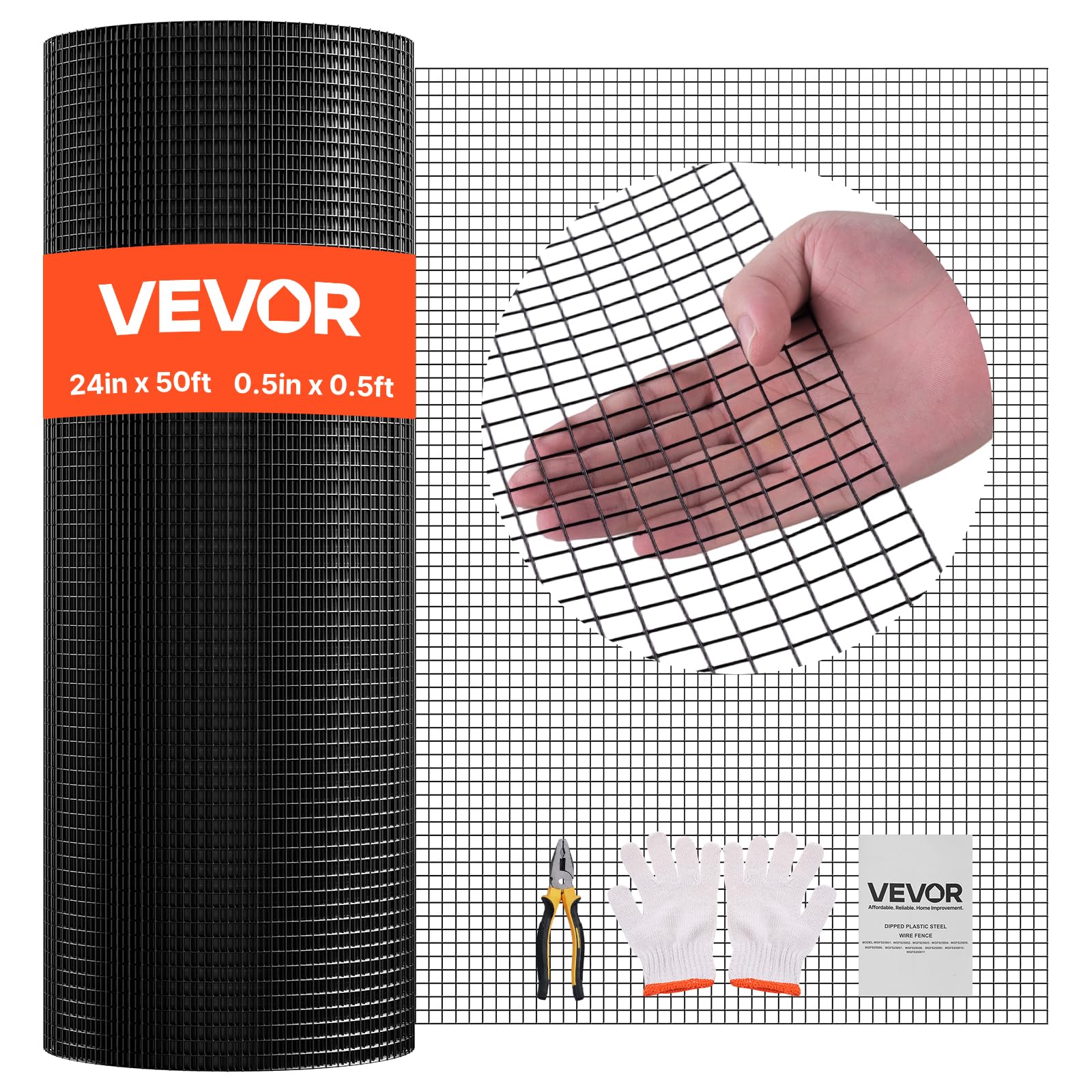
3. VEVOR Hardware Cloth 24 in x 50 ft 1/2 in 19 Gauge
A 24-inch roll that arrives with the cutter and gloves already in the box.
Nobody wants to drive to the hardware store mid-build because they forgot gloves. This roll ships with a heavy-duty cutter and a pair of protective gloves in the bundle, so the install can start the moment the box opens. The maker puts a 15 minute setup window on it for a first-time user, which says more about the tool-light design than about speed.
At 24 inches wide, the half-inch mesh is best read as coop and cage skirting rather than full-height fencing. It blocks rabbits, rodents and puppies at 0.5 x 0.5 inch openings, and the maker says the welded joints are hand-inspected so the wire does not slip and leave gaps. The coating is galvanized steel under a black vinyl layer, giving a second line of defense against sun, rain and seasonal wear. That matters most on the spots you cannot repaint: the inside of a coop and the base of a pet enclosure.
The gauge here is where you need to be honest with yourself. Multiple sources describe the 19 gauge wire as thin, and some find it flimsy against real force. It is the wrong roll for holding back a large dog or a fox, and the right roll for lining the lower half of a coop or a run you will re-check each season. Buy it for the accessory bundle and the cooperative roll — not as a primary fence.
What the bundle buys you: cutter and gloves included, steel wire pliers per the maker’s list, and a 15 minute claim for a first-time install.
The honest thickness read: 19 gauge with a black vinyl coat is fine for coop skirting and pet enclosures; several buyers find it too thin for anything load-bearing.
Right for: a first coop or a small pet enclosure where the included tools and 50 foot roll cover the whole job.
Wrong for: a perimeter fence facing large predators — step up to a thicker gauge for that.
4. Hardware Cloth 1/2 inch 36in x 100ft Green PVC Coated

Green-coated mesh that disappears into the hedge line instead of shouting from it.
The green PVC coating is the reason to look here first if the mesh sits in view. A bare silver coil across the front garden reads as work in progress; a green-coated one blends into foliage and fence posts. Underneath that coating is 19 gauge wire in a 36 inch by 100 foot roll, with 1/2 inch openings that stop rabbits and snakes.
This manufacturer is refreshingly direct about the limits. The listing states plainly that this standard single-layer mesh is made for small animal protection, and that foxes, stray dogs and badgers will defeat it — recommending buried posts, a bottom anti-dig skirt, double-layer mesh or frame reinforcement instead. That is rare honesty on a product page, and it should shape your plan. If your threat list stops at rabbits and raccoons, this roll does the job. If foxes patrol your boundary, budget for reinforcement.
The cut-out edges are sharp, so wear the gloves, and the 25 pound roll is heavy enough to ask for help unwinding. Beyond that, the practical story is coverage: 100 feet of length and 36 inches of height let you run a whole garden boundary without a splice, and the corrosion-resistant coating handles wet weather. Lay it, stake it, and re-check the base each season for digging.
Why it earns the front-garden spot
- Green PVC coating blends with planting and posts
- 100 feet of length covers a full boundary without a splice
- 1/2 inch openings block rabbits and snakes
- Maker is explicit about the small-animal-only limit
What you need to plan for
- Single layer will not hold against foxes or large dogs
- 25 pound roll asks for a second person to unroll
- Cut edges are sharp — gloves are not optional
Best fit: a visible garden boundary against rabbits and snakes, where a green finish matters as much as the mesh.
Not the answer for: fox or dog defense — the maker itself calls for added structure in that case.
5. Gbekery Hardware Cloth 1/2in 16x50ft
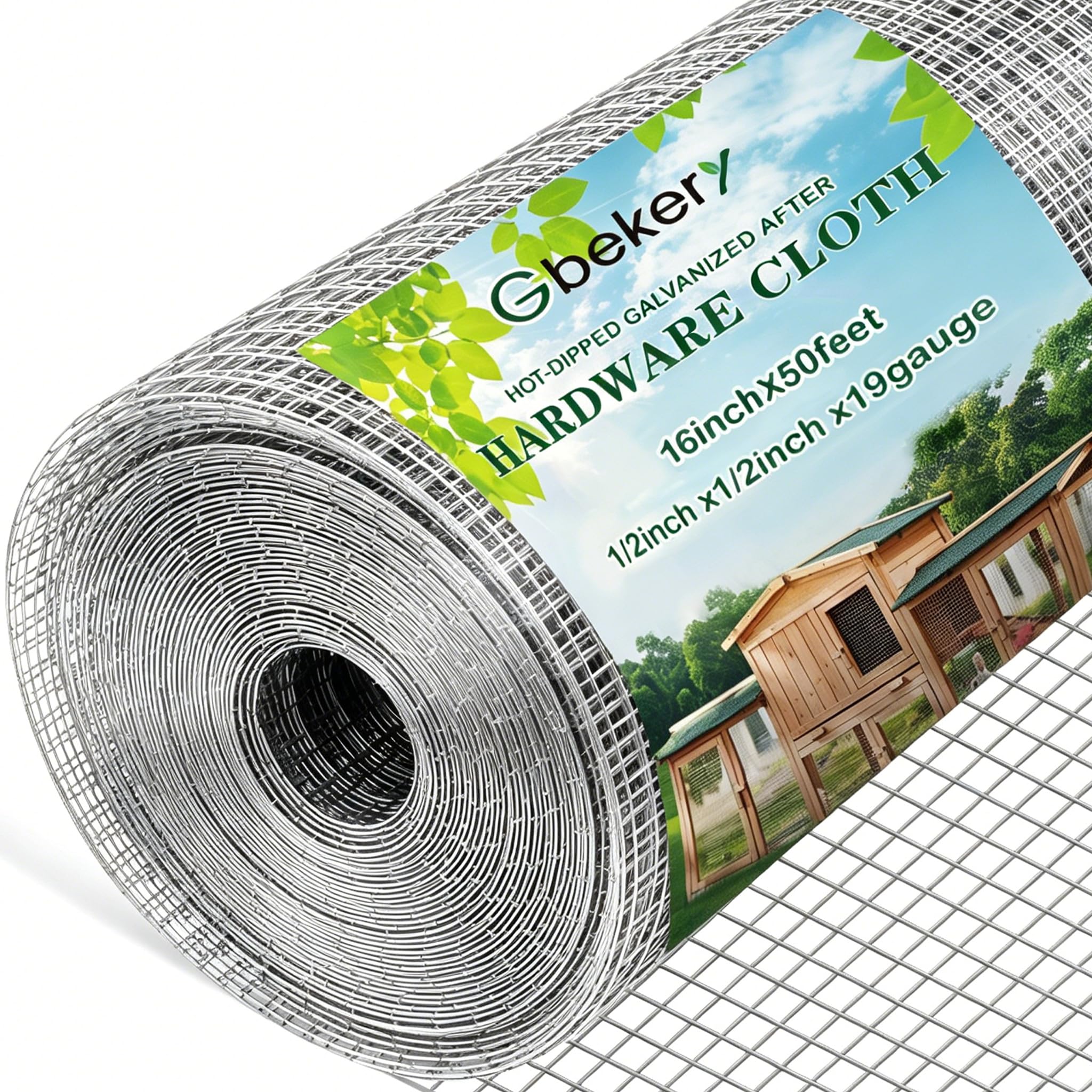
A short, flexible roll for a coop panel or two beds, and easy to cut to size.
The 16 inch by 50 foot format is the point here. It is narrow and light enough to handle solo, so a small run, a couple of raised beds or one coop panel gets done without a second set of hands. The hot-dip galvanizing happens after welding, coating every joint so the mesh resists rust in rain, soil and sun — the detail that separates it from pre-galvanized wire that rusts first at the welds.
The 1/2 inch mesh keeps rabbits, snakes and gophers off plants and out of coops, and the smooth welded edges mean fewer scratches while you cut and install. It works with fence posts, zip ties and landscape staples. For a gardener doing a patch job rather than a perimeter, that tool-light setup is the whole appeal.
The one honest knock is sturdiness. Some buyers find it less rigid than heavier rolls, and a single layer of 19 gauge needs staples and a post or two to hold a clean line. Treated as a barrier for small animals and a repair material rather than a structural fence, it earns its price. Treated as the last line against a strong predator, it will disappoint.
Small-job value: 16 inches by 50 feet, hot-dip galvanized after welding, and cuttable with hand tools — a fit for patching a coop or a bed rather than fencing a field.
The bend-you-should-know: it is not the sturdiest wire out there, so give it posts and staples to hold a clean line.
Grab it if: your project is small, your budget is tight, and 50 feet of half-inch mesh is all you need.
Skip if: you are fencing a boundary or expecting it to hold against heavy predators without reinforcement.
6. Hardware Cloth 16″ x 50′ 19 Gauge

8.55 pounds of half-inch mesh you can carry up a ladder on your own.
At 8.55 pounds, this roll is the one you can haul one-handed to the top of a coop or across a yard without help. It comes in 16 inch by 50 feet, with 19 gauge welded steel that holds its shape during installation. The narrow width is not a limitation here — it is the design. Short skirting panels, compost bin liners and tree guards are exactly the jobs a light, narrow roll is built for.
The 1/2 inch mesh is the balanced choice for a coop or run: it blocks rabbits and snakes but keeps airflow and visibility open, so the enclosure does not feel closed in. Hot-dipped galvanized after welding, it resists rust in gardens and yards. Cut and shape it with standard wire cutters and it conforms to whatever you are wrapping.
Owners mention it doing exactly what the label promises: one buyer kept a rattlesnake out, another kept rabbits off the garden. The recurring caution is thin wire — 19 gauge will not take a direct hit from a large animal, and the roll sits at half the width of a 36 inch roll, so a tall fence needs two courses. For the money, both limits are fair for the job.
What the weight gives you: 8.55 pounds of roll, 16 inches by 50 feet, half-inch mesh — the solo-install option for coop skirting and tree guards.
What the width costs you: at 16 inches you need two courses for a taller barrier, and 19 gauge stays vulnerable to a hard push.
Reach for it when: you are installing alone on short panels and want the lightest roll that still blocks rabbits and snakes.
Consider the 36-inch rolls instead when: you need full-height coverage without stacking courses.
7. Hardware Cloth 36 in x 50 ft Black PVC
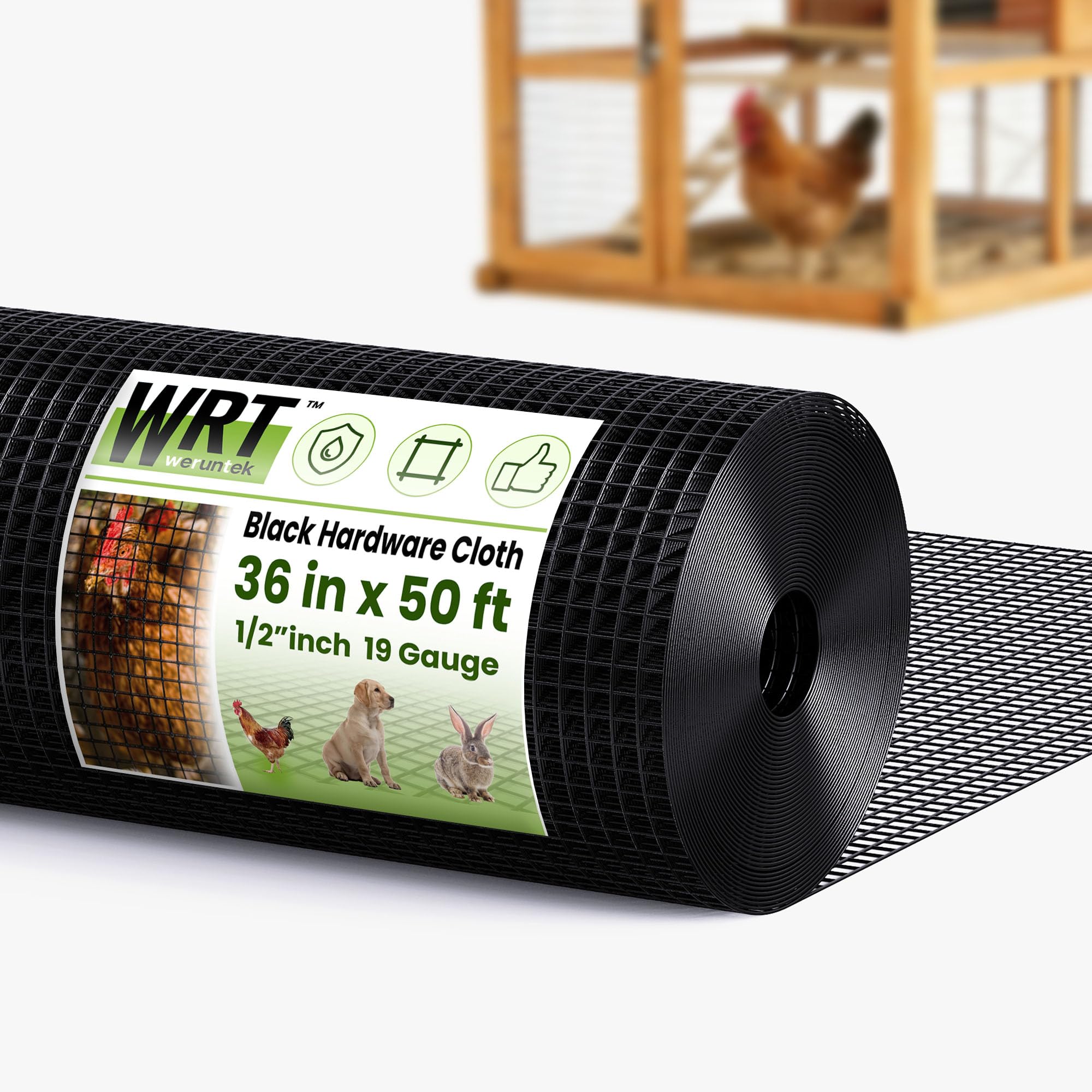
The black-coated half-inch roll for raised beds that need to look intentional.
Black PVC coating over 19 gauge wire is the spec that sells this roll to anyone building raised beds in a tidy yard. The coating protects the metal from moisture and corrosion while the black finish reads as garden hardware rather than a scrap coil. At 36 inches wide and 50 feet long, three feet of vertical coverage lines a standard raised bed or a medium-height enclosure with room to spare.
The 1/2 inch square openings do the blocking work: rabbits, squirrels, chipmunks and rats get stopped while airflow and visibility stay open. That combination is why the same roll serves garden borders and chicken runs. It cuts with suitable wire cutters and bends around bed frames or posts, and protective gloves come in the box.
Owners use it for hail screens over beds and as a chipmunk barrier along foundation lines, and owners consistently rate it a cut above plain chicken wire in both feel and coating. The main thing to accept is weight: a 17.01 pound roll is not a one-hand carry, and the coating is a surface layer, not a heavier gauge. Bring a helper and a staple gun, and expect a roll that looks as good as it works.
Where the coating delivers
- Black PVC coating resists moisture and corrosion
- 1/2 inch openings block rabbits, squirrels, chipmunks and rats
- 36 in x 50 ft covers a raised bed or medium enclosure
- Gloves included; cuts and shapes with wire cutters
What to expect on arrival
- 17.01 pounds — plan a second pair of hands for unrolling
- PVC is surface protection, not a thicker gauge of wire
- 50 feet is short for a full boundary run, so measure first
Ideal for: raised beds and garden borders where a black finish and corrosion resistance both matter.
Think twice if: you need a long run in one piece — 50 feet will not cross a large yard without a splice.
8. Zevemomo 24″ x 100′ 1/4inch Hardware Cloth
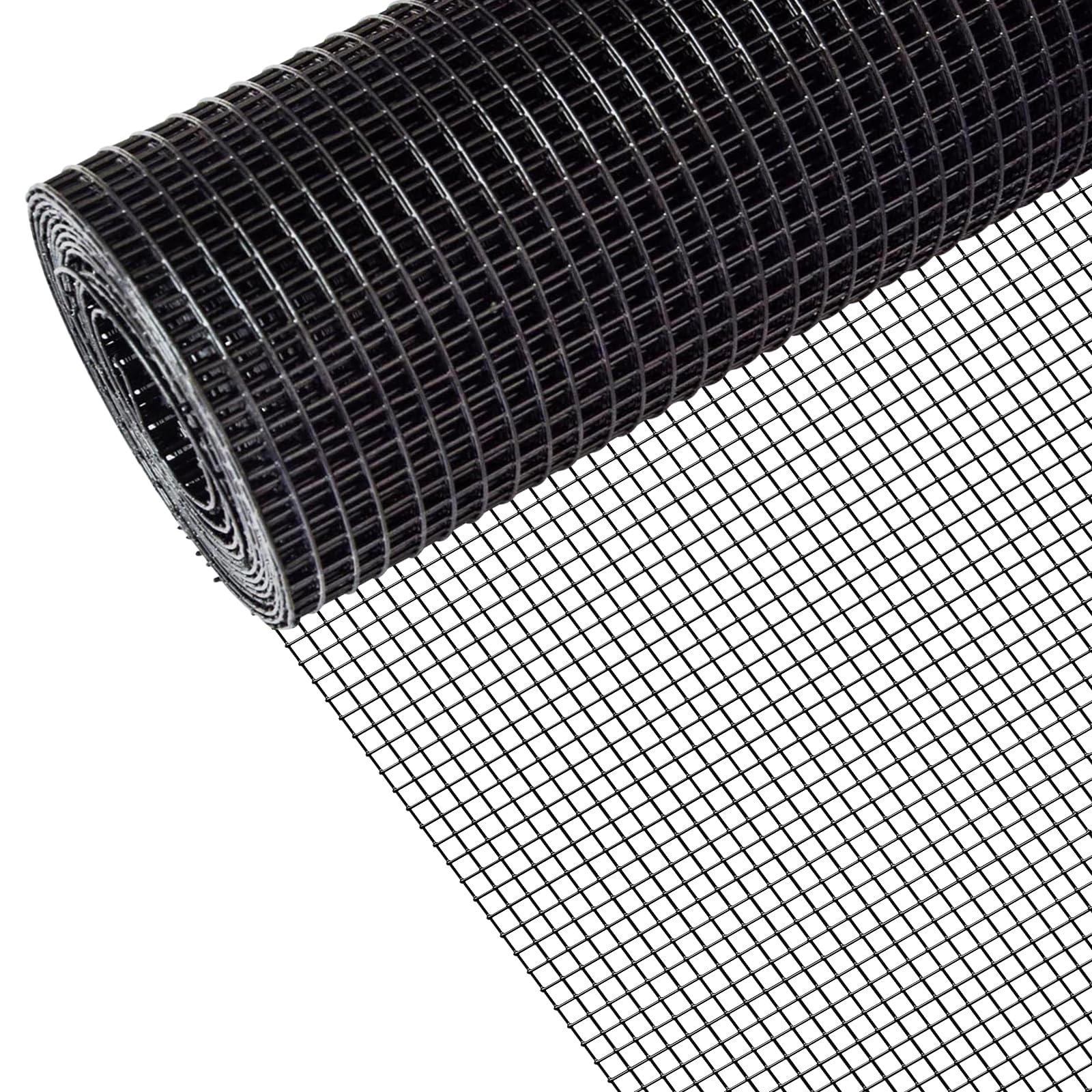
A quarter-inch grid for the smallest pests, not the biggest push.
The 1/4 inch opening is the differentiator in this whole list. Where half-inch mesh stops rabbits and snakes, a quarter inch grid closes the door on mice and the smallest burrowers as well. That finer grid needs finer wire to stay workable, so this roll uses 21 gauge, with the galvanized steel coated inside and vinyl-coated outside for rust resistance in long-term outdoor use.
At 24 inches by 100 feet, it covers a lot of ground in a narrow strip. That profile suits tree protection wraps, chicken coop skirting, garden mesh screens and small animal cages. It is flexible enough to bend around a trunk or fold into a cage, cuts with scissors, and the welded points are galvanized again after welding so joints do not break off under soil. It is the roll for lining, wrapping and screening rather than for standing up as a fence.
The honest boundary is strength. A 1/4 inch grid in 21 gauge is a fine-mesh tool, not a structural barrier, and it will not take the same pressure as a 19 gauge half-inch roll. Cost is the second question mark — value opinions split, with some buyers finding it priced above their local store and others satisfied. Buy it for the fine mesh and the coating, and pair it with a sturdier roll where a big animal could push through.
Why the fine grid matters: 1/4 inch openings plus a 21 gauge galvanized-and-vinyl build make this the mouse-class barrier for wraps, cages and soil screens.
Where it stops: fine wire is easy to cut and bend, which also means it will not hold against an animal that pushes hard.
Choose it for: tree wraps, mice-proof skirting and small cages where a quarter-inch grid is the requirement.
Pair it with a heavier roll if: the same fence line also has to face larger animals.
9. Black Welded Wire Fence 36 in x 50 ft
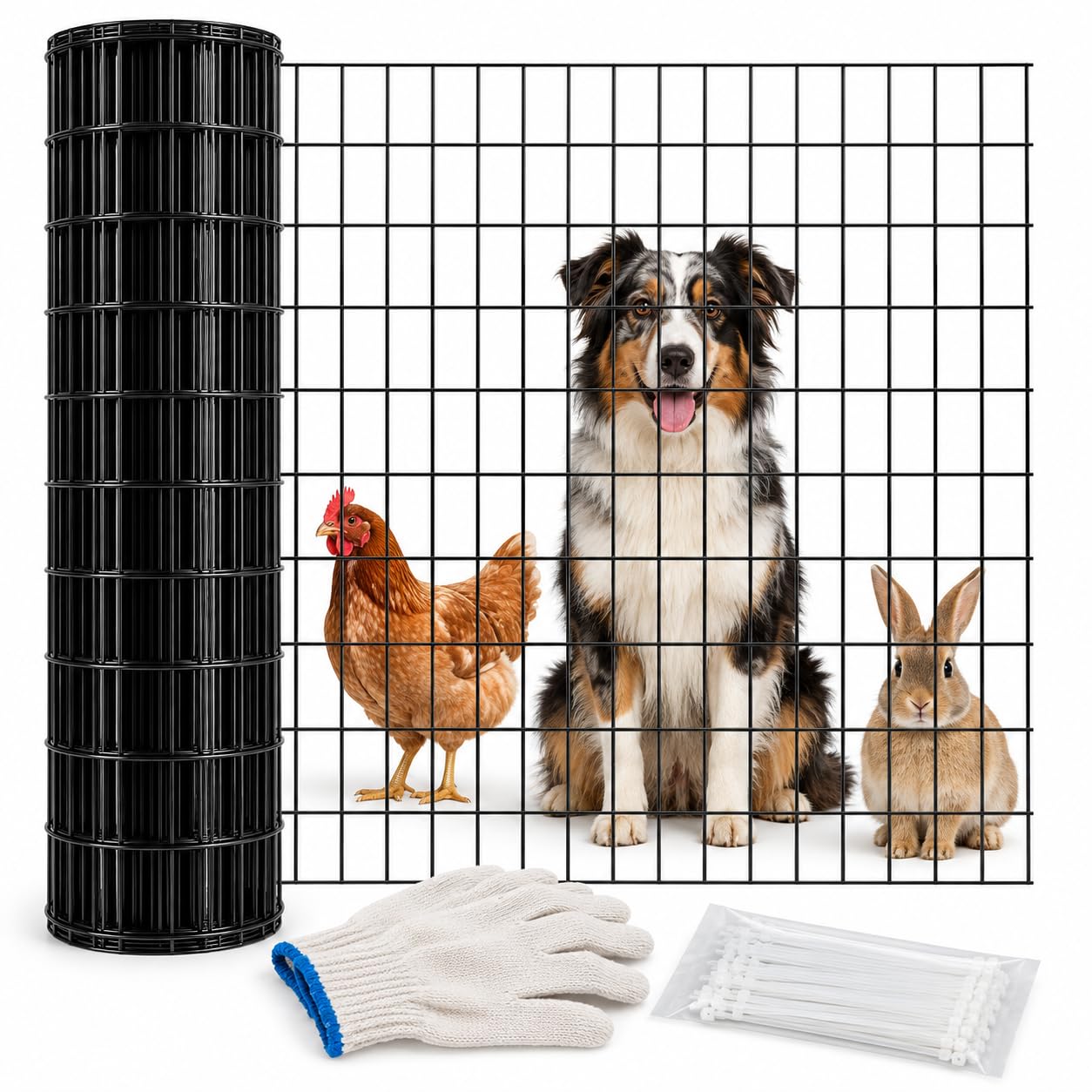
Thick 16 gauge wire in a wide grid — a boundary fence, not a pest screen.
The gauge number tells you what this roll is for. At 16 gauge, the wire is heavier than the 19 gauge mesh everywhere else on this list, and that thickness is exactly what you want holding a perimeter line against a leaning dog. The 2 x 3 inch rectangular mesh is a different animal from half-inch cloth, though: it is a boundary and enclosure panel, not a small-animal barrier. Rabbits and snakes will pass through a 2 inch gap. Read it as fencing, not pest control.
What the format gives you is a 36 inch by 50 foot roll of black PVC-coated steel, with 3 feet of vertical coverage for pet areas, chicken runs, tree protection and property boundaries. The welds hold the shape during installation and everyday use, and the black coating blends with a landscape instead of flashing at it. It ships with work gloves and cable ties, so setup is fastener-provided.
The honest read is that this is a low-fence panel, and 3 feet is not a deer or privacy height. Set your stakes first and the panel goes up cleanly; skip them and the welds become the strain point. For a pet enclosure outline or a garden boundary that needs to look orderly rather than fortress-thick, it works.
What the thick wire does for you
- 16 gauge steel is the heaviest wire in this lineup
- Black PVC finish blends with garden and yard backdrops
- 36 in x 50 ft roll with 3 feet of vertical coverage
- Gloves and cable ties included in the box
What it is not
- 2 x 3 inch mesh does not stop rabbits, snakes or mice
- 3 feet is a low panel — not deer or privacy height
- Needs stakes for a straight line, or the welds carry the strain
The right roll for: property boundaries, pet areas and chicken runs where thick wire matters more than fine mesh.
The wrong roll for: rabbit or snake control — you need half-inch or finer openings for that job.
Know the Specs
Mesh Opening and Privacy
The opening is the gap between welded wires, and it decides what animal the roll can stop. A 1/2 inch opening blocks rabbits, snakes and rats; a 1/4 inch opening adds mice and small burrowers; a 2 x 3 inch grid only blocks larger animals, which makes it a boundary fence rather than pest cloth. Smaller openings also block more light and airflow, so a fine grid used on a coop reduces the open feel of the run.
Wire Gauge and Why It Weighs More
Gauge is wire diameter, and lower numbers mean thicker metal. A 16 gauge roll uses heavier wire than a 19 gauge roll, which is why it holds a straight line under pressure; a 21 gauge roll is finer and easier to bend and cut. Thicker wire is stronger but heavier and harder to work; thinner wire is easier to install but needs posts and staples to keep its shape. Match gauge to pressure, not to habit.
Hot-Dip Galvanizing and Rust
Galvanizing is a zinc coating that slows rust. Hot-dip galvanizing after welding coats the wire and every welded joint, which is where cheaper pre-galvanized wire rusts first. A PVC or vinyl layer on top adds a barrier against moisture, but it is a coating, not a substitute for galvanizing at the joints. For a roll that sits in soil, half-buried or under eaves, galvanized-after-welding is the spec to check.
Width, Length and Buried Barriers
Width is vertical coverage and length is run distance. A 48 inch roll gives you four feet of height, a 36 inch roll three feet, and a 16 inch roll a narrow strip you can stack in courses. For the base of a fence, bury a section of the roll below grade to make a skirt — that is the layer that stops digging animals. Longer rolls save splices; narrower rolls are lighter and easier to handle alone.
Common Questions
What size mesh do I need to keep snakes out?
Will 19 gauge wire hold up against foxes or dogs?
What is the difference between hot-dip and pre-galvanized mesh?
Can I bury welded wire mesh to stop digging animals?
What does the gauge number mean in plain terms?
How much coverage does a 36 inch by 50 foot roll give?
Can I cut welded wire mesh to size with household scissors?
Does the PVC coating make the wire thicker or stronger?
Why is my 2 x 3 inch mesh letting rabbits through?
Will welded wire mesh rust if left outside all year?
The Bottom Line
If you want one roll to fence a long run and last through wet seasons, the Amagabeli Hardware Cloth 1/2 inch 36 x 100 ft is the pick — 100 feet of half-inch mesh galvanized after welding, and the longest coverage in the lineup. For a tall barrier around raised beds, the Hardware Cloth 48in x 100ft gives you four feetof height and double galvanized joints. And for a first coop build where the tools should come with the box, the VEVOR Hardware Cloth 24 in x 50 ft is the roll that gets you started without a store run.
Buy the opening for the smallest animal you need out, then the gauge for the pressure the mesh will face, then a roll length that covers your run in one piece. Get those three right and you will not have to replace the same fence line twice.
How we choose
We do not accept paid placement. Every pick is matched to a real buyer and a real use-case; we do not hands-on test units.
Sources
Specifications: manufacturer listings and product documentation. Review insights: verified customer reviews, as of November 2026. Pricing: not shown on this page (it changes often); check the current price via the retailer link.
As an Amazon Associate, Tactical Gear Guy earns from qualifying purchases. This does not affect which products we feature.