Specs are compiled from manufacturer listings and verified buyer reviews and can change over time — please confirm the key details on the product page before buying.
You want a tracker that tells you the truth about your body and still has juice left on Sunday. That is the whole game. Everything else — the screen, the app, the fancy recovery scores — only matters if the thing stays on your wrist and keeps measuring. So this guide is built around the two numbers that decide whether you actually wear it: how many days the battery runs, and whether the heart-rate and sleep data you get back are worth trusting.
This guide is built by comparing the manufacturers’ published specifications and the patterns across verified customer reviews, so you get each pick’s real strengths and trade-offs instead of marketing spin.
Below you will find a screenless recovery band, a solar-charging field watch, two Apple Watches and a handful of value picks that punch well above their weight. The crowd favorite here is the Garmin Forerunner 570 — 4.5+ stars across 600+ owners — and it earns that spot on GPS accuracy and roughly nine to ten days between charges. If you want the short version of this wearable health and fitness tracker list, it is this: match the battery figure to your charging habits first.
Top Picks

How To Choose The Best Wearable Health and Fitness Tracker
Most people buy on looks and regret it by week three, when the charger cable becomes a nightly chore. Start with the boring numbers instead, and the right watch tends to pick itself.
Start with battery days, not screen size
A tracker is only as good as the data it collects while you wear it. A watch rated for 21 days on a charge (like a full three weeks of everyday wear) means you stop thinking about the charger entirely. A watch rated for 24 hours means you build a charging ritual into your evening. Neither is wrong — but know which life you are signing up for.
Separate your everyday battery figure from your GPS figure
Running the GPS radio (the chip that talks to satellites to map your route) burns far more power than telling the time. A watch can list 11 days in smartwatch mode and 18 hours in GPS mode and both numbers are true. If you run long distances, the GPS figure is the one that matters to you.
Decide if you want a screen at all
Some trackers go screenless on purpose so nothing lights up at 3 a.m. and so the battery lasts far longer. Others give you a bright display for messages, maps and workout stats mid-run. Screenless suits sleep and recovery focus; a screen suits navigation and notifications. Pick the one that matches how you actually use your wrist.
Check what the membership includes
Some wearables bundle their features into the hardware and never ask for another payment. Others run on a membership that carries the coaching, the insights and the app experience. Read what comes in the box before you commit — a membership term is part of the product, not an extra.
Side-by-Side Comparison
| Model | Best For | Battery Life | Display | GPS | Amazon |
|---|---|---|---|---|---|
| Garmin Forerunner 570, 47mm★ Best Overall | Runners chasing accurate splits | Up to 11 days smartwatch / 18 hours GPS | AMOLED touchscreen | Built-in | Amazon |
| Xiaomi Mi Smart Band 10Battery Champion | Three weeks between charges | 21 days | 1.72″ AMOLED | Not listed | Amazon |
| Fitbit Inspire 3Everyday Sleeper | Low-profile everyday wear | 10 days | Slim color display | Not listed | Amazon |
| Amazfit Bip Max | Big screen, offline maps | 20 days | 2.07″ AMOLED | Built-in, 5 satellite systems | Amazon |
| Fitbit Charge 6 | Gym machines and contactless pay | 7 days | Color display | Built-in | Amazon |
| WHOOP 5.0/MG | Screenless recovery coaching | 14+ days | Screenless | Not listed | Amazon |
| Garmin Instinct 3 Solar | Rugged outdoor use | Up to 40 days; unlimited with solar in smartwatch mode | 1.1″ solar-charging lens | Multi-band with SatIQ | Amazon |
Detailed Reviews
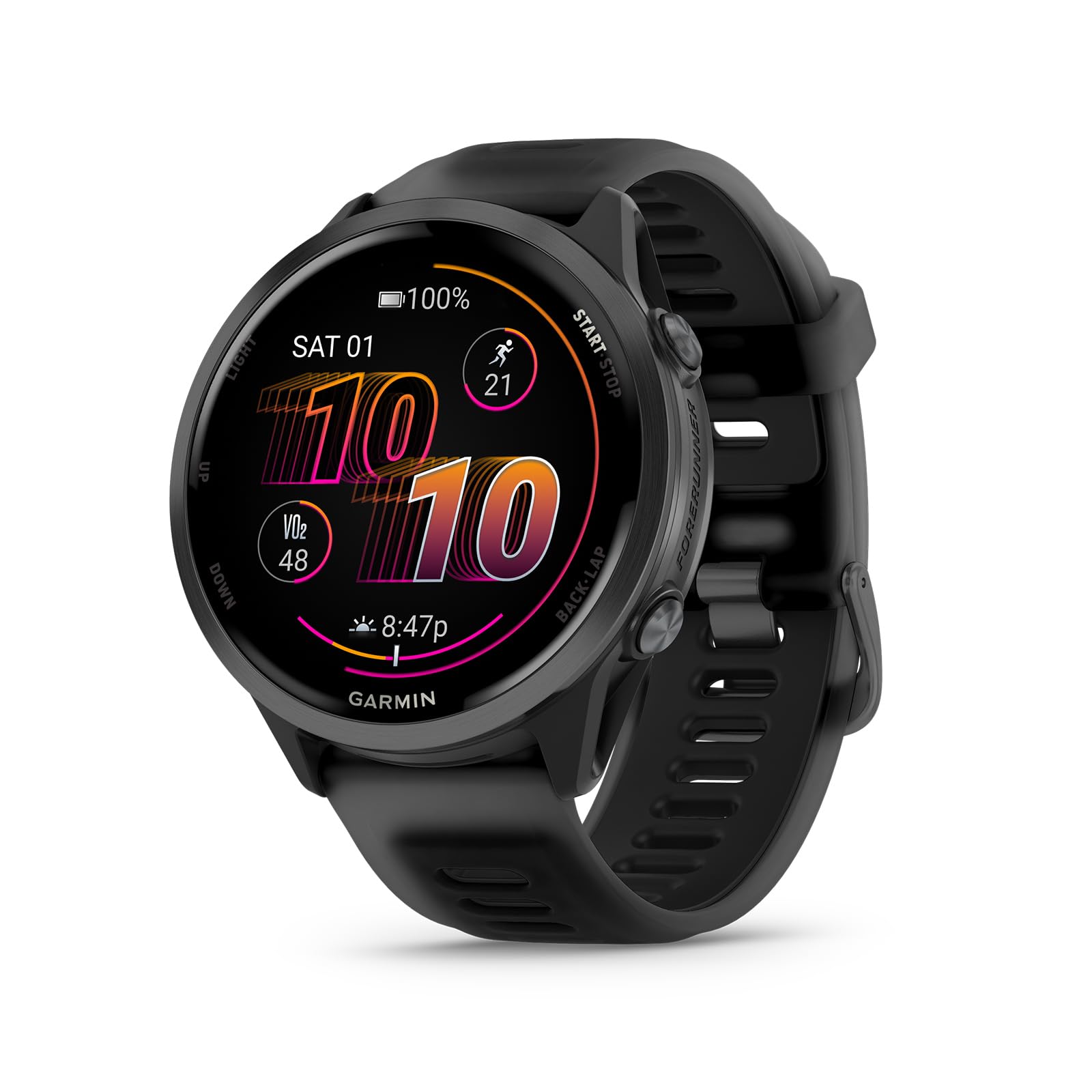
1. Garmin Forerunner® 570, 47mm, Aluminum, Black
Our pick — 4.5+★ from 600+ verified ratings; the strongest balance of quality and price.
The running watch that maps your route properly and still has charge left on the weekend.
This is a training tool first and a smartwatch second, and that order is the reason it wins here. The 47 mm aluminum case holds a bright AMOLED touchscreen with physical buttons beside it — a pairing that matters when your fingers are cold and wet and a touchscreen will not respond. Garmin rates the battery at up to 11 days in smartwatch mode, dropping to 18 hours in GPS mode. Practically, that is a watch you charge on Sunday and forget about, but a long race day still needs planning.
The coaching side is where the extra cost goes. Garmin Coach builds running and triathlon plans that adapt to your performance and recovery, and the training readiness score weighs sleep quality, recovery, training load and heart-rate variability (the tiny timing shifts between heartbeats that hint at how recovered you are) to tell you whether to push or back off. There are 30+ activity profiles including triathlon, track run, cycling and open-water swimming, so one watch covers a full race calendar. A built-in microphone and speaker let you take calls from your wrist when the watch is paired to your phone.
What earns the trust here is accuracy combined with stamina. Owners describe the GPS as super accurate and the charging interval as roughly nine to ten days in practice, which lines up with Garmin’s own 11-day smartwatch rating once you account for workouts. The running-specific training feedback is the part people keep talking about, and the sleep data holds up well against rival watches. Stack it against the Xiaomi Mi Smart Band 10 and the trade is clear: the Garmin gives up the Xiaomi’s 21-day battery, but it brings real GPS and structured coaching that the band simply does not have.
Where the Forerunner 570 pulls ahead
- Up to 11 days in smartwatch mode and 18 hours in GPS mode, so race days do not kill a full week
- Training readiness score built from sleep quality, recovery, training load and HRV status
- 30+ activity profiles covering triathlon, open-water swimming and track work
- Physical buttons plus a touchscreen — usable with wet or gloved hands
What you give up
- You pay the premium tier for this one, and the coaching is aimed squarely at runners
- Some partner watches below last weeks longer between charges
- It has fewer ratings than the big Fitbit and Xiaomi listings, simply because it is a newer, pricier watch
Built for: anyone training for a race who wants reliable GPS splits and a readiness score they can act on.
Not your pick if: you never charge a watch and refuse to start — the 18-hour GPS figure forces a little planning on long days.
2. Xiaomi Mi Smart Band 10 (2025) Global Version
Three weeks on a single charge, and a screen bright enough to read in full sun.
Twenty-one days. That is the whole pitch, and it is a real one — the Xiaomi Mi Smart Band 10 is rated for 21 days of battery life on a single charge, and when it does run down, an hour plugged in brings it back to full. Put that against the Fitbit Inspire 3’s 10-day rating and the gap is the difference between charging twice a month and charging three times. For a band this small and this inexpensive, that is remarkable.
The 1.72-inch AMOLED display is the other headline. Xiaomi squeezes it to 2.0 mm bezels and pushes the screen-to-body ratio from 66% to 73%, which makes the band feel like far more watch than it is. Peak brightness hits 1500 nits in high-brightness mode (a nit is a unit of screen brightness — 1500 is bright enough to stay legible in direct sunlight), which means a text or a lap time reads clearly on a summer run. There is a new electronic compass for tracking swimming direction, multi-sport tracking, detailed post-workout analysis and staged sleep monitoring.
The one thing to sort out before you order: the Xiaomi Fit app only works in metric. If you want pounds and inches, you have to connect it to Google Fit through a third-party link. Owners rave about build quality above all else, with battery life and value close behind, and the performance, accuracy and connectivity areas get a more mixed read. Treat it as a superb everyday tracker at a budget-tier level rather than a lab-grade running instrument.
The brightness test: 1500 nits of peak brightness on a band this size is what makes mid-day outdoor glances actually work instead of turning into a squint.
Set-up quirk to know: the metric-only app is a genuine friction point for US buyers, so plan the Google Fit workaround on day one rather than after your first workout.
The honest verdict: if your priority is a bright screen and a charger you barely touch, this is the value leader of the list.
Think twice if: you want built-in GPS for route mapping — that job belongs to the Garmin and Amazfit picks here.
3. Google Fitbit Inspire 3
A slim band that slips under a shirt cuff and turns your sleep into a score you can read.
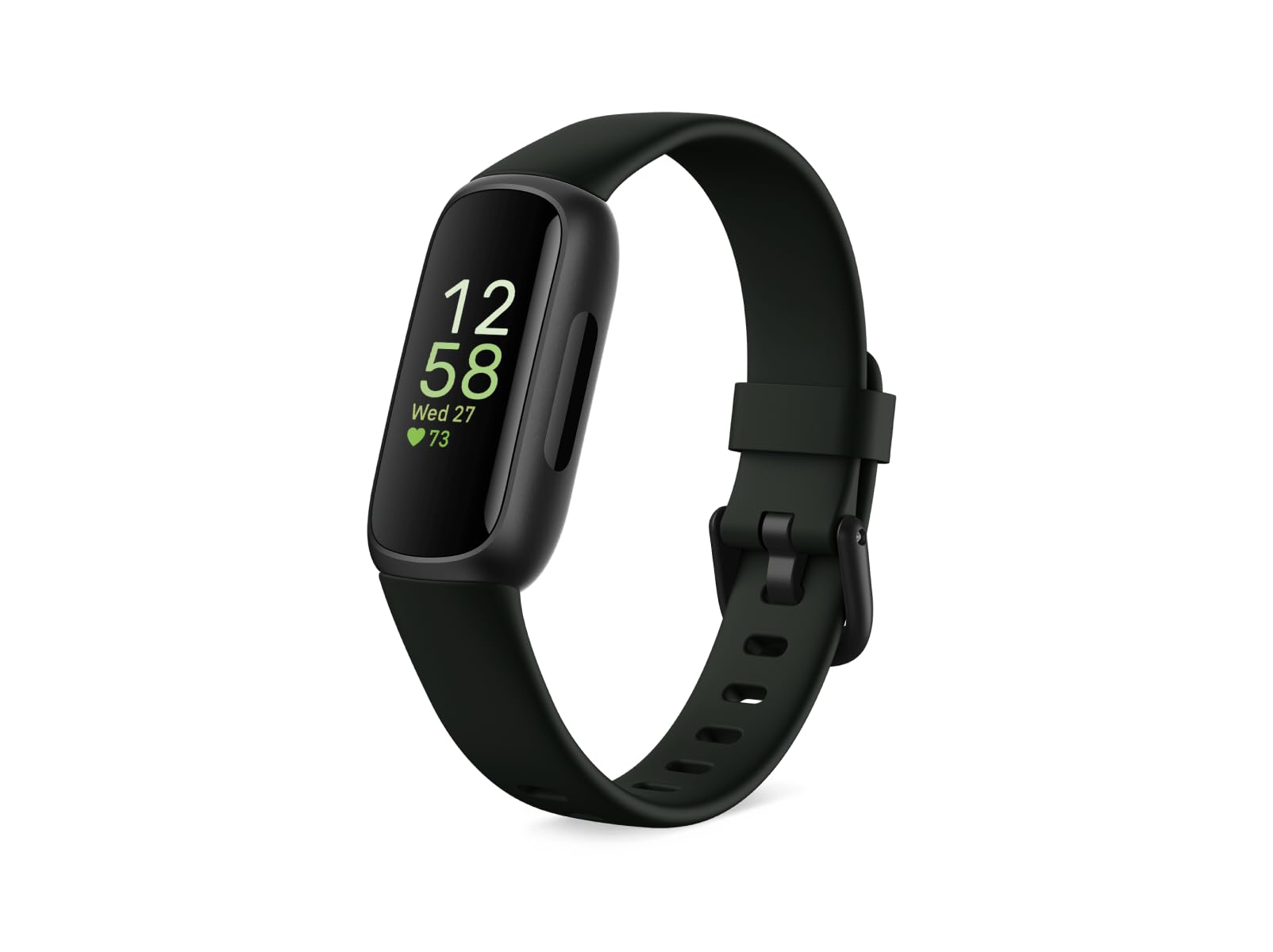
For anyone who wants a tracker they forget they are wearing, the Inspire 3 is the obvious starting point. It is a bare-bones band — no big glowing screen competing with your watch, no maps, no fuss. Fitbit rates the battery at 10 days and the charge time at 2 hours, so it settles into a once-a-week routine. It works with Apple iOS 16.4 or higher and Android OS 11.0 or higher, which covers basically every phone made in the last few years.
The health depth is where this small device surprises people. You get a daily readiness score, active zone minutes, all-day activity tracking, 24/7 heart rate and 40+ exercise modes with automatic exercise detection. On the wellness side there is a daily stress management score, guided breathing and mindfulness sessions, resting heart rate, SpO2 (blood oxygen readings taken by the sensor), irregular heart rhythm notifications and menstrual health tracking. Sleep is handled automatically with a nightly sleep score, a smart wake vibrating alarm and a sleep mode that keeps the screen dark.
Here is the balanced read on this one. The majority of owners get along with it fine, but battery life is the split topic — some find it generous, while a smaller group reports the charging failing after a couple of months. Treat that as the fit question, not a verdict: if you want a rechargeable band you can genuinely ignore for a week and a half, this is a natural first tracker. The 10-day rating also sits far behind the Xiaomi’s 21 days, so if the charger is your enemy this is the wrong pick.
Best for the sleep-focused: the nightly sleep score, smart wake alarm and stress score make it a solid low-profile wellness band for everyday wear.
The fair caveat: a small share of owners hit charging trouble within a couple of months — keep the receipt and the return window in mind.
Good fit for: first-time tracker buyers who want a light, discreet band and a clear read on sleep and stress.
Look elsewhere if: you want GPS built into the band or you refuse to charge more than twice a month.
4. Amazfit Bip Max Smart Watch
The biggest screen on this list, with offline maps and a charger you touch twice a month.
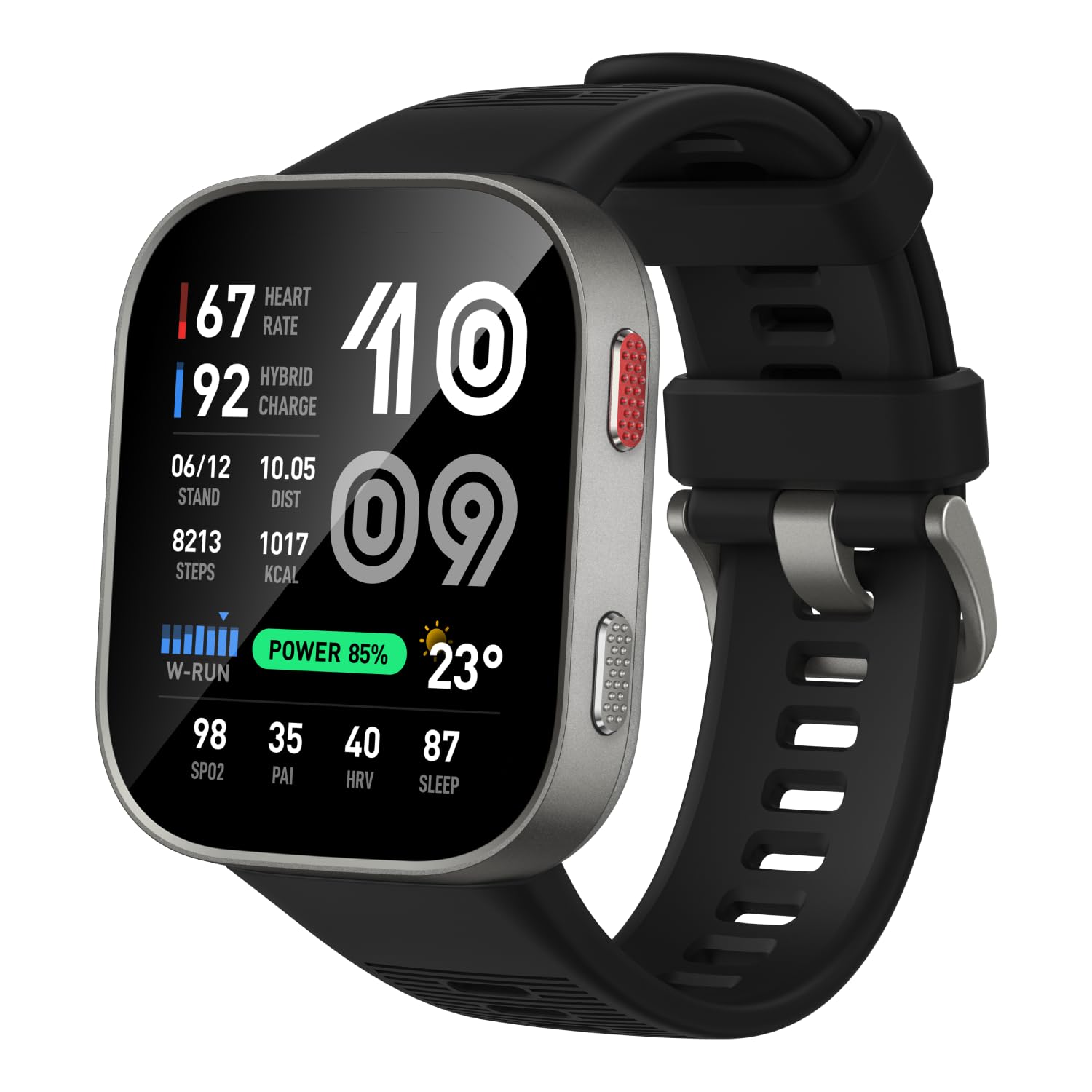
The Bip Max takes a different approach to the battery problem: it fits a 2.07-inch AMOLED display and still rates the battery at 20 days of typical use. That screen is the standout — it fills the aluminum-alloy case in a way that makes stats, maps and notifications genuinely readable mid-stride rather than squinted at. A clean two-button layout means you are not chasing touch targets with sweaty fingers.
Where it goes further than most mid-range trackers is navigation. It carries 4GB of onboard storage for offline maps, downloaded free from the Zepp App, with turn-by-turn directions and off-track alerts backed by 5 satellite systems for a fast GPS lock. The Zepp App is subscription-free and hosts 150+ sport modes including dedicated HYROX and strength profiles, plus adaptive Zepp Coach routines and training metrics like VO₂ Max, Training Load and Training Effect. It also tracks mileage on your running shoes and cycling gear so you know when to rotate kit.
Recovery is handled by a BioCharge score that shifts based on sleep quality, recent workouts and stress. Owners describe this as a watch that looks and feels more premium than the price suggests, with the big screen and the long battery cited as the standouts and the function set praised as packed. The heart rate and sleep data are reported as accurate in everyday use. Note that the box includes a magnetic charging base but no USB Type-C cable, so budget for one.
The case for the Bip Max
- 2.07-inch AMOLED panel with 20-day typical battery life underneath it
- 4GB storage for free offline maps from the Zepp App with off-track alerts
- 150+ sport modes and a subscription-free coaching app
- 5 satellite systems for a quicker GPS lock on runs
Worth knowing before you buy
- The charging base in the box has no USB Type-C cable, so you will need your own
- Mapping data pulls from Zepp, not a dedicated outdoor nav app
- It does not match the Garmin’s multi-band precision for serious trail work
The takeaway: a big bright screen and offline navigation without jumping to the premium tier.
The catch: no USB Type-C cable in the box means a separate purchase before your first charge.
5. Google Fitbit Charge 6

The band that talks to your treadmill, not just your phone.
The Charge 6 earns its place on one feature most trackers skip: it links directly to compatible exercise machines. Pair it with a treadmill or elliptical and your heart rate streams onto the machine’s own display in real time, which turns a boring session into something you can actually pace. Built-in GPS, 40+ exercise modes, all-day activity tracking and 24/7 heart rate round out the fitness side.
The Google layer is the other half of the story. You get turn-by-turn directions from Google Maps on the tracker during runs and rides, tap-to-pay with Google Wallet for a mid-run snack stop, and YouTube Music controls on your wrist. On the health side there is an ECG reading (a heart electrical signal measurement taken from the wrist), a stress management score, a nightly sleep score and a smart wake alarm. The stainless steel case feels sturdier than a plastic band, and the silicone strap handles sweat fine.
Seven days is the rated battery, with a 2-hour charge time, and that is the honest limit here — owners split on whether that is enough, and a slice report wanting to charge daily. Reliability across the wider field is the most mixed topic around this one, and durability gets the rougher read. Frame it the right way: for the gym machine and contactless-pay niche, nothing else on this list does the job. For a set-and-forget wrist piece, the cheaper bands demand far less attention.
What it does that others do not: streaming heart rate straight to compatible gym equipment, plus Google Wallet tap-to-pay, is a genuinely useful pair of features.
The trade to accept: at 7 days rated, this wants charging more often than the multi-week picks, so it suits people already used to a nightly routine.
Made for: gym-goers who want their heart rate on the machine’s screen and a wallet on their wrist.
skip it if: a weekly charge feels like a chore — the Xiaomi and Amazfit picks run two to three times as long.
6. WHOOP 5.0/MG Screenless Fitness Wearable
No screen, no notifications, no glow at midnight — just a recovery score to wake up to.
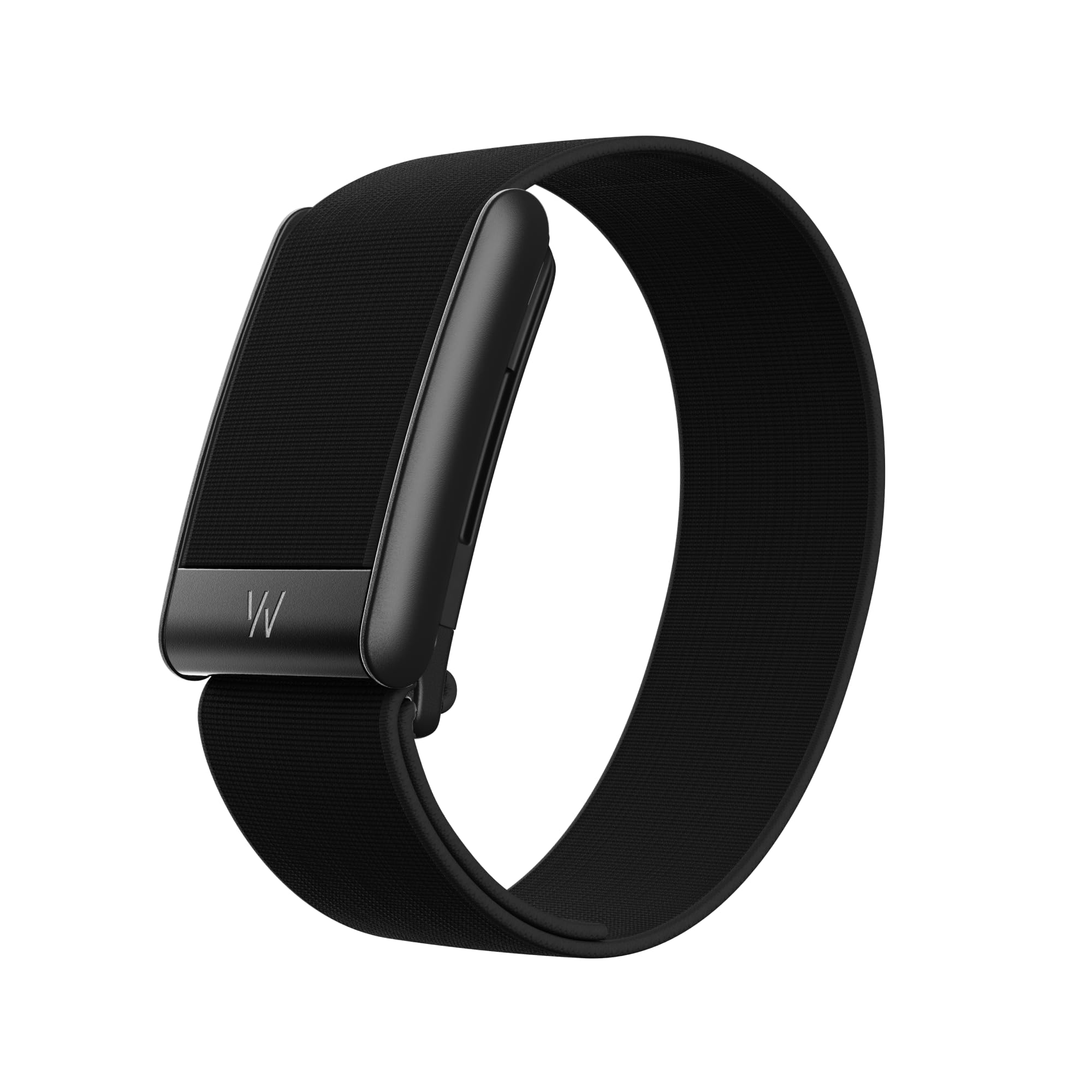
WHOOP takes the boldest design bet on this list by removing the screen entirely. There is nothing to tap, nothing to light up in a dark bedroom, and nothing to distract you mid-set. In its place you get continuous monitoring around the clock — heart rate, HRV, respiratory rate, VO₂ Max, resting heart rate, steps, calories, sleep, strain and recovery — sampled day and night without you starting or stopping anything.
The membership model is baked in: your purchase includes a 12-month WHOOP One membership, with the WHOOP 5.0 device included at no additional cost along with a CoreKnit performance band and a basic corded charger. Battery life runs 14+ days, and if you upgrade to the Waterproof Wireless PowerPack (IP68 water-resistant up to 10 meters for 2 hours) you can charge it on your wrist without taking it off. The app turns 140+ health metrics into AI coaching, and there is a journal for tracking 160+ daily behaviors so you can see how habits move your sleep and recovery.
The sleep detail is the real draw. WHOOP tracks REM, deep and light sleep, awake time, sleep need, sleep debt, consistency and efficiency, then shows how training, alcohol and travel change the picture. The device weighs 3.84 ounces, and the nylon CoreKnit band is built for overnight wear. Owners describe a device that genuinely shifts habits and surfaces useful insights, with reliability and accuracy drawing a mixed read — a minority report it failing within a week. Value is the touchiest topic, since the membership is the product, not an add-on.
Where it wins: all-night comfort with no screen and no vibration, plus sleep-stage data detailed enough to change your bedtime.
The honest catch: the 12-month membership is the core of the deal, so this is a subscription commitment, not a one-time gadget purchase.
Choose it if: you want recovery and sleep coaching above all and you hate wearing a glowing screen overnight.
Pass if: you expect to read the time — there is no display to read it on.
7. Garmin Instinct® 3 Solar, 50mm, Charcoal

A solar panel in the lens that can keep it running without a cable in sight.
Battery life stops being a chore here. The Instinct 3 Solar carries a 1.1-inch display with a solar charging lens and rates unlimited battery life in smartwatch mode with solar charging — a figure that assumes all-day wear with 3 hours per day outside in 50,000 lux conditions. Without reliable sun, the standard solar-assisted rating is 40 days. That is a totally different class of staying power from a 24-hour smartwatch.
The build is the other half of the pitch. A 50 mm fiber-reinforced polymer case with a metal-reinforced bezel takes knocks, and the watch is rated 10 ATM for water and designed to MIL-STD-810 for thermal and shock resistance. There is a built-in LED flashlight with variable intensities and strobe modes — genuinely handy on a night trail or in a dark car park. Navigation runs through a 3-axis compass, barometric altimeter and multi-band GPS with SatIQ technology, which juggles positioning accuracy against battery drain.
Health tracking includes wrist-based heart rate, advanced sleep monitoring and Pulse Ox, with the standard caveat that these are estimates, not medical readings, and Pulse Ox is not available in every country. Garmin Pay handles contactless purchases where supported, and Connect IQ lets you download new apps and watch faces. Buyers report it lasting well over a week between charges and praise the durability. For comparison, think of it as the outdoor sibling to the Forerunner 570: less runner-specific coaching, far more survival.
Built for rough days: MIL-STD-810 thermal and shock resistance plus 10 ATM water rating makes this the one you take off-trail.
Solar reality check: unlimited battery life depends on 3 hours of bright outdoor sun per day — a winter in an office will not deliver it.
The right owner: hikers, trail runners and outdoor workers who want a watch that outlasts the trip.
Wrong owner: if your day is mostly indoors, you will get the standard 40-day figure instead of the solar promise.
8. Apple Watch Series 12 GPS 42mm
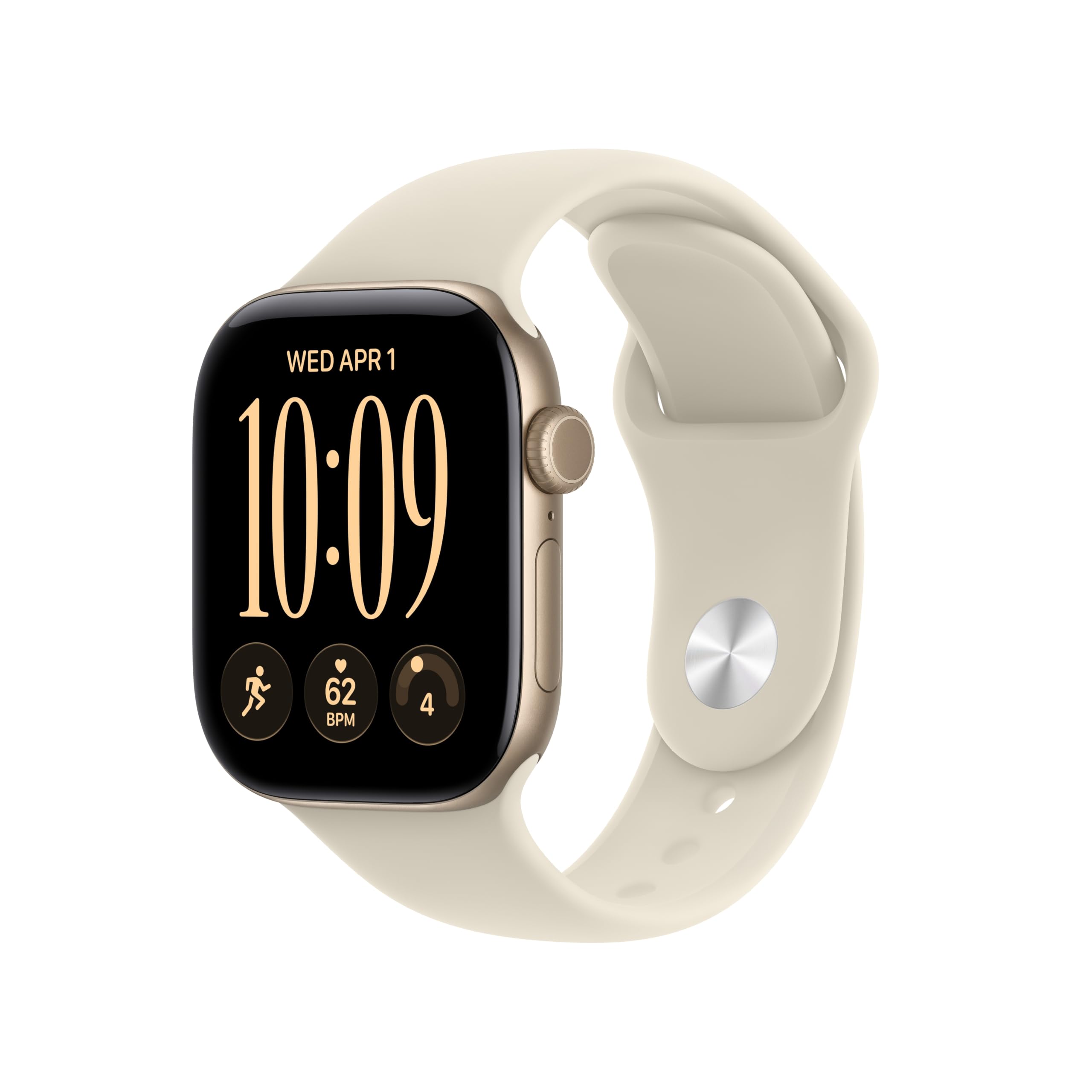
The deepest heart-rate sampling on this list, at HRV every five minutes.
For iPhone owners, the Vitals app, sleep score and readiness score all land in one place. The Series 12 measures HRV as often as every five minutes for stress and recovery signals, and takes background heart rate readings every five seconds. Five-minute HRV sampling is what lets the readiness score flag a stressed week before you feel it.
The health package goes well beyond steps. The Vitals app pulls your overnight metrics into one view, you get a daily sleep score, menstrual cycle tracking and blood oxygen readings. A readiness experience then weighs your recent activity, vitals and sleep to tell you whether to rest or push. On the fitness side there are Heart Rate Zones, Pacer and Workout Buddy, and the safety set is real: fall detection and crash detection that can contact emergency services and your emergency contacts.
Battery is the number that decides it for most buyers. Apple rates the Series 12 at up to 24 hours of normal use, with a 15-minute fast charge giving up to 12 hours. That is a daily charging habit, full stop — a very different life from the Xiaomi’s 21 days or the Instinct’s 40. Owners do report it stretching to about two days in practice, and the heart-rate sensor plus the overall look get strong marks. The aluminum case now uses Ceramic Shield 2 and is built to last.
Why it earns the premium
- HRV every five minutes and background heart rate every five seconds — far more sampling than most trackers
- Vitals app, sleep score, readiness score and blood oxygen in one place
- Fall detection and crash detection with emergency contact alerts
- Ceramic Shield 2 on the aluminum case
The daily reality
- Up to 24 hours rated, so it becomes a nightly charging routine
- It is a GPS model that works with iPhone or Wi-Fi — no standalone cellular
- The health depth only pays off inside the Apple ecosystem
Pick it when: you already live in iPhone and you want that five-minute HRV sampling and readiness score every morning.
The honest trade-off: you are signing up to charge it every night — that 24-hour rating is not a suggestion.
9. Apple Watch Ultra 4 GPS + Cellular 49mm

45 hours of workout tracking in titanium, with satellite texting when cell service drops.
The Ultra 4 exists to solve the one complaint people have about Apple’s standard watch: battery. This model rates up to 45 hours of Max Extended Workout tracking, and a 15-minute fast charge gets you up to 18 hours of use. That takes it from a nightly charge to a multi-day charge — a meaningful shift if you are out on a long effort.
The hardware is built for punishment. A titanium case with a sapphire crystal display, water resistance up to 100m for swimmers and divers, and precision dual-frequency GPS for distance running, triathlons and mountain biking. Built-in cellular means you can take calls, stream music and listen on AirPods without your iPhone nearby. If you are out of cell and Wi-Fi range, built-in satellite communications let you text emergency services.
Health tracking matches the Series 12 with HRV every five minutes and background heart rate every five seconds, plus the Vitals app, sleep score, cycle tracking and blood oxygen readings. Owners describe the battery as phenomenal, with charging taking about an hour and a half and lasting a long time, and the functionality is what wins them over. The value topic is the split one — some find it well worth it, others find it a stretch. At 15.1 ounces it is also noticeably heavier on the wrist than the band-style picks here.
What nobody else here does: satellite messaging for emergency texts when there is no signal, plus dual-frequency GPS that holds a line in dense cover.
Who pays the premium: this is the heaviest and priciest watch on the list — worth it only if you actually go where the signal stops.
Worth it for: ultramarathon runners, open-water swimmers and anyone who trains beyond cell coverage.
Overkill if: your workouts happen near a charger and a phone signal — the Series 12 covers that ground with less bulk.
Common Questions
How many days should a health tracker last on a charge?
Does a bigger AMOLED screen drain the battery faster?
Which trackers here have built-in GPS?
Do I need a membership to use the WHOOP 5.0?
Can the Xiaomi Mi Smart Band 10 show pounds and inches?
What water rating do I need for swimming?
Is the Apple Watch Series 12 or the Ultra 4 the better fitness tracker?
Why do some trackers list two different battery numbers?
Do these trackers work with both iPhone and Android?
What can the solar charging on the Garmin Instinct 3 Solar actually do?
The Bottom Line
For most people buying a wearable health and fitness tracker, the Garmin Forerunner 570 is the one to take home — accurate GPS, a readiness score built from real recovery data, and roughly nine to ten days between charges. It holds the highest score on this list at 4.5+ stars, even though the Xiaomi Mi Smart Band 10 has far more ratings behind it, because the Garmin is the newer, pricier watch in a much smaller pool.
If the charger cable is what you resent most, the Xiaomi Mi Smart Band 10 turns that around with 21 days on a charge and a 1500-nit screen — and at a budget-tier level, it is the easiest recommendation on this page. Want a giant screen with offline maps instead? Grab the Amazfit Bip Max.
Buy on battery habits and GPS need first; everything else is preference.
The right owner: hikers, trail runners and outdoor workers who want a watch that outlasts the trip.
Wrong owner: if your day is mostly indoors, you will get the standard 40-day figure instead of the solar promise.
How we choose
We do not accept paid placement. Every pick is matched to a real buyer and a real use-case; we do not hands-on test units.
Sources
Specifications: manufacturer listings and product documentation. Review insights: verified customer reviews, as of November 2026. Pricing: not shown on this page (it changes often); check the current price via the retailer link.
As an Amazon Associate, Tactical Gear Guy earns from qualifying purchases. This does not affect which products we feature.