Specs are compiled from manufacturer listings and verified buyer reviews and can change over time — please confirm the key details on the product page before buying.
Buy the pair that keeps your socks dry on the walk to work, not the pair that looks best in a product photo. That is the whole decision. A boot can be labelled waterproof and still let slush creep in at the zipper, or keep your feet bone dry and freeze your toes solid. The nine pairs below are the ones that get both jobs done — dry feet and real warmth — and each one suits a different kind of winter day.
This guide is built by comparing the manufacturers’ published specifications and the patterns across verified customer reviews, so you get each pick’s real strengths and trade-offs instead of marketing spin.
You will see where each pair is best used, what the insulation is rated for, and which fit quirks to plan around before you order. Here is a straight comparison of the best waterproof winter shoes for women, sorted by how you will actually wear them.
Top Picks
How To Choose The Best Waterproof Winter Shoes for Women
Winter boots fail in two ways: water gets in, or the cold gets through. Sort those two problems first and the rest is fit and style. Everything below is about answering those two questions for your own commute, your own sidewalk, and your own toes.
Waterproof versus water-resistant
Water-resistant means the surface sheds a light splash and then gives up. Waterproof means a membrane or sealed construction stops moisture from reaching your sock at all. If you walk through slush, step in a puddle at the bus stop, or shovel a driveway, you want the word waterproof on the listing — not “water-repellent” or “treated upper”.
Check where the sealing lives. A boot with a treated tongue and a gusseted zipper keeps more water out than one with a plain open zipper down the side. Seam-sealed leather or a breathable internal membrane does the heavy lifting on the pairs that hold up best.
Warmth ratings and insulation
A comfort rating in degrees tells you the coldest temperature the maker says the boot is built for. Kamik rates the Greenbay4 at -40˚F, and the suede tall boot carries a rating of -25°C/-13°F. That number is your starting filter for how cold your winters actually get.
Insulation weight works alongside the rating. Look for grams of Thinsulate or faux fur in the listing — the suede tall boot pairs 200g 3M Thinsulate with 800g faux fur, and the Merrell Coldpack 3 uses 200 grams with a fleece lining. More insulation means warmer toes but a bulkier feel, so match it to your climate rather than maxing it out.
Traction and the outsole
A deep treaded rubber outsole is what stops you going down on an icy sidewalk. Some pairs add a specific grip compound under the foot, and others rely on a thick lug pattern. Either way, look for a real rubber outsole with visible tread depth, not a smooth fashion sole dressed up as winter footwear.
Side-by-Side Comparison
| Model | Best For | Waterproofing | Insulation / Warmth | Height | Amazon |
|---|---|---|---|---|---|
| Sperry Women’s Saltwater Waterproof Seasonal Boot★ Best Overall | Everyday city wear | Waterproof duck boot | Warm on snowy days | Ankle duck boot | Amazon |
| PROJECT CLOUD Waterproof Snow Boots for WomenBudget Start | Budget-friendly first winter boot | Waterproof design | Memory foam insole, insulating build | High lace-up | Amazon |
| Women’s Waterproof Hiking Boots Lightweight Non-SlipTrail Ready | Trails and long walks | Waterproof hiking build | Not rated in listing | Mid height | Amazon |
| Kamik Women’s Greenbay4 Winter Boots | Deep snow and blizzards | 100% waterproof | Comfort rated -40˚F, Thinsulate liner | Mid-calf | Amazon |
| SOREL Women’s Tivoli V Tall Waterproof Boot | Snow and street style | Waterproof | Warm in deep snow and ice | Tall | Amazon |
| Women’s Waterproof Suede Leather Tall Winter Boots | Cold city winters | CanDry waterproof leather + membrane | 200g 3M Thinsulate + 800g faux fur, to -25°C | Tall | Amazon |
| Merrell Women’s Coldpack 3 Thermo Moc Waterproof | Icy pavement and errands | Waterproof construction | 200 grams insulation + fleece lining | Low moc | Amazon |
| The North Face Women’s Sierra Mid Lace Insulated Waterproof | Casual winter wear | Waterproof | Insulated build | Mid | Amazon |
| KEEN Women’s Revel 4 Mid Height Polar Insulated Waterproof | Wider feet and long cold days | Waterproof, breathable | Thermal heat shield inside | Mid height | Amazon |
Detailed Reviews
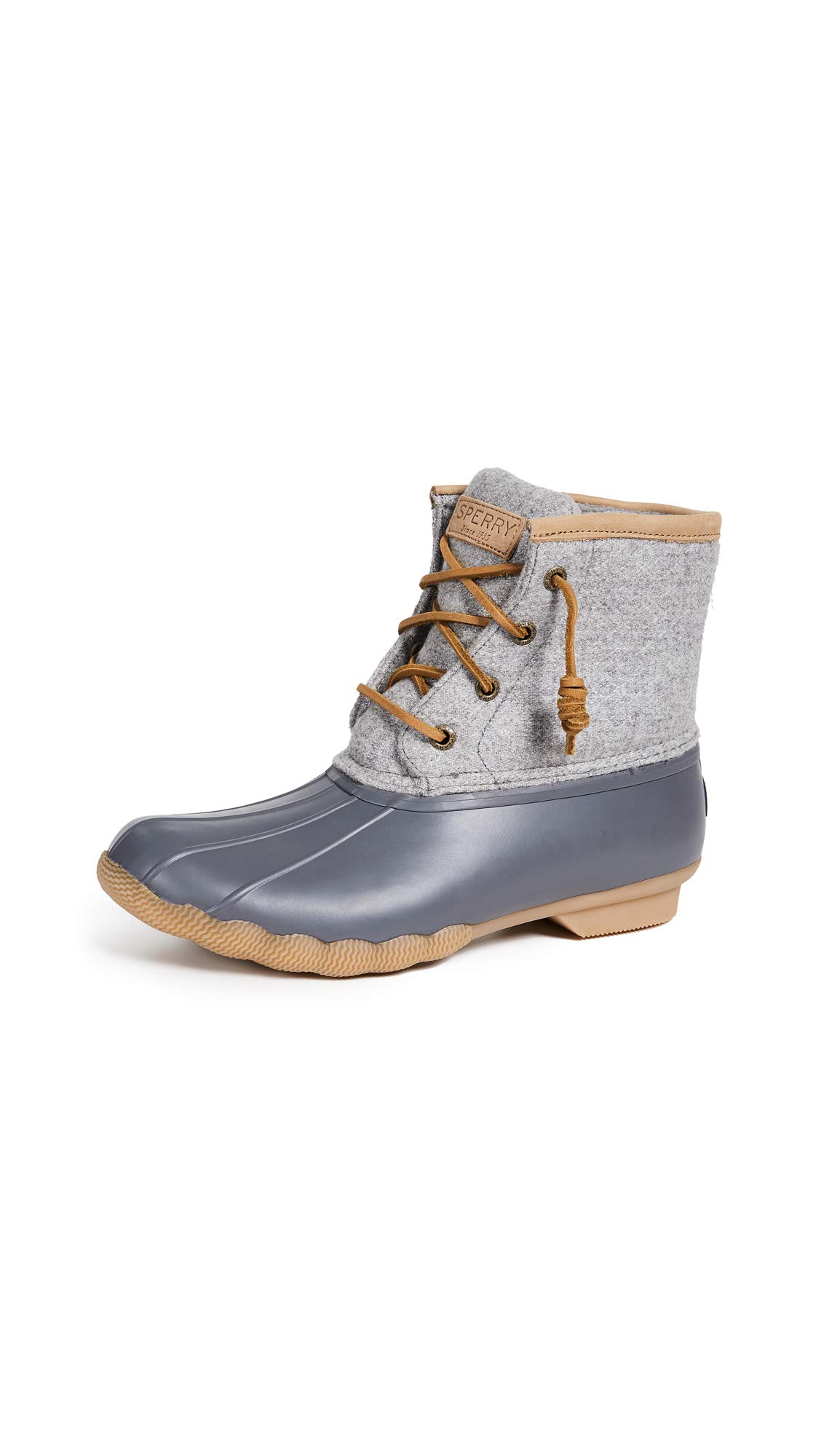
1. Sperry Women’s Saltwater Waterproof Seasonal Boot
Our pick — 4.5+★ from 12,500+ verified ratings; the strongest balance of quality and price.
The duck boot that made the whole category fashionable enough to wear to dinner.
The Sperry Saltwater is the pair you reach for when the weather is ugly but you still have to look like a person. It carries the highest rating in this whole group — 4.5+ stars across 12,000+ owners — and that pile of feedback points to one thing: this design works for people who wear boots to work, not to a mountain.
What wins people over is how it looks. Over a thousand owners single out the appearance, more than any other trait, with comfort close behind. That rawhide barrel lacing with rust-proof eyelets lets you cinch the fit precisely, and the side zipper means you are not unlacing wet laces in a doorway. Buyers report they can walk “12-18 miles a day” in these, which is a real endorsement for a boot people buy for looks.
Here is the honest part. This is a warm duck boot, not a deep-snow expedition boot — the listing says warm on snowy days and dry in the rain, with no comfort rating in degrees. The other catch is fit. The size feedback is the one soft spot, with a mixed to negative lean: several say it runs about half a size bigger than normal. If you wear thick wool socks, that slack works in your favor. If you go bare-sock thin, consider sizing down.
Why this one took the top slot
- The strongest owner satisfaction of the whole group, holding at 4.5+ stars.
- Appearance is the most-praised trait — these look good enough for the office.
- Barrel lacing plus a side zipper means a locked-in fit that still pops on fast.
- Rust-proof eyelets hold up when the salt and slush hit them.
Where it asks for compromise
- No comfort temperature rating is published, so deep cold is out of scope.
- Fit runs about half a size big for many wearers — plan your sock thickness.
- An ankle-height duck boot, so it leaves your lower calf exposed to drifted snow.
Made for: the commuter who wants one boot that handles rain, light snow, and the walk into the office without looking outdoorsy.
Think again if: you need a published sub-zero rating for real deep-cold walks.
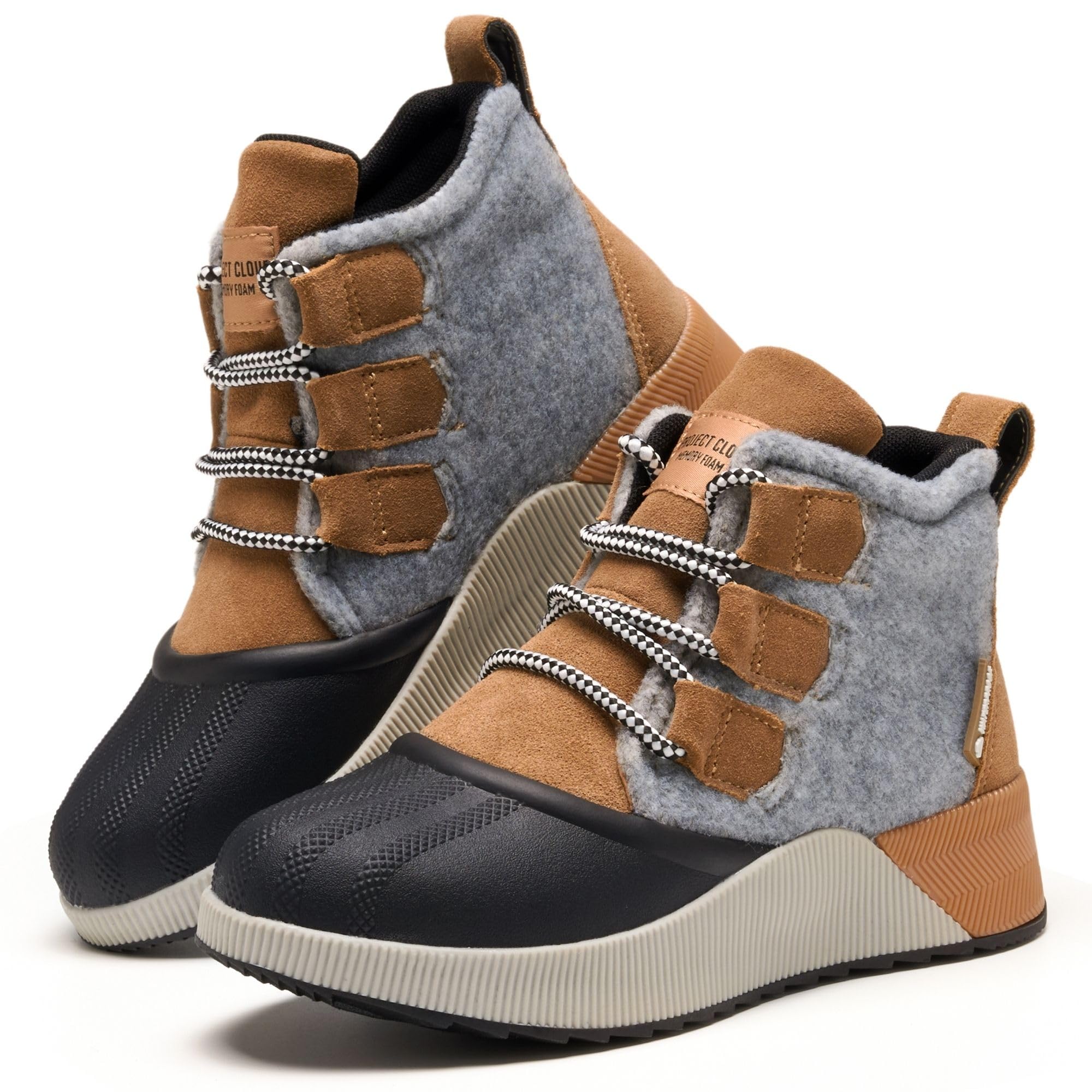
2. PROJECT CLOUD Waterproof Snow Boots
The entry-level pair that packs a plush memory foam insole into a lace-up snow boot.
If you want your first real snow boot without spending much, the Project Cloud Rhianon gives you the full lace-up silhouette with a waterproof design and a memory foam insole that molds to your foot. The package weighs 1 pound and measures 8 x 6 x 4 inches. The Kamik Greenbay4 package measures 14 x 5 x 5 inches and weighs 1.44 pounds.
The comfort story is the memory foam. That memory foam insole is described as adapting to your foot shape and relieving pressure, which matters on a long errand day. The outsole is built non-slip for wet and dry ground alike, and the high lace-up front gives you a secure, adjustable fit.
The trade-off is maturity of feedback. With far fewer owners behind it than the Sperry or the Kamik, the record is thinner, and the fit verdict is split: some say these slip on easily, others say they run too small. Order with that in mind — if you are between sizes, size up. Treat this as a solid budget starter boot rather than a deep-winter lifer.
What you are actually getting: a waterproof high-top with memory foam cushioning and a non-slip sole — the warmth and fit that come with a newer, less-reviewed product.
The honest catch: the listing promises insulating properties for cooler weather but publishes no degree rating, so don’t expect it to match a Kamik’s stated cold-weather range.
Strong choice for: a first winter boot on a tight budget, or a backup pair for errands and school runs.
Look elsewhere if: you want thousands of reviews to lean on, or your winters go well below freezing.
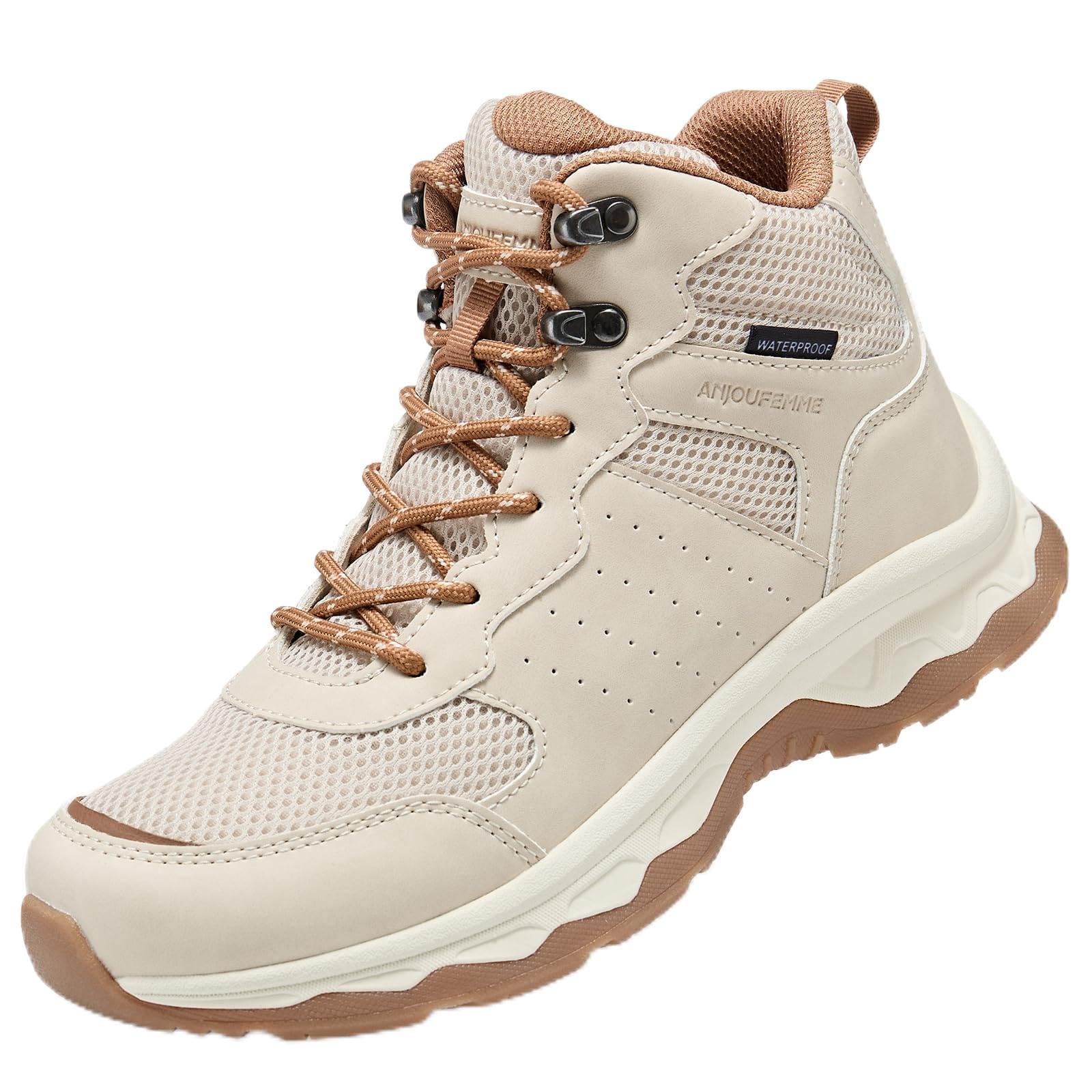
3. Women’s Waterproof Hiking Boots Lightweight Non-Slip Outdoor
A hiking boot built for wet trails first and city slush second.
This one is for the walker who covers ground — a canyon hike, a long dog walk on a wet path, a commute that turns into a mile and a half. Comfort is what carries it, and quality sits right behind comfort as the second-praised trait. Owners mention the boots lasted over 25 miles in canyon lands before needing attention, which tells you the waterproof build holds on long wet trails.
The ankle support also earns its place for uneven ground, and the verdict on value is strong. Where this pair differs from the Kamik Greenbay4 above is intent: the Kamik is a deep-snow boot, while this is a lightweight outdoor hiker that happens to be waterproof. On a snowy sidewalk in January, the Kamik wins. On a wet trail in shoulder season, this is the better fit.
The fit is the thing to watch. Some walkers report it runs true to size, others say it runs half a size smaller, so sizing up is the safer bet if you plan to wear a thicker sock. The listing publishes no insulation weight or comfort temperature, so pair it with wool socks in real cold rather than counting on the boot’s own warmth.
The standout: a waterproof hiker that stays comfortable over long mileage, with ankle support that matters on uneven ground.
The catch to plan for: sizing leans small for some wearers, and there is no published cold rating — this is a wet-weather walker, not a blizzard boot.
Pick this if: your winter involves trail time, muddy paths, or long wet walks rather than deep snow.
Pass if: you need a boot rated for sub-zero temperatures.
4. Kamik Women’s Greenbay4 Winter Boots, Waterproof Snow Boots

A comfort rating of -40˚F and a snow collar built to keep the white stuff out.
When the blizzard actually arrives, this is the boot that has a published number to back its claim. Kamik rates the Greenbay4 at -40˚F, and that is the single most useful spec here — it is the number that tells you the boot is built to keep toes functional in serious cold, not just chilly mornings. The waterproof nylon shell, removable Thinsulate foam liner, and lace-lock snow collar all work together to keep warmth in and weather out.
You get grip on slick pavement from a thick treaded rubber outsole (the bottom part that touches the ground). A mid-foot adjustable Velcro closure (a strap you tighten across the top of your foot) locks the fit. Warmth is the second most-praised trait here after appearance, and customers note dry, warm feet all day — the kind of feedback that matches the spec sheet. That package measures 14 x 5 x 5 inches and weighs 1.44 pounds. The Project Cloud package measures 8 x 6 x 4 inches and weighs 1 pound. The extra size is the trade you make for all that insulation.
The catch is size. Fit feedback is mixed and sizing feedback leans negative: a large share of reviewers point out these run small and some recommend going one or two sizes up. Durability is also split between owners. So order up, and treat these as a dedicated deep-snow boot rather than a daily driver for a dry commute.
Why snow-country owners rate it
- A published comfort rating of -40˚F gives you a real cold benchmark.
- Removable Thinsulate liner traps heat and can be pulled out to dry.
- Lace-lock snow collar closes the gap at the top of the boot.
- Thick treaded rubber outsole holds on icy ground.
Before you order
- Sizing runs small for many wearers — several size up one or two sizes.
- Durability feedback is split, with some saying they hold up and others finding wear.
- It weighs 1.44 pounds.
Best matched to: climates with real snow, blizzards, and sub-zero mornings where a rated boot matters.
Not your pick if: you want a light everyday boot or you refuse to size up.
5. SOREL Women’s Tivoli V Tall Waterproof Boot
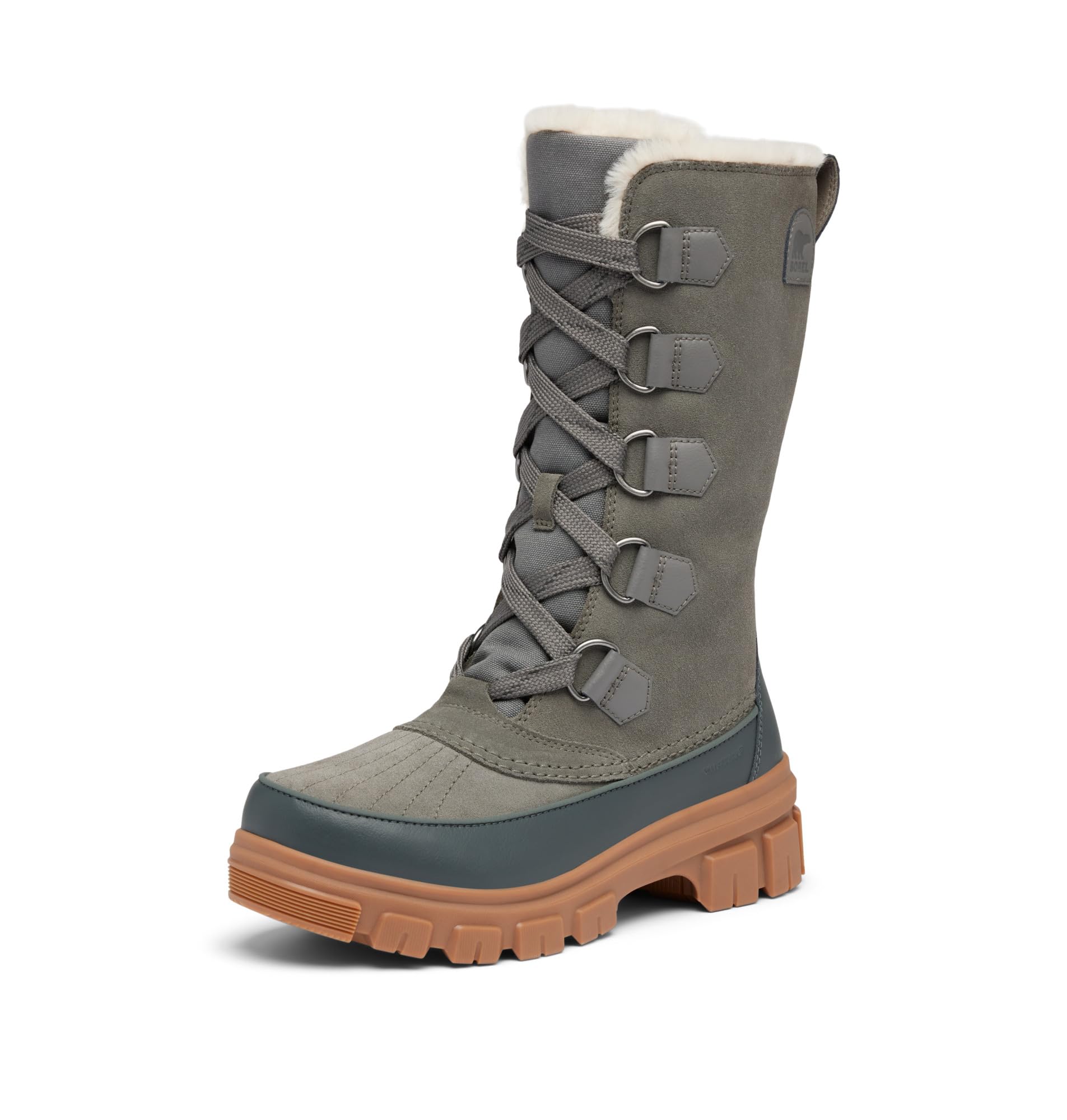
The tall waterproof boot that lets you trudge through a snowbank and still look put together.
The Tivoli V earns its keep on build quality. Quality is the most-praised trait here, followed by warmth, and the tall waterproof shaft keeps feet dry and warm while you walk through deep snow and ice. If you want a boot that reaches up your calf instead of stopping at the ankle, this is the one on this list that pairs that coverage with a refined silhouette.
Traction gets its own line of praise, which matters on icy sidewalks, and shoppers say the tall waterproof shaft still looks new after a winter of salt and slush. Value is another recurring theme. The pairing of appearance and durability is why this one lands near the top of the premium group — it holds its looks while doing the wet, cold work.
The honest note is fit width. Feedback is mixed, with some finding it true to size and others saying it runs small and narrow. If you have a wider foot, plan to size up or expect a snug break-in. It is also the taller, heavier option by nature, so short commutes and quick errands don’t need this much boot.
Where it shines: tall coverage, dry feet in deep snow, and a build that survives a full winter looking sharp.
What to weigh: a narrow-ish fit that isn’t kind to wide feet, and more boot than you need for a quick trip to the shop.
Reach for these when: you want a tall, polished boot for snow days that still pass as city footwear.
Choose something else if: your feet run wide or you only need an ankle boot.
6. Women’s Waterproof Suede Leather Tall Winter Boots
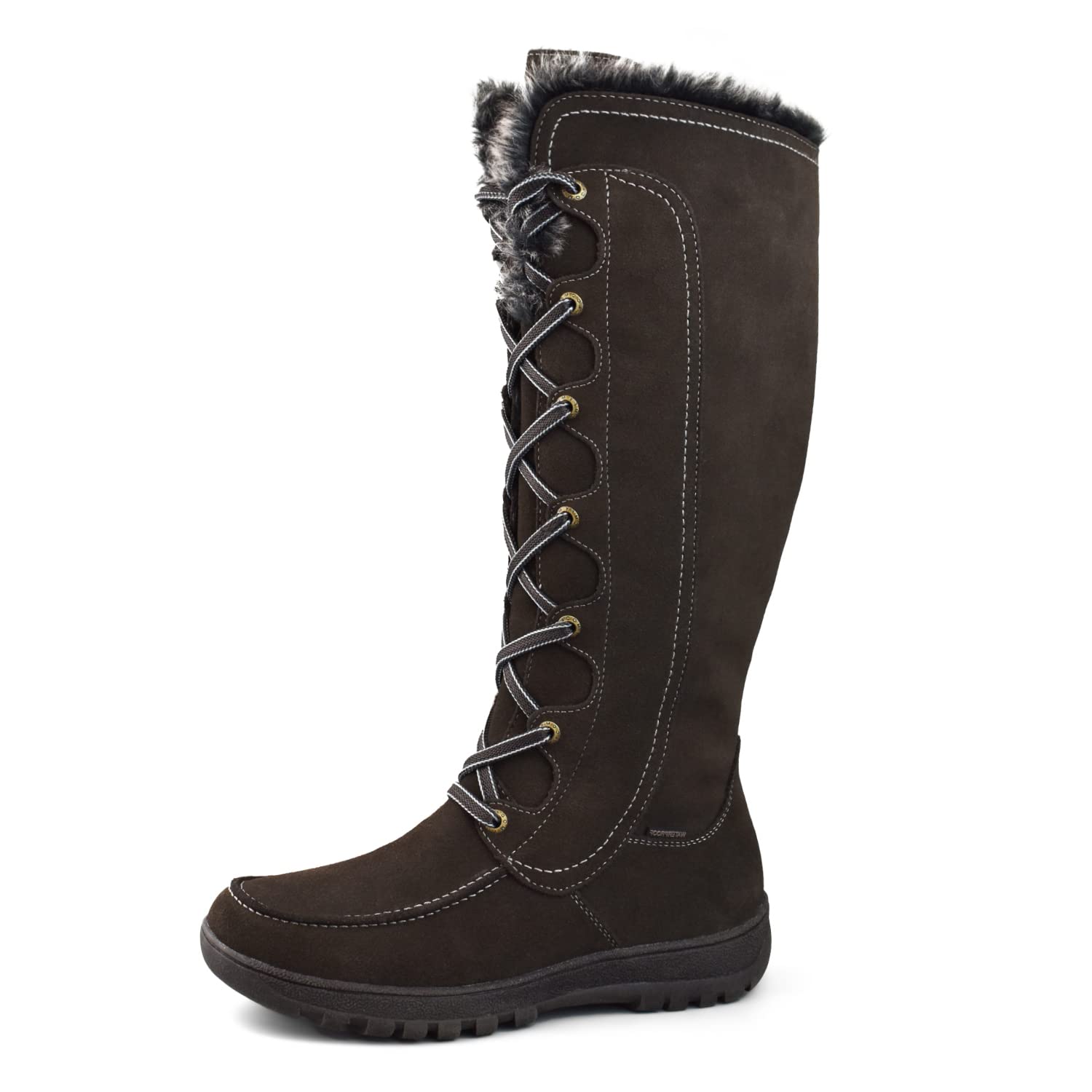
Two-hundred grams of Thinsulate plus 800 grams of faux fur — this is the warmest recipe on the page.
Read the insulation numbers and the intent is clear. This tall suede boot pairs 200g 3M Thinsulate with 800g faux fur lining and carries a rated temperature of -25°C/-13°F. Thinsulate traps body heat while the faux fur adds a second insulation layer, so the boot is designed to keep your legs and feet warm in cold weather, not just your toes.
The waterproofing is a full system, not a spray-on finish. CanDry technology uses premium waterproof leathers with an internal breathable membrane, and the tongues and zippers get durable coatings plus integrated gussets. The WarmEx wool insole retains heat and wicks moisture, and the aluminum-foil layer in the insulated midsole is there to hold warmth in and stop cold air coming through. A zipper makes for easy on and off, and the front ties let you adjust the calves.
The suede is the one handling caveat. It is treated for durability, but like all premium suede you should brush off salt and slush and use a protector to keep it looking sharp. Sizing also runs snug — if your foot length is close to the insole measurement or you like thick socks, go one size up.
The insulation argument
- 200g Thinsulate plus 800g faux fur for a stated rating of -25°C/-13°F.
- CanDry waterproof leather with a breathable membrane and gusseted zipper.
- Aluminum-foil midsole layer aimed at retaining warmth.
- Wool insole wicks moisture and suits orthotics.
What needs care
- Premium suede wants regular brushing and a protector to stay clean.
- Runs snug — sizing up is advised for thick socks.
- Tall shaft adds bulk for quick errands.
Suits you if: you want maximum published warmth and full-leg coverage for genuinely cold city winters.
Better avoided if: you won’t maintain suede, or you need a roomy fit without sizing up.
7. Merrell Women’s Coldpack 3 Thermo Moc Waterproof Moccasin
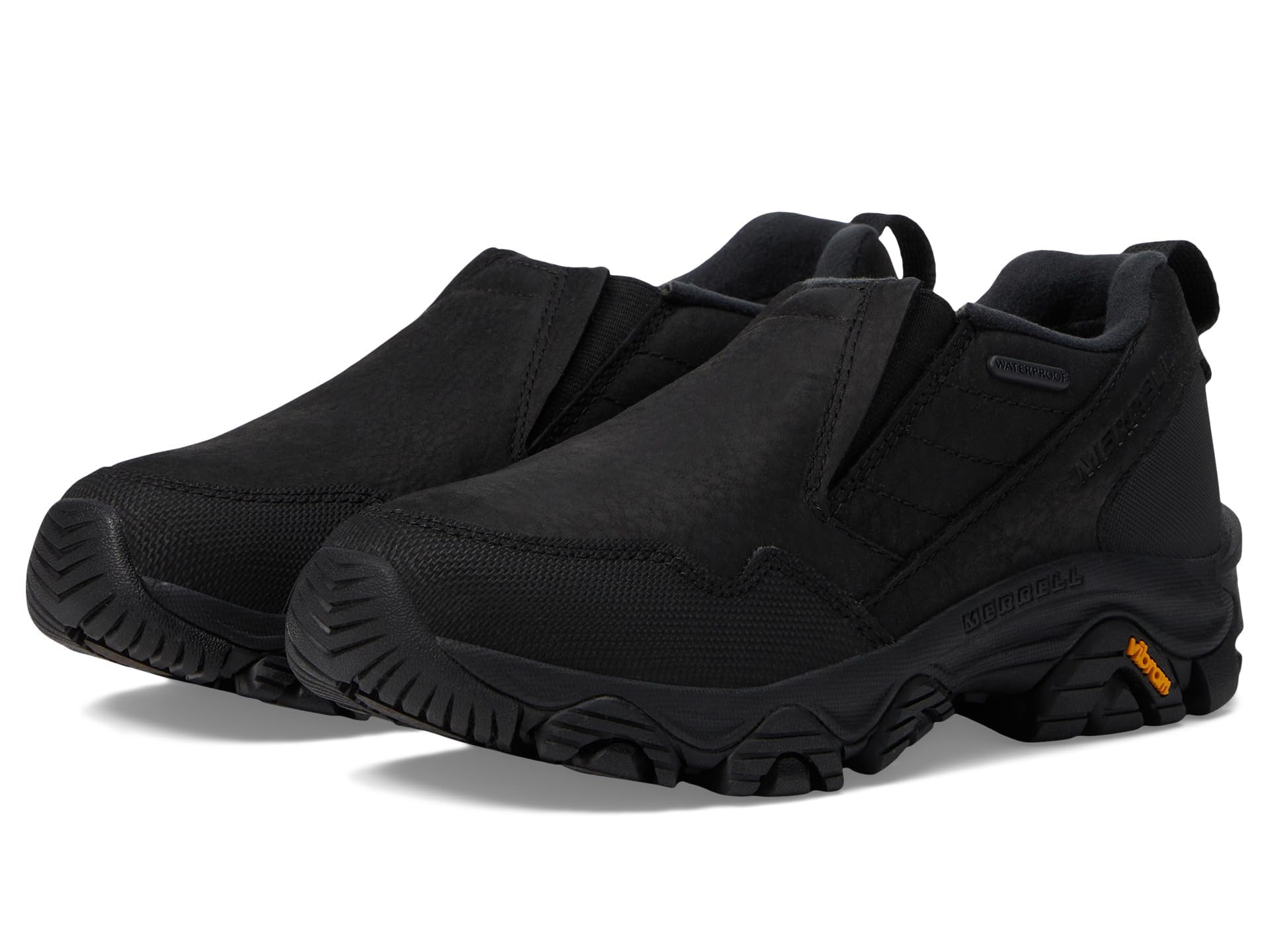
A low moccasin with Vibram Arctic Grip underfoot — built for frozen ground, not deep drifts.
The Merrell Coldpack 3 bets everything on grip. Vibram Arctic Grip is a rubber compound made specifically for slick, icy surfaces, and that is the standout feature — traction that holds when a regular sole would slide. Add 200 grams of insulation and a fleece lining, and you have a waterproof shoe that keeps feet warm when the temperature drops without the bulk of a full snow boot.
Comfort and arch support both get steady praise, and the moc silhouette makes it an easy slip-on for errands. If you want a boot that pauses for a quick run to the mailbox on an icy morning, this is the shape that does it without overkill. The weight and low cut keep it nimble compared to a tall boot like the Sorel Tivoli V.
The fit is where you need to pay attention. Feedback is mixed: some owners find it roomy, others say it runs narrow. That split is worth weighing if you have a wide foot — try to know your Merrell size before ordering. The low cut also means no ankle coverage, so for drifted snow you’d want the Kamik or the tall suede boot instead.
The reason to buy: Vibram Arctic Grip traction on ice plus 200 grams of insulation, in a low, easy-on moccasin.
The limit to know: fit runs narrow for some, and the low cut leaves your ankle exposed in deep snow.
Fits the bill for: icy sidewalks, quick errands, and anyone who wants maximum grip with minimum bulk.
Skip if: you need ankle-deep snow coverage or have a wide forefoot.
8. The North Face Women’s Sierra Mid Lace Boots
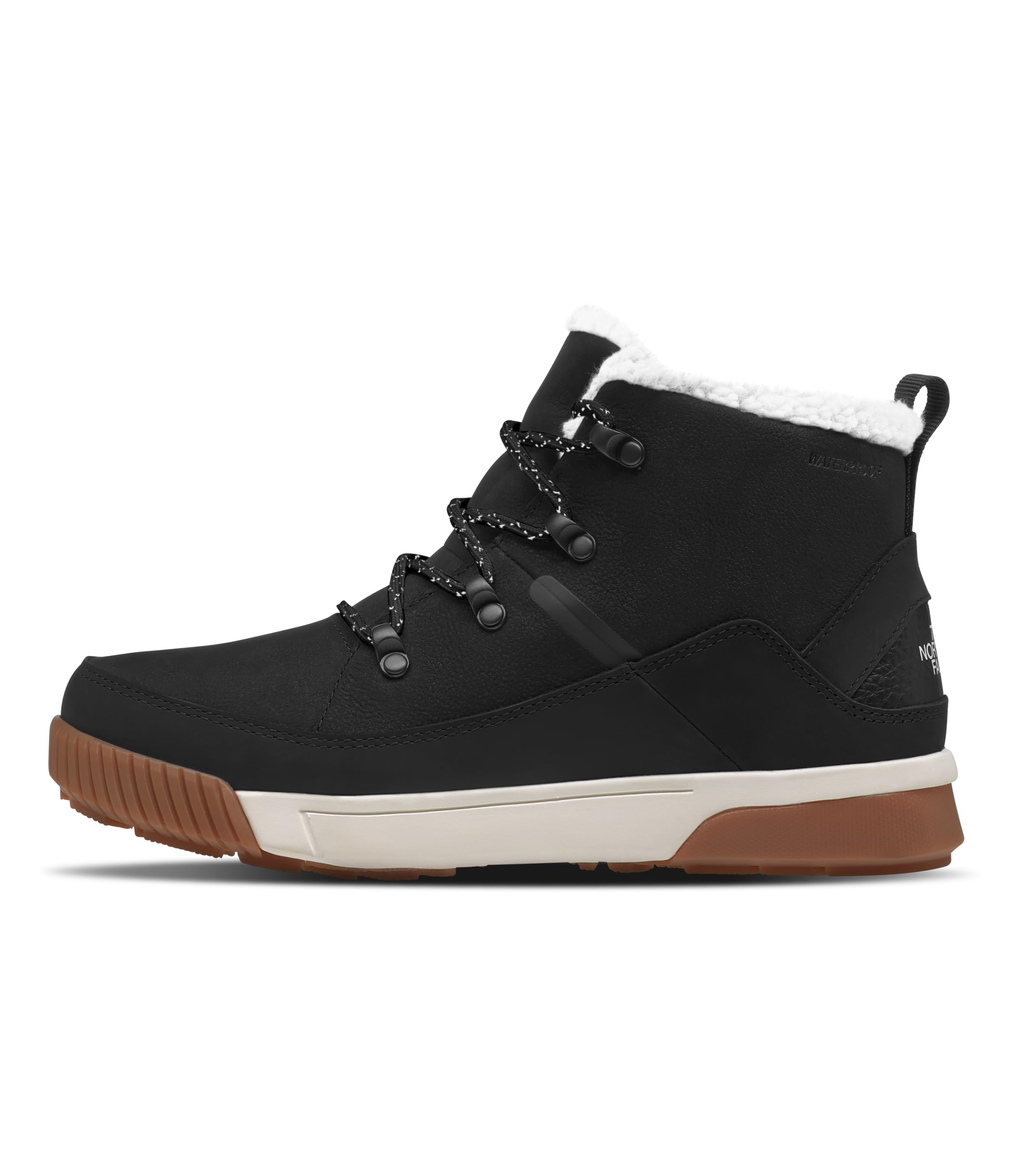
A mid-height lace-up that keeps your feet warm without announcing itself as a snow boot.
Warmth is what defines the Sierra Mid, and it is the most-praised trait among owners. The insulated, waterproof build sits under a leather upper with a rubber outsole, so you get a boot that handles cold and wet while looking like a normal winter shoe rather than a mountaineering rig. Style and appearance both get steady praise alongside comfort — buyers report their feet never hurt while wearing these insulated leather lace-ups.
The mid cut is the practical middle ground. You get more coverage than the Merrell moc but less bulk than the tall suede boot, which makes it a sensible choice for a daily commute or a walk through town. It laces up for a secure fit and stays in that all-purpose middle zone that most people actually need.
Fit is the thing to settle before you buy. Feedback splits between owners who say it is perfect and others who say it runs a bit snug. There are no published insulation grams or temperature rating in the listing, so this is a warm everyday boot rather than a rated extreme-cold one. For the coldest mornings, the Kamik’s -40˚F rating is the safer call.
Why it’s here: a warm, waterproof leather lace-up that works as an all-round winter shoe with real comfort.
The honest caveat: fit runs snug for some, and there’s no published temperature rating to lean on for deep cold.
Good pick for: someone who wants one warm, good-looking lace-up for everyday winter wear.
Look past it if: you need a documented cold rating or a guaranteed roomy fit.
9. KEEN Women’s Revel 4 Mid Height Polar Insulated Waterproof
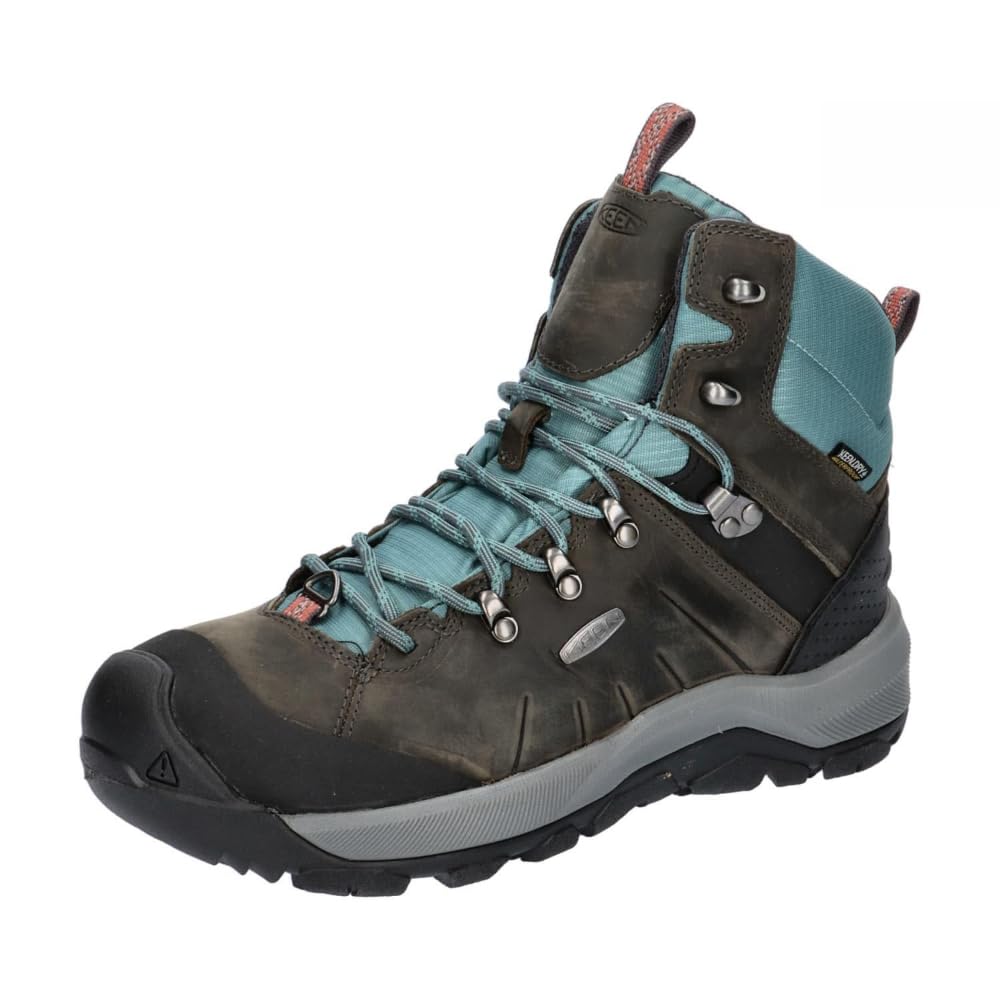
The boot built off a wider form — warmth and grip without pinching your toes.
Comfort is where the Revel 4 wins, and it wins by a distance. what separates it is the fit shape: KEEN builds this one off its traditional wider footwear form, so if most boots squeeze your forefoot, this is the pair to try. Add a thermal heat shield inside to hold warmth, waterproof breathable protection, and a speed lace webbing system (a quick-pull lace setup), and you get a snow boot aimed at long days on your feet.
Traction earns its own praise — owners mention the outsole gripping well on packed snow and ice — and ankle and arch support are frequent points of praise. One buyer notes it particularly suits feet with arthritis, which tells you the arch and ankle support is substantial rather than token. Warmth is the second-strongest trait after comfort, so this is a genuine cold-weather boot, not a fashion piece.
Sizing and durability both come with mixed feedback, so size with care and expect the normal wear of a fabric-and-rubber boot. It is also one of the pricier pairs on this page, which is the trade for that wider fit and the support underneath. If your priority is a roomy, supportive boot for cold, long days, that cost is the one that earns its place.
Where the Revel 4 pulls ahead
- Built off KEEN’s wider form for forefeet that get pinched elsewhere.
- Thermal heat shield inside captures and holds warmth.
- Speed lace webbing gets you in and out quickly.
- Traction grips packed snow and ice, with solid ankle and arch support.
Where it asks more of you
- Sizing feedback is mixed, so check your KEEN size first.
- Durability draws split feedback rather than a clean record.
- Premium-tier, so the wider-fit comfort is the value argument.
Worth it for: wider feet, long cold days on your feet, and anyone who needs real arch and ankle support.
Think twice if: you have a narrow foot or want a lower-cost boot.
Know the Specs
Waterproof construction
A true waterproof boot uses a membrane or sealed build to stop moisture at the skin, while water-resistant leathers or coatings only shed light splashes. Look for named waterproof technology, gusseted zippers, and sealed seams on the pairs you’re comparing — those details decide whether slush stays outside the boot.
Insulation and temperature rating
Comfort ratings in degrees tell you the coldest weather the maker builds the boot for, and insulation weight in grams tells you how much warmth it packs. Higher insulation keeps toes warmer but adds bulk, so match both the rating and the gram count to your actual winters rather than maxing out.
Traction on ice
A thick treaded rubber outsole is the baseline for grip. Some pairs add a specific cold-weather grip compound for slick surfaces. Either way, a real rubber sole with visible tread depth is what keeps you upright on a frozen sidewalk.
Fit and sizing
Winter boots often run small or big, and thick socks change everything. Check whether the listing recommends sizing up, and whether the fit skews narrow or wide, before you order — that sizing call decides comfort more than almost any spec.
Common Questions
What is the difference between waterproof and water-resistant winter boots?
How cold can I go in a boot rated -40˚F?
Do waterproof winter boots for women run true to size?
Are these boots warm enough for deep snow or just city slush?
Can I wear winter boots with thick wool socks?
How do I keep suede winter boots waterproof?
Is Vibram Arctic Grip better on ice than a normal rubber sole?
Are these boots good for wide feet or narrow ones?
Can I wear these winter shoes on a wet trail or hike?
How do I stop snow getting into the top of my winter boots?
The Bottom Line
For most buyers, the waterproof winter shoes for women winner is the Sperry Saltwater because it holds the strongest owner satisfaction of the group, hits the balance between duck-boot looks and real waterproofing, and slips on fast with the barrel lacing and zipper. If your winters mean deep snow and sub-zero mornings, the Kamik Greenbay4 is the rated pick at -40˚F, just size up. And for maximum warmth with full-leg coverage, the suede tall boot stacks 200g Thinsulate and 800g faux fur under a -25°C rating. The Sperry Saltwater is the crowd favorite at 4.5+ stars across 12,000+ owners — the safe bet for rain, light snow, and the walk into the office.
How we choose
We do not accept paid placement. Every pick is matched to a real buyer and a real use-case; we do not hands-on test units.
Sources
Specifications: manufacturer listings and product documentation. Review insights: verified customer reviews, as of November 2026. Pricing: not shown on this page (it changes often); check the current price via the retailer link.
As an Amazon Associate, Tactical Gear Guy earns from qualifying purchases. This does not affect which products we feature.