Specs are compiled from manufacturer listings and verified buyer reviews and can change over time — please confirm the key details on the product page before buying.
Cold, wet feet end a winter hike faster than tired legs do. The shoes that solve this need two things working together: a waterproof barrier that stops slush from soaking through, and real insulation that holds warmth when the temperature drops. Everything below has both, sorted by who each pair actually fits.
This guide is built by comparing the manufacturers’ published specifications and the patterns across verified customer reviews, so you get each pick’s real strengths and trade-offs instead of marketing spin.
Fit and insulation weight decide more than brand name here. The Columbia Firecamp Boots set the benchmark for most cold-weather walkers, and every comparison below starts from them. These picks cover the waterproof winter hiking shoes worth strapping on before the trail freezes over.
Top Picks

How To Choose The Best Waterproof Winter Hiking Shoes
Three things separate a winter hiker from a three-season shoe: the waterproof barrier, the insulation, and the outsole grip. Get one wrong and you feel it within the first mile — wet socks, frozen toes, or a slide on packed ice.
Waterproofing is a membrane, not a coating
A waterproof shoe usually hides a thin membrane inside the upper — a sheet that lets sweat vapor out but blocks liquid water from coming in. That is different from a spray-on water repellent on the outside, which wears off. Look for a named membrane or an explicit “waterproof” claim in the listing, and remember that a waterproof shoe breathes less than a mesh one, so pair it with a wool sock that manages moisture.
Insulation weight sets your temperature range
Insulation is measured in grams, and the number tells you how cold a shoe is built for. An uninsulated waterproof hiker works for wet, mild days. A lightly insulated model suits active hiking where your feet generate heat. A heavily insulated boot is for standing around in deep cold or slow snowy walks, where trapped heat matters more than breathability.
Grip compound matters as much as lug depth
Deep lugs bite into soft snow and mud. On hard, wet ice, the rubber compound itself is what holds — some outsoles are formulated specifically for cold surfaces, and those are the ones to pick if your trails ice over. Pair a cold-weather outsole with a mid-height collar for ankle support and you have a shoe that handles the whole season.
Side-by-Side Comparison
| Model | Best For | Waterproofing | Insulation | Stated Weight | Amazon |
|---|---|---|---|---|---|
| Columbia Men’s Firecamp Boots | Everyday cold-weather walks | Waterproof construction | Low-bulk insulation | — | Amazon |
| Columbia Men’s Expeditionist Shield | Ice and packed snow | Waterproof-breathable | Ample insulation | — | Amazon |
| Columbia Bugaboot III | Hard-core winter treks | Waterproof, seam-sealed | 200g | 1.44 pounds | Amazon |
| Merrell Women’s Antora 3 Thermo Mid Zip | Fast winter trail runs | Waterproof | 100 grams | — | Amazon |
| KEEN Men’s Targhee 4 Low | Wide feet, daily trails | KEEN.DRY membrane | — | 530 g | Amazon |
| KEEN Men’s Revel III Mid | Cold-weather day hikes | Waterproof, breathable | Thermal heat shield | 1.31 pounds | Amazon |
| The North Face Storm Strike III | Packable winter travel | Waterproof, non-PFC DWR | Warm insulation | — | Amazon |
Detailed Reviews
1. Columbia Men’s Firecamp Boots
The warm, dry, do-everything boot that handles a frozen commute and a snowy trail without weighing you down.
Winter hiking footwear has one job that matters above all: keeping your feet dry and warm when the ground turns cold and wet. The Firecamp boots handle both with waterproof construction and low-bulk insulation, so you get warmth without the puffy, overbuilt feel of a heavy snow boot. Plush cushioning underfoot rounds it out for long days standing or walking.
What wins people over is quality — it is the single thing owners bring up most — followed closely by comfort and warmth. Owners describe these as a boot you can pull on and forget about, with socks that stay dry even after slushy miles. Fit leans generous, with plenty of toe room noted, which helps if you layer a thicker winter sock.
The honest catch is that low-bulk insulation is built for cold-weather activity, not for standing still in deep sub-zero conditions. If you need a boot for slow, stationary time in extreme cold, a heavier insulated model lower down this list fits that job better. For everyone else — daily winter wearers, light hikers, and commuters — these are the easiest pick to live with. It also helps that they come in multiple colors and sizes, so you can dial in a look that fits your outdoor kit.
What holds up on the trail
- Waterproof build with socks that stay dry through slush
- Low-bulk insulation keeps toes warm without a bulky feel
- Generous toe room for thicker winter socks
- Cushioned underfoot for long walking days
Where it falls short
- Insulation suits active cold-weather use more than standing around in deep cold
- Not the pick for severe sub-zero stationary conditions
Straight verdict: the natural default for most winter walkers and commuters who want warmth and dryness without a heavy boot.
Think twice if: you need a boot for standing still in extreme cold rather than moving through it.
2. Columbia Newton Ridge Waterproof Omni-Heat II Boots
The icy-path specialist, built with Columbia’s most advanced thermal-reflective tech and cold-tune grip.
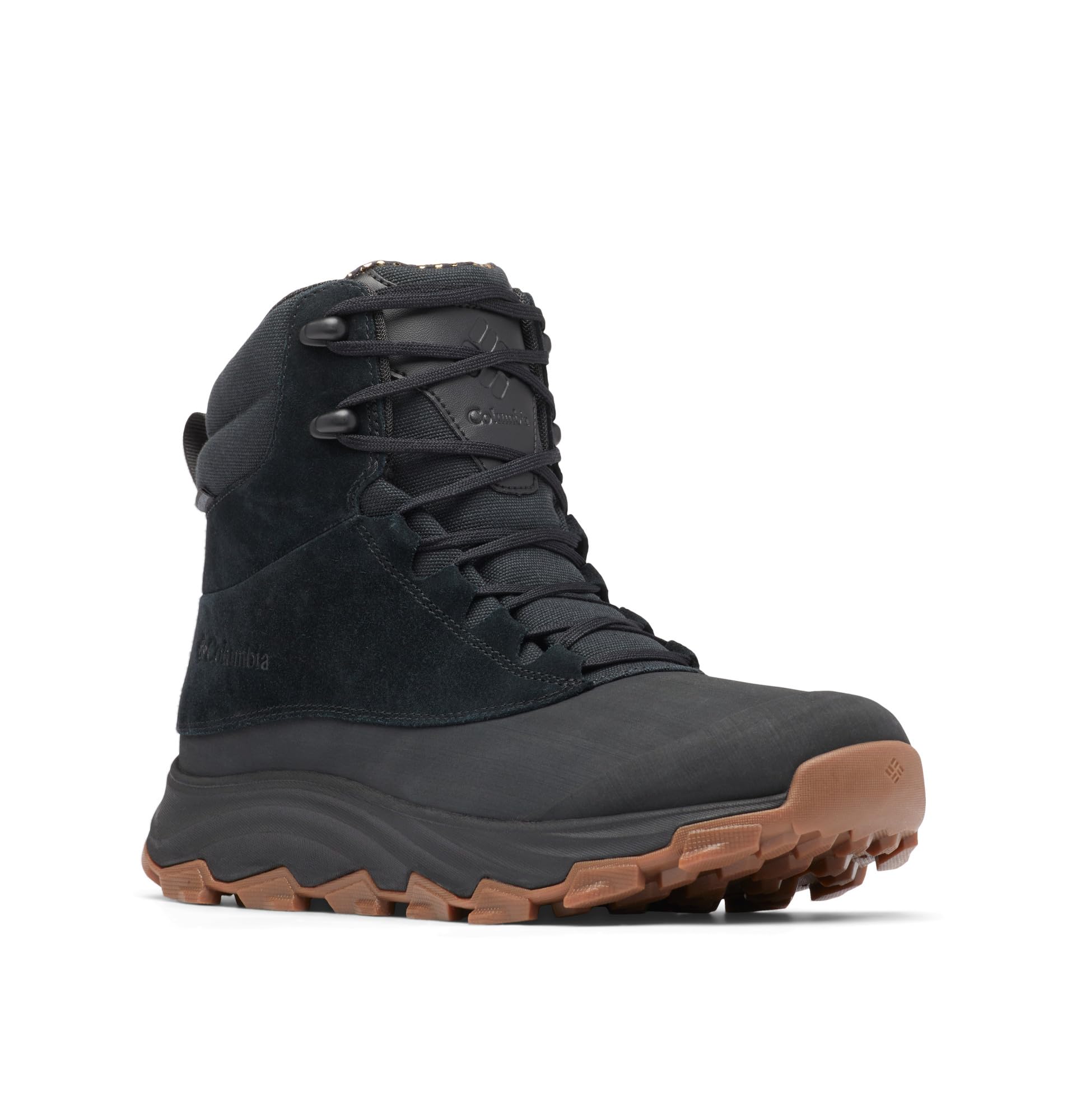
If your winters mean frozen sidewalks and packed snow, the Expeditionist Shield is aimed squarely at you. It pairs a waterproof-breathable build with Columbia’s most advanced thermal-reflective tech, a lining meant to bounce your own body heat back at you. Ample insulation adds a second layer of warmth, and the outsole is tuned for cold surfaces so it bites into ice and snow instead of skating across them.
Owners say no water gets in at all — that is the consensus on the waterproofing, and it is the headline for a winter boot. Quality and comfort lead what buyers praise most, with warmth and light weight close behind. For a boot with this much insulation, the fact that wearers call it lightweight is a genuine point in its favor over chunkier snow boots.
The one area where feedback splits is durability, so treat it as a boot to care for rather than abuse. Some owners find it long-lasting; a few wonder about longevity over many seasons. That is the honest trade-off, and it does not change the fact that for cold, wet traction this is the strongest pick on the list. It is also the pick for guys who want insulation without a brick-heavy boot on the climb.
What earns its place
- Thermal-reflective lining plus ample insulation for cold days
- Cold-tune traction engineered for ice and snow
- Waterproof-breathable build owners say shuts water out entirely
- Light enough to wear comfortably despite the insulation
The honest caveats
- Longevity feedback is mixed, so expect routine care
- Built for cold-weather outings, not year-round summer wear
Pick it for: icy sidewalks and snowy trails where grip and heat retention decide the walk.
Pass if: you want a boot you can treat roughly for years without a second thought.
3. Columbia Bugaboot III
A 200-gram insulated, seam-sealed winter boot that treats deep cold like a mild inconvenience.
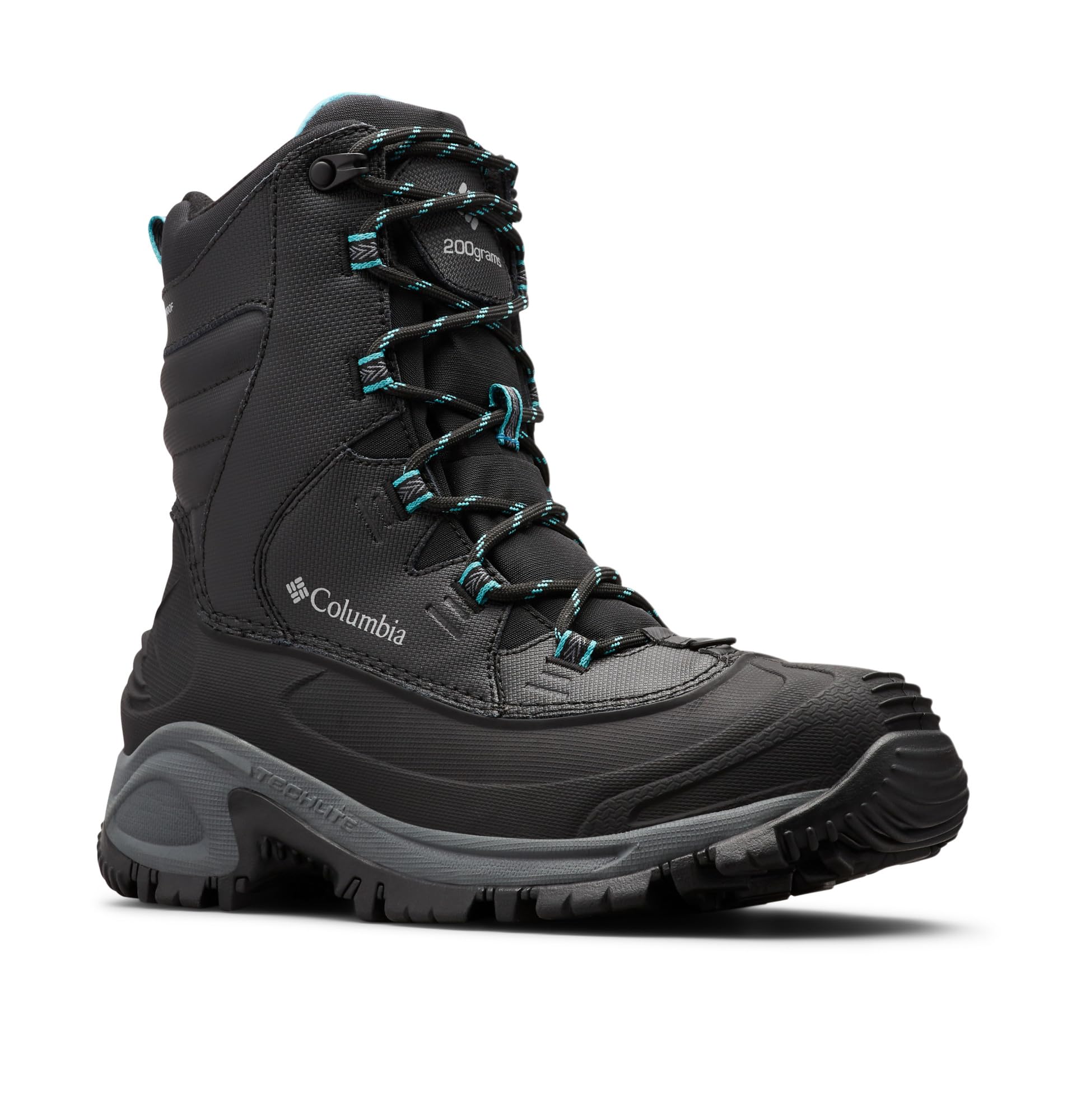
Deep cold is the whole brief here. The Bugaboot III packs 200g of insulation into a waterproof, seam-sealed shell — seam-sealed meaning the stitching is taped so water cannot sneak through the joins. A thermal-reflective lining adds another layer of warmth, and the PU-coated leather upper sits over an injection-molded rubber shell and outsole for heavy-duty protection.
Fit is the thing people love most about this boot, which is unusual for winter footwear that often runs tight around thick socks. The fit comes true to size, warmth ranks right behind it as the second most-praised trait, and comfort follows. Traction holds up in snow too, and the waterproofing is serious — the kind of dry that survives an accidental step into standing water rather than just a drizzle.
The weight comes with that 1.44 pounds on the spec sheet: this is a substantial boot, not a featherweight hiker, so if you want something you can forget you are wearing, look at the Merrell Antora or a lighter Columbia model instead. For standing around in cold, walking deep snow, and a boot that feels genuinely built, the Bugaboot III is the strongest insulated pick here. One note: the listing describes this as a women’s boot, so women should order their true size.
A warmth-first build: 200g insulation, seam-sealed waterproofing, and a rubber shell make this the deep-cold standout.
Weigh it against the alternatives: the Bugaboot III is heavier than the light hikers above — the trade for that warmth is bulk, so pick it for cold, not for speed.
Best for: women who face real cold and want warmth that does not quit, with true-to-size fit.
Skip if: you want a lightweight, fast-moving boot — this one prioritizes heat over spread.
4. Merrell Women’s Antora 3 Thermo Mid Zip Waterproof
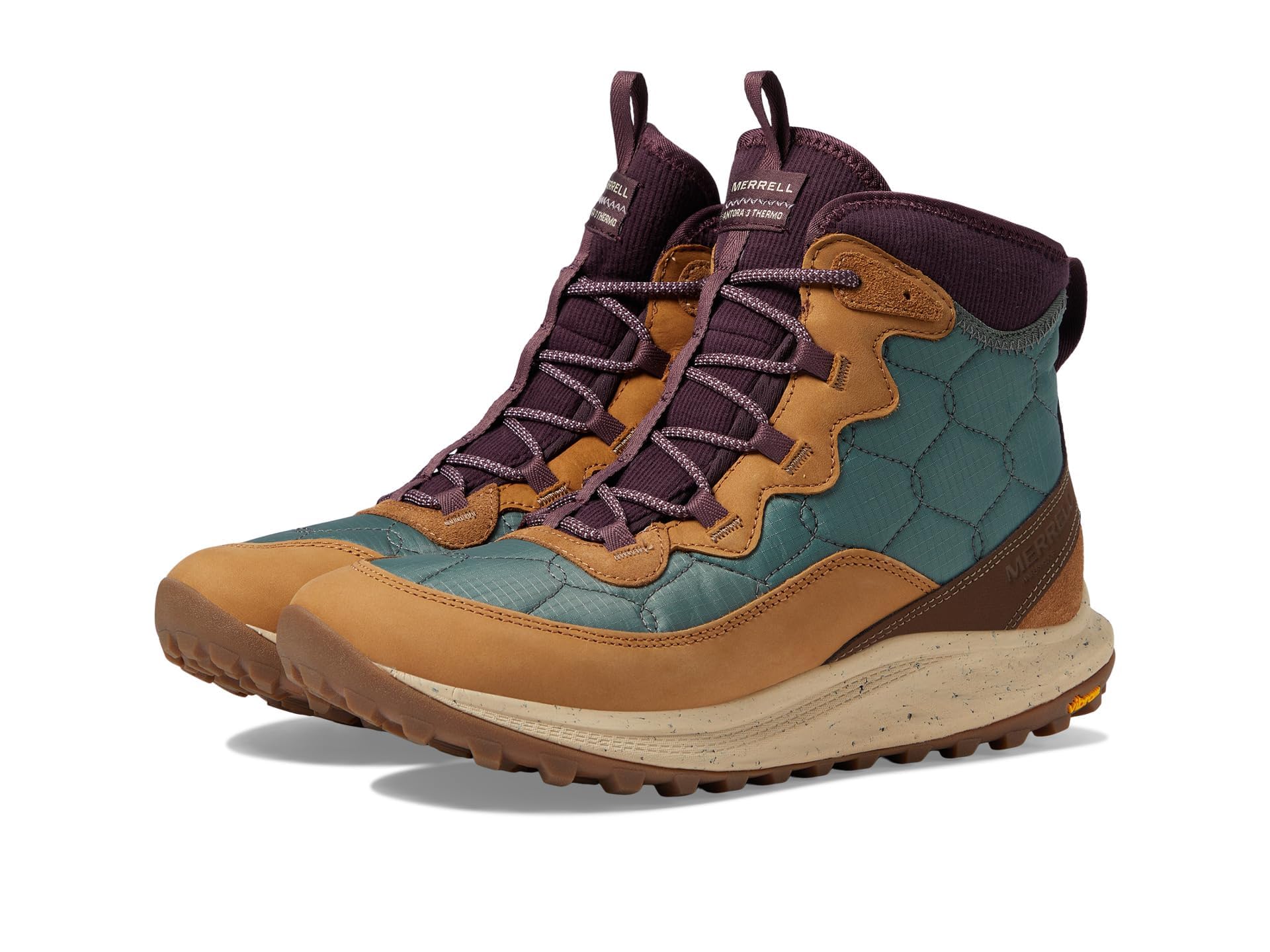
A winter trail runner in boot clothing, with an ice-specific outsole and just enough insulation to keep moving.
The Antora 3 Thermo is for the woman who treats a winter trail as a running surface, not a slow walk. It balances performance and style with lightweight synthetics and soft leather, and it pairs a Vibram Ice Trek outsole — a rubber compound and tread pattern built for cold surfaces — with 100 grams of insulation. That combination is aimed at cold-weather movement, where you generate your own heat as you go.
Quality is what buyers praise most, with comfort right behind — these are boots people say they can walk miles in. Traction earns steady praise for grip on the soles, and the warmth keeps feet from freezing when the temperature drops. It is a lighter option than the heavier insulated picks, which is exactly what makes it work for faster winter outings.
The recurring gripe is fit: the Antora 3 has a reputation for running narrow, so wide-footed buyers should size up or look to the KEEN Targhee below, which is built on a wider form. If your foot is average or narrow, that is not a problem — and the zip design makes the Antora easier to pull on than a lace-up snow boot. This is the pick for covering ground quickly on a cold trail.
Built for cold speed
- Vibram Ice Trek outsole tuned for grip when temperatures plummet
- 100 grams of insulation for active cold-weather use
- Lightweight synthetics and soft leather keep it nimble
- Zip entry makes it quicker to get on than laced boots
Know before you buy
- Runs narrow, so wide feet may need to size up
- Moderate insulation suits moving fast, not standing in deep cold
Made for: narrower feet that want to log winter trail miles at a good clip with real ice grip.
Not for: wide feet or anyone who needs a heavy-weight cold-weather boot for standing around.
5. KEEN Men’s Targhee 4 Low Height Waterproof Hiking Shoes

The low-cut winter hiker that finally gives wide feet somewhere to be.
Most winter boots squeeze. The Targhee 4 Low does the opposite, built on KEEN’s original wider form so a broad foot has actual room. Around that roomy fit sits a KEEN.DRY membrane — a waterproof, breathable liner that lets sweat escape while keeping water out — plus water repellency on the outside. The KEEN.RUGGED outsole is the abrasion-resistant part, a rubber made to keep its lugs sharp rather than wear smooth.
Durability is what earns the most praise, with owners noting these shoes stand up to outdoor winter weather rather than cracking after one season. Comfort and fit follow, and that wide fit gets called out as the standout — a fantastic wide fit, in buyers’ words. The waterproofing delivers too; buyers report staying dry even in melting snow, which is the slushy test most boots fail.
Two things to note. The low-cut design trades ankle support for freedom, so if you want a collar that wraps higher, step up to the Revel III Mid below. And KEEN lists these at 530 g, so they carry more heft than the Merrell Antora — you feel the extra structure, but you get the durability in return. For wide-footed guys who hike all winter, this is the clear pick. It also carries a 4.5+ star rating across 950+ buyers, matching the Antora’s score.
The wide-fit answer: a roomy last, a KEEN.DRY waterproof membrane, and a rubber outsole built to resist abrasion on rocky winter trails.
What you give up: the low cut means less ankle wrap than a mid boot, so lace-up stability on rough ground is on you.
Choose it if: your feet are wide, you hike through winter, and you want a low shoe that lasts.
Choose otherwise if: you want high ankle support or the lightest possible trail weight.
6. KEEN Revel III Mid Height Boot
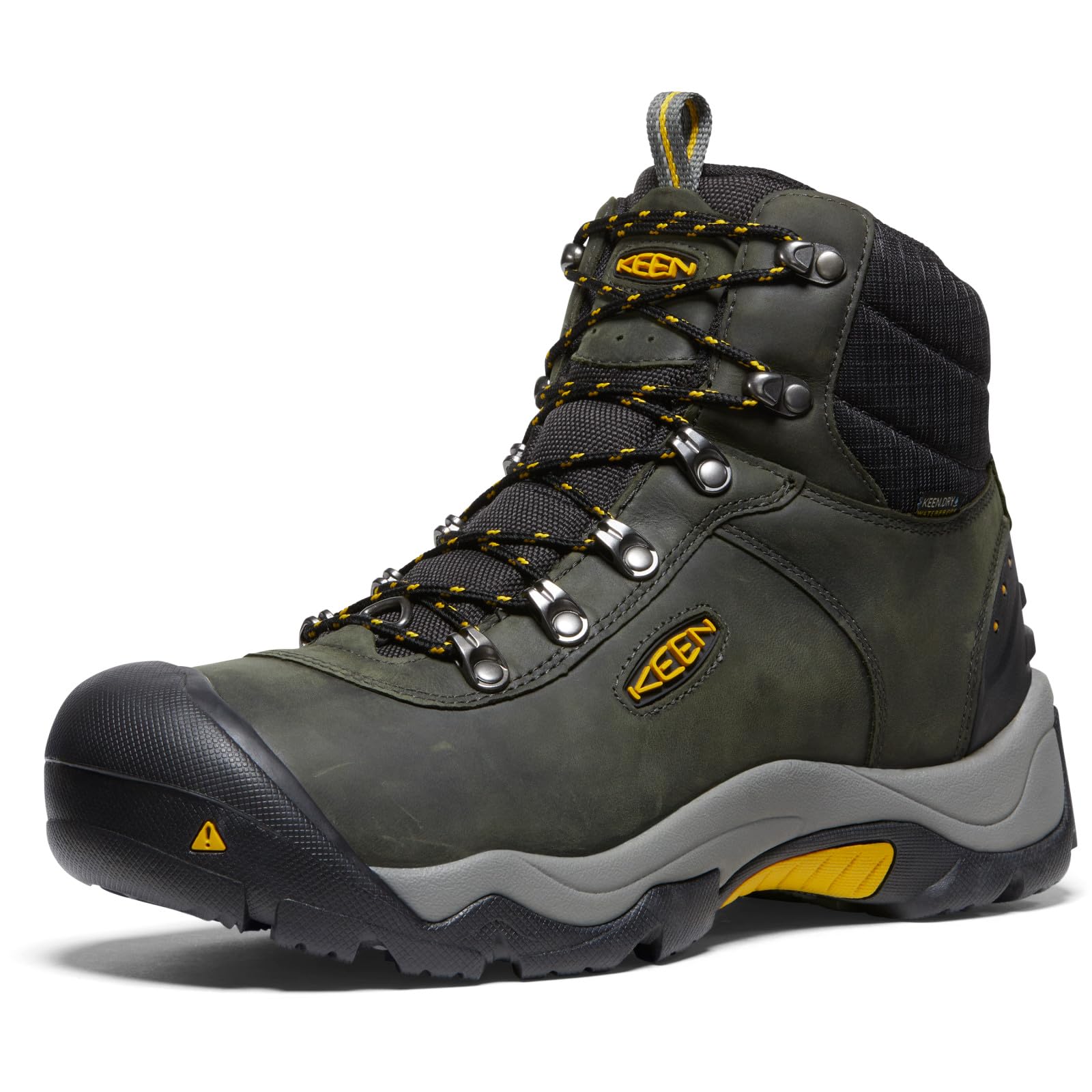
A mid-height winter boot with a heat shield inside and a lacing system you can fine-tune without stopping.
This is the boot for a guy who wants a tall collar and a warm interior but hates feeling boxed in. The Revel III Mid wraps a thermal heat shield inside to capture warmth, adds waterproof, breathable protection on the outside, and sits on KEEN’s traditional wider form so the toe box stays roomy. A speed lace webbing system lets you dial in the tension across the top of the foot rather than living with one fixed fit.
Quality leads the praise here by a clear margin, with comfort and fit right behind it. The wide toe box gets singled out, and owners say the warmth is real without the boot feeling bulky on the foot. The lacing system earns its own credit — the ability to tighten the upper and lower zones separately is the kind of detail that saves an uncomfortable hike. Plenty of owners describe the Revel III Mid as built like a tank.
The one honest weak spot is the fabric covering the laces, which can wear through on some pairs faster than the rest of the boot. It does not affect the waterproofing or the warmth, and the core of the boot stays intact — just watch that lace-cover area if you are hard on footwear. At 1.31 pounds, they sit between a lightweight hiker and a heavy snow boot, so they suit a full day outdoors without tiring your legs out.
Why it earns the mid-boot title
- Thermal heat shield captures warmth without added bulk
- Speed lace webbing lets you tune tension zone by zone
- Wider KEEN form gives a roomy toe box for thicker socks
- Waterproof, breathable build that handles a full winter day
Where to keep an eye
- The fabric over the laces can wear ahead of the rest of the boot
- Mid-height weight is heavier than a low-cut trail shoe
Made for: men who want a warm, adjustable mid boot with room for winter socks.
Skip it for: hard, daily abuse where a lace-cover failure would bother you.
7. The North Face Storm Strike III Shoe

A fully waterproof insulated shoe with a rubber outsole, designed for snow, rain, and shifting winter weather.
The Storm Strike III leans on The North Face’s winter formula: a fully waterproof design paired with warm insulation and a rubber outsole, plus a non-PFC durable water-repellent treatment on the outside. Durable water repellent is the spray-on layer that beads water off the surface so it rolls away instead of soaking in — a non-PFC version skips a common chemical in the process. That mix is aimed at unpredictable winter days where snow, rain, and wind take turns.
Buyers agree the build quality and comfort are there — this is a shoe that feels well made and pleasant to wear. Appearance is the trait people respond to most, and it is a good-looking option for a winter hiker. The honest counterpoint is the fit: several customers note it runs narrow, so wide-footed shoppers should either size up or steer toward the roomier KEEN Targhee instead.
Worth knowing before you buy: the insulation here is warm but not quantified in grams, so treat it as a solid cold-weather shoe rather than a deep-cold boot — for extreme temperatures, the insulated Bugaboot III or Revel III Mid offers a more defined warmth spec. For winter travel and everyday slush, it makes a clean, packable choice. Its 4.0+ stars across 230+ buyers reflect solid satisfaction tempered by that narrow-fit caveat.
Where it delivers
- Fully waterproof build with a non-PFC durable water-repellent finish
- Warm insulation and a rubber outsole for wet, cold ground
- Build quality and comfort hold up on daily winter wear
- Sharp looks for a winter hiking shoe
What to plan around
- Runs narrow, so wide feet may need a size up
- Insulation is not defined in grams, so it is less tuned for extreme cold than heavy boots
Suits you if: you want a good-looking waterproof winter shoe for travel and everyday cold-weather walks.
Look elsewhere if: your feet are wide or you need a boot rated for severe cold.
Know the Specs
Waterproofing: Membrane vs. DWR Coating
Two different things keep water out, and they work best together. A waterproof membrane is a liner inside the shoe that blocks liquid water while letting sweat vapor pass — think KEEN.DRY or a “waterproof” upper. A durable water-repellent (DWR) coating sits on the outside and makes water bead and roll off. The membrane is the real barrier; the DWR is the first line that buys the membrane time. Look for a named membrane or an explicit “waterproof” claim in the listing, since a DWR finish alone will not keep your socks dry in standing slush.
Insulation in Grams and Named Systems
Insulation weight is usually stated in grams — a higher number means more warmth but also more bulk and less breathability. Some brands use named systems instead of a grams figure: thermal-reflective linings bounce body heat back, “heat shield” or “heat trapolator” layering traps warmth near the foot, and underfoot layers stop cold rising through the sole. A heavier gram rating suits slow, cold-weather use; a ligher or uninsulated build suits active hiking where your feet make their own heat.
Outsole Compound and Lug Pattern
The tread does two jobs in winter. Lugs (the raised blocks) bite into soft snow, mud, and loose ground. The rubber compound matters most on hard, wet ice, where a cold-tune formulation like a snow-and-ice grip outsole or an ice-specific tread holds better than generic rubber. If your trails turn to packed ice, prioritize the compound; if you mostly deal with deep snow and slush, lug depth and a grippy multi-surface rubber do the heavy lifting.
Fit, Toe Box, and Sock Layers
Winter boots are worn with thicker socks, so fit is about room, not just length. A wider last or a roomy toe box gives your toes space to stay warm — cramped toes lose heat fast. A narrow boot that fits perfectly in summer can feel tight with a wool sock. If you plan to layer socks, size up or choose a wide-form brand like KEEN; if you wear thin socks and want a precise, quick feel, a standard or narrow last works better for you.
Common Questions
Are waterproof winter hiking shoes suitable for deep snow or standing around in the cold?
Do these shoes really keep my feet dry in slush and melting snow?
Why does my normal shoe size feel tight in a winter boot?
What does a “waterproof-breathable” membrane actually do?
Is a higher insulation number always better for winter hiking?
How much grip do I need for icy trails versus soft snow?
Are wide-footed hikers better off with KEEN or a standard last?
Can I wear these waterproof winter hikers in warmer months?
What does non-PFC DWR mean on a winter shoe?
How do I break in an insulated winter boot without blisters?
The Bottom Line
For most people, the waterproof winter hiking shoes choice is the Columbia Firecamp Boots — waterproof, comfortably warm, and easy to live with from commute to trail. If icy ground is your main worry, reach for the Columbia Expeditionist Shield and its cold-tune traction. And for wide-footed hikers who want durability that lasts, the KEEN Targhee 4 Low is the pair to grab. The Firecamp is the crowd favorite here — 4.5+ stars across 900+ ratings — and its low-bulk insulation plus waterproof build earn that top spot for the widest range of winter walkers.
How we choose
We do not accept paid placement. Every pick is matched to a real buyer and a real use-case; we do not hands-on test units.
Sources
Specifications: manufacturer listings and product documentation. Review insights: verified customer reviews, as of November 2026. Pricing: not shown on this page (it changes often); check the current price via the retailer link.
As an Amazon Associate, Tactical Gear Guy earns from qualifying purchases. This does not affect which products we feature.