Specs are compiled from manufacturer listings and verified buyer reviews and can change over time — please confirm the key details on the product page before buying.
Here is what actually keeps your feet dry: a leather upper that has been treated to shed water, plus a seam-sealed or membrane-backed build that stops it creeping in through the stitches. The trouble is that plenty of boots sold as waterproof are only water-resistant, which means they shrug off a light drizzle and soak through in wet grass. This guide separates the genuinely sealed boots from the spray-on pretenders, and matches each one to the ground you walk on.
This guide is built by comparing the manufacturers’ published specifications and the patterns across verified customer reviews, so you get each pick’s real strengths and trade-offs instead of marketing spin.
Every pick here has a sealed leather upper and a lugged sole built for wet ground, not just a treated surface. This breakdown of the best waterproof leather boots covers nine sealed pairs, what each one does well, and where it falls short.
Top Picks


How To Choose The Best Waterproof Leather Boots
Where a boot will spend most of its life — trail, job site or tree stand — decides which sole and shaft height you need. A trail hiker, a roofer and a hunter need completely different soles and shaft heights, even though all three want dry feet. Once the terrain matches, the membrane, insulation and welt choices narrow down fast.
Waterproofing that survives the second mile
A treated leather outer only handles so much. What keeps water out over hours is a barrier behind the leather, such as the TimberDry membrane Timberland uses, the GORE-TEX lining in the Rocky Outback, or DRYShield in the Ariat Treadfast. Look for the words “seam-sealed” or “waterproof construction”, not just “water-resistant”.
The tongue matters just as much as the upper, so check that it is fully gusseted. A gusseted tongue is stitched to the boot on both sides, which stops water rolling in through the lace gap when you step in a deep puddle.
Match the shaft height to the ground
A 6-inch boot clears tall grass, shallow puddles and most job-site debris. A 12-inch boot like the Irish Setter Elk Tracker adds coverage up the calf, which is why it suits hunters standing in brush and cold. Taller shafts are heavier and warmer, so do not size up unless you actually need the coverage.
Insulation grams: warm feet or sweaty feet
Insulation is measured in grams, and that number tells you the climate the boot was built for. The Timberland Premium 6-inch carries 400 grams of PrimaLoft, which is a genuinely cold-weather build. The Irish Setter Elk Tracker goes further with 1000g 3M Thinsulate Ultra insulation, aimed at deep winter and long sits in the cold.
Side-by-Side Comparison
| Model | Best For | Upper | Waterproofing | Insulation | Amazon |
|---|---|---|---|---|---|
| Timberland Premium 6 inch★ Best Overall | Cold-weather everyday wear | Nubuck leather | Seam-sealed | 400g PrimaLoft | Amazon |
| Wolverine Carlsbad 6″Budget Workhorse | Budget job-site work | Full-grain leather | Waterproof leather | — | Amazon |
| ROCKY Outback GORE-TEXRugged Pick | Rugged trail and brush | Full-grain leather | GORE-TEX lining | — | Amazon |
| Timberland White Ledge Mid | Lightweight day hiking | Waterproof leather | Seam-sealed | — | Amazon |
| ARIAT Treadfast 6″ | Electrical-hazard job sites | Full-grain leather | DRYShield | — | Amazon |
| Merrell Moab Adventure 3 Mid | Comfort on long hikes | Rough-out leather | Merrell membrane | — | Amazon |
| Irish Setter Elk Tracker 12″ | Deep-winter hunting | Full-grain leather | GORE-TEX | 1000g 3M Thinsulate Ultra | Amazon |
Detailed Reviews
1. Timberland Men’s Premium 6 inch Waterproof Boot
Our pick — 4.5+★ from 9,500+ verified ratings; the strongest balance of quality and price.
The icon that still keeps a wet January commute out of your socks
The 400 grams of PrimaLoft insulation is the number that sets this boot apart from every other pair here. That is a real cold-weather fill, so you get a boot that holds warmth on a frosty morning rather than a thin shell that leaves your toes numb. The seam-sealed upper is what actually keeps water out, and it does the job through puddles and slush without a separate waterproofing spray.
Underneath, the Goodyear welt construction is the reason this pair is worth thinking about as a long-term boot. A welt is a stitched strip joining upper to sole, and it means the sole is attached properly rather than simply glued on. The rubber lug outsole carries 10% plant-based materials, and the rust-resistant hardware means the lace eyelets do not seize up after a wet winter.
The catch is sizing. Timberland’s own buyer feedback splits on it, with a wide fit catching some people out, so try before you commit if you sit between sizes. Note too that the crowd favorite in raw review volume is the White Ledge further down this list — this Premium 6-inch holds the same 4.5+ stars but from a much smaller pool of 9,000+ owners, so it wins on score and construction, not sheer volume.
What earns its keep
- 400g PrimaLoft insulation built for genuine cold
- Seam-sealed upper with a welted sole that can be repaired
- Rust-resistant hardware and reinforced triple stitching
- The padded collar and anti-fatigue sole keep long days bearable
Where it asks more of you
- The wide fit puts some buyers between sizes
- Heavier and warmer than a summer hiker needs
- Insulation is overkill for mild climates
Buy this one: anyone who wants a single sealed boot for wet commutes, slush and cold weekends without buying a separate winter pair.
Pass on it: if you run hot on a mild autumn walk — the PrimaLoft will have your feet cooking.
2. Wolverine Men’s Carlsbad Waterproof 6″ Work Boot
A 3-pound site boot that takes a beating and asks for little back
At 3 pounds this is a light boot on your foot for a concrete shift, and the full-cushion EVA midsole is the reason. EVA is a soft foam that soaks up impact, so you get cushioning under the arch on a hard floor all day. The full-grain leather upper is treated to be waterproof, and the moisture-managing mesh lining pulls sweat away so your socks are not wringing wet by lunchtime.
The rubber lug outsole is what grips on a muddy job site. Lugs are the raised tread blocks, and they bite into loose ground and wet concrete alike. The blocked heel adds stability when you are carrying something heavy up a ladder or across uneven fill.
Durability feedback on this boot is genuinely split: many owners get a full working year and reorder, while some report early separation. A lot of owners get a full working year out of a pair and simply reorder, while a few report them coming apart far sooner. That is a real trade-off at the budget end of the market, not a reason to rule it out. If your work tears through boots fast, expect to replace them; if you are a weekend gardener, this pair will last well.
The honest read: comfortable close to first wear, and a fair number of buyers report the fit runs true with plenty of toe room. The trade-off is long-term life rather than day-one comfort.
The right call when: your job needs a sealed leather boot and you plan to replace it once a season anyway.
Not the one: if you expect five years out of a single pair, put the money toward the welted Timberland Premium instead.
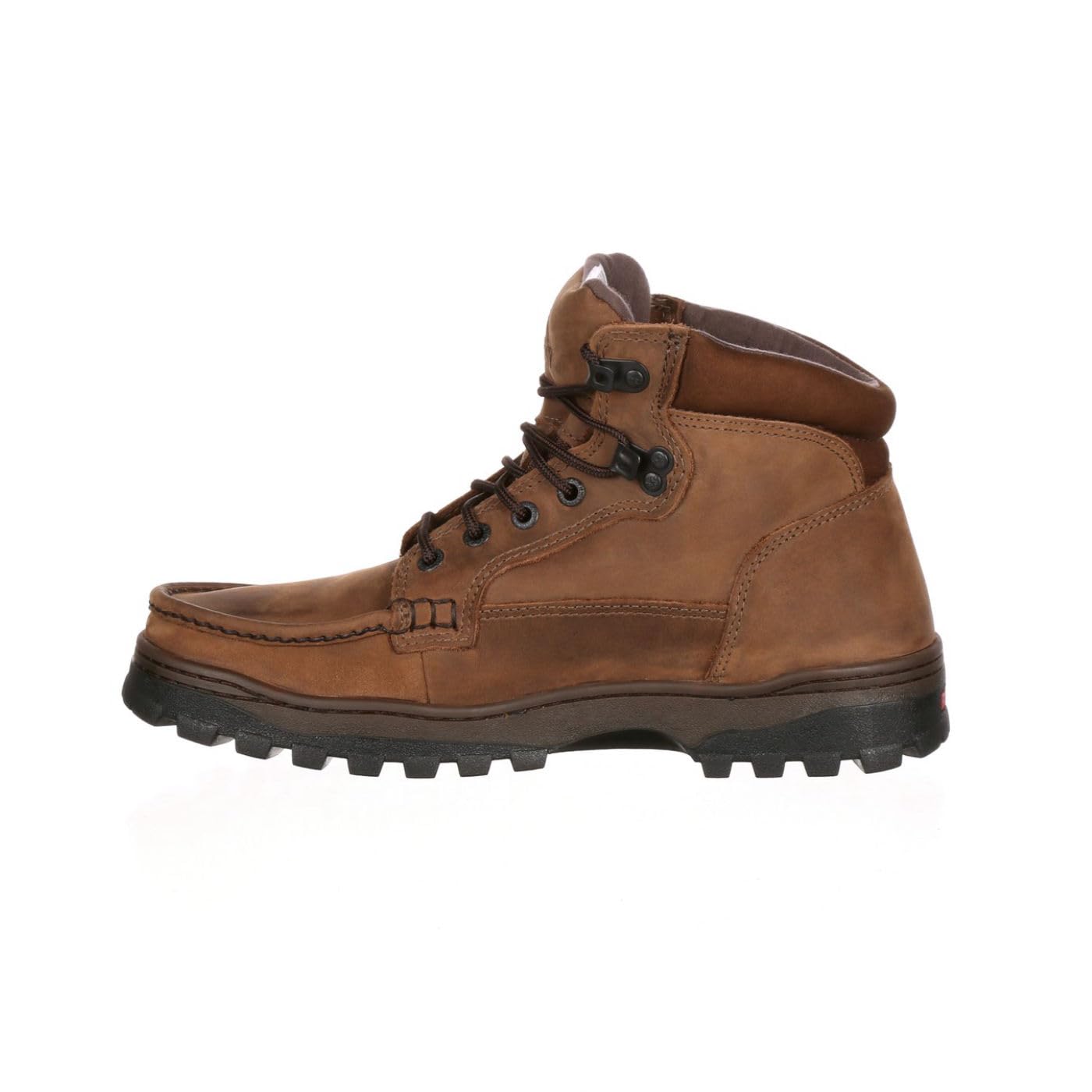
3. ROCKY Men’s Outback GORE-TEX Waterproof Hiking Boots
A GORE-TEX liner aimed at the brush, the trail and the tree stand
The GORE-TEX lining is the headline here. GORE-TEX is a membrane that blocks water from getting in while still letting vapour out, so you get dry feet that do not turn into a swamp on a long climb. Underneath that it uses a soft full-grain leather upper with an already-broken-in feel, plus an anti-friction mesh interior designed to pull moisture off the foot.
Weight is where you need to plan ahead. This boot comes in at 4.5 pounds, against 1.1 pounds for the White Ledge further down — a 4.1x gap. That extra mass buys you a deep-tread rubber sole that digs into wet rock and mud, and a perforated footbed for air circulation on a long carry. For a serious wilderness day that trade is worth it; for a stroll along a paved rail trail it is not.
The fit has a well-documented narrow toe area, which is the one thing to weigh up before you buy. Owners who wear a standard width and want a roomy toe box should look at the Mt. Maddsen instead. Buyers who settle into this boot tend to stay with it for years; the construction and durability feedback lands firmly on the positive side of the ledger.
Where it shines: the deep-tread sole grips on wet or dry rugged ground, and the full-grain leather keeps its rugged look season after season. This is a boot built for the brush and the backcountry.
What to weigh: 4.5 pounds is real weight to lift mile after mile, and the narrow toe box is not for everyone.
Grab it for: hunting, thick bushwhacking and wet, rooted ground where grip and a sealed liner matter more than an ounce on the scale.
Look elsewhere if: a roomy toe box is a must — this one runs narrow up front.
4. Timberland Men’s White Ledge Mid Waterproof Hiking Boots

The boot the trail crowd keeps re-buying, and the weight explains why
At 1.1 pounds this is the boot you reach for when you want dry feet without dragging a brick uphill. The upper is 100% premium waterproof leather from an LWG Silver-rated tannery, and the seam-sealed construction is the part that actually stops water working through the stitching. The fully gusseted tongue closes the lace gap to water, which is the leak point most boots ignore.
The EVA footbed and EVA midsole carry you through a long day on trail. Speed lace hardware with lace hooks at the top lets you cinch up in one pull, and the rustproof finish means the hardware survives a wet spring. Multi-directional lugs on the rubber outsole bite in several directions at once, which helps on loose descents and side slopes.
The honest split is on durability. The pattern across the many thousands of owners is that most wear them hard for years and come back for another pair, while a minority report them giving up after a season. That is a fair caveat for a lightweight hiking boot — the materials that save weight are the ones that wear first. It is still the boot I would point a first-time hiker toward.
Why it wins the masses: the combination of a feathery 1.1-pound weight, seam-sealed leather and a gusseted tongue is what most people actually want from a day hiker.
The obvious starter: new hikers, weekend walkers and anyone logging light trail miles who wants dry feet and no heavy boot to break in.
Think bigger if: you carry a heavy pack over multi-day trips — the lightweight build is not the heavy-hauler here.
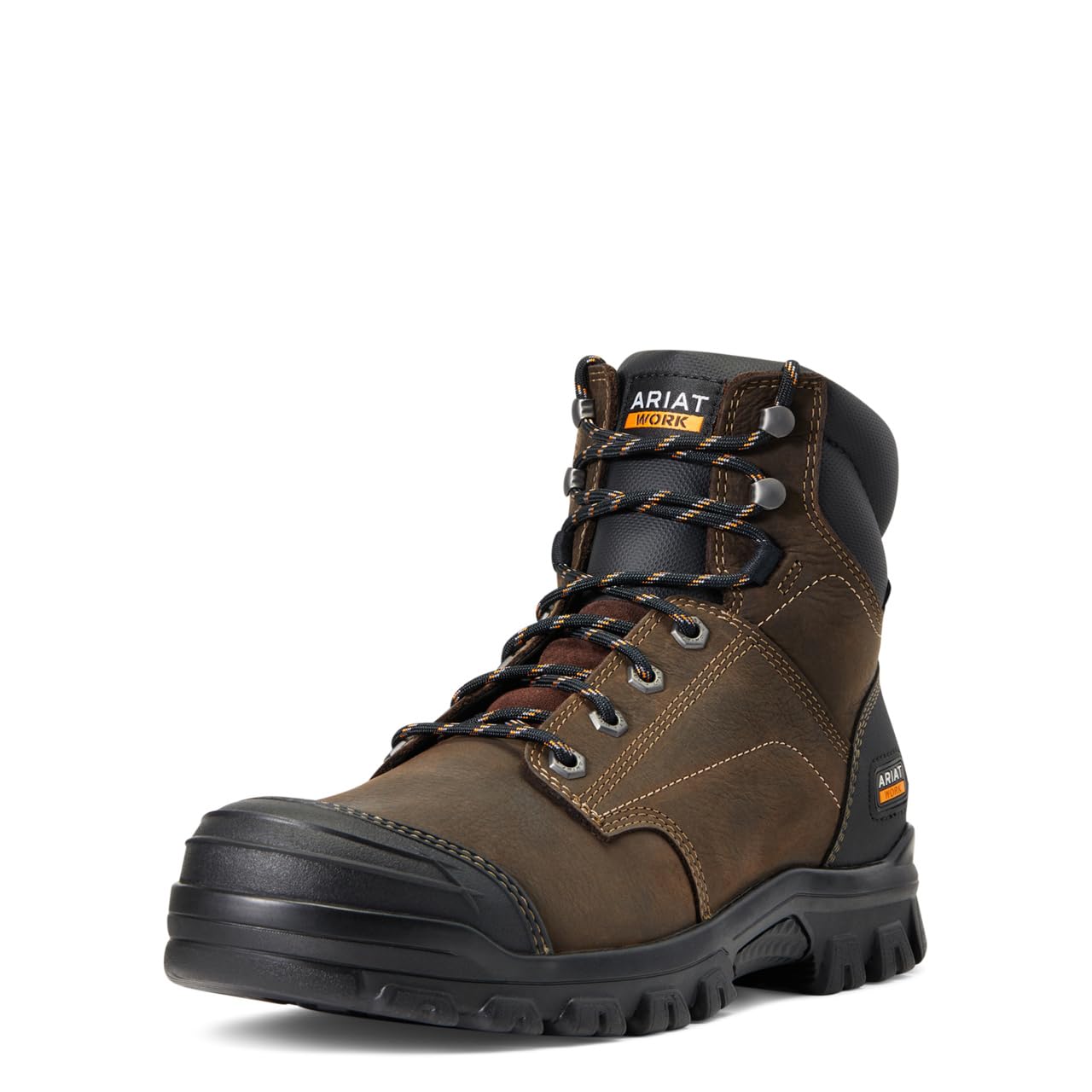
5. Timberland Men’s Mt. Maddsen Hiking Waterproof Boots
Safety-rated, slip-tested and built for a full shift on site
The credential that separates this boot is its ASTM rating for electrical hazard and slip resistance. ASTM is the standards body that sets the test, so you get a boot that has been put through recognised tests for slipping and for electrical hazards, which matters on wet concrete and around live equipment. DRYShield waterproof breathable construction backed by full-grain leathers keeps the water out while your feet still breathe.
The rest of the build is work-first. 4LR technology gives lightweight support and stability through the arch, and the all-day cushioning insole carries you past the eight-hour mark. A Duratread outsole is oil- and slip-resistant, and reinforced ExGuards run over the toe and heel to cut down wear on the two spots that wear first. Factory, warehouse, farm and ranch are all fair game.
The trade-off worth hearing: the durability signal on this boot is mixed, with sole wear coming up as the weak point on a hard-used pair. It is a boot you should expect to wear through rather than hand down. Weight is a positive here, with a lightweight feel that owners bring up far more often than on a steel-toe work boot.
What matters most: the electrical-hazard and slip-resistance ratings plus DRYShield waterproofing are the reasons a site worker should put this on over a hiking boot.
What to know: the sole is the piece that goes first on heavy use, so watch the tread if you pound concrete daily.
Pick this for: construction, warehouse and ranch work where an electrical-hazard rating and a slip-rated sole are not optional.
Not aimed at: hikers. The reinforced toe and heavy-duty sole are overbuilt for a trail walk.
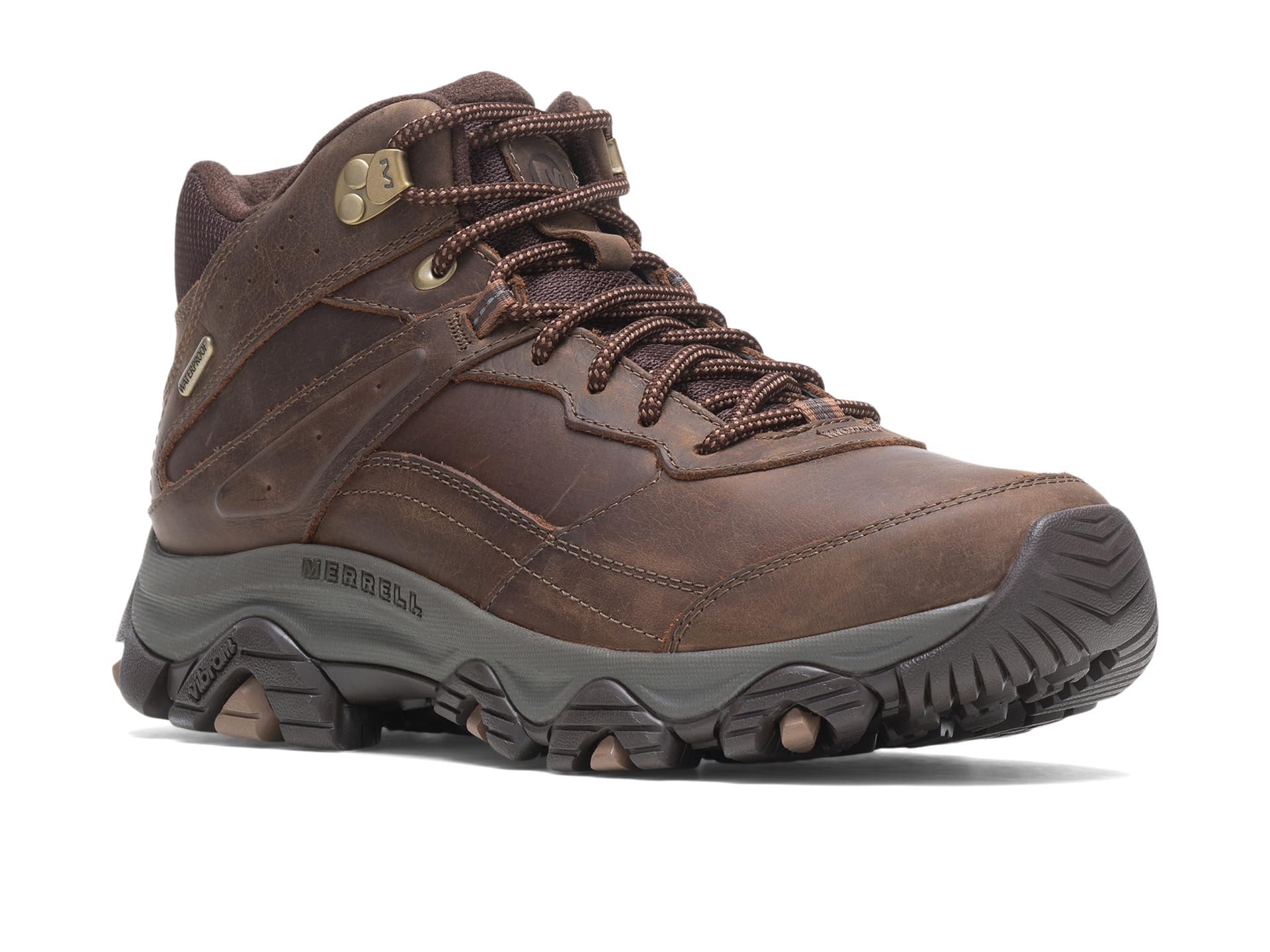
6. Merrell Men’s Moab Adventure 3 Mid Wp
The out-of-the-box fit Merrell is known for, now with a technical sole
The Vibram TC5+ outsole is the star here. Vibram is a rubber compound maker with a reputation among hikers, and TC5+ is a tread built for mixed ground, so you get grip on rock, gravel and wet roots. Merrell’s own waterproof membrane sits behind the rough-out leather upper, which is what keeps your foot dry when the rain rolls in.
What people want from this boot is the fit. The Moab line’s whole reputation rests on feeling broken in from day one, and this keeps that, with a fit that suits wide feet well. Seams hold up as the area owners single out for staying together, and the rough-out leather look gets its share of compliments on the trail and in town.
The honest limit is stability. A portion of the feedback flags it as the weaker side of this boot, which makes sense for a mid that prioritises comfort — a mid with a soft feel gives up a little rigidity on rough descents. If your hikes run to uneven, rocky terrain with a heavy pack, budget for a stiffer boot.
Where the money goes: the Vibram sole and the fit. Merrell’s comfort reputation is real, and the wide-foot friendly shape makes this a natural home for broader feet.
Try this: if you want a mid boot that fits painlessly and grips on mixed trail, with no break-in ritual.
Move on if: you carry a big load over unstable rock and want a stiff, locked-down platform under you.
7. Irish Setter Elk Tracker 12″ Mens Hunting Boot

A 12-inch, 1000-gram hunting boot built for standing still in the cold
Start with the 1000g 3M Thinsulate Ultra insulation, because that figure tells you exactly who this boot is for. It is the warmest boot on this list by a wide margin, built for the hunter who sits in a stand or stands in sleet with numb toes being a real enemy. The GORE-TEX waterproof lining keeps the water out under the same cold, and the full-grain waterproof leather upper runs up a 12-inch shaft to cover the brush.
The build underneath is a serious one. A removable comfort cork EVA and memory foam footbed gives a soft bed under your arch. The Bulls-Eye Air Bob Aggressive outsole bites into mud and snow. Goodyear leather welt construction ties sole to upper with real stitching, and the ScentBan treatment is aimed at hunters worried about scent control in the field.
Now the caveats. The feedback pattern splits on fit, with some buyers finding the sizing off, so measure against the chart before ordering. And this is not a three-season boot — the warmth is the entire point, and a mild October hunt will leave you overheating. If you want one boot for the whole year, this is not it; if you want one boot for the coldest sits, it is exactly it.
The absolute case: for a standing-still, sub-zero hunt, 1000g of 3M Thinsulate Ultra plus GORE-TEX waterproofing and a welted, cork-footbed build is a genuinely serious package.
Built for: cold-weather hunters who need warmth and dry feet over long sits and will pay for a boot that lasts.
Wrong tool for: the mild-weather hiker or anyone who wants a do-everything boot — the heat and the shaft are too much.
Know the Specs
Membranes: GORE-TEX, TimberDry and DRYShield
A membrane is a thin sheet behind the leather. It blocks liquid water from getting in while allowing water vapour to escape, so your feet stay dry without turning clammy. GORE-TEX is the big name, and it shows up in the Rocky Outback and the Irish Setter Elk Tracker. TimberDry does the same job in the Mt. Maddsen and White Ledge, and DRYShield handles it in the Ariat Treadfast.
Insulation weight and the gram number
Boots are graded by how much synthetic fill they carry, measured in grams. A boot with no fill is set for mild weather. A boot with 400 grams of PrimaLoft, like the Timberland Premium 6-inch, is built for cold and will run hot in summer. The Irish Setter’s 1000g 3M Thinsulate Ultra is the deep-winter end of the scale — you buy it for the stand, not the summer trail.
Gusseted tongue
A tongue is the padded flap under the laces. A fully gusseted tongue is stitched on both sides down to the boot, so when you step in a puddle, the water cannot roll around the edges and in through the lacing gap. It is one of the cheapest waterproofing features on a boot and among the most effective. The White Ledge and Mt. Maddsen both carry it.
Construction: welt vs. direct-attach
Goodyear welt construction uses a stitched strip to join the upper and sole, which is repairable and durable over the long haul. Direct-attach bonds the sole to the upper without a welt, which tends to be lighter and springier but harder to resole. The Timberland Premium and the Irish Setter Elk Tracker are welted; the direct-attach builds save weight.
Common Questions
How can I tell if leather boots are truly waterproof rather than water-resistant?
Do waterproof leather boots need to be treated or re-proofed over time?
How much does insulation weight in grams actually matter for warmth?
Will a GORE-TEX boot make my feet sweat during summer hiking?
What is Goodyear welt construction and why does it matter on a boot?
Should I size up or down in waterproof leather boots?
Is a heavier boot better for rugged terrain than a lightweight one?
Which boot should I pick if I have wide feet?
What do ASTM ratings on a work boot mean for slip and electrical safety?
How long should a waterproof leather boot last with daily wear?
The Bottom Line
The 4.5+ star Timberland Premium 6-inch is the pick that makes the most sense for the most people — 400 grams of PrimaLoft warmth, a seam-sealed upper and Goodyear welt construction all in one boot that wears in town or on the trail. If you want a lightweight day hiker instead, the Timberland White Ledge Mid at 1.1 pounds is the boot for fast, light miles. And for a deep-winter sit in the brush, the Irish Setter Elk Tracker with its 1000g 3M Thinsulate Ultra insulation is the one worth paying for.
How we choose
We do not accept paid placement. Every pick is matched to a real buyer and a real use-case; we do not hands-on test units.
Sources
Specifications: manufacturer listings and product documentation. Review insights: verified customer reviews, as of November 2026. Pricing: not shown on this page (it changes often); check the current price via the retailer link.
As an Amazon Associate, Tactical Gear Guy earns from qualifying purchases. This does not affect which products we feature.