Specs are compiled from manufacturer listings and verified buyer reviews and can change over time — please confirm the key details on the product page before buying.
Alaska rain comes sideways, lasts for days, and finds every seam that was not properly sealed. So the jacket you want is not the one with the cleverest marketing. You want taped seams (seams sealed with waterproof tape so water cannot creep through the stitching), a real waterproof coating rather than a light water-resistant finish, and a hood that stays put in wind. Below are nine jackets that hold up to that standard, sorted by what each does best: layering, insulation, flotation, or pure packable rain cover.
This guide is built by comparing the manufacturers’ published specifications and the patterns across verified customer reviews, so you get each pick’s real strengths and trade-offs instead of marketing spin.
You will see which shells are built for layering under a pack, which ones carry their own warmth, and where sizing runs short so you order right the first time. Here is the practical shortlist of the waterproof jacket for alaska that keeps you dry when the weather turns serious.
Top Picks


How To Choose The Best Waterproof Jacket for Alaska
Alaskan weather punishes the wrong jacket choice fast. You can be dry on the dock in the morning and soaked through by lunch if the shell was only water-resistant (it sheds light drizzle but soaks through in steady rain). Before you buy, get three things straight: how the seams are sealed, if you need insulation built in, and how much room you need underneath for layers.
Sealed seams versus a coating alone
A waterproof coating on the fabric stops rain from soaking the cloth — but every stitch hole is a gap. Look for fully seam-sealed or seam-taped construction, where tape is bonded over the stitching so water cannot wick through. That single detail separates a jacket that survives a wet week from one that wets out by day two.
Insulated shell or thin layering piece
An insulated jacket carries its own warmth, which suits standing around in cold rain. A thin shell has no insulation of its own, so you wear a fleece or midlayer underneath and add or remove as the day shifts. Thin shells pack smaller and dry faster. Insulated ones are warmer standing still. Match the jacket to how active you will be.
Why pit zips and breathability matter
Rain gear traps heat. Walk uphill in a sealed jacket and you will sweat, and sweat inside a waterproof shell feels just like getting wet. Ventilation zips under the arms, a breathable membrane, and a mesh or fleece lining all help move that moisture out. If you plan to hike, haul gear, or move fast, ventilation is not a luxury.
Side-by-Side Comparison
| Model | Best For | Waterproof Rating | Insulation | Weight Class | Amazon |
|---|---|---|---|---|---|
| Carhartt Men’s Monterey Jacket★ Best Overall | All-round wet-weather workhorse | Waterproof, fully seam-sealed | Uninsulated shell | Lightweight, packable | Amazon |
| wantdo Women’s Plus Size Ski JacketBest Plus-Size Fit | Plus-size cold-weather coverage | 10,000 mm/H2O | Insulated, polar fleece lining | — | Amazon |
| wantdo Men’s Winter ParkaBudget Warmth | Budget warmth for big and tall | 5000 mm | Insulated puffer | — | Amazon |
| BASSDASH Walker-LW | Silent shell for fishing and hunting | Waterproof, breathable | Uninsulated shell | — | Amazon |
| The North Face Antora Rain 2.0 | Packable trail and city rain cover | Waterproof, breathable | Uninsulated shell | Lightweight, packable | Amazon |
| Marmot Men’s Precip Eco | Recycled lightweight backpacking shell | NanoPro waterproof membrane, seam-taped | Uninsulated shell | Lightweight, packable | Amazon |
| Columbia Tipton Peak III | Insulated warmth with thermal-reflective tech | Waterproof, breathable | Insulated, thermal-reflective | Lightweight | Amazon |
| Piscifun Ice Fishing Jacket | Cold-water flotation safety | DWR-coated, fully taped and sealed seams | 100% polyester thermal insulation | Heavyweight | Amazon |
| Helly Hansen Crew Hooded Midlayer 2.0 | Marine-grade warmth on the water | Helly Tech, fully seam-sealed, DWR | Polartec fleece midlayer | Medium weight | Amazon |
Detailed Reviews
1. Carhartt Men’s Monterey Jacket
Our pick — 4.5+★ from 750+ verified ratings; the strongest balance of quality and price.
A no-nonsense rain shell that seals out wind and water without becoming a sauna.
The Carhartt Monterey is the jacket you throw on for any wet day and stop thinking about. Its whole job is sealing you off from rain and wind, and it does that with waterproof zippers, an adjustable hood, and a fully seam-sealed body. Fully seam-sealed means tape is bonded over every stitched seam — the spots where water normally sneaks through — so the shell holds a solid barrier instead of wetting out in a downpour. The design still lets your body breathe, so you are not clammy after an hour of walking.
Adjustability is where this one earns its place on an Alaska list. The cuffs and hem tighten down so you can dial in the fit against wind-driven rain, and when the weather clears you compress the whole thing into one of its own pockets. Multiple zip pockets keep a phone and papers dry. It pairs cleanly with a fleece or midlayer underneath for cold mornings, which is why it works across seasons rather than just summer drizzle.
What wins people over on this jacket is plain quality — it is the thing the most buyers single out, with water resistance close behind. It blocks wind and rain, and the cut leaves room in the chest and arms for layers. The honest caveat is sizing: a portion of buyers find the fit off, so check the Carhartt size chart rather than assuming your usual letter size.
Where it earns its keep
- Fully seam-sealed body with waterproof zippers seals out driven rain
- Adjustable hood, cuffs, and hem let you lock the fit down in wind
- Packs into its own pocket when the sky clears
- Breathes so you are not soaked from sweat inside the shell
What to plan around
- Fit draws mixed feedback, so measure before you order
- No built-in insulation — you supply the warmth with layers
Go for it: anyone who wants one dependable rain shell that handles wind, wet, and layering across the year.
Size check first: the fit runs inconsistent for some, so consult the size chart before clicking buy.
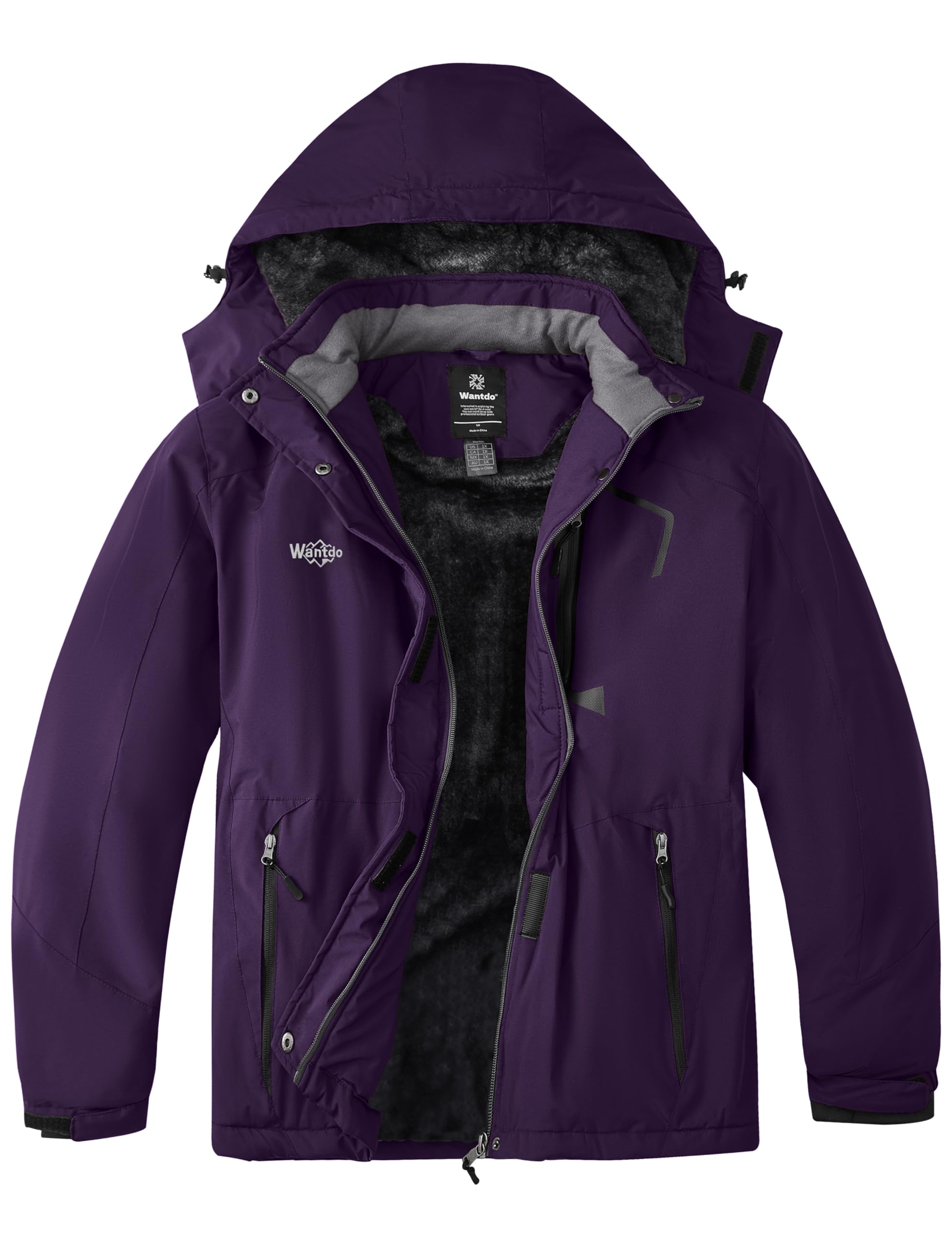
2. wantdo Women’s Plus Size Ski Jacket
Built for plus-size women who need real cold-weather coverage that layers cleanly.
If you have struggled to find a winter jacket cut generously without losing weather protection, this one was designed for exactly that. The waterproof ski coating carries a 10,000 mm/H2O rating — that number measures how much water pressure the fabric resists before it leaks, and 10,000 mm is a genuine rain-and-snow barrier rather than a splash-resistant finish. Elastic cuffs seal snow out of your gloves and sleeves, so your hands stay warmer and drier.
The strength here is warmth. A heavy polar fleece lining and thumb holders push heat around your core on genuinely cold days, and the fit leaves room for a sweater underneath when you want extra layering. The detachable hood gives you protection from wind when you want it and the option to strip it off when you do not. Pockets are generous, including an extra one that fits a phone within easy reach.
Quality and warmth are what buyers most appreciate, and it handles very cold temperatures well. The trade-off worth knowing is that the insulation makes it bulky, and some find the length runs differently than expected — neither is a defect, just something to weigh if you want a trim silhouette. This is a cold-weather workhorse, not a packable shell.
Why it fits the brief: a real 10,000 mm/H2O barrier plus fleece lining means one jacket covers rain and cold, and the plus-size cut is the point rather than an afterthought.
The honest catch: it is a bulky insulated coat, so it suits standing around in cold wet weather better than packing small for a hike.
Reach for this if: you want one warm, plus-size jacket that handles snow and rain without layering gymnastics.
Look elsewhere if: you need something ultra-packable or you prefer a slim fit — the insulation adds bulk.
3. wantdo Men’s Winter Parka
An insulated puffer parka that brings warmth and rain cover to big-and-tall sizing on a budget.
This is the jacket for the guy who runs cold and wants warmth built in rather than stacked on. Its 5000 mm waterproof rating sets a moderate rain barrier — enough for steady rain and snow, below the heaviest sustained downpours you would want a higher-rated shell for. The puffer construction traps heat with a soft liner that keeps you mobile, and it is cut in extended sizes for big and tall men, which is often the hardest fit to find in a weatherproof coat.
Your essentials stay close in four large multi-function pockets. An SBS two-way zipper (a zipper that opens from both the top and the bottom) runs smoothly up and down. Adjustable cuffs keep cold air out, and a detachable faux fur hood is easier to clean and maintain. The recycled-material build adds comfort without sacrificing the insulated feel. For travel, camping, or the daily walk, it does the warm-and-covered job without fuss.
Quality leads what buyers notice, with warmth right behind it, and many get compliments on how it looks. It is worth being honest about the zipper: it draws the most negative feedback of any feature, so treat it gently. Sizing also splits — some find it true to size, others find it runs big. Order by the chart, not by habit.
Value read: insulated warmth plus extended big-and-tall sizing is the reason to pick this — that combination is hard to find at the entry end of the market.
Watch the zipper: it is the feature most likely to give you trouble, so do not force it and keep the track clean.
Reach for this if: you are a bigger or taller guy who wants an insulated, hooded parka without spending premium money.
Look elsewhere if: you need to face the heaviest sustained downpours — its 5000 mm barrier is more moderate than a dedicated storm shell.
4. BASSDASH Walker-LW Wading Jacket

The quiet, breathable wading shell that survived a week of heavy Alaskan rain.
For fishing and hunting, noise matters as much as dryness, and this jacket handles both. The outer fabric is built to stay silent as you move, so a rustle does not spook fish or game the way a crisp nylon shell does. It is a genuinely waterproof, breathable shell that keeps you dry. One buyer reports it survived a full week of heavy rain in Alaska.
Storage is where it pulls ahead of a plain raincoat: two outside chest zip pockets, one secure inside chest zip pocket, two brushed tricot hand-warmer pockets, and two front pockets with button-flap closures — seven in all. The brushed hand-warmer pockets are a small but smart detail on cold water mornings. It breathes well enough to wear over layers through a long day of moving and standing.
Build quality is the thing people praise most, with water resistance close behind, and it dries out well after a soaking. The real warning here is sizing: it runs quite small for many, and a share of buyers find the sizing off. Do not order your everyday letter size — size up. Get that right and this is a purpose-built field jacket, not a city raincoat.
Field-ready detail: the silent outer fabric plus seven well-placed pockets make this a working shell for anglers and hunters rather than a fashion layer.
Order up: the sizing runs small across enough buyers that you should plan to size up rather than trust your usual fit.
Best for: anglers and hunters who need a quiet, waterproof shell with serious pocket organization.
Skip the guessing: it runs small — go up a size from your normal letter size.
5. The North Face Antora Rain 2.0 Hooded Jacket
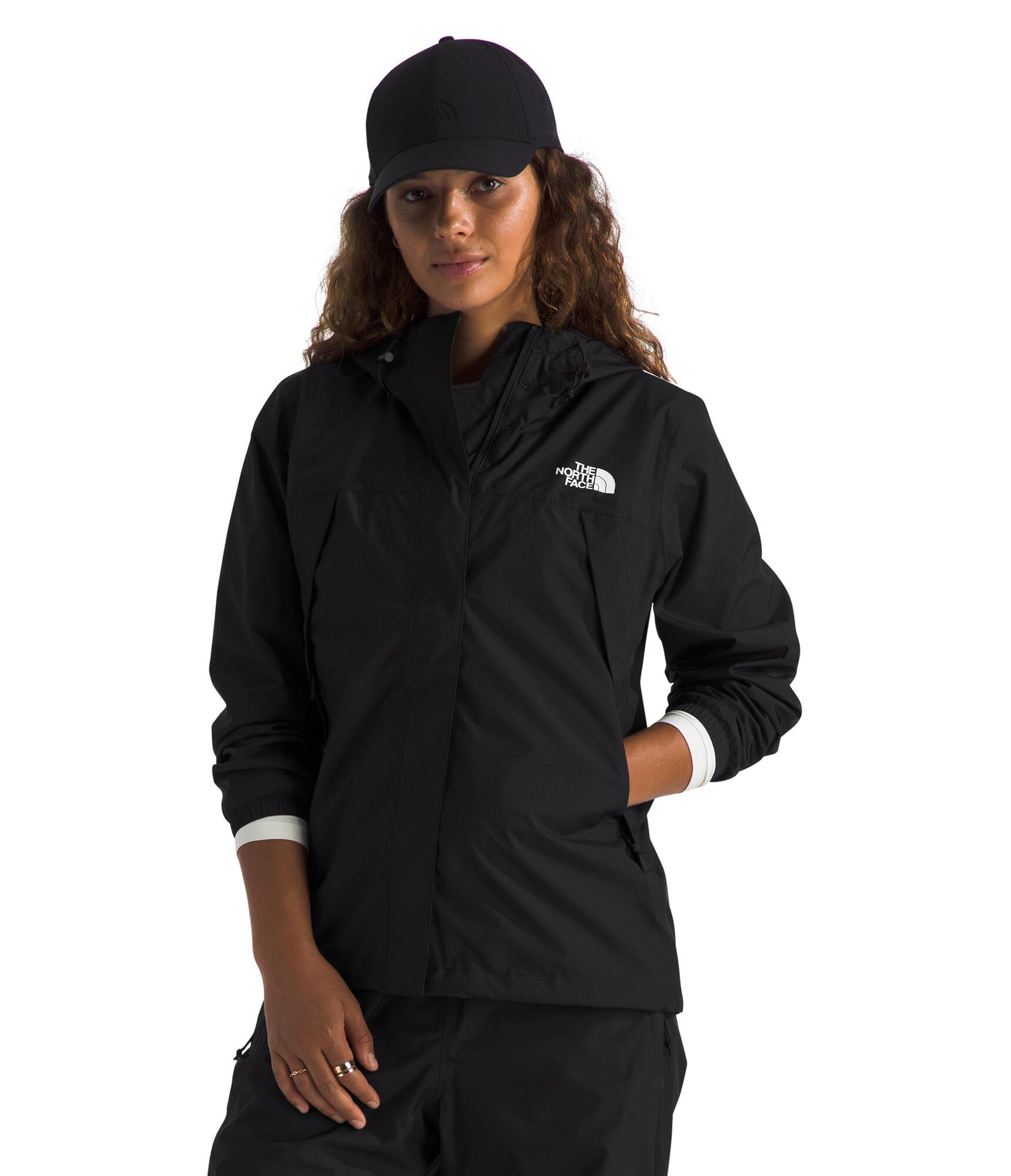
A packable trail shell that shrugs off shifting weather and stows when the sun breaks.
The Antora is the one to grab when the forecast is a question mark. It is a waterproof and breathable shell built with high-performance materials that protect against both light and heavy rain while letting moisture escape — so on a high-output hike you are not stewing in your own sweat. It stays lightweight and packable, which means it disappears into a daypack until the clouds roll in, then comes back out for the downpour.
The fit is the standout. Buyers consistently report it fits well across the chest and shoulders, and it keeps them dry through heavy rain. One buyer reports it handled Scotland’s shifting weather, and the dry-vent lining reportedly prevents overheating. It also looks good enough to wear around town, not just on the trail.
Sizing is the one wrinkle to plan around: plenty of buyers find the fit right, but a portion say it runs a bit small. If you are between sizes or plan to wear a heavy layer beneath, lean toward the larger size. That aside, this is the packable shell that earns its place in a bag on any trip where weather is unpredictable.
Why it travels well
- Waterproof and breathable shell handles both light and heavy rain
- Lightweight and packable so it stows into a daypack easily
- Lining helps prevent overheating on active days
- Clean enough to wear around the city, not just on trails
Order smart
- Some find it runs a bit small — size up if you layer underneath
- No insulation of its own, so warmth comes from what you wear below
Go for it: hikers, commuters, and travelers who want a light shell that packs down and handles unpredictable weather.
Size up if unsure: the fit is dialed in for many, but a share find it snug, so lean larger when layering.
6. MARMOT Men’s Precip Eco Rain Jacket
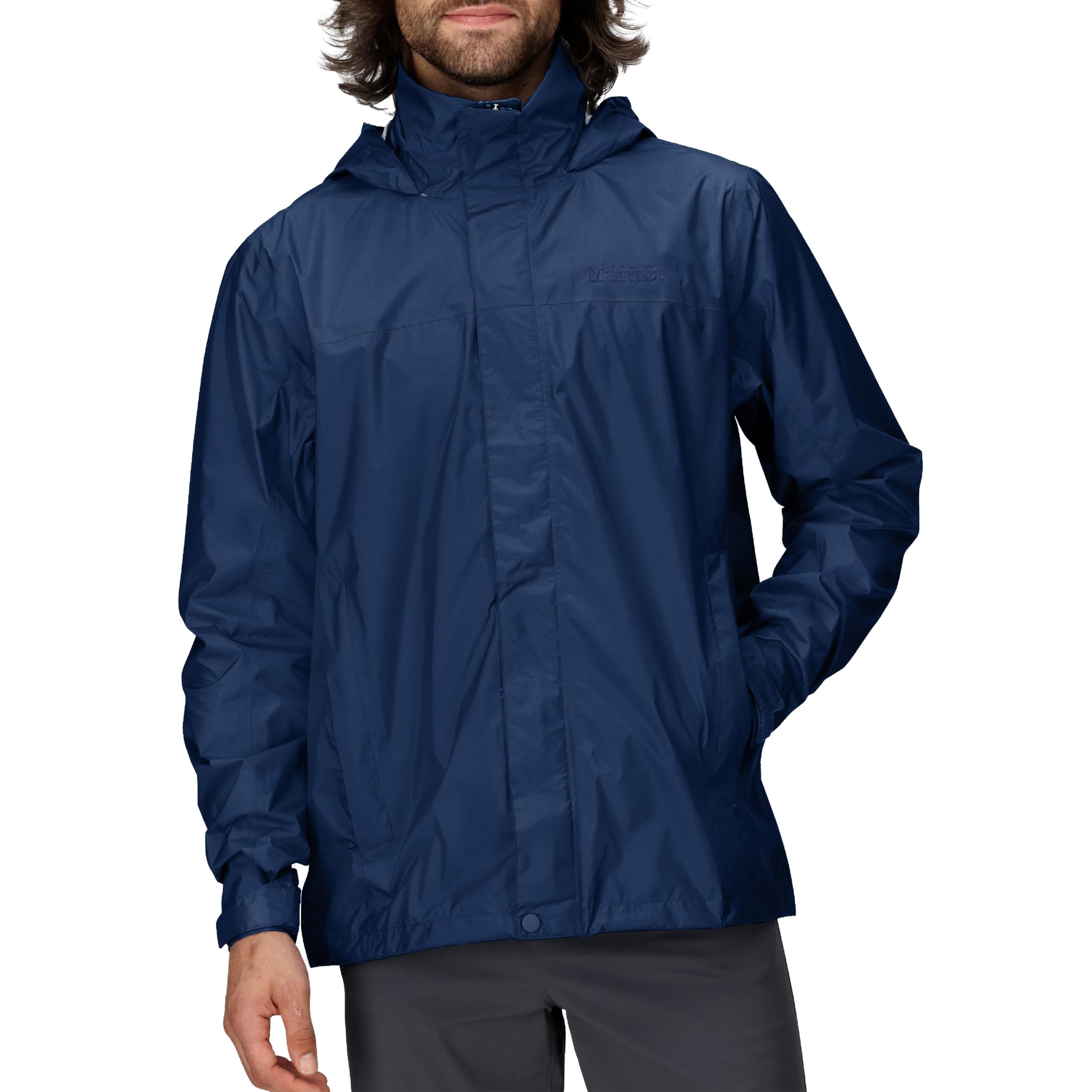
A lightweight backpacking shell that leads on breathable rain protection and recycled materials.
Here is the advantage a proven rain shell has over a plain waterproof coat: ventilation. The Precip Eco runs a NanoPro waterproof and breathable membrane under 100% seam-taped construction — seam tape bonded over every stitch so leaks have nowhere to start. Add pit zips under the arms and you can dump heat on a climb without opening the front and letting rain in. It stows into its own pocket, adjustable drawcord hem and Velcro cuffs lock out cold air, and a DriClime-lined chin guard reduces irritation around your face.
Buyers praise this design’s quality and fit first, with water resistance and lightweight build right behind. It handles rain and wind well and is particularly loved for spring, summer, and fall trips where you want protection without weight. The recycled nylon ripstop shell (a grid-reinforced fabric that resists tearing) and PFC-free DWR (a water-repellent surface treatment free of certain fluorinated chemicals) give it an eco-conscious angle too.
Two things to keep in mind. First, durability draws mixed feedback — this is a lightweight backpacking shell, so treat abrasion points with a bit of care. Second, it is built for mild-weather layering, meaning it is your rain barrier, not your warmth. For pure wet-weather protection under a pack, it is a strong pick.
Breathability edge: the NanoPro membrane plus pit zips is the reason this one lets you move hard in rain without overheating — a step up in ventilation from a basic seam-sealed coat.
Layering note: it suits mild-weather rain over a midlayer, so pair it with insulation on genuinely cold days rather than expecting warmth from the shell.
Best for: backpackers and hikers who want a lightweight, breathable rain shell with real ventilation and recycled materials.
skip it if: you want a burly abrasion-resistant shell or built-in warmth — this one favors weight savings and breathability.
7. Columbia Men’s Tipton Peak III Insulated Jacket

Warmth built into the shell — synthetic insulation plus thermal-reflective tech under waterproof protection.
The Tipton Peak III skips the layering puzzle by carrying its own heat. Synthetic insulation traps warmth while thermal-reflective tech bounces body heat back at you, and both sit under a waterproof, breathable shell that seals out rain. That combination means you can step out into cold, wet weather in one jacket instead of a shell over a puffer. Extended and tall sizing widens the fit options, and the regular cut keeps it from feeling boxy.
This one is built for winter wear specifically. It performs well between 15 and 50 Fahrenheit and stays lightweight for an insulated jacket. The adjustable bungee cords on the hood let you cinch it against wind, and the overall look earns compliments. It is a jacket you wear when the cold is the main event, not a passing drizzle.
Quality and warmth are the things buyers rate highest here. Two notes to weigh: sizing draws mixed feedback, so check the chart, and pockets get some mixed chatter — worth eyeballing what you need to carry. On raw warmth-per-layer, it beats the thin uninsulated shells in this list for standing-around cold. Between it and the Carhartt Monterey above, the difference is simple: the Columbia brings its own warmth; the Carhartt keeps you dry and lets you add layers.
Why it earns a place
- Synthetic insulation plus thermal-reflective tech keep you warm without extra layers
- Waterproof, breathable shell covers rain and cold in one jacket
- Extended and tall sizing for a broader range of builds
- Keeps you moving comfortably across a wide stretch of the cold season
What to check
- Sizing runs mixed, so confirm against the chart
- Pocket layout draws some mixed feedback
Reach for this if: you want one insulated jacket that handles cold and rain together without layering.
Look elsewhere if: you want a fast-packing shell you can strip down — the built-in insulation makes it a bulkier wear.
8. Piscifun Ice Fishing Jacket

The only jacket here engineered to keep you afloat if you go through the ice.
Nobody else on this list does what the Piscifun does. Its Professional Flotation Technology keeps an adult afloat if you fall through the ice. A waterproof surface fabric pairs with 100% polyester thermal insulation for warmth in extreme cold, and the fully taped and sealed seams plus a DWR coating (a water-repellent surface finish) block rain while the fabric stays breathable. An interior mesh hem design quickly drains water out once you are back to safety.
Safety details run deeper than the flotation: there is a safety whistle for signaling help in an emergency, reflective strips and printing front and back for night visibility, and seven pockets for storage. A YKK two-way zipper and precise stitching back up the durability, and the Veil Camo partnership gives it a look that stands out on the ice. Flannelette-lined pockets keep your hands warm when the wind bites.
Quality and warmth are what impress buyers most, and it earns praise for cold-weather fishing comfort and its useful pocket count. The catch to know is fit: it is a heavily insulated, heavyweight jacket, and some find the sizing runs a little short — check the length before you commit. For anyone who fishes cold water, the flotation alone changes the math.
The safety difference: flotation technology plus a safety whistle and reflective strips make this the one jacket here built around cold-water survival, not just staying dry.
Length matters: it is a heavyweight insulated coat and some find it runs short, so confirm sizing with length in mind.
Best for: ice anglers and cold-water fishers who want flotation safety plus heavy insulation in one jacket.
Check the length: the fit runs short for some, so verify sizing and length before ordering.
9. Helly Hansen Men’s Crew Hooded Midlayer Jacket 2.0

Built for life on the water: fully sealed waterproofing with Polartec fleece warmth inside.
Helly Tech Protection is the heart of this jacket — fully waterproof, windproof, and breathable fabric and construction, fully seam-sealed, with a durable water-repellent (DWR) treatment on top. Its 2-layer build pairs that shell with Polartec fleece lining, so warmth is part of the jacket rather than something you add. A packable hood stows in the collar, and the regular fit is cut to go over thicker midlayers — neither slim nor oversized. It is designed for inshore sailing, dinghy sailing, and marine life, then wears fine into the city.
Small details show the marine DNA: a drawstring adjustment inside the hood, an adjustable drawcord on the hem, brushed polyester inside the collar and hand pockets, adjustable cuffs, and PFC-free construction. The brushed fleece lining means the inside feels warm against skin, not cold and slick. It is a hip-length cut that stays put when you are moving around deck or around town.
Warmth and water resistance are the top draws, with buyers praising how it keeps them dry in rain and wind, and it looks sharp enough for daily wear. One honest note: durability draws mixed feedback, so this is a jacket to care for rather than abuse. The North Face Antora above is the lighter, more packable choice; the Helly Hansen brings fleece warmth and a marine-built shell in its place.
Water-first design: Helly Tech waterproofing with a fully seam-sealed shell gives this real marine-grade protection, and the Polartec fleece lining adds warmth without a separate midlayer.
Care note: durability draws mixed feedback, so treat it as a jacket to look after rather than a rough-use beater.
Best for: boaters, sailors, and anyone who wants a warm, fully sealed jacket that wears equally well on the dock or downtown.
Handle with care: durability is mixed, so this rewards upkeep over hard abuse.
Know the Specs
Waterproof rating (mm/H2O)
A waterproof rating measured in millimeters expresses how tall a column of water the fabric can hold back before it leaks. A 10,000 mm/H2O jacket resists steady rain and wet snow far longer than a light water-resistant finish. Higher numbers mean more sustained downpour protection. A moderate 5000 mm rating still covers ordinary rain and snow but is not built for the heaviest sustained storms.
Seam sealing and DWR
Seams are the weak points in any waterproof jacket — water wicks through stitch holes. Fully seam-sealed or seam-taped construction bonds tape over those stitches so leaks cannot start. A DWR (durable water repellent) finish makes rain bead and roll off the outer fabric, keeping the shell from wetting out. Together, seam sealing plus DWR is what turns a waterproof coating into reliable protection.
Insulated versus uninsulated
An insulated jacket carries its own warmth — synthetic or fleece fill traps body heat, so one layer covers cold and rain. An uninsulated shell is a thin barrier you wear over a fleece or midlayer, adding or removing warmth as the day shifts. Insulated suits standing around in cold wet weather; uninsulated suits active days and packing small. Match the jacket to how much you will be moving.
Breathability and ventilation
A waterproof shell traps heat unless it can let moisture out. Breathable membranes move sweat vapor through the fabric while blocking rain, and pit zips under the arms give a fast vent for climbs. Without ventilation, hard activity makes you sweat inside the shell, which feels like getting wet. If you hike or work in the jacket, weight breathability and venting as heavily as the waterproof rating.
Common Questions
How do I know a jacket is truly waterproof and not just water-resistant?
Is an insulated jacket or a layering shell better for Alaskan weather?
What does a 10,000 mm/H2O waterproof rating actually mean?
Why do some rain jackets have zippers under the arms?
Will these jackets hold up with layers worn underneath?
Do I need a hood that adjusts, or is a fixed hood fine?
Which jacket is safest if I fall through the ice?
How much weight does a waterproof jacket add to a pack?
Should I choose extended or tall sizing for a weatherproof jacket?
Why does my jacket feel damp inside even when rain stays out?
The Bottom Line
For most people, the waterproof jacket for alaska winner is the Carhartt Men’s Monterey Jacket. It seals out wind and rain with a fully seam-sealed body and waterproof zippers, then packs into its own pocket when the weather clears — a do-everything shell that layers across the year. If you want warmth built in rather than stacked on, grab the Columbia Tipton Peak III. And for fishing or hunting where a quiet, pocket-heavy field jacket matters, the BASSDASH Walker-LW is the one to reach for — just size up.
How we choose
We do not accept paid placement. Every pick is matched to a real buyer and a real use-case; we do not hands-on test units.
Sources
Specifications: manufacturer listings and product documentation. Review insights: verified customer reviews, as of July 2026. Pricing: not shown on this page (it changes often); check the current price via the retailer link.
As an Amazon Associate, Tactical Gear Guy earns from qualifying purchases. This does not affect which products we feature.