Specs are compiled from manufacturer listings and verified buyer reviews and can change over time — please confirm the key details on the product page before buying.
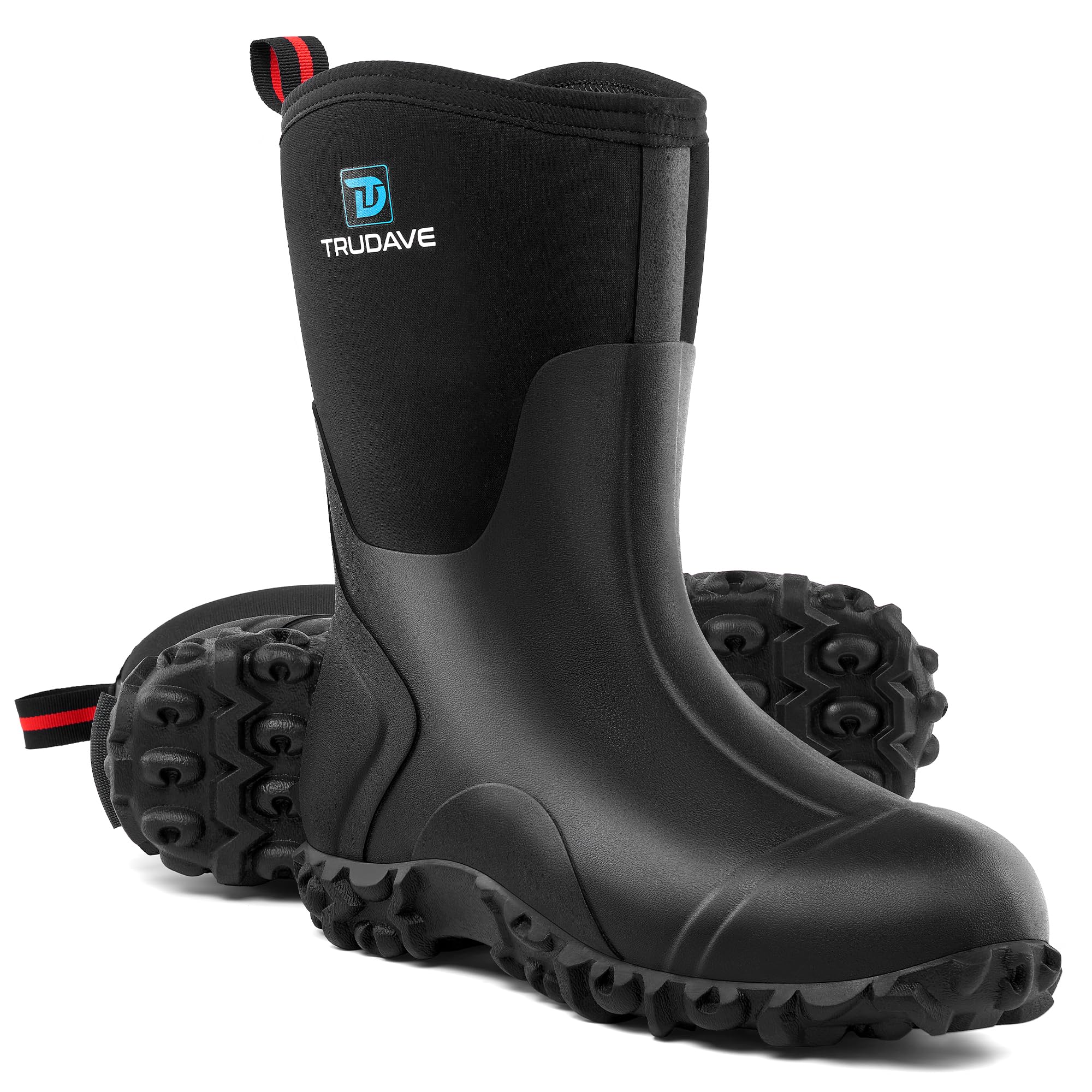
If you want the short answer: the Trudave 6mm Neoprene Mid Calf Rain Boot is the pair that best balances waterproofing, warmth and grip for most women, and the NORTIV 8 hiking boot is the one to pick if you mostly walk trails rather than barnyards. Everything below is about matching the boot to your ground — mud, snow, wet city pavement or a damp hiking trail — because a waterproof boot that fights your feet is no bargain at any tier.
This guide is built by comparing the manufacturers’ published specifications and the patterns across verified customer reviews, so you get each pick’s real strengths and trade-offs instead of marketing spin.
A rubber shell seals out standing water, while a membrane boot blocks rain and still vents sweat — so match the build to your wet weather, not the label. Below is a full breakdown of the waterproof boots for women that hold up in real wet weather.
Top Picks

How To Choose The Best Waterproof Boots for Women
Start with the ground you actually walk on. A rubber-and-neoprene boot is built for mud, wet grass and deep puddles, while a hiking boot with a suede or mesh upper is built for trails and pavement where you want flex. Buying a trail boot for barn chores, or a rubber wellington for a rocky hike, is the most common misfire.
Match the shell to your wet weather
Rubber and neoprene shells shrug off standing water and hose down clean in seconds. That makes them the safer bet for gardening, farm chores and slush. Suede and mesh hiking uppers feel lighter and more athletic on a trail, but they want a proper waterproof membrane inside to keep a puddle from soaking through.
Check the sole before the colour
A deep, treaded outsole is what keeps you upright on wet tile, icy paths and slick mud. A steel shank (a stiff bar tucked into the sole under your arch) adds support when the ground is uneven, so your foot is not doing all the work. If a boot has ever folded under you on a rutted track, a steel shank is the stiffness you were missing.
Decide how warm you need to be
Insulation keeps your toes from going numb in cold slush, but it also cuts airflow. A 6mm neoprene layer runs warm; a breathable mesh-lined hiking boot runs cooler. If you wear these through a mild, wet spring, less insulation is more comfortable. For winter slush, warmer wins.
Get the fit right the first time
Waterproof boots are notorious for running small, because the sealed layers eat into the inside space. Read the fit feedback for each model and size for the socks you will actually wear. A boot that pinches across the toe gets tighter, not better, with a thicker sock.
Side-by-Side Comparison
| Model | Best For | Build | Insulation | Sole / Support | Amazon |
|---|---|---|---|---|---|
| Trudave Rubber Boots★ Best Overall | Mud, chores, all-season wear | 6mm neoprene + natural rubber | Insulated neoprene | Steel shank, deep tread | Amazon |
| NORTIV 8 Hiking BootsBest Value | Trails on a lean budget | Waterproof hiking upper | — | Hiking outsole | Amazon |
| Western Chief ChelseaStyle Pick | Rainy-day style and yard work | Rubber rain boot, printed | — | Treaded sole, side buckle | Amazon |
| HISEA Deck Rain Boots | Quick slip-on for wet chores | Reinforced rubber shell | — | Non-slip outsole, memory foam insole | Amazon |
| R CORD Hiking Boots | Day hikes with ankle support | Waterproof breathable hiking upper | — | Non-slip outsole, ankle support | Amazon |
| Columbia Transverse Suede | Cushioned trail comfort | Waterproof suede hiking boot | — | Advanced traction sole | Amazon |
| Merrell Speed Strike 2 Mid | Fast, light trail hikes | Recycled mesh with waterproofing | — | Sticky rubber outsole | Amazon |
| BOGS Amanda II Chelsea | Cold-weather everyday wear | Synthetic upper, plush lining | Comfort rated to -13F/-25C | Slip-resistant outsole, EVA gel footbed | Amazon |
| SOREL Tivoli V Tall | Deep snow and winter city days | Tall waterproof winter boot | — | Winter traction outsole | Amazon |
Detailed Reviews
1. Trudave Rubber Boots for Women with Steel Shank
Our pick — 4.5+★ from 950+ verified ratings; the strongest balance of quality and price.
The mid-calf boot that treats mud, muck and snow as one and the same problem.
The number worth knowing is 6mm — that is the thickness of the neoprene wall lining this boot. Neoprene is a soft, spongy synthetic rubber, and at that gauge it does two jobs at once: it insulates your foot against cold ground, and it gives the shell some give so it moves instead of cracking. Around it sits natural rubber, which is what makes the boot genuinely waterproof rather than merely water-resistant. Hose it off after a muddy morning and it looks new.
Underneath, a steel shank runs through the sole, and that is the detail that lifts this above a plain rubber wellington. A steel shank is a stiff bar tucked under your arch, so the boot does not fold when you step on a rut, a rock or the edge of a raised bed. The deep tread handles slick ground, and cold-weather grip is where this pair earns its following — snow and ice are the conditions owners bring up by name. Durability earns a nod too: these are boots people wear for seasons, not one wet spring.
What wins people over is the sheer build quality, which sits comfortably ahead of every other thing owners talk about, with the fit close behind. That fit pairing is unusual for a rubber boot, because most either swallow thin socks or choke thick ones — here both work. The catch is weight and bulk: this is a substantial mid-calf boot, not a shoe you will forget you are wearing, and it is cut for work rather than for a dress. It reads as a chore-and-garden boot first.
What earns it the crown
- 6mm neoprene insulates and cushions while the natural rubber shell seals water out at the seam level.
- A built-in steel shank keeps the sole rigid on ruts and uneven ground.
- Deep tread grips snow and ice, not just wet grass.
- Fit works with thin or thick socks, which is rare in a rubber boot.
- Cleans up with a hose and holds up over multiple seasons.
Worth knowing before you buy
- It is a heavy, mid-calf boot with a work-boot silhouette — no dress-up use.
- Insulation that keeps winter slush at bay can feel warm on a humid summer day.
Buy this if: your wet days look like mud, snow, wet grass and a hose-down at the end.
Pass if: you want a slim boot that disappears under trousers or goes to dinner.
2. NORTIV 8 Waterproof Women’s Hiking Boots
A trail boot that survives rain, hail and mud without asking much of your wallet.
If your wet weather happens on a path rather than in a barn, start here. These are hiking boots with a waterproof build, and the owners who put them through the worst weather report back that they hold up — rain, hail and mud all come up in the feedback, and the boots come through it with dry feet. They last past the first season too, which matters more than any single feature at the budget-friendly end.
Trail support is the second reason these earn their place. Long walks and uneven ground are what this boot is built for, and the ankle support gets specific praise for keeping a hiker steady on loose terrain. Compare it with the Trudave above and you are looking at two different tools — one for standing in muck, one for covering distance. Neither replaces the other.
Here is the honest part: fit is the most argued-about topic in this boot’s feedback, and it splits both ways. Some wearers find it true to size while others need to adjust, so try them on with the socks you hike in before committing to a long trip. Comfort gets a similar spread. Sizing up half a size is the safer bet if you are between sizes or plan on thick socks.
The trail argument: real hiking support and a waterproof upper at an entry-level tier, with the durability to last past a year of weekend use.
The sizing argument: fit is the one thing owners disagree on, so order with a return plan in mind.
Reach for these if: your weekends are trails, towpaths and wet woodland walks.
Look elsewhere if: you need a boot for standing water and farm chores — get the rubber pair instead.
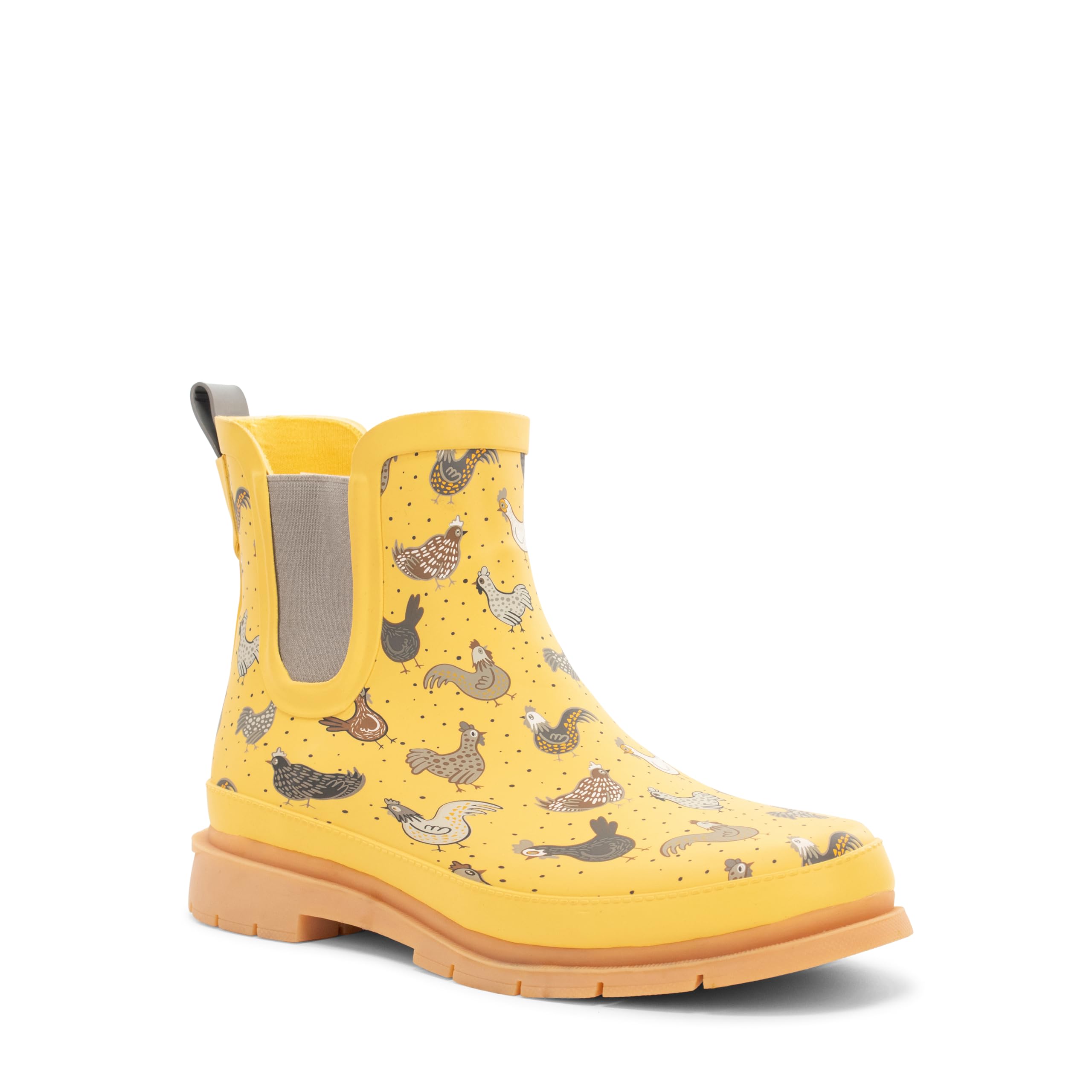
3. Western Chief Women’s Waterproof Pull-On Chelsea Rain Boot
A rain boot that treats a wet day as an excuse to wear something cheerful.
Western Chief has been building family footwear since 1891, which is a long time to learn what keeps a foot dry. This Chelsea silhouette is a rubber rain boot with a printed upper, a back pull for getting it on, a side buckle for shape and a treaded sole for grip on wet pavement. It is the pair you reach for when the forecast is grim but the outfit still matters.
Owners treat it as a yard-and-garden workhorse as much as a fashion boot, and the look is what gets talked about after the build quality itself. That combination is why it sits mid-pack on this list rather than at the bottom. The treaded sole earns its keep on wet steps, and the pull-on shape means no laces to fight with wet fingers.
Two things to weigh before you click. Fit is the split topic in the feedback — some wearers find it true to size, others find it runs small, so treat the size chart as a starting point rather than gospel. Getting the boot on and off also divides opinion: the pull helps, but a few find it a wrestle. Neither is a reason to skip a well-made rain boot, just a reason to order with room to return.
The charm factor: printed rubber that shrugs off puddles and still looks like a choice rather than a compromise.
The fit caveat: sizing runs inconsistent across wearers, so confirm your size before a wet-weather trip.
It suits you if: you want a rain boot you are happy to be seen in around town or the garden.
It does not suit you if: you want one boot for deep mud and long trail days.
4. HISEA Women’s Deck Rain Boots

The ankle boot you can kick on in a doorway without sitting down.
At 1 pound, this is the lightest boot on this list — the Merrell Speed Strike 2 Mid is 2 pounds. That low weight is the whole point of a deck boot: it should feel like a sturdy slipper you can pull on at the door and forget about. Reflective pull straps on either side make that pull easy in a dark doorway or a dim boat cabin.
The build is a reinforced rubber shell over a breathable, moisture-wicking mesh liner, and the sole is a molded, curved outsole with a memory foam insole underneath. In plain terms, water stays out from the rubber and sweat gets a route away from your foot through the mesh. Owners reach for these for rain and mud, and the easy on-off is a big part of why the boot keeps getting worn. Warmth holds up too, which is more than most ankle rain boots manage.
What is worth knowing: the fit is the one topic that splits, with a meaningful share of wearers finding them off from their usual size. Try them on before a long day out, and check whether your heel lifts when you walk. If you want a boot for hiking rough trails, this is not it — the sole is a deck-style non-slip outsole, not a lugged trail sole.
Where it wins
- At 1 pound it is the lightest boot here, and far easier to carry than the 2-pound Merrell.
- Reflective pull straps make getting them on a one-second job.
- Reinforced rubber shell over a breathable, moisture-wicking mesh liner.
- Memory foam insole and non-slip outsole for wet decks and pavements.
Where it stops short
- Fit runs inconsistent for some wearers, so confirm your size before a long wet day.
- Ankle height only — no coverage against deep puddles or drifts.
The right boot if: you want a light, quick slip-on for wet grass, docks and mud-season errands.
The wrong boot if: you need a tall boot for standing water or a lugged sole for hiking.
5. R CORD Hiking Boots Women Waterproof Ankle Support

A hiking boot tuned for the end of the day, when feet are usually the first thing to complain.
What comes through loudest in this boot’s feedback is comfort — feet still feeling good after a full day on the move, which is the one thing a hiking boot cannot fake. It is a waterproof, breathable upper with a non-slip outsole and added ankle support, built for camping, travelling, walking and working. The breathable part is the underrated one: a sealed boot that cannot vent turns into a sauna on a warm climb.
Ankle support is the second thing wearers call out, and it is the difference between this and the lighter mesh of the Merrell Speed Strike 2 Mid. If you want a boot that feels locked in around the ankle on rough ground, this is the pick. It also runs generous — wide feet get room to spare, which is more than most women’s hiking boots can say. Appearance and grip both get warm words too.
One area worth watching is long-term durability, where owner experiences diverge — some boots keep going, others show wear sooner. That is common at this price band, and it is not a reason to pass if comfort is your priority. Just treat these as a solid day-hike boot rather than a decade investment, and check the fit across the instep when they arrive.
Why feet come first: all-day comfort and real ankle support in a waterproof breathable upper that accommodates wide feet.
The honest limit: durability is the mixed note — great for regular day hikes, less of a lifetime boot.
Choose it if: your days are long walks and light backpacking and you want your feet to feel fine at the end.
Think twice if: you need a boot built for years of hard expedition use.
6. Columbia Women’s Transverse Suede Waterproof Hiking Boot

A suede trail boot that takes a puddle in stride and a long walk without a blister.
Blister-free is the phrase that matters here, because it is what separates a comfortable hiking boot from a boot you dread putting on. The upper is waterproof suede, the cushioning is lightweight and responsive, and the sole is built to adapt across mixed terrain. Owners walk through puddles and shallow streams with dry feet, which is exactly what you want from a boot that looks this civilized on a high street.
Fit runs true to size with room to spare for toes and thicker socks, so you can size normally and still layer up for winter. That room is a deliberate comfort choice — a cramped toebox is what turns a good walk into a bad afternoon. It handles most wet-country conditions you will meet on a footpath or a town errand in the rain.
It will not keep your feet warm at sub-zero the way the BOGS below will, and it is not a tall boot for deep snow. Those are different jobs. If your wet days are wet footpaths, damp parks and the school run, this suede upper is a nicer-looking answer than a slab of rubber.
The comfortable truth: no blisters, a true-to-size fit with toe room, and a waterproof suede upper that survives puddles and shallow streams.
The seasonal limit: it protects against water and looks smart, but it is not a cold-weather insulated boot.
Pick it for: everyday wet-weather walking that needs to look presentable as well as stay dry.
Skip it for: deep snow, ice and temperatures that need real insulation.
7. Merrell Women’s Speed Strike 2 Mid Waterproof
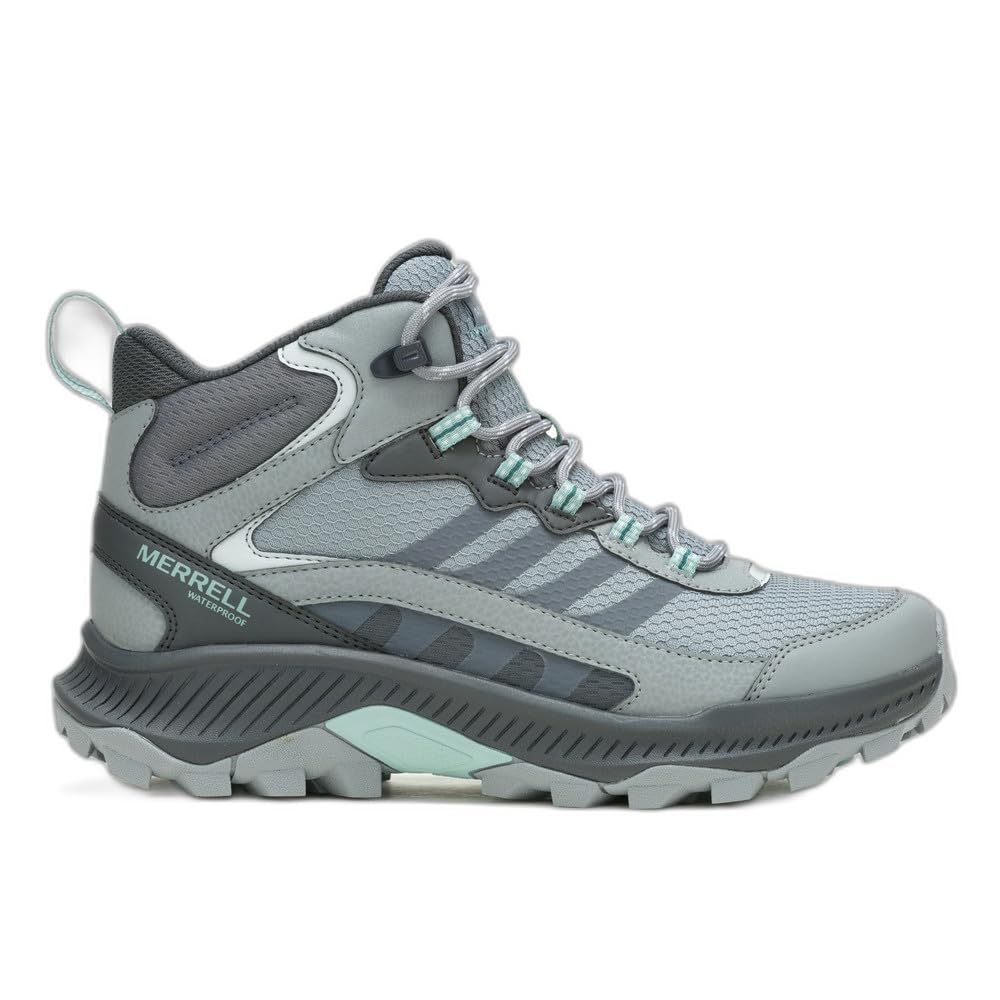
The mid hiker that moves like a trainer and grips like a trail boot.
Two numbers define this boot. The first is 2 pounds — that is the weight of the pair, and it is why this boot feels athletic rather than clumpy on a climb. The second is the recycled content: the laces, webbing, mesh lining and footbed cover are all made from 100% recycled materials, with a 50% recycled removable EVA foam footbed underneath. That EVA is the cushioned layer your foot sits on, so it is both a comfort spec and an eco one.
Owners describe the support as present without being rigid — good ankle and arch support that lets you push on, rather than a stiff cage that fights every step. Water resistance holds up on wet ground, and the ankle protection comes in useful on rough, rocky terrain. The sticky rubber outsole is the third pillar: it grips on slick rock where a softer sole would slide.
Compare this with the R CORD above and you get two blends of the same idea. The Merrell trades a little of that boot’s generous width for a faster, lighter stride, and in a desert-mountain hike it earns its keep. Check the fit at the half size — this brand and this boot tend to reward wearing the exact size for your foot rather than sizing up hopefully.
The high points
- At 2 pounds the pair, it moves faster than a traditional leather hiker.
- Laces, webbing, mesh lining and footbed cover are 100% recycled; the EVA footbed is 50% recycled.
- Ankle and arch support that stays supportive without feeling stiff.
- Sticky rubber outsole grips slick rock and wet trail.
The points to weigh
- The athletic cut runs closer than a roomy leather boot, so fit matters.
- This is a trail boot — it offers no insulation for deep winter.
Made for: hikers who want to move fast over wet, rocky ground without a heavy boot.
Not for: standing in cold snow or working in deep mud.
8. BOGS Amanda II Chelsea Waterproof Boot

A Chelsea boot with a published cold rating, so winter slush is not a guessing game.
The spec that does the work here is the comfort rating of -13F/-25C. That is not marketing — it is a stated cold-weather threshold, and it is the number to check if your winter involves waiting at a bus stop in freezing slush. A plush lining adds real warmth inside, and a moisture-managing lining pulls sweat away from your foot so it does not sit there and chill you later.
The rest of the build is built for the day: elasticized gore panels for pulling on, a dual-density EVA footbed with gel cushioning underfoot, rebound cushioning and a supportive shank for stability, and a slip-resistant outsole. EVA is a light, springy foam, so that footbed gives some bounce back rather than a flat slab. There is also a DuraFresh organic bio-technology treatment on the insole that activates to fight odor — handy if you wear them sockless at the door.
Appearance and comfort are what the boot gets the most warmth for, and that matches the Chelsea silhouette — it works with jeans. Be honest with yourself about the fit, though: the sizing runs tight for some wearers, so consider sizing up if you are between two sizes or want a thicker sock. It is a low-cut, easy boot, not an all-day deep-snow boot.
Winter credibility: a stated -13F/-25C comfort rating, a plush warm lining and a slip-resistant outsole — real cold-weather numbers, not vibes.
The fit warning: some wearers find it tight, so size up if you plan to wear thick winter socks.
Go for it if: your wet days are cold and you want a Chelsea boot you can pull on at the door.
Leave it if: you walk long distances in deep snow or need a tall boot to keep the slush out.
9. SOREL Women’s Tivoli V Tall Waterproof Boot
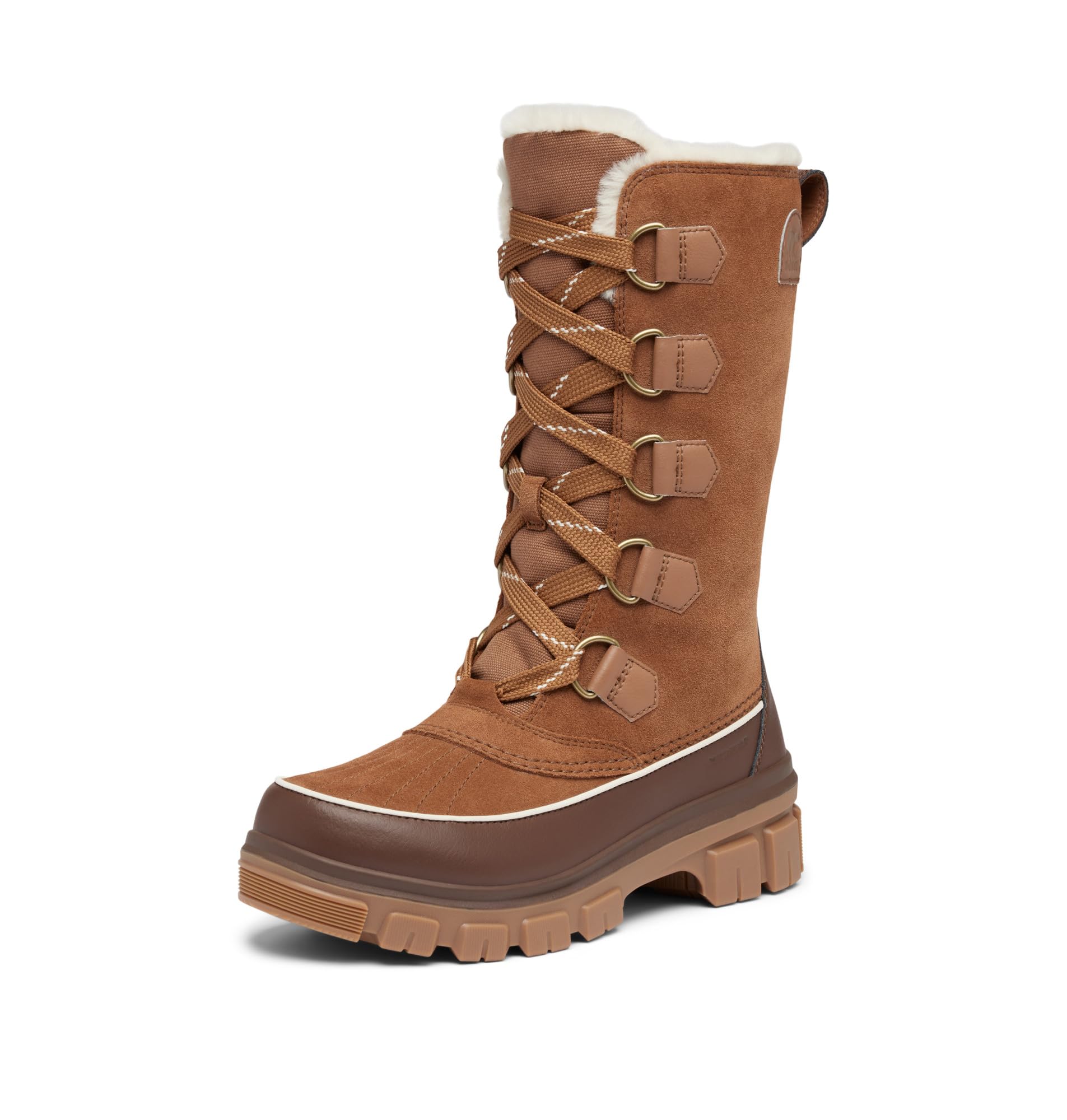
The tall boot that keeps feet warm and dry in deep snow and still looks deliberate.
Deep snow is a different problem from a wet puddle, and it needs a taller boot and warmer lining. That is where this SOREL fits — a tall waterproof winter boot with a traction outsole, built for walking through snow and ice with feet that stay dry and toasty. Owners wear it through a whole winter and report it still looks new at the end of it, which is a fair summary of how it handles the season.
Traction is the other thing that gets noticed, and on icy pavements that is not a small detail. The tall shaft covers more of your leg than any ankle boot here, so slush does not creep in over the top — the Trudave covers a similar distance but for mud rather than snow. If you want one boot for a snowy commute, this is the most complete answer on the list.
Fit is the part that splits: some find it true to size, others find it runs small and narrow. If you have wide feet or wear thick winter socks, sizing up is the sensible move. At the premium tier, it is worth being sure of the size before the snow arrives.
What justifies the premium
- Tall waterproof build with warmth that handles deep snow and ice.
- Grip that people notice on icy ground.
- Looks sharp enough to wear into an office after a snowy commute.
- Holds its appearance through a full winter of use.
Where caution helps
- Runs small and narrow for some wearers — size up if in doubt or wearing thick socks.
- It is a tall snow boot, so it is overkill for mild, wet spring days.
The winter pick: a tall, warm, grippy boot for snow, ice and a cold commute.
The mismatch: if your wet weather is mild and rainy, this boot is more than you need.
Know the Specs
Waterproof Membrane versus Rubber Shell
Two builds keep water out. A rubber shell is a solid barrier — great for standing water and mud, and easy to hose clean. A waterproof membrane is a thin, breathable layer laminated inside a fabric or suede boot; it blocks liquid water while letting vapor escape, which is what a hiker needs to avoid a sweaty, clammy foot. Neither build wins outright — a rubber shell suits standing water, a membrane suits distance. Match the build to the wet you actually meet.
Steel Shank and Ankle Support
A steel shank is a stiff bar tucked into the sole under your arch. It stops the boot folding on uneven ground and takes some load off your foot on long walks. Ankle support is the padding and cut at the back of the boot that holds your heel steady — useful on rough trails, less so on a boot you only wear to the bin. If you walk on ruts, rocks or hills, both are worth the extra weight.
Insulation and Cold Ratings
Insulation is the warm layer — neoprene in the Trudave, a plush lining in the BOGS. A published comfort rating, like the BOGS -13F/-25C figure, tells you the cold threshold the maker stands behind. More insulation means warmer toes but less airflow, so a summer shower boot will feel clammy if it runs warm. Choose the warmth for the coldest wet days you actually get, not the worst storm you can imagine.
Fit, Socks and Sizing
Sealed boots eat into interior space, so fit is the number one complaint across this whole category. The Columbia suede boot runs true with toe room; several rubber and winter boots run smaller. Decide on the socks you will actually wear, then size for those. A sealed boot that pinches on day one rarely loosens up — it usually just blisters you.
Common Questions
Are rubber rain boots actually waterproof or just water-resistant?
Will waterproof boots make my feet sweat?
Do I need a steel shank in a rain boot?
What does a comfort rating of -13F/-25C actually mean?
Should I size up in waterproof boots for women?
Can I wear waterproof hiking boots for gardening?
How do I stop my feet getting cold in wet winter boots?
Are tall boots better than ankle boots for wet weather?
Why do some waterproof boots cost so much more than others?
How long should a pair of waterproof boots last?
The Bottom Line
For most buyers, the waterproof boots for women winner is the Trudave Rubber Boots, because a 6mm neoprene shell, a steel shank and a deep tread together handle mud, snow and wet grass without asking you to choose between warm and dry. If your wet days happen on a trail, grab the NORTIV 8 Waterproof Hiking Boots for the waterproof build and trail support at a value tier. And for deep snow and an icy commute, the SOREL Tivoli V Tall is the one to reach for, with the BOGS Amanda II Chelsea the better option if you want a Chelsea you can pull on at the door.
How we choose
We do not accept paid placement. Every pick is matched to a real buyer and a real use-case; we do not hands-on test units.
Sources
Specifications: manufacturer listings and product documentation. Review insights: verified customer reviews, as of November 2026. Pricing: not shown on this page (it changes often); check the current price via the retailer link.
As an Amazon Associate, Tactical Gear Guy earns from qualifying purchases. This does not affect which products we feature.