Specs are compiled from manufacturer listings and verified buyer reviews and can change over time — please confirm the key details on the product page before buying.
You want one thing from a solo tent: to wake up dry. The tent that does that best here is the ALPS Mountaineering Lynx 1 — a freestanding two-pole shelter with a factory-sealed rainfly and a 2000 mm coated floor, the kind of construction that shrugs off wind and rain instead of letting it through the seams. Below you will find nine one-person tents that genuinely keep weather out, sorted by what each one is actually good at, so you can match a shelter to your trip rather than guessing from a spec sheet.
This guide is built by comparing the manufacturers’ published specifications and the patterns across verified customer reviews, so you get each pick’s real strengths and trade-offs instead of marketing spin.
Waterproofing numbers get thrown around loosely, so this breakdown separates real sealed-seam protection from promises. Read on for the picks that hold up when the sky opens, with a full comparison of the best waterproof 1 person tent options for solo trips.
Top Picks


How To Choose The Best Waterproof 1 Person Tent
A one-person tent lives or dies on two things: whether the fabric and seams keep water out, and whether you can carry it far enough to be worth bringing. Everything else — doors, pockets, color — is a comfort detail. Start with waterproofing and weight, then work outward.
Read the coating number, not the word “waterproof”
A waterproof coating is rated in millimeters of hydrostatic head — the height of a water column the fabric can hold before moisture pushes through. A 1500 mm rainfly handles steady rain; a 3000 mm or 5000 mm coating and floor gives you margin for a sustained downpour or wet ground. Every pick here lists its real number, and the floors run from 2000 mm up to PU8000 mm.
Sealed seams and a taped floor are the real test
Water gets into a tent through stitch holes, not usually through the fabric itself. A factory-sealed rainfly and fully taped floor seams close those gaps before you ever pitch it. Several tents on this list call out taped seams by name; treat that as the detail that separates a genuinely dry night from a damp one.
Match the floor size to your body and your gear
A solo tent floor runs anywhere from 28 to 34 inches wide in this lineup, and length stretches from 80 to 90 inches. If you are tall or sleep with a pack inside, longer and wider wins; if you are counting ounces on a thru-hike, a tighter floor and a vestibule for your bag is the smarter balance.
Side-by-Side Comparison
| Model | Best For | Trail Weight | Floor Size (L x W) | Waterproof Rating | Amazon |
|---|---|---|---|---|---|
| ALPS Mountaineering Lynx 1★ Best Overall | All-round solo shelter | 3 lbs. 5 oz. minimum | 90 in x 32 in | Rainfly 1500 mm / floor 2000 mm | Amazon |
| Underwood Aggregator 4 Season TentBest for Winter | Winter and snow | 4.4 lbs. | 86.6 in x 31.8 in | PU5000 mm | Amazon |
| iClimb Ultralight 4 Season SoloBest for Cot Camping | Cot camping | 5 lbs. | 80 in x 28 in | PU 3000 mm | Amazon |
| GEERTOP Ultralight Bivy | Minimalist fast pitch | 2.9 lbs. | 7 ft x 30 in | Rainfly PU5000 mm / floor PU8000 mm | Amazon |
| Naturehike Backpacking Tent with Footprint | Three-season value | 3.63 lbs. | 80.7 in x (12+37.4+12) in | Rainfly PU 4000 mm / floor PU 3000 mm | Amazon |
| Kelty Discovery Trail | Overlanding and car-base | 3 lb 6 oz minimum | 19 sq. ft. floor | Waterproof fly, taped seam | Amazon |
| MC TOMount | Tall sleepers | 3.6 lbs. | 86.6 in x 31.5 in | PU3000 mm | Amazon |
| Naturehike Star Trail Ultralight | Ounce-counting hikes | 2.3 lbs. | 86.6 in x 59.1 in | Rainfly PU1500 mm+ / floor PU3000 mm+ | Amazon |
| The North Face Stormbreak 1 | Stormy-weather camping | 3 lbs 1.4 oz trail | 18.13 sq. ft. floor | Waterproof rainfly, seam-taped floor | Amazon |
Detailed Reviews
1. ALPS Mountaineering Backpacking-Tents Lynx 1
Our pick — 4.5+★ from 900+ verified ratings; the strongest balance of quality and price.
The dry-night baseline every other solo tent on this list gets measured against.
The Lynx 1 wins on its 75D 185T factory-sealed rainfly with a 1500 mm coating and a 75D 185T 2000 mm poly taffeta floor. In plain terms, the seams come sealed from the factory so water has no stitch hole to sneak through, and the floor resists the pressure of you lying on damp ground all night. It sleeps you on a base of 7’6″ long by 2’8″ wide — 90 inches by 32 inches of floor — with 3 feet of center height, so you can sit up rather than curl.
Owners praise the build quality first and the quick two-pole setup second. The freestanding aluminum two-pole frame goes up without fuss, and multiple buyers report pitching it in roughly 15 minutes. The half-mesh walls trade a little warmth for airflow, which keeps condensation from soaking your bag on a cool night. Carrying it is the honest compromise: total weight is 4 lbs. 1 oz., with a minimum weight of 3 lbs. 5 oz. If your trip is a long thru-hike and every ounce gets counted, a sub-3-pound shelter will serve you better.
Compare it to the iClimb Ultralight 4 Season Solo and the space gap is clear: the Lynx 1 floor is 32 inches wide and 90 inches long, versus 28 inches and 80 inches on the iClimb. That is real room for a sleeping pad and a pack at your side. The crowd favorite by a wide margin here, it sits at 4.5+ stars across 900+ ratings.
What earns it first place
- Factory-sealed rainfly and a 2000 mm floor coating keep rain out at the seams
- Generous 90 x 32 inch floor fits a pad plus gear
- Freestanding aluminum frame pitches in about 15 minutes
- Half-mesh walls cut condensation on mild nights
- Vestibule, interior pockets, and gear loft organize your kit
Where it asks for patience
- 4 lbs. 1 oz. total is heavier than the bivy and ultralight picks here
- Half-mesh design is cooler in shoulder-season cold than a solid-wall tent
Reach for this if: you want one shelter that handles rain, wind, and mild cold without a learning curve.
Look elsewhere if: you are shaving weight for a long thru-hike — the sub-3-pound options serve that trip.
2. Underwood Aggregator 1/2 Person 4 Season Backpacking Tent
A snow skirt and a full-coverage fly for the trips that do not end in autumn.
Four-season shelters earn their label through cold-weather hardware, and this one leans on a rollable snow skirt that keeps snow out and warm air in during winter. Roll it away when the ground is bare. The rainfly carries a PU5000 mm coating, which holds up to sustained wet weather, and it sits over aircraft-grade aluminum poles for a freestanding frame. Packed down it measures 5.1 inches by 15 inches at 4.4 pounds, small enough to strap to a pack.
Inside, a 35.8-inch center height and a 31.8 x 86.6 inch floor give you a single-person footprint with a little breathing room. The double-layer door vents in summer while the mesh keeps bugs out. Two owners’ worth of notes point the same direction: it stays dry through rain and snow and holds warmth, and there is enough room to change clothes with a little effort. The recurring catch is interior space — plenty of buyers love it, others find it tight once gear comes in.
Against the ALPS Lynx 1, this trades mesh-heavy walls for a winter-ready fly and skirt, so it is the better cold-weather tool and the heavier one at 4.4 pounds. Buyers rate its build quality highest, and its setup runs nearly as fast as the two-pole picks. The one thing to plan around: pitch it with the skirt down in snow and expect to manage condensation by cracking the vents.
The winter case: a snow skirt, full-coverage rainfly, and PU5000 mm coating make this the most cold-weather-focused solo tent in the lineup.
The honest limit: the floor is 31.8 inches wide, so pack light and use the vestibule instead of stacking gear inside.
Built for: cold-weather campers who need snow and wind handled first and weight second.
Not the fit for: summer ounce-counters who want the lightest possible solo shelter.
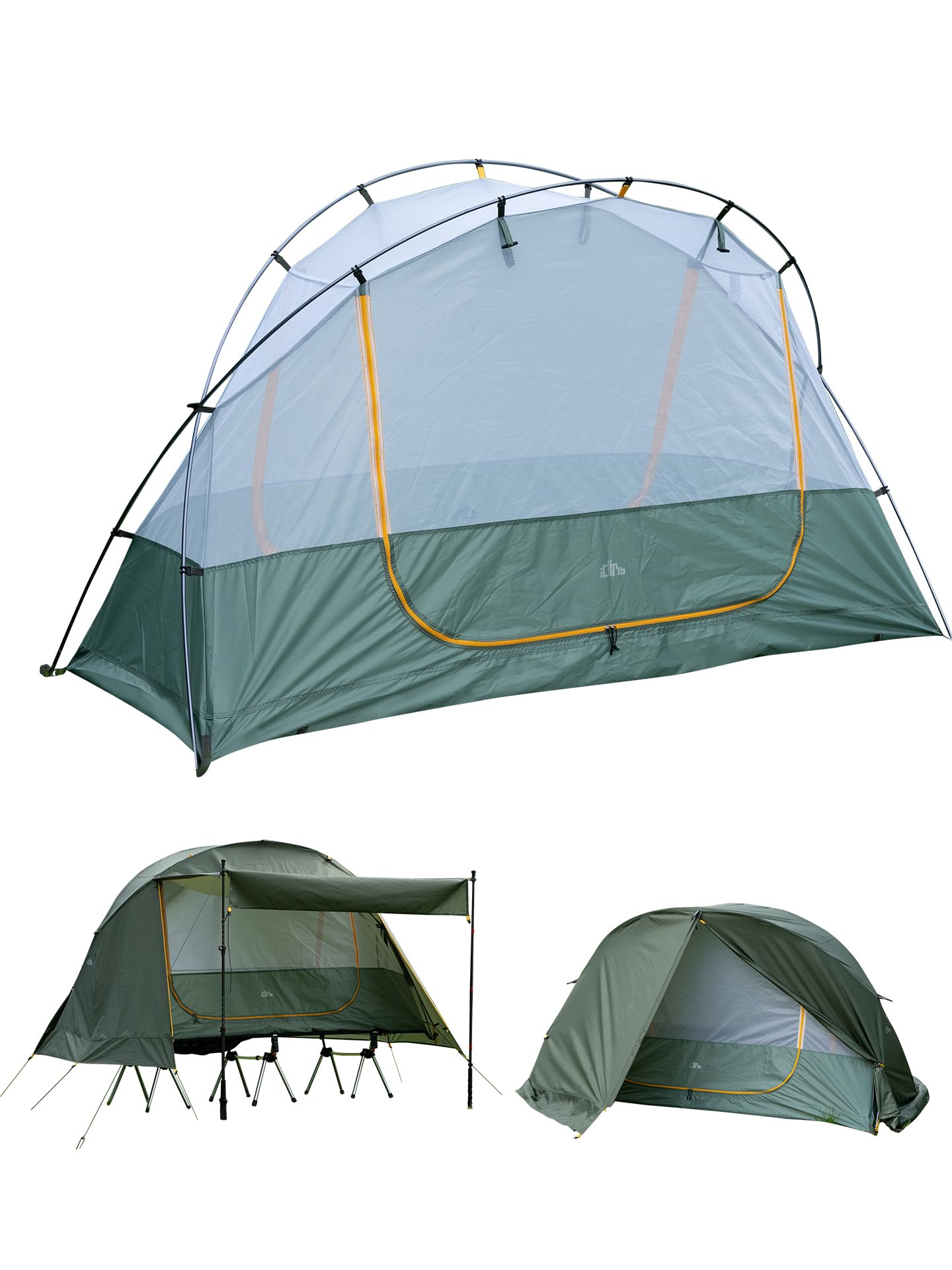
3. iClimb Ultralight 4 Season Solo Tent with Snow Skirt
The one solo shelter here built to pitch over a camping cot instead of bare ground.
Two elastic straps under the inner tent let you fix this shelter to a cot, and the maker notes it pairs with an iClimb Folding Cot’s eyelets. That off-the-ground option is the reason to pick it — you stay out of the mud and off cold ground. The ripstop 210T polyester taffeta rainfly and bathtub floor both carry a PU 3000 mm coating with fully taped seams, and the 7001 aluminum poles hold the dome steady in wind.
Setup is a free-standing two-pole job, and the buckles connect the rainfly to the inner tent so you can cover it fast. Two large D-shape doors and full mesh walls keep air moving, and the high-density B3 mesh (a fine bug-blocking weave) keeps mosquitoes out. There is a vestibule you can prop with trekking poles to cook under, plus reflective ropes for dark campsites. One honest note from the maker: skip the cot in winter, because wind blows underneath.
At 5 lbs. the weight is the trade for that cot-friendly design and its 80 x 28 inch floor — it is the heaviest shelter here, and noticeably bulkier to carry than the 2.9 lb GEERTOP bivy. Buyers single out overall quality most, with the simple two-pole setup a close second. If you camp from a vehicle or a base camp and sleep on a cot, that weight stays in the truck.
The standout feature: a cot-compatible inner tent with taped PU 3000 mm seams proves that ground-sleeping is optional in this category.
Weigh it up: at 5 lbs. it is a base-camp shelter, not a thru-hike one.
Made for: cot campers and base-camp setups where the pack-out weight does not matter.
Skip it for: long carries — the sub-3-pound shelters are the smarter haul.
4. GEERTOP Ultralight Bivy Tent, 1 Person Backpacking Tent
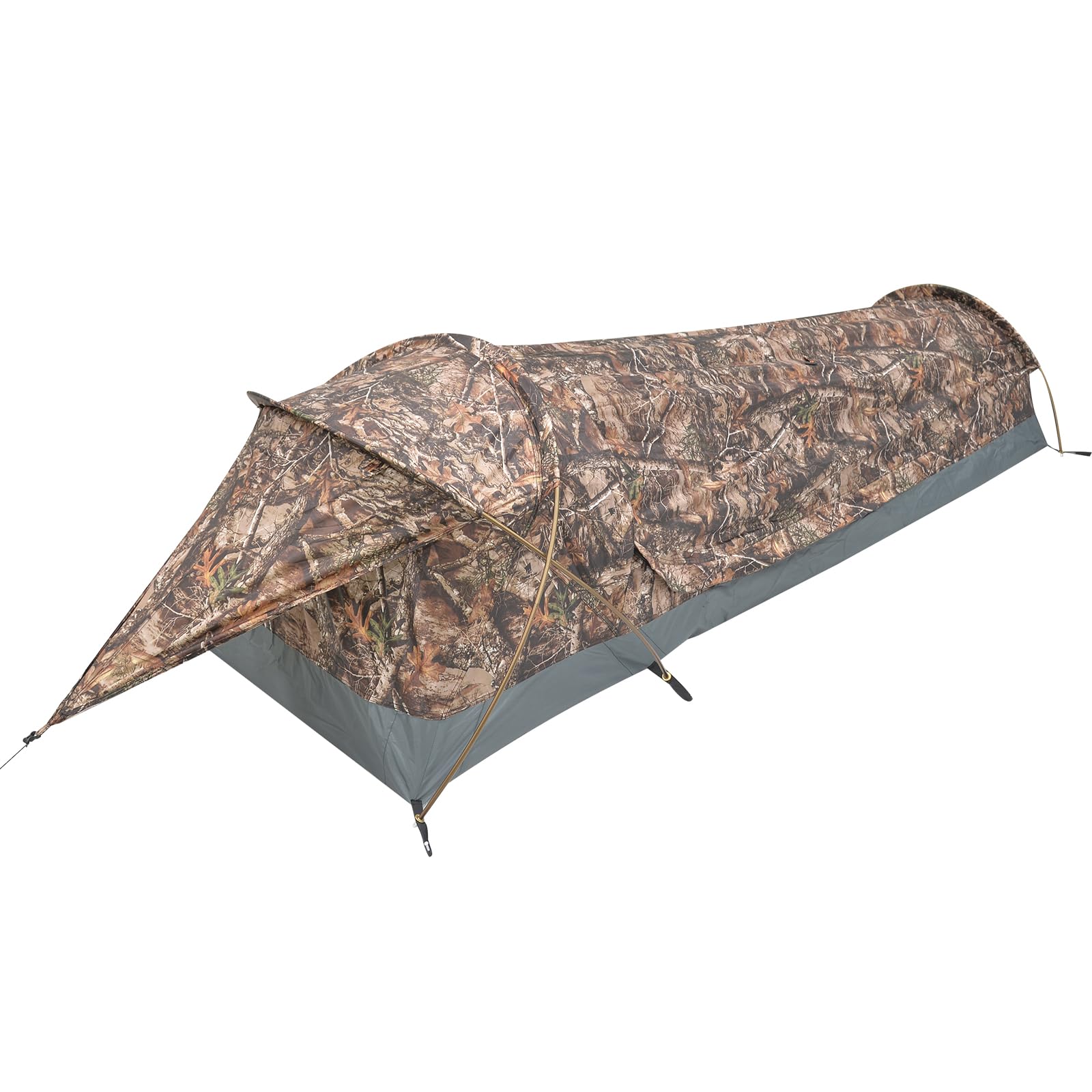
A 2.9-pound shell that tucks into a pack and throws up in minutes.
Start with the numbers that matter on a hard day: 2.9 lbs. total, packed to 17 x 5 x 5 inches, on a shock-corded aluminum three-pole frame. That is lighter than the ALPS Lynx 1’s 5 lbs. — a difference of over 2 pounds on your back. The rainfly carries a PU5000 MM coating and the floor a PU8000 MM rating, both fully seam-taped and double-stitched, which is beefy floor protection against wet ground.
Setup is a two-minute job with the three-pole frame, which makes it a good choice when weather turns fast. Interior space runs 84.6 x 29.5 inches with 24 inches of headroom, so it is a sleep-and-store shelter rather than a sit-up-and-read one. Ventilation comes from a top mesh panel and two windows. But that is also where opinions split: the short 24-inch height and tight walls leave some campers feeling closed in, and a few run into condensation when it is sealed up in cool, still air.
Rain worth planning around: it handles steady precipitation on the taped seams, but in a heavy sustained downpour a handful of buyers have found moisture inside, so stake the fly tight and keep the vents cracked. Buyers praise the build quality most, with the quick setup right behind it. The camo finish blends into brush if you hunt or scout.
The bivy trade: 2.9 lbs. and a two-minute pitch make it the fastest, lightest shelter for a fast solo trip — you pay for it in 24 inches of headroom.
Pitch it with care: stake the fly taut and crack the vents so condensation does not gather into a cold-weather night.
Top choice for: minimalist hikers and hunters who value a tiny pack and a fast pitch over living room.
Think twice if: you sit up to dress inside — the 24-inch peak keeps you low.
5. Naturehike Backpacking Tent for 1 Person with Footprint

Three-season protection that ships with the ground sheet you would otherwise buy.
Most solo tents here sell the footprint separately. This one includes it, so the floor’s 150D rip-stop oxford with PU 3000 mm coating is shielded from rocks and roots by the ground sheet. The rainfly above it is 20D silicone-coated nylon at PU 4000 mm, and the maker states every corner and seam is taped — so the seams are a design promise rather than an afterthought.
Setup runs on a free-standing two-Y aluminum pole frame in under five minutes, with 7001 alloy poles holding firm in wind. Interior height is 43.3 inches, enough headroom to sit upright, across a floor 80.7 inches long. Two layers create airflow between fly and inner tent, and the B3 mesh inner plus a window manage ventilation. It packs to 15.7 x 5.9 x 5.9 inches at 3.63 lbs., which fits easily in a pack alongside other gear.
The catch is the width: the listed 12+37.4+12 inch floor is a sleep spot with a little side shelf, not a spread-out space. Buyers call out the simple setup most, with overall quality tying at the top. Compared with the GEERTOP bivy at 2.9 lbs. and 24 inches of headroom, this Naturehike gives you far more sitting room and a footprint, at roughly 0.7 pounds more carry weight.
Value you can see: an included footprint and a PU 4000 mm taped rainfly at a three-season pitch is a strong package for a first solo tent.
Best fit: a first-time solo camper who wants headroom, a footprint, and quick pitching in one package.
Pass if: you need four-season snow handling — the snow-skirt tents handle winter.
6. Kelty Discovery Trail Backpacking Tent, Waterproof Rainfly
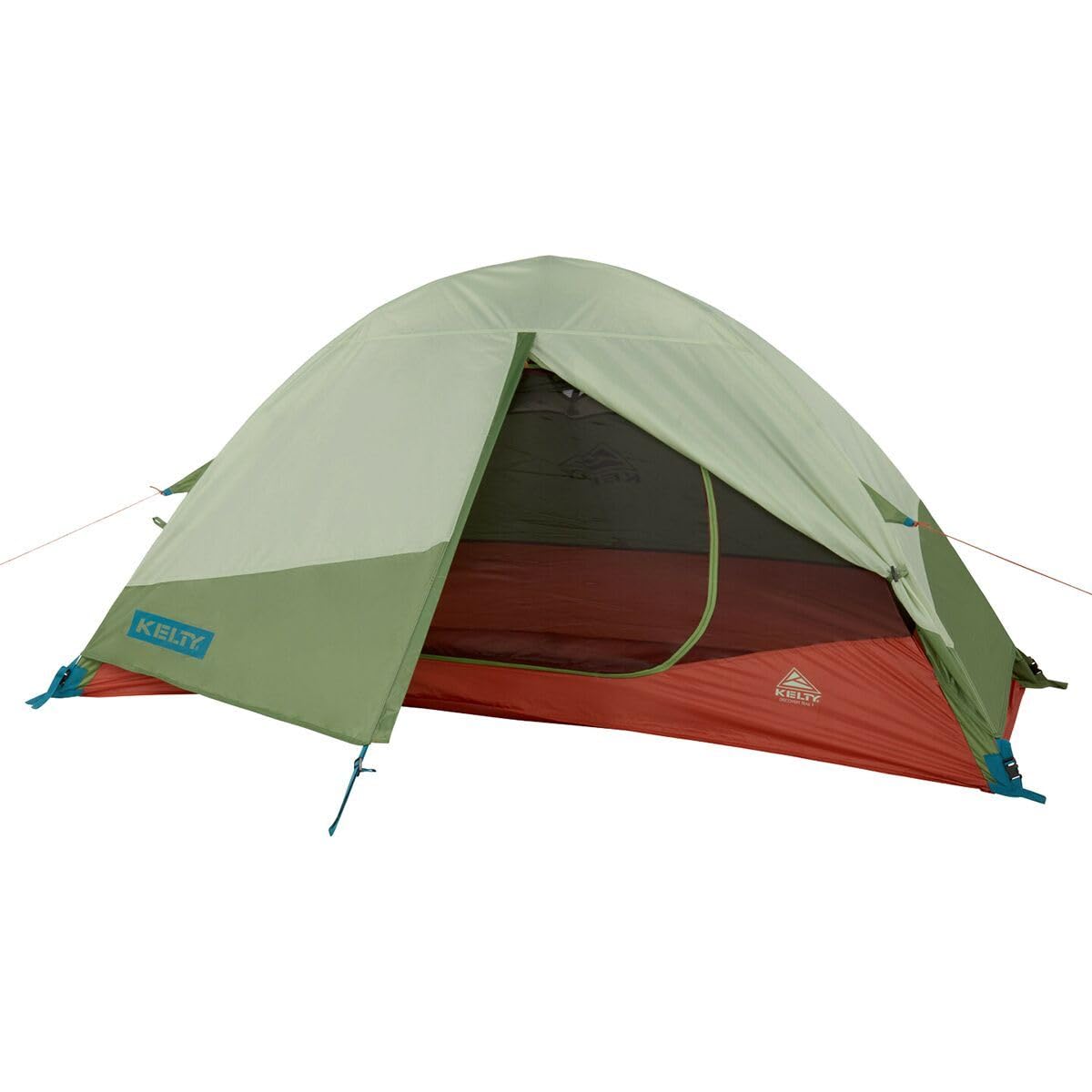
A roomier single-person tent that makes room for your boots and pack.
Space is what wins people over with the Discovery Trail. The floor measures 19 sq. ft. with 40 inches of peak height, so boots and a pack stay out of the rain alongside you, not stacked at the door. Add a taped seam, a waterproof fly, a single door with a vestibule, and a fly vent that combats condensation and you have a sheltered spot for wet weather.
Setup leans on Kelty Quick Corners and lightweight pressfit aluminum poles with pre-attached guylines, and take-down is quick thanks to a stuff sack sized to actually fit the tent back in. Minimum weight is 3lb 6oz. The fabric finishes are DWR/PFC-free, which keeps the coating free of a fluorinated chemical finish. The single honest caveat across the reviews is pole durability — a minority have snapped a pole, so pitch gently and treat the alloy with care on rough ground.
Compared with the North Face Stormbreak 1’s 18.13 sq. ft. floor, this Kelty gives you slightly more ground to organize gear on. Buyers praise how much fits inside most, with the quick setup right behind it. It handles mosquitoes too, which makes it a good summer-lake and overlanding choice.
Why campers keep it
- 19 sq. ft. floor and 40-inch peak hold boots and a pack out of the rain
- Quick Corners and pre-attached guylines speed setup and take-down
- Taped seam and waterproof fly with a vent to cut condensation
- DWR/PFC-free fabric finishes
- Stuff sack sized so the tent fits back in
What to watch
- Pole durability draws mixed notes — pitch with care on rough ground
- 3 lb 6 oz minimum is mid-pack on weight, not the lightest pick
Pick this when: elbow room for gear matters more than shaving grams.
Look elsewhere if: the lightest possible pack matters more than 19 sq. ft. of floor.
7. MC TOMOUNT Backpacking Tent Ultralight Nylon 1-2 Person
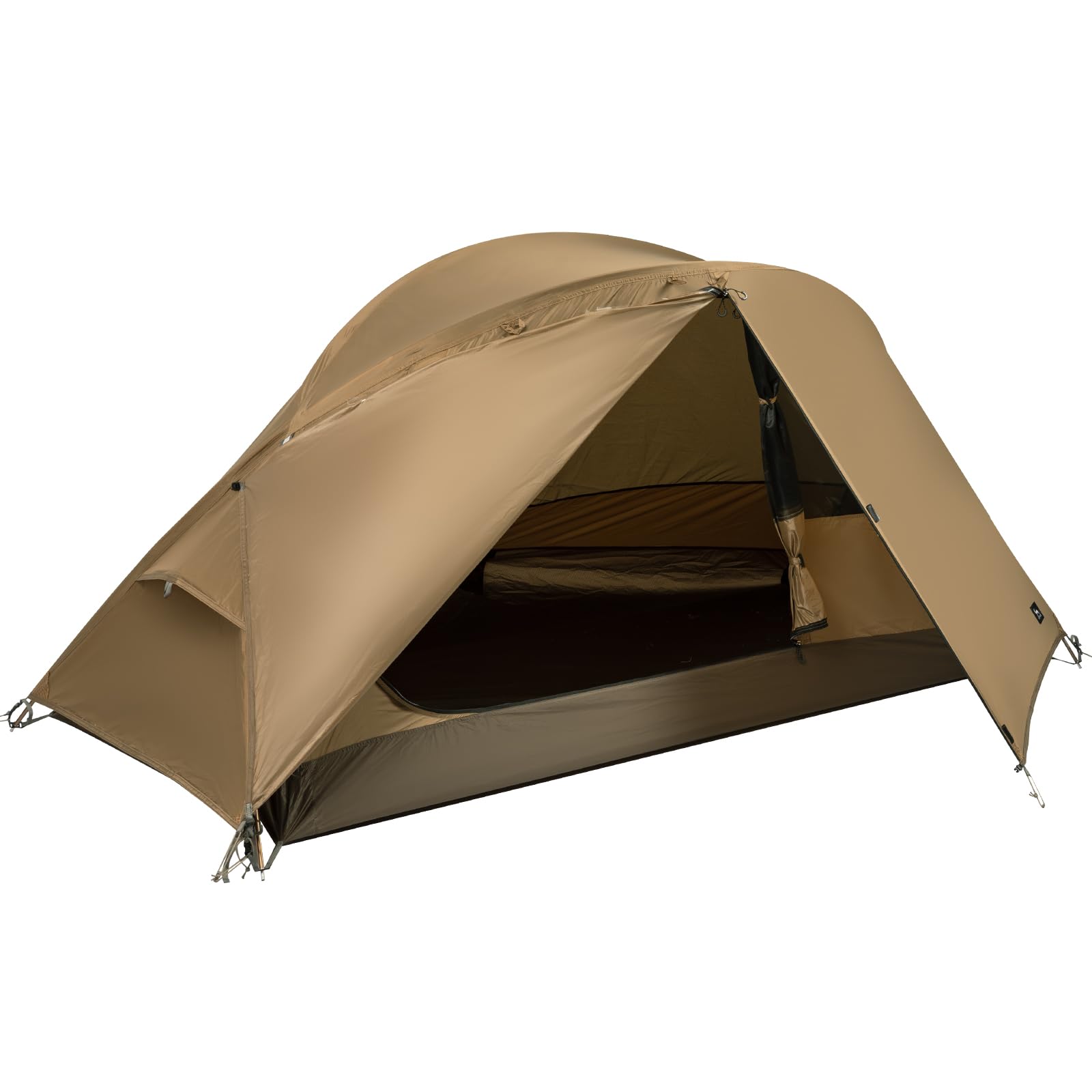
An 86.6-inch floor built so a tall man can stretch out without feeling boxed in.
Length is the reason to look here. The floor runs 86.6 inches long and 31.5 inches wide, and the middle can extend to 70 inches for storing luggage beside you. Center height is 41.3 inches, enough to sit or lounge upright rather than hunch. It clocks in at 3.6 pounds on 20D nylon, packed to 16.9 x 5.5 inches, small enough to strap to a bike frame.
Waterproofing is a PU3000 mm coating on that 20D nylon. For a long downpour the maker suggests pairing it with a tarp — an honest hedge rather than a claim it will not make. Two side windows and inner tent mesh keep air moving and bugs out, and the nylon tent top means condensation drips slide off instead of raining on you. The inner tent also stands alone, so you can use it as a bunk inside a larger shelter.
What buyers single out most is build quality, with reports of no leaks during heavy rainfall and plenty of room for gear. Value comes up next. Some wish it were roomier still, which is the usual one-solo-tent trade. Two crossed aluminum poles pitch it fast, even for a first-time camper. Set against the ALPS Lynx 1 at 90 inches, this one is a touch shorter but gives you the wider extendable middle for gear.
The tall-person answer: an 86.6-inch floor plus 41.3 inches of ceiling is real stretch-out room in a 3.6-pound tent.
The honest caveat: a PU3000 mm coating plus the maker’s own advice to add a tarp in prolonged rain means this is a three-season shelter, not a monsoon one.
Suits you: tall campers and cyclists who want length and sit-up height without a heavy pack.
Not for: multi-day heavy-rain trips where a tarp-free storm shelter matters.
8. Naturehike Star Trail Tent
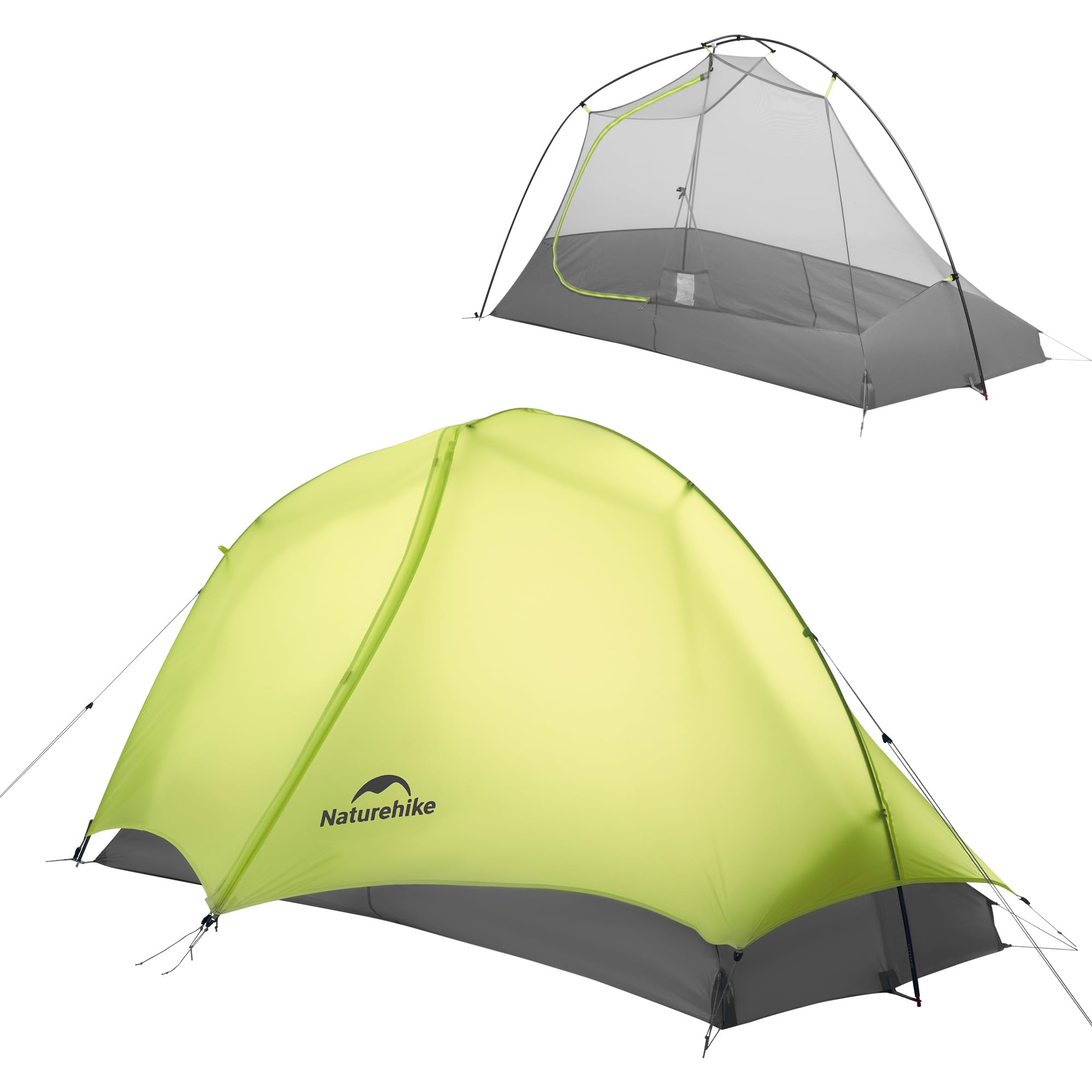
Tipping the scale at 2.3 pounds, this is the featherweight of the lineup.
If weight is your whole decision, start here: 2.3 lbs. total, packed to 17.7 x 5.1 inches, which drops into a backpack without a second thought. The fly is 10D nylon with a PU1500 mm+ coating, and the 20D floor and included footprint carry PU3000 mm+ — so the thinner fly wants a pitch that sheds water well, while the floor and ground sheet defend against wet earth. Setup is a 3-minute pitch even for a beginner.
The floor is listed at 86.6 inches long by 59.1 inches wide, which is the most generous ground in this group and gives a solo camper a genuine spread of space. A full-coverage mesh inner and an improve center peak keep airflow moving and let an adult sit upright. It suits three-season trips, with the mesh design tuned toward warm-weather camping. Packed with the footprint and guy lines included, it goes anywhere a bike or a pack can.
The honest caveat: the PU1500 mm+ fly is the lowest waterproof rating among the picks here, so plan on good staking and a tarp for a soaking multi-day storm. Still, it took a mountain rainstorm in stride for at least one camper, and what owners rave about most is how little it weighs, with the construction close behind. Compared with the North Face Stormbreak 1’s 3 lbs 1.4 oz trail weight, this is the more packable shelter by a real margin.
Weight champion: 2.3 lbs. with the footprint included makes a light pack achievable without a bivy’s cramped quarters.
Manage the fly: the thinner PU1500 mm+ fly rewards careful staking and a tarp in sustained rain.
Grab it for: weight-obsessed solo backpackers and bikepackers who want space too.
Hold off if: you camp straight through multi-day heavy storms — a higher-rated fly better suits that.
9. The North Face Stormbreak 1 One-Person Camping Tent
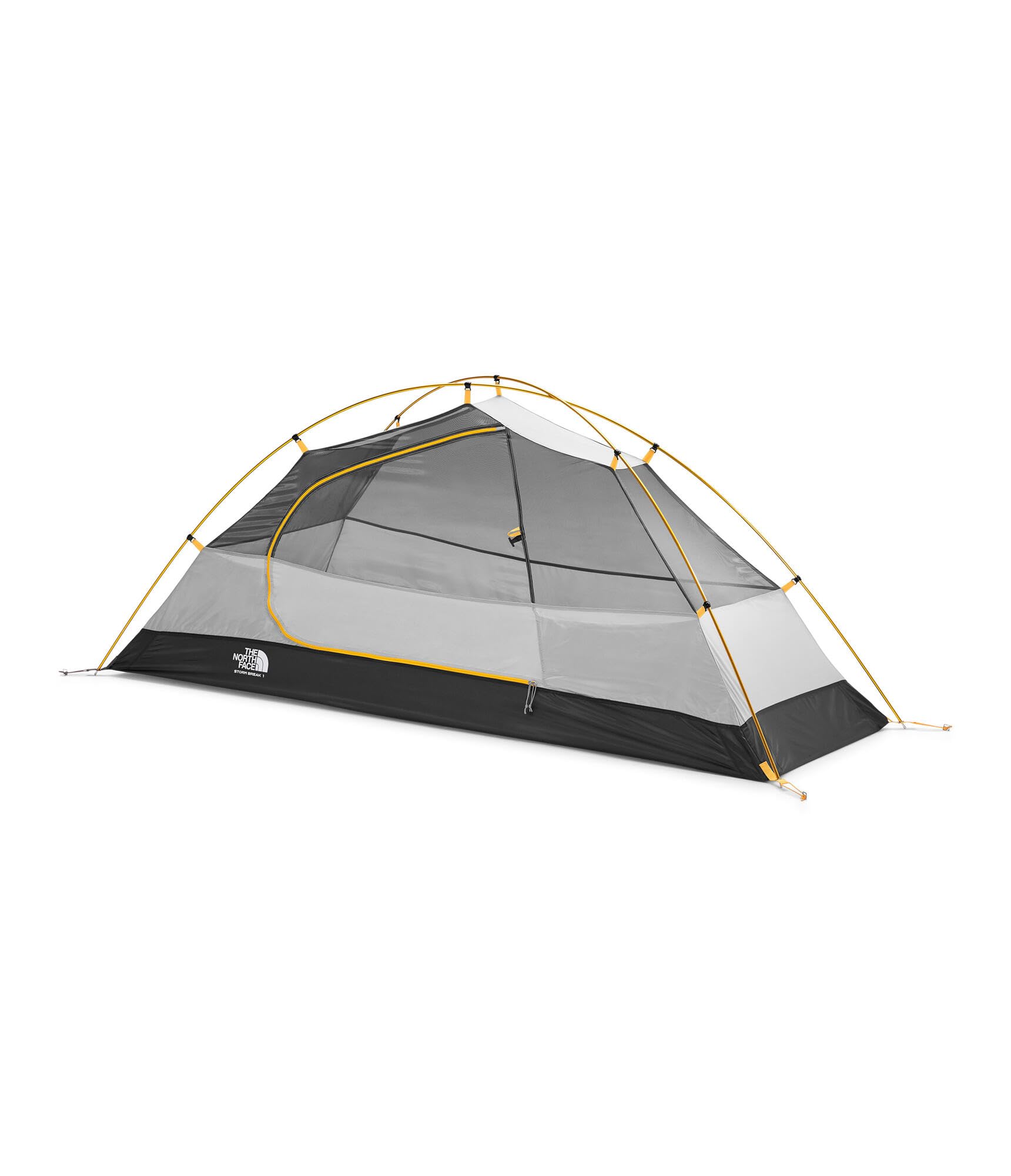
A big-brand solo tent built for the nights that turn into storms.
The storm-ready part is the whole point: a durable waterproof rainfly plus a seam-taped floor work together to keep you dry when weather turns. The large vestibule shelters your gear and gives you a covered spot to pull off muddy boots before you climb in. Trail weight is 3 lbs 1.4 oz on a simple two-pole frame, and 34 inches of headroom is enough to sit up and change clothes.
The one big caveat: the floor covers 18.13 sq. ft., which is on the tighter side for the category, so a big sleeper may feel it. That said, buyers describe it as very sturdy and lightweight, and a good share consider it the best single tent at its tier. High-low ventilation openings push air through even with the fly on, and the large door stuffs into a mesh pocket rather than needing to be rolled. The fly carries a non-PFC DWR finish, and the fabric is made without a flame-retardant coating.
Compare it to the Kelty Discovery Trail’s 19 sq. ft. floor and this is a fraction smaller, so the Kelty wins on room while the Stormbreak wins on storm-focused detailing. The footprint sells separately, so factor that in. Multiple buyers call it the best single tent for the money, so for a brand-name shelter that wears storms well, this is a sound choice.
The storm case: a waterproof rainfly and seam-taped floor with high-low ventilation is built to keep you dry when the forecast lies.
Size it up: 18.13 sq. ft. of floor is a tight single — pack light or add the separate footprint.
Choose it for: storm-heavy camping where a trusted rainfly beats extra floor space.
Look elsewhere if: you want a larger floor or a footprint in the box.
Know the Specs
Hydrostatic Head (the waterproof coating rating)
This number, written as mm, tells you how much water pressure a fabric holds before moisture seeps through. A rainfly at 1500 mm handles steady rain; a floor at 3000 mm or 5000 mm stands up to you lying on wet ground. Higher is drier, but it usually adds weight. Match the number to your weather, not to the biggest figure on the page.
Trail Weight vs. Total Weight
Total weight is everything in the bag. Trail or minimum weight strips out the stakes, stuff sack, and sometimes the footprint — the number you actually carry. A tent listed at 4 lbs. 1 oz. total can drop to 3 lbs. 5 oz. minimum. Compare tents on the same number, or the difference gets exaggerated.
Sealed Seams and Taped Floors
Every stitch line is a potential leak. Factory-sealed rainflies and taped floor seams close those holes before you pitch. When a listing says “taped” or “sealed,” it means the maker has waterproofed the weak points. It is a bigger dry-or-damp factor than the coating number on its own.
Floor Size and Headroom
Floor width runs from 28 to 34 inches here, and length from 80 to 90 inches. A wider, longer floor fits a pad plus gear; a tight one suits a weight-focused solo trip. Center height decides whether you can sit up — 24 inches is a lie-down bivy, 40 inches or more lets you dress upright.
Common Questions
Does a higher hydrostatic head number mean the tent is fully waterproof?
Is a 1 person tent big enough for a tall camper?
Will a snow skirt tent work in summer?
How long does it take to set up a solo waterproof tent?
Do I need a footprint under a waterproof tent?
Will a 4 season tent be too warm for summer camping?
Can a single person tent be pitched over a camping cot?
How much does a waterproof 1 person tent weigh on a backpacking trip?
What is the difference between a bivy and a one-person tent?
Do taped seams or a big waterproof coating matter more?
The Bottom Line
For most solo campers, the waterproof 1 person tent to buy is the ALPS Mountaineering Lynx 1. Its factory-sealed rainfly, 2000 mm floor, and 90 x 32 inch floor give you a real dry-night shelter with room to move. If winter is on the calendar, the Underwood Aggregator adds a snow skirt and a PU5000 mm fly. And if your pack weight is the priority, the Naturehike Star Trail at 2.3 pounds is the lightest way to stay dry in this lineup. Match the shelter to your trip: the Lynx 1 for all-round use, the Underwood for winter, the Star Trail for pack weight.
How we choose
We do not accept paid placement. Every pick is matched to a real buyer and a real use-case; we do not hands-on test units.
Sources
Specifications: manufacturer listings and product documentation. Review insights: verified customer reviews, as of November 2026. Pricing: not shown on this page (it changes often); check the current price via the retailer link.
As an Amazon Associate, Tactical Gear Guy earns from qualifying purchases. This does not affect which products we feature.