Specs are compiled from manufacturer listings and verified buyer reviews and can change over time — please confirm the key details on the product page before buying.
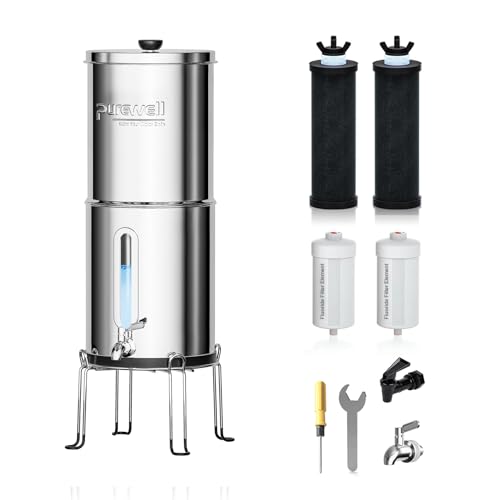
If your tap water tastes flat and you want the fluoride out without buying plastic bottles every week, the short answer is this: buy a purifier whose filter media is actually rated for fluoride reduction, not a plain carbon jug. The Purewell 1.5G Gravity Water Filter System is the pick that gets it done without electricity or plumbing, and it holds a 4.5+ star score across a large review count. Everything below is built around that one filter-media question.
This guide is built by comparing the manufacturers’ published specifications and the patterns across verified customer reviews, so you get each pick’s real strengths and trade-offs instead of marketing spin.
You will see gravity stainless systems, countertop dispensers, under-sink cartridges and reverse-osmosis machines side by side, with the fluoride claim and the filter lifespan spelled out for each. Fluoroapatite chemistry is not something you want to guess at, so this is a straight read on the water purifier that removes fluoride without the marketing fog.
Top Picks

How To Choose The Best Water Purifier That Removes Fluoride
Fluoride is a small, stubborn ion. A standard coconut-carbon pitcher will pull out chlorine and improve taste, but it will slide right past fluoride unless the maker built a dedicated stage for it. That single fact is the fork in the road for every pick below.
Read the media name, not the marketing badge
Look for one of three words on the spec sheet or the box: “activated alumina,” “reverse osmosis,” or a fluoride-reduction membrane. The Purewell unit uses a dedicated white fluoride cartridge with a reduction membrane rather than alumina, which is its main selling point over older gravity filters.
If a listing only shows a carbon block and a sediment pad, it is a taste and chlorine filter — useful, but not a fluoride answer. The Home Master, Frizzlife, Waterdrop, Santevia, AquaTru and Alkanatur picks all state fluoride reduction in their own data, so they are the ones that pass this first gate.
Match the form factor to your counter and your patience
Gravity and dispenser units sit on the counter and need no plumbing, so they suit renters and small kitchens. Under-sink cartridges like the Frizzlife hide below the cabinet and need a wrench and a few minutes. Reverse osmosis, as in the AquaTru carafe, uses electricity and a multi-stage stack but removes the broadest list of contaminants in the data.
Filter life matters as much as media. A 2-month cartridge is a constant reorder; an 18-month cartridge is a once-a-year chore. Check the gallons figure, too, because a 150-gallon dispenser filter and a 10,000-gallon under-sink filter serve very different households.
Respect the trade-offs each design carries
Faster filtration usually means smaller media contact time, and slower gravity systems mean waiting. Leakage comes up with several installed countertop and under-sink units because water pressure pushes against fittings. And no gravity or pitcher system lowers TDS — that is a dissolved-solids number, a different measurement from fluoride.
Side-by-Side Comparison
| Model | Best For | System Type | Capacity / Life | Key Fluoride Claim | Amazon |
|---|---|---|---|---|---|
| Purewell 1.5G Gravity★ Best Overall | Renters and off-grid kitchens | Gravity countertop | 1.5 gal / 6-month filter | 90% fluoride reduction | Amazon |
| Waterdrop WFD-02W 35-CupBudget Champion | Families on a tight budget | Countertop dispenser | 150 gal / 2-month filter | 90%+ fluoride reduction | Amazon |
| Epic Pure PitcherBest Fridge Fit | Fridge-door storage | Filter pitcher | 100 gal / 3-month filter | Reduces fluoride & PFAS | Amazon |
| Home Master TMJRF2 Jr F2 | Sink-top with fast flow | Countertop multi-stage | 500 gal / replaceable | Up to 93% fluoride | Amazon |
| Alkanatur Pitcher | Alkaline + magnesium fans | Filter pitcher | 105 gal / 3–4 months | Removes fluoride | Amazon |
| Frizzlife TW10 | Under-sink, cold water only | Under-sink 8-layer | 10,000 gal / 18-month filter | DFA de-fluorine agent | Amazon |
| Santevia Glass System | Glass vessel and minerals | Gravity countertop | 8 liters / 2-month filter | 99% fluoride reduction | Amazon |
| AquaTru Glass Carafe | Widest contaminant list | Countertop RO | Varies by stage / 6-month pre-filter | Removes fluoride via RO | Amazon |
Detailed Reviews
1. Purewell 1.5G Gravity Water Filter System
Our pick — 4.5+★ from 800+ verified ratings; the strongest balance of quality and price.
A stainless gravity tank that strips fluoride without a power cord or a plumber.
Its headline claim is 90% fluoride reduction, handled by a dedicated white cartridge built around a fluoride-reduction membrane and triple PP sediment layers rather than the activated alumina older gravity filters used. That split matters: the white cartridge handles fluoride, while a separate black carbon cartridge takes chlorine, rust and sediment. Splitting the two keeps the fluoride media from doing the carbon cartridge’s taste-and-chlorine work.
Look at the tank and the trim. This is a 1.5-gallon stainless system with a clear window on the upper chamber, so you can see the water line without lifting the lid — a small mercy when you refill it a few times a day. It ships with four filters and a stand, and the whole unit weighs 7 pounds, so one person can carry it to a cabin or a tent. No electricity is required, which is the real selling point for a rental, an RV, or a power-outage kit.
The catch is throughput. Gravity filtering is slow by design, so plan your refills instead of standing over it. It also does not lower TDS, so do not expect that number to move. Pair that with the fluoridation question and you have the honest picture: this is a fluoride-first gravity system, not a water softener.
What earns it the crown
- 90% fluoride reduction from a dedicated cartridge, not a carbon afterthought
- No electricity and no plumbing — works in a kitchen, an RV, or a blackout
- Clear water-level window on the upper chamber speeds up refills
- Four included filters plus a stand; 6-month recommended swap rhythm
- Stainless chamber body holds up better than a plastic pitcher over time
Where it asks for patience
- Gravity flow is slow — filters a batch, not a stream on demand
- Some units show leakage at the seam; seat the chambers cleanly
- Does not lower TDS, so a TDS meter will stay near tap levels
Worth grabbing if: you want fluoride reduction without wiring a pump into your cabinet, and you can live with a refill wait.
Look elsewhere if: you need instant flow at the faucet or you want the TDS number to drop.
2. Waterdrop WFD-02W Water Filter Dispenser
The dispenser that fills a whole family’s glasses for months on one cartridge.
Where the Purewell asks you to wait for a gravity batch, this one gives you a 35-cup reservoir that you can tap at the spigot whenever you want a glass. That is the concrete win for a household of one to three people. The 90%+ fluoride reduction runs through an upgraded carbon block that also pulls chlorine and odor, and the spec sheet claims PFOA and PFOS too. It is BPA free, which is the standard every buyer should ask for on a plastic dispenser.
The lifespan is the trade-off. This filter runs 150 gallons over 2 months, while the Frizzlife under-sink unit below claims 18 months and 10,000 gallons. If you want fewer cartridge swaps, the under-sink route wins the math. If you want a dispenser on the counter that the kids can pour from, this is the one. It measures 5.54″L x 9.95″W x 14.37″H, so it sits on a counter or fits a big shelf without dominating it.
Taste is what wins most of the praise here. The bulk of owner feedback circles on water that tastes clean and sweet, plus a capacity that keeps a small family in cold water all day. Filtration speed draws mixed notes — some find it brisk, some find it slow — so set expectations that a full reservoir takes a while to pass through. Treat the 2-month swap as a calendar reminder, and the cost stays low.
What buyers notice first: the capacity and the taste, in that order. It is the easiest pitch in this group for a family that wants fluoride reduction on a plain countertop dispenser.
The honest limitation: a 2-month filter means six changes a year, and the filtration pace is uneven — a slow fill is normal, not a defect.
Go for it when: a 35-cup spigot matches your kitchen and you want fluoride out with almost no setup.
Pause if: you would rather change a cartridge once a year than every two months.
3. Epic Pure Water Filter Pitcher 10 Cup
A slim glass-look pitcher that trades reservoir size for fridge-shelf real estate.
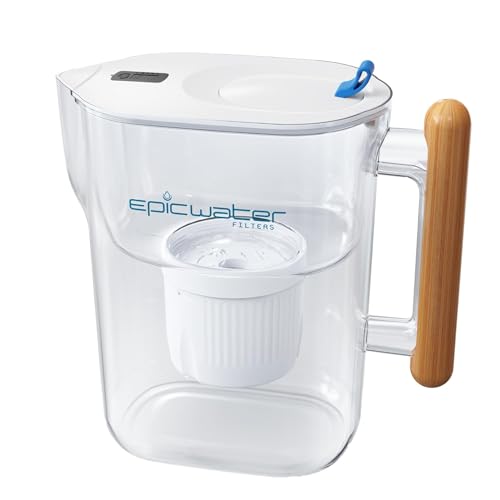
If your counter space is gone and the only place left is a fridge shelf, this is the shape you want. It is a 10-cup BPA-free Tritan pitcher that filters through a carbon block and helps reduce fluoride alongside PFAS (PFOA and PFOS), lead, chlorine, chloramine, microplastics and pharmaceuticals. The media is independently tested to NSF/ANSI 42, 53 and 401, with added testing for PFOA, PFOS and microplastics — the exact language to look for before trusting a fluoride claim.
The lid has a filter timer built in, which is the small feature that keeps you from losing track of a 100-gallon cartridge run. Each filter covers about 3 to 4 months for most homes and replaces over 1,000 single-use 12 oz bottles. For a side-by-side read: the Purewell gravity tank holds 1.5 gallons and the Waterdrop dispenser holds 35 cups, while this one is a fridge-door pour pitcher — smaller batch, easier to fit.
The reality of a pitcher: pour slowly, keep a hand on the lid when it is wet, and expect fill times that depend on the media. Independent certification helps, but this is not a broad RO system — it will not remove everything an AquaTru carafe will. It is the right pick when fridge space is the constraint and you want a credential to back the fluoride line.
Why the certificate matters: the NSF/ANSI 42, 53 and 401 testing covers the contaminants most pitchers skip, including fluoride and PFAS. That is the part worth paying for.
This is for: the fridge-shelf filter buyer who wants the fluoride claim backed by a real NSF test footprint.
Not the pick if: you want a large reservoir that stays on the counter, or you expect RO-grade removal.
4. Home Master TMJRF2 Jr F2 Water Filter System

Sink-top filtration that pours at a real 1 gallon per minute.
The standout number is 93% fluoride reduction, claimed for a three-stage cartridge that also pulls chlorine and other chemicals. The other number that matters is a 1 gpm flow rate, which means you fill a pot at the sink instead of waiting on a gravity drip. Compare that to the Purewell gravity tank and the Waterdrop dispenser, which both fill at a drip pace, and the Home Master turns a chore into a normal faucet routine.
Install takes minutes with a diverter valve, adapter, tubing and faucet in the box, and the unit is compact enough to travel. It is a 500-gallon cartridge, which is a bigger run than the Waterdrop dispenser’s 150-gallon filter. For a renter, the appeal is that nothing permanent is drilled — it hooks onto the faucet and comes off for a move.
The recurring downside is leakage. That is a fitting issue, not a filter issue — seat the diverter carefully and it holds. The rest of the owner experience is praise for taste and simplicity. If fluoride reduction with real flow is your priority, this is the sink-top that delivers it. If you want zero fittings and zero drip, look at the under-sink Frizzlife instead.
Reasons it holds a slot
- Up to 93% fluoride reduction from a three-stage cartridge
- 1 gpm flow — pot-filling speed, not a drip
- Install takes minutes with the included diverter and tubing
- 500-gallon cartridge run before a swap
- Portable enough for a rental or a trip
Honest gripes to know
- Fitting leaks come up — seat the diverter valve cleanly
- Countertop footprint is visible next to the sink
- No TDS drop, same as any non-RO filter
Best for: the renter who wants fluoride reduction and a fast faucet without drilling a hole in the counter.
Skip if: you cannot live with a diverter valve on the faucet or a fitting that needs a careful seat.
5. Alkanatur Alkaline Water Filter Pitcher
The alkaline pitcher that adds magnesium without adding a grain of sodium.
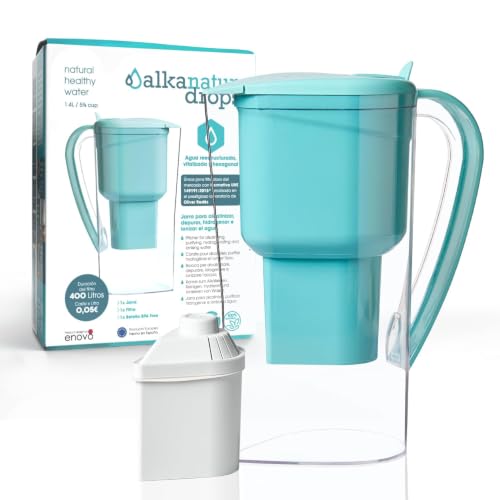
Most alkaline pitchers work by ion-exchange resin, which softens water by trading calcium and magnesium for sodium. Alkanatur uses a patented bioceramic filter instead, so it alkalizes to pH 8.5–9.5 and adds up to 18mg/L of magnesium with no sodium added. That is the exact reason to pick it over a generic alkalizing jug — you get the mineral bump without the salt trade.
It also handles the fluoride question, since every filter option in this line removes fluoride, PFAS, chlorine, heavy metals and microplastics alongside the alkalizing job. The 2.5L capacity and an independent tank design that keeps filtered and unfiltered water separate make it a real fridge-door pitcher. A 105-gallon filter covers 3–4 months for most homes. There are three filter formulas — Original, Low Emission, and one with added zeolite for older or sediment-heavy plumbing — so the buyer can match it to their water source.
The honest split is on value. Some owners find the mineral and pH outcome worth the outlay, while others feel the cost per pitcher run is steep. That is a fit question, not a defect. If pH and magnesium are your reasons for buying, this earns its slot. If you only want fluoride gone, a simpler cartridge does the job for less.
The pH angle: 8.5–9.5 after alkalizing with a mineral-additive filter, and the option to pick a zeolite formula if your pipes are older. That is the differentiator.
Know before you buy: this is a 2.5-liter pitcher, so a large family will refill it often, and the cost per filter is the recurring gripe.
Pick it if: you want fluoride reduction and a mineral-rich, alkaline pour in a fridge-friendly pitcher.
Look elsewhere if: you are buying strictly on fluoride and want the lowest running cost.
6. Frizzlife TW10 Under Sink Water Filter System
An under-cabinet cartridge that hides the fluoride fight behind the sink.
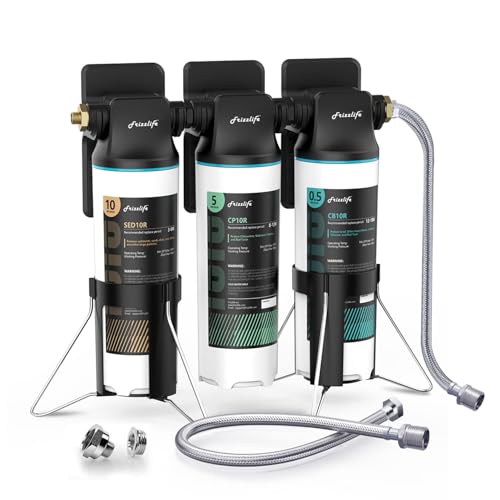
This is the pick for a homeowner who wants the filter out of sight and the faucet untouched. It combines an 8-layer stack — PP sediment, a 0.5-micron activated coconut shell carbon block, chloramine-removal catalytic media, ion-exchange material and DFA (De-Fluorine Agent) — to reduce fluoride alongside chlorine, chloramine, lead, heavy metals and VOCs. That 0.5-micron carbon block is the fine-pore piece that catches the particles a coarse block misses.
The headline spec is the 10,000-gallon / 18-month run, and it is the reason this pick moves ahead of the pitcher and dispenser options on long-term cost. Compare it to the Waterdrop dispenser’s 150-gallon, 2-month cartridge and the difference in swap frequency is dramatic. It installs in about 3 minutes to a standard 3/8” NPT or 1/2” fitting and connects directly to the existing faucet hose, so no extra hole is needed. Lead-free brass fittings are a real point of pride here, and the auto shut-off means a cartridge swap is a simple twist without shutting off the water.
Before you order, measure the cabinet: the unit runs 15.7″L x 4.7″W x 14.6″H, and the listing itself flags the fit check. It is also cold-water only, so a hot line is not an option. Two extra outlet hoses are in the box for a longer run. Treat the install as a 3-minute job and the fit check as the real homework.
What it does well
- 10,000-gallon / 18-month cartridge — the longest change interval in this group
- 8-layer stack with DFA media for fluoride reduction, plus lead and chloramine coverage
- 2 gpm flow at 60psi keeps the kitchen faucet usable
- Lead-free brass fittings, auto shut-off, twist-in cartridge changes
- Cold-water only, which is the honest limit to note
What you should know
- Some units report leaks at the fitting — check the seat during install
- Cold-water use only; no hot line
- Cabinet space needs to clear the footprint
Made for: the homeowner who wants one cartridge change a year and no counter clutter.
Think twice if: you cannot fit the unit under the cabinet or you need hot water filtering too.
7. Santevia Glass Water Filter System
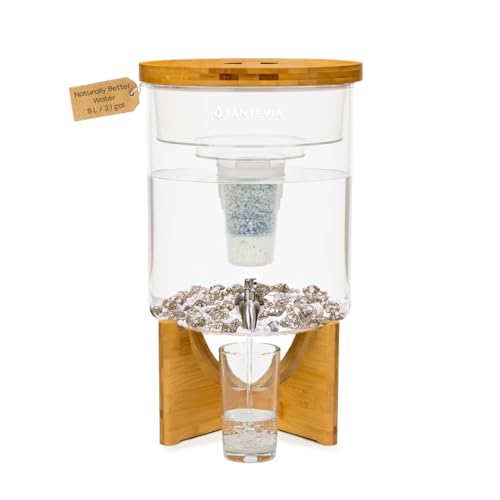
A glass jar on a bamboo stand that filters fluoride and remineralizes as it drips.
This is the showpiece of the group. The 8-liter vessel is glass and sits on a bamboo stand, so it looks like a kitchen fixture rather than a plastic jug. The MINA fluoride filter claims 99% fluoride reduction plus chlorine and lead, and the full system covers over 90 contaminants including PFAS, PFOS and VOCs, tested to NSF standards 42, 53 and 401. The mineral stones add calcium, magnesium and potassium and nudge the pH up by up to +2.0 units.
The ownership detail that matters is the glass — only the outer portion is glass on some builds, which is the one mixed note in the feedback. The MINA filter runs 2 months, which is the shortest in this group, while the mineral stones run 2 years. If you like the look and the mineral add, this is a real upgrade over a plastic dispenser. If you want long cartridge intervals, the Frizzlife or AquaTru will cost you less in reorders.
It weighs 8.22 kg, so set it on the counter and leave it there — this is not a portable unit. It is a lifestyle pick for the buyer who wants a good-looking glass filter and a mineral bite, and does not mind a 2-month cartridge rhythm. For pure fluoride removal per dollar, a pitcher or under-sink filter wins the argument.
The centerpiece: an 8-liter glass and bamboo system with a 99% fluoride reduction claim and a +2.0 pH mineral bump. It earns its place on looks and minerals, not on cartridge longevity.
Right for: the buyer who wants a glass vessel on a bamboo stand and does not mind changing the MINA filter every 2 months.
Wrong for: anyone who wants the fewest cartridge swaps, since 2 months is the tightest interval here.
8. AquaTru Glass Carafe Reverse Osmosis Water Purifier
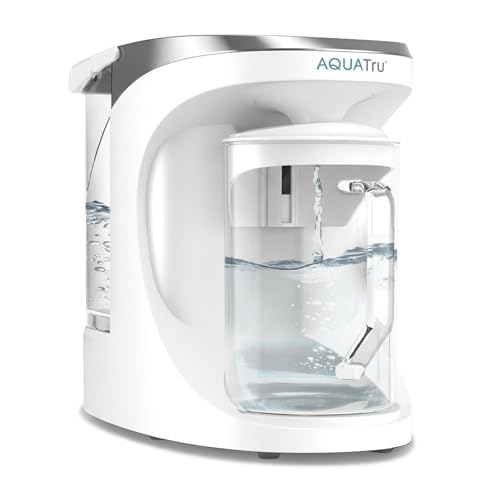
The RO machine that goes after fluoride with the widest contaminant list and a glass carafe.
Reverse osmosis is the heavy-filtration route, and this is the only RO pick in the group. Its four stages remove 84 contaminants — fluoride, chromium-6, arsenic, PFOA, PFOS, microplastics and more — tested and certified to NSF standards by IAPMO. If you want the widest net cast over your tap water, this is the one built for it, not a carbon filter pretending to cover the same list.
The system stages run on different clocks: the pre/carbon filter lasts 6 months or 300 gallons, the RO filter a year or 600 gallons, and the VOC carbon filter a year or 300 gallons. That is more upkeep per stage than a single-cartridge under-sink unit, but the payoff is the contaminant list. It plugs into any standard outlet and sits on the counter — no plumbing, no drilling, no tools. Purified water dispenses into the borosilicate glass carafe with a lid and pour spout.
The honest downsides are real. It uses power, unlike the gravity picks. Some buyers report the filter breaking after a year of use while others get a full year, and filtration speed and value draw mixed notes. Treat it as a machine with a maintenance schedule, not a set-and-forget tank. If fluoride plus the broadest removal list is the brief, this is the answer.
Why it takes the RO slot
- 4-stage RO with 84 contaminants removed, IAPMO-tested to NSF standards
- No plumbing, no drilling, no tools — plugs into any standard outlet
- Borosilicate glass carafe with lid and pour spout
- Stage-specific filter schedule with a 1-year RO filter run
What to keep in mind
- Uses electricity, unlike every gravity pick here
- Filter durability is a mixed report — some units fail around the one-year mark
- Filtration speed is slower than a faucet mount
- More stages means more cartridges to track
Choose this if: you want the widest contaminant removal and do not mind a powered machine with a multi-stage filter schedule.
Hold off if: you want a filter that runs without electricity or you prefer one cartridge instead of three.
Know the Specs
Fluoride media: alumina vs membrane vs RO
Activated alumina and reverse-osmosis membranes both pull fluoride, but they work differently. Alumina is a granular media that grabs the ion; RO forces water through a fine membrane that leaves the ion behind. The Purewell unit uses a fluoride-reduction membrane rather than alumina, and the Frizzlife calls its media DFA (De-Fluorine Agent) — different labels for the same job of intercepting fluoride. Carbon-only blocks do a fine job on chlorine and taste but leave fluoride alone, so read the media name before you buy.
Filter life in gallons vs months
A filter’s life is stated two ways, and both matter. Gallons tell you how much water the cartridge will treat before it is spent; months tell you the calendar clock regardless of use. A 2-month cartridge on a dispenser and an 18-month under-sink cartridge are very different ownership rhythms. A large family that filters a lot will hit the gallon limit first; a light user will hit the month limit first. Use whichever number comes sooner as your swap trigger.
Flow rate and the gravity trade-off
Flow rate is water speed at the spigot. The Home Master runs at 1 gpm and the Frizzlife at up to 2 gpm, which is a normal faucet pace. Gravity systems and most pitchers do not have a gpm rating because they work by drip — you wait. RO machines sit in between, filling a pitcher over minutes. Faster flow usually means smaller media contact time, so a fast filter is not automatically a better filter for fluoride. Match the speed to your patience.
Capacity and footprint
Capacity tells you how much water you can hold at once, which determines how often you refill. An 8-liter glass tank, a 35-cup dispenser, a 1.5-gallon gravity tank and a fridge pitcher each fit a different household size. Footprint matters just as much: under-sink units like the Frizzlife need cabinet clearance, while countertop and pitcher units need surface or shelf space. Measure the spot before you commit, because the biggest capacity in the wrong place is just in the way.
Common Questions
Does a regular carbon pitcher remove fluoride?
Is reverse osmosis better than a gravity filter for fluoride removal?
How often do I change the fluoride filter?
Will an under-sink filter fit my kitchen?
Do these purifiers lower TDS?
Can I use a countertop fluoride filter without plumbing?
Why do some of these filters leak?
Which is better for a family of four, a dispenser or a pitcher?
Does an alkaline filter still remove fluoride?
Are these systems certified for fluoride reduction?
The Bottom Line
For most buyers, the water purifier that removes fluoride answer is the Purewell 1.5G Gravity Water Filter System — 90% fluoride reduction from a dedicated cartridge, no electricity, no plumbing, and a stainless tank that travels. If you want the widest contaminant removal and do not mind a powered machine, the AquaTru Glass Carafe is the RO pick. For the longest interval between cartridge changes, the Frizzlife TW10 hands you 18 months on a single filter. And when the budget is tight and the family is large, the Waterdrop 35-Cup Dispenser is the one that fits the counter and the wallet.
The one honest nudge: every pick here states fluoride reduction in its own data, which is more than most pitchers on the market can say. Read the media name, measure the footprint, and set a calendar reminder for the cartridge — that is how you get the fluoride out and keep it out.
How we choose
We do not accept paid placement. Every pick is matched to a real buyer and a real use-case; we do not hands-on test units.
Sources
Specifications: manufacturer listings and product documentation. Review insights: verified customer reviews, as of November 2026. Pricing: not shown on this page (it changes often); check the current price via the retailer link.
As an Amazon Associate, Tactical Gear Guy earns from qualifying purchases. This does not affect which products we feature.