Specs are compiled from manufacturer listings and verified buyer reviews and can change over time — please confirm the key details on the product page before buying.
Which pool heater is actually worth buying? The short answer: match the heater to your pool’s volume and your home’s power supply, and you avoid the single most common and expensive mistake in this category. A 110-volt plug-in heat pump suits a small above-ground pool; a large inground pool needs far more heating output and a 220–240-volt hardwired circuit. Get that pairing right and the water holds temperature through cool evenings and shoulder-season mornings.
This guide is built by comparing the manufacturers’ published specifications and the patterns across verified customer reviews, so you get each pick’s real strengths and trade-offs instead of marketing spin.
Below you’ll find real heating output in BTU (British thermal units — the standard measure of heat a unit can move), voltage requirements, pool-size ratings, and the install realities owners actually hit. Once you can read BTU, voltage, and gallon ratings, the right water heater for the pool is easy to spot.
Top Picks
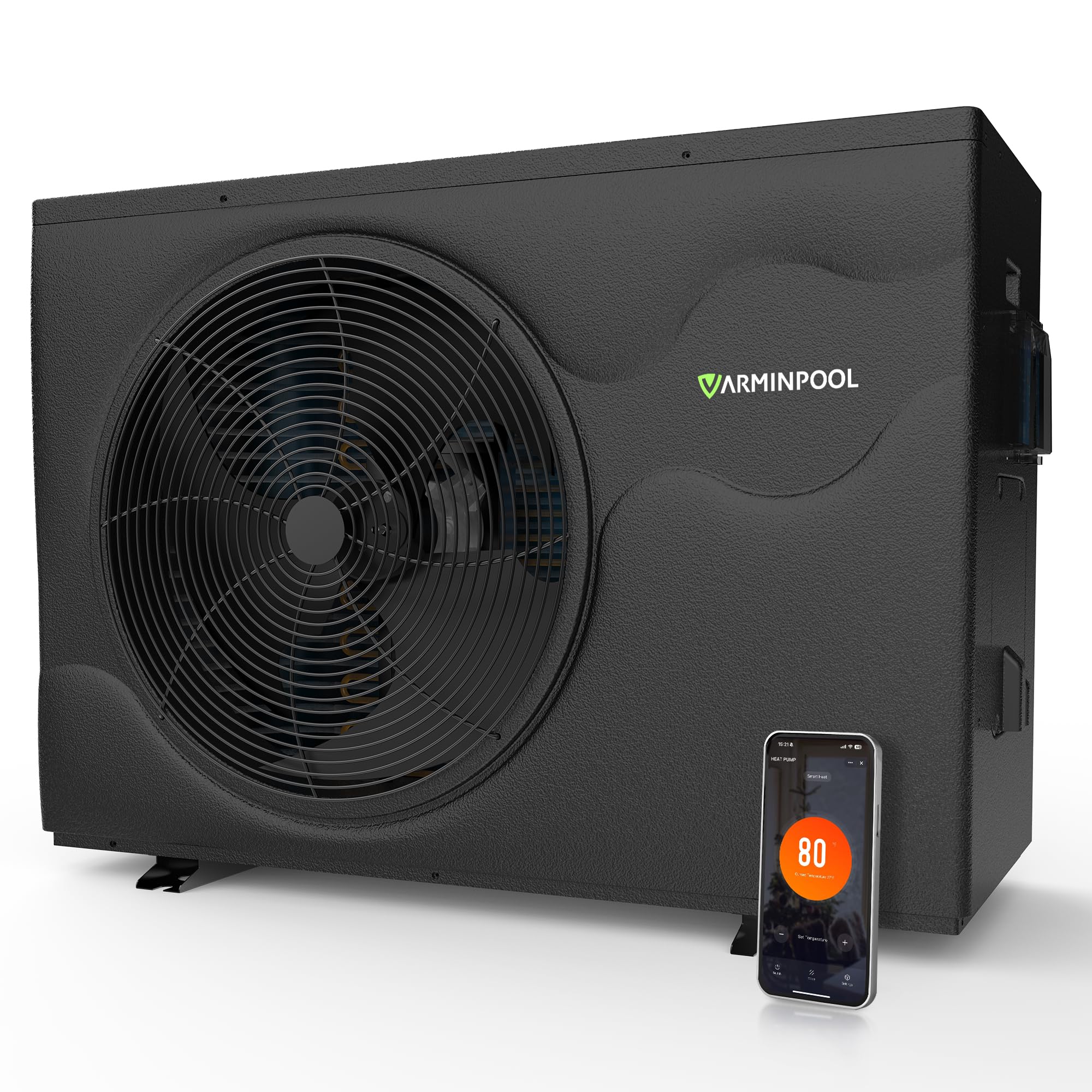

How To Choose The Best Water Heater for the Pool
Start with the two numbers that decide everything else: how many gallons your pool holds and how much heating output (BTU) the unit delivers. Buy too little output and the heater runs nonstop and barely keeps up. Buy too much for a tiny pool and you overspend on a unit you cannot fully use. Everything below helps you line those two up correctly.
Match BTU output to pool volume
Heating output is measured in BTU. A heat pump rated for a small above-ground pool tops out around 5,500 gallons. A unit built for larger inground pools can cover up to 20,000 gallons. The brand’s own guidance is the clearest shortcut here — check its stated gallon rating and stay at or under it. Bigger output warms the water faster rather than making it warmer.
Check the voltage before you buy
This is the step most buyers miss. A 110V heat pump plugs into ordinary household power, which makes it a natural fit for a small above-ground setup. A 220–240V unit needs a dedicated circuit and, for several models here, a certified electrician to hardwire it. Confirm what your home can supply before you fall in love with a unit — wrong voltage means a stalled install.
Heat pump, solar, or gas — pick by climate and goal
A heat pump pulls warmth from the surrounding air, so it works best when outdoor air stays mild. Solar mats are passive and rely on sunlight, which makes them best for above-ground pools in sunny spots. Natural gas heats fast and hard but needs a gas line and a larger footprint. Your climate and your fuel line dictate which family makes sense.
Side-by-Side Comparison
| Model | Best For | Heating Output | Power Requirement | Weight | Amazon |
|---|---|---|---|---|---|
| Swimming Pool Heater for Inground Pool 65000BTU★ Best Overall | Large pools, smart control | 65,000 BTU | 220–240V | 110 lbs | Amazon |
| FAFCO Original Solar BearBest Solar Option | Above-ground pools, sun-dependent | Solar | None (passive) | 20.3 lbs | Amazon |
| 5,500 Gallon Heat Pump 110v | Small above-ground pools, plug-in | 16,000 BTU | 110V | 74.8 lbs | Amazon |
| TURBRO Beluga 50,000 BTU | Mid-size pools, seasonal extension | 50,000 BTU | 220–240V | 145.7 lbs | Amazon |
| FibroPool FH270 | Above-ground or inground, mild climate | 70,000 BTU | 240V | 157 lbs | Amazon |
| Hayward H-Series Natural Gas 150,000 BTU | Inground pools and spas, gas line | 150,000 BTU | Natural gas | 150 lbs | Amazon |
Detailed Reviews
1. Swimming Pool Heater for Inground Pool 65000BTU
Our pick — 4.5+★ from 200+ verified ratings; the strongest balance of quality and price.
The big-pool workhorse that lets you start the season early from your phone.
The strongest all-round pick here is built around one number: 65,000 BTU of heating output, enough to heat and hold temperature for pools up to 20,000 gallons. That output is the reason it earns the top spot — it serves both inground pools and larger above-ground ones without the slow, wheezy climb you get from an underpowered unit. The crowd favorite backs that up, sitting at 4.5+ stars across 200+ owners.
What wins people over is how well the whole system works together. The inverter design adjusts power to real-time demand instead of switching hard on and off, which holds a steadier temperature and trims runtime. Buyers report steady water for night swims, quick warm-ups in a Georgia pool, and a machine quiet enough to forget it is running.
A corrosion-resistant titanium heat exchanger (a metal core built to shrug off saltwater and humidity) and weather-resistant housing mean it handles a backyard season after season. It needs a 220–240V connection at 17.5A, and the 2″ PVC fittings match standard pool plumbing. The honest catch: the WiFi app draws mixed feedback — some units disconnect from the app and need re-pairing. If you would rather set the temperature at the panel and leave it, that wrinkle will not bother you; if phone control is the whole appeal, expect the occasional reconnect.
Where it earns its keep
- 65,000 BTU covers pools up to 20,000 gallons
- Inverter heating holds temperature steady and trims energy use
- Titanium exchanger handles saltwater and humid air
- Quiet enough for a residential backyard
The honest trade-offs
- WiFi app control can drop its connection
- Needs a 220–240V circuit, not a standard outlet
Reach for this if: you have a mid-to-large inground pool and want fast, stable heating you can schedule from a phone.
Look elsewhere if: your only power supply is a standard household outlet — this one wants 220–240V.
2. FAFCO Original 4 x 20 Feet Solar Bear Solar Pool Heater
No compressor, no cord, no circuit — just sun and a mat that weighs as little as a bag of groceries.
Here is the outlier of the list. The Solar Bear is a passive solar mat, not a compressor-driven machine, so it has no BTU rating to compare and no voltage to wire. What it does have is weight: 20.3 pounds. Against the 157-pound FibroPool FH270 heat pump, that is the difference between a two-person lift and something you can carry out to the deck yourself. Hook it into your above-ground pool’s circulation and let the sun do the warming.
The connected-tube design runs water through the mat’s channels and back into the pool, and the kit includes the starter parts to plumb it in. It is built for above-ground pools, where it pairs naturally with a small pump and an open, sunny spot. Set it where the sun hits and it works silently for as long as daylight lasts. Expect it to help most on clear, warm days — this is the kind of heater whose output rises and falls with the weather.
No sun means no heat with a solar mat. On overcast days or in shaded yards, it cannot carry the load the way a heat pump can. It holds 4.0+ stars from roughly a dozen-plus buyers, so it is a quieter pick. But for a sunny backyard and a modest above-ground pool, it is the simplest warm-water upgrade you can plumb in.
Lightness is the pitch: at 20.3 pounds, this is the only heater on the list you can move and reposition without a second set of hands.
The clock it runs on: it depends entirely on sunlight, so treat it as a daytime booster rather than an all-weather system.
The sunny-day shortcut: ideal for an above-ground pool in a bright yard where you want warm water without wiring anything.
Fair warning: cloud cover and shade cut its output — it cannot match a heat pump after dark or in a cool snap.
3. 5,500 Gallon Heat Pump Pool Heater
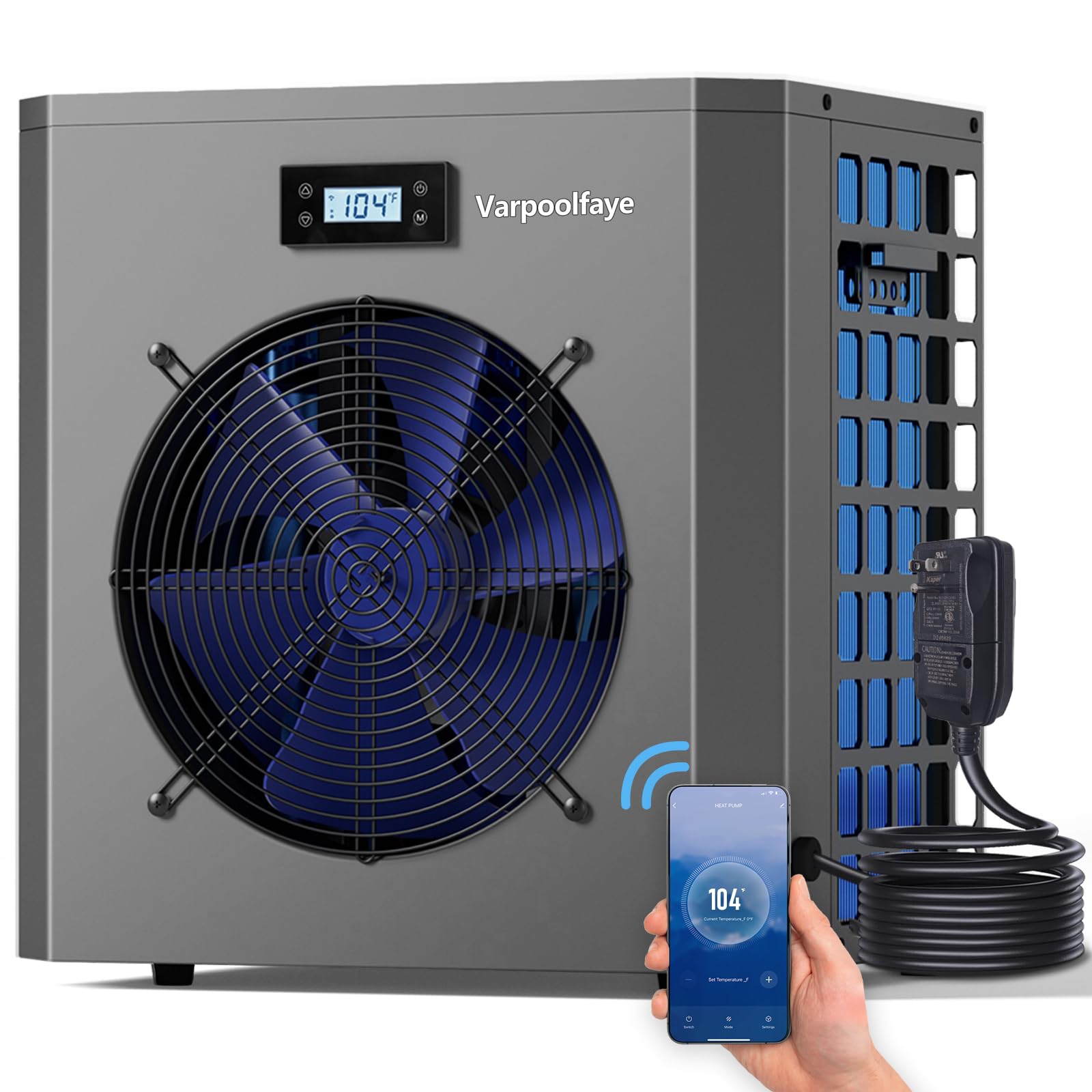
The one that runs on a regular outlet — a heat pump small pools can actually power.
For a small above-ground pool, the plumbing and the power are the whole ballgame — and this unit solves both. It delivers 16,000 BTU to heat pools up to 5,500 gallons, and it runs on standard 110V power instead of a dedicated circuit. Compare that to the 220–240V, 65,000 BTU inground pick above: this is a fraction of the output, but it plugs in without an electrician. It also pumps both ways, heating from 59°F up to 104°F and cooling down as far as the mid-40s to low-80s range on hot days.
The titanium heat exchanger and high-output compressor do the lifting, and the unit rates a 4.3 COP (coefficient of performance — how much heat it moves per unit of electricity, so a higher number means less power spent). Sound dampening holds noise to a low 50 dB, quiet enough that splashing drowns it out. Setup is genuinely simple: two DN32–38mm universal connectors, a 118-inch cord, and a pump pushing 700 GPH, and you are running.
Owners of this style of plug-in heat pump tend to flag one thing as normal: a little water dripping from the bottom, which is condensation from the heat exchange and defrost cycles, not a leak. Put a cover on the pool and it heats noticeably faster. The catch worth knowing is sizing — push it past its 5,500-gallon rating and it will struggle to hold temperature on cool nights.
Why small-pool owners like it
- 110V plug-in power needs no electrician
- Heats and cools, from 59°F up to 104°F
- 50 dB operation keeps the yard peaceful
- Universal connectors and a long 118-inch cord
What to plan around
- Capped at 5,500 gallons, so it is not for big pools
- Condensation drip from the base is normal, not a fault
Made for: the above-ground pool owner with a plain outlet and a modest water volume who wants warm water without an electrician’s visit.
Out of its depth on: pools above 5,500 gallons, where its 16,000 BTU cannot keep pace.
4. TURBRO 50,000 BTU Inverter Pool Heater, Up to 15,000 Gallons
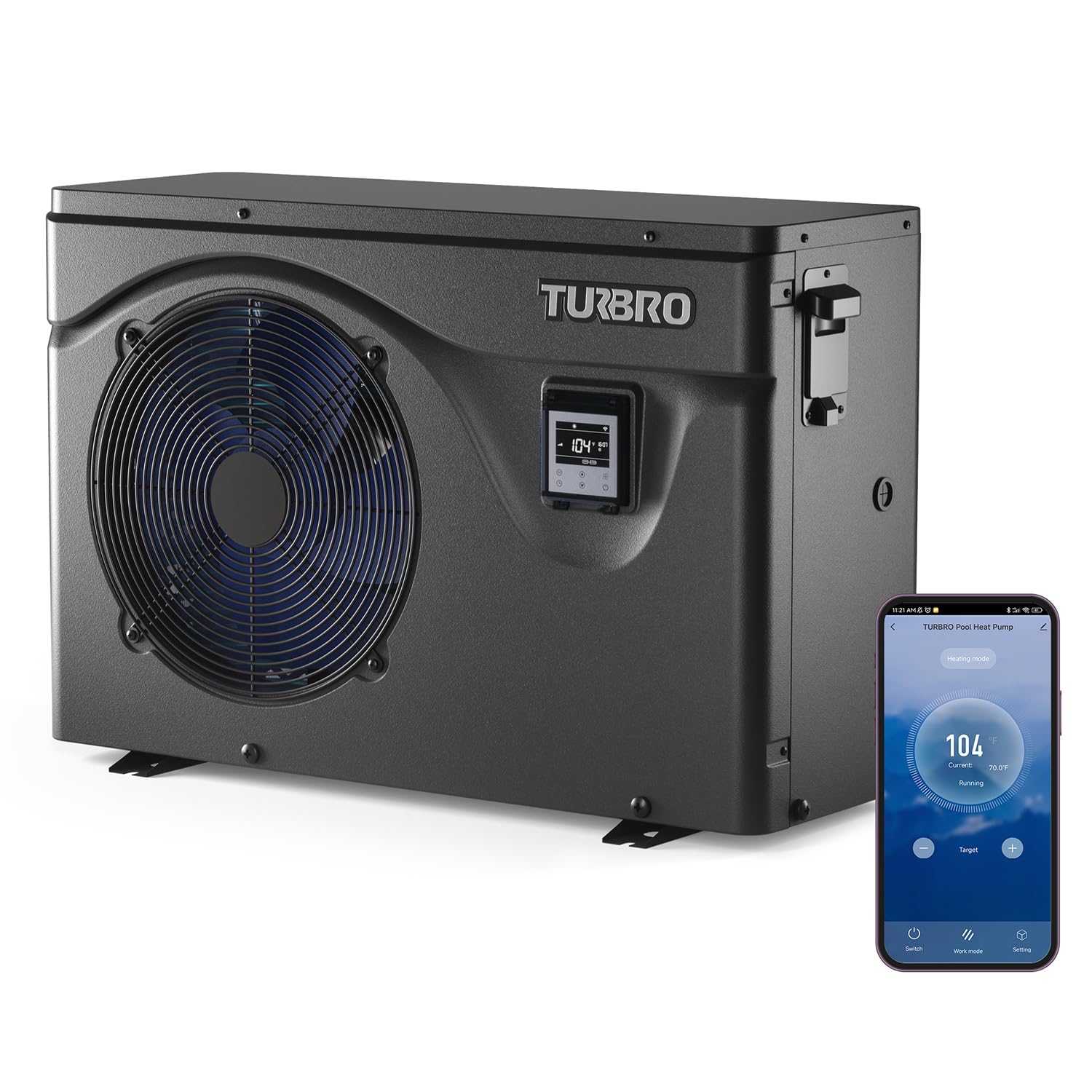
Built to stretch spring and fall, not to turn your pool into a hot tub.
You get steady pool warmth for cool spring and fall swims from the Beluga — 50,000 BTU (a measure of heating power) across pools up to 15,000 gallons. It does not try to be a hot tub, and that focus is why it fits a mid-size pool well. Its full DC inverter compressor (a variable-speed motor that ramps heating power up or down rather than snapping on and off) reads the air temperature, the water flow, and your set point and adjusts to keep things even. Owners mention a consistent 5–6°F difference between inlet and outlet water.
Control is a strong suit. You can set two timer periods from the panel or from your phone, and performance and the app are what buyers discuss most. Built-in sensors watch inlet and outlet temperature, ambient temperature, current, voltage, pressure, and water flow, and the unit shuts down and shows an error code if something goes wrong — a real safeguard on an outdoor machine.
Know before you buy: this one needs a certified electrician to hardwire it to a 220–240V supply. The box includes rubber blankets, drain connectors, a drain pipe, and water pipe joints, but not hoses, valves, filters, pumps, or chlorinators. It also works most efficiently when outdoor air is 60°F or above, so in genuinely cold weather its performance tapers.
Smart-control read: the phone app and the two-period timer give you real day-to-day command over temperature without walking out to the pad.
The fine print: it needs a hardwired 220–240V electrical install and works best at 60°F and up, so it rewards mild climates and a planned electrical run.
Suits you when: you have a mid-size pool and want to open earlier and close later with app-based control.
Think twice if: your winters bite hard or you have no 220–240V circuit ready — this wants both mild air and an electrician.
5. FibroPool FH270 70,000 BTU Electric Pool Heat Pump
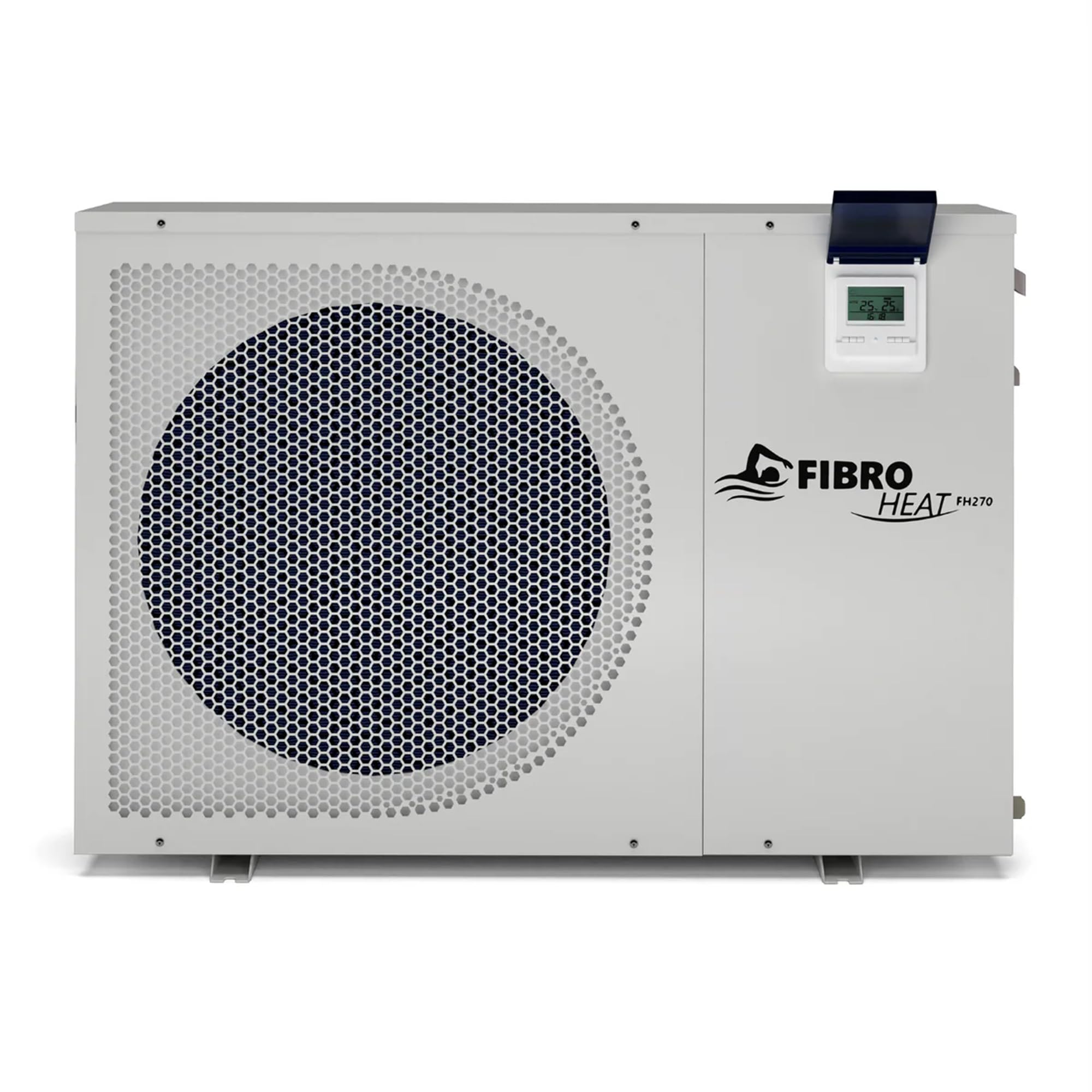
The highest-output heat pump here — and the heftiest thing you will bolt onto the pad.
At 70,000 BTU, this is the most heating muscle in the heat-pump group. That output covers inground pools up to 15,000 gallons, or above-ground pools sized 27 ft round or 18 x 33 ft oval in mild climates. It is the closest heat-pump match to the 65,000 BTU inground pick above, and it leans on a titanium heat exchanger and high-pressure compressor to hold steady output through the season.
Here is what customers note: water climbing from 77 to 82–84°F in about 4 hours. That is fast warm-up for a heat pump, and it is why the FH270 earns its keep. The digital display makes setting and checking the temperature quick, and the panel can be relocated with an optional extension so you are not crouching behind equipment to read it.
Now the physical reality. This unit weighs 157 pounds and measures 38 x 15 x 26 inches — against the 20.3-pound solar mat, that is a serious piece of machinery you will want to site carefully and lift with help. It installs on a 240V circuit with included 1 1/2-inch fittings, and the enamel-coated steel cabinet resists weather and corrosion. The caveat is siting: its slim profile is designed to slot into a tight equipment pad, so plan your pad space before delivery.
The fast-warm case
- 70,000 BTU, the highest heat-pump output on the list
- Reviewers point out 77 to 82–84°F in about 4 hours
- Enamel-coated steel cabinet stands up to weather
- Relocatable digital display panel
Sizing notes
- 157 pounds — plan the lift and the pad location
- 240V circuit required
Pick this when: you want the most heat-pump output here and can give it a 240V circuit and a solid pad.
Pass if: you need to move the heater around or cannot supply 240V power.
6. Hayward H-Series Natural Gas Pool Heater 150,000 BTU
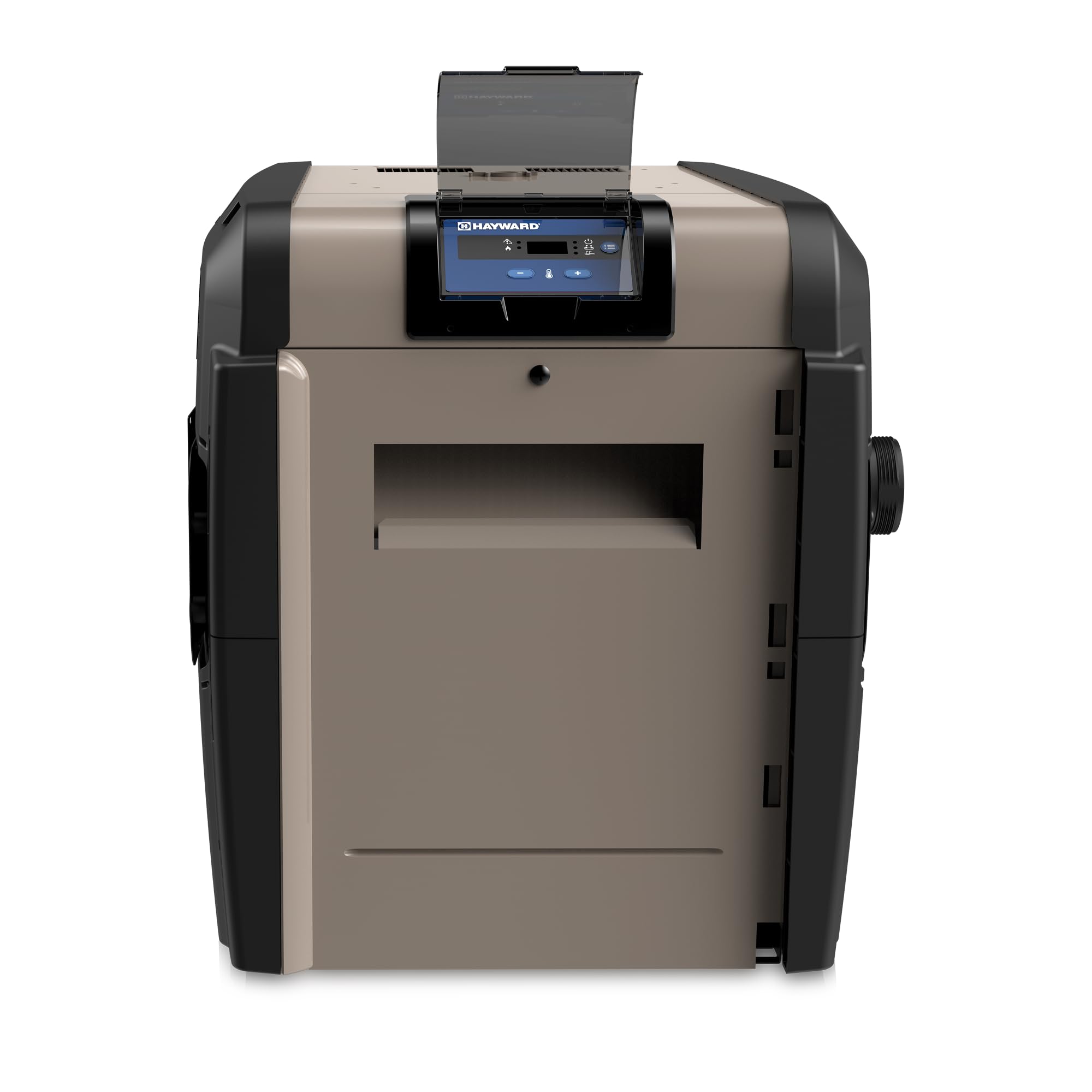
The gas brute — more heating output than any heat pump here, and it needs a gas line to prove it.
The pure-output champion of this list runs on natural gas and throws 150,000 BTU at the water. That is more than double the FibroPool’s 70,000 BTU and several times the plug-in unit’s 16,000 BTU, which is what fast, hard heating looks like. It is built for in-ground pools and spas up to 450 square feet on a natural gas connection, with other models covering 600, 750, or 1,200 sq ft. For a big inground pool you want warm in a hurry, no heat pump here comes close to its 150,000 BTU.
Its control panel runs self-diagnostics and monitors water temperature. The control panel with a digital LED display runs diagnostics on itself and keeps an eye on water temperature. Flexible gas and electric connections can sit on the right or left, and the built-in 3/4″ gas connection simplifies the fuel line. It is also certified for low-NOx emissions (a measure of reduced nitrogen-oxide output), and its efficient design trims circulation-pump runtime.
The honest read is mixed. Buyers find it easy to install and quick on the heat, but reliability sees both satisfied owners and disappointed ones — some report no trouble at all, others cite Hayward failures. That is a fair caveat to weigh, not a knockout: this is a high-output gas unit that rewards a clean install and balanced water chemistry. The other catch is the install itself.
Raw heating edge: 150,000 BTU makes it the fastest-warming option here by a wide margin — the choice when a heat pump’s steady climb is too slow.
The installation wall: a natural gas line is non-negotiable, and reliability is a coin-flip worth going into with eyes open.
Right call for: a large inground pool or spa, a home already plumbed for natural gas, and a priority on heating speed over quiet simplicity.
Wrong call if: you have no gas line or you want the lower maintenance profile of a heat pump.
Know the Specs
BTU — How Much Heat It Moves
BTU stands for British thermal unit, and on a pool heater it tells you the heating output — how much heat the unit can move into the water. Higher output warms a given pool faster; lower output takes longer. The trap is buying output that does not match your volume. A 16,000 BTU heat pump is pitched at small above-ground pools, while a 150,000 BTU gas unit is built for large inground setups. Read the gallon or square-foot rating and stay within it.
Voltage — What You Can Actually Power
Voltage decides how the heater connects. A 110V unit plugs into ordinary household power and skips the electrician, which suits a small above-ground pool. A 220–240V unit needs a dedicated circuit and, for some models here, professional hardwiring. A natural gas heater needs a gas line and flexible gas and electric hookups instead. Check your power supply before you shop — the wrong voltage turns a simple purchase into a stalled project.
Common Questions
Will a 110V heat pump really warm an above-ground pool?
What size heater do I need for a 20,000 gallon pool?
Do I need an electrician to install a pool heat pump?
Is a heat pump or a gas heater faster at heating a pool?
Can a solar heater keep my pool warm in all weather?
Why is water dripping from the bottom of my heat pump?
Does a pool cover really matter for heating efficiency?
How do I control my pool heater from my phone?
What water flow rate does a heat pump need?
The Bottom Line
On the strength of the whole package, the water heater for the pool that earns the nod is the 65,000 BTU inground heat pump — it pairs broad 20,000-gallon coverage with inverter efficiency, saltwater-ready titanium, and app control. If you want the biggest raw heat-pump output, reach for the FibroPool FH270 at 70,000 BTU, which owners see climbing 77 to 84°F in about four hours. For a small above-ground pool and a plain outlet, the plug-in 5,500 gallon 110V heat pump keeps it simple. And when only gas-fast heat for a big inground pool will do, the Hayward H-Series with 150,000 BTU is the one to run — provided you have the gas line.
Whichever you choose, pair it with a cover and the right flow rate, and confirm your voltage before you buy — that is the step that decides whether the warm water arrives this weekend or next month.
How we choose
We do not accept paid placement. Every pick is matched to a real buyer and a real use-case; we do not hands-on test units.
Sources
Specifications: manufacturer listings and product documentation. Review insights: verified customer reviews, as of November 2026. Pricing: not shown on this page (it changes often); check the current price via the retailer link.
As an Amazon Associate, Tactical Gear Guy earns from qualifying purchases. This does not affect which products we feature.