Specs are compiled from manufacturer listings and verified buyer reviews and can change over time — please confirm the key details on the product page before buying.
Hot water that smells like rotten eggs is the surest sign your tank’s anode rod has given up. That rod is a sacrificial metal bar screwed into the tank — it corrodes on purpose so the steel lining does not. Replace it and you protect a water heater that would otherwise rust, crack, and leak. This guide covers nine rods, from a flexible aluminum-zinc unit that kills sulfur odor to a powered titanium option, so you can match the right one to your tank.
This guide is built by comparing the manufacturers’ published specifications and the patterns across verified customer reviews, so you get each pick’s real strengths and trade-offs instead of marketing spin.
Thread size and rod length decide whether a rod even fits your heater, so check those before anything else. Below you will find the specs that matter, the honest trade-offs, and the fit notes for each tank type. This breakdown of the best water heater anode rod covers aluminum, magnesium, and powered options for every common tank.
Top Picks


How To Choose The Best Water Heater Anode Rod
Three things decide whether a rod works for you: the thread size, the length, and the metal. Get the thread wrong and it will not screw in. Get the length wrong and it will not clear your ceiling or fit through the opening.
Match the thread size first
Most residential tanks use a ¾” NPT connection (NPT means the standard tapered pipe thread used on plumbing fittings). RV and Atwood-style heaters instead take a ½” NPT rod, often a short 4.5″ one. Sizing on this is not optional — a ½” rod will not seal a ¾” hole.
Then check length and clearance
A long rod in a low basement can be a genuine problem. Flexible rods split into four sections under 12 inches each, so they bend through tight space. A straight rod needs full overhead clearance, which some closets simply do not give you.
Aluminum-zinc versus magnesium
Aluminum-zinc is the go-to when your water smells like sulfur, since it targets that odor directly. Magnesium gives a stronger protective current, which many buyers prefer for plain corrosion defense. Both decay on purpose — that is the whole job.
Side-by-Side Comparison
| Model | Best For | Rod Length | Thread Size | Material | Amazon |
|---|---|---|---|---|---|
| 44″ Flexible Aluminum Zinc Anode Rod★ Best Overall | Killing rotten-egg odor | 44″ | ¾” NPT | Aluminum-Zinc | Amazon |
| Camco Magnesium RV Anode RodRV Specialist | Atwood-style RV heaters | 4.5″ | ½” NPT | Magnesium | Amazon |
| Eleventree 4 Pack RV Anode RodsMulti-Pack Value | Suburban and Mor-Flo RVs | 9.25″ | ¾” NPT | Magnesium | Amazon |
| Eau 44 Inch Flexible Magnesium Rod | Fast install with tools included | 44″ | ¾” NPT | Magnesium | Amazon |
| Podoy 44″ Flexible Magnesium Rod | Magnesium protection on a budget | 44″ | ¾” NPT | Magnesium | Amazon |
| Eastman 42 Inch Flexible Magnesium | Stainless nipple fitment | 42″ | ¾” x 3″ NPT | Magnesium | Amazon |
| Powered Titanium Anode Rod | Permanent odor fix, no decay | 9.4″ | ¾” NPT | Titanium | Amazon |
| Podoy 29″ Magnesium Rod | Trim-to-fit in tight spaces | 29″ | ¾” NPT | Magnesium | Amazon |
| About Fluid Michigan Magnesium | Complete kit with real instructions | 44″ | ¾” NPT | Magnesium | Amazon |
Detailed Reviews
1. 44″ Flexible Aluminum Zinc Anode Rod
Our pick — 4.5+★ from 550+ verified ratings; the strongest balance of quality and price.
The aluminum-zinc rod built to end the sulfur smell at the source.
If your hot water already smells like rotten eggs, this is the rod to start with. The aluminum-zinc alloy is formulated to knock out that sulfur odor, rather than just slowing corrosion the way a plain magnesium rod does. It carries a 4.5+ star rating from a deep pool of owners — the crowd favorite for exactly this job.
Length and clearance are what usually stop a rod swap, and this one is built around that. It runs 44 inches but hinges into four sections, each under 12 inches, so you can feed it into a tight closet or low basement one piece at a time. If it still runs long, a hacksaw trims it down safely.
The kit includes the anode rod, Teflon sealing tape, and a 27mm chrome-finished socket — the tools that otherwise cost you a second trip to the store. It threads into the standard ¾” NPT connection and fits A.O. Smith, Rheem, Reliance, Richmond, Kenmore, State, GE, and many more. What wins people over is the build quality, followed closely by how straightforward the swap is; buyers report it “can be swapped out in under 5 minutes.”
Where it earns its keep
- Aluminum-zinc alloy targets sulfur odor directly, not just corrosion
- Four sections under 12 inches each clear tight install spaces
- Socket and Teflon tape included, so no extra tooling run
- Standard ¾” NPT thread fits most major residential brands
- Can be cut shorter with a hacksaw if clearance is tight
What to plan around
- Like any sacrificial rod, it decays on purpose and needs replacing every 2 years
- Trimmed sections must be cut carefully so the core stays intact
Reach for this if: your water smells like sulfur and you want the odor gone without calling a plumber.
Choose another if: you have an Atwood-style RV heater — that takes a ½” NPT rod instead.
2. Camco Magnesium RV Water Heater Anode Rod 11553
A pocket-sized sacrificial rod made only for Atwood-style RV tanks.
Here is the number that tells you whether this is your rod: it is 4.5 inches long with a ½” NPT thread. That is the signature of an Atwood-style aluminum RV water heater, and it is why this Camco will not fit a standard home tank — but fits its target perfectly. For scale, the 44″ rods on this list run nearly ten times longer.
Inside that small body sits a magnesium core that sacrifices itself to absorb corrosive elements before they reach the tank lining. RVs sit for months between trips, which is exactly when a neglected heater starts to rust. The rod weighs just 4 ounces and swaps in place of your old drain plug.
Owners consistently describe it as the necessary part for their Atwood heater, with the ½” NPT thread seating in place of the drain plug. The honest catch: corrosion resistance draws mixed feedback — the protection holds for some setups but not indefinitely for everyone, so check it each season. Treat it as a consumable you replace, not a one-time install. It is a solid fit for a camper owner who wants a spare on hand.
The one to buy for a camper: ½” NPT and 4.5 inches long, matched to Atwood aluminum heaters and nothing else.
Watch the clock: plan on replacing it as it decays, since protection is not guaranteed year after year.
Suits: camper and trailer owners with an Atwood-style heater who want a purpose-built rod.
Not for: a home tank with a ¾” connection — the ½” thread simply will not seat.
3. 4 Pack RV Water Heaters Magnesium Anode Rod
Four rods in one box, so a spare is always in the camper.
Anode rods are meant to be consumed, so buying four at once is not overkill — it is planning. This Eleventree set gives you four 9.25-inch magnesium rods, each with a ¾” NPT thread that fits most Suburban and Mor-Flo 6-gallon RV heaters. You install one and keep the others for the next few seasons.
The magnesium core pulls corrosive elements out of the water so the tank lining survives longer. When the rod in use is mostly eaten away, you unscrew it, drain the tank, and drop in a fresh one. That cycle is the whole point of owning a multi-pack.
It uses a 1 1/16″ socket, which is a common size you likely already have. The recurring note across owners is lifespan: some get a long run from a rod, others see it break down sooner, so inspect it rather than assume. Each rod measures 9 ¼” long, so confirm your clearance before ordering. Best for the RV owner who wants to stop buying rods one at a time.
Why a four-pack makes sense: a 9.25″ rod with ¾” NPT thread for Suburban and Mor-Flo 6-gallon heaters, with three spares to follow.
The honest caveat: durability varies from rod to rod, so check condition instead of trusting a fixed schedule.
Built for: Suburban and Mor-Flo RV owners who would rather stock up than reorder.
Look elsewhere if: your heater wants a long flexible rod — these are 9.25 inches and straight.
4. Eau 44 Inch Flexible Magnesium Anode Rod
Magnesium protection with the socket and tape already in the box.
If you want the swap done in one sitting, the kit is what sells this one. Everything you need is inside — the 44-inch magnesium rod, Teflon sealing tape, and a 27mm chrome socket. Owners mention the swap takes about 15 minutes with the included socket and tape.
The 44 inches split into four sections, each under 12 inches, so the rod bends down through a narrow opening. Magnesium gives a stronger protective current than aluminum, and the ¾” NPT connection fits A.O. Smith, Rheem, Reliance, Richmond, Kenmore, State, and GE heaters.
Where it gets murkier is lifespan and odor. Some owners see improved heater life, while others doubt it lasts beyond 5-6 years, and the odor results are split. So set expectations: this is a solid corrosion guard for a standard tank, not a guaranteed cure for smelly water. Homeowners with a 50-gallon GE report it fitting cleanly.
What buyers like about it
- Whole install kit included — rod, Teflon tape, and 27mm socket
- Flexible 44″ rod bends into tight spaces in four sections
- Magnesium core gives a strong corrosion defense
- 15-minute install reported by owners
- Fits most standard ¾” NPT residential tanks
Where expectations need setting
- Odor reduction results are mixed, so do not bank on a pure cure
- Some owners question how many years the magnesium will last
The easy-install pick: a complete magnesium kit for a standard home tank and a spare afternoon.
Know before you buy: if sulfur smell is your main battle, the aluminum-zinc pick above targets it more directly.
5. 44″ Flexible Magnesium Anode Rod 3/4″ NPT
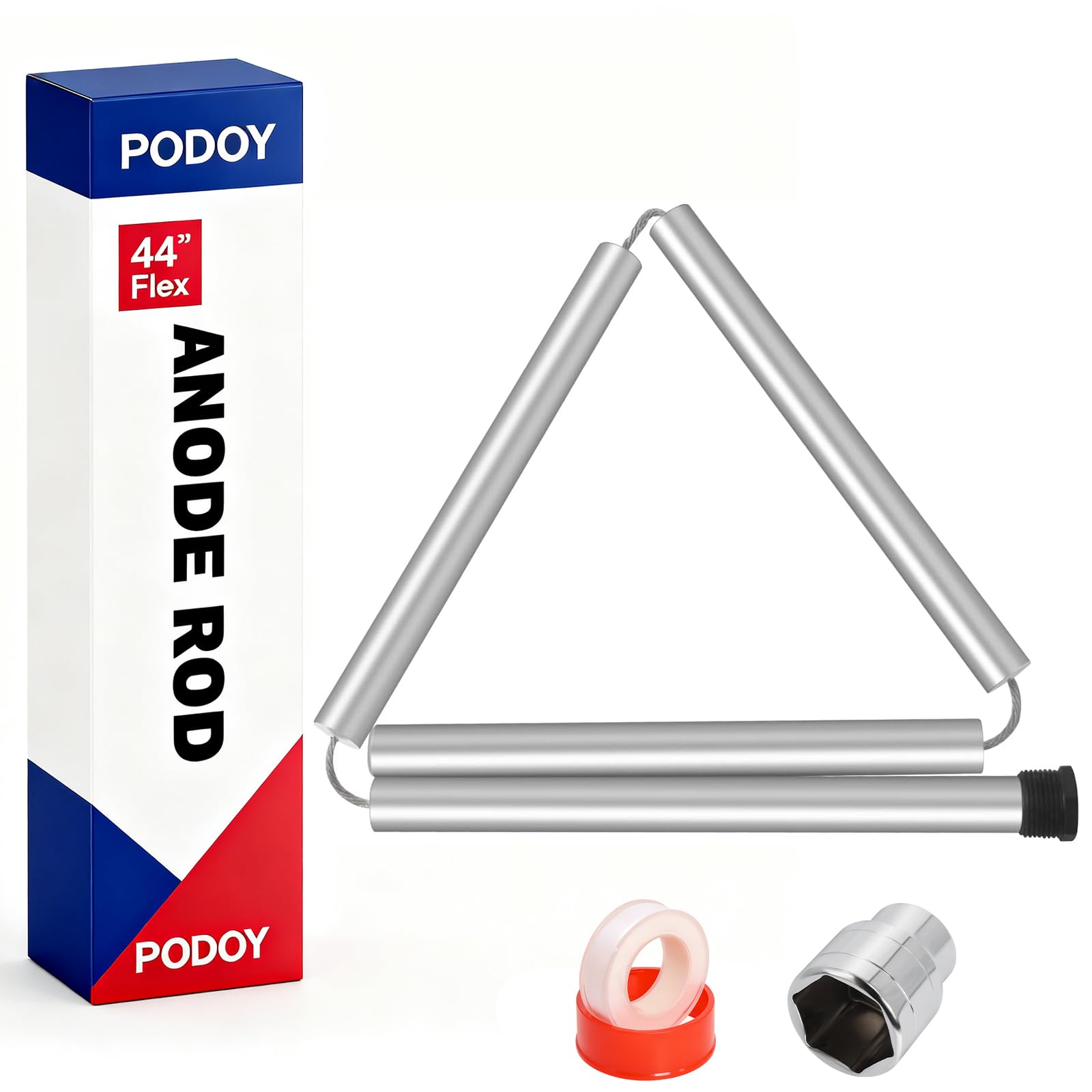
The rod that tells you straight whether it fits your tank — or not.
Most listings bury the compatibility details. This one leads with them, and that saves you a wasted return. It fits A.O. Smith, Rheem, Reliance, Richmond, Kenmore, State, and GE tank-style heaters with the ¾” NPT connection — and it states plainly that it is not compatible with Bradford White heaters. Read that line before anything else.
Once it fits, the 44-inch magnesium rod gives a strong protective current that many owners rate above aluminum for corrosion defense. The four sections each run under 12 inches, so it slides through low-clearance areas where a straight rod would jam. The box also holds a 1-1/16″ hex socket and a roll of thread tape.
Magnesium is expected to give about two years of protection, and the maker advises checking it on that cycle. Owners describe it as good quality and easy to install, with the 1-1/16″ hex socket and thread tape covering the job. The build earns its score at 4.5+ stars. For a straightforward swap on a mainstream residential tank, this is a dependable, well-documented choice.
Set-it-straight fitment: ¾” NPT for the usual home brands, with Bradford White called out as a no.
Two-year rhythm: plan the next inspection on that interval to keep protection going.
Good match for: standard residential tanks and buyers who want clear fitment guidance before ordering.
Steer clear if: you own a Bradford White heater — this rod is not built for it.
6. Eastman 42 Inch Flexible Magnesium Anode Rod 60286
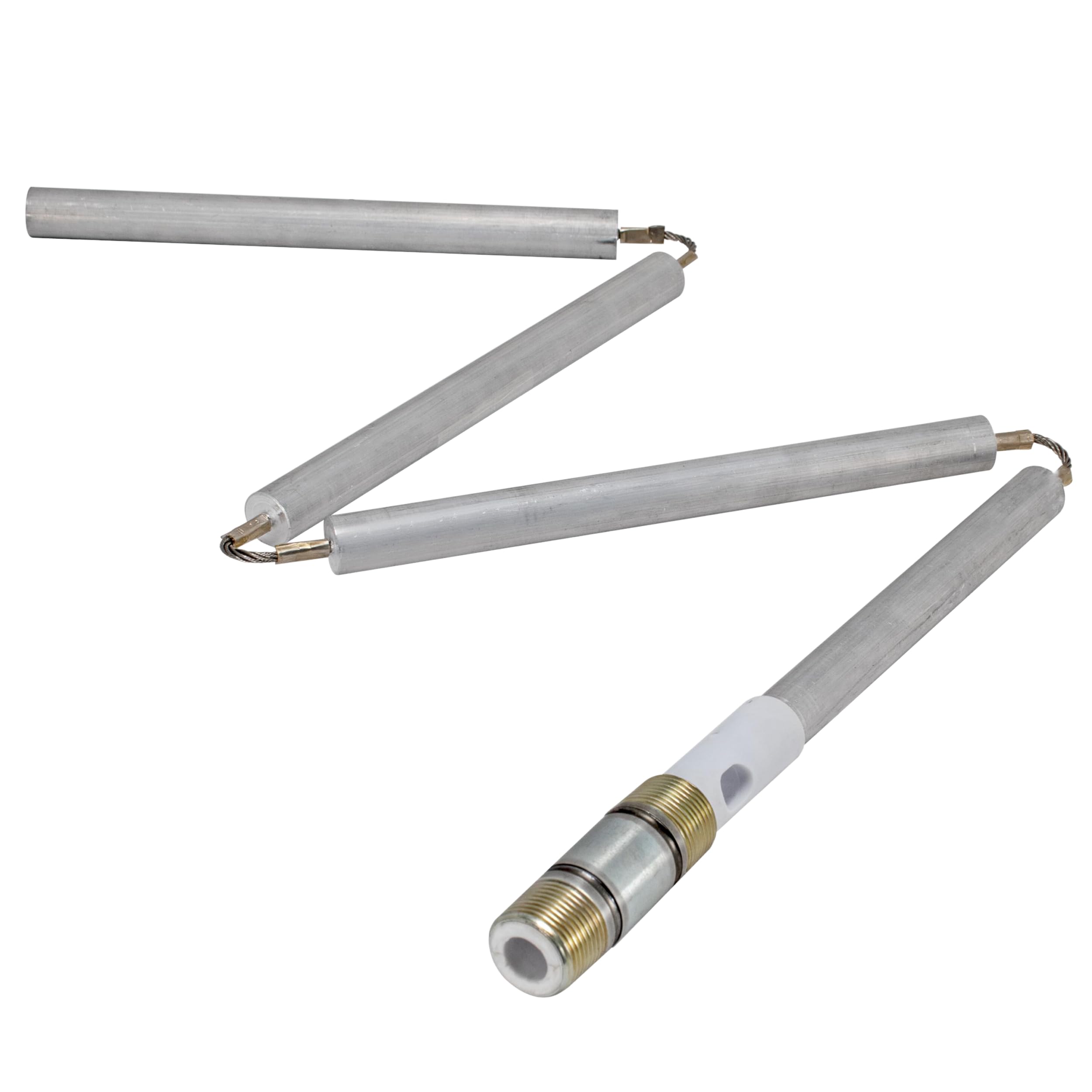
A stainless fitting and four magnesium links for a stubborn tight spot.
The fitting is the story here: a stainless steel 3/4 in x 3 in NPT nipple, built to resist corrosion at the connection point itself. That is the spot most rods quietly fail on over time. Behind it sits a 42-inch flexible body on a carbon steel cable with four magnesium links, each 5/8 inch in diameter.
That four-link design is what lets it bend for installs where a rigid rod has no room. The chrome finish gives the exposed fitting a clean look at the tank top. One install rule to respect: you need at least 12 inches of clearance above the tank to work, so measure that first.
Owners rate it good quality and easy to install, with the four magnesium links bending through tight installs. It fits most residential heaters and provides good value. The honest limit: it can help reduce sulfur odor but is not sold as an odor cure, and it is rated to protect for a maintenance cycle you check every 2 years. A sensible pick for a tight space and a durable fitting.
Reasons it stands out
- Stainless steel ¾” x 3″ NPT nipple resists corrosion at the joint
- Four magnesium links flex where a straight rod will not fit
- Carbon steel cable holds the sections through the bend
- Fits most residential heater models
Details to weigh
- Needs at least 12 inches of clearance above the tank
- Odor reduction is a possible bonus, not its core promise
Made for: a snug install where a durable stainless fitting and a flexible body both matter.
Think twice if: your tank top has under 12 inches of room to work.
7. Powered Anode Rod Titanium

A titanium rod that runs on power instead of corroding away.
Every other rod here works by decaying, and this one does not. Instead of a magnesium or aluminum core that gets eaten, it is titanium and runs on a small electrical current, so it protects the tank without consuming itself. That is the reason to pay more: no replacing it every couple of years.
It replaces a decaying aluminum-zinc or magnesium rod and targets sulfur odor the same way — owners describe the smell clearing once it is on. The rod is 9.4 inches with a ¾” NPT thread. It fits 10 to 39 gallon, 40-80 gallon, and 90-120 gallon electric heaters across the common brands, with two exceptions: Bradford White and Bock, which need extra hardware.
The maker says it draws little electricity and installs in 10-15 minutes with the included step-by-step guide. Owners praise it for removing odor and its long-term durability, with one noting it “still working after over a year of use.” The catch to size up: it is only 9.4 inches and needs a power source, so it best suits an electric heater where you have an outlet nearby. 90+ owners have weighed in, and it holds steady at 4.5+ stars.
Why pay for powered: titanium construction means it does not wear out the way a sacrificial rod does, so the upkeep cycle changes.
Check your setup first: an electric heater and nearby power are requirements, and Bradford White or Bock tanks need extra parts.
Right for you if: odor keeps coming back and you are tired of buying sacrificial rods every two years.
Not the pick if: you have a gas heater, a Bradford White, or a Bock.
8. 29″ Magnesium Anode Rod for Hot Water Heater, 3/4″ NPT
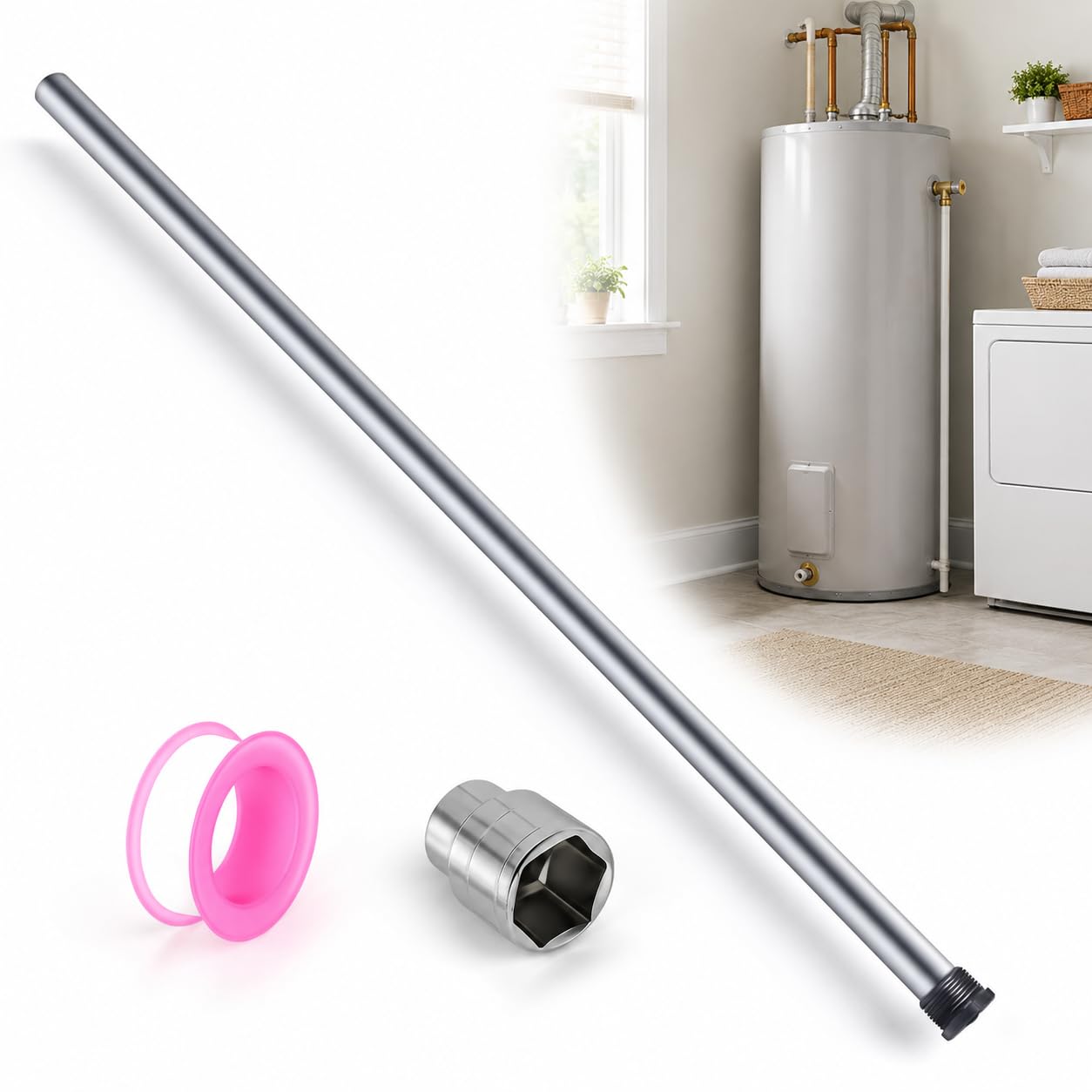
A 29-inch rod you can trim to hit an awkward space exactly.
Sometimes the problem is not the connection but the ceiling. This rod is 29 inches, and if that is still too tall for an under-sink or closet install, you trim it with a hacksaw. That flexibility is what makes it useful in spots a full 44-inch rod cannot reach.
It is made from solid magnesium, which gives stronger corrosion protection than an aluminum-zinc rod, and the ¾” NPT hex plug fits a standard wrench. The thread is designed to fit most residential gas and electric heaters, including Rheem, A.O. Smith, GE, Richmond, Reliance, and Giant tanks.
The maker also points to its energy angle — less limescale means heat transfers faster and the heater runs less. Owners describe it as working as expected and fitting well, with the ¾” NPT hex plug threading into a standard wrench. It holds a strong 4.5+ star score from 250+ owners. For a tight space and a mainstream tank, this is a smart trim-to-fit answer.
Strong points
- 29″ length trims with a hacksaw for tight installs
- Solid magnesium for stronger corrosion defense than aluminum-zinc
- ¾” NPT hex plug fits a standard wrench
- Comes with socket and plumbers tape
Small print to note
- A trimmed rod is permanently shorter — measure before you cut
- Shorter than 44″ options, so less coverage in a tall tank
Your pick if: overhead space is limited and you want to trim the rod to fit exactly.
Pass on it if: your tank is tall and you would rather not cut anything.
9. About Fluid Michigan Magnesium Anode Rod 44″

The kit that treats instructions like they matter — because they do.
Most anode kits assume you know what you are doing. This one does not. It ships with printed, step-by-step instructions written by licensed plumbers in southeast Michigan, and a full roll of Teflon sealing tape you will still have left over. The chrome-vanadium socket is built to be reused, not thrown away after one job.
The rod itself is a 44-inch magnesium unit split into four sections, each under 12 inches, so it drops into a tight space one segment at a time. The hinge connectors use 304 stainless steel cable, chosen because it does not rust the way common substitutes do. The ¾” NPT thread fits Rheem, Reliance, Richmond, Kenmore, State, GE, and most other standard tanks.
Owners describe easy-to-follow instructions and a swap done in about 15 minutes, with the four sections sliding in one at a time. It carries a 4.5+ star rating and is often called the best value for the money. The honest note: one small voice finds it less easy than the rest, so plan your clearance before you start. For a first-timer who wants guidance, this is the friendliest kit.
The kit that holds your hand: plumber-written instructions, a full roll of Teflon, and a reusable lifetime socket.
Where to set expectations: you still need to measure clearance and work carefully, since a few find the job fiddly.
Ideal for: a first-time DIYer who wants clear instructions, a sturdy socket, and spare tape.
Better to skip if: you already own the tooling and just want the bare rod.
Know the Specs
Thread size (NPT)
NPT is the tapered plumbing thread that seals when screwed in. Most home tanks use ¾” NPT; Atwood-style RV heaters use ½” NPT. This is the first thing to check — the wrong size will not seal the hole.
Rod length and clearance
A rod must fit the tank and clear your ceiling. Flexible rods split into four sections under 12 inches each so they bend through tight space. Long, rigid ones need full overhead room.
Magnesium vs aluminum-zinc
Magnesium gives a stronger protective current for plain corrosion defense. Aluminum-zinc is chosen when the water smells like sulfur, since it targets odor more directly. Both decay by design.
Sacrificial vs powered
A sacrificial rod is meant to be consumed and replaced on an interval. A powered titanium rod uses a small current and does not decay, so it suits an electric tank with power nearby.
Common Questions
Will a ¾” NPT anode rod fit my water heater?
How do I get rid of the rotten egg smell in my hot water?
How often should I replace my anode rod?
Can I cut a flexible anode rod shorter?
Which anode rod fits an Atwood RV water heater?
Is magnesium better than aluminum-zinc for tank protection?
What is a powered anode rod and when should I use one?
Do anode rods fit Bradford White heaters?
How much clearance do I need to install an anode rod?
What tools do I need to change an anode rod?
The Bottom Line
For most people fighting sulfur odor, the water heater anode rod winner is the 44″ Flexible Aluminum Zinc Anode Rod — the aluminum-zinc alloy hits the smell directly, and the four-section design plus included socket make the swap painless. If you want a complete magnesium kit with tools in the box, grab the Eau 44 Inch Flexible Magnesium Rod. For an Atwood RV heater, the Camco Magnesium RV Rod is the one to reach for. And if you are done replacing rods every couple of years, the Powered Titanium Rod protects without decaying.
How we choose
We do not accept paid placement. Every pick is matched to a real buyer and a real use-case; we do not hands-on test units.
Sources
Specifications: manufacturer listings and product documentation. Review insights: verified customer reviews, as of November 2026. Pricing: not shown on this page (it changes often); check the current price via the retailer link.
As an Amazon Associate, Tactical Gear Guy earns from qualifying purchases. This does not affect which products we feature.